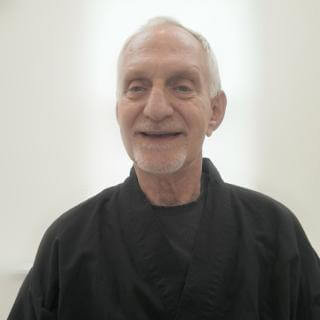
The following Dharma talk was given at Boundless Way Temple in Worcester,
Massachusetts.
The temple is an affiliate of Boundless Way Zen,
A multi-lineage school of Zen Buddhism.
In our evening talks,
We explore koan just as we do in the morning,
But the talks are shorter.
So for a shorter talk,
I've picked a short koan.
And it's a koan that's not part of our curriculum.
It's a modern koan.
It was written by Sung San,
Who was a Korean Zen master,
Taught mostly in the latter part of the 20th century and mostly in the United States,
And was the founder of the Quantum School and was especially interested in connecting with Western students.
So his koan has a bit of a Western flavor to it.
It's called Dropping Ashes on the Buddha.
Somebody comes into the Zen center with a lighted cigarette,
Walks up to the Buddha statue,
Blows smoke in its face,
And drops ashes on its lap.
You are standing there.
What can you do?
And Sung San's students wrote that actually when he would present it to the students,
He would say,
And the man with the cigarette is really big and strong and he will hit you if he doesn't like your answer.
So I'll read it again.
Somebody comes into the Zen center with a lighted cigarette,
Walks up to the Buddha statue,
Blows smoke in its face,
And drops ashes on its lap.
You are standing there.
What can you do?
So I started to imagine what would happen if someone came here into the temple and walked up to the Buddha,
Blew smoke in its face,
Dropped ashes,
And then I thought,
Well,
This is a temple where the smoke would set off the smoke detectors and the smoke detectors would call the fire department and the fire department would come and suddenly there would be fire engines in the parking lot and firemen bursting into the temple.
And that would be one heck of a call and response.
But what is this koan about?
What is this koan asking us to investigate?
And so in a way this is similar to teachings we have had in many other places.
The teaching,
If you meet the Buddha on the road,
Kill him.
The teaching that Bodhidharma gave to the emperor when he was called to the emperor's court and Bodhidharma,
Our first zen ancestor,
Was asked by the emperor,
What is the essence of the holy teaching?
And Bodhidharma's answer was,
Nothing holy,
Vast emptiness.
So Bodhidharma was saying,
Nothing sacred,
All pointing to there being a teaching in a man who comes in,
Or could be a woman,
And drops ashes in the Buddha's lap.
And we've been talking about this,
About actually the wonderful liberating insight of our ancestors.
That the world we live in is the world that the mind creates.
That this constructed nature of our reality offers the promise to get glimpses beyond this construction.
Glimpses beyond whatever we say we have to worship,
We have to bow to,
To just this,
To just oneness,
To emptiness.
And this great insight offers a kind of liberation that has captivated students for centuries.
Imagine feeling so confined by your life and getting a taste of this.
Nothing sacred,
Nothing holy.
Nothing open and free.
So then,
What's the problem?
What's the koan?
The man walks in,
Drops his ashes,
So what?
But there is a shadow side to this miraculous emptiness,
This oneness,
This intonation of unity completely with everything.
And that shadow,
Of course,
Is that then nothing is holy,
Nothing matters.
It's all one,
So let it all play out.
Nothing suffering in the world,
It's all just karma.
It's all just playing out.
So let's just sit here and do our zazen.
Nothing to be done.
The planet dying,
Nothing to be done.
So the shadow side of this freedom,
This liberation that emptiness offers us,
Is an apathy and an indifference to the suffering of the world.
And that,
Of course,
Is not why we practice.
Another shadow is the image that I've had,
That the truly realized person has no preferences,
Holds nothing sacred,
And therefore can never be hurt or offended.
So if I'm truly accomplished as a Zen student,
No ego,
Ever,
Call me anything you like,
I'll never take offense.
But of course,
We know that as beings,
We hold things dear,
We hold ourselves dear.
And we can be wounded.
What we're talking about is the problem of being lost in emptiness,
Of what Melissa talked about this morning as a kind of Zen sickness.
It can feel so soothing and relieving to just see everything as one,
That we yearn for it,
We seek it,
And we turn away from the world of form,
The world of what I care about,
The world of wanting to relieve suffering,
Because suffering is real,
And it's right here.
The Heart Sutra tells us every time we chant it,
Form is exactly emptiness,
Emptiness is exactly form,
And the danger of being completely at ease with the man who drops the ashes on the Buddha is that we let go of what we care about,
Of what we love,
Including the beautiful form of the Buddha sitting on the altar.
I struggle with this koan in terms of my work life,
That I work in a place where,
Boy,
Titles mean so much,
And accomplishments,
Jumping through hoops is the coin of the realm,
And the people who've jumped through the most hoops and acquired the most titles,
Boy,
Those are the most revered folks.
And my department chair called me in one day and said,
We want to put you up for this new award.
But in order to do this,
You need to do a few other things,
You need to do these tasks,
You need to accomplish these things,
And then you'll really be a good candidate.
And he was asking me to do things that I just didn't care anything about.
So I sat there and I listened,
And I was very honored,
And I told him I was honored.
But I said,
Why would I want to do that?
It's all made up anyway.
And my boss had this momentary startle,
And then he got a smile on his face and he looked at me and said,
Oh,
Bob,
You've been doing too much Zen.
And I realized that I had,
Probably with no small amount of Zen stink,
Thought I would teach my department chair a little something about emptiness.
But instead what I had done was I had dumped ashes on his Buddha.
I had dumped ashes on something that he cared deeply about,
That he had devoted his life to,
This idol of academic achievement.
And that yes,
For me,
It had lost its luster.
But this was what he held sacred,
This was holy for him.
And for me to come in and aspire to teach about emptiness was a kind of sickness and stuckness.
What our practice keeps asking us to do is to move back and forth,
To live in these worlds of form and emptiness,
Exactly the same,
Exactly one.
Sometimes we experience more of the oneness,
More of the interconnectedness of everything,
And more of the relief that comes with letting go of some of the shoulds,
Some of the false gods that we often submit ourselves to.
And that is a blessing.
But at the same time,
How do we honor both what we love and what we deeply care about,
And what other people hold sacred,
Even if we don't hold that sacred?
And so,
This little koan is an invitation to so much discernment.
Where do we land?
No parachute,
No ground,
But we have to land,
We have to step forward,
We have to make a statement or hold back from saying something.
We have to act.
This is where we deed the precepts,
Because the precepts can give us some guideposts,
Some anchors in this swirling world of form and emptiness.
These are anchors that the precepts offer for staying in the world of form and knowing the times when we are likely to do harm,
Even in the name of spiritual teaching,
Even in the name of sharing wisdom.
How do we use the precepts to discern when to bow to the person dropping ashes on the Buddha,
When to slap the person dropping ashes on the Buddha,
When to weep,
When to pull out the rag and wipe the Buddha clean?
Somebody comes into the Zen center with a lighted cigarette,
Walks up to the Buddha's statue,
Blows smoke in its face and drops ashes on its lap.
You are standing there.
What can you do?