This is another very special episode from my old podcast.
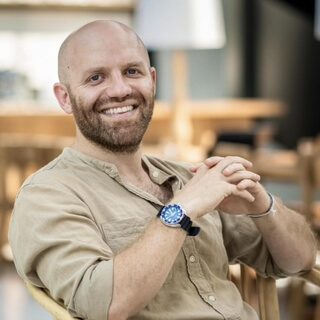
This is with Michael Ellsberg.
He's the author of the bestseller,
The Education of Millionaires.
And at this time when we had this conversation,
It was late 2015.
I had been following Michael for a while.
He went through this period of like creative mania where he was posting like very outlandish things,
The internet and things that were both inspiring and like got a lot of wow factor.
And then he posted his article,
A very vulnerable article about his bipolar disorder and what from a less educated standpoint,
We could just call manic depression.
And I was very interested in this because when I saw him in his mania,
I was kind of in this like rut creatively.
And I was like,
Wow,
Like this guy,
He seems kind of nuts,
But like,
It's just like inspiring seeing him and then seeing him crash afterwards and go into the depression after the manic phase.
I was also interesting because I was also like basically struggling as a creative.
And not to say that,
You know,
I know what bipolar disorder is like at all,
But I do feel as a creative person or someone who desires to be creative,
You go through these swings of creative outburst followed by depression.
Like the cycle is very common.
Depression and creativity seem to be linked very much.
And it was great hearing the perspective from Michael because he's written a bunch about bipolar disorder.
He has some great articles on it.
And more for anyone who's not afflicted with bipolar disorder,
The idea of understanding the creative cycle and the emotional cycle and the tolls and things that you can know about.
And simply hearing his story so vulnerable was really touching,
Especially at that time in my life.
And I think it's useful for anyone going through a creative struggle or challenge.
This is a very special episode.
It's a little longer than most of my podcasts.
This is episode negative nine,
Michael Ellsberg on creative madness.
You're listening to the Luwando podcast,
Perpetual Orgasm Infinite Play.
Please subscribe on iTunes and enjoy the show.
We spoke a few months ago and it was a great conversation.
And the number one thing that stood out to me when we spoke speaking about the book that I'm writing and stuff was you made a distinction between entertainment and education or entertainment and information.
I forget the exact words you said.
And that totally shifted how I started viewing the work that I do and the writing that I do because it became very clear on how I wanna write my book.
It's more,
Even if there's things you can learn from it,
It's mainly for entertainment.
And I think that ties into a lot of things that I wanna speak about.
But can you say a little bit about that lens that you have?
Sure,
Well,
I help people think about book ideas all the time and I only work in nonfiction.
I don't really personally know anything about fiction.
I don't write it,
I'm not a big fiction reader.
So the most basic distinction that there is when someone's thinking about a book project is,
Is this going to be primarily a how to,
Like tell you how to do stuff,
The reader's gonna learn things,
Or is it gonna be a narrative that grips people and has them turning the pages because they wanna know what happens and they're finding it so entertaining.
And your project,
When we were talking about it,
Really could have gone both ways because there is a lot of information in it and it could be a how to.
But it seems really clear to me that,
And when we talked about it and still thinking about it,
That you've got a great story.
I mean,
You were involved with this really kind of controversial,
Highly sexually charged organization that just probably has a million stories associated with it.
And there's a clear narrative arc also of,
I don't know exactly what the difference was between when you went in and when you went out,
But I'm sure there was a big difference.
So you have a narrative arc there.
So that's,
And when we say entertainment,
I mean,
That is a very broad term.
It doesn't just mean things blowing up and action movies and car chases and things,
Like anything that grips you and has you wanting to know how it turns out is entertainment.
Yeah,
Yeah,
And like I've been looking at it in a broader sense of like anything that really engages your attention and then you want to look at not for like self-improvement purposes or to gain anything to add to your list of attributes,
But something that just like really engages your attention.
That's the way I was looking at it,
Which I really want to like zoom out on that idea because when we spoke before,
We kind of connected on this,
I guess our judgment of certain elements of the self-improvement industry and how,
And I love the term that you bring up,
Bliss fronting about,
You know,
People trying to make things look all like lovely and light all the time.
And the dark side,
Which I think we'll speak about quite a bit today is really where people's attention gets like really engaged and where you care about every word rather than the bullet points.
Yeah,
I mean,
People for a narrative and just bringing it back to yours for a minute,
You know,
People,
If it's all lovey-dovey and like,
You know,
Just a list of the wonderful things that happened,
That's not going to be interesting to people.
For some reason,
It's probably hardwired in our psychology.
People want to see conflict in their stories.
Again,
That doesn't mean fighting or violence,
But some kind of struggle,
Some kind of overcoming.
It could even be conflict within,
Overcoming something within yourself.
And we're really drawn to that in our stories that we look for,
Whether they end happily or not.
We want to see someone kind of struggling with something.
Yeah,
And I think that's a really important point and I reached out most recently because you had that great blog post,
I think you posted a few weeks ago,
About the dark place that you went to recently.
And one,
It was great just because so few people,
Especially public figures,
Will actually share those parts of themselves,
Even though we all experienced something like that.
And there's this one line that jumped out in that post that you wrote was,
Part of my purpose in living is to be open and honest about the dark sides of life,
The struggles that are equally a part of human existence is all love and light so that others don't feel alone.
Is that like a mission you feel right now?
Yeah,
I mean,
I have all this shit going on and I figure I might as well do something useful with it.
And it's kind of hard to know what could possibly be useful about depression.
But one thing that is useful about it is making other people feel less alone and less ashamed if they're depressed.
For those who don't know or don't follow my Facebook,
I recently made a post about going through a really severe depression.
And I don't know if listeners have been depressed or know people who've been depressed,
But it's different than just being a little bummed out or sad or it's in fact,
It's different even than being in a really bad mood.
My experience of depression,
And this is pretty common,
Is just a complete emptying out of any sense of feeling,
Any caring,
Any sense of motivation,
Of wanting to do anything.
It's like a total numbness to life.
And it's completely debilitating in my case.
It was,
There were periods when I just could barely get out of bed.
And this was a recurrence of a bipolar,
Which I had been,
I dealt with a lot in my 20s and I wrote about in a piece on Forbes,
Kind of my struggle overcoming that period.
And I thought I had kind of overcome it.
It had been about eight years since I had had symptoms and then they came back really strong this summer.
So,
I am fortunate in that I don't,
I've figured out how to work without a boss.
I'm a writer,
I do consulting,
I coach people on writing,
I coach people on how to build their networks.
And so,
I'm able to write pretty honestly about what's going on in my life without worrying about alienating my boss or what the coworkers who might be backstabbers are gonna,
How they're gonna use that information to get ahead of me somehow at work or whatever.
So,
I think a lot of people for good reasons just aren't able to be very open about what's going on.
But the collective result of that is that everybody thinks everyone else is so happy and cheerful,
And we don't really know what everyone else is going through.
And that means that if you're going through something,
You kind of think that there's something wrong with you or that you're alone.
And so,
I like to use my position of being able to be open about things to help people feel less alone in those.
Gotcha.
And so,
You went eight years without having this feeling of depression and then it hits this year.
Did you feel like,
Oh shit,
Something's wrong?
Or what was going through your mind when you recognized it?
Yeah,
Totally.
Well,
What happened was,
So bipolar or as it used to be called manic depression,
You have these kind of two phases where you're in the mania,
You're like totally up and you're not sleeping,
You're just got tons of energy,
You've got all these creative ideas,
Grandiosity,
I'm gonna change the world,
I'm gonna create this new business,
I'm gonna create this radical new form of art.
And I was manic this summer.
It was coincident with a period of like very heavy use of psychedelics.
I think that they were kind of feeding each other.
So,
The mania was having me be really excited about exploring all these states of consciousness through psychedelics.
And the psychedelics were keeping the mania going on.
So,
They were egging each other on.
And I was really flying very high for like four months.
If anyone's experienced mania,
It's incredible feeling.
It's like constantly being on like 10 cups of coffee with no stop,
It just keeps going.
And I was doing all this crazy stuff.
I was,
For better or worse,
Probably mostly worse.
I was writing a lot on Facebook during this period.
And I kind of created this concept that I wrote that I'd turned my whole life into a novel.
And so,
I was sort of like updating the novel every day with like my latest crazy occurrences because that's how it felt.
It felt like I was living in a novel.
Yeah,
And then- As a writer,
Just watching that and even hearing me say that now,
That seems so attractive,
Like that kind of mania as a creative person,
To be overcome with that like 10 cups of coffee feeling seems like really fun.
Yeah,
It is.
I mean,
Very few people who are manic depressive complain about the manic side.
I mean,
It can be very destructive.
But it can,
I didn't,
I got away,
Thank goodness,
Relatively engaged from it,
But people can get into fights.
They can get into,
Like spend enormous sums of money.
They can,
There's all kinds of stuff.
So yeah,
So then it just kept going and I just kind of started,
Like it just,
It became too much.
Like it just kind of got crazy.
And I started like believing that I was like in a kind of spiritual relationship with Dionysus who is the Greek God of madness and ritual ecstasy and orgies.
But I think he's the only religious kind of archetype that is devoted to group sex.
And so I was very drawn to this and I guess that's not so crazy.
I mean,
People think that they're in relationship with Jesus or Buddha or,
It was a religious,
But I was kind of overcome with these religious feelings.
Was it like a metaphorical understanding or you actually felt like you're connecting with this deity?
Somewhere in between.
I didn't,
I wasn't like attached to any sort of supernatural explanations,
But on the experiential level,
I was experiencing myself in relation with some kind of spirit entity.
Now,
If a scientist came along and told me,
Well,
That was this part of your brain firing these neurons,
I'd probably just say like,
Okay,
I'm down with,
I'm not here to argue that there's some man in the sky called Dionysus,
But I was having the experience of being in relation to a spiritual entity.
And it just was like kind of getting out of control and there was kind of one final LSD trip in the middle of July.
And then I just,
When it came down from that,
I was like,
Okay,
I've gone too far.
I finally reached that point.
I mean,
I've been experimenting with psychedelics since I was about 20.
So that's 18 years now,
I'm 38.
I've never done hard drugs.
I've done a couple lines of coke in my life.
I'll never do it again.
Never done heroin,
I've never done meth.
Like I'm not into that stuff.
I don't drink alcohol,
But psychedelics,
I was very,
Very interested in for a long time.
And I'd never reached that point of like,
Okay,
I've gone too far until this July.
What were your dosages like or how frequent?
I mean,
I don't know the exact doses,
But I was doing some kind of trip,
Like maybe twice a week plus a lot of pot.
So,
There's people who have gone farther than that,
But they don't tend to turn out super well.
So,
You know,
That's,
You know,
If anyone has done psychedelics,
Like twice a week is a lot.
I mean,
You know,
A trip takes a lot of time.
It takes a lot of energy.
It goes for a whole day.
You have to integrate it.
And so I just,
Yeah,
I was like,
I've gotten too far.
I just felt it in my body.
And so I was like,
I'm gonna stop.
I quit all,
You know,
All recreational drugs,
Pot,
Psychedelics,
You know,
Alcohol,
Although I wasn't really drinking any alcohol.
And,
You know,
Fortunately I was doing things that don't really tend to hook you in a physiological way.
So,
I didn't have a problem stopping,
But I did stop.
And boom,
I just went in,
It like flipped.
It just completely flipped.
And I went into,
You know,
One of the worst depressions that I've experienced.
And I have a history of depression.
And,
You know,
It's been four months now.
I'm doing better.
I've like,
I've been attacking it from multiple angles,
Which I can talk about.
But so I'm feeling better,
Especially the last week or so.
It feels like I've turned some kind of corner,
Knock on wood.
But,
You know,
When I was in the depths of it,
It was really bad.
I mean,
It's,
You know,
I was not wanting to be alive.
And really the only reason I was staying alive and not just offing myself was that it would totally crush my parents and I loved my parents.
And I just would never,
It would be incredibly selfish for me to inflict that pain on them just because I was in pain.
And so I kind of hung in there and seemed to have been,
Seemed to be turning a corner now.
Gotcha.
Yeah,
It's really incredible.
It's really,
The most incredible is that you can speak about it with such clarity.
Whereas most people who are depressed can't even come up with those words or even coming out of it.
Yeah,
You know,
I've spent a lot of time in these states.
So I've read about them a lot.
I've introspected a lot.
I've tried a lot of different things to get out of them,
Both mainstream and holistic.
You know,
I believe when you're in one of these states,
Like you gotta try everything.
Cause you gotta,
You just read about all the mainstream approaches,
All the holistic approaches and just attack it from as many different angles as you can.
Yeah,
I wanna ask about your methods in a sec,
But I'm still curious about the mania.
We actually have a question from one of the listeners on what did you learn from the drug experiences?
And I actually asked that,
Like,
Was there anything you were seeking in the mania that maybe gave you the impulse to take LSD twice a week rather than whatever you're doing before?
Yeah,
Well,
Let's start with what I was seeking.
You know,
I'm a writer,
I'm creative and I consider myself a spiritual person.
We can talk about what that means.
But I was seeking that creative juice.
You know,
I kept feeling that I was on the verge of some great discovery for my writing.
And the writing I was producing was lively and I was actually getting really good feedback from it.
And,
You know,
There was a manic energy to the writing which people responded to and I just kept wanting more and more.
Another thing that I was seeking was,
I was using something called Moxie,
M-O-X-I,
That's the street name.
The chemical name,
I think is 5-M-E-O-M-I-P-T.
It's not super well known.
It's one of these designer psychedelics and it's an incredible sexual drug.
I mean,
It's just this thing,
Like,
You know,
I've had a lot of sex,
I've had a lot of different kinds of sex and different circumstances and different styles and ways of different levels.
This stuff really is an exceptional sexual experience.
I had the experience of just totally dematerializing into sexual energy and feeling my partner dematerialize so that our sexual energies were just merging and uniting.
And,
You know,
People talk about being able to access those states without drugs and that's great.
I wanna learn that because I'm taking a long break from drugs but at that time,
That's how I got there.
And it was great.
And I was going to sex parties and,
You know,
When I'm manic,
I seem to get on a roll with just being able to seduce partners and,
You know,
I'm very lively and I just have a lot of personality and that's seductive.
There's a lot of energy there.
And so there was a sexual aspect to it and a spiritual aspect.
I think a lot of people explore psychedelics because they want spiritual answers or to have a spiritual experience.
And I was having that.
In terms of what I learned,
I mean,
To be honest,
This go round,
What I learned is that I can go too far.
Gotcha.
That's what I learned.
I mean,
You know,
There's diminishing returns and I was definitely by the end in the point of diminishing returns.
If you take somebody who's never done psychedelics and they are,
You know,
They have a very sort of kind of square,
Let's say,
Outlook on life.
You know,
You go to work,
You go to work,
You come home,
You watch TV,
You go to bed,
You go to work and they don't really have any sense that there's other ways to view the world or that there's other realms of consciousness.
And if that person is open to it,
I mean,
If they're close to it,
It's a really bad idea.
But if they're curious or open to it and they take,
You know,
A mushroom trip or an LSD trip or ayahuasca trip,
It's gonna open,
You know,
Vast worlds for that person.
I mean,
People report their first couple of psychedelic trips are life-changing experiences that completely alter the way they view the world and themselves.
And it's very hard to explain,
If you haven't done it,
How that happens,
But you just have to trust that that generally does happen for people.
I had gotten to the point where I was sort of,
I was just chasing,
You know,
I was,
There was a,
Even though I wasn't physically hooked,
There was a kind of addictive quality to it and then I was wanting more and more and more.
And,
You know,
I was having- The moral's like a combination of physical pleasure and like chasing the news.
Yeah,
Just like having far out experiences.
You know,
For my birthday,
I got really high and I had six female friends don me.
And so I was,
You know,
I was completely,
I mean,
The drugs already put you in somewhat of a surrendered state where you're just going with the flow and not necessarily exerting a lot of agency.
And then these women were,
You know,
Were flogging me and like,
We did this whole role play and I went into what's called subspace.
Now you're not supposed to combine drugs and BDSM and I flipped a middle finger to that rule.
And in that case,
In that circumstance,
It turned out really well and I had a great experience.
But I've since then had experiences where I saw the value of that rule.
And now I basically am going to follow it.
Yeah,
I just like,
I was so out there and my partner was so out there that we just,
You know,
Once we were sober,
We realized like we wouldn't have made the same choices as when we were high.
And that was sobering,
That was like,
Wow,
Okay.
These drugs,
Like we were both so high,
Like they really impacted like,
You know,
How far we went and like all this stuff.
And so I just learned,
I mean,
Everything,
You know,
We really like processed it a lot and like parsed everything and came to,
You know,
Really came to an understanding that we want to play sober.
And that was for both of us.
So- And impulses that were unnatural?
No,
It's just like the intensity,
You know,
Like the intensity and the ferocity and like how deep we're going and how long and like how much physical stuff is going on with a BDSM.
And,
You know,
You don't even feel things really.
Like you can like slap somebody or whatever and they're not even going to feel the pain until later if they're on drugs.
So,
You know,
I just learned a lot and,
You know,
Fortunately everything turned out okay.
And,
You know,
Like,
You know,
No one was hurt and,
You know,
I'm on good terms with everyone.
But like,
I was partying too hard.
I mean,
When we come down to it,
I lost,
You know,
This is something in my community,
In the Burning Man community at large,
Where,
You know,
They sometimes call psychedelics medicine.
And I do think that they can be used as medicine for the soul.
If you use them really intentionally for that way,
If you set up a ceremonial container and you have like really deep intentions,
The problem is that people start using that term.
And I was certainly one of them and I've seen other people to just assume that if you're doing psychedelics,
It's medicine.
And they even say like,
Well,
What medicine are you taking tonight?
Instead of like,
What drugs are you taking tonight?
It's like,
What medicine are you taking tonight?
And that can trick you because if you just think that automatically that it's medicine because it's a psychedelic,
You could start fooling yourself.
And I saw myself fooling myself with that.
That's really interesting with the language piece because really it's such a small difference.
You're just calling one thing and you name,
But because it has different connotations,
Like it totally changes your behavior.
Like I saw that a lot in the organization I was a part of where like really small changes in like someone's language,
Essentially it was how people got brainwashed.
Like rational people would totally change their perspective just because they changed a few words.
Yeah,
Totally.
The power of language is really deep.
So to finish answering the listeners question,
I got a lot out of psychedelics earlier in my earlier explorations.
It just opened me to a spiritual side of myself.
It awakened my sexuality.
It gets you to see your own body in a whole different way.
You have an experience of the energetic flows within the body.
You can really understand a lot of the say,
If you've read any Buddhism or Taoism,
It really starts to make sense to a Western mind when you're on psychedelics.
And obviously you could get there without it,
But if you're not there and you happen to take it,
You could begin to understand what they're talking about on a deeper level.
And by the way,
I'm personally not recommending for or against it for anybody.
I mean,
It's a choice that you have to make.
You have to do a lot of research.
It can be life-changing,
It can be disastrous.
So everyone has to make that choice for themselves.
So do you still feel like it was a good chapter in your novel of your life?
I feel,
Now I feel good about it.
I mean,
I made some messes and I cleaned them up and just apologized to people for ways that I showed up at different social events.
And I,
Assuming I get out of this depression,
Which I am assuming at this point,
I mean,
There were times when I was really hopeless about it,
Because it's been about four months.
I feel like I learned a lot.
I mean,
My highest value is learning.
And at this point I can say I've learned a lot.
I've been on Sunday with my friends and I've been on Sunday will be 12 weeks with no recreational drugs,
Including no alcohol.
That's actually,
12 weeks doesn't sound a lot,
But most people don't go 12 weeks without a beer.
So I am actually,
That is something there that I'm not like using any substances to alter my consciousness or to get high.
So that I've really valued my sobriety right now.
It's been,
I don't think I'm gonna do it forever.
I'm not like in a 12 step program.
But right now what it's forcing me to be with myself and to be with the dark side,
Like we talked about.
And to deal with it instead of to just escape it by taking a drug and feeling great and going into mania.
It forced me to be like,
Okay,
What the fuck is here?
What is down here?
And I've discovered like some really deep things that I hadn't really thought about or dealt with.
And I won't go into too much detail,
But one of them is I was raised in a very activist kind of progressive left wing household.
And my father in particular is very,
He's an anti-nuclear activist.
He's very,
Very like up on the nuclear issue.
Like he knows pretty much everything about it.
And this was his obsession.
And so I was raised with kind of this fear that I was hearing about since birth basically of like that there's a huge danger.
The nuclear danger hasn't gone away.
We're still,
There's still like incredibly risky things going on and the world has a really big chance of blowing up within the next hundred years because of these things.
So whether you agree with that or not,
That was my reality that I was raised in.
And so I realized like I have a very,
Very dark view of the world and of our prospects.
And I seem to be drawn to other catastrophic issues to kind of learn about them and kind of sulk over them.
Global warming,
Like AI risk,
Like anything that's like massively catastrophic for some reason my mind like goes there.
And this has like,
I'm realizing like a lot of the depression comes from this hopelessness of feeling like our society is doomed.
And I have just had to find a way to still,
You know,
Still get up out of bed and do things with this like really deeply seated fear and kind of hopelessness.
And I've been finding it.
Like I've been really focused,
Rather than trying to argue my mind out of those positions and say,
No,
Everything's great.
You know,
Everything's,
It turned out awesome,
Which is not,
It was just not my belief system actually.
I've just been trying to find like,
Okay,
Well let's say all this is gonna happen.
What is still meaningful within that context?
And I've,
You know,
The answer I keep coming to is love.
Like opening your heart to people is valuable in itself.
Whatever is gonna come of it,
Whatever is gonna come of the world,
Just learning to open your heart and,
You know,
Give love and receive love to those around you.
And that I'm finding to be helping me get out of this,
Out of this depression.
Yeah,
And like a lot of people speak about the importance of love and like it's almost like a trite thing to say,
Love is the answer,
But it's so much more,
Going back to the entertainment thing almost,
It's so much more interesting and engaging to have heard you go through like a bottom and then coming to that realization as opposed to like just reading in a book about nice things to do.
Right,
Yeah,
So absolutely.
There's something I'm always looking out for in my personal development and when I hear about or read about other approaches to personal development is what I would call a dissociated form of love.
So dissociation means not feeling everything in your body.
So people can go to the love and light.
We call them love and lighters,
Who are like everything is wonderful and everything's beautiful and everything's evolving and everything is love.
And if it's not love,
It's just like a misunderstanding of the ultimate vibration.
And I would call that a dissociated form of love because it's so clearly not engaging with the darkness in the world of which there is a lot.
There's a lot in the world that isn't love.
And so what I try to cultivate is a love that engages with the darkness,
That has room for it,
That doesn't deny it,
And that can actually send love to the darkness on its own terms.
So rather than turning away from it and saying,
No,
Okay,
No,
That's not there.
Like really everything is beautiful and light.
I mean,
You've probably met people like this.
They're fairly common in the spiritual new age kind of communities.
And I have a practice that I actually created a recording about.
You can find it,
It's free online called Loving the Unlovable Within.
And the idea of Loving the Unlovable Within is to find that part of ourselves that we find most repulsive.
And I'm not talking physically here.
This is about inner world.
Like what's the part,
What's the thing about ourselves that we hate?
Like the aspect of our personality or who we are that we find repulsive and everybody's got one.
I don't believe if someone says they don't,
That they love everything about themselves.
And instead of trying to change that,
Which kind of further shames it,
It's like,
Okay,
Well,
That part I'm gonna try to change.
That implicit in the trying to change it is a further judgment that it's wrong.
In fact,
Further hatred of it.
So I like to practice just like,
Okay,
That part is there.
Like that part of me that will just totally fly off the handle and like go kind of crazy is there.
And I can work to prevent it from harming my life and harming others,
But it's there.
It's that potential is there.
And can I just love it?
Just like the analogy would be,
If you're a parent and you have a teenager that's driving you crazy and it's,
Let's say a problem teenager and causing totally morose and not doing schoolwork or whatever,
You're still gonna love that teenager.
You're still gonna express love.
You're not casting it about.
And- The dark side is so many good things.
Like those people you mentioned that are like a dissociated love.
They usually don't have great senses of humor.
They usually have sexual issues or like are impotence or creatively impotent.
Like creativity and sex and humor,
They all come from that darkness that you're talking about.
Yeah,
Totally.
I mean,
Someone who just thinks on the positive side about everything is not like there's not that creative tension.
If you're just in the doom and gloom,
It's not gonna be fertile for creativity or humor either.
But all of this stuff,
Like the aliveness and sexual energy and humor and creativity,
They come from the creative tension between the dark and the light.
And if you're denying one side of it,
Then there's no creative tension at all.
When you're depressed,
You're denying the light side of life.
Everything is doom and gloom.
Everything is negative.
Well,
There's no creativity there either.
So yeah,
You want it all.
And one thing I would say on the sexual front that you just talked about was that if people have this idea that sex is like all in the light,
That in my opinion,
That leads to a kind of denatured,
Like you said,
Impotent,
Kind of weak sexuality.
I mean,
There's a part of sexuality that's very carnal and that is like,
There's a kind of just a taking and a predator-prey relationship.
And obviously that can be a part of sexuality,
But obviously that can be expressed in very destructive and unethical ways.
But if you can learn to harness that energy and bring it into a sexuality that is constructive,
That is based on consent and respect,
That just adds,
It's like an engine that adds muscle to the sexual passion.
And those energies are explored in BDSM often.
Yeah,
That distinction kind of relates to another listener's question we have.
It's a bit abstract,
But I'll ask it the way he wrote it and see what you think.
He wrote,
How do I distinguish between my authentic dark side and the other voices,
Feelings,
And forces that seem similar but are not coming from my core?
You know,
I'm not a big believer in,
I'm not a big believer in this whole idea that we have like,
You know,
A true self and then like this fake,
Somehow this like fake layer that got on top of us or something like that.
I believe these are all parts of ourselves.
And so if someone is having voices that are negative,
That's a part of him.
And what I would recommend is again,
Like finding a way to integrate that into the self so that it's tied to other things like love.
And it's tied to,
You know,
That it can be there and be respected on its own terms,
But it's not the only thing.
You know,
The problem comes when one of these parts becomes our only thing.
Like when I just gave free reign to that kind of manic,
Like more and more and more side of myself,
That's when the problem rises.
The analogy I like to use is like,
Who's in the driver's seat?
So when I was manic,
The part of me that just wanted to get higher and higher and have more out there,
Creative and sexual and spiritual experiences was in the driver's seat.
And it was driving me towards disaster.
So now it's still there.
It's just not in the driver's seat anymore.
I'm not,
It's still,
It's like a family vacation in the car,
You know,
But it's in the backseat.
It's like the deadhead teenager,
He was like listening to the dead or something.
Now there's,
Grounded,
Mature version of myself drive the car.
38,
I'm rounding up on 40,
You know,
Pretty soon.
And like,
I figure 40 is a good time to have that part of myself driving the car.
Yeah.
Cool.
So you mentioned before that you found different methods for attacking depression.
Can you share some of those?
Absolutely.
And by the way,
I just want to emphasize,
You know,
I'm not a doctor.
I'm not recommending anything to anybody else.
The one thing I would recommend is to look into these things,
Research them,
Ask your doctor,
Look on them online.
But I,
You know,
I'm not,
I'm not like hawking any particular tier here.
But I mean,
There's so many angles you got to attack these things from.
So one is diet and nutrition.
And,
You know,
A lot of this stuff I kind of already knew from my last go round,
But I just had to re-implement.
So,
You know,
Getting sober is really important.
Not,
You know,
Not,
Because depression is like in large part,
Like a neurotransmitter issue.
So if you're getting high,
You're,
You know,
You're fucking with the neurotransmitters.
So,
You know,
Being sober,
Like not,
Like having a very kind of a diet that gives you a really steady energy.
So not eating sugar,
Which has you go up and down,
But instead,
You know,
Eating basically,
You know,
A paleo diet that gives you,
You know,
Very,
You know,
Like lots of protein,
Lots of vegetables,
Like whole grains.
I guess that's not paleo,
But you know,
Any thing that is,
Gives you a kind of steady energy,
You know,
Not eating junk food,
Then,
So that's the dietary stuff.
Then there's all kinds of supplements,
You know,
Omega-3s,
I think are really important.
Probiotics,
I think are important.
I went,
So another angle is I went to a naturopath.
In fact,
Right after this interview,
I'm gonna hear the results of all these tests that the naturopath took,
You know,
Like hormones,
Thyroid,
Testosterone,
Neurotransmitter levels,
Vitamin levels,
Food allergies,
Sensitivities,
Gluten intolerance,
Testing,
All that stuff.
And this is stuff that mainstream psychiatry just doesn't generally do.
All those kinds of tests.
So we'll see if something comes out of that.
And then I did go to a psychiatrist and,
You know,
The standard for my,
What I have is lithium.
I went on lithium and we tried,
You know,
A bunch of different drugs on top.
The lithium kind of keeps the mania in control.
I really wanna see if I can get off the lithium.
It's totally killed my libido.
I mean,
I went from one extreme to the other.
I don't even think about sex now.
And I could go a certain amount of time like that,
But eventually obviously I'm gonna want my libido back.
And I feel it just kind of slowing my creativity down,
Which could be a good thing for a period,
But it's just not like a sustainable thing for me.
And then I tried- Insanity and creativity go together?
I think that a little bit of insanity and creativity go together.
I mean,
If you're really just don't have any grip on reality,
Probably there's probably some exceptions,
But probably the art you're gonna create is just gonna be too disjointed and out there to interact with society.
But if you're not insane at all,
Then you're kind of just totally within the bounds of society.
You're gonna just create kind of mundane art.
So I think,
If you think about it,
Insanity is,
On an experiential level,
Is not believing in the same things that the mainstream society believes in.
And it's like having a reality that is not normal in a statistical sense.
Your reality is way out on the bell curve.
Yeah,
That quote,
You're crazy if you laugh and no one laughs with you.
Yeah,
Yeah,
Exactly.
Then that was for controlling the mania.
One thing I learned from my psychiatrist,
I asked him,
I was like,
Look,
Why can't we just treat the depression?
The mania,
Especially if I'm not mixing it with drugs,
Recreational drugs,
The mania is really fun and creative and energy.
And he said something that really changed my perspective on it.
He said,
You can't have the mania without the depression.
If you're manic,
You're gonna crash,
Which has been my experience.
I never really saw it quite that way.
In such a deterministic way.
And so you've got to treat the mania also.
Yeah,
I don't like hearing that either.
Like as a creative person who also likes LSD,
Like when people say,
Oh,
Every up has a down,
Like a part of me wants to believe that you can have like crazy ups without having to crash.
So you're saying that's not- Yeah,
Well,
I mean,
Occasional use of psychedelic,
I don't think for someone who's not manic depressive is probably,
Yeah,
You're probably gonna be down for a day or two,
But it's probably not gonna be a crash.
But I do think that with doing so many psychedelics,
Having an underlying manic depression condition was playing with fire.
So yeah,
So I'm taking other,
I tried something called Abilify for the depression.
That worked for,
It worked for about two weeks and then it just stopped working kind of one day to the next.
And then I'm on something now called Lamictal,
Which is an antidepressant for bipolar people.
So,
You know,
I'm in sort of holistic,
And a lot of people when they hear I'm on pharmaceuticals are like horrified and they're like,
You've got to get off those,
They're terrible.
And I'm like,
Look,
I don't want to be on these forever.
And I want to do all the holistic stuff with diet and supplements and exercise and spiritual and meditation.
But when you're in a hole,
You're in a fucking hole.
And if you've got one ladder to get out of it,
You use whatever you got.
So I'm throwing everything at this because it's been really debilitating.
Yeah,
I'm probably part of that crowd that really errs away from pharmaceuticals.
But yeah,
When it comes to acute symptoms,
Holistic medicine doesn't cut it necessarily.
You need something direct.
Yeah,
Or it's not even that it's just,
You don't know what's going to work.
Like they don't,
You know,
The mental conditions are diagnosed by their symptoms,
Not by like,
They don't know.
It's like,
You know,
I'm a cancer survivor,
You know,
That when they diagnosed me,
They had a very specific proof of exactly what was wrong and like where the tumor was and like all of that stuff.
You don't have that with mental conditions.
So you don't ultimately know exactly what's going to work because you don't know what's wrong exactly.
So you just got to try a bunch of different stuff.
Again,
That's my opinion.
I'm not a doctor,
But I'm very experienced as a patient.
That's for sure.
Do you think that,
Because you said you went to a naturopath that tested your hormone levels,
Do you think that would show like something concrete of like,
Oh,
These are like the hormone levels of a depressed person?
Well,
Actually,
Interestingly enough,
I literally just got some tests in the interim when we took a break.
And she found like all these things,
Like I'm low in B12,
I'm low in B5,
I'm low in D3.
I have low testosterone.
So,
You know,
I'm gonna try all this stuff to try to get some results.
To see if it makes a difference,
Like try the vitamins and try,
She recommended something called DHEA for the low testosterone.
Now I have no idea if they're gonna work or not.
And I don't even know what the scientific evidence is that taking these things will make a difference,
But they don't really hurt other than costing a bit of money.
So again,
It's in the spirit of trying everything.
I'm just gonna throw everything I got at this.
Yeah,
And you mentioned earlier that you're a spiritual person.
I mean,
There's a lot of questions to ask on that,
But have you tried more like mystical stuff too?
Yeah,
Well,
What I have come to is,
To me,
Spirituality is not something very esoteric.
It doesn't involve even beliefs that are necessarily supernatural or that would go against a scientific understanding of the world.
It's literally just looking at yourself through the lens of your own self.
And through the lens of your own soul,
Which is a way of looking at yourself instead of looking at yourself as,
Western medicine looks at you sort of like a thing,
Almost like a machine with all these different parts.
And that is one lens,
But there's another lens that we have this thing called consciousness,
Which no one really knows why or how it arises from a bunch of molecules interacting.
And you can look at your own consciousness and you can change your own consciousness.
Like you can,
Definitely like things like diet and exercise and supplements and things or drugs or pharmaceuticals change your consciousness,
But you can also look within and we have the ability to just change it by what we pay attention to.
So that's where it's sort of like spirit in the sense of like team spirit or the spirit of an age where it's this,
When a team has high spirit or low spirit,
They're still the same people.
They just,
There's something has shifted in their internal experience that has them more alive and more attuned to the excitement and possibilities of life.
So for me,
What I have found is that I am really able to change my consciousness if I focus on kind of finding like,
What are these core areas of my life that I really am ashamed of,
That I push down,
That I don't respect,
That I try to hide from myself and others.
And then just finding,
Just sending them love,
Just like you would send a child who was in distress love.
It's exactly the same.
And- Do you take like kind of a Jungian take on the mind of like we're made up of different archetypes rather than like,
Because it sounds like when you speak about your dark side,
You're personifying it,
I guess a metaphor.
Absolutely,
Yeah.
But I,
There's a phrase I came up with called the personified unconscious,
Which is a lot of my spirituality.
So,
When I was talking like really into this Dionysus archetype,
I didn't necessarily believe there was a entity in the sky called Dionysus.
I'm basically go along with the scientific worldview and don't tend to believe in supernatural things.
But I was sort of,
It's a personified unconscious.
There is certainly something called the unconscious and we can,
It doesn't have to be a vague ethereal force.
You can actually give it a personality because it does have a kind of personality.
If different people have different issues going on in their subconscious and their unconscious that take on aspects of independent personas.
So yeah,
I would say,
I haven't read a lot of Jung,
But I would say that I'm probably indirectly influenced by him just in the way that I view the world.
Yeah,
Like your take on spirituality,
And maybe I'm like overusing this,
But it seems like it ties again to the entertainment information thing that I love so much.
Like it's almost like a choice to view or to create a narrative or to like find a narrative in your experience as opposed to just looking at a bunch of mechanical parts.
Yeah,
Absolutely.
I mean,
When I was creating that novel,
Which I think in some ways is kind of a crazy idea,
But it was like an extreme version of a more day-to-day way that I view our lives,
Which is that we're living a story and you can actually revise your past if you view life that way.
Because let's say,
For example,
I mean,
I've already suggested one way that I've done that is I went through all these challenges with the recurrence of the manic depressive symptoms and like all this craziness.
And then was in a horrible way for four months of the depression.
Well,
Let's say all of that leads me to changes.
Let's say that that leads me to reevaluate my relationship with substances and to have a much more balanced approach to that.
Let's say that that leads me to make a whole bunch of changes in my lifestyle and my diet that gives me better health.
Then all of a sudden,
Because I've made those changes now,
That actually allows me to revise my past,
Not what happened.
I don't get to revise what happened,
But I get to revise the meaning of it.
You get to change the meaning of what happens in the past based on what you do now.
So instead of all that being this horrible thing,
That's just this tragedy that I suffered,
All of a sudden it becomes like act one of the movie.
Act one is where the challenge happens,
Where the protagonist suffers some terrible loss or is put up against some terrible challenge.
And then the meaning of that changes based on what happens in act two and act three.
Have you constructed a meaning for this most recent depression?
Yeah,
I mean,
I'm starting to.
Like,
I think that there were aspects of me still holding on to my 20s,
Late into my 30s.
My 20s were this very wild time of a lot of exploration,
A lot of sexual exploration,
A lot of psychedelic exploration,
A lot of bipolar.
And I thought I had licked that and kind of moved on and gotten what I was gonna get out of that.
And in my first part of my 30s were very solid and respectable and I was married and I was in this relationship that I thought was gonna last my lifetime.
And then that ended and I kind of went back to this wild artistic way.
And I think,
I really think at this point that I've had enough of that.
I mean,
Never say never,
I'm not gonna say that I'll never go back to that.
But I think I saw it as its extremity.
I got what I'm gonna get out of it.
And now,
I want to produce great work in the world.
I want to,
I still don't feel I've written my great book yet I mean,
I'm proud of the books I've written.
I've written three,
One of them co-authored with my mentor,
Brian Franklin.
It's coming out in January,
And they're great.
They're really good books,
But there's that like,
That pure expression of me,
That's like,
This is why I was here on the planet that I don't think I've tapped into yet.
And honestly,
Back to that question of what was I chasing?
I think I was chasing that,
I wanted that inspiration.
I wanted that sense of the essential creative self.
And now I realize that I'm gonna have to find that without such extreme measures.
I'm gonna have to find it in a more grounded way.
And I think that that's appropriate for coming into my 40s where I'm gonna approach it in a more adult,
Mature way.
Yeah,
Thanks.
We actually have one more listener question that's just on the same topic.
What are some things you would tell your younger self about love and life?
Wow,
Let me think about that for a moment.
That's a great question.
I would tell my younger self to not get so caught up in being certain that being in relationship with one person or another was going to solve all my problems and make me happy.
Because my tendency is to meet an in-person,
A potential romantic partner,
And just get totally caught up in excitement and passion and wild thrill that this person is in my life or might be in my life.
And having all kinds of fantasies about how wonderful everything's gonna be when we're together.
And what I found is that in certain ways,
Like nothing changes.
And I was with an amazing partner.
My ex-wife Jenna is one of the most remarkable people I'll ever know.
And she is beautiful and brilliant and creative.
And I love her,
I still love her,
And we're still very good friends after our divorce.
But the idea that everything is gonna be perfect after you're in a relationship is really misguided.
And we did have a wonderful life at this,
Particularly in the first four years of our relationship.
But there was like stuff comes up and relationships dredge up like some of your most challenging stuff.
And I think it's actually unfair and probably not very attractive either to your partner to put on them the solution to your problems or you're elected to make them the source of everything that's gonna be wonderful in your life.
Because at that point,
You're just kind of using somebody in a sense.
And if you can find some way to feel complete outside of relationship,
Then you're coming to your partner already as a complete person.
And then they're just adding wonderfulness to your life.
You're not coming to them with a neediness.
That's what I've come to in my time on the planet so far.
And right now I'm in a phase of like,
I've got all these issues I'm trying to solve.
And especially like the libido thing,
I'm not even really dating right now.
I'm literally just trying to get myself to a place where I'm coming to a partner complete and in a great place and stable and with a lot to offer.
And I think that's gonna be a much stronger place for whatever next relationship I'm in.
Awesome.
Cool.
Yeah,
There's just one topic I wanna cover probably on the last topic is,
Well,
One thing that's unusual about your,
Or unique about your whole manic depressive cycle was that so much of it was public.
Like I was able to follow,
I mean,
Obviously I'm sure you didn't post everything,
But you can follow your trajectory.
Do you think that exposure affected it at all?
Yeah,
I mean,
It was definitely a factor.
I grew up in somewhat of an unusual family situation.
My father is a very well-known anti-war activist.
His name is Daniel Ellsberg and he's from the Vietnam era and there's been a movie made about him.
In fact,
Several movies made about him and books.
And he's not like a rock star,
Like a movie star,
But he's definitely well-known to people who are interested in American politics.
And he was in the media a lot and interviewed and giving lectures and people came up to me and said,
Your father is my hero and I got that a lot.
And so I just kind of grew up just very comfortable with the information being shared with the public.
I don't seem to have that fear of like,
What will people think of me?
So I didn't get that.
So I have chosen to live pretty openly about what's going on in my life.
Again,
Part of it is that I think it's helpful to other people to see a really vulnerable,
Honest sharing of the ups and downs of life.
And part of it is,
It's just what I do.
I don't know why,
I can't explain it.
So part of me regrets that.
I think that I probably alienated some people.
I probably,
There's probably people who think I'm a cuckoo because of what I was writing in the manic phase.
But those people then aren't my audience.
I think a lot of my audience for my writing stuck with me and was like,
Okay,
You're going through some wild rides right now,
But it's all part of Michael Ellsberg.
And I think I have developed a brand,
If you will,
Of having a certain tone that is wild and uninhibited and free and unashamed.
And all of it was part of that.
So it was what it was.
And probably going forward,
If I have another manic episode,
I should probably not,
I should probably stay away from Facebook.
But it's what I did.
And it's all just been part of my journey.
Yeah,
And really all of these things we're talking about have come from your willingness to just be open about your private life,
Which I've not encountered anywhere else.
So I'm really grateful that you did share all of this with this episode.
Thank you,
Yeah.
The one thing that I've been really happy about sharing publicly is my stuff around BDSM and kink,
Because so many people have written to me and said like,
Oh,
I practice this too,
But I can't do it.
I can't be public about it because of my work.
So I've just met a lot of interesting people who are exploring the same things through being public about it myself.
Oh yeah,
Are you still working with me and Harley?
Yeah,
We're gonna keep doing workshops.
We taught one workshop called Dominance for Nice Guys,
Which was great.
We had 15 guys and we'd spent all day with them and just went into the basics of dominance and we had a blast.
So we wanted to keep doing that.
That's awesome.
Yeah,
What's it like working with her?
It's great.
I mean,
She is such a fountain of knowledge.
Like this woman,
For those who don't know,
She's a porn star who's been probably the longest working porn star that's still in the business.
She's in her 50s now.
I think she's been actively making porn since her mid 20s.
And she's a feminist.
She used to be a registered nurse.
She is an author.
She's really outspoken.
And she's just a total character.
I mean,
There's only one Nina Hartley.
And I learned a lot from her.
I wouldn't feel like I'm at the place where I can teach that workshop just by myself yet.
But I've learned a lot about dominance from her.
And so we make a good team.
Yeah,
I heard her interview with Chris Ryan on his podcast and it was so fascinating,
Her take on subjects that everyone talks about,
Like things like porn and feminism,
Where she has such a unique and wise perspective.
Yeah,
Totally.
Yeah,
She's definitely worth checking out.
Cool.
Awesome.
Yeah,
Well,
Thank you so much for being on with us.
Was there anything you wanted to share,
Maybe like last bits of advice or any thoughts you wanted to give the audience?
Wow,
I mean,
We covered so much.
I hope all this stuff about manic depression is relevant to people.
I think a lot of it applies to creative people in general.
It's highly correlated with having some kind of mental condition,
Whether it's depression,
Manic depression or unipolar depression or high anxiety.
So I think a lot of what I said,
Again,
I'm not giving medical advice,
But I'm just speaking as a perspective of a long time patient.
A lot of what I said probably applies in different ways to people with different medical conditions,
Whether it's depression or anxiety.
A lot of the advice is very similar for all of these.
Yeah,
I think it's gonna be super useful,
Particularly for creative types.
I'm very much looking forward to re-listening to this later.
Yeah,
So thank you so much for spending time with us here,
Michael.
Yeah,
Well,
Thank you so much for having me.
I really appreciate it.
Thanks for listening.
Don't forget to subscribe on iTunes or Stitcher.
If you wanna be a part of the virtual audience for future episodes,
Make sure to follow me at crowdcast.
Io slash Rwanda.
See you next time.
Yeah,
Yeah,
Yeah,
Yeah,
Yeah,
Yeah,
Yeah.
Truth,
I dress in a foam boots.
I'm invulnerable.
Touch no optimus,
Say optional.
Now I get uncomfortable.
You want a piece of me,
Take the whole thing golden.
Not stolen,
I give it away.
Truth ain't black and white,
Even acting right,
Right?
There's still a little gray.
I'm coming from Brooklyn,
Straight to your headphones.
Get another butt hit,
Don't break.
Don't knock,
I'll pop that.
I hit the front door,
Make the street.
Don't stop,
Don't stop.
I'm coming from Brooklyn,
Straight to your headphones.