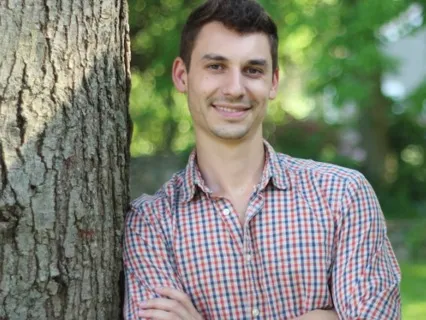
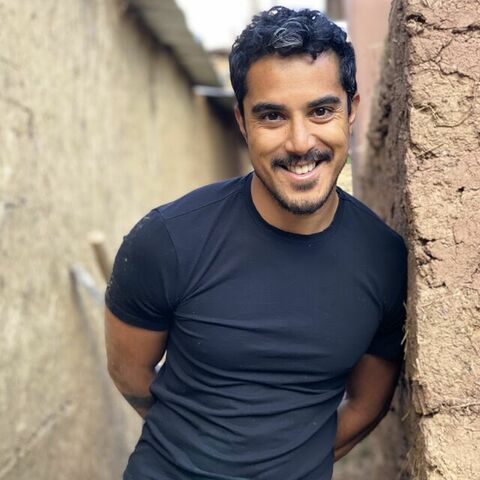
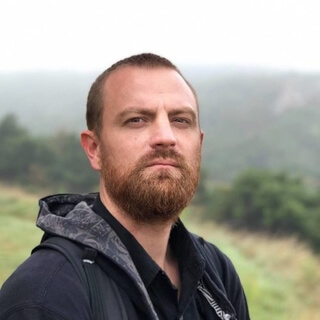
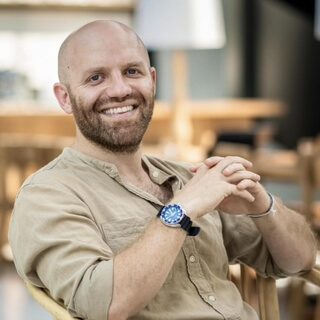
This episode's guest is Alex Hein of ModernHealthMonk.
Com and also MilkThePitchen.
Com.
Alex is an awesome entrepreneur.
He's a great health coach.
And what I love about speaking with him,
Other than him just being a cool dude,
Is that he brings a very practical,
Grounded understanding to a lot of what we could call like mystical health concepts.
Like,
At the time of this recording,
Which was some time ago,
Chinese medicine was one of his interests and he had a Qigong background.
Right now,
He's actually in Chinese medicine school and you can check out his work on his more recent healing expertise.
But we had this conversation.
He was still a student,
He's still a student now.
And we speak a lot about these healing concepts and how to live a better life from both like a mystical and scientific understanding.
Alex gives a lot of great information on both feeling good and being a productive human.
And this is a super fun conversation to have.
This is episode negative eight.
Alex Hein,
Modern Health Monk.
So my favorite thing about your work and what you've written,
Both online and like excerpts from your book,
Is that,
Yeah,
You speak about general things like weight loss.
I know you have thoughts on weight loss and why you focus on that.
But as a lot of my wishy friends would say,
You put a lot in your writing for people to read between the lines.
Like it's not about just getting to goals.
There's a lot of mind-body connection and deeper stuff.
Can you speak a little bit about how you ended up focusing on diets when that's not really what you're about?
Yeah.
Well,
It's sort of a weird situation in the sense that my site started because Modern Health Monk.
That right there kind of says who I am.
I'm kind of like one person described me the best I've ever heard myself describe kind of a weird thing to say.
But one guy said I'm a cross between like a monk and a doctor.
And that really is like those are my two big passions.
And so when I started my site,
I wanted to talk about more integrative health.
That's going to come out.
I'm sure we'll talk about this more later.
But it ended up being that most of the questions I got from people ended up just naturally coming back to weight loss.
So it was I had a hard time personally juggling what I wanted to write about and what people wanted to read about.
And that was kind of why it's turned into a weird kind of mesh of essentially at a high level health and weight loss,
But also personal development,
Goal setting,
Even spirituality and things like that all kind of combined.
Well,
Because I'd imagine you haven't had an issue with weight loss yourself.
Have you?
No.
But what was so interesting is that I had people when I originally started like,
What are you doing talking about weight loss?
And I had I mean,
Besides being a personal trainer,
That's legally certified to discuss this stuff.
The thing was that at the start,
I interviewed people because I wanted to find people that lost over 100 pounds and kept it off in an healthy way.
But I wanted I didn't care about what they ate.
I didn't care about what plan they were on.
I wanted to know what habits,
In other words,
What personal development principles did they implement to get there.
So that also became a source of credibility because I was this no name dude who obviously was never overweight in his life and people were like,
Yeah,
This is a little sketchy.
What does this guy do?
And I was like,
Hey,
Here's kind of the story.
Here's what I found.
Take it or leave it.
And a lot of people connected with that.
Gotcha.
So it's basically that you had this message.
It's almost like you've transcended the artist's markers dilemma where you had this message and then you just found this hole that people wanted to hear about,
Which was weight loss.
And you found your way to fit it anyway.
Yeah,
Absolutely.
I mean,
Like I said,
The name Modern Health Monk shows the multiple things I was trying to cover at the start.
And now I tried to do the best I can juggling this habits-based approach with also still talking about a very basic thing like weight loss.
Cool.
Hold on a sec.
My fridge just started making noise.
Is that audible on your end?
Not hearing at all.
No.
Okay.
I'll just turn down the gain a little bit.
All right.
Cool.
So I know you spent some time in China.
We spoke a little bit about Chinese medicine.
I know you're going to Chinese medicine school too,
Which I want to ask you about.
But where did this interest come from before the weight loss stuff like the more spiritual or personal development side?
Yeah.
I mean,
To be honest,
If I had to say if it came from an experiment or experience,
It didn't really just – I was one of those kids that for whatever reason,
10,
12 years old,
I just started teaching myself to meditate.
I was interested in meditation.
Like when all the little boys were praying for girlfriends,
I was praying for like holy men to apprentice me and like teach me medicinal herbs and like show me how to perform miracles.
It's weird.
But that was like daily.
Like every night,
I would pray for that until I was like 18.
That's funny.
That's all long.
I was similar but I wanted a holy man to show me how to get girls.
Why a holy man?
Or I can expand my mind so I could be magnetic.
But yeah,
Sorry.
Go on.
But I think that's – they were similar in that sense.
Like for me,
The obsession was both shamanism and mysticism.
I took a whole correspondence course for like three years on the druids and things like that.
So this was always like very much like a childhood calling.
I don't really know why,
To be perfectly honest.
But it just was.
Were you trying to find anything specific?
I think a lot of people are seekers and they don't really know what they're looking for.
But for me,
It was just – I just love this stuff.
Like by the time I was 18,
I had three or 400 books on my bookshelf all on like mysticism or this little – like family members didn't know what to get me.
They just bought me another book on herbs.
That's how much they knew that this was my character.
I wasn't even into drugs.
I didn't smoke weed.
I didn't do anything.
I didn't do acid,
None of those things.
It's just like a real legitimate interest.
Yeah.
You stay pretty clean,
Right?
Like you don't – I know we spoke about psychedelics once but I know that's not your jam.
Yeah.
No.
I mean as far as it goes,
I'm traditionally in a relatively straight edge.
But I think because of the field I'm in or I will be in Chinese medicine,
I think that's actually going to help my credibility too in the sense that it will demonstrate to people that I'm like a very serious in one sense kind of person about this kind of thing.
Got you.
So on that end,
I know you're very against fad diets.
But you're in an industry of fad diets.
How do you reconcile those two things?
It's tough because in one sense,
People say they don't want fad diets or they're tired of them.
But they actually want them because the whole principle behind a fad diet is a marketer that says,
Hey,
People are tired of diet one,
Diet two.
People are tired of Weight Watchers,
Of calorie counting and blah,
Blah,
Blah.
Let's give them a new one.
So we create something new that generates intrigue and interest.
That's like the essence of marketing in one sense,
Right?
In one aspect,
People say they hate that but they actually love it.
They eat it up because they want something new.
They want something different.
So in one aspect,
It's actually disadvantageous to me to not focus on being very marketer and being genuine.
In one sense,
It is very – it hinders me and what I'm trying to communicate because people want – they're going to sign up to my email and they're going to be like,
If I'd say whatever else is saying,
Even if it's genuine and even if it helps them,
They're going to unsubscribe.
They don't care because it's still the same.
Even if it's good-natured,
It's still the same.
So one thing that I try to do is I try to show people what they already know,
That if it were as simple as picking the right diet,
Then why are you here reading this email,
Getting advice from me?
Obviously,
Because you didn't get the results you wanted.
And overwhelmingly,
That's the case.
It's because you can change the what as much as you want,
What you do.
But if you don't change who you are,
Then the same thing happens over and over and over.
Yeah.
It's so interesting that the fad idea is so – like such an addictive concept like the quick fix because like I was reading parts of your book and I was like,
Yes,
Like anti-fad diet,
Awesome.
But then I was like,
Oh,
I should ask him about his diet.
Like I still – I still am curious to know like,
All right,
So what is your way of eating?
Yeah.
You know,
I'm a big believer in at the end of the day,
Do whatever works best for you.
For me,
What do I typically eat?
So I've got a GI problem.
It's a little bit more restricted than most people.
So by default,
I don't eat any dairy.
That's because I've never liked dairy my whole life.
And if I eat it,
I'm lactose intolerant.
That doesn't help.
And then beyond that,
I keep it very smart.
So I tend to have – because I'm still focusing on gaining a bit of weight,
I tend to have a little bit higher protein and I try to just make sure I have plants with every meal.
So we were talking before how one of our friends,
Our mutual friends had a hard time eating healthy.
And he was saying like,
I've heard about this plant and that plant and we were saying,
Why don't you just add a healthy thing to each meal?
You can still eat crappy food.
Eat pancakes or whatever.
Just add like a fruit bowl.
And it's psychologically a very simple switch because – think about the whole diet industry.
Don't eat this.
Don't eat that.
You can't have this.
You can't have that.
It's all like what you can't do,
What you can't have.
So there's so much negativity filled with it.
So to go back to your original question,
My diet,
I tend to focus on – I have more meat and plants and I still eat carbs every single meal.
But I focus on like rice.
I have rice for almost every single meal as my carb source or sweet potatoes.
Is that from living in China?
In one part,
Yeah.
It kind of got addictive.
It feels weird to have food without rice now.
But it also because – in one sense,
It's weird.
Like if you're ever over in Asia,
You can't have food without rice,
Especially if it's heavy.
Rice also tends to be oily and heavy.
But for me,
Especially with GI stuff,
Rice tends to be the least reactive compared to things like wheat or oats and that kind of thing.
Yeah,
It's interesting.
It's like even when you were a kid,
You just didn't like dairy.
Like it just tasted bad to you?
When I was a child,
I actually – I would eat cheese.
And then as I got older,
I would eat like a very processed square American cheese in the wrapper.
That's like not real European cheese.
I would eat that.
But now,
Like cheese is literally the most repulsive taste of any food I've had in the whole world.
I've eaten like exotic,
Very exotic things,
Scorpions,
Like starfish,
Centipedes and cheese.
It tastes the most disgusting.
And then with lactose,
If I have milk,
Like my stomach blows up within a half hour.
Yeah,
It's interesting.
Like that taste will tell you that right away.
Like when I was a kid,
I hated drinking bottled water.
Like it would make me throw up.
And like my parents would be like … Me too.
There's nothing wrong with you.
There's nothing wrong with that.
But like decades later,
We realized when a bottle of water is in the sun,
It releases whatever the plastics into the water.
And I was tasting that because I was like a sensitive little kid.
Interesting.
Yeah.
Yeah,
I was the same way.
I hated drinking water as a kid and had a little camping experiment that changed that forever.
But dehydrated.
But as far as what I know,
I went on like a 30-day camping thing off the Pacific Coast Trail,
The PCT.
And we only could have water for 30 days and it was iodized.
So we drop iodine in there.
And iodine kind of tastes – to me,
It tastes like blood.
It tastes like iron.
Like if you've ever like licked it out,
It's got the same taste as iron because of the oxygen,
The hemoglobin.
But basically,
I could only have water that tasted like iodine for 30 days.
And after that,
I was so used to this like bloody,
Rusty tasting water that I just naturally started drinking water.
Like my whole life,
I've never drank water.
And then after these 30 days,
That's just – that's all I drink now.
Interesting.
So I usually just drink water or coffee tea.
I like the taste of blood.
Well,
You're a vampire.
So that makes sense.
Yeah.
Totally.
Yeah,
I actually had a kidney stone when I was seven because I refused to drink water.
Like it was bad.
I ended up not having to pass it.
But that's its own little – Wow.
How did it just naturally broke up?
My parents just force fed me water in it.
My body was young and easily fixable.
But I had like a stone in the track.
Wow.
Well,
You didn't need surgery or anything.
Yeah,
That would have been terrible.
So two things that you mentioned in your book that are like keystones you mentioned right in the beginning were the inner narrative and tiny daily habits,
Which is not something anyone would expect from a diet book.
But it's not really a diet book.
But can you explain those two concepts?
Yeah.
So coming back to what we started this discussion off with,
How do I basically in one word position myself in a very crowded industry is I take principles that have really helped me.
Essentially what they are is personal development principles and I'm climbing that off.
So when I interviewed one of those people,
I talked about the people who have lost over 100 pounds.
When I interviewed them,
A lot of our discussion came back to mental,
Emotional,
Psychological stuff,
Right?
It's just like what we talked about before,
How most people,
They already know.
Like if I survey 50 people,
The majority will have an idea of what's healthy food.
Like a child can tell you that Skittles probably don't help you lose weight or that science and healthy kinds of chicken are good for you.
If it were that simple,
Then why does anybody have a health or a weight issue?
So the truth is that not like what could you,
The what is only actually a very small piece of the puzzle.
And when I interviewed these people,
We started coming across things like I came across ideas like,
You know,
I've always failed before,
So why bother trying again?
If I'm going to fail anyway,
Like screw it,
I'm just going to eat whatever I want and enjoy life.
I really meditated on that.
I thought that was so interesting,
Those words they use.
I've always failed before,
Why bother trying again?
In my mind,
Whenever I hear something like that,
I think what's the story behind the story?
This is not being communicated that they're also telling me and what they're saying here is that they literally have tried so many times that mentally they've given up because they know they've rejected the outcome to always be failure.
And so they're saving themselves a year or two years of misery by not trying instead.
But that's also not making them happy.
So when I noticed this stuff,
I ended up calling it the narrative because this isn't a new concept at all,
But the narrative is just as always an underlying story going on or sometimes multiple underlying stories.
Sometimes it's related to childhood,
Sometimes it's just something that happened in adulthood,
Or sometimes it's just a repetitive pattern like you see in anyone who's trying to achieve a very long term goal like health or business building or whatever it is,
Relationship goals,
Spirituality.
So the narrative kept propping up and I found people,
Another one would be like a very busy mom who says she's way too busy to do XYZ to exercise or she's too busy taking care of other people like her family or her husband or her friends to do anything good for herself.
And the problem is people internalize these stories without actually consciously questioning them.
So they're unconscious in other words.
It's a subconscious story going on and it's like what you and I were talking about how the purpose of the listeners here is they want greater levels of consciousness.
The narrative is often just below the level of consciousness for the average person.
So the problem is they repeat the pattern over and over and over because it's not a stated story.
So they're not actively aware of the fact that,
Of that thought that hey,
I always fail,
Why bother trying.
They're not aware of the fact that oh,
I say that because five years ago,
Three years ago and last year I tried to die,
It didn't work out.
Now I'm back at square one.
They don't understand,
They don't see the whole story painted.
Imagine if you and I were God,
We could see a person's life like year 10,
Year 13,
Year 15,
We could see our pieces and how they connected.
A person can't.
So that's why the story often becomes so unconscious and in the subconscious.
Yeah,
The whole consciousness thing is really interesting because like the fact that,
Hold on,
I got to move away from this fridge,
It's actually,
It's not too sound,
Just one second.
If it makes you feel better,
I can't hear anything.
Okay,
Yeah,
I wasn't,
At this point it's just distracting.
All right,
Let's get back here.
Yeah,
The consciousness piece is so interesting because a person really has to go off the rails to end up being obese or have a serious illness.
You don't see obesity in the animal world.
If you see an obese animal,
Something went terribly,
Terribly wrong and it shocks you.
Whereas a city for humans is kind of normal because we're kind of used to being imbalanced or out of alignment with ourselves.
Yeah,
That's a really fascinating aspect of Chinese medicine too.
I'm sure we'll talk about it a bit more later but it's just the idea that in Chinese medicine is very different from any other form of medicine I've ever seen because just inseparable from the medicine is the idea of the cultivation of the practitioner.
So the physician treating the person has to be cultivated for the best results for the person.
But going back to what you said,
You're right.
If we knew that we were destroying ourselves essentially one pound at a time so to speak,
Then we would stop doing it.
But often behind that is a lot of emotion and there's a lot of pain sometimes and sometimes it's just unconsciousness.
Sometimes it really is.
I'm so busy.
I'm over scheduled.
I'm over booked.
I'm so out of balance in every other aspect of my life that me running and grabbing food,
Shoving down quickly,
Getting acid reflux,
Gaining all this extra weight,
Sleeping crappy it's just a symptom of a much deeper imbalance going on.
Yeah,
And this imbalance we're talking about to start to relate it to Eastern philosophy and Chinese medicine.
We've spoken about the Tao Te Ching before,
Right?
Yeah,
Totally.
It's like these people are just disconnected from the Tao and animals are not.
This inner narrative you're talking about is kind of like being one with the Tao,
Right?
It's the whole being- If you're aware of it.
Yeah,
Yeah.
Yeah,
Totally.
As humans it kind of sucks.
The paradox is that we are conscious and that allows us to not be conscious whereas animals don't have a choice.
That is the ultimate paradox.
You're right.
It's like we have the gift of doing insane things and creating things.
But the fascinating thing also in Chinese medicine is humans are so much harder to treat than animals because humans have a conscious process around their illness.
So humans can obviously exacerbate one unproven illness just by thinking about it.
That's a very hard basically process to control or alter.
Yeah.
Because I mean,
The whole idea of psychosomatic illness or psychosomaticism,
Is that the concept?
I don't know.
Maybe.
I don't know.
Everyone knows what we're talking about.
In Chinese medicine they not only have identified that a lot sooner,
But a lot of the medicine is based around that whereas the psychosomatic effect in Western medicine is still kind of seen as this strange thing.
I think placebo is this anomaly that we need to filter out of experiments.
What have you seen so far in Chinese medicine?
In terms of what?
In terms of working with the body to affect the mind and the mind to affect the body.
We'll stick with weight loss as an easy example.
Yeah.
So I've seen on a very low level,
I spoke with a woman who was – I'd say she's about 100 pounds overweight.
She told me she was about over 100 pounds over what she wanted to be.
And we got – we were basically on a call and I was just trying to see what was really going on.
I call it the story behind the story.
That's why I like to call it the narrative because it's the story people tell and it's the real story behind the story that they may not even be aware of because it's so deep or it's been repressed.
And I've seen a girl who was very skinny when she was young.
She was from a European country that wasn't very wealthy.
They were very poor and the risk of a child starving was actually very high when she was young.
And she said her parents would always basically force feed her.
They were like,
You have to eat,
You're too skinny.
Even at a healthy weight,
They would tell her that because they knew the chances of a child surviving this famine were basically the fatter,
The better off they'd be.
Yeah.
So this woman was 30.
She was about 100 pounds overweight.
And as we started talking a bit,
I wanted to figure out what was really going on because obviously at that point it's never really just about food.
It's like someone who's chronically overspending.
It's almost never just about money,
Right?
There's something else going on there that's not being said.
And what we found was when we talked,
She was from an Eastern European country in an era where basically children were starving to death because there wasn't enough food and her parents were pressuring her,
Basically saying,
You have to eat,
You're too skinny.
Even when she was normal body weight,
Because they knew that the chances of a child surviving the famine were highest if they had quite a lot more body fat.
And sometime past,
And we were speaking obviously when she was 30,
This is 20 some odd years later,
And now that really had snowballed to where she was over a hundred pounds overweight.
And ironically her parents now had begun telling her,
Wow,
Now you're so overweight.
So you imagine the damage that does to a child's psyche.
First,
Not enough,
Now too much.
Yeah.
Cool.
Yeah.
So what about the tiny habits?
And that's a major part of your book.
Yes.
So the first part is really what's stopping us,
Right?
We talk about some of the internal stuff,
But then I have to give people a solution and the best thing I've ever found that has really changed my life was,
I found that a lot of the traditional goal setting stuff just doesn't work very well.
It's like,
We've all heard this typical,
Like set smart goals,
Like that whole thing,
That specific measurable.
It's like,
I want to lose 20 pounds in 90 days,
But I'll tell you the percentage of ambitious hardworking people that follow that and still do not reach their goals is the majority.
So in my mind,
If really hardworking,
Really smart people are following the system and it doesn't work,
Then the system must be flawed.
So interesting that you point out that they're smart and hardworking because I bet most people look at it,
They try it and they're like,
Oh,
It didn't work.
I must not actually be smart or hardworking.
I know I followed so many systems and they don't work.
I'm like,
Oh,
I must have been too lazy.
That's like the first thing that my mind says.
Well,
I think that's totally true for most people.
I mean,
I think one of the problems though is that when I come to this and I'm like,
So what can I give people that works better?
Like what can I do to help people make progress towards their goals without the negative side effects of goal setting?
And there are a lot,
I don't think a lot of people know this,
But for me in my own life,
I run myself to burn out a hundred times into depressions a dozen times,
All as a result of setting goals and going after them because I'm so good at forsaking the present moment.
I'm so good at removing happiness from the equation,
The day to day happiness.
And instead,
So just getting over hyper focused on the outcome that even if I don't get to the outcome,
I've basically pissed away 300 or a thousand days for a goal.
And this was a big problem for me because let's say theoretically I never reached a goal,
Right?
Let's just say I work three years towards a goal and I don't ever get there.
I've effectively from an emotional perspective,
I've wasted those years because I didn't enjoy them.
And so for me it was,
How can I get people to make progress and how can we do it without the negative emotional side effects of I'm too,
I'm so lazy and unmotivated,
Unmotivated,
Which I hear a lot.
I always fail.
And then also the guilt,
Right?
It's like I had a little bit of food,
I had a pastry,
I had some sugar,
You know,
You feel a little guilty and then you wonder if you should even start again.
So I wanted to create an idea that helped a mnemonic basically.
And the book,
The book title is a mnemonic both for myself and for other people.
So a memory trick,
A trigger to remind people to master the day.
So what that really means is instead of tracking calories,
For example,
Or tracking business revenue or tracking the number of the pieces of art you make this year,
Track your output,
Right?
So,
Or excuse me,
You're in what you're putting in and what you're getting out.
So track your production rather than what you're getting out of it.
So what are the habits today that I know will eventually get me there?
But instead if I change my focus to today to just mastering every minute,
Every hour and every day will eventually get me to my goal without the negative side effects of the guilt,
The depression,
The self-hatred and inevitably you'll get there anyway.
So I basically through the book,
I introduced people to the concept of figuring out what habits are going to help you get to your goal.
And rather than being outcome focused,
Which is something that I call wedding day syndrome because people are so focused,
Very myopic and focused on the wedding day and not the marriage.
If people focus on reaching their goal by only focusing on today,
They ended up actually reaching their goal and they ended up doing it much happier.
Yeah.
It's kind of like a modern digital age application of the Tao Te Ching.
In one sense.
I mean,
I don't think I really deserve that,
But I appreciate it.
Yeah.
No,
I mean,
I love the way that you combine like this like universal wisdom into very concrete actionable ideas like the habits.
Can you give us an example of like a goal you have and like the corresponding habit?
Yeah.
So one of the goals for me,
Well,
I guess this will be interesting,
So I'll give you two.
The principle of master of the day is what I used to write master of the day.
So the way a person traditionally,
The way I see people that want to write a book,
How they write their book is something like this.
They've got the idea,
They open up the word doc and then it's like,
Well,
All right,
What am I writing today?
Or if they know what they're going to write,
They just write as much as they can until they start feeling that stress and anxiety or it's,
You know,
Or writer's block hits and then they stop or they get frustrated.
For me,
I knew that if I set a minimum quota,
If I set a really small habit that I could do every day,
That eventually I would get there.
So I knew,
You know,
I was an experienced writer.
I've been writing on blogs for a couple of years now.
So I knew that if I just put,
I was like,
What is my ballpark goal?
Right?
I was like,
All right,
Let's just say,
I don't know what a book has to be.
We'll say 60,
000 words.
And I was like,
All right,
Well,
What could I do every day that's still totally doable in less than an hour?
So I set the goal of writing a thousand words a day.
Now for writing the book,
The piece of paper that I hung by beside my desk,
He never said goal,
Write a book.
He just said goal 1000 words today.
So nowhere in there do I mention a book just like how a person would,
If they were following this,
They wouldn't say goal,
You know,
Produce one piece of art or goal lose 20 pounds.
They would say goal today,
Enjoy painting for one hour goal today,
Make one homemade meal every day this week,
But just today.
So instead of focusing on the outcome,
I brought myself back to the present by reminding myself of this master of the day idea.
That's the tiny habit that's going to get me there inevitably without too much focus on the outcome.
So the goal was just write a thousand words a day.
And that was on my desk behind my computer.
And I did that seven days a week.
That's amazing.
I mean,
That's one of my habits right now with the book I'm writing a thousand words a day.
And every so often I'll be on a run,
Like having a super productive month and I'll increase it to 2000 words a day and then I'll get all frazzled because I can't do that every day.
And then I get frustrated and then like exactly what you're saying about having the big goal written somewhere.
I've noticed that especially like when I was working in sales,
Like having a monthly sales goal becomes stressful if you're not close to it,
But having a habit is easy to do.
Yeah.
And that's,
That's going back to what we talked about before,
Which is the essence of getting all this stuff done and really achieving these things is really controlling the internal state more than the external state.
Right?
And maintaining that positive state of mind,
Something I talk about called the snowball effect where it's just,
Or positive snowballs.
I think that's what I called it,
The term from positive psychology,
Which is just make it easy enough that you can do it every day,
But big enough that you can see results from it.
So when you leave the computer,
You're still in a good mood.
You're still excited for tomorrow to write it.
And it's,
It's,
It's really a longterm view of achieving goals.
Yeah,
It feels like you also like are shortening the feedback loop between the doing and the pleasure response because if the year long goal,
You know,
Whether it happens or not,
You have to wait a year to feel that.
And then it's just stress until then with having the daily habit,
You do it today and you feel good today or you do it this hour and you feel good at the end of the hour.
I'm just like shortening that response time,
Which is a lot closer to being in the moment than of course a year long goal.
Yeah,
That is,
That is spot on.
That's an awesome way to put it.
You're so true that it's,
It's really,
It comes back to that whole idea of being happy today while being productive today.
So just like you said,
It's that feeling of achievement every single day,
No matter what.
Yeah.
Or it sounds like you even take it to like feeling achievement every hour,
Every minute.
Yeah,
Absolutely.
I mean,
That's,
I think at a high level,
That's what it should be.
And that's something I strive towards.
You said you were going to mention another goal and habit.
Oh,
So,
Um,
When I,
One of the chapters in the book is called the one minute of meditation challenge,
Where I talked about,
After I moved back from China,
I wanted to kind of maintain that focus on kind of cultivation.
And so my buddy in China and myself,
We launched this one minute challenge where we both wanted to get up to what we considered a serious level of meditation.
To me,
That's an hour a day because I tend to view meditation in the timeline I view,
In the timeframe that I view exercise.
So if you exercise 10 minutes a day,
You'll see benefits,
But you're not going to get anywhere near the kind of results.
If it's 30 minutes to 60 minutes a day,
Like you can be fitness professional fit in 45 to 60 minutes a day.
So I knew that if I could do that with meditation,
I could probably see some crazy results.
So again,
My old self would have been,
Okay,
Alex,
We got to meditate 60 minutes a day.
And then I would sit down for like,
You know,
I could do 20 minutes pretty easy.
And I had done a lot more.
I mean,
I've done five days in a row of meditation,
You know,
Standing,
Walking,
Sitting as much as I could,
Like in vision quest,
But even an hour takes a lot of effort if we're on train.
So instead of setting the hour goal,
All I did was I put down today,
You meditate one minute,
And then I had my calendar laid out.
Tomorrow is two,
The next day was three,
The next day is four.
So again,
It brings me back to today's goal,
Which is just adding on a minute rather than the outcome goal,
The someday goal,
Which is the 60 minutes,
Which is always overwhelming,
Always depressing,
Always falling short.
Yeah,
It's awesome.
And this is like,
You know,
Like no shit.
It's a no shit idea,
But like actually doing it and like having it laid out like that is a big thing that sabotages a lot of people when they don't do it.
Absolutely.
And it's just like,
Just like the thousand words a day.
It's so simple.
There's no,
There's no mysticism in magic and or esoterica,
You know,
There's nothing esoteric about it,
But people just don't do it.
Yeah.
I do want to talk about some esoteric stuff because you just mentioned a vision quest.
Like,
Have you been on vision quests?
Yes.
So the one official one I've been on was in the Sahara Desert in Africa when I was,
I must have been 21 or 22.
I traveled with a band of nomads,
The Tuareg on a camel caravan for 10 days and they laid me in this little cave sand dune area for five days of water.
That's the place where like people wear indigo dye,
Is that right?
Yes.
They've got the very famous,
I don't even,
I forget what they're called now,
The years later,
But the essentially the turban they wear and yeah,
The indigo,
They're very famous for that.
Yep.
Cool.
So you were in a cave for five days?
Yeah.
So basically when we arrived at kind of the settling zone,
So to speak,
They were like,
You know,
We'll send one of the kids out with you.
You can walk as far as you want all day,
Find your good spot,
You know,
Where you're going to be meditating.
And then every morning about a hundred meters away,
We'll put down a rock.
You put down another rock to match it.
So we know you're still alive basically.
And then they basically give me,
Gave me a gasoline container with water and then came back for five days after five days and then I could eat again.
Huh.
What was that like?
It's pretty interesting.
It's pretty trippy.
I mean,
Both,
Both the sense of not eating that long,
Which is tough and also easy.
It's easy if no one's eating,
Right?
You don't see anyone else.
So it's pretty easy to avoid any food triggers.
But it's,
It's really damn hard to meditate for five days straight.
But all kinds of interesting stuff happens.
And I think the theory behind not eating is that the more you rely on physical sustenance,
The less your body focuses on the physical plane.
I think that's the theory behind it,
Behind fasting in general.
I mean,
I've,
So I've done a lot of like psychedelic journeying and stuff and the shamans always say don't eat.
I mean,
If you could fast the days before,
It's the best,
But like definitely don't need anything heavy,
No meat.
You just eat leaves or like plain rice or something for that reason that you just said.
That's interesting.
Yeah.
And you know,
I found it interesting because one sense I was having very vivid dreams.
Like I was having 15 dreams a night,
Which is,
Which was weird.
And 12 of them were about meals I was going to eat when I got back.
But I came up with some good Martha Stewart recipes.
That's the secret.
If you want to be an author of a recipe book,
Don't eat for a week.
You know,
A lot of interesting things happened and the desert,
Interestingly enough,
The Sahara,
I mean,
I've been all over the world about maybe about a quarter of the earth and I've never been to a place that felt as spiritual just by itself as the empty Sahara desert.
I woke up multiple times every night over the three weeks I was there because I felt like something was watching me and I'm just sitting alone in a sleeping bag in the middle of the desert.
So there's some kind of feeling about the desert,
Which I really liked.
And I mean,
I had all kinds of interesting revelations and some that actually got me on the path to eventually moving to China in the first place.
Do you think you would have had that spiritual feeling if you were like sitting in Central Park and not eating for five days?
You know,
I mean,
I think at a high level a person could,
But for me it's just the sensory deprivation is part of inducing that kind of experience.
I think a lot of cultures traditionally,
Like you talked about the shamans,
Even the bards and the druids up in the bridge.
Hey,
You just cut out again.
Shout.
Hey,
Can you still hear me?
Yeah,
Yeah,
You cut out for a second.
Sorry about that.
You know,
There are still some shamanical- Right when you said bards and druids you cut out.
Okay.
You're a bit choppy.
Can you hear me right now?
Yeah,
I can hear you fine.
All right.
This problem with an incoming call and it turns off Skype by itself doesn't give you an option.
Yeah,
So in the British Isles,
For example,
The bards and the druids and the shamans there were very fond of sensory deprivation.
And even there are some American Indian tribes whose children they would raise in pure darkness until they were,
I think,
12 or 13.
Something crazy like that with the belief that- Something?
Yeah,
They would keep raising them in caves their whole life from birth.
And so the belief was that if they didn't have any physical interaction with life,
They could only develop,
They would naturally develop spiritual sight,
I guess I would loosely use that word,
But they would have a spiritual focus because they're,
You know,
Our main sense is our sight.
And if you don't have that,
You focus on other senses.
So do I think a person could?
Absolutely.
But I think it's,
You'd have to have a certain level of cultivation and I'm certainly not there yet.
And I think,
Like I said,
The desert has always called mystics.
Like there's the,
What is it,
There's a book called The Sayings of the Desert Fathers.
I believe they're Christian mystics,
Like gnostics.
And the desert just has that kind of,
It's the baroness.
It's the same thing.
When there's not much external stimulation,
You go inside.
So I think if you're in Central Park,
There's way too much for the average person,
Too much stimulation.
Yeah.
You know,
You can look at people all day and you wouldn't be able to go deep.
Yeah,
The attention stimulation is a huge thing.
I don't know if you told me this.
Somebody I know was telling me about a study where they like check the sleep patterns of all different species of animals and different kinds of people.
And they found two species of creature that sleeps better than anyone else in the world.
One was domestic house cats and the other one were Bedouins.
Like people.
And they were saying,
I guess you didn't tell me that if you're saying,
Wow.
No,
That's interesting though.
Yeah.
I mean,
There's something around like since they spend their entire lives in the desert,
All they ever look at is the flat ground and the sky.
It's like their visual centers are like less,
They're definitely not overstimulated and they sleep the deepest out of any human.
That does not surprise me at all.
The Chinese medicine mentor of mine who's phenomenally skilled,
He always says that digestion not only is a physical concept,
But also a consciousness related concept.
So that doesn't surprise me at all because he talks about a lot how children these days that are overstimulated with screen time,
Not only is screen time correlated with more ADD type stuff,
But he talks about how this kind of overstimulated environment is hard for people to process and digest not only metaphorically,
But also literally.
He actually literally will say that it affects a person's actual digestion.
So that's very interesting that you brought that up.
Yeah.
This vision piece is like a theme.
I just did an interview with Mari Miyoshi.
She's a brain integration expert and she was saying how,
Because people are like overstimulated visually,
They're – what's it called when you're telling proprioception,
Like telling where your body is in space and it becomes underdeveloped.
For instance,
You shouldn't need to have your eyes open to balance on one leg,
But most of us need that because we're so used to relying on our visual sense.
That's very interesting.
Yeah.
So,
We just talked about sleep.
You and I spoke about sleep,
I think it was about a year ago.
You were saying how – you were super productive,
You couldn't fall asleep.
At that time,
I wasn't working very hard.
I was sleeping incredibly.
I would like lights out immediately,
But I didn't get things done.
We reconnected recently because I agree very recently this month,
I've been having issues sleeping,
Although I've been spending a lot of time doing work on the computers.
Has your sleep pattern changed at all lately?
Yeah.
It's improved quite a lot with the exception of one or two days this week.
As a general trend,
It has improved a lot.
I think there's two parts.
People – especially when you Google like how to sleep,
People tend to focus on tactics,
Right?
Like turn the computer off before 10,
Don't drink coffee,
All this kind of BS.
But you'll find people that use the computer until five minutes before bed and drink 10 coffees a day who still sleep fine.
So I think what – obviously,
Each person is going to be different,
But I think for me what worked is looking at the big picture.
The big picture like we were talking about yin and yang,
The big picture was that I was just overstimulated,
Right?
I was always in a state of activation and my body just didn't have enough time to wind down and relax.
So I made sure just to focus not only if I'm working 12 hours a day still,
Focus on being more conscious of breath,
Making sure I'm not overdoing it in the gym,
Just the whole picture of allowing a little bit more decompression and that's worked so far.
Yeah.
Because in moments where I've had trouble falling asleep,
It's not like – I mean,
What it really is,
Is like I can't stop thinking.
I think you mentioned something like that too.
Like you just want to think more.
Yeah.
One part for me is that like you said,
Just not being able to stop thinking.
If you just have – if you're over scheduled and overbooked or maybe you're excited,
Right?
You're not going to be able to go for Christmas.
Any alteration in that emotional state will affect sleep.
I think that's another big concept of Chinese medicine.
You never see in Western medicine is this idea of inner tranquility,
Right?
Like how everyone,
Even the average businessman needs a certain level of inner calm because it affects every aspect of health and disease.
Yeah.
Yeah.
Like the whole – I mean,
Even this research about how stress leads to cancer or like organs like shutting down,
But it's still looked at in this like compartmentalized way.
Yes.
It's the integrated way of Chinese medicine.
Yeah.
This is the greatest weakness of Western medicine.
I think most doctors aren't even aware of it.
Here's another aspect for you to consider.
There's a well-known – there's a great TED Talk out now and the woman talks about how for decades we've known that – we've known,
Quote-unquote,
That stress is bad for you.
She did these longitudinal studies or maybe she just presented the research showing how people who believe stress is bad for them show the associated increase in mortality,
In health conditions,
But people who believe stress is good for them have no negative side effects whatsoever.
So how about that for blowing your mind,
The power of the mind over – and this is – again,
This has been written down 3,
000 years ago in Chinese medicine then,
This kind of idea.
Yeah.
It's really incredible.
Someone else mentioned that talk to me.
I should watch it now.
Yeah.
I was really fascinated when I found out you were interested in Chinese medicine because you are one of the more rational people I know.
Right.
Even though Chinese medicine is more accepted by the Western world now,
There still are – even for someone like me who's into mysticism,
There's still some things like the concept of chi is still very vague even if you go to an acupuncturist like – they speak like doctors but chi and like these concepts are so vague.
How do you reconcile that?
Yeah.
Well,
You want me to be honest?
I'll probably piss off a lot of people.
Most Chinese medicine people don't have a goddamn clue what they're talking about.
Most are not very good.
That's a very – that's a pretty aggressive statement for me to make,
Someone who's not even in school for it.
When you ask a person what is chi,
They don't really know.
That's why they probably can't give you a very good answer.
But I'll tell you,
In Chinese,
Chi is used to describe a concept which again why it's so hard to translate.
For example,
They say shang chi which is anger,
Right?
To be angry.
Shang means to birth,
To give birth to chi.
So do you see how anger is an activating emotion,
Right?
A person who's angry,
They explode.
So birth chi,
It describes a concept that's physical.
But if you try to translate that,
It doesn't work.
Another example would be tian chi.
Tian chi is weather.
That's the day-to-day word for weather.
Tian means sky or heaven and chi means chi.
So the chi of the sky is weather.
It makes sense,
Right?
It's just the sky stuff.
The sky stuff is weather.
The birthing of chi is anger.
So that's why it's.
.
.
Yeah,
I hope that helps a little bit.
Again,
I am far beyond a beginner but knowing Chinese does help me to understand it a little bit.
But the way I like to think of it is basically a grouping of processes and all at once that are very hard to break apart and describe by themselves.
But you'll find a lot of Chinese medicine people that are like,
Oh yeah,
Acupuncture just stimulates.
.
.
It's myofascial release,
Which I'm not going to really go there because I don't really know that much.
But from what I've heard from people,
That's totally incorrect.
But that's kind of my idea of what chi is or maybe isn't.
I don't know if that helped at all.
Yeah,
Yeah.
Because when I started,
I mean,
I've only experienced Chinese medicine as a patient.
And when they're talking about these things,
At first I just had to accept it.
Okay,
Maybe meridians correspond to fascia or something or dif or something I'm not aware of.
But then I started thinking,
Oh,
Maybe it's just a metaphor.
Maybe they're speaking about it metaphorically.
But as you even receive treatment in acupuncture,
You start to realize there's definite connections and you just have to make something up that makes it make sense.
And what you're saying about the language is really interesting because I only speak English,
But I know that certain languages that are very different than romance languages are structured so differently.
These concepts just can't translate.
It's like a totally different way of thinking.
Right.
And then you also have the fact that the Far East has always been romanticized and people believe what they want to believe.
The fact that there are so few people that really understand it.
The fact that there are not a lot of people that have seen American Chinese medicine that they learn in school versus what happens in China or even learned with a very high level person that really gets it.
So there's a lot of problems with,
I mean,
For lack of a better word,
Quality control.
Like really,
I mean,
That's what it comes down to.
Yeah.
And it's hard to have quality control because unlike Western medicine,
Which can all be measured,
You can't measure chi.
You can't measure the skill of someone's internal physician.
You just have to trust them or feel it.
Right.
And that's one of the inherent paradoxes of it.
Yeah.
And going into that paradox,
We also spoke not too long ago about like the gut versus the mind making decisions.
Did you actually,
You made your decision on your Chinese medicine school,
Right?
Yes,
I did.
Cool.
And we were speaking before about whether your gut was going to win or your mind,
Like what ultimately made the decision for you?
Yeah.
It ultimately came down to my gut for sure because I've done a bit of reflection over the past years.
And I realized as a really intellectual dude,
It's yin and yang.
There's a good side and a bad side.
The bad side is you override every gut feeling with intellect and everything looks good on paper.
You tell yourself it's good,
But it feels bad.
And that's a very hard thing to reconcile.
Yeah.
But it just so happened that,
Yeah,
I had this one,
It just makes sense.
And then the more I think about it,
The more I dream about it,
About the next six months where I'm going to be,
The more it makes sense.
So the gut has certainly won.
I think I've done a good job making a very important decision this time.
Yeah.
And it's interesting because again,
We're taking a rational lens on something.
Most people when they talk about gut feelings,
They speak about in a very abstract way with like no basis.
It's just a way to avoid thinking about concrete feelings.
But it sounds like you're saying that your subconscious,
Your gut was picking up on something better than your intellect was.
Absolutely.
And the way I think about it,
The way I always convinced myself that gut usually knows what's right is think about dating.
Right?
Like I've for years,
I was like,
All right,
This is the kind of girl I want on paper.
She looks like this.
She talks like that.
She comes from that family.
She likes this.
She hates that.
And then you meet that girl,
You go out to dinner and you don't feel shit.
And you're like,
Wait,
This is not supposed to happen.
You know,
You're like,
Wait,
Wait,
Wait,
Wait,
Wait,
Wait.
She's everything on paper,
But I don't feel anything.
And that anything that that 1% or 5%,
Whatever it is,
Is the most important percent because it's,
It's what it's the feeling kind of you've been looking for the whole time.
Right?
So it's like that.
Right,
Exactly.
We're looking for whatever that is,
Whatever that can,
Whatever,
If it's purely biological,
It's chemical,
It's a pheromone,
It's something genetic that we can't accurately describe,
But we perceive fine.
But that's,
I think ultimately that's the feeling we're looking for.
And that's something that intellect can never really grasp.
Yeah.
Yeah.
I feel like we could keep talking about this for,
For hours and hours.
But yeah,
So I have one question I almost forgot to ask from one of the listeners.
He asked what foods can increase your sex drive?
All right.
So I think this is a good question phrased poorly.
So this is kind of trying to go to reductionist in the Western model.
The best,
The best way is just to be healthy.
That sounds like a very cop out answer.
But if you're healthy,
Everything else is going to function fine.
Like think about an adolescent kid that's been eating fine,
That's been running around outside,
They sleep fine,
They poo fine,
They can have whatever sexual performance they want to have,
You know what I mean?
It's the whole thing works rather than trying to be like one pill for one solution.
It's a very Western linear thinking.
So I would say focus on getting all this stuff you know you should be doing and just improving it,
Focusing on the sleep,
The food,
The digestion and overall the internal state.
If you know if there's a lot of stress or anxiety,
That obviously affects quite a few things.
And humans obviously have that wonderful gift of the mind being able to affect everything from health to sexual performance.
So another,
Another different lens to kind of view it through.
Awesome.
Yeah.
I mean with my background in sexuality,
That has been what I found all the time.
Like it's never about sex,
It's about their lifestyle,
About their family.
Yeah.
So when do you start Chinese medicine school?
I'm still waiting on everything to be finalized but it'll be in August.
Okay,
Awesome.
Because I would love,
I mean again I feel like we could talk for another four hours.
I just wanted to hear about all the things you learn once you've actually been in school because I think it would be super enlightening.
So your book's called Master the Day,
It's on Amazon right now.
Is there anything you want to say about it?
I mean if,
If a person's interested in not only health but also kind of having that 10 out of 10 in every aspect of their life,
Whether it's financial,
Whether it's your spirituality,
Your relationship and also your health,
Then it might really be of interest to you.
So you can check it out.
Master the Day on Amazon.
It's Kindle and the print version's coming out in a couple of weeks.
So if that's your thing,
Let me know and you can shoot me an email.
That's heine.
Alexander.
Gmail.
Com.
That's my personal email.
Awesome.
Yeah,
I've read bits of it.
It's an awesome book.
I am waiting for the print version because that's how I like to read.
So I'm really looking forward to that.
Awesome.
Yeah.
Thanks so much for having me here today,
Ruan.
Thanks for listening.
Don't forget to subscribe on iTunes or Stitcher.
If you want to be a part of the virtual audience for future episodes,
Make sure to follow me at crowdcast.
Io slash Ruwondo.
See you next time.
Bye.