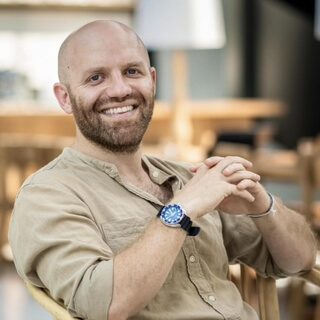
Today's guest is Jordan Luke Collier.
Jordan is the head instructor of Arza Marada,
Which is a company that teaches men about women and beauty and how to live the life of an adventurous human being.
You may know Zann Parian who's been on the podcast,
The visionary behind that movement.
Jordan is a good friend.
We've known each other for quite a while.
I think right when he was starting to work with Arza Marada and lead his own workshops.
This was before I even started many years ago.
We met in Brooklyn and he's been on the podcast already as well.
He lives not too far from me here in Chiang Mai and we had a really great discussion over pizza and beer a couple weeks before this conversation.
I really wish that I had recorded that one as well.
We tried to recreate as much as we could and go off of those tensions.
We're speaking about beauty,
Which is something that if you follow Zann or Arza Marada,
They speak about that much more than me.
I find it interesting.
We had Hans Komen on last year.
We used to work with them and he also speaks a lot about beauty.
It's something that I don't think about day to day,
But I think it's a really awesome and fun way to look at the world,
Not just in terms of relating to women or in relationships,
Although there's plenty of practical application.
This conversation with Jordan in particular,
It goes beyond that,
Which I think is part of the man's journey.
I think every guy who says he isn't as confident as he wants to be and isn't connecting with women as much as he wants to be,
In the beginning there's a stage of development where we have to conquer that.
And then there's another stage where you're getting your needs met and you have a lot of choice.
Now you can choose to be with the type of women you want to be with.
You don't have a feeling of scarcity in that area of your life.
Jordan and I started speaking though about what's the level after that where women and seduction and sex and that stuff is taken for granted,
But it's a given in your life.
You no longer feel like that's the primary problem you have to solve.
What do you solve?
And then there's other,
It's not just with dating,
You apply the same exact model to money.
You don't have it,
You finally do have it.
And then what happens when you don't need it anymore?
And this is kind of where our discussion went,
Where certainly a more philosophical one of what is beauty and is it subjective?
Is it objective?
He references the worker of Sir Roger Scruton,
Who I am not familiar with,
I'm becoming more familiar with,
But I guess he's working with Arzam Arad on different things.
So anyway,
It's a fun discussion.
A little bit of a speak on pop culture,
Which I don't normally comment on at all,
But it's fun.
So do I have any announcements?
The archetype challenge is still available.
There are coaching sessions available this month with it and anything else?
I think that's it.
I mean,
If you didn't join my new members area,
Which is free at Rwanda.
Com,
I'll put in your email,
Join my email list and you will get free access to my archives of five plus years of interviews and other things that I don't publish online because as you know,
I don't keep a blog or anything like that.
So anyway,
That's available at Rwanda.
Com.
Right now you're listening to episode 076 Jordan Luke Collier is beauty subjective.
You're listening to the Rwanda podcast,
Part of the Gotham podcast studio network in New York,
New York.
If you enjoy the show,
Please subscribe and read it wherever you listen to podcasts.
This makes sure there's no spinach in my teeth.
No spinach check.
Okay.
Spinach check.
Fried chicken check.
Cool.
Great.
So,
We're here in Thailand.
So for everyone watching,
Listening,
You may be hearing the sounds of Thailand in the background.
We're not sure how sensitive the mic is.
There's some neighborhood Thai boys playing in the yard,
Playing with the eight puppies.
It's another story.
Probably won't get into it.
And yeah,
Airplanes and stuff,
But.
It's just a disclaimer nowadays.
I guess so.
It's better when you just like it with anything and dating you,
You own up to it upfront,
Then it's not a big deal when it happens later.
Cool.
How have you been?
Good.
Cool.
Yeah.
So we had an amazing discussion over pizza.
I guess it was an Amorati meetup,
But it's just us hanging out for that evening.
And we spoke about a lot of things and I really wish we recorded it.
So I hope that this conversation can do justice to our private one a few weeks ago.
But we were speaking on beauty and I remember us kind of,
I guess we were philosophically pondering objective beauty.
Do you have anything off the top on that?
Or if you remember some of our fascinating points before?
Objective beauty rather than subjective beauty.
Right.
Because you were speaking about,
I'm going to mess up his name,
Sir Roger Scruton.
Roger Scruton.
Yeah.
And he was arguing that classical music is the only,
Is like the pinnacle of beauty.
Is that right?
Yeah.
Yeah.
Depending on what you're listening to,
Exactly.
Yeah.
Yeah.
I was thinking about that with an area where maybe you and I spend more time thinking about women,
Dating.
That's probably the entry point when a guy starts pondering beauty.
And certainly there's a wide variance of what men are drawn to in music and women and all that sorts of things.
I was wondering if you had any thoughts since on this topic of subjective beauty.
Yeah.
Maybe we can start off and follow the breadcrumb trail and see where it leads us.
I think when it comes to men in this conversation that we're in about women,
Sex,
Relationship,
Attraction,
One of the big things that men in our community start to discern is like,
She's hot.
There's a hot woman,
But here is a beautiful woman.
And it's a categorically different kind of experience.
So one is like the lustful eyes feasting on some imagined,
You know,
This woman is hot and I've been brought up or taught to believe that this woman is hot,
But then there's beauty,
Which strikes us in a very different way.
And so I think when we come across an experience of seeing a woman whose beauty hits us through maybe a different sense,
Even a sixth sense than just the eyes,
Cause she's got the right face or the right colored hair of the season or the right curves that are in fashion because of what's happening in pop culture at the moment.
Then it raises a big question like,
Wow,
I've been looking at all these kind of iconic women all these years thinking that's beauty,
But when I actually get to know them,
There's not much real juice or revelation or transcendence or excitement or anything nourishing for the soul in that.
Yeah,
I can meet a woman who might totally belie the cultural standards of hotness and yet she gives me something that's so much more fulfilling.
And then it's like,
What was that?
That's the question and the meditation,
Like multi-year thing that I don't think we can still put words on.
And we could go in circles,
Philosophically on this objective beauty thing,
But if a woman has that,
Isn't it,
Not every man is going to see it that way in a given person or given art piece.
But I guess the Roger Scruton argument is that there are some things that have just no matter what,
It will touch you.
And if it doesn't,
It's an imitation of something else or pulling on heartstrings that aren't like quality heartstrings,
I guess.
I think maybe to frame the conversation a little bit,
There's this,
If we're completely following the cultural script,
There is an objective standard of beauty.
So in the late nineties,
When I was a teenager,
Pamela Anderson was the hottest and then it was like Britney Spears and everyone else was just like a weak imitation.
Right.
So if you wanted to be a hot girl,
You had to have big boobs,
Long blonde hair,
But didn't really matter too much.
It was 10 years later when I came into fashion.
Mangello.
Yeah,
Exactly.
She changed the cultural script.
So there's an objective beauty.
And I remember being at school with my friends and we'd rate the girls out of 10 and all that kind of stuff,
How close they got to that objective beauty.
And then we see beyond that a little bit and then it's like,
Well,
Actually there are other women that break the mold that are interesting and taste refine and develop.
And once we get out of that cultural norm,
We can start to think for ourselves what's most beautiful.
And then we can have all kinds of different subjective tastes.
And I can't say yet why I could say like,
Ruin tasting women is a bit straight,
Whatever it is.
And we might have a fight about that.
But all of a sudden the notion of what's beautiful has been deconstructed.
And so we all follow our individual preference.
And that's a massive evolution.
Like we could talk about women's beauty or men's beauty,
Or we could talk about art.
It's the same thing in art.
There used to be like really strong standards of,
You know,
This is a good painting.
This is worth putting in a gallery.
This is going to give you the qualification needed to get into art school or like you don't make the grade or whatever it is.
Right.
And we could objectivize that art and have really good criteria that everyone nods their head and strokes their chin and agrees on.
And then it all disperses.
And then we've got,
You know,
The French guy with the urinal in the museum.
People didn't know if it was really a urinal,
Like a piss pot or a piece of art.
And for him it was a piece of art and it was this great trick.
Art doesn't have to be beautiful.
It's just whatever we put in an art museum,
We can proclaim as art.
It's the post-modernist,
I don't know,
What do you call it?
Perspective or.
.
.
Yeah,
Totally.
So that's all well and good.
It's like,
Yeah,
We have these constructs,
Traditional trends of art and beauty,
Modern trends of art and beauty.
Now you've pulled the rug from underneath that.
And we could say that that kind of laundry basket,
That that's upside down.
Sorry,
We haven't got it in shot.
Because I thought it was pretty ugly.
Your enjoyment.
So this is probably a really ugly thing to have in the shot.
Anyway.
So we can put that in a museum and say that's art.
And even more so,
Like in Chiang Mai,
We can say,
Oh yeah,
It's like,
You know,
It's art from an unknown and undiscovered culture.
Right.
Even more valuable.
Right.
So amazing things have happened because we've pulled the rug underneath that form of beauty.
But the problem in this age when everyone's subjected to,
Well,
I like this and I like this woman and I like that woman and I like this and my preference is this and anything is art if you put it in a museum.
All of a sudden we get to this kind of level playing ground where nothing is more valuable,
Nothing is more beautiful or nothing is more true than anything else.
Yeah.
And then everything's kind of meaningless.
Arbitrary.
Yeah.
Yeah.
Yeah.
I don't know if anyone can hear the airplane,
But I don't know if I can say that anymore.
I'm going to test it out.
It's reminding me of when I was in college I had to take a photography,
I had to take an art elective and I wasn't interested in art at all and so I picked photography because it seemed like the most like practical art.
And I,
Every art project I got a D and I didn't know why.
Sometimes I tried really hard to like make the clouds look cool.
I took all these pictures of clouds and I got a D.
And then on the last day I was so fed up with,
On the last project I was so fed up with this class and I'm like,
I'm just going to,
I was reading this psychology book about how the left side of your face demonstrates your emotional brain and the right side of your face demonstrates like,
It was actually really fascinating.
I could speak more on that,
But I was like,
I'm just going to take three pictures of my roommates and like split their faces and then tell the story.
And I got an A and a part of me was like kind of upset that like I know I bullshitted.
Like I put zero effort into this,
But I told a good story and the professor liked it and she gave me an A and I was like,
Is this,
I guess there is no,
And I was very,
Very cynical about art for a long time.
No kidding.
So it was a technically inferior piece of art with zero effort,
Almost no effort.
And I told a good story.
Yeah,
There you go.
This is my perception on postmodern art and the art world that we're in at the moment.
And this has a massive influence on other fields.
Like we could explore how that goes,
But it's like there was technique that you were trying to apply and you weren't being that successful.
But then you come to the art table with a trick of the intellect and all of a sudden you get an A.
So it's like,
Well done,
Ruan.
Like you've won the game,
Which means you deconstruct everything that's kind of normal and that you're trying to achieve in art and you deliver an intellectual trick and then you win.
And I think like why the average man on the street feels so dissociated,
Cut out of art.
Why the art world is like this stuck up kind of affair happening in expensive mansions on Hills with very skinny people,
You know,
With weird fitting clothes.
And they're all like talking to each other about art and we can't get into that.
So we can't care about art.
So we miss anything useful and beautiful that art might have because it belongs to some academic elite.
And it seems that a lot of this academic elite are just trying to outwit each other with slight of mind.
It's like the art world seems like this very disembodied affair where it's like,
Yeah,
But if I cut a photo at different angle to you,
Then I've got a twist and I've got a twist and I've deconstructed your thing and I've one up to you in a very abstracted kind of way.
And the hard thing is that this is like the go around is like,
What if there is something that we're missing and we just wouldn't,
I mean,
How could we not know too?
But I think,
I don't know if we were speaking about this the other day about how I've been reading a lot of like the classics in literature and I'm like,
None of these books would be popular today because people don't have the attention span to really appreciate the average person my age or millennials or younger don't have the attention span to appreciate the long drawn out things of Dostoevsky or something like that.
And I don't even,
I've been trying to read it.
I know this is a good book.
Everyone says it's a good book,
But I'm like,
I don't think I can really appreciate it.
And I'm like,
Yeah,
I don't know if something is perhaps lost or the attention span to appreciate classical music.
Yeah,
We're heading into Sir Roger Scruton's area now that,
Cause that's one of the big crimes that he's talking about.
And it's just the way we've coalesced around this instant culture,
Like this instant gratification.
I can click on this.
Even for me,
If I go on Facebook and it's like,
Oh yeah,
This article is 10 minutes long.
I don't want anything to do with it.
So I want it,
I want it 30 seconds or less.
Cause so,
So I'm in that.
I get it as well.
Or I'm sorry,
I was just bringing this up because I was thinking maybe the intelligentsia of a hundred years ago was masking what could have been said,
Like written like Hemingway,
But they were using these like long drawn out sentences to keep certain people away from reading literature.
And like that was their version of the people in the Hills wearing weird fitted clothing.
Like you are,
Most people can't understand it.
So we're going to keep this like quality writing to ourselves.
Whereas in the modern age of copywriting and like getting clicks,
It's like they're actually coming down to the people for the first time so they could get your money.
Yeah.
They actually say,
Hey,
Make spelling mistakes in this.
Cause you'll be more relatable.
Yeah,
Yeah,
Yeah.
What's his name?
Richard,
Richard,
Sorry.
It's Russell Brunson says that all the time.
Yeah.
I can leave your,
You leave your typos there.
Yeah.
But some,
Something is lost.
Well,
I guess it's a question.
I don't know if something is lost.
Something is definitely lost.
You're sure?
Yeah.
Okay.
I'll put money on that.
Okay.
And,
And so this,
This goes into Roger Scruton's philosophy very much.
I want to say,
You know,
Like self disclosure,
I'm not like an art theorist or anything like this.
So I actually did an elective in philosophy of art.
And the university don't remember very much,
Apart from they,
There was a Soviet painting in the twenties and they just painted the canvas red.
And so the communists considered that the best piece of art of the decade.
Like look how red it is.
Resplendent.
It just backs up our political ideals.
So it was like,
Art is political.
That was the frame they wanted to put on it.
And so,
So we're,
We're in this situation now where people are saying there's no great or less of beauty.
There's no greater or lesser truth.
Everything can be deconstructed.
Everything is up for grabs.
So you know,
Just put what you want in.
You put your own made bed or you can just stand up on stage and burp and that is valuable because you say it is.
And then,
So with the,
With the long form thing and also with the social media thing of like my attention span is not so big.
What we're missing out on is the attention needed to grapple with complex human emotions and dynamics and get the big payoff,
The massive pay off.
So one of the,
I haven't read Dostoevsky,
One of the novels I was very impacted by is a hundred years of solitude.
And so that's not just a story,
It's like a saga of many different generations of this family.
And it's this way a story will come in and then it will leave and then it will twist and someone else will come and then a new character will come in and you don't know them at first,
But they're in your heart within 30 pages and then they're dead.
And it's like,
You know,
What am I to do?
Like the heart is kind of aghast with just in a way how slow moving this place of Macondo is,
But then how quick it actually starts to change.
And it's like,
I,
I,
I'm just taking root here and now it's being pulled out from underneath me.
And so much gets transmitted in this story about the nature of your life,
Where it's like this pioneering thing of childhood that you march into with all this gusto,
You go through all these different mistakes.
And as soon as you get a sense of stability and culture,
You start feeling it getting tugged away from you.
And it's like,
How can you not just describe those facets of human experience,
But how can you make another person feel that?
So they're like,
Holy fucking shit,
This book is speaking my life that I know so intimately that I've never shared with anyone else in my life.
How can I ever share these feelings with another?
It's so difficult.
And then a great novelist comes along and says,
Through story,
It's like show,
Don't tell,
But he draws the picture of like,
This is what happens to this,
These people and these pioneers.
They make this,
They make this town,
This city,
And then this happens to it.
And you feel parts of your life through it.
And all of a sudden we've got a way to be like,
Wow,
There was so much grief and anguish and difficult feelings that I suffer completely alone in my own life.
I've got no way to express that,
But thanks to reading this book,
I feel somehow like someone out there gets me and I'm not alone because at least I've got my book.
And that's the gift of a great novel.
That's why Masterpieces are masterpieces because millions of people have read those pages and had a similar experience of,
I've read about Garcia Marquez's Columbia and I was transported to,
And I feel enriched too.
And I feel less,
You know,
Even if life is this devastating thing,
Which it is like,
I've got something in my soul is heartened or connected or can relax because I'm not the only one with this experience.
You're not going to get that no matter how good your Facebook posts are these days.
I wonder.
Yeah,
I wonder.
Because I think you were saying,
I believe you're maybe sharing Roger Scruton's idea on classical music isn't pleasant.
We were talking about it.
I remember it's like,
You kind of have to suffer through monotony.
It's like,
Oh,
This is just sounds by violin and twisting and trill.
I was sharing,
I haven't listened to enough classical music to know,
But I was sharing the,
I'll put it in the introduction.
I forget what it's called,
But Yo-Yo Ma's most favorite song,
His top song on Spotify.
Most people will recognize it,
I think.
It's just like,
He's been using commercials,
I believe,
And stuff like that.
And listening to it,
It's in my workout playlist.
I have like hip hop and I have other things and I have this song because it's like,
You know,
Whatever,
Classical music doesn't do anything for me.
At a certain point,
It changes octaves and I get so emotional.
I just like suffered and I finally made it.
I always have this feeling every time.
I have to pay attention to it though.
If it's in the background,
No emotional experience.
But if I'm paying attention to the music and that change happens,
My eyes well up.
Is that what quality is?
Is that what beauty is?
I think there's something about beauty,
Which is we really know beauty at its most resplendent,
To give it a word,
When it's juxtaposed against something else.
So you know that with,
In love,
In romance,
It's so much better to get the girl after a period of torture.
And you know,
We don't want to play games and we don't want to go through that kind of old school,
You know,
Like playing games and hard to get and all that kind of stuff.
But there is something about the tension,
Which is if you don't sleep with someone the first night,
If you let it simmer slowly,
If you go through these moments of like,
Oh wow,
It felt like she really liked me and now I'm not so sure.
And I feel really confident and now I'm starting to feel insecure.
And then after all of that dance,
It comes to fruition.
Like the first night you have together,
There's such a,
Like the heart's just ripped apart and vulnerable and you're both vulnerable and you together in it.
And it's like,
That's a rush.
Very few people have that in a one night stand.
So there's beauty in relationships.
We don't want to play games just to ham up the circumstances.
But I feel that the more mature I get,
The longer I want to leave it before I sleep with a partner because I like to feel these different textures play out over time,
Like a piece of classical music.
And then all of a sudden when you want to suffer for a little bit or not,
Not have the immediate payoff is a better way to put it.
And so in music literature as well,
Music is such a good example because we relate to it much more immediately,
I think than any other kind of music and any other kind of art.
But you listen to maybe five minutes and for two or three of those minutes,
It starts getting excruciating.
I've had the experience of like inviting a friend around putting on this and I'm like,
This is the best piece of music you can ever hear.
Like let's listen to it.
Two minutes in I'm like,
Oh my God,
I forgot that six minutes of this song is like literally awful.
And I'm watching the poor guy's face and I'm just praying that as soon as it kind of drops into the sweetness or the relief part of it,
He's going to get off on it as much as I do.
And he might absolutely not.
But yeah,
It's that thing about art is at its most valuable.
So I believe there's a hierarchy of beauty and a hierarchy of truth and value in art.
Not everything's equal.
You can't present that and say,
This is an indigenous upside down wastebasket.
Therefore it's better than anything out there and we need to view it as well.
I think if we can see the mirror of our complex emotions through a great piece of art and then feel like this soul soothing,
We feel consoled,
Like life is right.
I've got spirit to continue to the extent that we can feel that we've got a good work of art that is worth topping those lists of best hundred books of the century.
Because they grade them against some criteria and that's what I take to be the criteria.
And so for a piece of music to be like one of the greatest pieces of music,
Like a transcendent piece of music,
There needs to be an agony so that the ecstasy is so much more sweet.
You can't just put ecstasy on loop.
And you feel modern music,
Like hip hop,
Techno,
House music.
If you ever listen to a DJ that just puts on hit after hit after hit,
After 10 minutes,
You get bored.
You can't start your set with the most banging popular track because everything you place after that,
The energy is going to come down.
Yeah,
The surprise.
Yeah.
Any DJ worth his soul is going to take you on a journey and to be on a journey,
You need points of uncertainty.
David Lynch,
I recommended to you the other day to watch a movie by David Lynch,
Like Mulholland Drive or Inland Empire.
You've got 45 minutes and you're like,
This is fucking horrific.
Like watching this movie is viscerally painful.
Like I don't know how much more I can take before I stand up and leave the cinema.
Then all of a sudden something dissolves and he puts on a piece of music and it just goes into you.
Like I did not see that coming.
Like the relief.
It's very S&M.
That's how I felt about There Will Be Blood.
Have you seen that?
Daniel Day-Lewis?
No,
No.
I thought it was super monotonous and then there's like a punch at the end and you kind of appreciate the rest of the movie.
We were speaking about the one night stands versus the immediate gratification.
I was trying to explain this to my girlfriend recently because she's been meeting guys that I've worked with and stuff in the past,
Guys who I am helping in some way and I know how much getting laid means to them.
When you say it like that,
Especially to a woman who maybe gets hit on a lot and is trying to fend away,
She's like,
Oh yeah,
These boys just want to get laid.
I know and I'm sure you know when you're say years of struggle or self-esteem issues or challenge or feeling not the man you want to be,
It actually means a lot.
A guy who's eaten shit in the dating world for five years,
When he gets laid by a woman he really admires and thinks is so beautiful,
It's that same beauty that means more because of the agony.
I know this one guy,
He came to hang out and he got laid and it's just like,
Whatever.
I think he was speaking in just crass terms,
But I could recognize the tears in his eyes that this meant something to him and I would just wish people could understand.
Yeah,
Totally.
Yeah that's an experience that women I think do struggle to empathize with.
Maybe that's why I love beauty so much now because I had so many years in the desert.
But so many of us are in the desert because there's getting laid and then there's like a moment of you didn't just have sex with someone but the hearts opened and you got to see a bit of each other's soul,
Like that vulnerable moment where it's like,
Oh yeah you're not just like this face and this body that I had but like I felt something in you that was more human.
And you go away and it's like,
I mean I had several moments of this where it was like,
Oh wow.
I was asked an interesting question,
What's more intimate,
Having sex with someone or being naked and looking at each other?
Yeah,
I think most would say the latter.
I'm familiar with the book Radical Honesty.
Read it a few years ago.
Many years ago.
And I actually haven't finished it.
I got the idea of the book,
But there's two exercises he suggested to couples,
Which is one spend three hours telling your life story one way to each other and the other person just listens,
Which I've done with some close friends.
It's actually really like,
It's a beautiful experience.
The other one,
Which I haven't,
Well,
It's like masturbate to completion in front of each other.
And he says that's more intimate than sex for most people.
And most people,
That's like a big,
Way bigger challenge than entering each other's bodies or anything.
Yeah.
Yeah.
So it's amazing like that thing of,
Okay,
I'm going to literally,
You're going to watch me as I masturbate to completion and I have to feel myself being watched with all the embarrassment and shame that that's going to bring up.
And then you saw a window into the most secret part of my humanity and that's like terrifying.
And yet in that level of intimacy,
We'll both,
Whatever happens,
We'll both leave the building like,
Like today was something that,
That kind of intimacy is just so higher.
There's a higher order of truth.
You know,
Not all one might stand equal.
Right.
I'm curious about,
You know,
Obviously we're philosophizing about beauty and whatnot,
But as far as if you have any guidelines for the way you live your life or maybe any principles around like how you seek beauty or maybe how it,
How you,
How you actually let it guide you.
Maybe some examples where you can go back and like,
This is kind of how I let beauty guide me.
Oh my God.
Don't quite know where to start with that.
Well I was particularly interested in,
You shared a little bit with me about your nomad life pre-digital nomad.
And then like,
That seems like an adventure that anyone from now can't really have.
And I,
You know,
It was just a few years earlier than,
You know.
And if it seems,
I mean,
I might be over romanticizing it.
So you tell me if whatever,
But it's like,
It's like,
There's something about not,
Not pre Instagram traveling in the world where you're really just doing it for yourself.
Like there's no,
And that seems to be something I'm fascinated by.
There's no personal brand building that you do on these travels.
It was just,
Yeah.
I think if there's one word that I could bring back to secular society and have people understand the merits of it,
It would be soul.
So soul.
So a lot of people might think that's a very weird new age concept or this ancient kind of traditional thing.
But there is a part of us that knows something that is deeper than the day to day reality that we see.
Not everyone is going to stay with me on this conversation.
And yet some people will like straight away,
Like,
Yeah,
I get it.
We all know soul because it's in music,
Right?
This is this tune has soul.
This one really doesn't.
So even if you're very secular and skeptical,
You probably agree that there's something called soul.
So a part of me always knew that there was a reality greater than the one I lived in,
In modern United Kingdom during the early,
What are they called?
The early two thousands like that era,
The kind of George Bush,
Tony Blair.
And everyone was like feeding off this really strong economy.
Like that's hedonism central.
The 2008 crisis hadn't yet hit.
There was like no reflectiveness in the broader,
There was very small pockets of like,
This is what we're actually doing with our lives.
But everyone was just in the feeding frenzy of the good economy and money.
And that's just in England.
Oh,
Wow.
It's Friday night.
Let's get on a flight and go to Prague,
Czech Republic,
Spend a few hundred pounds on beer and women,
And then come back on Monday morning,
Just work hard,
Play hard in that degree.
And this is when you're in university around?
Yeah,
University.
And then just after.
And I'm like,
Well,
There's no soul in that.
Cause I feel the way that just work and study is a big competition and then even drinking is a big competition.
And so there's a part of me that knows that there's a deeper beauty that is at stake.
I didn't know where it was,
But I saw Penelope Cruz in movies.
She was really objective.
Yeah,
There was a muse,
Right?
There was a muse.
And I heard like somewhere between all of the dreadful pop music at the time,
Who was top in that period.
I don't even know,
But it was like hip hop,
Like really kind of,
But,
But when at least the social club kind of found their way into the circulation.
And I'm like,
Wow,
There's like this really fucking like organic,
Beautiful Cuban music,
All these musicians like 70 years old and they're producing something of more work than the biggest selling artists in the world.
And like,
There's something out there that speaks to me more deeply than this,
Right?
Than the modern life.
So I just knew I had to go and seek it.
Go traveling.
I went to South America,
First stop was California,
But it quickly crossed into Mexico and I spent about three years in South Central South America.
Just searching for that.
Like,
What is that?
And to my young mind,
It was all about finding the Penelope Cruz.
Like okay,
If I have a Mexican or a Colombian or an Argentinian woman like this,
Then like your,
Your man who's got laid after five years,
Like my wonderful,
Perfect woman is going to be that.
But as I reflect on it more now,
It's,
There's a deeper quality of romance that I longed for on the road,
Even more than finding the dream girl.
And I saw this in,
Maybe I'm getting a bit off topic,
But we were in Taiwan the other day and in Taiwan,
They've,
When,
When the people that run the islands fled the mainland China,
They took a lot of the great historic Chinese pieces of art with them.
So communists were burning it all.
So they wanted to preserve it.
And they do in Taiwan,
They've got this big palace full of ancient Chinese art.
There was a great exhibition on the elegant gathering and the elegant gathering,
All of the refined society at that time,
Cultivated people,
They would get together and they would share the games of the day and the poems that they had written and the calligraphy that they were drawing and the way that they were serving tea and maybe the martial arts that they were developing.
And so people would come from all these different provinces,
Sit together in this elegant gathering and for three or four days,
They would just have this merging of the minds.
And it was in this gathering that culture got moved forward because it's like,
Oh,
Why you're doing,
You're doing calligraphy like this.
I'm doing it like this.
Or if I take what you're doing and what I'm doing,
Then we're going to end up with this.
And you'd be like,
Yeah,
But there's also this.
And so there's this great,
And every gathering that they did would advance the culture further.
This is like nearly 2000 years ago,
Like in the third,
Fifth century,
Approximately.
And so one of the pastimes was they would,
They would float teacups down a river and they'd fill up these teacups with a little bit of wine.
And then the,
The,
The teacup would float down the river and I would have to stop it with a stick when it came to me.
And then I spontaneously stand up and have to recite verse,
Right.
Give poetry.
This is my,
What do they do in New York?
It's like that face off of like a beatboxing or whatever.
So I'd have to stand up and deliver some verses and then drop the teacup.
And if I couldn't spontaneously come out with good poetry,
I would have to drink the wine.
So these people were half getting smashed by the Riverside beautiful pastime.
And then the others are like,
Literally I want to impress everyone.
So there's this element of competition in the cultural advancement.
And so what the,
What a lot of the men were doing and we saw great,
There was just great drawings that illustrated this.
A lot of the men would be like,
Okay,
So I want to impress in the next elegant gathering.
I want to put my mark on culture and be seen as,
You know,
A good mind.
They would go off on these benches where to like really horrible,
Inhospitable lands.
And they'd go with a donkey or a guide or whatever it was.
And then we'd just go to the edges of hospitable,
Like wherever.