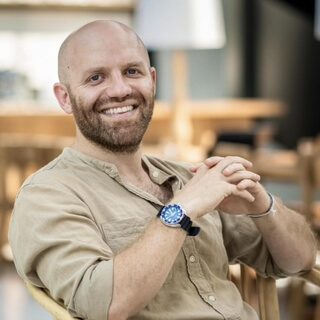
Hello and welcome to the Ruando Podcast.
This is episode negative one.
If you're listening on iTunes,
You can see that the first 15 episodes have negative numbers,
Kind of like the BC years.
Talk about the years.
This is because I took the 15 best episodes from my old podcast and reposted them here because they were great conversations that I wanted to share.
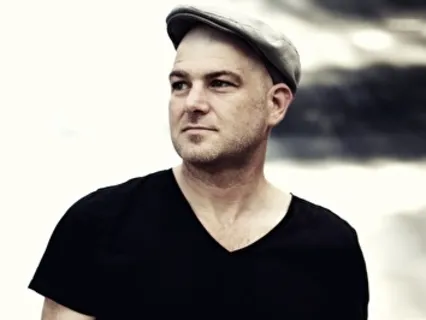
And this one is with DJ Walker Barnard.
This is actually the very first podcast conversation I ever did.
It's from a few years ago.
I probably sound different,
But I remember loving it.
And it's kind of an impromptu conversation.
I think it wasn't even meant to be a podcast.
I was going to turn it into an article,
But I was like,
Wow,
I really love having these conversations with really interesting people.
And he basically showed the spiritual side of EDM music,
Which I never considered about its roots in history and pre agricultural civilization.
It's a great conversation.
I hope you enjoy it.
This is episode negative one,
Walker Barnard.
You're listening to the Ruando Podcast,
Perpetual Orgasm,
Infinite Play.
Please subscribe on iTunes and enjoy the show.
All right.
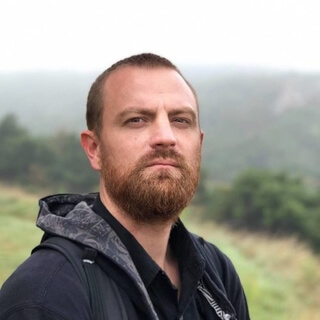
I'm here with Walker Barnard.
He's an international DJ,
A Grammy winning record producer,
And I met him very recently through the OM community and we started talking.
We had a conversation just a few days ago that was really thought provoking and I felt a lot.
And I wanted to expand on that and turn it to interview.
So thanks for being here.
Thank you for having me.
Yeah.
So the other day we were speaking about like your own practice and how it affects your work as a DJ.
Yeah.
In some ways I find so many parallels between being a DJ and working with being a vessel for what in essence is orgasmic energy,
Moving through me and the crowd and the context created by the dance floor and by the party is really a place where people can come from wherever they want to be.
Wherever they originated,
Arrive without a common language,
Without a common history and let go of the societal layers and find themselves and find each other outside of the normal bounds of patterned society.
And as a DJ,
The great successes for me have come when I've been an open vessel for that and the vibration in the room starts rising and everybody,
You're looking around and everybody has the same look in their eyes.
And there's this feeling of incredible connection to self but also connection to all of the other beings in the room and it's a frequency that I can feel in the room.
And in the oming community,
It's just honing right in on that one thing.
And in a room full of people oming,
It's a similar feeling but stripped away from the amplitude of the music,
Stripped away from the amplitude of the medicine or the drugs and it's the kind of pure centralized version of that in a way.
Yeah,
Awesome.
Because I've never heard a DJ describe music in that form,
Using that language before.
I thought it was fascinating.
But actually,
Before we go into that aspect,
I think it's important to go over your history a little bit because you grew up in an ashram.
Yeah,
Yeah.
My father is a filmmaker and went to school in Berkeley in the 60s and kind of had his Berkeley moment of exploring the medicine,
Acid,
Being an artist,
All these things,
But very quickly found meditation and met Maharishi and met my mom shortly afterwards.
And they made a choice to kind of dive deeper into that practice together.
And within a very short amount of time,
My father became the filmmaker for the TM movement.
And his kind of role with Maharishi was really to make a visual transmission of Maharishi's basic message at that moment of bringing meditation to the West in order to create a critical mass of meditators to usher in what he called the Age of Enlightenment.
And so I was born about two years into their time with Maharishi in Austria as they were moving between courses.
And I spent the first couple of years in Europe traveling around with them,
Spending a lot of time sitting with them in lectures when Maharishi would speak,
Oftentimes sitting on Maharishi's lap and just being in that whole field.
And then we moved to what the center for the TM movement at that point was in upstate New York.
That was before Iowa.
Yeah,
Before Iowa,
Exactly.
And lived there until I was nine years old.
And so the whole first part of my life was,
That was the world I saw.
It was around people meditating and doing the TM hopping thing.
And as a kid,
I imagined that superheroes became superheroes by meditating.
That's a much different childhood then.
Yeah,
So at what point did you start integrating this into your life?
Because it was your life for so long and then at some point you went so more conventional.
Yeah,
I mean when,
At a certain point my father decided that he really wanted to pursue the film thing outside of the TM context and he moved,
Well he first went to Hollywood and then we followed a year later.
And so I went from living on this ashram in upstate New York,
The worst word I had heard at that point was darn,
And moved to Los Angeles to Santa Monica.
And there was one day where shortly after we had arrived where I had met some new friends and we were all hanging out and they were like,
Hey we're going to go to Carl's Jr.
And have a hamburger.
I'm like,
A hamburger?
So we go there and I eat a hamburger for the first time.
Were you a vegetarian?
I was a vegetarian,
Yeah.
I grew up macrobiotic.
I had never had any meat before and never even been exposed to it as an option.
It was just not something my parents presented to me.
And in that one day I had a hamburger and I came back and I was like,
Mom,
I had a hamburger!
It was amazing!
And later on that day somehow I got in my first fight and saw my first Playboy magazine and it was just like,
This insane cracking of the innocence of my upbringing and just diving into human reality.
At that point were you kind of upset that you missed out on these spices or whatever?
I had no idea that that was there.
And I was just curious and open.
I was just interested.
It was like,
Ooh,
This is interesting.
And just following that feeling.
It wasn't until later that I really kind of contextualized that and felt like,
Oh,
I really was brought up this way and other kids weren't.
And the longer that I was in that school,
Public school in Santa Monica,
I started to get a sense of what these other kids were like and what my life was like and how it was different.
And for a while it was like,
I had very little of the patterning that other kids were working with.
And they all knew these TV shows,
They all had popular culture,
And my references weren't that.
And so I felt really outside and different.
And that was,
For some years,
There were two worlds and I was learning how to operate in the general societal world.
It must have been pretty difficult.
Super difficult.
But also,
My parents were both kind of artists and creative people.
And so our home life was really amazing.
And I met friends.
And I was a kid too,
So even though it was hard,
I was riding bikes.
I was just into the city life,
Which was all so exciting.
So it was hard,
But it was more on an inner emotional level where I would feel like people were far more advanced in their knowing of popular culture and all this.
And I just didn't have those references.
So I felt a little bit like,
I just felt outside.
But I was also still super engaged in just all of the new experiences.
You mentioned,
I think you used the word patterns,
You didn't have the patterns they had.
Are you also referring to the negative conditioning?
Absolutely.
So what was your take on that?
Were you more jealous of their pop culture knowledge or did you feel superior in any way?
I think both things at different times.
And then I moved to Santa Monica in second grade.
And then we moved to Pacific Palisades when I was in third grade.
And that was a little bit less wild of an environment.
The Palisades at that point was kind of upper middle class,
But it hadn't gotten super rich yet.
There were a lot of kids.
And that was when I started surfing and skateboarding and things.
And I had lots of great friends there.
And so there was an easier,
I was just more connected in that place.
Cool.
I'm curious to know at a young age,
Because you had such an immersion of,
I guess,
What most people refer to as spirituality.
What was your take on life or philosophy at that point?
Or did you really just not think of it?
Well,
Just the statement of,
Before I came to LA,
There were comic books and all this stuff.
And just this thing about superheroes become superheroes by meditating.
I still had this inside me.
I was like,
Oh,
That human beings have this ability to tap into this great potential and power.
And that's just what we do.
And so that was what I carried into this.
Part of me was really deeply connected to that.
And part of me was feeling like,
Oh,
I don't quite fit in.
And so how do I fit in?
Because it was the time when I was going from third grade,
Fourth grade,
Fifth grade,
And then all that.
And the desire to fit in was really huge.
The desire to feel just like other kids.
And that kind of set up a little bit of a,
Not a schism,
But just a disconnect in me on a certain level that didn't resolve until later years when I actually took acid for the first time.
And started to see the fabric of both of these existences that I was living and got the relevance of my own upbringing.
And also saw this whole world that I was,
Just the world of society.
And saw them for the first time as these two separate streams in my life.
And had the opportunity to see what tied them together through my experience.
Let's talk about the acid thing.
How did you get introduced to it?
Because it's probably extremely far from the way you were raised initially.
Well,
Yeah,
I mean in some ways.
But I know that my father had had moments with it and then he saw that really what he was looking for,
That that would,
He always described it to me as a kid,
That acid or drugs,
But acid in particular,
It's like a catapult,
A spiritual catapult,
And launches you.
But it doesn't,
It's not about sustaining it.
And that meditation was the sustained path to that kind of consciousness.
And so I had that picture in my head.
But the thing about the parallel between meditation and consciousness and experiences with acid is that really it's about stripping away the layers and seeing the self in the multidimensional aspect.
And so when I found that,
All of the small ideas of self I could step out of and just see the larger context that I was in and understand my positionality in that and just kind of get my path.
And I'm absolutely thankful for it.
I think it's an intense thing to do so young.
I mean,
I did when I was 15 for the first time.
And it opens up a lot of doors.
And I ended up going pretty deep into that for a while and gained a lot of benefit.
But also in the kind of language of the own community,
It's a hard stroke.
And there's a little bit of deadening that happens in that,
Which we talked a little bit about yesterday in terms of where things are right now.
Yeah.
Could we expand on that?
Because that was one of the huge like,
Holy crap,
When you were speaking about that the other day,
About I guess the lifestyle that your work is involved in,
Where a lot of people are doing drugs for that purpose,
But there's this catapult and the deadening.
Yeah.
Well,
There was a.
.
.
I'd been playing music for a long time as a bass player in bands.
And then at one point in the mid 90s,
I took my first pill of ecstasy and went to a party and had this kind of regulatory experience that anybody who's ever done that has a first time.
And just saw it as really a context and a vehicle for societal transformation in that moment.
How do you mean?
Well,
So a little what I said before,
That there aren't.
.
.
Well,
That's actually really an interesting conversation because in the sense that there weren't a lot of other ways that I had seen where people from different backgrounds without the common language could come together and have a transcendent experience.
And I had really experienced deeply people having transcendent experiences together when they had made the choice and the commitment to be meditators or to be on a path.
But what if people don't share that?
Then how is it possible?
And when I first had my first experience in a party,
It was people were stripping away their layers and coming to this childlike,
Innocent,
Essential beingness of pre-pattern,
Pre-trauma,
Pre-everything that happened in our life.
And that was all the layers were stripped back and they were interfacing from that place.
And that was the first time that I had experienced that in such a pure way outside of the meditation community.
And so saw that this is a place where people can have that experience,
Understand themselves in this stripped back,
Open and innocent way,
But also interface with a whole room full of people that are in that.
So that was incredibly profound to me.
And also the connection to the body and just the funk and just the booty and just the sex.
And that was one thing coming from the TM side of reality where that's kind of like from here,
From the heart up,
But not really incorporating the sex and the incarnation of the body and just the kind of depths of being human.
And so that to me in my first party was like,
All of these things can come together.
But then there's this aspect,
You know,
There's like with the,
You know,
In using the language of omen in terms of stroking,
It's a very powerful stroke,
The medicine or the drugs or the ecstasy.
But it's one thing for the first time and it's a really profound experience the first time and in a way each time after that it becomes,
It has less of that pure essence in a way.
And the stroke becomes harder and harder in the sense that it can be deadening and it can deaden that sensitivity or that sensitivity exists in that moment.
But then when you go back into waking state,
You kind of have your serotonin dopamine dip and then you're kind of back in your everyday reality.
And it's harder to sustain that kind of pure essential understanding of self and beingness afterwards.
It doesn't give you the tools,
It just rockets you into it.
Right.
And that's,
You know,
There in my eyes the kind of trickery and conundrum of the poison path.
Yeah,
So it's like,
I like that term poison path.
It's Jonathan Darby.
Jonathan Darby.
Okay.
Yeah,
So what you're saying is like they can reach that but it's only good for the time that the drug is in their system and then?
Not necessarily,
I mean,
But it's just that it's up to you,
Like anything about our own awakening,
It's up to the individual about,
We have to step towards it in order for it to sustain.
And so you have this peak experience but you don't have the tools and the framework to,
You're not inherently given that,
You're given views into that.
But in order to take that incredible juice and electricity and bring it into your life,
You have to do the work.
And there's not a lot of conversation about that within the,
You know,
At that point in the 90s the dance music community was,
Yeah,
It was just like,
You know,
When's the next party?
When can we do this again?
When can we feel this again?
And,
You know,
The hope,
You know,
Even in that community,
In that moment was like,
We want this all the time,
We want to live in this,
We want to live in the society that we feel in this high peak moment of the dance floor.
I want this every moment.
I want this to be what the world is like.
And,
You know,
That's far more complicated when it comes down to like,
You know,
How we sustain ourselves through the course of the days.
But,
You know,
On the other side I feel like that modality and the party has like gotten hugely popular now,
You know,
In the US and around the world.
It's kind of becoming pop culture.
And there's a lot that's lost in it,
But the basic framework is still there.
And I think that there are still people that are going to parties for the first time and before that moment they never had experienced the transcendent in that aspect.
And so it still holds that potential and it's just an entry point.
It's an entry point.
Do you feel that the pop culture aspect or maybe the commercialization of this experience is taking away from any conscious awareness brought into it?
I mean,
Yes,
Of course,
But it absolutely is.
But on the other side,
The experience is still the experience.
One of the things that I think is really happening is that in Europe,
Especially before the Romans kind of came through and conquered the Celts,
Conquered the Germanic tribes,
There was an indigenous culture in a sense that it evolved in Europe.
There was a ritualistic ceremonial culture.
There was the Druids.
And if you really look into that,
All over Europe there was not necessarily a unified culture,
But there was a framework for spirituality and community and ritual,
All of these things.
And first the Romans came through,
They conquered,
And that was the first layer of that being broken.
And then later on you have the Inquisition and you have Christianity coming through and systematically,
Valley by valley,
Killing off the knowledge holders and the witches,
Witch hunts and all this.
But essentially,
When you look back into the history of the first trials of the Inquisition,
It was in the area in between Italy,
France and Switzerland.
And the first kind of documents really talk about,
Not about witches,
They talk about just a mass general cultural phenomenon where on certain days,
On full moons,
On different,
The whole Beltane thing,
The kids would go out in the fields and they would dance and they would do ritual and celebrate and there would be sex,
There would be all these things.
But that was what they were going after.
They were like,
We can't have control if this is the cultural experience that's happening.
So they saw that,
The first documents were talking about that,
But then later they realized we can't just stop that,
We have to go and take the people that are the lynchpins of this culture and start to,
Well,
Kill them,
Put them on trial.
And so person by person at first,
They started to knock that away and then went through each valley,
Kind of killing that off to the point where I think Estonia might have been the last place in Europe that the Inquisition got to.
And so in a way,
What I saw with the dance music context and at that point when I got into it was raving.
Through ecstasy,
Through the drugs and through the psychedelic experience,
In a way we could tap back into something that is innate to humans.
And I think actually the essential difference and evolutionary step that humans took.
And before language,
There was.
.
.
Beyond?
Well,
I kind of imagine it like this,
It's like our predecessors evolutionarily lived in small groups in kind of forest or jungle-y kind of things,
And the communication,
It was fairly tight and there was foraging and all of this and there wasn't a big necessity to have complex communication.
And then as they moved out onto the savannas and move more towards hunting,
The communication had to happen,
The language had to become to coordinate all of this,
To coordinate larger groups,
Different sexual relationships instead of a dominant male and females underneath it became kind of a more potent brew that was hard to deal with.
The thing that had to happen was this layer of pre-lingual cultural cohesion and the more that I understand about it,
That came through dance,
Music and ritual in a sense.
And what the dance music experience is,
The rave thing,
Is in essence is tapping back into that circuit that all humans have,
That's how we create cultural fabric.
And from that,
Once we have the cultural fabric of limbic connection,
Then from there,
There's the possibility of language happening.
That's so fascinating,
I wasn't expecting this to go there because I write and speak a lot about the production-oriented civilization that's kind of cut off the artistic feeling-based side,
Which is what we need more as organisms.
It's really interesting how you're saying how music is,
Basically the movement you're in is bringing that back in some way,
So same with the home movement.
I think,
Yeah,
When I tune back in time,
I can feel this moment when there was this connection between people.
Terrence McKenna talked about this too,
His thing was that maybe humans evolved through the mushroom,
Through experiencing that,
And ate the mushroom,
Had this experience of self and other and the transcendent,
And could step outside of just being in nature and not having consciousness of self.
And then from that step on an individual level,
How do you do that in society?
And you do that through creating limbic connection.
And essentially music,
Dance,
And storytelling to a certain degree,
That's how you transmit that and generate within a group a deep understanding and a connection that is culture.
I'm curious to know,
What is your experience when you're in a live set or something where you're feeling this transmission to a crowd?
I'm thinking of one moment in particular where I played a live set at Panorama Bar two years ago on Christmas night,
And Panorama Bar is the upstairs part of this club,
It's Panorama Bar and Berghain,
And it's kind of one of the most amazing clubs in the world,
A kind of center in Berlin for this thing,
And it's just full on.
It's really kind of an amazing privilege to be able to play there and it's such an incredible experience because people go there just to go off,
They're there for days at a time,
You kind of go and it's like you're paying your rent for a couple days,
And you're there.
And so I got to play there and I remember the feeling of bringing my music there and getting up in front of all these people,
Everybody's dancing into it,
And nervous of course,
And then start feeling all this,
And then get into it and just start to feel my music come into the room and people are feeling it.
And really like very quickly moving into this place where it's like I just feel kind of energy moving through me and I feel this energy coming back and it becomes more,
I mean really very much like what I feel like in a home,
Just like sensation moving and to the degree that I can open up and just be that,
Be a vessel for what my,
In a sense,
Orgasm is.
That resonates and other people,
It starts to get them resonating and then the whole room is like zinging like a crystal chandelier when a certain note hits,
It starts vibrating and everybody in the room is kind of like there's this trembling and these waves,
Like literally orgasmic waves,
When peaks in the music happen,
Everybody's like ahhh.
And it's an incredible feeling to both be a vessel but be ego at the same time because the music came through my particular vessel,
It came through my choices,
My desire,
My self,
But in its essence,
The DJing thing and music and you know,
Well let's talk about the dance floor thing.
The DJing thing on the dance floor,
It's really,
It's the people that do that the best are the ones that really can be this vessel and bring that energy into the room and just sustain it and ride it and just follow the stroke.
Yeah,
This might be a bit of an abstraction but you mentioned a few times being a vessel and like being your orgasm or whatnot,
Like do you feel like this thing,
This sensation orgasm,
Whatever you want to call it,
Is something that's more like the Dao and like that comes through you or is it something that you like have in you or both?
I've seen two models like in creativity which I've been really interested in recently.
One is like all you're doing is opening up so that God can flow through you and the other thing being like something you cultivate to like,
You know,
More like cheat.
I think it's both.
I mean,
I think we can open up to it and we can have it move through us but in the end,
We are in bodies and we have singular consciousness and so it's about the cultivation of our ability to be conscious,
In a conscious dance with that.
Yeah,
Absolutely.
Life force,
Orgasm,
God,
Universe,
Whatever.
There is that and we can tap into it and be vessels but we're also these individuals and you can live or one can live and block that out and not be connected to it and not maybe be exposed to that or be exposed to it and not choose it and live in disconnection.
And in one way,
I think this,
When I think about cancer,
It's like when a cell no longer retains the ability to understand itself within the context that it's in and regenerates outside of the context without sense of its context and so it just keeps multiplying.
And then that creates tumors,
All these things but it's like the disconnection from its place within the fabric in a sense.
So,
I guess maybe I'm stretching it but you feel like disconnection or isolation is kind of like being cancerous in a sense.
In a sense but there's this extra thing of cancer that it keeps growing and multiplying in our bodies but it's disconnection ultimately.
That's really interesting.
So,
I'd like to speak a little bit about where you're at right now because now that especially now that more of a context of what your experiences have been because that's how we started speaking that other day.
I mean right now you're very successful as a DJ internationally.
I mean you have a place in Bali.
Actually,
Do you want to speak about the Bali thing?
Yeah.
Through a very good friend of mine,
Three years ago now,
I went to Bali to go work on an album project and I really didn't know a lot about it but growing up as a surfer in California,
Bali was always this legendary place for surfing.
I've been in my mind with that and then also my father and my mother listened to all kinds of ethnic music and kind of grew up hearing monkey chants and just having this sense of gamelan music and all of this.
It played a little part in my interior mythology and then finally went there and very quickly just got super connected.
The first night I was there,
I met a guy who had just kind of taken this position to run this club and book this club.
So what we're talking is like,
Oh,
You're a DJ?
You just came from Berlin?
I'm like,
Yeah.
He's like,
Well,
I just started this club.
Do you want a residency at my club?
I was like,
Okay,
Cool.
So very quickly got just tapped in and he and I tuned into this thing and I was playing there a lot and kind of just in Bali,
There's a lot of this kind of beach club,
Super cheesy,
Rich,
Not very conscious kind of thing that's going on.
But then there's a lot of people that are really deep on their path in different ways and have left wherever they're at in the world and just landed there because it's really fertile ground for them to do their work.
And so there was like this untapped thing musically where it wasn't about the superficial.
It wasn't about the horizontal as we talked about in the other thing.
And so my friend John Mark and I kind of just tapped into that and there was a context for that.
And so I was there for four months,
Had an incredible time,
Really made deep friendships and connections to the place and just felt really alive in that place.
Went back to Berlin and did life for a couple of years.
And just this last year,
Catherine,
My wife and my son Karen and I all went back and kind of tapped back into that and through again through this one friend John Mark ended up at this villa and this incredible place that both Catherine and I felt an immediate connection to.
And long story short,
We kind of went down the road of finding out who the owners were and really investigating what it would take for us to,
You know,
To,
This year what we found out to lease the place.
So now we did that and we're about to go back there and live there for the next six months and also have it open it up as a context for people to come,
Different DJs that are touring through Asia to drop in.
There'll be a recording studio there,
But also a place where this very conversation we're having can exist with people in a room where it's the dance music thing.
It's the people coming from the psychedelic side,
People coming from the music side,
People coming from the oming side,
People coming from yoga and arriving in this space and just holding the space for this conversation to happen.
So in a couple weeks we're about to go there and dive into that.
That's really awesome.
I mean,
I guess there's so many things that could happen from there,
But do you have like any plans for what it is?
You're just going to bring all these people together?
Well,
Coming from,
You know,
Growing up in an ashram and,
You know,
Throughout the early 90s being parts of intentional communities,
Being in intentional communities,
There's an aspect of the formality of that that I'm not quite as interested in.
And I like the looseness and the openness that is possible in this where it's just like,
Let's hold the space open and not say it has to be one way or the other,
But just kind of put out this little beacon of conversation,
Of a little energy that either people feel and they feel akin to or not.
And already,
You know,
We've been talking about it and certain people are like,
Whoa,
I'm interested in that.
And it's really been wild to see,
You know,
Who's triggered by that?
Who actually makes the commitment to say,
Okay,
I bought my ticket,
I'm coming so and so.
And it's not that I don't have specific ideas.
It's more that I'm interested in this new territory between all of this where it's,
You know,
We're all different.
Some people,
You know,
Really want to dive really deep into something,
Let go of the rest of their life that they've been in and just follow the path of community or of a certain modality.
And what I'm interested in is,
In a sense,
It's the evolution of what I felt when I went to my first party,
Where people could come from all these different things.
Maybe they have different ideas,
But there's a form.
It's like the party outside the party.
What I was saying before,
It's like,
In that moment,
I wanted life to be this way.
I wanted it to be every day,
That peak experience.
And so it's holding a space open for that to happen.
And then from there,
One of the things that I'm very interested in at Bali is the development there over the years,
You know,
Certain areas are incredibly touristy and just almost horrifyingly so.
But on the other side,
The cultural fabric of the Balinese is very intact.
In every village,
There's a gamelan ensemble and a temple and then people practice.
And there's a time of year,
Nipi,
Where the power shuts down on the island.
They shut down the power for the weekend and they're just a ceremony.
And it's like,
No cell phones,
No,
No,
No.
It's just like you're there and people are like.
.
.
And that's the time of the year where they,
Through ceremony,
Chase the demons out and it's just a regeneration.
That's cool.
It sounds like a return to what you're talking about,
The pre-Roman Europe.
Well,
This is human.
This is the essence of who we are.
And we've gone so far on a level of building up culture,
But really,
It's this pre-lingual circuit of connection.
There's a great book called The Singing Neanderthal that really goes into this thing and talks about the pre-lingual circuit,
About how language arose,
Like what happened before language,
What kind of connection was necessary,
And how that was generated in order for language to even happen.
And so,
In a way,
I think why something like oming or the rave thing or ecstasy or any of these things or the psychedelic experience,
Why it resonates with us so deeply is it taps into the part of us that we all came through evolutionarily.
It's the first step of being human,
That basic fabric of cultural,
Of limbic connection.
Yeah,
That's awesome.
Cool.
I know one thing,
I guess maybe this is the last thing we'll go over that we spoke about the other day.
I guess these breakthroughs you've been having,
Putting your life in context,
Going from ashram to this very different world.
Do you want to share anything about that?
Right in this moment that I'm in now,
I've walked so many different paths in my life and was born into a family of meditation teachers.
And there were moments in my life where,
Kind of recently,
Where it's like I've been deep in the trenches of the Berlin thing,
Which is like ecstatic on this whole other level and like,
You know,
Beastie and just like,
You know,
In this.
And essentially,
What my journey has been is to be like the funk,
The sex,
The booty,
But also the high.
And so a lot of what's been happening for me lately is just,
In a way,
All of the moments of doubt where I made different choices in my life and went down different roads.
And like sometimes it was like,
Whoa,
I've really deadened myself doing this or I've really thought I went in the wrong direction or this and that.
Now I'm just realizing from this perspective today,
After the weekend,
You know,
This third mastery thing and all these experiences that every choice that I made gave me the understanding to connect those two things through my specific and personal desire and presence to what I feel and what I want.
And I think for the longest time,
It was one or the other and I'd kind of like be swinging from this more spiritual thing into this thing of being in music and playing in bands and just like this,
All of this sexual energy moving around.
And culturally,
They're kind of pushed aside and mediated and brought into forms.
And religion is a form where it's like you can experience ecstasy,
But you can't have the sex.
So now through the experiences of the weekend and with the Omru thing in particular,
I feel the point in between all of that and now as I look back at all of the moments that I've lived,
I just have understanding for all of these terms that I took in moments where I thought,
Oh,
This is a mistake.
I've lost something out of this.
I've lost sensitivity.
I've lost my connection to this meditation state.
And really,
It's all one conversation about the awakening of myself and my desire,
But also humans,
All of us.
There's a wave going on right now.
One of the things that's really far from me is that I was born into this,
Around it.
And I remember in the 70s as a kid,
Going to health food stores and there were these little cramped things with lots of bins of really smelly beans and weird things.
If you wanted sweets,
You get this gross carob thing.
And then through the 80s,
It started to get bigger.
And then the new age thing started to really kick and it started to not be such a small conversation.
And then now there's TV shows that talk about this.
There's movies.
It's pop culture.
And on one level,
It's like,
Oh,
The commercialization of that,
The cheapening of that.
But on another level,
It's just like,
This is what we are.
This is what we want.
And now it's when things move to a mass level,
You gain amplitude because there's many people involved.
But on the outside,
You lose specificity because in order to really go deep into that experience,
It requires intimacy.
It requires depth.
It requires detail.
And in order to transmit something on a mass cultural level,
It has to be streamlined,
Simplified and easily digestible.
And so that's,
You know,
In a way,
What's lost is it becomes mass culture.
And as people really make the choice to wake up.
But the thing is,
Is that it's happening.
And each individual that's part of this wave of this consciousness sweeping across the planet is going to have their own experience.
And even if they come into it at the electric zoo event or whatever,
And they have their first ecstasy experience,
They're going to keep pulling that thread or maybe they're going to keep pulling that thread and keep looking.
Maybe their taste in music gets deeper.
Maybe their journey on a personal level gets deeper.
Maybe they find yoga and through that develop a practice or whatever it is for them.
And so I can,
Although there's a part of me that felt like,
You know,
Both on the level of spiritual community and all of this and the dance music thing,
I was part of this small in-group of people that were doing it and it was like,
Not everybody.
And this feeling of like,
Oh,
That's not quite as interesting now that everybody's into it.
On the other side,
It's like,
It goes back to what Maharishi was saying about a critical mass of meditators generating a wave of collective awakening.
Thank you.
I was going to ask for some final advice or something like that,
But I think you covered that.
Thank you very much.
It's been super fascinating.
I hope it's been useful for everyone.
For you guys,
If you want to learn more about Walker Erskine's work,
You can find him on Facebook,
Walker Barnard,
And I'll attach some links to this interview.
Thanks.
Thank you.
Thanks for listening.
Don't forget to subscribe on iTunes or Stitcher.
If you want to be a part of the virtual audience for future episodes,
Make sure to follow me at crowdcast.
Io slash Rwanda.
See you next time.
I'm in.
You want a piece of me?
Take the whole thing.