Welcome to the Mindfulness Meditation Podcast presented by the Rubin Museum of Art.
We are a museum in Chelsea,
New York City that connects visitors to the art and ideas of the Himalayas and serves as a space for reflection and personal transformation.
I'm your host,
Tashi Chodron.
Every Thursday,
We present a meditation session inspired by a different artwork from the Rubin Museum's collection and led by a prominent meditation teacher from the New York area.
This podcast is a recording of our weekly in-person practice.
In the description for each episode,
You will find information about the theme for that week's session,
Including an image of the related artwork.
Our Mindfulness Meditation Podcast is presented in partnership with Sharon Salzberg and teachers from the New York Insight Meditation Center,
The Interdependence Project and Parabola magazine and supported by the Frederick P.
Lenz Foundation for American Buddhism.
And now,
Please enjoy your practice.
Wow,
So brave.
We all filled the theater.
It's beautiful.
Welcome.
Welcome to our weekly Mindfulness Meditation at the Rubin Museum.
I'm Tashi Chodron,
Himalayan Programs and Communities Ambassador,
And I'm delighted to be your host.
So we are a global hub for Himalayan art with home base in New York City,
And we are so glad to have all of you join us for this weekly program where we combine art and meditation.
Inspired by a collection,
We will first take a look at work of art.
We will hear a brief talk from our teacher,
Tracy Cochran,
And then we will have a short sit,
15 to 20 minutes for the meditation guided by her.
And let's take a look at today's theme and artwork.
So the theme for this month is rebirth,
Reincarnation,
Or awakening.
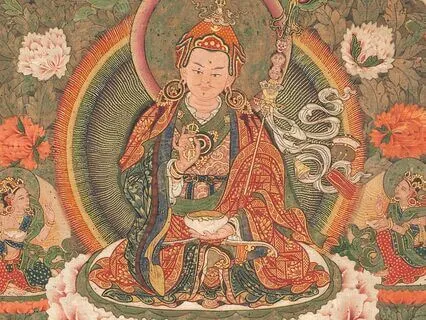
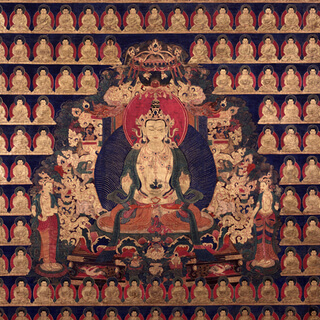
And the artwork for today's session is this beautiful thangka that is handpicked by our teacher from a selection of different arts.
And this thangka is Padma Sambhava and his eight manifestations and the scenes from his life.
Padma Sambhava is a Sanskrit word,
Padma means lotus,
Sambhava means born in lotus.
And in Tibetan,
He's often known as Guru Rinpoche,
Which means precious teacher.
And you see here Padma Sambhava and then the eight manifestation.
The connection to the theme for the month of July,
The rebirth,
Is we invite all of you to reflect on how we can integrate change,
Transformation,
Renewal in our lives and blossom into a new form,
Just like the lotus flower from the muck,
Right?
And so this beautiful,
Remarkable thangka,
Which is a mineral pigment on cloth,
It's a Tibetan scroll painting,
Depicts Padma Sambhava.
And Padma Sambhava is one of the most revered figures within Tibetan Buddhism.
He's honored for bringing Buddhism to Tibet in the eighth century of the common era from India to Tibet.
And he's also known to subdue the negative forces and help build the first monastery known as Samye Monastery in Tibet near the capital city of Lhasa.
According to Kama tradition,
Padma Sambhava was born in northern India as the son of a king or minister.
In the Therma tradition,
He's a lotus-born emanation of the Buddha Amitabha.
Padma Sambhava's eight forms represents the outer,
Inner,
And secret aspects of tantric teachings.
This painting is in the treasure tradition,
Which is Therma tradition of the Nyingma School of Tibetan Buddhism.
It includes Padma Sambhava's eight forms and eight narratives,
That is,
Scenes from his previous life.
And Padma Sambhava manifesting in eight different forms,
In peaceful and fierce wrathful forms,
And the fierce wrathful form is the one that flew to Bhutan and went into the cave called Tiger's Nest,
Which is a very popular pilgrimage site and tourist site.
And he helped subdue evil forces and flourished Buddhism and helped tame all the negative forces and bring forth good fortune and blessing.
So now let's bring on our teacher for today.
Our teacher is Tracy Cochran.
Tracy has been a student and teacher of meditation and spiritual practice for decades,
And she's the founder of the Hudson River Saga,
Which is now virtual and is open to all.
The link of her weekly meditations can be found on her website,
Tracycochran.
Org.
In addition,
Tracy has taught mindfulness meditation and mindful writing at the Rubin Museum of Art and the New York Insight Meditation Center,
As well as in schools,
Corporations,
And other venues worldwide.
Tracy is also a writer and editorial director of Parabola,
An acclaimed quarterly magazine that seeks to bring timeless spiritual wisdom to the burning questions of the day.
Her writings,
Podcasts,
And other details can be found on her website and on parabola.
Org.
Tracy,
Thank you so much for being here,
And please help me in welcoming Tracy.
I'm so happy to be here with you in this cool,
Beautiful place.
It's a true refuge.
We can feel that on a day like this when it's so hot,
And also it's going to be changing form.
I'm particularly aware of these tapes,
Not just because of this place,
But everywhere I look,
Everything I touch,
Change,
Change.
And of course,
This was the heart of the Buddha's teaching,
And the teaching of how to beat with change.
And why I picked Padmasambhava is because I think it has,
It's a living tradition inside us too.
All of these great stories and myths are things that we can experience inside right now.
And he was summoned to Tibet,
As Tashi said,
From India,
Because he was a great teacher and courageous.
And they were attempting to build a monastery.
You can relate to this.
You're attempting to sit down and have a peaceful sitting.
And this place,
This place that was created,
Was beset with demons.
Can you relate to that?
You sit down and they're outside the front,
Scouting,
People are making demands,
Or inside,
Inside especially.
You sit down intending to have peace,
Spaciousness,
Ease,
And up comes pain,
Sorrow,
Confusion,
Memories of all kinds tugging at you.
So this great teacher did something extraordinary.
He took these demons and danced with them in one of the myths.
He welcomed them into the dharma,
Into what it is,
Into reality.
He didn't try to chase them away.
He didn't try to deny their presence were happening.
He said,
Come and sit.
Let's have tea.
Let's be together.
And the effect of that,
I found,
Trying to mirror this extraordinary person,
I find that when I bring kind acceptance to what's happening.
And it always starts with me,
My reactions to what's happening.
Things are not going the way I would like them to go.
Have you ever experienced that?
You keep getting what you don't want and not getting what you really want.
And it hurts your feelings.
It really hurts your feelings.
And it can make you really mad and obsess about how to fix it and control it or keep yourself safe from further hurt.
So something new we can do.
Let that particular demon be their hurt and our angry defense against hurt.
And notice how it feels when we bring kind attention to that and say,
Thank you.
Thank you for protecting me.
Thank you for contracting and armoring me.
We see the good.
And we notice sometimes that brings ease.
They take their seat.
They take their place.
And Padmasambhava was famous,
I'm not going to go in on about it,
But for bringing this extraordinary teaching had to do with presence,
Bringing full presence,
Body,
Heart,
And mind to reality,
Embracing aspects of ourselves that are wrathful or sad or painful.
Just that.
And I wrote a book called Presence.
And I called it that because the heart of every great tradition of awakening involves this movement we're about to do of recollection or remembering.
The ancient word sati for mindfulness means to remember literally head,
Heart,
Body.
Let them be here together.
Collect them.
Let them be collected.
Be present.
And we notice that what we do is we stop being this isolated little fortress in a dark world.
Something opens like a lotus.
Opens.
And something inside appears that's wise,
Compassionate,
Capable of being with what's happening,
With kindness,
With responsiveness.
So I love that his name means lotus born because it reminds me that we are too.
We can be.
And lotuses grow up at the muck.
There's a lake where I live and there are lilies and they're gorgeous and they always grow right where all the mucky mud is.
We can take our experience no matter how painful or murky,
Mucky,
And meet it with this kind attention and acceptance.
Don't go into it with thinking.
Just accept and notice in that moment something can be reborn.
Something inside opens,
Feels fresh,
Fresh and part of what's happening now.
So let's sit together,
Speak for ourselves.
So take a comfortable seat.
I see you doing that.
And always know that's the most important instruction.
Make yourself welcome,
Welcome here.
And let the eyes close if you can.
Or gaze down.
A closed eye is lovely,
Lovely chance to turn the attention to what's happening inside.
And notice there is a knowing that's here.
You don't have to strap in for it.
It's here.
Attention in the body,
Head in the heart.
And notice,
Notice that this attention softens.
Just rest.
Attention in stillness.
See that when thinking happens,
When you notice thinking,
Or picturing,
Or feelings,
Including difficult feelings,
Notice that this kind attention can touch these things.
With kind acceptance.
And gently bring you home to this body and this present moment.
Notice how it feels to be kind to your experience.
Not think about it,
But bring an attitude,
An attention that's kind,
Patient,
Accepting.
When you feel lost in thought or confused,
Sink into a sensation,
Body.
And notice how this blossoms,
Opens into presence.
And notice how it feels to be welcome,
Completely welcome.
And notice you can begin again.
Just come home to body,
To sensation,
To presence.
And rest.
Notice the life inside and outside.
Notice that you belong to life.
Just come home to body,
To presence.
And notice how it softens and opens you to be completely accepted,
Kindness,
With infinite patience,
Fastness,
Love.
Just begin again any moment.
Come back to presence and find welcome.
Thank you so much for that,
Tracy.
Thank you,
Thank you so much.
That concludes this week's practice.
To support the Rubin and this meditation series,
We invite you to become a member at rubinmuseum.
Org membership.
And to stay up to date with the Rubin Museum's virtual and in-person offerings,
Sign up for a monthly newsletter at rubinmuseum.
Org slash e-news.
I am Tashi Chodron.
Thank you so much for listening.
Have a mindful day.