Welcome to the Mindfulness Meditation Podcast presented by the Rubin Museum of Art.
We are a museum in Chelsea,
New York City that connects visitors to the art and ideas of the Himalayas and serves as a space for reflection and personal transformation.
I'm your host,
Tashi Chodron.
Every Thursday we present a meditation session inspired by a different artwork from the Rubin Museum's collection and led by a prominent meditation teacher from the New York area.
This podcast is a recording of our weekly in-person practice.
In the description for each episode,
You will find information about the theme for that week's session,
Including an image of the related artwork.
Our Mindfulness Meditation Podcast is presented in partnership with Sharon Salzberg and teachers from the New York Insight Meditation Center,
The Interdependence Project and Parabola magazine and supported by the Frederick P.
Lenz Foundation for American Buddhism.
And now,
Please enjoy your practice.
Good afternoon,
Everybody.
Tashi Delek.
And welcome.
Welcome to the return of in-person mindfulness meditation with the Rubin Museum of Art.
I am Tashi Chodron,
Himalayan Programs and Communities Ambassador.
I'm so happy to be your host today.
Happy June.
In June,
We celebrate Pride.
It's a cult Pride month.
And then we also celebrate Juneteenth.
And in the Himalayas and all over New York and New Jersey,
The Tibetan Himalayan community,
We've been celebrating Sakadawa,
Which is one of the most holy or auspicious month of the year.
And this month,
Buddha is believed to have been born as well as reached enlightenment and Mahaparinirvana.
He passed away on the 15th day of the month.
And so we try to do good things,
Accumulate good merit,
Because one action is multiplied many millions of times.
And so therefore,
If we have good merit,
Then we are happier.
And if you're happier,
That butterfly effect,
Everybody can be happy around you.
So we are a museum of Himalayan art and ideas in New York City.
And we're so glad to have all of you join us for this weekly program where we combine art and meditation.
Inspired from our collection,
We will first take a look at work of art from our collection.
We will then hear a brief talk from our teacher.
And our spirituality week teacher is Peter Corbett.
We're so happy to have Peter Corbett here.
And then we will take a short sit,
15 to 20 minutes for the meditation guided by him.
Now let's take a look at today's theme and artwork.
The theme this month,
We've been exploring on the theme of impermanence.
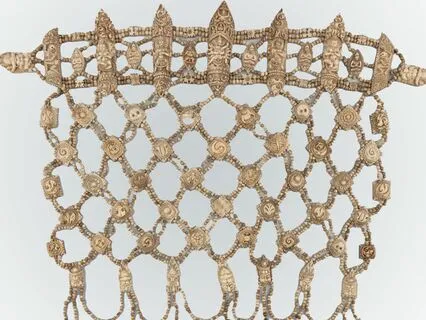
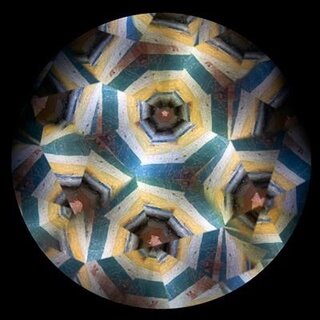
The art connection for today is this beautiful bone ornament,
Origin from Tibet or Nepal.
And it's later 18th to 19th century,
About 24 and a half into 31 and a half into one fourth inch,
Beautiful bone ornament.
Bone ornaments are symbolic ornamentation worn by certain Yidam deities.
Yidam means meditational deities,
Depending on the particular sadhana,
The text.
There are generally said to be either five or six types of bone ornaments.
Objects made from bone are also intended to act as reminders of our mortality.
For most among them are objects made from human bone and most of all the human skull.
Bone ornaments are selected with very specific criteria for various ritual uses.
Some belong to great realized masters.
Others have gained ritual potency based upon the character of the deceased and the circumstances of their death.
Some malas or the prayer beads and ritual instruments such as hand drums and trumpets are made from human bone as well.
Other bone ornaments like the ritual apron displayed here are made of most,
They say it's animal bone.
Similar aprons are worn by great tantric masters during specific stages of ritual ceremonies to symbolize non-dual wisdom while conferring initiation.
And now let's bring on a teacher for today.
Our teacher is Peter Corbett.
Peter has been a meditation practitioner for over 24 years.
He was encountering the practice through the Dalai Lama's Emory-Tibet Partnership at Emory University where he was a student.
Over many years of study and practice,
Peter was drawn more to Zen Buddhism and joined the Mountains and Rivers Order of Zen Mountain Monastery where he is a practicing member.
Over the courses of his Zen training,
Peter has served as a spiritual care provider through the New York Zen Center of Contemplative Care where he studied under Koshin Pali Ellison Sensai and Chodo Robert Campbell Sensai.
He is a frequent Zazen instructor and has taught this core Zen practice to hundreds of beginners nationwide.
Peter,
Thank you so much for being here.
Please help me in welcoming Peter.
Before I give some instruction in Zazen,
That's the physical form of meditation we'll do today,
I'll just say a few words about impermanence and tie it to this beautiful piece that you saw,
The bone apron.
Often especially when you see bone,
We think of death and somehow that grips us and that's somehow a negative thing.
If we practice impermanence,
We see in fact that it's crucial.
If there wasn't impermanence,
Let's see,
If there wasn't impermanence of a flower in spring,
There wouldn't be fruit right after,
There would always be flowers.
Now mind you,
That'd be great,
But what would the animals eat?
What would we eat?
So the flowers have to be impermanent.
The fruit has to be.
If the fruit wasn't impermanent,
Then it wouldn't turn into seeds to propagate that same plant.
So this use of bone in Buddhism,
If you see it now,
Wherever you see it,
Hopefully there's not a trigger of a concern or a fear for your life.
In fact,
You can turn it ever so slightly,
It can help you appreciate all of life and all of your experience.
And what we'll practice a little bit in Zazen relates to that,
Which is that there is a continuum of all of this.
There's no beginning,
There's no end.
Show me it.
I would ask you,
Show me where it began,
Show me where it ended,
Because it's all a continuity.
The bone apron was a buffalo in Kathmandu,
Probably in 700 or 800 AD.
And today the buffalo is still here teaching us about impermanence.
So where did the buffalo begin?
Where did it end?
So with that,
How many of you have sat Zazen ever?
Anyone?
Three,
Four,
Five,
Six,
Seven.
Okay,
I'll take it.
Many of you probably sat TM,
Transcendental Meditation,
Maybe Vipassana,
Maybe just a generic mindfulness where you sit quietly.
It's all wonderful.
It all generally comes from what I'm going to show you.
This is what the Buddha sat,
When you see the images of the Buddha sitting in a certain way.
So just the form is important.
Just have a look at how I'm seated.
I have my left foot on top of my calf here.
I've formed a little bit of a triangle.
I'm able to sit upright comfortably without too much effort.
I feel stable that way.
So try to find a nice stable posture if you can.
And if you can't,
The chairs,
Of course,
That many of you are sitting in,
Have both feet on the floor and try to find this mudra.
This is the Zazen mudra,
Where you put your left hand on top of your right.
And then you touch your thumbs ever so gently.
You're forming a little bit of a circle here and holding it roughly where your navel is.
Just below your navel is called your Hara in Zen.
It's your spiritual center.
That's the center of your whole being.
Our center is not behind our eyes,
In our head.
So if you form this mudra,
You can think of it as collecting everything right here,
Right now,
Your whole being,
All of your presence,
Right here,
Right now.
Not leaking out all across the city or into your phone or somewhere else.
So let's bring ourselves right here,
Right now,
As I continue with a little more instruction.
And then we'll sit.
So now going from the top of our head down,
We can feel our head resting nicely on top of our shoulders.
There's no strain in our shoulder muscles,
Not so tight.
Now my eyes start to close.
And they're about a third of the way open.
They're not fully closed.
The practice of Zazen is not an escaping into some other place.
So having a little bit of vision there keeps us here,
Right here,
Right now,
And in the room with this community of people that have chosen to spend this time with us today.
Your mouth closes,
Your tongue touches the top of the roof of your mouth behind your teeth.
Just kind of stow it there for the rest of your time.
Your chin is about level with the floor.
You're not slumped over.
You'll notice because you'll start to kind of fall in on yourself.
Chin nice and level.
And now all together,
Let's reconnect with our breath.
So have a nice deep breath in.
And out.
And do another one to get us settled in.
Nice deep breath in.
And out.
Now breathing at your own pace.
I'm going to stop talking soon because that's all there is to it.
When you're breathing,
It's just through your nose.
Your mouth is closed.
And you're endeavoring to be as still as possible.
Not of twitch of the eye,
Not a scratch in any way,
Shape,
Or form.
And what we'll do is we'll sit in as still a posture as we can for about 15 minutes or so.
And the period will begin when I strike this bell three times.
And the period will end when I strike the bell once.
And since so many of you are new at this,
The beginning instruction for Zazen is just to count your breaths.
So counting a breath in,
That's one.
Counting a breath out is two.
Nice and slow.
And if you get to 10,
Just start again.
And if you get interrupted with a thought,
Just start at one again.
Okay.
So you can stretch out your legs a little bit.
If they got a little stiff.
Thank you.
Thank you so much for that beautiful session.
That concludes this week's practice.
To support the Rubin and this meditation series,
We invite you to become a member at rubinmuseum.
Org slash membership.
And to stay up to date with the Rubin Museum's virtual and in-person offerings,
Sign up for a monthly newsletter at rubinmuseum.
Org slash e-news.
I am Tashi Chodron.
Thank you so much for listening.
Have a mindful day.