Welcome to the Mindfulness Meditation Podcast presented by the Rubin Museum of Art.
We are a museum in Chelsea,
New York City that connects visitors to the art and ideas of the Himalayas and serves as a space for reflection and personal transformation.
I'm your host,
Tashi Chodron.
Every Thursday,
We present a meditation session inspired by a different artwork from the Rubin Museum's collection and led by a prominent meditation teacher from the New York area.
This podcast is a recording of our weekly in-person practice.
In the description for each episode,
You will find information about the theme for that week's session,
Including an image of the related artwork.
Our Mindfulness Meditation Podcast is presented in partnership with Sharon Salzberg and teachers from the New York Insight Meditation Center,
The Interdependence Project and Parabola magazine and supported by the Frederick P.
Lenz Foundation for American Buddhism.
And now,
Please enjoy your practice.
Good afternoon,
Everyone,
Tashi Delek,
And welcome.
Welcome to Mindfulness Meditation at the Rubin Museum of Art.
I am Tashi Chodron,
Himalayan Programs and Communities Ambassador,
And I'm so happy to be your host today.
We are a global hub for Himalayan art with a home base in New York City,
And we're so glad to have all of you join us for our weekly program where we combine art and meditation.
Guided by our collection,
We will first take a look at work of art.
We will then hear a brief talk from our teacher,
Kimberly Brown,
And then we will have a short sit,
15 to 20 minutes,
For the meditation guided by her.
Now,
Let's take a look at today's theme and artwork.
The theme this month is ritual,
The ritual of coming here once a week,
And there are so many rituals.
This month,
Especially,
It's the ritual where gift-giving,
Celebrating holidays,
Christmas,
All of that,
And we just celebrated Diwali and Hanukkah.
All of these are ritual in one way,
Right?
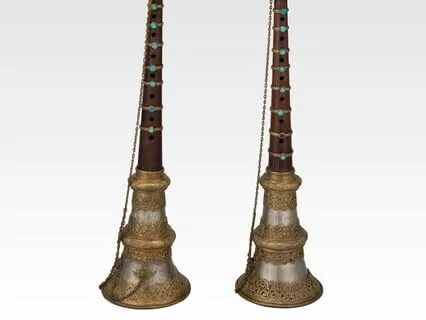
And the art connection for today's session is this beautiful jaling.
It's hand-picked by our teacher,
And this is obo,
Known as jaling in Tibetan word,
Origin Central Tibet,
20th century.
It's wood,
Silver,
And beautiful inlay of turquoise,
About 25 1⁄2 into 5 1⁄2 into 5 1⁄2 inches,
And this is a ritual object.
The jaling is similar to obo.
Both instruments have a double reed.
These exquisite jalings are adorned with silver and turquoise.
Jalings are played on ceremonial occasions.
It is also used during rituals to invoke the deity,
And during when the teacher is entering the temple or the monastery,
Or during procession,
And they're welcoming the teachers and invoking the deities and the local spirits.
This is often used for peaceful deity practice as well.
Here we see two examples of a jaling,
Because jalings are generally played by two in pair,
And they are also played by monks and nuns or laypeople sometimes.
This enables the sound to continuously flow.
Jalings have an important function within sacred Tibetan music,
Especially during the ritual performance.
The other instruments that typically constitute the ritual orchestra are the tung chen,
The really long instrument,
And gong ling,
Which is often used during the wrathful deity practice,
Often known as thigh bone,
Tung kar,
The conch shells,
Daru and tebu,
The damarus and the bell,
And silnyin,
Symbols.
The instrumental music is interspersed with chanting.
So now let's bring on a teacher for today.
Our teacher is Kimberly Brown.
Kimberly Brown is a meditation teacher and author.
She leads classes and retreats that emphasize the power of compassion and kindness meditation to reconnect us to ourselves and others.
Her teachings provide an approachable pathway to personal and collective well-being through effective and modern techniques based on traditional practices.
She studies in both the Tibetan and Insight School of Buddhism and is a certified mindfulness instructor.
Kimberly,
Thank you so much for being here.
And please help me in welcoming Kimberly Brown.
Well,
Hello,
Everyone.
Happy solstice.
I was thinking a lot about,
You know,
What does ritual mean?
And when the Rubin,
What they do for us meditation teachers is they send us a couple works of art from the collection and ask us,
Which would we prefer?
I preferred the obo,
The jialing,
Because I have experienced it.
And just like Tashi Chodron said,
Out in Queens,
There are a number of Tibetan centers.
There are some in Manhattan,
But there's a big Tibetan population in the neighborhood I live in,
In Jackson Heights.
And one particular center called Dharma House,
When teachers come from abroad,
You know,
Kind of well-known teachers or teachers that aren't often available to give teachings in New York City,
When they come,
Everyone assembles outside,
Outside of the center on the sidewalk,
And they roll out a red carpet,
And they play these special instruments to herald the arrival of the teacher.
It is incredibly joyful.
And this ritual in this tradition,
All rituals in this tradition,
Are not simply to entertain or to show devotion or to serve as anything except another way to wake up.
Waking up in this tradition,
It means seeing clearly.
It means recognizing that everything is impermanent.
Everything's always changing every moment.
It means that we all struggle and we have suffering,
You know,
Some very deep suffering and some just that moment to moment,
Oh,
This is boring,
Right?
It also means recognizing our interdependence,
That all of us affect each other,
And that our words and our actions are really meaningful.
So in this way,
We all can use rituals in this way.
And Tashi Trojan was mentioning,
Well,
You know,
December in this,
In the United States at least,
There are lots and lots of what we call rituals,
Whatever your religious background.
It's very likely you're participating in giving gifts or throwing parties or putting up a tree or a menorah.
Whatever it is,
It may be at this point,
It's no longer really a ritual,
But rather a routine.
Rather something that,
You know,
We do maybe because it's pleasant,
You know,
Or fun.
But we can make our routines more like a ritual,
More meaningful,
More significant.
Something we can use to remind us of our precious life,
Of how valuable our words and our actions are,
And how we share in the world with everyone else.
So these rituals,
First of all,
They help us pay attention.
That sound really grabs your attention,
Right?
But you can do that,
You know,
Even with your morning coffee,
Right?
That's a routine many of us have,
A coffee or a tea.
You might make it,
You might go and buy it,
But it's very likely you have some sort of routine in that way.
And you can alter that and change it to a ritual by being,
First of all,
Paying attention to it,
Putting down your phone,
Really being with either the action of making it or the action of receiving it.
You can do this with a sense of gratitude,
Right?
Gratitude,
Because that's one of the deepest ways we can pay attention,
To know what we have.
We have coffee.
Coffee,
Oh my God,
It doesn't grow,
I don't think it grows anywhere in the United States.
It has to be grown very near the equator.
So this is a very,
Very special,
Even though mundane,
Item that almost all of us use,
Right?
So that's one thing,
You bring attention to it,
Right?
You can also,
You can use it to connect to others,
Right?
I'm using coffee as an example.
It could be tea.
It could be that every day you take the subway or you drive your car to work,
Right?
These are routines.
But in these routines,
You can use your attention.
You can use your sense of understanding what you're grateful for,
What you have in that moment,
And how it connects you to others,
Okay?
So that an example of coffee,
All of the coffee growers,
The roasters,
How it got to you,
Took a lot of hands,
Right?
The subway,
I mean,
Lots of people keep that subway going.
And of course your car,
Somebody made that car,
Somebody's,
We got gas from all over the world here to propel us.
And finally,
The third piece of taking a routine and making it more of a ritual is it can remind us what's valuable and important to us,
What really matters.
You know,
Giving gifts,
Sometimes I don't have a particular religious background,
But I give gifts every year.
And there's always a couple on my list that are like,
Oh,
I just have to buy something for them,
Right?
Turning that ritual into,
Okay,
Who is this person,
Right?
Whether I care for them or I don't care for them,
Whether I like them or not,
It's another living being,
Right?
They're on my list for a reason.
Maybe I'm related to that.
Maybe they do work in my building.
And I can take a moment to be mindful of their experience,
That they're just like me.
They have loves and joys and suffering and struggles,
Right?
And bring a certain appreciation there.
So that's what I'm going to suggest today.
And we're going to do a practice now that we consider all of these routines that we have and transform them into rituals.
Because from a wisdom view,
Everything is sacred.
Not just special things,
Not just that jolling,
Right?
This little thing is sacred.
Why?
Because it exists,
Right?
Because all of us can apprehend it and see it.
Because it's made of wood.
And someone made this somewhere.
A tree grew for this little thing,
Right?
So that's the kind of attention we want to bring.
Without guilt,
Without shame,
Oh,
No,
Why do I have this and no one does?
That's not what we're saying.
We're saying first appreciate,
First know,
Then how can everybody have coffee?
Or how can everybody enjoy a peaceful,
Safe life?
What are the causes and conditions that can bring that,
Right?
But that comes next.
First a ritual is to pay attention,
To recognize what you have,
And to know how connected we all are.
So today,
You know,
It's the solstice and many traditions in the Northern Hemisphere,
You know,
This has always been a time of deep reflection,
A time of gratitude,
A time to honor that the earth,
That the earth is not something we control,
Right?
It's out of our control that the days are going to get a little bit longer over the next few weeks,
Right?
Starting tomorrow.
And it's not in our control that tonight is going to be a very long night.
So recognizing this deep and precious vulnerability that we all share,
As well as our joys and our sorrows.
So everybody,
I'd like you to go ahead and just close your eyes.
You can,
You know,
There's always this transition from not meditating to meditating.
Notice what's that difference for you,
Okay?
For most of us,
The difference is in how you're paying attention,
Right?
So noticing that shift,
Allowing yourself to pay attention to your breath,
To the light entering your eyes and smell and taste.
You're probably noticing some plans or thoughts,
Ideas you might have right now.
That's okay.
Just hang on to them.
For this brief meditation,
You don't have to fix anything or figure anything out.
There aren't any problems you need to solve right now.
And recognizing that you yourself are not a problem to be solved.
Many,
Many meditation students here in the United States approach this practice as some sort of self-improvement journey.
There's nothing wrong with you that needs to be fixed.
Your nature is wise and open.
And this practice allows us to tap into that,
To recognize it.
And for each of you,
I would like you to consider what was your intention for coming here to the Rubin today?
You're choosing to practice meditation.
No one's making you do it.
You live in New York City.
You could be doing anything you wanted.
And yet here you are at the Rubin,
Sitting quietly without your devices,
Whatever your intention is,
Your particular reason for being here,
Your motivation,
All of our motivations here today are beneficial.
Each one of us came here to take care of ourselves,
To be more patient,
To be more mindful,
To develop compassion and love for people we know.
And so rejoicing in this,
Rejoicing that you have such a motivation,
That you have such an intention.
If you think about it,
Sitting quietly like this,
Developing a beneficial intention that you have,
This would transform the world.
So that's why we say rejoice in this motivation.
Thank yourself.
If you could say silently,
Thank you.
And thanking everyone here today.
Thanking the Rubin,
Thanking Tashi Chodron and thanking Tim,
Thanking all of the volunteers,
All of the members that allow this to be possible,
Jason up in tech.
And right now I'd like you just to rest your attention in sound.
Now that's interesting because it's kind of quiet here.
So allowing yourself to notice the sounds further away from you,
The sounds near to you.
And also you might notice as you're resting your attention on your ears,
That you hear silence.
If you're falling asleep,
You can gently open your eyes and just let your gaze softly look down toward the floor.
And this is a practice where you don't have to do anything.
You are just receiving the sound.
This is a practice of resting.
You'll often hear people talk about letting go,
Allowing,
Welcoming,
Being with.
These are all synonyms.
Just resting your attention on the sounds entering your ears.
You don't even have to listen.
Just allow them to come to you.
You might notice boredom arise or planning or remembering.
That's okay.
Gently come back to the sounds and the lack of sound,
The moments of no sound.
In this way,
Sound is no distraction.
It's the focus of our attention just for another minute or so.
And as you're resting your attention here and allowing yourself to receive,
We'll take a moment to practice a very common ritual in all the Buddhist traditions.
It's called dedicating the merit.
This requires,
First of all,
Mindfulness and attention that your words or your actions have been beneficial,
Have been towards the good.
That's number one in the ritual.
Number two is that doing actions that are beneficial and towards the good have impact on others,
Have outcomes through your words and your deeds.
And finally,
That we could share whatever merit,
Whatever potential is created when we have thoughts and words and actions that are beneficial.
So today,
Coming together like this,
Practicing meditation,
Developing our hearts and our minds,
This is towards the good.
Whatever merit is created from this coming together,
Whatever potential,
Whatever virtue,
Let's share it.
And we can share it with those in the world who are living in places of disaster,
Of war.
Through our efforts,
May they be safe and protected.
May their minds be free from hatred and fear.
Through our efforts,
May we bring about the conditions for safety and well-being for everyone.
You can open your eyes.
You could move or stretch,
Whatever seems beneficial to you.
Thank you so much for that,
Kimberly.
Thank you,
Everyone.
Many,
Many blessings.
This concludes this week's practice.
To support the Rubin and this meditation series,
We invite you to become a member at Rubin museum dot org slash membership.
And to stay up to date with the Rubin Museum's virtual and in-person offerings,
Sign up for a monthly newsletter at Rubin museum dot org slash e-news.
I am Tashi Chodron.
Thank you so much for listening.
Have a mindful day.