Welcome to the Mindfulness Meditation Podcast presented by the Rubin Museum of Art.
We are a museum in Chelsea,
New York City that connects visitors to the art and ideas of the Himalayas and serves as a space for reflection and personal transformation.
I'm your host,
Tashi Chodron.
Every Thursday,
We present a meditation session inspired by a different artwork from the Rubin Museum's collection and led by a prominent meditation teacher from the New York area.
This podcast is a recording of our weekly in-person practice.
In the description for each episode,
You will find information about the theme for that week's session,
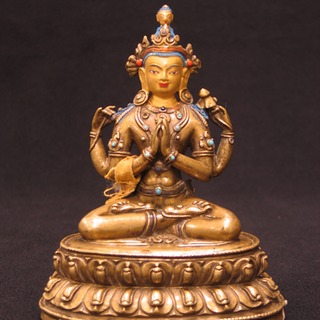
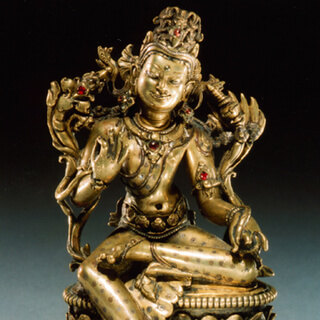
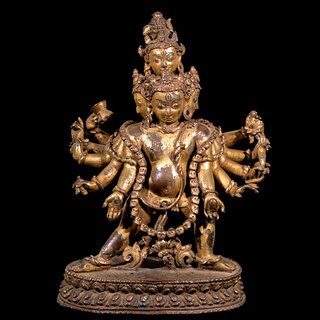
Including an image of the related artwork.
Our Mindfulness Meditation Podcast is presented in partnership with Sharon Salzberg and teachers from the New York Insight Meditation Center,
The Interdependence Project and Parabola magazine and supported by the Frederick P.
Lenz Foundation for American Buddhism.
And now,
Please enjoy your practice.
Good afternoon everyone and Tashi Delek and welcome.
Welcome to the Mindfulness Meditation at the Rubin Museum of Art.
I'm Tashi Chodron,
Himalayan Programs and Communities Ambassador,
And I'm so happy to be your host today.
I'm kind of curious to know how many of you have been attending this on a regular basis.
Wow,
Thank you.
And how about first-timers?
Wonderful.
And in between?
Wow,
Thank you so much.
Those of you who are first-time,
We are a Museum of Himalayan Art and Ideas in New York City,
And we're so glad to have all of you join us for this weekly program where we combine art and meditation.
Inspired from our collection,
We will first take a look at work of art from our collection.
We will hear a brief talk from our teacher,
And we're so thrilled to have our teacher Geshe Haktor Lahir.
Geshe Haktor Lahir,
Welcome.
Thank you.
Thank you.
Thank you.
Thank you.
Thank you.
Thank you.
Thank you.
Thank you.
Thank you.
Thank you.
Thank you.
Thank you.
Thank you.
Thank you.
Thank you.
Thank you.
Thank you.
Thank you.
Thank you.
Thank you.
Thank you.
Thank you.
Thank you.
Thank you.
Thank you.
Thank you.
Thank you.
Thank you.
Thank you.
Thank you.
Thank you.
Thank you.
Thank you.
Thank you.
Thank you.
Thank you.
Thank you.
Thank you.
Thank you.
Thank you.
Thank you.
Thank you.
Thank you.
Thank you.
Thank you.
Thank you.
Thank you.
Thank you.
Thank you.
Thank you.
Thank you.
Thank you.
Thank you.
Thank you.
Thank you.
Thank you.
Thank you.
Thank you.
Thank you.
Thank you.
Thank you.
Thank you.
Thank you.
Thank you.
Thank you.
Thank you.
Thank you.
Thank you.
Thank you.
Thank you.
Thank you.
Thank you.
Thank you.
Thank you.
Thank you.
Thank you.
Thank you.
Thank you.
Thank you.
Thank you.
Thank you.
Thank you.
Thank you.
Thank you.
Thank you.
Thank you.
Thank you.
Thank you.
Thank you.
Thank you.
Thank you.
Thank you.
Thank you.
Thank you.
Thank you.
Thank you.
Thank you.
Thank you.
Thank you.
Thank you.
Thank you.
Thank you.
Thank you.
Thank you.
Thank you.
Thank you.
Thank you.
Thank you.
Thank you.
Thank you.
Thank you.
Thank you.
Thank you.
Thank you.
Thank you.
Thank you.
Thank you.
Thank you.
Thank you.
Thank you.
Thank you.
Thank you.
Thank you.
Thank you.
Thank you.
Thank you.
Thank you.
Thank you.
Thank you.
Thank you.
Thank you.
Thank you.
Thank you.
Thank you.
Thank you.
Thank you.
Thank you.
Thank you.
Thank you.
Thank you.
Thank you.
Thank you.
Thank you.
Thank you.
Thank you.
Thank you.
Thank you.
Thank you.
Thank you.
Thank you.
Thank you.
Thank you.
Thank you.
Thank you.
Thank you.
Thank you.
Thank you.
Thank you.
Thank you.
Thank you.
Thank you.
Thank you.
Thank you.
Thank you.
Thank you.
Thank you.
Thank you.
Thank you.
Thank you.
Thank you.
Thank you.
Thank you.
Thank you.
Thank you.
Thank you.
Thank you.
Thank you.
Thank you.
Thank you.
Thank you.
Thank you.
Thank you.
Thank you.
Thank you.
Thank you.
Thank you.
Thank you.
Thank you.
Thank you.
Thank you.
Thank you.
Thank you for giving this opportunity to visit this beautiful museum.
And it's a privilege to introduce this out of many of your collections,
To be able to introduce these two very important themes,
Vajra and Bell,
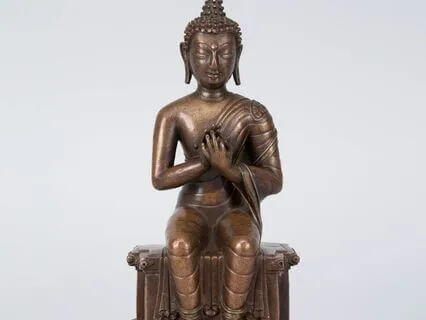
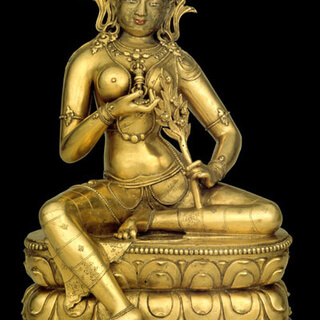
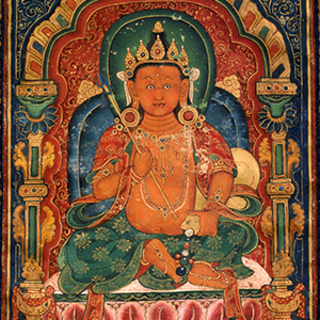
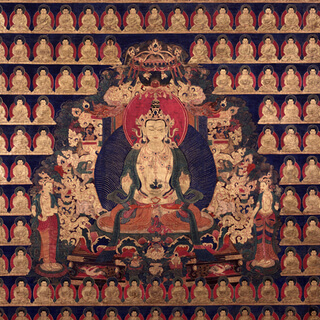
And Maitreya.
Maitreya symbolizes loving-kindness.
There is a line of praise sung in his praise that Maitreya Buddha is somebody who has always meditated on the three aspects of loving-kindness.
Loving-kindness focuses on sentient beings.
Loving-kindness focuses on sentient beings who are characterized by suffering.
And loving-kindness focuses on sentient beings who don't have inherent independent existence.
And it is because of this practice and meditation on loving-kindness,
The three types of loving-kindness,
He was able to destroy the evil forces through the force of loving-kindness.
And because of this practice of loving-kindness,
He was also able to take care of the suffering sentient beings.
May we all get the auspiciousness of Maitreya Buddha.
As I said,
Maitreya Buddha primarily symbolizes loving-kindness.
But in Buddhism,
A unique feature and practice is the harmony of wisdom and compassion,
The method and wisdom,
Which is symbolized by Vajra and Bell.
In the Sutric practice,
We talk about the union of the method and wisdom,
Compassion and wisdom understanding,
Shunyata.
But as you proceed into the tantric practice,
Then the method is replaced by the development of subtle experience of bliss,
Mental bliss.
And this very subtle,
Peaceful mind of bliss is then used to realize and penetrate into the ultimate nature,
Which is Shunyata.
Therefore,
You reach a state of indivisibility of the method and wisdom,
The bliss and Shunyata.
Therefore,
This Vajra symbolizes the great bliss,
And the Bell symbolizes emptiness and Shunyata.
And in fact,
When a master plays the Bell,
We need to imagine that he is really giving us the teaching on Shunyata,
Which is not equal to nothingness,
But which means everything arises through multiplicity of causes and conditions.
Like the Vajra,
The Bell is able to produce the sound because of this hollowness inside and the tongue inside,
Then being moved by the hand.
When all this comes together,
Then a sound is produced.
Otherwise,
Sound is impossible.
So therefore,
I'm happy to introduce these two very important points.
Now,
As I was introducing this given theme,
In order to actualize that profound,
Great bliss and wisdom understanding emptiness,
One has to undertake sustained practice.
According to Buddhism,
There is no push-button enlightenment.
So therefore,
Many people misunderstand meditation.
They think meditation is observing certain physical postures and sitting alone.
Yes,
That part is also there.
But the most important meaning of meditation is to make your mind habituated with positive ways of life,
Positive qualities.
Because we are predominantly controlled by negative emotions,
And because of this,
We suffer.
In other words,
We are addicted to negative emotions.
The purpose of Buddhist practice is to stop these addictions and make our mind habituated with positive qualities like loving-kindness,
Compassion,
And so forth.
So meditation primarily means getting your mind habituated with love,
Habituated with compassion,
Habituated with wisdom understanding emptiness,
And which of course takes time.
So that is really the main focus of all the Buddhist practices.
So meditation is really something that actually covers the whole facets of Buddhism.
All the teachings of the Buddha are to be meditated.
It is not that certain parts are to be meditated and certain parts are to be neglected.
It is not like that.
We need to get habituated with all these aspects.
And then it is because of this wider concept and understanding of emptiness,
There are many methods like,
For example,
Mindfulness,
Awareness,
Conscientiousness,
And heedfulness.
Now in the West,
We talk so much about mindfulness and meditation,
But I haven't seen many people talking about the importance of conscientiousness and heedfulness.
These three guys actually come together.
Because mindfulness is making sure that your mind is able to stay on the chosen object.
In addition to that,
We need what we call conscientiousness,
Which is really like the watchdog,
To see whether the mind is really staying on the object or not.
And at the same time,
You need to have heedfulness to see whether the mind is really engaging in the positive practices,
Whether it is refraining from the negative activities and things like that.
So therefore,
Shantideva in his famous text,
Bodhisattva Charyavatara,
He says that,
With my folded hand,
I am requesting you,
Please maintain mindfulness.
Please practice conscientiousness.
Please practice heedfulness.
Because he is so concerned about the well-being of sentient beings.
He is so concerned about removing their sufferings.
But the sentient beings,
Most of the time,
We are distracted.
We don't do these things.
And therefore,
We suffer.
In a way,
We suffer unnecessarily.
So therefore,
He is saying,
Please,
Please pay attention.
If you don't want suffering,
You need to do these things.
Be mindful.
Be aware.
So in a way,
We are saying that wisdom is like awareness.
It's the larger perspective where you are able to see the law of nature.
Once you develop this awareness,
How we are connected to the rest of sentient beings.
How we are connected to the environment and so forth.
And then also,
More importantly,
The meditation on impermanence.
Through this awareness,
When we see how fragile we are.
And of late,
I have been telling people that we have today 8 billion human population.
All these 8 billion human population are dead after 100 years counting from today.
On an average.
But this does not mean that I will live 100 years.
My turn may be after 10 years maximum.
So why do we need to think like this?
We need to think like this.
If you think like this,
Then there is an urgency in terms of your practice.
You can't just postpone and say that I'll do practice tomorrow.
I'll do practice tomorrow.
I'll do practice tomorrow.
No,
That will not work.
That will also help you think,
Why should we fight each other?
Why should we kill each other?
Why are we inventing ballistic missiles?
Why are we inventing nuclear bombs?
Because you don't need all these things.
The Buddhist wisdom says you don't have to kill people,
They will die.
So that's meditation.
That's really meditation.
Meditation is really having a larger perspective of the universe and especially the law of nature.
And therefore the instruction is to say to live in accordance with the law of nature.
Don't pretend.
By thinking that what is impermanent is permanent.
What is suffering is pleasure or happiness.
Don't pretend.
Get rid of these misconceptions if you really want to have happiness and peace.
So when you are able to develop this larger perspective that we are all going to die,
Things like that,
Then the conclusion will be,
I must now help the suffering sentient beings.
I must now develop compassion.
A step forward.
And then having developed genuine compassion,
Compassion not just for the sake of talking,
But when you develop this genuine compassion,
Thinking how nice if I'm able to remove the sufferings of all sentient beings,
Then automatically there will be engagement.
You will not be somebody who will say that I should develop compassion,
Standing by the side and not doing anything.
Automatically you will come forward,
Do whatever is possible to help alleviate the sufferings of sentient beings.
So therefore the Buddhist meditation or Buddhist teaching is really a solution for many of the ills and problems that we have today.
And of these days I have also been saying that we have so many types of problems.
In addition to the problem of aging,
Sickness,
Death and so forth,
We have countless man-made problems.
Man-made problems are essentially unnecessary problems.
We can do away with that,
But unfortunately because of short-sightedness,
Because of narrow-mindedness,
Because of misconceptions,
Because of ego and things like that,
We are not dealing with these things.
So therefore it is really important to have a precise understanding now that all these problems,
We have to find a solution.
And we also have to be very clear that the solution will not come from science.
The solution will also not come from religion.
The solution will have to come from man himself and herself.
In my case,
Maybe because of my lack of in-depth expertise or knowledge of science and technology,
It may be because of this.
Or maybe I am trying to turn the clock back.
But sometimes I do feel that many of these inventions by science and technology are in a way distractions.
The key question is,
With all these inventions,
All these shiny gadgets,
Are we really happier?
Are we really happier?
Because at the end of the day,
Happiness is something that we are all looking forward to.
We all want to get.
Are we really happier?
Yes,
It is true we are much more busy than before,
But that's not important.
Right?
So I strongly feel that don't just say I'm busy.
It is not important that you are busy.
What is important is what are you busy about.
If you at all want to be busy,
Then get busy doing something for the well-being of other sentient beings,
Doing something for healing the planet,
Which we have destroyed so much,
That the air is polluted,
Water is polluted,
Mineral resources are destroyed.
That's what we are experiencing.
But still we have this unchecked greed,
Letting our senses go wild.
You need something to look,
Something to taste,
Something to touch,
Something to smell,
And your focus is only on the sensual objects,
And you never go inside.
Your mind is empty.
You don't know yourself.
I think that is the source of the problem.
So it is high time that we pause,
Go into solitude at least once in a while.
Think about the meaning of human life.
What is the purpose of human life?
What is the meaning of human life?
How can we bring about long-lasting happiness for all of us?
I think this kind of thinking is not in our pastime.
It is not a luxury.
It is not just for the Buddhists.
It is for all of us who want to survive and enjoy peace and happiness.
Otherwise,
We are going to commit a global suicide.
So the choice is yours.
It is in your hand.
As I said,
Meditation is really working with the mind,
Removing the negative emotions,
Cultivating the positive emotions.
So normally when we do the meditation,
We start with the breathing meditation.
Because your breath is something that is there with you,
It is very easy to focus on that.
And your breath is also your remote control to your brain.
So there is a great connection between these two.
So therefore,
Try to focus on your breath,
Coming in,
Coming out.
Count that coming in and going out,
And going in as one.
Make sure that you are able to concentrate on this one count.
There is inhalation and exhalation.
If you fail,
Then you need to start again.
And that itself is not easy.
So in this way,
When you get habituated to this kind of meditation,
Watching on the breath,
Concentrating on the breath,
Nothing else.
The good thing with this is,
When you start concentrating,
You will immediately see how distracted your mind is.
I had friends who told me that,
Before I meditated,
I was a nice person.
After I meditated,
I became a bad person.
That is,
Of course,
Not true.
But before you meditated,
You had no idea who was coming and who was going in your mind.
Thieves were coming,
Robbers were coming,
Anger was coming,
Jealousy was coming.
You didn't watch.
You just welcomed them.
Now,
Through meditation,
You at least notice who is coming and who is going.
That is a good start.
The next step is to say,
That if negative emotions are coming,
Then you should say,
Sorry,
You are not welcomed.
If positive emotions are coming,
You should say,
Please come,
My dear friend,
Compassion and loving kindness,
Please come.
I did not recognize your importance for a long,
Long time.
Now I know how good you are.
Please come,
Have a cup of tea.
Things like that.
That is kind of how you should start.
Right?
And then,
Gradually you need to understand,
Whatever object you choose,
A flower or the breathing,
Whatever you choose,
You should not just spend the rest of your life watching your breath and then die.
That is not the purpose.
The purpose is through that you should learn the importance of concentration.
Concentration is the source of success,
Both in war and in peace.
Concentration is like a laser beam.
When the rays of the light of the laser beam are scattered,
It doesn't have the power to cut through steel.
But when the rays of the light of the laser beam are concentrated,
It can cut through the steel.
So concentration means pulling all your energies together and use it on one object.
It is not just spiritual practice or Buddhist practice,
But in all your activities,
If you are able to concentrate and do something,
Let us say for six months,
You will be able to accomplish the work that you normally take five years.
This is really,
Really important.
Much of the things that we don't achieve is because we make half-hearted attempts.
We are not concentrating.
We are doing something,
But your mind is somewhere else.
Even when you bring a cup of tea,
You spill it.
So therefore,
Concentration.
Concentration also means enjoying what you are doing.
Many people ask me the question,
Geshe-la,
Yes,
Yes,
It's important to concentrate,
But we are unable to do it.
How should we do it?
In fact,
This question was asked me recently when I checked in at the immigration.
The immigration gentleman who was stamping my entry passport,
He said,
What are you going to do here?
I said,
I'm going to talk and teach.
He said,
Do you teach meditation and mindfulness?
I said,
Yes.
Okay,
Can you please explain a little bit?
I'm trying to do that.
I'm not successful.
What is the technique?
I said,
You need to like what you want.
Whatever you are doing,
You need to like it.
You need to enjoy it.
Then concentration will be there.
Just like singing,
Dancing,
Sports.
You need to like whatever you are doing.
Just like the small kids.
The small kids,
Even if you give them a broken toy,
They'll spend the whole day.
That's their world.
They like it,
You see.
And as we grow up,
We are distracted,
Not able to concentrate.
So in all your spiritual practice,
You need to enjoy and like it.
I am lucky.
I have obtained this precious human life.
I have got this wonderful opportunity to practice love,
Compassion,
And so forth.
Then concentration will automatically come.
Then at the end of the concentration,
It's not concentrating on a flower or an image,
Things like that.
The purpose of one-pointed concentration is you should concentrate in helping all suffering sentient beings.
That's the main objective.
Many people don't talk about it.
They always say,
Concentrate on Buddha's image,
This,
This.
That's fine.
But the ultimate goal is so that we are able to concentrate for the well-being of all sentient beings.
And that concentration is possible through analytical meditation,
The second kind of meditation,
Where you analyze.
Concentration is really like when you do a mathematical calculation,
You know,
2 plus 2,
4,
Something like that.
So you are talking about the 4.
It's the summary.
Concentration is the summary.
And before that,
You need to figure out how many other figures are there,
2,
3,
4,
5.
So analytical meditation,
You analyze.
Which means in your daily life,
You should use your brain,
Use your intelligence.
Two very important features of human beings is human intelligence and human language.
And unfortunately,
This human intelligence is either not used or misused.
Because we are very good in inventing nuclear bombs,
Atom bombs,
Ballistic missiles,
Smart bombs,
You know,
Biological warfare,
Chemical warfare,
All these things we are able to invent.
But what about good things?
Inventing good things.
Right?
So therefore,
This intelligence itself is just a potential.
And it's important that we use this potential for constructive things.
It's very,
Very important.
And then the second important thing is your language.
We are not tigers and lions.
If there is a misunderstanding,
There is a conflict,
We should not physically try to jump up on each other and kill each other.
Because we are not like tigers and lions.
In the case of tigers and lions,
That's the only way they can do.
They don't have a language.
We have a language,
Which means when there is a problem,
Sit down and have dialogue,
Negotiation,
Find a solution.
Unfortunately,
In today's world,
We don't either use the intelligence or don't use the language properly.
So therefore,
Again,
In this case also,
We need to meditate and understand and be aware of these unique features that we have as human beings,
Which distinguish us from animals.
Just eating,
Sleeping,
And producing child.
Animals also do.
If that is the case,
If we are to live like this,
Then why do we need this big brain?
Human beings have the biggest brain,
Relative to the size of the body,
I am saying.
This brain must be used for constructive purposes.
So,
Meditation or mindfulness,
Awareness,
Whatever you are talking about,
We should at the end of the day focus on this larger picture.
Then it brings harmony,
Then it brings peace.
May those with fear be fearless.
May those under bondage be freed.
May those powerless be empowered.
May our hearts join in friendship.
Thank you.
Thank you.
Thank you.
Thank you so much,
Geshe-la.
That was beautiful.
That concludes this week's practice.
To support the Rubin and this meditation series,
We invite you to become a member at rubinmuseum.
Org and to stay up-to-date with the Rubin Museum's virtual and in-person offerings,
You can register at rubinmuseum.
Org slash e-news.
I am Tashi Chodron.
Thank you so much for listening.
Have a mindful day.