Welcome to the Mindfulness Meditation Podcast presented by the Rubin Museum of Art.
We are a museum in Chelsea,
New York City that connects visitors to the art and ideas of the Himalayas and serves as a space for reflection and personal transformation.
I'm your host,
Tashi Chodron.
Every Thursday,
We present a meditation session inspired by a different artwork from the Rubin Museum's collection and led by a prominent meditation teacher from the New York area.
This podcast is a recording of our weekly in-person practice.
In the description for each episode,
You will find information about the theme for that week's session,
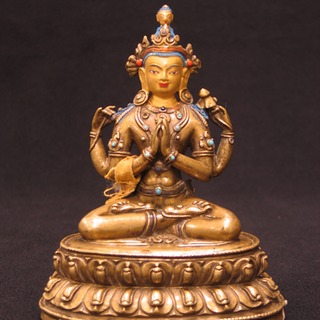
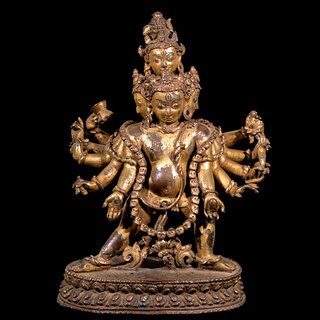
Including an image of the related artwork.
Our Mindfulness Meditation Podcast is presented in partnership with Sharon Salzberg and teachers from the New York Insight Meditation Center,
The Interdependence Project and Parabola magazine and supported by the Frederick P.
Lenz Foundation for American Buddhism.
And now,
Please enjoy your practice.
Hello,
Everybody.
Tashi Delek and good afternoon.
Welcome.
Welcome to the Mindfulness Meditation at the Rubin Museum of Art.
I am Tashi Chodron,
Himalayan Programs and Communities Ambassador,
And I'm delighted to be your host today.
We are a global hub for Himalayan art and ideas in Chelsea,
New York City,
And we're so glad to have all of you join us for this weekly program where we combine art and meditation.
Inspired from our collection,
We will first take a look at work of art from our collection.
We will then hear a brief talk from our teacher,
And I'm so thrilled that our teacher is Do Tuku Rinpoche,
Very special afternoon.
And then we will have a short sit,
15 to 20 minutes for the meditation guided by Rinpoche.
Now let's take a look at today's theme and artwork.
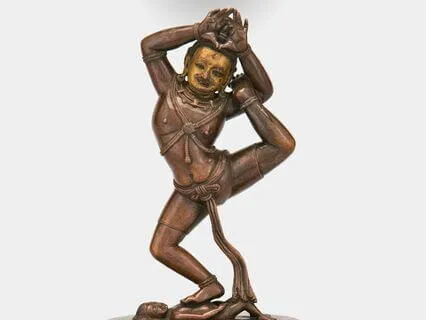
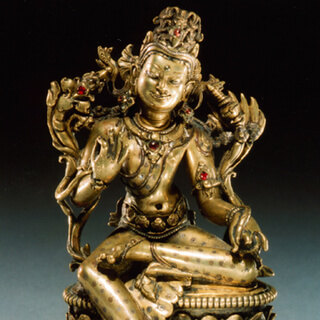
The art connection for today's session is this beautiful sculpture of Maha Siddha Jalendra,
Origin Tibet,
16th century,
Medium copper alloy.
Size of this is 9 1⁄2 x 5 1⁄2 x 3 1⁄2.
The connection to the theme,
Maha Siddhas exemplify Tantric Buddhist practices,
Which offer many paths to realization.
And this beautiful sculpture is a Maha Siddha.
Maha means great,
Siddha means realized one in Sanskrit word.
Legendary men and women called Maha Siddhas,
Or great spiritually accomplished ones,
Are considered to be among the first teachers of Tantric Buddhist practices.
Usually of ordinary occupations,
Such as a wandering monk,
Weaver,
Or a farmer,
They are often portrayed in various yogic positions,
Flying or dancing,
Wearing little or no clothing,
Through their unconventional behavior,
Maha Siddhas are celebrated as real people who embodied enlightenment through Tantric practices.
The Indian Siddha depicted here is known as Jalendra,
Meaning the net holder.
He is recognized for his many yogic feats.
It is said that he could manifest his body in many places at the same time and live in many bodily forms in widely disparate lands simultaneously.
Jalendra was born and raised as a Brahmin.
He renounced the material world and went to meditate in a charnel ground.
He entered a state of heightened consciousness and heard a voice of a Dakini emanating from the sky.
She appeared before him,
Initiating him in the practices of Hevajra Tantra and Perfection Stage Yoga.
Jalendra then dedicated his life to working for the benefit of all beings until he entered the pure realm of Khechari,
Accompanied by 300 of his students.
Now let's bring on our teacher for today.
Our teacher is Dho Thukur Rinpoche.
Dho Thukur Rinpoche is the resident Lama and spiritual guide of Arya Taras Net,
An online community and center for Buddhist studies and practice in Windick,
Germany.
Rinpoche was recognized by His Holiness Sakya Trichin at the age of 17 as the reincarnation of the fifth Raktrul Rinpoche.
His incarnation line goes back to the first Raktrul Rinpoche in 17th century,
A master of the Doteng Monastery in eastern Tibet.
After his recognition,
Rinpoche received an 11-year training in Buddhist philosophy,
Practice and debate at the Dzongsar Chen Tse Chökyi Lodro Institute in India.
Since then,
Rinpoche has been teaching and guiding retreats in India,
Nepal,
Europe and South America.
He has received transmissions and initiations from some of the greatest masters of our time.
He lives in Germany,
Where he teaches regularly.
Rinpoche,
Thank you so much for being here.
Please help me in welcoming Dho Thukur Rinpoche.
Tashi Delek and welcome to this session.
So happy to be here and I'm so thankful to the Rubin Museum,
Such a prestigious institution to let someone like me say something.
And the topic is so interesting.
We are talking about Mahasiddha's realizations and these phenomenons that are beyond the grasp of our mundane conceptual mind.
Before we begin talking about Mahasiddha Jalandharipa,
I would like to bring your attention to the first Mahasiddha,
Shakyamuni Buddha.
And if you would kindly try and sit to bring to your mind Shakyamuni Buddha,
This runaway prince of India that left all comfort and everything he knew for the search of truth,
For the benefit of others and to realize the true reality of existence.
That's what Mahasiddha is,
Someone who is awakened,
A yogi.
Actually that's what it means.
It doesn't mean just stretching,
You know.
It has such deeper meaning.
So here,
Please look at this completely awakened being.
Think of him in front of you and just breathe.
You can look at his face,
His hands,
Whatever that you can think of.
Thank you.
Since for a Mahasiddha,
Time has no relevance.
Birth and death are but mundane conceptual games that they are free from.
So we believe that when you bring them to your mind,
You get closer and closer to the ultimate reality.
And that's what it is.
The teaching of the Buddha is called sutra,
Dō.
What it means is time when the mind of sentient beings and the mind of a Mahasiddha meet,
A crossroad,
Dō.
Well,
To talk about Mahasiddhas we have to talk about realization.
What is it?
What makes someone a Mahasiddha?
Basically,
Realization is awakening to the reality of things,
To the ultimate truth.
It is the most sincere,
Unbiased,
Fearless,
Compassionate,
Honest mind.
That's what it is,
Realization.
Of course,
We're not talking about an idea or just a fleeting experience.
When we talk about realization,
We're also talking about a change,
A transformation that happens in our mind from where there's no return.
That is realization.
So basically,
The only difference between us and someone like him is that they were able to accept reality completely,
No compromise,
No modification,
No fabrication.
We are not.
Everything that we do is decided by our feelings and habits and education.
And we know that feelings and reality rarely go hand in hand.
So there's a lot of that kind of aspect.
Jalandharupa,
I was so happy when I was given the choices of different artifacts.
And I saw this,
So I immediately jumped to this because I have long admired Jalandharupa.
Actually,
The place where he was from is very close to where I studied in Himachal.
The place is still called Jalandhar.
So either he got the name from the place or the place got the name from him.
Either way,
It's still there,
So to speak.
Still a pilgrimage site.
Realization,
Realization.
This is really so tricky to talk about realization,
So tricky to talk about ultimate truth.
No one wants to know the truth.
We don't want to know the truth.
These great beings,
They have tried all kinds of means and methods to introduce what is actually going on,
What is the true sort of mechanism of our existence,
The true fabric of our mind.
Sometimes they succeed,
Sometimes they are not so successful.
Sometimes they try to introduce the ultimate reality without any reference.
He tried that.
So one of his accounts,
His life,
Is that after receiving teachings from his teacher,
He became a wandering yogi and he came upon a beautiful garden.
He was hungry.
There were a lot of fruits on the tree.
So he was a mahasiddha.
I mean he was on his way to become a great mahasiddha.
So he looked at the tree and all the fruits fell down.
He picked some and ate them.
And he looked back,
The remaining went back.
So you're going to hear a lot of these things if you want to know about mahasiddhas.
And this is nothing miraculous about it,
Nothing at all.
It's just when you are completely in tune with the nature of how things are,
You are free from our sort of conceptual bondage.
How can fruits fall by looking?
All that is gone.
Now what was happening was that someone was watching him,
A queen no less.
It was her garden.
She was watching him from her window and she thought,
Wow,
This man really seems to know.
This man really seems to have realization.
And she's been trying to convince her son,
The king,
To receive teachings.
They were Buddhists.
So she really urged him.
The son was not so convinced because his mother,
The queen,
Was urging.
So he said,
Okay,
I'll do it.
And they made a big celebration ceremony and requested teaching from Jalanda Ripa.
He just brought an empty vase.
And told the king to put his hands into it.
That's what he did.
And he said,
What is there?
What do you see?
What do you feel?
The king said,
It's nothing,
No substance.
And he said,
That's it.
The king felt humiliated.
Now,
At this point,
Of course,
Jalanda Ripa was not saying nothingness or he was not being nihilistic,
But he was really getting to the heart,
Core to the thing.
He said that the king didn't get it.
And he was imprisoned for 12 years,
This guy.
But that was a real blessing for him because then he could really practice without distraction.
So there are that kind of path.
Let's try that.
Try to sit.
Try to sit and just look at your mind.
Breathe and just watch.
Try not to follow whatever that pops into your mind,
Colors,
Shape,
Memory.
Just watch.
Go back to your mind.
This present moment awareness is always there.
Go back to your awareness.
This is difficult,
So difficult.
It's difficult to talk,
Difficult to listen,
Difficult to comprehend.
By the time it reaches you through your mind and it's being processed,
What do you call it,
Chinese whisper?
That,
That's what happens.
He says something to her,
She says something to him.
By the time it reaches fifth,
Sixth,
Seventh person,
The whole information is just.
.
.
And so,
Again,
People like him,
Shatramuni,
They try to reach us through symbols,
Through structures and colors and shapes,
Rituals.
I saw that another,
One of the artifacts that I was given to choose,
There was a very beautiful copy,
I should say,
Of the Mahabodhi Stupa.
Mahabodhi Stupa,
It's a temple in Bodhgaya,
The place where Buddha gained enlightenment.
Mahabodhi means great awakening.
The name of the temple itself brings us to realization,
Brings us to the ultimate truth.
And so everything else Buddha did,
Discipline,
Generosity,
Whatever he taught,
All to get us to this state,
To become a Mahasiddha.
I suppose I should say.
And so,
Many people follow that.
And we call them follower of Sutra path,
Mahayana path.
Then there are those who are more daring,
Who may not be ready for the direct,
Like empty,
Vast hand teaching,
But,
You know,
Who also should not be wasted with just an image of a temple or a statue.
So these people,
We give rituals,
Implement,
Vajrayana implements.
I'm sure you see them a lot,
Like a sword,
Katanga,
And skull cups.
A skull cup,
A cup made of skull in your hand.
It was not an art for them.
This was the path.
How are you going to be distracted when you have a skull cup in your hand?
How are you going to be making a lot of plans and being all disappointed or having so many hopes and fear when you have a skull cup in your hand?
And this is always there.
So there's this kind of way,
Where you look at your body,
Look at the structures,
Blood coursing through your veins,
Beating of your heart.
All of this,
You just watch.
You just sit and watch.
There's always something happening.
That's another way of getting to realization.
Please,
Ask me questions after the session.
We should have some time,
But I would request you again to just be aware of your body.
Just be aware.
Your heart is always beating,
It's always in motion.
Every part of your body has a function.
So unique,
So beautiful.
That's how we gain realization,
By being honest and sincere.
This time I'm going to do this.
Please,
Just watch.
Thank you.
Thank you,
Thank you so much for that Rinpoche.
I often say every day we learn,
And I've been to many pilgrimage sacred places,
Including Buddha's Awaken Bodhgaya,
But it's wonderful to know that Jalendra's sacred site exists,
And I hope to visit someday.
That concludes this week's practice.
To support The Rubin and this meditation series,
We invite you to become a member at rubinmuseum.
Org slash membership.
If you are looking for more inspiring content,
Please check out our other podcast,
Awaken,
Which uses art to explore the dynamic paths to enlightenment and what it means to wake up.
Season two,
Hosted by Raveena Arora,
Is out now and explores to transformative power of emotions using a mandala as a guide.
Available wherever you listen to podcasts.
And to stay up to date with The Rubin Museum's virtual and in-person offerings,
Sign up for a monthly newsletter at rubinmuseum.
Org slash enews.
I am Tashi Chodron.
Thank you so much for listening.
Have a mindful day.