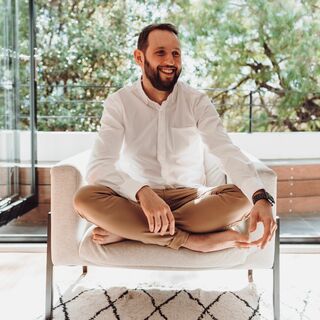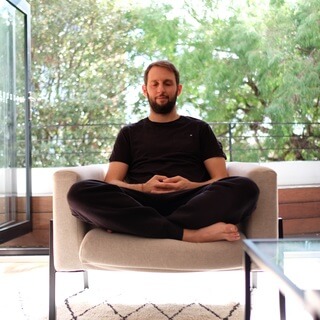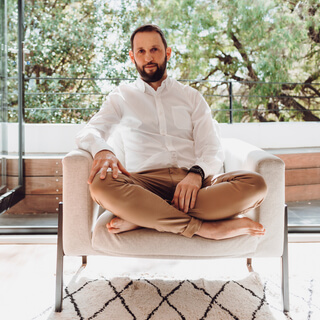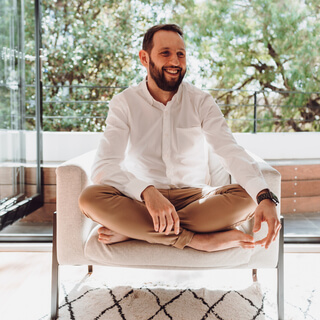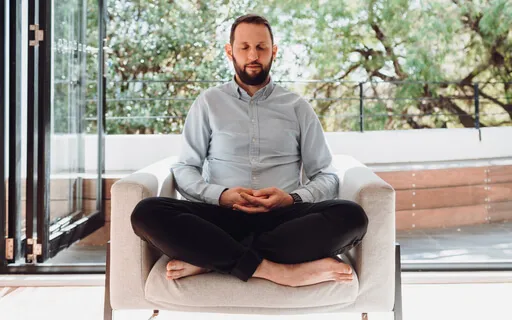
Find somewhere comfortable to sit and close your eyes.
Sit however is comfortable for you.
It's okay to have your back supported like you'd sit to watch TV or read a book but don't rest your head back as we don't want to encourage sleep although it's okay if you do sleep.
Take a deep breath in through your nose and sigh it out.
Again through the nose and sigh it out.
Allow your breathing to return to normal and see if you can breathe more into your belly than your chest as that's the most efficient way to breathe.
Breathe normally.
In this meditation we're going to gently place our awareness on the breath.
The breath will be an anchor,
A home point for the mind to return to when it wanders.
Allow your awareness to gently rest on the breath.
Find wherever feels most comfortable for you to notice the breath.
On the inhale feeling the air entering your nostrils or on the exhale warming your upper lip.
Perhaps you can feel the gentle rise of your belly.
Or maybe you can notice the natural pauses between each inhale and each exhale.
And each exhale and each inhale.
Naturally you will notice the mind has a tendency to wander.
This is its natural tendency and we're not going to fight it.
All there is to do is to return your awareness gently to the breath whenever you remember to.
You you Take a moment to physically relax your body releasing any tension you might find there.
Your shoulders or your neck your jaw or your forehead and sink a bit deeper into your chair.
You you you Return to the breath whenever you remember to.
You you you No need to concentrate or use force.
No need to clear the mind.
Just return to the anchor of the breath whenever you remember to.
When we meditate we draw back from the pressures of the day so much so that we often find we have a few more minutes available than we thought.
If that's the case for you why not continue meditating on your own for a few more minutes.
And when you finish check in with how you're feeling.