Welcome to Relax the Jaw.
In this lesson,
You're going to be guided through some basic movements that most people do with their jaw every day.
The ability to do these movements freely and easily are the key to jaw comfort.
When these movements are restricted,
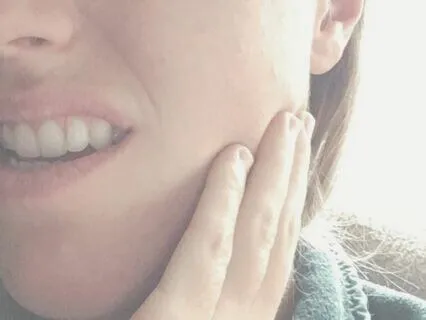
There's often pain or discomfort in your jaw and neck and sometimes there are other symptoms like headaches or teeth grinding,
Tinnitus,
And even shoulder pain.
Because we're whole beings,
Not only isolated body parts,
Issues with the jaw are not only about the jaw but include the spine and pelvis as well.
And you'll find that being able to do the main movements in this lesson comfortably is the first step to a more comfortable,
Free,
Relaxed mouth and jaw permanently.
So please find a place on the floor or carpet where you can lie on your back.
Pad the space so that you're comfortable.
You can also lie on a firm mattress for this lesson.
And if possible,
Please don't use a pillow.
If you're more comfortable with your head slightly raised,
Use a folded flat towel.
So ideally your chin and your forehead are on one line.
You can have your legs long or knees bent and your feet standing or you can move between the two.
The most important thing is that you're comfortable.
You can also prop your legs up on a bolster or pillow.
And now please take a moment to sense and feel your contact with the floor.
Gently observe what parts of yourself are in contact with the floor and what parts are lifted away from the floor.
Notice the right side of your pelvis and its contact with the floor and compare it with the left side of your pelvis.
Does one side feel heavier than the other?
Does one side feel flatter?
Are the two sides the same or are they slightly different?
And you don't have to fix anything or change anything.
Simply observe how you come to lie on the floor.
And now notice your lower back.
Is there a space behind it or is it flat on the floor?
And as you move your attention up your spine,
Notice the right side of the back of your ribcage and its contact with the floor and compare it with the left side of the back of your ribcage.
Does one side feel flatter or heavier?
And which shoulder blade feels wider or flatter,
The left or the right?
And again,
You don't have to fix anything or change anything.
And now notice how behind your neck there's a slight space and then you can clearly feel the back of your head on the floor.
And please roll your head a tiny bit to the left and then to the right.
And just notice,
Does one direction feel easier or smoother?
And when you roll your head on in one direction,
Can you feel that it's a straight line across and the other side goes a little bit uphill or downhill?
And now pause with your head and simply notice the feeling around your eyes and your face and notice the feeling of your jaw and observe the distance between your upper and lower teeth.
Are they touching or are they separated?
And notice how your tongue is resting in your mouth.
Is your tongue touching some of your teeth?
Is it touching your upper teeth or your lower teeth?
Is it pressing on the roof of your mouth or is it being held in the center of your mouth?
Or is your tongue resting in the bottom palate?
There's no right or wrong,
You're just noticing.
And now please begin to make a very small,
Easy movement of slowly opening and closing your mouth.
So you move your lower jaw a tiny bit away from your upper jaw and then you bring it back and you pause.
It's a very small movement and you only do the movement that feels easy and smooth,
Even if you're only moving your lower jaw 1 16th of an inch away from your upper jaw.
And you continue to very,
Very slowly open and close your mouth in a way that's very easy and very comfortable.
You just move your lower jaw a little bit away from your upper jaw and then you close your mouth and then you pause before you do the movement again.
Very slowly and then you rest before you open and close your mouth again.
And you just notice how smooth and even is the movement of opening and closing your mouth.
You might notice that at some points the movement is very smooth and at other points it's not so smooth.
And as you continue to slowly open and close your mouth that little bit,
Very slowly,
Just notice places around yourself where you can feel that you're using effort,
Where your muscles are engaging,
Or where you feel a little bit of tension.
And wherever you notice any area that's contracted,
You just make the movement a little smaller and you go a little more slowly.
Okay,
And now please rest,
Relax,
And just observe the sensations of your jaw and your face.
Notice your breathing.
So what we're doing here in this lesson has nothing to do with other activities you might have tried like stretching or physical therapy or deep massage.
You're working with your brain and your nervous system.
Those are the control center that gives every muscle in your body the direction to either contract or to let go.
And now once again,
Very gently,
Very slowly,
Open your mouth by taking your lower jaw a tiny bit away from your upper jaw and hold it there.
And now with your mouth open like that,
Begin to move your lower jaw a tiny bit to the right and then back to the middle and pause.
And then you do that again and you keep your mouth open a tiny bit and you move your lower jaw a tiny bit to the right and then back to the middle and you pause before doing it again.
And very,
Very slowly in both directions.
There's no goal.
There's no benefit to doing more repetitions.
In fact,
Just doing the movement two or three times with very focused attention on your sensations will provide more improvement.
And of course,
Each time you do the movement,
You rest for a moment before doing it again.
If you're not clear on the direction that your jaw is moving,
Just place one of your forefingers on your lower jaw and you'll be able to feel the direction a little more clearly.
And as you move your lower jaw that little bit to the right and then back to the middle,
Notice if your jaw moves in a straight line or whether it goes a little uphill or downhill.
Is the movement smooth or does it jump a little?
And you'll be able to detect this very subtle movement if you move your jaw very slowly and make the movement very small.
And notice if you're unconsciously holding your breath and see if you can allow your breathing to be relaxed and easy.
And notice if you're tensing any muscles between your eyes or wrinkling your brow as you move your lower jaw that little bit to the right and then back to the middle.
Just notice if you have any tension in your mouth or your face as you move your jaw.
And if you do,
You rest or you do less.
All right,
And now please let that go.
And your legs if they're not,
If that's comfortable for you,
And just rest and just feel the difference in the sensation of the right side of your jaw and neck compared to the left side of your jaw and neck.
So we often use more muscular effort than necessary,
Especially in our mouth and our neck and our jaw.
But as you learn to let go of unnecessary muscular effort,
You'll discover that the improvement is quick and easy.
As you do the movements of this lesson,
Instead of making big or quick or repetitious movements with your jaw,
Go as slowly and as gently as possible.
See if you can do the movement in such a way that it's so smooth and effortless.
Make each movement as small as necessary to be comfortable,
Even if that means you're only moving your jaw a 32nd of an inch or less.
And of course,
Whenever you feel any discomfort or even feel sleepy,
That's a good indication that it's time for a rest.
You can always pause the recording or catch up with it later.
Now,
Slowly move your lower jaw a tiny bit away from your upper jaw,
And then move your lower jaw a little bit to the left this time,
And then let it come back to the middle and pause before doing it again.
And as you continue to move your lower jaw a little bit to the left and then back to the middle,
Notice if there's a difference between when you move your lower jaw to the left compared to when you were moving your lower jaw to the right earlier.
So most people find it easier to move their jaw in one direction compared to the other.
And again,
If it's helpful,
You can place your forefinger on your chin so that you can follow the movement of your lower jaw to the left and back to the middle.
And if you feel any strain,
Just make the movement smaller or slower.
If at any point during the lesson you'd like to rest,
Please do so regardless of the instructions.
And as you move your lower jaw to the left and back to the middle,
Just notice where can you reduce any unnecessary muscular tension or effort in your neck,
In your face,
Around your eyes,
Your shoulders?
Are you contracting your belly?
And are you breathing easily and freely?
So we often hold tension in certain areas of our body without being aware of it.
So as you move your lower jaw to the left and then back to the middle,
Notice where you can reduce any unnecessary muscular tension or effort.
And once we become aware of the tension,
We can begin to let go of it.
Just notice,
Are you holding any tension in your abdomen?
Are you gripping your thighs or the muscles around your pelvis?
All right,
And now please let that go and rest.
And again,
You can lengthen your legs if you like,
Or you can bend your knees.
Just observe your contact with the floor overall and notice if you feel wider or narrower than earlier in the lesson,
Across your shoulder blades or your back.
Do you feel more lifted away from the floor or more spread out on the floor?
And notice the sensation in your jaw and neck.
Do you feel any tension or fatigue?
And if so,
This is an indication that you need to rest more during the lesson and do even smaller movements.
Okay,
And now please open your mouth only as far as it's easy.
And with your mouth open that little bit,
Begin to move your lower jaw a little bit to the right and then allow it to come back to the middle and then move it to the left and then to the middle.
So you slowly move your mouth a little bit to the right,
Through the middle and to the left.
And you can do the movement a few times and then rest for a moment and then slowly continue to move your lower jaw to the left and to the right and see if you can put your focused attention on the entire range of the movement in every direction so that whenever you feel any tension throughout yourself,
You do a little bit less.
You go a little bit slower.
And notice whether your lower jaw moves a little more easily to one side or to the other.
And if,
Of course,
If you hear any clicking in your jaw,
You might be trying to move your jaw too far or too quickly,
So do less.
And now please rest.
So the movements you're doing in this lesson were neurologically designed to provide your brain the information necessary to release the muscular tension and contractions you've been holding unconsciously.
And as your nervous system senses and lets go of any unnecessary effort,
Strain and tension,
The movement of your mouth and jaw will almost immediately become easier and more comfortable.
Please open your mouth very slightly.
And now this time,
Bring your lower jaw a little bit forward and then back.
So you open your mouth and you bring your lower jaw a little bit towards the ceiling and then let it come back to its resting position.
And you rest before you do it again.
So you're moving your jaw as if you wanted to put your lower teeth a little bit in front of your upper teeth,
And then you come back to the neutral place.
And if you like,
You can put an index finger on your chin so you can clearly feel the direction in which your jaw is moving as you continue to move your lower jaw a little bit forward towards the ceiling and then back to its normal resting place.
Just breathe easily and freely and only move that little bit that's easy and comfortable for you.
Just notice whether your lower jaw moves forward and back in a straight line or does it veer a little to the left or to the right.
And if you find it difficult to move your lower jaw forward in this way,
It's possible it's because there's often a pattern of tension in which the lower jaw and the mouth are held back in a retracted position.
So freeing the forward movement of your lower jaw is essential to having a more relaxed and comfortable jaw.
And now please rest and observe the feeling around your jaw and your mouth and your neck.
So when you move slowly,
It gives your brain time to absorb subtle and important sensory information about the way you feel and the way you move.
Then your brain,
The control center,
Can respond with directions to the muscles to let go.
And this creates a more efficient and stress-free movement of your jaw.
So simply by letting go of unnecessary muscular effort,
There will automatically be improvement.
Please open your mouth and bring your lower jaw a little bit forward and now hold it there.
Make sure it's comfortable in that position.
And with your lower jaw held forward like that,
Begin to move your lower jaw a little bit to the right and then allow it to come back to the middle and pause.
And then slowly again to the right and to the middle and really go slowly and rest for a moment whenever you need to.
Make sure that you're breathing and any place you notice any tension throughout your whole self,
You make the movement of your jaw a little bit smaller.
And now pause for a moment,
Relax your mouth.
And now please open your mouth that little bit by taking your lower jaw forward towards the ceiling a little and hold it there where it's comfortable.
And then slowly move your lower jaw a little bit to the left and then come back to the middle and pause and move it to the left again and to the middle and just reduce any tension in your neck and your face.
Relax your breathing and now rest for a moment.
And now we'll move your lower jaw in both directions.
So begin by opening your mouth only as far as it's easy and then move your lower jaw a little forward towards the ceiling and keeping it there,
Slowly move your lower jaw to the right and through the middle and then to the left a little and through the middle and you alternate from side to side while keeping your mouth slightly open and a little bit forward like that.
And of course,
Rest between every few movements and then resume the movement whenever you're ready.
Slowly move slowly so that you can feel any difference in the quality of the movement of your jaw as you move it to the right and to the left and make the movement so small and so slow that the movement in both directions feels equally smooth and easy.
And now please stop and rest.
And now please open your mouth and this time without taking your jaw forward,
Simply move your jaw a little bit to the right and back to the middle.
Just do this a few times very slowly.
Make the movement small and breathe easily.
And now slowly with your mouth still open a little bit,
Just move your lower jaw a little to the left and then back to the middle a few times.
Again go very slowly.
And now move your lower jaw a little to the left and to the right,
Alternating.
Can you feel how much easier this movement is now than at the beginning of the lesson?
Okay,
And now let that go.
Close your mouth and rest.
And now let's go back to that very first movement you did at the beginning of the lesson.
So slowly open your mouth and close your mouth by taking your lower jaw a little bit away from your upper jaw and just feel how much easier and clearer this movement is to open and close your mouth now.
Good,
And please rest.
And notice the feeling in your neck and your face and your jaw.
Is there more space now between your upper and lower teeth?
And where is your tongue?
Is it resting more comfortably?
Just feel how the entire area around your jaw and mouth are more relaxed than your neck.
Just observe yourself as you lie on the floor.
And even though you've only been focusing on your jaw and neck,
Notice how relaxing one part of yourself has had a more general effect.
Do you feel wider or more spread out on the floor than when we began the lesson?
Notice across your shoulders,
Your lower back,
Your middle back.
Notice across your pelvis.
And now,
Very slowly and gently,
Roll your head a little bit to the left and to the right and just notice if that movement feels smoother or easier or clearer than earlier.
Perhaps you even have more range,
But range is not the most important thing.
What we care about is the quality of the sensation.
And now leave your head in the middle and just observe the rise and fall of your abdomen and chest as you breathe.
And now please feel free to lie here for a few minutes to allow the benefits of this jaw lesson to integrate and to enjoy the relaxation that you feel.
Thank you for taking the time to focus your attention on yourself to relieve your jaw tension and to relax overall.
You can practice this lesson or even some of the movements of it every day or whenever you feel pain or tension in your neck,
Face,
And jaw.
The more often you practice,
The more you'll reinforce these healthier neural pathways that we've just created.
And remember,
It's your attention to your own physical sensations or what you feel that makes the difference,
Not only the movements themselves.