One moment,
Please.
Reflections on life and faith.
On a brisk early morning in September,
When I was 10,
A knock came to our door.
I remember my mother and I looked at one another,
Wondering who would knock so early in the morning.
On opening the door,
An array of people stood on our doorstoop.
Instinctively,
My mother knew it was to bring bad news,
As this would happen several times more in her lifetime.
Clutching her chest,
My mother stepped back into our house and fell into the nearest chair.
And these uninvited guests then invaded our home to give us the news of which nightmares are made.
My father,
Age 34,
Was dead.
I remember little about the following days,
Weeks,
And months.
But what I do remember is that the trauma of that fateful event set me into an emotional tailspin.
Already an overly serious child,
This event drove me into a bottomless,
Dark pit that sucked the light out of my world and left me in a very dark place.
Looking back,
I should have received therapy,
But we were a poor Appalachian family that didn't know about such things and wouldn't have had the money if we knew.
Over the course of months and years,
I became an embittered young man,
Blaming fate for the unjust cruelty that came to our family.
I took on the persona and attitude of being a victim of cosmic cruelty.
Life was cruel and made no sense,
I concluded,
As I surrendered to the cruelties of fate.
At 18,
I left the state to attend college.
Shortly after my arrival,
I visited the college bookstore to purchase my textbooks.
Always the reader,
I was looking about when my eyes fell on a small paper book titled Man's Search for Meaning by Viktor Frankl.
As I read a few opening pages,
The words grabbed me by the throat and never let go.
Purchasing it,
I took it to my dorm room and read it in one sitting.
My life changed because of it.
My perspective on life changed.
It was one of life's most transformative experiences to this day.
The first half of Frankl's book is autobiographical,
In which he tells of his confinement by the Nazis during World War II,
Primarily in the death camp Auschwitz.
In the concentration camps,
The Nazis stripped away every vestige of individualism and personhood.
The prisoners were dehumanized,
And for those who survived the selection process and were not sent immediately to the gas chambers,
Were forced to work hard labor as slaves.
A small infraction,
Like stealing a piece of bread,
Would be met with beatings and death.
As a psychiatrist,
Frankl was in a unique position to observe human nature under such conditions of extreme depravity.
Freudian theory,
Which was in vogue at the time,
Stated that under such conditions of depravity,
People would resort to animalistic behavior and would kill for another person's crust of bread.
And indeed,
Such behavior did exist.
Towards the end,
There were even incidents of cannibalism.
However,
Surprisingly,
There were instances of humanitarianism in which someone would give their last crust of bread to another,
Knowing that in doing so,
It sealed their fate in certain death.
I read of a man who,
Before the war,
Had been a noted concert violinist.
In the death camp,
He was seen with two pieces of crude wood,
One serving as his violin and the other as his bow.
On this stringless violin,
With closed eyes,
He could be seen enraptured in the music that only he could hear.
From his place of observation in a concentration camp,
Frankl then made this observation,
Which is the truth that changed my life and that of many others.
He states in the book that everything that gives meaning and purpose to life can be taken from us except for one thing.
This one thing is our most incredible freedom and power.
And this one thing is our power to choose how we will respond to any situation.
No one or anything under heaven can touch my power to choose my attitude and my response to whatever life and people throw my way.
I have the power to choose.
As simple as it sounds,
This statement became for me the key to unlocking the chains that had held me enslaved as a victim of life.
And in that moment,
I realized that I didn't have to live as a victim,
But I could become a victor.
I had the power to choose how I would respond to the onslaught of things that happened to me unjustly in life,
As well as the people who bring hurt and destruction.
We all have that same power.
Over the years,
I have observed that many people seem to believe we are hopeless and helpless when it comes to fate.
As we all know,
Life brings us many things over which we have no control.
The premature death of a father isn't a prime example in my case.
Amid these undesired and often traumatic events,
We have a choice.
We can curse God and fate,
Become embittered as I was,
And fall prey to being blown about by the winds of fate.
Or we can choose to accept,
Learn from,
And grow through our losses and hurts.
The choice is ours.
It is our most incredible freedom,
And no one can take it away from us.
We can only surrender it.
In this sense,
The words of William Ernest Henley in his poem,
Invictus,
Ring so true.
It matters not how straight the gate,
How charged with punishments the scroll.
I am the master of my fate.
I am the captain of my soul.
Questions for Reflection When life has been painful or unjust,
How have you responded?
And was that response a conscious choice?
In what area of your life today do you need to reclaim your power to choose?
For one moment please,
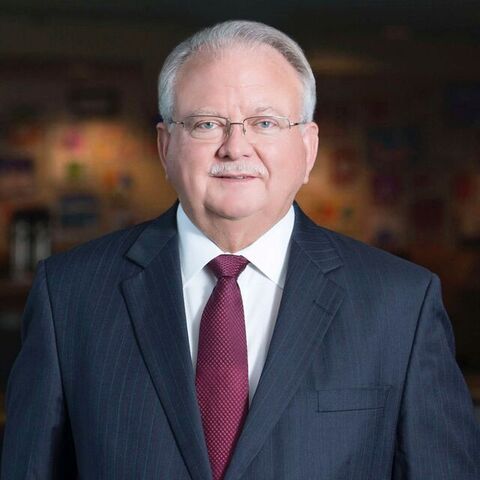
This is Randall Spence.