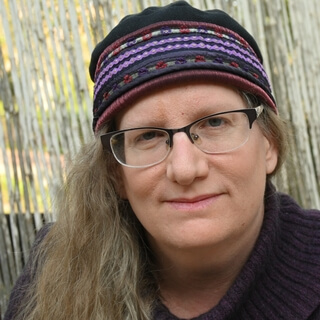
Welcome,
Welcome to Awakening Torah Musar Mindfulness.
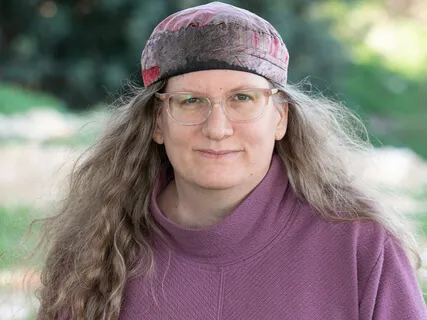
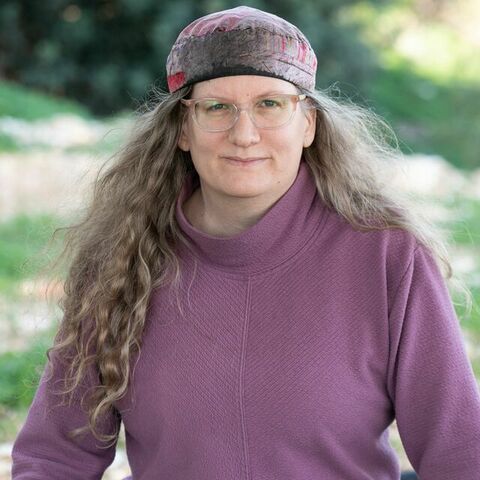
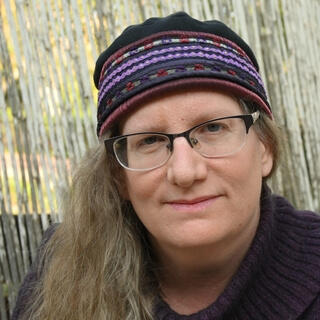
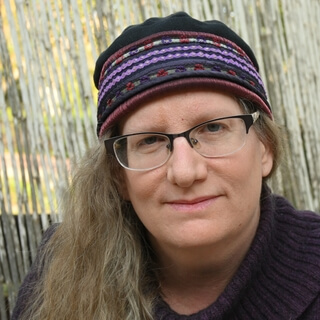
I am Rabbi Chassia Uriel Steinbauer,
The founder and director of the Institute for Holiness,
Kehilat Musar Mindfulness.
I'm delighted to have you today on Sunday,
February 12th,
2023,
7.
30pm Israeli Standard Time here in Israel,
Ha'aretz.
Today is the 21st of Shavuot.
We've already actually entered the 22nd here at night down because nightfall.
The Hebrew calendar functions from night to day.
And we will be covering the Torah portion from yesterday,
From on Shabbat,
Which was Yitro.
And I always like to give the date in the frame of reference.
So that was on the 20th of Shavuot.
The Hebrew month,
And it was on the 11th of February.
So as for those of you new to what is Torah Musar Mindfulness,
We always look at the Torah portion that happened the day before,
Giving us a week to study it and enter it to see what our parashanim,
Our ancestors have said about the Torah portion,
What we might have learned in community and in the synagogue when we hear it read,
If we participate in a minyan or a big knesset in a synagogue.
And then we sit together.
We come here together every Sunday,
Bezrat Hashem,
God willing,
To look at the Torah portion from the lens from Musar Mindfulness,
Combining both the Jewish tradition of Musar and the dharma,
The mindfulness coming from Theravada Buddhism to learn the insight of these ancient traditions and wisdom from our ancestors to really get the most out of the Torah portion from the Hebrew Bible.
So I'm delighted that you've joined us,
Whether it's here on Zoom together or live streaming on our YouTube channel,
Please,
Please subscribe at our YouTube channel or live streaming on Facebook,
LinkedIn or Twitter,
Wherever you may be joining us.
Welcome.
I invite you to subscribe to our community at kehilatmusar.
Com to receive our newsletter and to keep in touch with what is happening.
We always begin our practice with our Kavanot,
With our intention for today's practice.
So if you look here,
You're going to go ahead and see our intentions,
Our Kavanot for today's practice,
Which we have every week.
It's the same three,
Because we see this practice together,
This time together as an act of radical self-care so that we can care and serve the other to bring God's good to the other.
So we say this is what I'm doing.
This is something I'm doing right now,
Sitting here with the Institute for Holiness with Rabbi Chassia here.
This is something I'm doing to strengthen my own soul.
And this is something I'm doing to strengthen my relationship to others.
This is something I'm doing with Kavanot,
With intention to strengthen my relationship with the creators.
All three levels that we meet in Musar learning and practice.
Ben Adam le'atzmo,
One's relationship to oneself.
Ben Adam le'chavaro,
One's relationship to others.
And Ben Adam le'makom,
One's relationship to the divine.
So we say we're doing this in order to be a benefit to others in the future so that we can be a better conduit of God's good to others when they need me.
So this is what we're doing.
This is may we merit this today so much that we need to be able to cultivate this wise discernment so that we may act in the world to care for others,
Not through reactivity,
But through a path that really recognizes the needs of the others and does not harm and suffering.
So this is where we launch today.
I'm going to stop sharing screen for those of you watching on video.
For those of you listening on audio or a podcast,
You just heard our classic three intentions for today.
So we are jumping into Parsha Yitro.
This is one of my favorites.
Why?
So just to give you a nice quick summary of what happens here,
I can find my summary notes.
My mida of Seder of order is not as strong as it used to be.
And I like to use my children as an excuse,
But it's really my practice,
My issue.
So where where is Yitro for those of you joining us?
It's in the book of Shemot in Exodus in English.
And it starts chapter 18,
Verse one through twenty seven in that chapter,
And then chapter 19,
Verse one,
All the way through chapter 20.
That ends in verse twenty one.
OK,
And what happens here?
What's the basis of this this weekly Torah portion?
So Yitro is the name of Moshe Rabbeinu,
Our leader,
Our ancestor Moses,
Moshe,
Who he is his is his father in law.
So Moshe has married Sipporah,
Whose father is Yitro.
OK,
And Yitro comes in this Torah portion to meet B'nai Israel,
The Israelites,
The Hebrews in the in the midbar,
In the desert,
In the wilderness.
And Yitro brings Moshe's wife,
Sipporah,
And their two sons,
Gershom and Eliezer.
OK,
So Yitro watches Moshe serve as the only dayan,
As the only judge for all of B'nai Israel.
And he thinks this is too much for Moshe to do alone.
He would think that way for anyone to do alone.
It's not that Moshe lacks some skill.
It's that he's looking at the system with thousands,
If not millions of people and says there cannot just be one judge,
One dayan here.
Right.
So Yitro helps Moshe build a better system with more judges.
This is significant in and of itself that basically this is in chapter 18,
Verse 21.
It is Yitro who finds the ideal,
The social,
The spiritual and moral qualification for judges.
This is profound.
This is a non-Israelite,
A non-Hebrew,
A non-Jew who has come to offer his insight and wisdom.
And it benefits the Hebrews,
The Israelites.
It benefits our people so greatly.
It's quite beautiful,
Actually.
So that's one of the things that happens here.
And then B'nai Israel set up camp at Har Sinai,
At Mount Sinai.
And for three days,
Which we're going to talk about three days,
What is the significance of this?
What does this mean?
For three days,
They prepare to receive Torah.
I want to say that again,
Because we're going to this is part of what we're going to focus on today.
For three days,
They prepare to receive Torah.
I want you to immediately even begin to think what is of so importance in your life that you knew was coming,
That you decided with Kavanah,
With intention to prepare for it.
Right now,
On the third day,
There is thunder,
Lightning,
Heavy clouds,
A very strong sound,
Kol shafar,
A sound of the shofar.
And Har Sinai fills with smoke because God comes down in fire,
Horrific,
Amazing,
All of the above,
What we call yira,
Both awe and fear happening at the same time.
God declares the aseret ha-dibrot,
The ten utterances.
In Western culture,
It's been translated as the ten commandments,
But they're not commandments per se.
Dibrot comes from the word d'var,
Meaning thing or word.
So these are more pronunciations like pronouncing something that's chashuv,
That's important,
Right?
Utterances.
So these include God oriented mitzvot,
Like not worshipping idols and to keep Shabbat,
The Sabbath,
And people oriented mitzvot,
Like do not kill and do not steal,
Things of that sort.
I would say it's more do not murder.
B'nai Israel are scared of what they see at Har Sinai,
And they ask Moshe to teach them instead of hearing directly from God.
Moshe tells them not to be afraid.
Then God gives Moshe rules for making a mizbeach,
An altar for sacrifices.
And that's essentially a summary,
A quick summary of our portion.
So what do I want to focus on today?
Obviously,
We have to narrow it down.
What we're going to focus on,
There's so much here,
Obviously.
Some very important things happen.
So the first is that I want to say that this scene,
This whole scene set up here at Har Sinai,
The preparations for the three days and then the actual teaching,
The receiving of the Aseret HaDibrot,
The 10 utterances,
That basically the scene is forging Israel's national identity and spiritual destiny in some sense,
Who they will be as a people,
What they will perpetuate and move on.
So that even today,
I'm sitting here teaching in memory and honor and living out the Torah as been passed down through our ancestors through centuries.
So three days.
We learn from this that our ancestors had a real deep sense in their observance,
In their spiritual practice,
That to take time,
That one must take time for something instead of just acting out in reactivity,
That one must consider how much time does one need to really prepare to be ready,
Sound mind,
Sound heart,
Moving forward here.
And this is of quite a significance and in particular,
I want to bring a wonderful quote here from the Jewish Publication Society that teaches us the significance of three days and the third day.
So I'm on page 105 here in the JPS Torah commentary on Shemot,
On Exodus,
And it says the third day.
In biblical consciousness,
Three days constitutes a significant segment of time.
As with Avraham at the Akedah,
This took place in Genesis and Bereshit and chapter 22,
Pesach 4,
Verse 4.
So here,
The longish interval is crucial for the trial of faith.
So this is how this is being interpreted,
That this is a trial of faith.
I think it's more than a trial of faith.
So you could see it as just something external being commanded of them by God that they must wait three days.
I think that people are also choosing to engage in this time to prepare.
It's not as if they've been given an order and then they sit around kind of biting their nails and all worried what's going to come next.
How are they going to receive this?
How are they going to be ready?
Instead,
They prepare themselves.
There is actual things that they engage in.
We'll look at that very clearly.
OK,
So here,
The longish interval is crucial.
The people's immediate assent to God's declaration may otherwise have been given through impulsivity,
Essentially,
Right?
Without proper consideration,
Maybe even just fear-based,
All this kind of both fear and all scariness happening on the mountain could cause one to immediately say,
Yes,
I submit.
Just go away.
Stop with the shofar and the fire and the smoke.
Who knows what?
We can only guess.
Different people would obviously have different reactions and responses to this.
But what is being proposed here is that it's not only the intention of God that it be three days,
But the people really take and engage in this time so that they are acting with intention,
That they're not acting out of rashness,
Impulsivity or reactivity.
OK,
So everything with proper consideration,
With wise discernment.
So the three days of preparation and self-restraint allow time for reflection so that the acceptance of the covenant can be considered an undoubted act of free will.
So according to Jewish tradition,
The third day fell on the sixth day of Sivan and is identified with our harvest festival of Shavuot,
Right?
Which obviously,
Consequently,
Over generations comes to memorate the giving of the Torah,
Of Matan Torah,
Giving the Torah,
Receiving Torah.
So what do our ancestors do here?
What do they?
So they work on purity.
They want to stay as pure as possible,
Seeing themselves as a vessel in which to be in relationship with divine and receive divine presence.
And excuse me,
I have a piece of hair here somewhere that that one essentially really make sure that they are in the best state possible emotionally,
Mentally,
Physically.
And so they launder their clothing.
You have to think to your own self.
I want you to think through this list.
What is it that you need to do to be a vessel,
To receive God's presence,
To be in relationship,
To receive that which is sacred and holy?
What would you engage in?
What do you need to engage in?
How many days?
So they wash their clothing.
They get ready for this third day.
There seems to be some real intention behind this readiness.
And they make sure to set up boundaries.
There's like physical boundaries set up.
They make sure to distance themselves a bit from that which is holy or too sacred to be a part of it.
They're not to go up the mountain or touch the border with it.
And that essentially this is all they are worn to stay pure.
Right.
And then,
Of course,
We have this famous basuq that is bothersome to all of us who have any consciousness at all,
Especially a feminist consciousness.
Be ready for the third day.
Do not go near a woman.
So obviously you could say this was this is a directed towards men.
I mean,
Maybe it was also directed towards women where women supposed to stay away from women,
Too.
And I don't mean just intimacy.
What is it about women that you are to stay away from?
Maybe has nothing to do with women.
Maybe if this is being directed towards men,
It has something to do with them.
Who knows if it even needs to be read into either men or women?
There's just this assumption that one is to stay away.
It could be read as sexual intimacy,
That that's not appropriate right now to engage in.
That's not how we engage in sacredness and holiness and connecting with the divine.
Or it could be something to do with possibly that she's menstruating and the sense of blood and its connection to purity and it being about life and death.
We could explore and over 2000 years that has been explored by our ancestors.
That's not of as importance to me as it is.
Our ancestors purposely shared this deep preparation with us,
The amount of time that they felt that they needed for reflection,
The amount of time that they needed to prepare and practice self-restraint.
And this is very important because this is a gift.
This is like having your grandparents sit down with you and say,
This is what I felt is best.
This is what I learned from this experience.
And so I want us to think about that in our own practice of Musa mindfulness,
That obviously to take this practice in life seriously,
That we live this very purpose driven life on this path towards holiness.
And we don't have a prescription of say,
Three days we need to prepare for this teaching or we need to wash our clothing or something to this effect.
But we all have intentional acts that we realize through the practice and through the path and through communal standards that signify for us the importance of not only creating boundaries,
That which we don't engage in,
That which we do,
In order to be the vessel that we want to be to be in relationship with the divine and being of service.
So that's the first thing I want to touch upon.
The other key thing that I think is really tied into this is of when we head to the description of the character of sanctity that happens at Har Sinai,
At Mount Sinai.
This we learn from Ramban,
One of our famous Parshanim,
One of our commentators,
Comes to really show the relationship between,
It's almost like a training.
So think about as I go into this,
See if you can see the connection.
By training,
I mean like a spiritual practice that one has to engage in and try first for the final,
Whatever the final thing might be here.
So Har Sinai,
Mount Sinai assumes the character of essentially a sanctuary,
Like a synagogue,
A big knesset,
Or a temple,
Right?
In the Senebemidash,
For the duration of what happens here at Har Sinai.
And it actually has a very close similarity between the tabernacle,
The Mishkan that is built in the desert,
That where our ancestors went to engage with and serve and give offerings and be in relationship with God.
And so these share several shared characteristics.
So both at Sinai and the tabernacle is evidenced by a tripartite division.
So this you can find,
Again,
If you're following along,
On page 105 of the Jewish Publication Society's section on this Parsha.
It goes on to teach that the summit corresponds to the inner sanctum,
The Holy of Holies.
Only Moshe was able to go up there,
Similar to the high priest,
The Kohen Gadol is the only one that can enter the Holy of Holies.
So he's the only one.
So here's the inner sanctum,
High up on the mountain.
And here's the Holy of Holies in the Mishkan,
Essentially.
And then the second zone is this part way up the mountain,
Right?
And we know who gets invited up there,
Right?
And this part way up the mountain,
Aharon,
Who then becomes the brother of Moshe.
He comes up and even the elders,
Zikne Yisrael,
The elders will be at the lower part.
So part way up the mountain is equivalent to the tabernacle's outer sanctum,
Right?
And then,
Or what we call the Holy Place.
And the third zone is at the foot of the mountain,
And it's analogous to the outer court,
Essentially.
So this is the same thing as with the tabernacle,
The three distinct zones of Sinai.
They feature three gradations of holiness in distending order.
So just as Moshe ascends to the peak,
Only the high priest enters the Holy of Holies.
And just as the second level,
Right,
Is the part way up the mountain,
Is a holy place preserved for the priesthood,
The Kohanim later on.
So too here with Aharon and the elders are allowed to ascend to a specific point in the mountain.
And then the confinement of the rest of us,
Of laity,
Right,
Is to the outer court of the tabernacle.
This is where the burnt offerings are located.
This is the same thing of at Har Sinai,
Mount Sinai,
At the foot of the mountain,
Essentially,
Right?
Where the altar is built in some way.
Okay,
So that's quite significant because one,
I think it's almost like a dress rehearsal in the sense of Hashem is modeling and showing B'nai Yisrael these gradations,
These levels of holiness,
These levels of sacredness.
Who is allowed to enter?
What state?
How are they prepared?
Who are they?
What is their relationship to the divine?
How do they represent the people?
This is all happening,
Right?
And there's something quite beautiful about that.
That if we weren't paying attention,
We wouldn't realize that this has been a gift given by God,
That let's experience this first level here at Mount Sinai.
And then when we build this Mishkan,
When we come together to build this home in the desert,
Where we will go and provide offerings,
This is going to be another training from what we learn from Har Sinai,
From Mount Sinai,
Of how to maintain and hold these gradations of holiness,
Of who serves,
What is brought,
What preparation is needed,
What purity is needed.
If one is in an impure state due to illness or menstruation or being near a dead body,
All the things that our ancestors held as part of the purity system,
One did not enter the Mishkan.
And so here,
At least,
The people prepare,
They attempt to be as pure as possible,
But I can guarantee you that there were probably sick people,
People who had been near a dead body,
God forbid,
People who were menstruating,
Women who were menstruating,
Women who were bleeding after giving birth.
All that was present at the foot of the mountain at Mount Sinai.
All were present.
All were welcome.
And so we remember that too,
That even when the people who are impure cannot in the desert enter the Mishkan,
They're still part of the Qahal.
They're still part of the community.
And this is a very strong lesson for us,
Because today in our communities,
In our relationships worldwide,
We have begun to create what I call false divisions and perpetuating them.
We have to be very careful not to do that in our own practice,
In our communities of excluding others that we deem inappropriate,
Not pure enough,
Not healthy enough,
Whatever,
Not of the right status,
Not of the right nation,
Not of the right race,
Not of the right class,
Not of the right gender,
Not of the right sexuality,
You name it.
We must hold on to what our ancestors wanted to learn from this Torah portion,
That all were welcome and all were present,
Even if there were gradations of those who held different relationships for the divine and provided their own service that way.
So we are going to take this lesson,
This idea that how we live and our deeds,
No matter how dark we've fallen,
No matter how much off the path we've gone,
That we have a moment at every juncture to go to that foot of that mountain and to replace how we had been living our deeds and such to service of God.
Just like our ancestors replaced how they lived and their deeds as slaves,
As former slaves in the institution of slavery in Egypt,
And they turned that way of living and deeds toward service of God.
And they will continue to do this.
They will continue having to constantly turn and do to Shuvah,
Because it's not as if we escape our paths,
And that's not what we're supposed to do.
It's supposed to be over time and integration,
Both the good and the bad,
Both the trauma and the resilience,
Both the pleasant and unpleasant.
So we over time will witness in this next 40 year journey of our ancestors through the Torah,
We will see them have to struggle with their lives and their deeds as they were in attempt to replace it for service of God.
And that is our task every single day.
It requires Emmett truth,
What my colleague Rabbi Carol Glass calls a whole picture awareness of past,
Present and future,
Understanding many narratives and how our narratives become truth to us.
It also just takes great humility.
And it requires great menucha ta-nefesh,
The mida of equanimity for us to be able to be present with what we call the good or the bad,
And having it not throw us off our surfboard.
If we see life as us riding the waves,
Even if the tsunami comes,
Even if hardly any waves are there at all,
Both of which are trying on the surfboard,
We and our practice stay on that surfboard,
Knowing that we can be with the stimuli,
Creating that space between the match and the fuse.
And there we find our freedom,
Our liberation,
The ability to not react,
The ability to choose wise discernment,
Where we don't cause harm and suffering to ourselves and others,
One day at a time.
We will enter our mindfulness meditation practice now to integrate some of this.
I invite you to assume one of the classic four mindfulness postures,
Either seated on a cushion on a zafu or in the chair like I am.
You're welcome to stand,
For instance,
In a strong mountain pose.
You can lie down.
I encourage you to keep your eyes open if you have vision,
Or you are welcome to do walking meditation,
Whatever is best for you,
Keeping in mind your own individual needs if there's any chronic pain or trauma to be present for all that is needed for radical self care.
So if you are seated like me,
Please move to the edge of your seat so that you can hold your spine erect.
You want to be upright created in the image and the likeness of the divine,
Not West Point stiff with ease,
Allowing the shoulders to rest and relax.
We will begin with three deep inhalations and exhalations,
Inhalation,
And exhaling.
I invite you to close your eyes if you feel safe or lower your gaze in front of you inhalation inviting ease,
Exhalation arriving,
Inhalation inviting a smile,
Exhaling,
Inviting the gift of presence,
Being awake to this moment,
Allowing ourselves to truly arrive to where our anchor is our breath and my voice,
Letting go of whatever came before this session,
And whatever you feel or think will come after.
We can let go of any planning for the future,
Allowing ourselves the gift of being here in the present moment,
Being if you can gently say to yourself,
Allow myself to arrive.
What is it that I need to be present here?
What more can I let go of imagining yourself even at the foot of the mountain,
How it'd be such a great,
Even challenging practice to remain present and not caught up in reactivity with all the thunder and the clouds and cold shafar,
The sound of the shafar and the blasts,
Very challenging,
Like very difficult waves.
Think in your own life,
When have you been challenged like that?
Something that was just either awe inspiring or full of fear or both.
What is it like to remain present for these things in the present moment?
Our practice of Menuchat HaNafish,
Of equanimity is a spacious,
Balancedness of heart.
It is something that can be cultivated just like we cultivate chesed and metta,
Loving kindness and rahamim,
Compassion.
And the first way we do this and balancing our hearts is recognizing that we are not in control.
That is the first truth of Emet.
We are not in control.
You can whisper that to yourself quietly.
I am not in control.
We are a small part on this great on this great path.
And even though we constantly cultivate compassion for others,
And we practice and offer deeds to alleviate suffering in the world,
There will always be situations we are unable to affect.
As we sit here right now together from all over the world,
Our brothers and sisters in Syria and in Turkey are suffering.
We can't affect that right now.
We can send them metta,
Loving kindness,
We can send them prayers,
We can send them money to try to help in any way we can.
The well known serenity prayer of the alcoholic anonymous movement,
Alcoholics anonymous movement.
May I have the serenity to accept the things I cannot change,
The courage to change the things I can,
And the wisdom to know the difference.
This wisdom that we are learning and cultivating together is to recognize that how we behave in the world,
These acts that we will be heir to them,
Meaning we will realize the effect of them,
Either ourselves,
Those we love around us,
And for some people,
For future lives,
If they believe that.
This is to say that we can deeply love others and offer assistance.
But in the end,
We all must learn for ourselves and be the source of our own practice.
So although everyone was at that mountain,
And continues to be at Har Sinai at Mount Sinai,
Each person had to cultivate and practice themselves.
Each person had to combine the understanding that truth with a compassionate heart,
Bringing your soft attention again to your breath,
Until you're both your mind and body are calm.
Kindly whisper to yourself,
May I be balanced and at peace,
Acknowledging that all that is created,
All arises and passes away.
Joys,
Sorrows,
That which is pleasant,
That which is unpleasant,
People,
Insects,
Animals,
Nations,
And even whole civilizations.
We kindly whisper to ourselves,
May I learn to see the arising and passing of all that is with equanimity.
May I be open,
Balanced,
And peaceful,
Acknowledging again,
The second layer of truth,
The first that we are not in control.
And the second that we are all heirs to our own deeds,
And that our lives arise and pass away according to the conditions and deeds that God has created for us.
We can love and care for others,
We cannot fix them.
We cannot love for them.
We cannot practice for them.
So as we hold everyone we love in mind and all the concentric circles of obligation,
All the way out to even our brethren in Syria and Turkey,
We say may your happiness and suffering depend on your actions today and on your thoughts.
They do not depend on my wishes for you.
I will pray will do everything I can sending loving kindness and metta to all in need.
We hold everyone gently whisper to yourself my learn to see the arising and passing of things with equanimity.
May I live with a balanced heart.
May I bring compassion and equanimity to the events of the world.
Others suffering depends often on their own deeds and thoughts.
But then there are things as an earthquake that is even beyond the control of them,
That our wishes cannot control them,
Or the situation.
All we can do is respond with wise discernment.
May they find balance.
May they find equanimity amidst it all.
May they be open and balanced.
May they have a courageous balanced heart.
As we sit the next few minutes in silence,
Allow yourself to be fully present with whatever has arisen.
If your mind has wandered,
Bring your attention back to your anchor,
Whether it's your breath,
The sounds around you.
Simply begin again,
You will hear the sound of the bells when it's time to come out of the meditation.
Gently and slowly open your eyes if they were closed during the practice,
Allowing the light to filter in slowly,
Allowing yourself a deep inner bow for your practice.
Thanking Hashem for this practice.
Thanking our ancestors as we take refuge here together in community in this practice of Musa mindfulness,
Taking refuge in the teachings of Torah and the Dharma.
I'm delighted that you've joined us.
May you also join us next Sunday,
B'srat Hashem at our usual time,
1230 Eastern Standard Time.
I encourage you to take this practice for this full next week to really internalize the emet,
The truth that we are not in control,
But that which we can control,
That we have the courage to act on it.
And so each day,
Discern how you can be of help to this world that is in so much need.
Looking at the situation,
Of course,
In Syria and Turkey,
This teaching,
This today has been sponsored in holding our ancestors and our relatives and brothers and sisters in Syria and Turkey.
May they receive such strength and courage this time to hold one another and care for each other and compassion and equanimity.
And we to carry them,
Support them in any way that we can.
So each day just doing one small deed,
Paying attention to what's happening there,
See how you can support.
And then if you can't do anything internationally,
Then what can happen locally in the sense of really seeing if you can collect goods to send to them.
And if you can't,
Then who can you collect goods for in your own local community to support and assist?
As I know,
There are needs everywhere throughout the world,
Everywhere.
So with that,
We thank you for your donations to support this weekly offering to the public.
And we encourage you to join us and our community as a subscriber and even as a member and be in touch with us so that we can meet and get to know you.
Thank you and you take care of yourselves.