Here we go.
Welcome to Awakening Torah,
Musar,
Mindfulness.
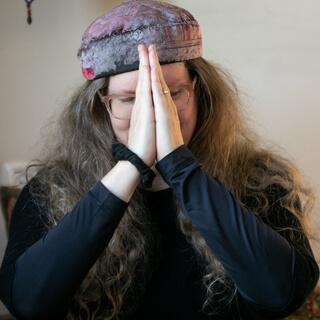
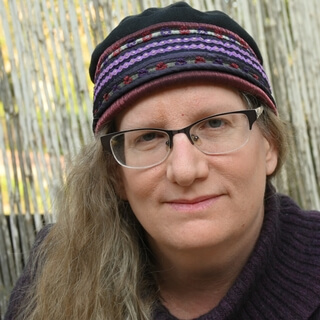
I am Rabbi Hasi Oriel Steinbauer,
The founder and director for the Institute of Holiness,
Kehilat Musar.
And you are joining us during our weekly session to look at the Torah portion,
The Hebrew Bible portion of the regular Torah cycle in the Jewish practice and Judaism,
Where we're in the book of Bereshit,
Of creation in the beginning.
And our parshah this week,
Which we studied during last week and read in communities throughout the world last Shabbat yesterday,
Is called Vayera.
And before we begin Vayera,
We want to say that it happened on November 12th,
Yesterday.
Today is the 13th,
2002.
And it happened on the 18th of Cheshvan in the Jewish year and the Jewish calendar,
The Hebrew calendar of 5783.
And so today,
Obviously,
Is the 19th of Cheshvan.
I'm delighted to have you here and to be practicing together.
So as we always do,
I'm going to move us through our kavanot,
Our intention for today's practice.
So let me just pull that up for you.
Jump into our learning together.
OK.
So if you are new to this awakening by the Torah,
Musa,
Or mindfulness,
Then you will see that each week we will cover these same kavanot,
These same attentions,
Because they're so life affirming and yet challenging at the same time.
And it's something that we want to fulfill.
It may be merited so as taking refuge and community to do this together.
So we stay together.
If you are able to see the screen,
If you have vision to read,
Otherwise you can hear me on audio or on the podcast,
Read this out loud.
Before we're doing acts of caring for the self,
Which we see this time together,
This 45 minutes together,
As really doing radical self-care,
Taking this time to learn and practice.
So we say this is something I am doing to strengthen my own soul in order to be a benefit to others in the future.
And then we say that we're also doing this as an act for others,
Which is tied to even the first kavanah.
So we say this is something I'm doing to strengthen my relationship to others so I can be a better conduit of God's good to others when they need me.
And then we're also doing this to strengthen our relationship to or with the divine,
However we define that.
Is this something to strengthen my relationship with the creator so I can be a better conduit of God's good to others when they need me?
So maybe actually just take a pause and allow that to internalize,
To know that that is our merit to try to engage in this and be present for it together,
To allow that intention to manifest.
So if you have been following along,
And if you haven't,
You can always go to our YouTube channel and look at Bereshit,
Noah,
And Lech Lecha.
We're now in the fourth parshah portion of Bereshit,
The book of Genesis and Vayera.
And you can watch those videos to follow along because you're going to start seeing a thread that we are really holding on to a certain pattern this year of really engaging in internalizing and seeing ourselves as created in the image and likeness of the divine because that was the gift,
One of the many gifts that God gave us in creation that God let us know that knowledge.
That knowledge didn't have to be given to us.
And we internalize it and we feel it.
And when we do that,
We can actually see ourselves as that.
Then we have this proper healthy self-esteem,
This proper anava of humility from Musa perspective,
The mida,
The soul trait of humility is all about that healthy,
Balanced self-esteem of you taking up proper amount of space in your place in society and in life.
So if we're able to internalize that,
Then we can also see the other,
Any other,
Even people that we think we dislike or disagree with or find unpleasant,
They too have that spark of the divine in them.
And so because of that,
There's a real basic humanity of kavod,
Of glory,
Of respect that we are cultivating as a practice to hold,
Which comes down to aesthetic,
To righteousness in the sense of not justice,
But due to the other how you want to be treated.
Love the other how you want to be loved.
What is hateful to you don't do to the other.
These sound very simple.
They're very difficult to live and to do on a daily basis.
So if you know anything about these parshiot,
Especially this one vaira,
There are lots of amazing stories from our ancestors passed down and we can never get to all of them,
Even though we would love to.
We could spend hours together doing this.
So I want us to focus on Avraham this year.
And so as you might recall,
What did we learn about our beloved ancestor Avraham,
Formerly known as Avram,
From last parshah and Leklacha?
You remember that he had these varied facets to him,
What we would call midot,
Personality traits,
Soul traits.
They were very varied in him and they shifted basically.
I mean,
We got to witness that about his character.
So for instance,
He was fearful and evasive while in Egypt,
Trying to survive the famine.
And then all of a sudden,
He's decisive and courageous in the land of Canaan,
In the land that's been promised to him when he was taking his journey,
When he was entering the land,
And also when he went to war against the five kings in order to redeem his nephew Lot.
So suddenly,
He had this new,
Tapped into this new courage and bravery and very decisiveness to take care of his nephew that we don't witness when necessarily when it comes to either caring for the self or maybe even his relationship with Sarah,
Formerly known as Sarai.
We can touch on that another time.
We also witnessed him from a man of peace.
And then all of a sudden,
A shift where we see the skill and heroism in battle or something like,
Where did that come from?
So we're seeing how varied he is in his full humanity.
We are seeing a full human.
We're being given the gift to see that someone is complex.
Someone might not be balanced in this midot or they're balanced here.
In order for us to be able to really identify with and learn from our ancestor,
We need to see them in their full mistakes and their humanity.
It's a real gift given.
It's quite beautiful.
So what we witness here also is it is like first he was facing his estrangement from his nephew Lot.
This is another example.
And then all of a sudden,
He exhibits this self-sacrificing loyalty to him and redeeming him when he was kidnapped by the five kings during the war.
And so let's just hold on to all that as we move into vayira.
I want you to recall how we're witnessing this full humanity and the full range of him.
He has these strong balanced midot,
These soul traits like loyalty,
Steadfastness,
Courage,
And even humility from time to time,
But not always.
Suddenly,
Humility become really unbalanced,
Where it's inappropriate what he's asking for or demanding from someone else.
So there will be fear that's really not balanced,
To be honest with you.
We see it,
For instance,
Him taking up too much space and not really considering the needs of the other when he actually banishes Hagar based on Sarah's command.
This will come later.
Also,
How he treats even Sarah by basically asking her to put herself in danger and harm's way so that he can survive.
So of course,
His survival instinct kicks in.
And sometimes that causes him to not behave in balanced ways that we would want towards the other.
Really sticky,
Complicated,
Moral dilemmas is what we're finding in this man's life and as examples for us.
And this parshah doesn't fail us,
As we will see here.
So what do we learn from this week's parshah?
It's a lot.
Basically,
We get the scene where we know that Avraham has just circumcised himself,
Basically undergone self-surgery in his private parts as commanded by God.
And he's out recovering,
Sitting out in his tent from this.
The tradition assumes he's on day three of his recovery.
If you know anything about circumcision,
I've heard from other adult males,
Particularly those who've converted later in life and underwent a circumcision through surgery in the hospital that day three apparently is the most painful day.
It's something about it healing and coming to where it is.
So picture Avraham outside his tent.
He's a 100-year-old man in the height of the heat,
The worst heat of the desert day.
And what does he do?
Three men.
So first of all,
God appeared to him.
God's somewhere near him.
God visits him,
What we assume the mitzvah of Bikur Holim,
Of visiting the sick.
He shows up.
He's silent with them.
They're both silent together.
They just sit in this beautiful silence.
OK?
It's being present for someone.
God's demonstrating this with Avraham.
And also then three men show up,
Which we learn are angels later because they know information that they shouldn't know as strangers,
As men.
Three men are traveling through the desert.
And what does Avraham do?
He jumps up and runs to them.
Can you picture someone who's just recovering from surgery,
Of circumcision,
And he's 100 years old?
And he bows to them on the way,
Bows to them,
And then basically kind of commands and begs them simultaneously to come,
Let them wash their feet or be washed,
Let them eat,
Let him prepare food for them and drink,
Let them rest with him.
It's almost like he can't allow them to turn away.
This has to happen for him,
Right?
And so what do we learn from Avraham?
We learn that he is like the classic number one example in case of how we are trying to,
How we as Jews and as humans are to stretch ourselves to be like him,
To emulate,
That we are to open our houses and our lives and our hearts to anyone who emerges,
Strangers essentially,
Right?
He doesn't run up to them and go,
Are you a citizen?
What's your race?
What's your class?
What's your sexuality?
What's your gender?
Whatever.
He doesn't classify them.
He doesn't limit them.
He just accepts them as human beings.
He really practices this,
They're created in the image of God.
Here comes these souls towards me,
And I'm going to take care of them,
Right?
I'm going to engage with them.
So essentially,
That's what he's demonstrating to us.
It's quite incredible.
No more information is required.
And then all of a sudden,
What comes,
The very statement,
The very antithesis of Avraham,
Is the towns of Sodom and Amorah,
Known in English as Sodom and Gomorrah,
And how the people behave there,
How they live,
Is set up as the exact opposite of how we are supposed to behave.
And not much information is given,
Except for the very clear text,
The very clear language,
Which I'll quote for you here.
It's in Bereshit,
Genesis chapter 18,
Verse 20 and 21,
Where it says here,
Vayomir Adonai,
Right?
Vayomir Hashem,
God said,
S'akat sudom ve'amorah ki rabah,
The outcry,
The scream.
The scream of Sodom and Gomorrah is so great,
Right?
It's rabah,
It's like enormous.
V'hatatam ki havdamor,
And their sin,
It's because their sin is so heavy.
What does it mean to be heavy?
It's so serious.
So we can't even,
All our midrashim,
All our agadot,
All our fables and stories around all these Torah portions have a lot to say about this,
Where they imagine what the people of Sodom and Gomorrah are actually doing that would require that there's outcries to God that God hears.
And God actually physically comes down to check out the situation.
So we all can go there.
We can all imagine the worst of humanity.
We saw examples of this earlier,
Right?
We're going to look at a Kayin committing homicide,
Killing his brother,
Hevim.
We're going to look at our ancestors not taking responsibility.
That's not even as bad as it could get.
We look at what happened with humanity before the great flood,
That basically the undid creation,
But how they behave towards each other,
Towards animals,
And towards the Earth.
And essentially,
What do we see?
And then the people of the Tower of Belleville,
Right?
Them trying to,
Probably in response to trauma,
To be honest with you,
This sense of not living in harmony and in alignment with the Earth and the divine.
But we're trying to picture what could be that these awful worst sins.
I'm not going to get into what we have to say about those.
But just imagine it's the worst of the opposite of Avraham.
So if Avraham runs to care for the stranger,
To reach out to those who are most vulnerable,
Traveling in the high heat of the day in the desert,
Then the opposite of that is someone who is shutting their doors to those who are most vulnerable to those who are in their greatest need,
Maybe need water or food or they're about to die,
Who has shut out,
OK?
And then you could even assume violence on top of that,
All right?
Whatever else might come.
So that's our context,
Is that here comes this people in this location where we can be taught essentially that it's the opposite of Avraham.
I want to bring in a text for you here very quickly.
The term here,
So I'm looking at the Jewish Publication Society page 132.
It wants to teach us about this language of sa'akah,
Of the outcry,
Of the screaming that went on.
That root,
That word,
It basically speaks the shorish,
The root of it,
Where it comes as the sariyud kuf.
It's really,
It connotes an anguish cry of the oppressed and an agonized plea of the victim for help in the face of unbelievable great injustice.
OK,
So that's what we're dealing with.
So let me tell you this.
We even witness in our tradition,
If you feel like,
Wow,
The way Avraham behaves,
It's really hard.
So just first in our practice right now,
Musa and Mindfulness,
We want to acknowledge that this might be a stretch for us to open our homes and hearts to strangers and whoever comes,
Especially in today's society.
So first,
Just acknowledge that.
Don't try to push it away or be in denial of it if you do feel that and you're not alone.
Our ancestors,
Some of them in the rabbinic tradition,
If for instance,
In the Midrashim,
We have this whole text that talks about how there was this tree that the people traveling would come and sit under near his tent.
And if the tree unfolded and covered them with what's called seil,
With a shade,
This should remind you of the story of Yonah,
By the way,
If it covers them,
Then it's a sign to Avraham that they're actually good,
Righteous people.
But if it doesn't cover them,
Then they're actually considered evil.
But why do our ancestors have to do that?
Why are they concerned and trying to make the three men,
The three angels coming have to be good and righteous for Avraham to take care of them and reach out to them?
I think the whole fact is that Avraham didn't actually check off if they were evil or righteous or actually human in between and had both traits,
Right?
The shadow self and the amazing great self,
Right?
I think why we see the rabbis doing that in the Midrash is they too are uncomfortable with how generous and open hearted Avraham is.
They feel that maybe they can't stretch into it,
Right?
But we don't realize this.
We see Avraham going ahead and doing this,
All right?
So I wanted to share that with you,
Right?
And then it moves into,
Right,
He has this,
There's a history there,
Right?
Even when he dwells in Egypt and is evasive and lies about his wife being his sister and does it again with Avinelech later on in this Torah portion,
Right?
And he says that I did this when they actually confront him.
They're like,
Why did you lie to us and tell us,
Especially Avinelech,
Tell us that your sister,
That Sarai and Sarah was your sister?
And he says because there was no fear of God in this place.
So he is,
We know that Avraham exercises discernment when he's evaluating people of how he's dwelling with them and what's going on culturally,
How they behave.
And so you might think,
And this is to give the benefit of the doubt to the rabbis of that Midrash,
You might think when he saw those three men that he did some type of evaluation like that.
Do these people have the fear of God?
But we don't see that at all in the Torah text.
We don't see that at all.
He just went to them and wanted to host them,
Right?
But I think that's where the rabbis get the story or create the story,
Right?
That there was this tree that somehow showed him that they were people who would have a fear of God,
Who would be righteous in this sense,
Right?
OK.
So I just want to note and remind us if,
Let me share one more quote with you that comes out of this,
That essentially what do we mean by fear of God?
Just to remind you from last year's Torah cycle,
Right?
If you don't recall,
In a situation where there's no legal sanction or reward that's enforceable,
There is this the ultimate restraint on evil,
Especially to our ancestors thousands of years ago,
Right?
As well as the supreme incentive for good is the consciousness of the existence of a higher power,
Right?
Who demands certain standards of conduct.
So when our ancestors in the Torah say that this place had no fear of God,
Right?
The way Abraham uses it,
Right?
He believes that the king,
Avimelek,
Would have killed him if he thought that he was the husband.
So he lies to say,
I'm the brother.
She's my sister.
So that he won't kill him in order to commit adultery,
Right?
So this is where this concept comes because it would be a far greater offense to him,
Right?
To commit adultery than to murder the husband.
That's the thinking.
That's where we are,
What we're learning from this.
So the fear of God essentially is this concept of like norms of moral and ethical conduct.
Its application is universal in the Torah and I want it to use.
And although people like to argue it's not,
That it's basically God-given,
This concept of what do we mean by this internalized fear of God,
Instead of an intuitive discrimination of right or wrong,
I want to argue that they're the same thing.
That they're one and the same.
That when you really internalize what you've learned from your relationship with the divine as Avraham is attempting to do in practice,
You develop that moral code,
Right?
You know that intuitive right and wrong,
But it's always based on because you're in relationship with the moral and ethical conduct that you receive from your ancestors,
That you accept upon yourself within your communities,
Right?
OK?
So what happens?
We go from this complexity of Avraham's behavior,
Right?
He'll go to bat.
He will go to town to save the people of Sodom.
It's unbelievable language.
No one has spoken to Hashem,
To God,
The way he does up until now.
Listen to this language.
If we come to Bereshit,
Genesis chapter 18,
Verse 25.
It says,
God forbid,
Far be from you,
God Hashem,
To do such a thing that you're about to do.
What is it that God's hiding from Avraham or now sharing?
That God's about to go down and possibly destroy Sodom and Gomorrah because of their behavior,
Because of the outcry and their sin is so great.
So he says,
Far be it from you to do this thing.
Lehamit sadik im Rasha,
To kill the righteous,
The innocent,
In a sense,
With the evil,
The Rasha,
Right,
With the guilty.
Beha'yakr sadik im Rasha,
And so that the righteous and the evil,
The innocent and the guilty are treated the same way.
This is not like you,
He's saying to God.
This is not you.
You can't do this.
No one's spoken to God like this up until now,
The three previous far-shiot.
Nowak didn't turn to God and say,
You can't flood the whole earth because of how the evil people are behaving,
The guilty.
He didn't argue that at all.
So we have a growth in consciousness and mindfulness.
We're seeing this happen among our ancestors over time.
Then he goes on to say,
Lillah lah,
Far be it from you,
God forbid God.
Asho bekoha aretz lo yase bishpat.
Shall the judge of the earth,
Of all the earth,
Not do justice,
Not do what is right?
This is him speaking to him to remind him,
This is who you are,
God.
This is why I'm in relationship with you.
This is what I try to live on a daily basis and emulate.
You can't go down there and do that if finally it was 50 people,
45,
40,
30,
20,
10.
If you could find 10 innocent,
10 righteous out of all of the dom and omora,
You cannot destroy this.
He's moving from mishpat,
From justice,
From law and order,
From righteousness.
He's moving to mercy because you would never tell anyone to save a whole city for only 10 innocent people.
He's moving to rachmin,
To mercy.
He's telling God,
This is a moral development.
I'm showing my morality.
Avraham showing his deep fear of God,
His internal compass.
He's trying to balance himself and really be like,
It's not enough.
Mishpat is not enough.
It's also mercy.
The question for us as we try to even explore and grow in our own practice and morality is,
Should any be murdered?
Should any be killed if they are guilty and if they are evil or doing evil behavior?
What do we do with that today?
What is our response?
How do we care?
How do we respond?
I don't have the answers and nor do I mean to create them today.
But these are the moral dilemmas that are facing our ancestors in this text that we are to struggle with.
We are really to face.
So this is Avraham.
He's amazing.
Basically,
He has demonstrated for us how we are to behave.
And I realized only recently,
I just shared this with someone I was teaching earlier.
This is huge.
And I never thought this until today.
So I'm so happy that both Susan and Jenny are here to at least explore this with me.
I really think this is here because God wants us to take that halilah lakha,
God forbid,
God,
That you would behave this way to the next story of the akedat yitzchak,
Of the binding and almost offering as a burnt offering of yitzchak,
Of Isaac,
The son of Abraham.
It is outrageous to us that he would ever demand that somebody take their child and sacrifice them.
We can't even get our heads around it,
Right?
So I think we're supposed to learn from Avraham and be like,
Halilah lakha,
Ma'aseh kedavar hazeh,
God forbid,
Forbid from you,
God,
To command this of Avraham,
To do such a thing.
This is not you.
This is not the God we know,
The God who is loving and caring and does chesed for people who aren't even deserving,
Right,
Who clothes Adam and Chavah and leaving the God Aidan when he was angry at them and disagree with them,
To bury Moshe Rabbeinu,
Moses,
Later on,
And Emek when he was disappointed and angry at him for hitting the rock and attributing the water to his own power.
Or be it from you.
This is not the judge and the God that we turn to and want to be in relationship with this,
Right?
And so we are now,
As a practice,
A say this to God,
Right?
We are to learn to stand up and protest that this is not an act.
This is going to cause harm and suffering.
It's not in alignment with the God that Avraham has come to know and then who we have come to know in the Torah.
They would never demand such a thing.
And we're even saying it to Avraham.
We're saying,
Halilah,
Be it from you,
Avraham,
That you would get up early in the morning and take your son as an offering.
That's not you.
You argued for strangers.
You argued for Sodom and Gomorrah of people who actually did horrible acts,
So strong of horrible acts that there was an outcry and their sin was kaved m'od,
Really heavy and awful.
And you argued on behalf of them,
And you don't even argue for your son?
Wake up.
And so that is our job today is when we are engaged in this text to feel it and to then model and emulate and to learn from Avraham,
You weren't able to argue.
You were not able for whatever reason,
Right?
Whatever you were not balanced in your meedot in some ways.
And we're going to argue for you.
We're going to say to God now when we read this text,
And we're going to say to you,
Avraham,
You know better.
This is not you.
This act,
Even if it was a test,
Crossed a line.
It's a line that causes harm and suffering.
Even Yitzhak,
Who we assume in our tradition in Judaism,
He survives,
Right?
He survives.
A ram is substituted for him in the slaughtering and the offering.
But what about Yitzhak?
Could you imagine as a child you surviving that?
They actually leave separately.
Avraham goes off this way,
And Yitzhak goes this way.
Why?
What trauma is there?
What silence is there?
What harm and suffering is there from even engaging in such an act to test the faith of Avraham if that's what God was doing?
So we have to keep that in mind.
Even if we tell ourselves,
Oh,
God didn't really mean it.
God was just testing.
It was never going to happen.
We have to think,
Are we telling ourselves that to get through this?
This is part of our practice to face where we are with this.
So I want you now just internally in our practice before we move into our meditation essentially is for you to kind of draft even your own words of what you would want to say to Avraham and what you would want to say to God about that moment of how it shifts given what we have learned from Avraham and how he went to bat.
He really tried to save the people of Sodom and Amorah.
It was very important to him.
He didn't stretch himself far enough,
In my opinion,
For the option to actually even bring up to shulva,
Repentance.
He could have said to God like what Yona,
The prophet Yona does later,
Jonah,
He could have said,
Why don't you go down or have me go down and say,
God is about to destroy you.
You have three days to change your behavior.
There was no offer of repentance,
Which gets us into the question of why not.
Was the outcry and the sin so great that there's no chance of repentance?
Can human beings do that type of behavior?
It's like when Cayenne kills his brother,
Most likely by homicide and not with intention,
But we of course don't know,
Right?
Murder versus homicide.
He cries out to God and says,
This sin is too much for me.
I can't even be in your presence.
He's aware.
He's so much in harmony,
Even though he did a horrible act,
With an understanding that when you cross a line,
When you take a life,
And you spill blood,
And the ground's crying out to God,
You might have crossed the line.
There might not be the opportunity for repentance to shulva.
I don't know.
I don't know why it's not even offered to Sodom and Gomorrah,
As it will later with the prophet Jonah and others,
Like when they go to Tarshish,
Right,
In Nivea,
The whole story,
He has to show up and tell them that God's about to destroy them,
And they can repent.
And they do.
They change their whole behavior.
It's incredible.
It's a beautiful story.
If you don't know it,
Go look up the prophet Jonah and read it.
But we don't see it here.
So that's part of our work,
That we hope to develop this concept that destruction of human beings and land will stop happening,
And there'll be an opportunity for Tarshulva and repentance to change,
To stop our evil ways,
Right?
So let's move into our guided mindfulness meditation practice.
Again,
As we begin and move into suddenly arriving,
I want you to really tap into what you could say.
What are your own words?
OK,
Allow yourself to begin to settle and arrive.
You can assume one of the classic four postures of standing,
Walking,
Lying down,
Or sitting in a seated posture,
Either on a meditation cushion or in a chair or even on the floor.
And allow your feet to really be held by the Earth so that you're between the heaven and the Earth.
And take three deep cleansing breaths,
Inhalation and exhalation,
Inhalation.
Allow yourself to go,
Ah,
Letting any tension go in the body,
In the hearts,
In the mind,
Allowing yourself to begin to settle and arrive.
One more inhalation and exhalation,
Allowing the gift to be here for you to really engage in this self-care.
Scanning what is here for you,
Accepting whenever you witness,
You will need to push away any strong emotions,
Sensations in the body,
Thoughts,
Simply developing your inner friend,
Your inner witness.
What's here for you?
What are you witnessing?
Doing it with curiosity,
With what we call a beginner's mind.
Seeing if you're able to be here with my voice and perhaps your own other anchors of your breath or body,
Allowing the breath to settle on its own now to its own natural rhythm.
What is it about our ancestor Avraham that allowed him to develop internally and morally that he would care for the stranger,
For the gare,
That he would care for those who would be in the same place that he would be in the same place?
And what is it about our ancestor Avraham that allowed him to develop internally and morally to care for those who engage in what we might call sin or evil acts?
Perhaps it was his own life experience as a gare,
As a stranger in the land of Canaan,
In the land of Egypt.
Perhaps it was his experience as a 75-year-old man being able to leave everything he loves and knows,
Leave his father's house,
Leave his home,
Leave his land,
To travel to a land unknown,
Promised.
Maybe that life experience formed him.
Maybe he was born this way.
Maybe it's a combination.
And maybe he actually practiced.
Maybe he practiced mindfulness like us,
Where he really tried to witness what was before him,
All the moral gunk,
All that was present,
And how to navigate that and do it as best as he can to cause the least amount of harm and suffering,
And making mistakes along the way,
So many mistakes,
So many that we can forgive and hold on to what is here for you right here and right now.
So for us in our Musa mindfulness practice,
We know that we have to practice to develop into someone like our ancestor,
Abraham Avinu,
Our father,
Our patriarch.
And we begin one day at a time and practice and taking refuge and community,
Sitting here together.
It's quite a gift.
So what do we do?
We engage in chesed,
In metta,
And loving kindness.
God is described as doing siddakah and mishpad,
Kindness,
Righteousness,
And justice.
That's the heart of the teachings for us,
Right?
Because strict justice,
Mishpad only,
Without the siddakah,
As I'm understanding,
Kindness of chesed,
Of metta,
Of loving kindness,
It can be cruel and cold without the kindness.
So our practice today is to move through a metta,
Loving kindness practice where we sit,
And we're going to engage in a new way of doing it to model after Abraham how he does it,
To see if we can learn anything from it.
So it might be challenging for us.
I will warn all of us.
If you're used to the metta,
Loving kindness meditation,
You know that we begin with the self usually.
Even that's challenging for many people.
And then we move out to those that we love,
That we love easily,
That we can wish love for,
Kindness.
And then we move out to those who are neutral,
That we may see on a daily basis but don't really trigger us either way,
To actually someone who's difficult,
To complain,
To actually even what we might consider evil,
Or very people that we profoundly disagree with from our values.
And generally we move like this in these concentric circles of love and obligation.
But what does Abraham do?
Abraham begins with the most difficult,
What is considered evil,
That which causes such an outcry,
Those people and their behavior,
That it requires that God come down to check out their sin.
It's so heavy.
It's so great.
And so for us sitting here right now in our meditation,
I want you to bring to mind that type of person or community or nation,
Whatever you need to pull up for you,
That you find cruel.
You find them to be the opposite of kindness and justice.
And I want you to allow your heart to see them fully,
Filter,
Allow them to be in front of you,
See if you can be with this,
Whether it's neutral or unpleasant,
Even asking yourself,
Can I be with this?
Put your hands on your heart,
And we will say to them,
May you be filled with loving kindness.
May you be safe from inner and outer dangers.
May you be well and healthy and body and spirit and mind.
May you be at ease and in peace with your own self.
May you be at ease,
May you experience joy.
May your heart open to kindness and justice,
Allowing whatever to arise be there for you to witness.
No need to push it away or over-identify with it.
Whatever is coming up for you need not be you and who you are as a static,
Fixed thing,
Seeing if you can witness.
And now I want you to be aware of your own self,
And now I want you to bring the mind,
A difficult person,
Someone who isn't cruel,
Someone who has their moments of kindness and justice,
But someone who triggers you,
Someone who is difficult,
Someone you have to really practice around.
Allow yourself to let them stand before you.
As you say quietly to yourself,
May you be filled with loving kindness.
May you be filled with loving kindness.
May you be safe from inner and outer dangers.
May you be well in body and mind and spirit and in mind and spirit.
May you be at ease and experience joy.
Now you will bring your neutral person.
I always bring to mind the person at the checkout counter,
Where I might buy groceries,
Someone you usually don't know,
But maybe you see once a week,
Someone who doesn't have any trigger in you either way,
As pleasant or unpleasant.
Your neutral person.
Let them stand before you.
Repeat after me,
May you be filled with loving kindness.
May you be safe from inner and outer dangers.
May you be well in body and mind and spirit.
May you be at ease and full of joy.
Notice what you're feeling right now in your chest,
In your heart,
Your stomach,
In your body,
Your stomach,
Maybe even in your throat.
Notice if there's been any shift from the cruel person,
Community or nation to your neutral person now.
Now I want you to move to a person that you easily love,
Someone where you feel his goodness,
Someone where it's pleasant for you.
If you don't have that type of person in your life,
Then simply bring up a spiritual figure,
Someone that's easy for you to open your heart to.
It could be even a pet,
A cat,
A dog,
A horse.
Then you'll begin as you have them in front of you.
May you be filled with kindness,
With loving kindness.
May you be safe from inner and outer dangers.
May you be well in body and mind and spirit.
May you be at ease and full of joy.
And finally,
In our meditation today,
We move to ourselves,
Sometimes challenging for some of us.
Just notice if that's the case for you.
Approach this with kindness and curiosity.
Hold yourself.
May I be filled with loving kindness.
May I be safe from inner and outer harm and danger.
May I be well in body,
Mind,
And spirit.
May I be at ease and full of joy.
May I be able to practice kindness and justice,
Holding both.
In our last minute of silence,
I will ring the bells when it is time to come out of our meditation.
And if you are so inclined,
You are welcome to share what that was like for you.
You can also write me privately at the Institute for Holiness,
Kehilat Musar,
Or share later.
Let's take a moment to close our eyes and let's take a moment to close our eyes.
Gently and slowly open your eyes if they were closed during your practice.
Let's take a moment to close our eyes and let's take a moment to help you.
Open yourself,
To give and bow to God if you have a relationship with the divine,
To your teachers,
To your community,
To your practice that you committed this time,
To engage in and do so.
Thank you for being here.
Or if you rather share privately later on,
That's also fine.
Okay,
I would love to hear from both of you present and anyone watching live streaming on YouTube or Facebook or LinkedIn or Twitter,
What that was like for you to do a meta practice moving from the most difficult to you.
We traditionally start with ourselves and move out.
So I want to have reflection back how that was for you to attempt to practice like that.
In our practice of this week,
We'll be focusing still on the mida of anava.
Oh,
Wonderful,
You'd like to share privately,
Wonderful.
Jeannie,
Please email me and I'll be in touch.
I have to run after this to teach one more thing.
So please be in touch.
So our practice this week is to continue with the mida of anava,
Humility of taking up our proper amount of space,
No more than our place,
No less than our space to advocate,
Right?
To use this beautiful skill that Avraham has taught us and to apply it to ourselves when we're not taking care of ourselves or to others who are in need.
And so that is our practice during the week and to really remember to look for the good in all of the people around us.
What can we learn from them?
Even if it's just one thing to open ourselves to that experience,
That's our daily kabbalah,
Our little practice each day.
For yourself,
Continue in this daily sitting meditation and the practice of metta.
I would even try this one for the week until we meet again.
If it was difficult for you or too trying,
Then go back to the traditional form from you onward.
But I wanna thank all of you who are present for today.
And I look forward to seeing you next week.
Bezrat Hashem,
God willing,
Sunday,
1230 Eastern Standard Time.
And God bless you all.
Thank you so much.
Take care.