Welcome.
And welcome.
Welcome to awakening mindfulness.
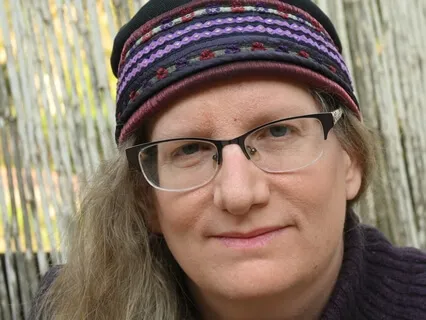
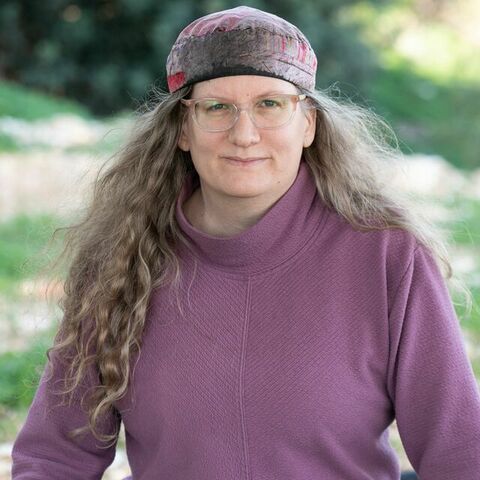
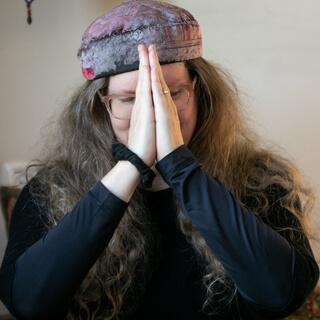
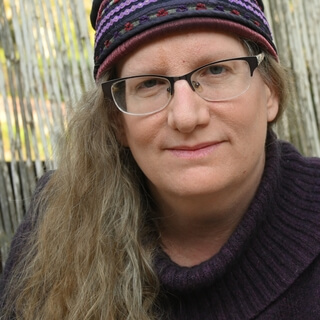
I am Rabbi Hassey or real Steinbauer the founder and director of this amazing institute where we combine the synergy,
The wisdom of two ancient traditions of moose are in Judaism,
And Tara Vada Buddhism.
Buddhism,
Particularly mindfulness,
And we create mindfulness moose are it moose are mindfulness.
And so we are delighted to have you here.
Please allow yourselves to settle and arrive as we welcome people who are just showing up either on the zoom link,
Or in our live streaming we're delighted to have you so just take this moment to begin to welcome arriving.
Welcoming awareness,
Coming into this space as we settle and arrive and begin to learn and practice together I'm delighted to have you here.
So,
I always announce what date this is what week this is what city it is this is our tradition.
We are in our seventh sitting our seventh weekly Torah portion that we started in the Jewish New Year.
It was in 1987 83,
And it was yesterday's yesterday's partial.
And in yesterday's partial we were in a via it say,
And it was the the date was the text of Keith live the ninth of key slave and December 3 today obviously is Sunday December 4,
You had key slave the 10th of key slave we are delighted to have you here today.
So,
I want to really look at this tour portion from the lens of moose are mindfulness and see what we can practice and learn around this and then jump into a guided mindfulness meditation practice.
We get a chance to study and look at this partial as is our tradition to do so the week before that Shabbat that Sabbath,
If you haven't I always give a brief summary and then I jump into our Nick with our very important point that we want to pay time attention to before we begin we always begin with our cover knots our intentions for today's practice it's very important in our practice to have an intention because it helps us guide our practice,
So that we know actually,
What is,
What are we aiming for what are we seeking to do here and get out of this.
So you see before you if you are watching by video.
You see before you three cover note three intentions that we say before every session.
If you are listening on audio I will be reading these.
So if you're joining us on our podcast or in the insight timer.
Cam and for the training itself on our entire life which sounds like YouTube videos.
In addition to that,
If you are doing two exercises just understanding as a third part of your life healthACHES your real path to doing this,
As a strong stream of healing.
Let's say if it wants to start a regular your awakening you will hear it hear.
So we say before doing acts of caring for the self,
Which we see this time together in this practice on Sundays at 1230 Eastern standard time that we are caring for the self,
This is what we're oriented to serve others in God.
The second one is before doing acts for others,
Which we see this practice doing.
This is something I'm doing to strengthen my relationship to others so I can be a better conduit of God's good to others when they need me.
And finally,
Our third covenant,
Covenant,
Excuse me,
Our third intention before doing acts to strengthen our relationship with the divine,
Which is what we're doing here.
Also,
This is something I'm doing to strengthen my relationship with the Creator,
So I can be a better conduit of God's good to others when they need me.
So may we merit that we fulfill this,
These kavonot today and our practice as we jump in together.
I want to say that I'm a there's a whole set of family and friends who are dedicating this learning today and even next meetings to my lovely daughter,
Which some of you know will be celebrating becoming a bat mitzvah and Shabbat coming up on Vaishlach.
And so this session and next are dedicated to this learning and honor of that and I'm delighted to have you here to be able to engage in that and do that.
Okay,
Our summary of Vayetze.
I just want to honor first take a deep breath that if you really study this part,
Shawn,
Who have been following along,
This might be difficult.
It might be starting to feel heavy and that is okay if that is your experience.
Why?
Because we're getting into behavior of some of our ancestors that is unethical,
That we would feel is even immoral at times and it touches our buttons,
It pushes us and this is part of the practice is to recognize when we are uncomfortable or we're triggered by behavior or the text and then we become aware of it and accept it and then we practice around it.
Okay,
And that's what we're going to do today.
I just want to start off by saying you're not alone.
I've had many students this week say,
Oh,
You know,
Having a hard time with what's going on.
So let's jump in.
What are we having a hard time with?
So as a summary,
Yaakov,
Who if you remember is the second born in a twin twin relationship in utero and his mother Rivka,
He's 17 years old and if you might want to recall his unethical and moral behavior,
He along with his ema,
His mother Rivka,
It's actually mostly her responsibility.
She decides to deceive her blind husband in order to make sure that Yaakov receives the blessing that she thinks he should receive.
So she has him dress up as his brother with fur on his body from an animal.
She has him give game and give food that the father would like so that he feels,
You know,
Satiated so that he can bless his son.
And she has her son lie to his father when the father says,
Who are you?
Like,
Who is this?
Are you sure that you're a sub this was this whole conversation ensues.
It's quite painful to witness and watch,
Particularly because we have this concept that you don't put a stumbling block before the blind.
And I can't think of a more stumbling block than deceiving the blind,
Not giving them the full honest picture of who's actually speaking and who's before them,
Right?
That you're you're lying.
You're not being honest about who you are.
Okay.
Yaakov,
Who is Yaakov has just done this act with his with his mother and his brother,
Asaf comes home from actually hunting to bring home the food.
His name is Asaf.
He is in so much pain and sadness and rage anger,
Which is coming from the sadness that he was not blessed,
Right?
Not blessed first.
Okay.
That the blessing was kind of stolen from his language is used.
His father says he's come to deceive.
So Yaakov,
The mother hears over here is Asaf to give you this background,
Planning in his heart that he's going to kill his brother.
Okay.
Obviously that's not the case,
As we know later on,
Because 20 years later he has the opportunity to do so.
And he doesn't,
I want us to be aware that people say irrational things when they are completely hurt and angry.
And Asaf in that moment,
I'm sure was in that state.
Okay.
So what happens?
Yaakov has to flee.
The mother says you have to get Rivka says you have to leave,
Go to my brother,
Your uncle,
Go head north so that I don't lose both of you in one day.
That's what she says.
That's her language.
He doesn't want them to fight Asaf and potentially one kill one or one kill both or have that work out.
Okay.
So she says,
You need to flee.
You need to leave and go to Levon my brother,
Your uncle.
Okay.
So Yaakov,
Just as a summary,
It starts heading by himself,
A 17 year old,
All by himself,
It seems kind of exiled in a sense.
It ends up being totally afraid and alone in the land.
The sun goes down,
He needs to sleep.
He ends up dreaming of a Sulam,
A ladder where up and down going at the,
On the ladder are angels going up and down.
And even a Hashem,
God is standing either upon him or upon the ladder or next to him.
The language is ambiguous and basically tells Yaakov in that moment that I am here with you.
I'm here to protect you,
That your descendants and you are going to inherit this land,
That you indeed are going to be the third patriarch.
Okay.
He hears this.
He has this in a dream.
The 17 year old wakes up an absolute shock at the experience.
He can't believe it.
He said,
I didn't even,
I didn't know God was in this place.
It's actually quite a really touchy and beautiful moment.
It's also surprising.
We'll talk,
We'll touch upon that.
Okay.
So he has this dream and the boy,
The seventh year old,
That moment feels much lighter on his feet.
He feels I'm being watched.
I'm being protected.
He gets up,
Like she says,
He lifts his feet,
Which is not the language usually for someone who starts walking on his path to head North to his uncles.
So he heads up,
He continues on his journey.
He finally meets Raphael at the well.
He doesn't even know that he's arrived in the location where his uncle lives.
And he ends up meeting Rachel,
Which is Lavon's second born daughter,
The younger daughter.
Okay.
So it's a similar position of Yaakov,
Rachel versus Asav and Leah,
Who the eldest is,
Who's the older one and who's the younger,
Right?
Yeah.
Although Rachel and Leah are not twins.
There's just an older and a younger.
So he meets her.
He's so relieved that he's run into a relative.
That's a sign that he's arrived.
There's a great introduction between them.
She brings him home and he meets Lavon.
Of course,
Her father,
His uncle,
Who,
You know,
At the beginning really greets him well and is excited to see him.
You might recall Lavon is essentially the patriarch,
Even though it should have been his father Nahor,
Who greeted Avraham's servant a while ago,
Who came to find a wife for Yitzhak,
Who ended up being Rivka,
Right?
The sister of Lavon.
And so you have this Lavon who has this history with Avraham and his family.
Okay.
He knows them and is aware of them.
So he ends up the summary of the story is Yacov ends up staying much longer than he planned with Lavon.
He literally thought he was going to go for a short time until his brother's temper calmed down and his mother would call back for him.
Sadly enough,
The mother who sends him away and all her scheming and planning and deception,
She says,
You know,
I don't want to lose you both in one day.
I'm sending you away and I'll call for you when his anger comes down.
It,
She actually passes away.
And so here is a case where I don't think God's laughing,
But this case where the mother was really trying to plan and control something.
And when we attach ourselves to an outcome so much,
There often ends up being suffering because of the the the suffering that we have.
And so we have this kind of a and we have this the two,
This idiom that we say in Jewish culture and in Hebrew that a man plans and God laughs.
And so here is a case where I don't think God's laughing,
But this case where the mother was really trying to plan and control something.
And when we attach ourselves to an outcome so much,
There often ends up being suffering because of the the the attachment and control.
So Yakov ends up serving essentially almost as an indentured servant.
He's definitely an indentured laborer.
He gets hired by his uncle for seven years to marry one of the daughters.
He he thinks he's going to marry Rahel.
That's his first choice.
And the younger one,
He ends up being deceived by LaVon,
Who hides and lies and has Leah be the one who marries him first.
He's shocked at the deception.
He can't believe it.
And it is LaVon who reminds him through very specific language that the culture is that you don't do things for the younger before the elder and the elder.
The eldest gets married first to the eldest receives.
Therefore,
It's like the signal to wake up to Yakov.
Yeah,
You you don't get the birthright.
You don't get the blessing,
But you took in this in deception and here you are.
Being deceived.
OK,
It's this family culture of habitual.
Deception.
And it's not healthy and we're going to see this outcome of it.
OK,
So he ends up saying,
All right,
I'm going to work seven more years for you to marry Rahel.
He marries her a week later.
He's now married to two women who are sisters,
Which we both know in Jewish law ends up being not acceptable.
You can't marry.
I mean,
Nobody marries more than one woman now,
But it used to be you can't even marry some somebody's sister.
Right.
And so he marries her.
He ends up actually marrying their concubines to has many children,
Has 11 sons and one daughter,
Another son later on.
Obviously,
That's later on in the next week's parasha.
But basically what happens is Levon has a keeps having conflict with the Yakov and the 17 year old boy begins to grow up.
Almost because he has to it's like that emergency situation where he's serving now is this a denture labor and he's forced to work for this bride price of both women.
And he learns,
You know,
We say in most our practice,
Most our mindfulness that you can practice on your own daily so you can be prepared for what life sends you all the stimuli,
Right,
All the both positive and negative or unpleasant and pleasant situations in life.
Or life can bump into you.
Right.
Things can happen and they will cause you to either sink or swim,
They will cause you to have to grow and change.
And that's what we witnessed here with the articles.
The 17 year old boy life gets thrown at him.
He's kind of the sink or swim he swims he does the best he can.
He makes mistakes along the way he's our very human ancestor that gets recorded in the Torah,
Right,
And very flawed,
Like most of us like a human being right.
But in that flaw can be where we are triggered,
Because a lot of people expect the patriarchs and the ancestors to be like angelic like perfect people who don't aren't human and don't make mistakes.
And this is clearly not what we're seeing here so if you notice that when you're studying reading these portions that you're having a hard time with who selected to be,
You know,
That which passes on,
And ends up creating a new and ends up creating the people the Jewish people as we know it,
You're not alone it's it's it's a,
It's a huge thing.
So what happens.
So John and yahkov have this conflict throughout the whole 20 years of labor he ends up doing not 14 years and additional six,
He they kind of deceive and manipulate one another until finally we know this,
Yeah cool has a hard time with conflict,
Like most of us,
Rather than face a conflict and communicate openly with someone,
He is his habitual behavior is to run away as to flee,
Like he did with his brother and his father.
The same thing happens with love on he tries once to request to leave he asked for permission to leave.
And then he says,
Well,
I'm not having it love on and manipulate him to stay.
So finally yahkov,
And now a grown man,
37 years old,
With,
You know,
Large family,
And many wives,
He,
He leaves he meets with his two,
The two primary wives and gets their permission to escape and leave.
And then,
Love on finally actually chases them.
He you can tell he had the intention to do him harm,
Because it actually took God has shown to come to him and dream and say don't do any harm or good to him,
Like don't touch.
And so when he shows up he says I had it in mind to do this to you xyz,
But your God told me not to do anything and so I'm not going to,
But it was really a difficult conflict and confirmation that yahkov actually blew up.
He finally has his moment of rage.
He,
He's so sick of levan's deception and behavior that he blows up and we suddenly learn of all these injustices that have been bottling up in the alcohol,
Because he doesn't have,
He has a very hard time being balanced in managing conflict and his me dot around it he right he's someone that is not balanced and humility he doesn't know how to take up his proper amount of space.
So there's these extremes that happen right.
And so what we witness is him blowing up,
They finally are able to come to some breed,
A covenant that they will have reconciliation and separate it's like a ceasefire.
So it's not to cross each other's boundaries or lines if you notice in these reconciliations and cease fires,
There's never really to shuva there's never really a full repentance and healing that people can actually get along and live together instead,
They live separately in peace.
Okay,
This is what we're witnessing.
So,
This is the background of this partial,
And what I want to focus on here is just the paradox that is given to yahkov from God when God speaks to him,
Who we're dealing with here and what that triggers is the cross.
Okay.
So the 17 year old boy want to go back to when he is on his own,
He ends up having to go to sleep on a rock in the middle of nowhere that he thinks is nowhere right.
The boy essentially is heading north to northern Mesopotamia,
He was located at the beginning and southern Canaan,
It's a very long journey.
Okay.
And his character is going to be tested,
And his personality molded and transformed by experience over time.
Right.
So,
He's a God made essentially speaks to him in this in this dream and as I said earlier,
He is God assures him of the continuity of the generation that yahkov is to become the third patriarch.
But what the paradox is,
He's told that he's going to inherit this land with his descendants,
And the paradox is the boy is about to be exiled from the land.
So here he's being told he's going to have this land and his descendants and then he's,
He's exiled he has to go out he has to flee and run away.
And so,
The title is affirmed but there's something really odd there there's also something if you pay close attention to the story of the boy,
The boy is a God speaks to him.
It's the first time that God promises to anyone but particularly to one of the patriarchs the ancestors.
He,
He promises to be there with him and protect him.
And of course the 17 year old needs to hear this,
They're alone in the middle of nowhere.
And,
And that's,
It's very frightening he's also fleeing someone that's so angry at him he wants to kill him.
He's fleeing to a brother that I'm sure he's heard about from Rivka right his mother.
So,
This is what he's given and here's this paradox we're going to hold.
So he's the first ancestor to also to exhibit any surprise at his initial experience of God,
Right,
God's sudden revelation comes and he's surprised right he's like,
I didn't know God was here.
And then,
Let's remember,
He's 17 when offer home encounters God and is told to leave his homeland,
Leave his country leave his father's house he was 75 years old,
When he gets up encounters God and has finally that conversation with him who he's going to help and inherit.
He's at least 40.
Okay,
So we're dealing with a child still.
And I think we need to honor that,
That that's very a part of the story.
I think people forget that when they're when they're looking at your calls.
All right.
So,
The paradoxes if I continue,
Is that he basically asked for all that he's already been promised so God promises him certain things,
And then he comes back and he asked for them again it's almost as if he's saying,
I either don't trust fully I'm too afraid I don't know this is a new relationship.
But it's clearly there,
And he doesn't really understand how this relationship with God works in some ways it's this is part of his trial and his growth.
So the other paradox is here he's the one to have received the blessing from his Abba from his father,
It's where he was told that his brothers,
Like a sob and his brothers would serve him,
And that they would bow to him this is part of the whole braha the whole blessing.
And this is the paradox if you pay close attention in this partial,
Who is the person who actually serves others,
It's,
It's yaku he serves as an indentured labor to live on.
He ends up like a claiming to a sob when he is finally a reuniting with him when he's 37,
He keeps calling himself,
Your slave your servant,
I am your servant I am your slave over and over again and he bows,
He bows,
Seven times complete full prostration to the ground.
In order to meet a song so here's the paradox here's the 17 year old boy who went to great lengths with his mother,
Probably deeply uncomfortably to steal the blessing that he's supposed to be the one that receives all this right,
And receive Abraham who passed away his grandfather all that wealth that was passed to get sock it'll be passed to him the double portion as the birth rate as the first born even though he wasn't.
And he receives this blessing of all this and here.
It's not the case and his real experience in his life and so we live with that paradox really what's going on here.
What is going on here.
And I'm not saying there's a simple or easier answer and maybe there shouldn't be.
It's just for us to acknowledge that even in our own lives if you feel that you,
You know,
Have a strong relationship with the divine and you feel that you have a purpose,
And you're here,
And you know what you're doing that there's an element of so much we don't know.
And that's part of our own humility to be open that we can try to be agents we can try to serve,
But really there's just so much unknown and it might be not like it might not be it might be not only about us,
Obviously,
Like if you're cool with his promise this for future descendants,
And he's going to be established as a third patriarch then it's obviously larger than him.
Okay,
So I finally want to go on to say,
And before we move into our practice more there was a couple of more things I wanted to touch base with you,
Which is essentially.
I said he was a boy,
Okay you the language I want to pay very close attention to when he was 17 and he arrives at the place right.
And the language is so important in the Hebrew,
A,
He goes right here like okay so we're on chapter 28,
We are on the 11th verse okay you're the Alex.
It says right here,
Very good.
It gets translated in the English that he arrived at this place but very God means that he bumped into and not only bumped into the Macomb the place actually bumps into him the language use it to understand that verb.
And is that the place itself kind of runs into him.
And if you know anything about the language from a comb.
We know in Hebrew that home a comb is also one of the names of the divine of God.
Okay,
So we're kind of wondering is this God bumping into him.
Is this the place because the place is also holy.
As we know this is going to be this portal of this ladder of angels going up and down and God's obviously standing there and communicating to him.
A,
It's,
It's a special place obviously he had something he has to learn,
But it is he's bumped into it.
All right,
And so that's the first number I told you he's someone who is,
Is going to have life happened to him and then he's going to have to learn to pivot.
Right,
So here's,
Here's the next part where he gets bumped into what's the language use it's unbelievable is that once he realizes that God's in this place he actually does this beautiful thing where he says I didn't know God was here,
And he finds this place terrifying but in that terrifying way that is both awe and fear what we call Yirah like right he says man or a home has a terrible how frightening how amazing all that combined together is this place,
And he suddenly has tons of energy,
The language actually use is by some yarkel of the glove he picks up his feet,
Who picks up their feet when they're,
They're going to go walk out their journey he's the boy the seven year old is so a choleric and somebody so excited right that he now has a lift,
And he finds the journey easier he feels protected he feels seen,
And his feet are directed he has resolved he has confidence right there's something really strong going on here.
Now you have to remember the boy at first was fleeing is terrified.
It was all a reactivity,
With a get get out to save your life.
And now he feels he has another purpose it's not only get out to get your life and he's supposedly going up to also find a spouse,
But he suddenly has this new relationship with the divine and new information and he's energized by that.
Okay.
So,
The last thing about bumping into that I'll say is you know we know this from looking at this full portion story that you're cold,
As I said earlier,
Someone who doesn't who bottles up his anger his,
His feeling of injustice right he feeling what done has done to him he practices a lot of silence in reaction or response to things done to him,
Or around him.
And essentially,
And when it comes down to the last part when we're looking at chapter 31 verses 36 through 43 where he has this a counter charges right against Levon a 20 years of suppressed anger at the basically kind of abuse and mistreatment.
Find expression right he has this impassioned outpouring of what we might call righteous indignation right.
It gives us a lens as the witnesses into his life of this kind of hard life of trials and tribulations that he endured that maybe we weren't so aware of until this moment,
But we also have to look at the poor boys behavior and he's not a poor boy anymore right he's the 37.
He has his imbalances.
He doesn't manage anger well,
He has a fear of conflict which is part of the anger thing.
And,
You know,
In some ways we have to have compassion and try to understand why he's coming from a culture,
And it still exists today unfortunately where there's a lot of male on male violence right if we think about wars and other things that go on.
He's,
You know,
And,
You know,
First he has a grandfather who's commanded to sacrifice his own father,
Yet sock.
And that's a form of male on male violence we don't see it that way because we see God is commanding it but that had the potential right of really having well first of all,
Y'all couldn't even be alive right.
So there's that that that history right and if we're going to look at kind of trauma and then resilience,
And then y'all cove a obviously does this deception to his father and brother.
Even earlier with his with a soft not feeding him unless he sells his birthright.
There's a lot of kind of the violence but a lower level of then right and at each other.
And then finally,
He has to flee the potential violence of his brother who might want to kill him in response to what's going on.
So then he answers this household with another male another patriarch who is obviously abusive and does mistreatment and deceives and so he has to navigate around that and slowly grow into a man around that as his model.
Okay,
His first model was a blind aging father who essentially ignored him and favored his brother because he brought him game and food it actually says in the Torah,
That he loved a soft because he brought him game to eat.
Okay,
So this is a boy who didn't feel necessarily loved or seen by his father enters a household with an uncle who is overbearing and unpleasant and unethical.
And then it has to kind of learn and navigate,
What does it mean to be a man that I'm not going to perpetuate this violence right or this fear of violence.
Obviously we'll see what's coming unfortunately with 11 of his sons.
And it's heavy,
It's very heavy right of what's going on in these are shields.
Okay,
So I'm just going to close in with saying that,
And the one positive thing I want to point out about your code is his ability and that moment at 17 to say,
I didn't know the words lips,
I don't know it's so important and our moose our mindfulness practice to be able to be humble enough to say I don't know.
So he actually says to himself God is here in this place and I didn't know.
You know,
It could have gone the other way he could have pretend that he knew.
Right,
Or he could have been like I don't believe this I'm not listening to this there's lots of different reactions that could have happened,
But there's something very powerful when the human being can,
When can we experience God,
The divine Hashem being closest to us.
It's when we can say I don't know right it's when we don't pretend wisdom and insight into either a situation or experience that we be,
We're open to the embodied experience of it.
And if anyone has to live that way it's yahkoh,
He is so much someone who only learns through experience and what is thrown at him.
So with that,
Let's move into our guided practice I will lead us in a guided guided mindfulness meditation practice where we're going to do something special today and look through the practices of what we call rain our AI,
And how we might be triggered or not.
So I invite you now to assume one of the meditative postures,
It can be lying down,
It can be sitting,
It can be walking meditation and it can be standing,
Whatever is most comfortable for you what is safest.
If you are going to sit I invite you to really firm your ground your feet into the ground,
Really hold them there and feel them you can even move your toes right now like this to know that you are here you're between heaven and earth it's like we're with that Suleim that ladder of yahkoh right now.
And we're,
We're somewhere in between the ladder we're noticing these angels going up and down.
We want to be here we want to be present.
So,
With that,
I invite you to close your eyes if you have vision,
Otherwise if you don't feel safe enough or you don't have vision you can just lower your gaze.
And,
And we're going to start with three deep cleansing breaths inhalation inviting and ease exhalation arriving slowly.
Inhalation inviting compassion and exhalation beginning to really settle and arrive,
Letting go of all tension.
Great inhalation the gift of oxygen and exhalation.
I invite you to invite awareness.
You can quietly verbally say that to yourself.
I'm inviting awareness.
I'm inviting being here right here right now in the present moment.
You'll allow your breath to fall to its own natural rhythm.
We're going to take this first few minutes to really just be here in silence and offering an accepted accepting open hearted presence.
Allow whatever primary emotion is activated inside of you,
Allow it to be here recognize it.
And if for some of you,
There might be a primary emotion and reaction or response to this partial to this tour portion to yucca,
Maybe to my sharing,
Or maybe whatever primary emotion is for you right now it might be just something else that's going on in your own life.
And just exist and recognizing it in silence.
Now in yourself to recognize whatever your situation is to get in touch with the most challenging part of whatever is happening with you.
Whether it be emotions,
Sensations in the body,
Or thoughts,
The storytelling that we can begin to get entranced in.
What is the primary emotion or thoughts or sensation that is activated in you right here and right now.
Bring your loving and wise compassionate attention to whatever feels most difficult.
And whatever you have recognized.
And this time with the intention of fully letting it be allowing is the willingness to pause to stay present with the life that is here just as it is allowing difficult emotions,
Or even thoughts or sensations to be present requires gentleness and tenderness.
You can gently say to yourself,
This too.
Yes,
I can hold this.
This is about opening to our experience even when it is painful or uncomfortable or unpleasant.
We move into inquiring our felt sense of our experience.
We want to move from a cognitive analytical process out of our head out of our brain into the felt experience.
And while your stories and beliefs can be a portal to this experience.
We want to direct our attention to the body to the felt sense and sensations of where we feel most vulnerable.
Bring an interested and kind attention to your experience.
I will offer you the following questions to help you in your investigation.
What is the worst part of this.
What most wants your attention.
What difficult or painful thing are you believing what emotions does this bring up such as fear or anger or grief.
Where do I feel the emotions inside.
What is the actual felt sense of these emotions as sensations,
Such as clenched raw hot sore.
A team empty squeezed.
Allow yourself to assume the facial expression and body posture that reflect the feelings and emotions.
You can curl down.
Make faces Don't worry no one's looking at you.
Assume the posture for just one minute.
How it feels inside.
As we transition to our nurturing and our non identification.
We stay connected with the vulnerable experience inside.
Know that we are asking and listening from compassionate presence.
If the most vulnerable part of you could communicate,
What would it express.
Words,
Feelings,
Images.
How does this part want you to be with it.
What does this part most need from you or from some larger source of love and wisdom.
Take this time now to breathe consciously and adjust your posture.
In a way that helps you fully contact your most awake hearts and your wise spirits,
What we sometimes call the high or future self.
Call on any wise or compassionate being if you cannot turn to yourself right now.
Whose wisdom and love you trust.
It can be a friend,
Family member.
It can be God can be a pet,
A teacher,
A spiritual figure.
Offered and really now the love,
The acceptance,
The forgiveness,
The compassion.
The protection that the vulnerable part of you needs right now.
Feel free to extend care through touch if you need to touch your chest or hold your face.
Or even imagery of senior inner child surrounded by light.
As we complete this nurturing and non identification sense if there's a message that you're most awake and wise hearts will be helpful for you to remember.
Allow yourself to experience the awareness of what might have shifted for you.
When you begin this meditation practice today.
What did you experience or learn about yourself that you want to remember.
When you are ready you can gently and slowly open your eyes if they were closed to come back into the shared sacred zoom space and on live streaming together on our YouTube channel and Facebook and LinkedIn,
And here on zoom welcome.
Thank you for your practice.
Thank you for being here today.
Thank you for your sponsorships and donations to allow us to provide an offer this awakening each week with our community and to the world at large so that mean we practice and learn from moose our mindfulness together.
I'm Rabbi has yet the founder and director of the Institute for holiness Kehilat moose are.
Thank you today.
I look forward to seeing you.
Next Sunday,
But as well.
Eastern Standard Time.
Take care of yourselves.
Thank you again.