Welcome.
Allow yourselves to settle and arrive.
We will begin shortly.
Perfect.
Welcome to awakening Torah Musar mindfulness.
The Institute for Holiness Kehilat Musar's weekly talk and guided seated meditation practice together.
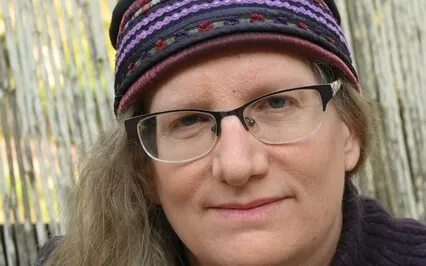
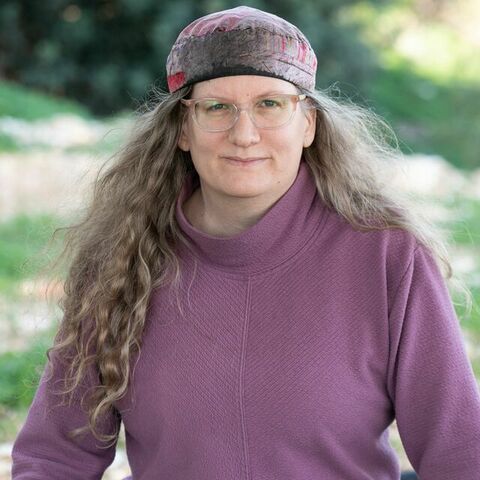
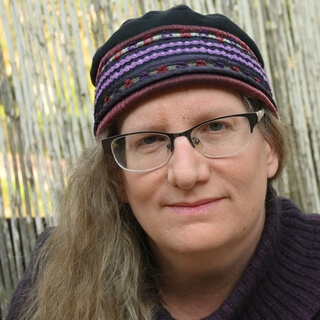
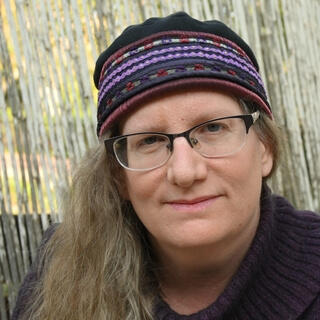
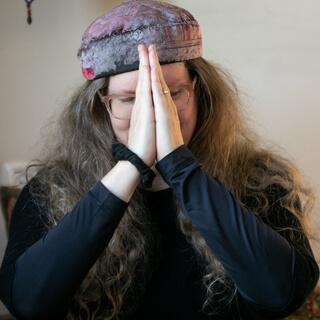
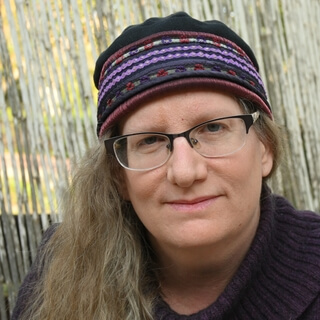
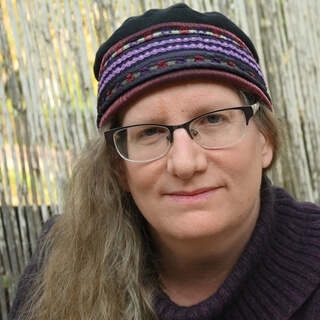
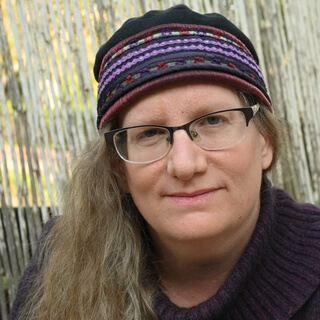
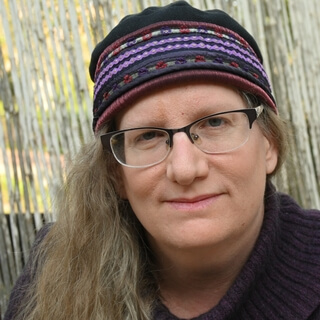
I am Rabbi Hasio Oriel Steinbauer,
The founder and director of the Institute for Holiness,
Known as in Hebrew Hamachon de Kedusha.
We are delighted that you've joined us.
We meet every Sunday at 3pm Eastern Standard Time.
All are welcome.
All levels of practitioners and practice oriented folks who have a regular seated practice of mindfulness meditation or of daily Musar practice,
You're all welcome,
Including those who are completely new to the practice.
As we begin with every week,
We share our kavanot,
Our intentions for today's practice.
It's very important in our Musar mindfulness practice to have an intention daily that we attempt to meet.
We find this is even found in research and brain science.
For instance,
Coming out of the Greater Good Institute from the University of California in Berkeley,
That when you have a kavanah,
When you have an intention,
You're most likely to fulfill it.
And it really does help you in the practice that you are aiming to fulfill.
So our first one,
As always,
Before doing acts of caring for the self,
Which we are doing right now to practice together,
Taking care of ourselves,
This is something I am doing to strengthen my own soul in order to be a benefit to others in the future.
Then our second kavanah,
Which we scroll down to the bottom before doing acts to strengthen our relationship with the divine,
Which is also what we're doing here today at this time.
This is something I am doing to strengthen my relationship with the Creator,
So I can be a better conduit of God's good to others when they need me.
It is well known that when we have our daily practice,
When we engage in the refuge of community,
With our vad,
With our sangha,
With our daily practice and with our mindfulness,
That we're able to care for ourselves in a proper way with wise discernment,
Being kinder,
More gentle,
More compassionate.
And then that enables us,
It strengthens us to be able to give to others and care for the world,
Which is so,
So much needed.
So today we dedicate our practice,
Maybe merit this,
To bring peace,
To stop the violence and war that's happening between Ukraine and Russia,
And we stop the aggressor of Russia's behavior and may we merit the alleviating of the suffering that is happening there.
And that's what we carry with us and our intention also for today's practice.
May our practice merit this so that we can approach this situation with greater clarity,
With greater skills,
Greater window of tolerance.
So what is it that we actually sit here and do together?
If you're new to this,
If you're not,
You know what happens.
We engage in the investigation of the Torah portion from the Hebrew Bible from yesterday,
From last Shabbat,
Where we took,
We delve into awakening,
Vayakhel,
Okay?
Vayakhel.
And we really investigate this,
This Torah portion from the lens of Musa our mindfulness.
And then we sit together and we practice.
And this really is just quite a delight and I'm,
And it's quite an honor to leave this and be with you.
So you're welcome to join us any Sunday on zoom,
Of course.
The link is at our website of kehilatmusa.
Com.
And we also are live streaming as usual on our YouTube channel,
Facebook,
Twitter,
And LinkedIn.
Thank you.
So let's delve in.
Vayakhel.
Immediately if you recall from two weeks ago of Kitzitzah,
We had a real disrupter in the relationship.
The people from my perspective thought that they were worshiping God.
They did so in an inappropriate way.
They commanded that Aharon build them a god or replacement leader for Moshe.
He had not come down from the mountain just to recall.
And so the people in their own reactivity,
In their own lack of tools,
Commanded this and built this golden calf and they gave from their gold jewelry,
Particularly their gold earrings to build this,
As you might recall.
And that did not go over well both for God and Moshe.
And if you explore from our time of awakening together and the blog on the website,
You will see how I feel about that and their own behavior.
So what we're witnessing here in Vayakhel,
Because we have to put things into perspective and context,
Is that we were witnessing Tushuva happen.
We're witnessing the people coming to give freewill offering,
Giving actually too much,
Probably as an act of compensation for their behavior.
Just giving and giving to the point where Moshe has to say,
Please stop giving.
But what's important to note here in covering this parasha,
This weekly portion,
Is that they're commanded to give and very specifically it is laid out what they are to bring to give in order to build the tabernacle and everything that involves the outer structure and the inner furniture and what is needed,
Including the clothing of the kohanim,
The priests.
So it's very specific.
It's very concrete.
And this is where you're witnessing the brilliance,
The I would almost say the training.
If we're going to have a practice for the people to grow in ways that God desires and wants and to lead the people,
This is where they are being commanded to engage in a practice.
And that practice is that you're giving freely.
You come and you're giving a gift.
But that gift has been,
You've been told what exactly to give if you're going to give.
And this is a tikkun,
This is a repair.
If you notice the people wanted to connect with God back in Kitzi,
They wanted to connect with Moshe,
They wanted him back to lead them.
There was this fear,
There was this lack of connection.
And that lack of connection led them to build something that they thought they could connect to.
That would be a replacement,
Maybe even temporary of Moshe and maybe even God.
And when you leave things up to people on their own,
Without you being specific about what your needs are,
What the gift might be or should be,
Then you're left open to what the people are going to give.
And in this case,
They build a golden calf.
Here,
They're told exactly what to give.
And they give and they give too much.
Okay,
So think about it,
If we're going to bring it down to more of a micro level,
You're in your partnership with your partner or spouse,
Your birthday is coming.
And,
You know,
The previous year,
You had learned your lesson,
Which was that you had told your partner or spouse,
You know,
Get me a gift,
I would love a gift that's beautiful,
Or just hoping that they would do so.
Maybe that was actually two years ago,
So much to go into Shuvat.
So two years ago,
You just said,
You didn't say anything,
You were just waiting for a gift.
And maybe that gift didn't come,
Maybe they forgot your birthday,
Or it wasn't what you wanted or expected.
So then there was a tickle and you thought,
Okay,
I can I can tell them that I want a gift,
I would like them to do something special for me.
But you leave it very open.
And then they come with their gift.
And it's not what you want.
So this is what we're witnessing on a macro level between God and the people.
So here comes the third tikku and the third teshuva.
Bring gifts,
These are the specific gifts that are desired and wanted.
And also you're going to use the very items that you used to turn off the direct turn off the path,
The gold earrings,
Gold items that you had used to create the golden calf,
You're going to take this very item and use it in an appropriate manner to build something that the whole community is going to benefit from something that the whole community will finally head on this path.
It's a practice,
It's an engagement of it's a building of holiness in space,
Something that the people need something concrete that the people need.
And there's no mistake,
It's not a coincidence that even starting this parasha,
God commands through Moshe the observance of Shabbat,
Starting with that you shall not work or light fire in your locations on that an actual Shabbat.
This is profound because this is a commandment in a practice that will create holiness in time.
So as you're seeing God set up this framework,
Invisible but yet visible where the people will begin to engage in daily practice of building something for the benefit of all something that will engage in the holiness of space while also observing on a weekly basis this holiness in time.
And that practice is really going to allow there to be a greater understanding of the terms of the relationship between God and the people and it allows them to do teshuva,
To know what it looks like to have this space,
This holiness in space and this holiness in time,
Particularly the holiness in space.
Somewhere I can go,
Somewhere I can engage in community,
Somewhere I know that I will be seen and accepted and be able to engage in this process of making sure to turn back to the right path.
And this is what we're witnessing in this parasha,
Which is quite profound.
I will just close with saying that it's Nachama Lebowitz,
Beloved teacher of ours,
May her memory be for a blessing in her writings that were actually collected by her students on new studies in Shemot,
The Exodus on page 668,
Who brings us this concept that the Israelites do teshuva with the very item in which they,
She uses the language sinned,
But I would rather use the language where they,
Even what is said in the Torah,
What God says to Moshe that they turned,
Min haderak,
From the path and went ahead and created this golden calf and worshipped it,
Brought offerings to it,
Dancing around it,
Eating around it,
However you want to understand those verbs,
Particularly yitzhak,
This type of playing,
Dancing or something of an inappropriate sexual nature,
We just don't know.
It's all a commentary and interpretation.
So Nachama brings this for us and it's just quite beautiful,
This concept of bringing the same gold earrings or the gold that one has to contribute to build this tabernacle.
So we want to,
For our practice this week and even in general,
But particularly this week when we're doing our Chishbon HaNefesh,
Our accounting of the soul journal,
When we're looking at our words,
Thoughts and deeds,
Just five minutes in the evening,
We want to look at what in our own life have we given inappropriately,
Not what the person needed or wanted,
But we were still,
It came from a good place,
The intention was there.
This is where we develop in our toolbox,
In our window of tolerance,
Understanding the difference between intention and impact.
So,
You know,
We might've had really good holy intentions,
But the impact was not what was either consensual or desired.
And of course our practice is to be on that path to bring what is joyful to others and to alleviate suffering.
So to look at ourselves,
Even this past week,
If there's nothing that comes up,
Something in the past where we might've behaved that way ourselves,
And the next time that we need to do that to shuva,
That returning to the proper path,
What is it in our engagement with where we were off the direct,
Where we were not in alignment with our values and how we want to behave in the world?
Did we engage in any use of anything that we could now use in an appropriate way?
So for instance,
B'nai Yisrael,
It was that they took these,
Took their earrings that gilded the calf.
And again,
You know,
Use these earrings of every kind of gold ornaments that they contribute to the tabernacle.
And,
You know,
Gold alone,
As Nakhama teaches us,
Gold alone was given to the calf,
But it was gold and the nadiv lev,
This willing heart,
This generous heart was given to the tabernacle.
So how can we look at what is it that we give and that where we might've given inappropriately or just person did not want that,
Person that was beloved to us that we wanted to give.
It might even be on the level of giving sadaqah,
Giving appropriately,
Given what is actually needed.
What is it that the person needs and wants to fulfill their needs?
And can we give with this nadiv lev?
Can we give it this generous heart so that we're giving with the same,
Maybe the same type of objects or items,
But also with the heart.
So I love that she teaches and brings that to us.
And so we'll want to look at that in our own practice,
Where we've done that in our own lives.
And maybe even during this week,
I will close off with saying that as I said,
I really think this is Hashem's,
You know,
We can't know exactly the wisdom and knowledge of Hashem,
But if I want to read the wisdom of Hashem,
Of God,
Is this really building specific practices to allow the people to grow on a daily basis,
To be heading towards holiness,
To being on the path,
Which is a lifelong journey.
And so we today in our practice are on that same path,
Bezrat Hashem,
God willing,
And we engage in this together.
So we have to make sure that our giving is disciplined.
And in some ways,
As Nehamah level,
It's forwarded with the yoke of heaven,
I would say with the awareness of what is expected of us,
And to be in alignment with that.
So we're going to move into our seated meditation practice together.
And in particular,
We're going to engage in a meditation on equanimity,
Which in the Musa tradition is called minu khatanefesh,
A calmness of the soul.
From the Theravada vipassana insight meditation,
Buddhist traditions,
Equanimity is it's a wonderful quality,
It's a spaciousness,
It's a balance of heart.
Now you might be thinking to yourself,
As I have encountered with many students over the past few days of how can I even how can I even sit and practice equanimity when this when war is ravaging.
So one,
I just want to remind us that war on some level has been raging in different places for as long as I can remember,
There's been some type of violence or conflict between human beings happening on a daily basis.
This is yes,
This feels larger,
Especially with the media coverage.
It also taps into our fears,
The hindrances of fear and worry that this will abrupt into a world war and involve us in a more intimate,
Difficult level,
Those of us who have the privilege to be outside of that location.
But these problems,
Violence,
The lack of addressing climate change,
The institution of racism and ongoing racism and classism and ableism and heteronormativity and the exclusion of so many people not to even address the insecurity of not having proper food or clean water.
All these issues are with us and had been with us prior to the outbreak of this war,
Even prior to COVID.
So I want to carry that and tell you that you can engage in a seated practice on the meda of Menochata Nefesh on equanimity and practice it.
And if difficulty is arising,
If guilt is because that's really what's behind the voice,
I feel guilty to be sitting and working on equanimity.
If we can't be of balance,
We are not going to respond to this war or anything with wise discernment,
With wise speech,
With wise action.
We must be doing our daily practice in order to respond in the healthiest,
In the best ways that are helpful and useful to the others who are suffering.
So we don't run away from this and we don't run away from our feelings of guilt that we it's survivor guilt.
It's the guilt of I'm not in war.
I'm not there.
I'm not feeling this as if you shouldn't have any joy or any practice of equanimity because this is going on.
That's simply just not true.
That's that's that's that's very much a hindrance.
And we need to recognize that and allow it and begin to investigate the felt sense of it.
So let's move into our practice.
If you are able to sit as I always say,
Do so in an upright dignified position.
Allow your sit bones to really settle and sit in.
Allow your feet to be grounded so that you're held and carried.
If you're coming to this practice with knowledge that you have a history of trauma,
And that it sometimes gets triggered or comes up in your meditation practice,
Please practice awareness of that.
Open your eyes and look throughout the room to bring yourself to the present moment to keep yourself grounded if you feel yourself being pulled away into somewhere else besides the present moment.
For those of us who are able to sit without their being in trauma that may come up,
I encourage you to sit your eyes shut your eyes if you feel safe.
For those of you with pain with a chronic pain or just too strong of discomfort to be able to be present in your seated meditation,
Please stand with a chair next to you to hold you firm or engage in walking meditation or lie down with eyes open awake and alert so that you don't fall asleep when we are engaged.
For the rest of us.
Allow your hands to settle in your lap or wherever is comfortable for you.
Begin to close your eyes if you feel safe.
Otherwise,
Lower your gaze.
And we begin with three deep cleansing breaths.
Notice if your breath is labored.
Notice if the length of the in breath is the length of the out breath.
No need to force or control it anymore.
Allow yourself to begin to settle and arrive.
Using my voice as your anchor,
The sounds around you or your breath.
And if your mind does wander off either to thinking or to emotions or to sensations in the body.
When you wake up to that experience,
Gently and kindly bring yourself back to the present moment to your anchor.
No need for judgments.
This is the practice.
Every single one of us our thoughts will wander.
Notice if you are getting up and planning for something for the future or reviewing something that happened in the past.
You can bow to it and honor it even use the naming techniques to say planning,
Planning,
Daydreaming,
Daydreaming,
And to come back to your anchor.
You can simply visit those thoughts again later.
Same thing if you have strong sensations in the body that are pulling your attention away.
Simply recognize that they are states that will arrive,
Have a certain shelf life,
And then they will pass.
No need to cling to them or to react and practice aversion pushing it away.
Simply allow.
Menochanafesh,
Equanimity,
This aware of what is present in the present moment.
Rising above both the good and bad,
Whatever is inconsequential.
That spaciousness,
That balance of heart,
That balance of our spirit,
Of our body.
And although this mida,
This trait grows with our meditation practice and our Musa practice,
It can be cultivated in a very systematic way like we have with chesed,
With loving kindness,
With rachamim,
With compassion.
And we can feel the possibility of balance in our hearts in the midst of life when we first recognize that we are not in control,
That life is not in our control.
And although we cultivate this compassion for others,
And that we actually engage in practices to alleviate suffering of the world meets both commandments,
There will be and there are many situations that we are unable to affect.
We practice the serenity prayer.
May I have the serenity to accept the things I cannot change,
The courage to change the things that I can,
And the wisdom to know the difference.
We must know that no matter how much we deeply love others and mirror for them and offer assistance,
In the end,
Each of us are on a journey to learn for ourselves and to be a source of our own wisdom,
Our own liberation.
We begin by reflecting on the benefit of a mind that has balance and equanimity.
Think back to your own practice of when you felt balanced and mino khatanefesh and equanimity.
Feel how that also was for you as embodied,
The felt sense of equanimity.
Sense what a gift it can bring,
This balanced,
Peaceful heart.
What a gift to the world around you.
Allow yourself now to feel an inner sense of balance and ease.
And we practice the chanting or saying of a phrase almost as a naming technique to bring that intention,
That Kavanah of may I be balanced and at peace.
You may repeat to yourself,
May I be balanced and at peace.
For those of you who are struggling,
Having whatever it might be,
Holding on to a clinging or an aversion to sensing an inner balance and ease,
Recognize it,
Allow it.
Ask yourself if you can be with it,
The ability to hold it all.
Acknowledge that all created things arise and pass.
Joys,
Sorrows,
Pleasant events,
People,
Buildings,
Animals,
Nations and even whole civilizations.
Let yourself rest in the midst of this.
And we add the following phrases to our practice.
May I learn to see the arising and passing of all with equanimity and balance.
May I be open and balanced and peaceful.
And while events happen,
Wars happen,
Situations happen,
Stimuli happens.
We acknowledge that what we are still in control of is our own reaction,
Our own response to the stimuli.
We are heirs to our own deeds,
Our own response.
And that ours and other people's lives will arise and pass away according to the conditions and deeds created by them in reaction to the conditions around them.
And while we can love and care for others,
We cannot fix them,
Not love for them,
Not stop wars for them.
To find equanimity with others,
We add the phrase,
Your happiness and suffering depend on your own thoughts and actions and not my wishes for you.
In the next steps,
We wish peace and equanimity to specific people.
We hold them in our heart.
And then we can move beyond from individuals to groups wishing.
May you learn to see the rising and passing of all things with equanimity and balance.
May you have true equanimity.
May you practice accepting the things you cannot change.
May you have the courage to change the things you can.
May you be balanced and peaceful.
May you live with the calmness of soul.
And finally,
We expand our whole field of equanimity to the whole world.
And we say and share together the following phrase,
May bring compassion and equanimity to the events of the world.
Other people's happiness and suffering depends on their thoughts and actions to the institutions that surround them and not my wishes for them.
May I learn to see their rising and passing of all things with equanimity and balance.
May I practice and develop the with the wisdom to know the difference between the things that I can change and the things that I cannot.
May I practice the wisdom of knowing that if I allow myself to struggle with worry and fear over those things in which I have no power,
Over those things which I cannot change,
That I'm only causing myself suffering and suffering to those around you and us.
May we be open and balanced and peaceful.
Maybe practice wise discernment.
Maybe find refuge and community in Hashem and God and the wisdom of the Buddha and our Sangha and our Vad and our Kehila and our communities.
In the teachings of the Torah and the Dharma and Musar mindfulness.
May we find balance and equanimity and peace.
Maybe create and practice balance,
Equanimity and peace.
And finally,
Our final phrase,
May I live with a peaceful heart.
We will spend the next few minutes in silence.
Thank you very much.
May we move towards nurturing and non identification with ever strong states ever arisen within us to acknowledge them to even make friends with them as the beautiful poet Rumi reminds us in his lovely poem the title being something of a house someone will remind me that all are welcome that we have the capacity in our practice to come with whatever arises to meet it and our next week of practice of equanimity see yourself riding the waves of the stimuli of the world on your surfboard the waves still come and they can be treacherous but you remain on that board and you ride and you know when and how to offer the gifts that you have for the greater good for the benefit of others.
Gently and slowly open your eyes meet us back in this sacred zoom space gift from Hashem and God that we're able to connect from all over the world to engage in awakening together today this Torah our mindfulness grateful for your presence and your practice may we merit alleviating the suffering that is going on in the world today's sitting and talk and teaching is sponsored by one of our lovely beloved students Mina Rosenberg who has contributed in order to sponsor the city which we welcome on a weekly basis to do so in honor of someone or in memory of someone and so for her this giving to us is in memory of those who've already lost their lives in this war and that we hold them and honor them we accept donations in order to offer this free will offering to you both coming from the div lev that you may contribute through any medium the information is on our website under donations we welcome you to join our community to engage in this daily practice be a part of this beautiful community to take refuge in that information is on the website under memberships and please subscribe to our newsletter in which you'll receive the written blog of this sitting as I explained previously that I take this sitting together and I write more intensely and extensively on the parasha and the weekly portion including citations and other insights that we cannot have time for in our daily sitting and particularly this sitting on Sundays so if you subscribe to our newsletter this ratish I'm God willing you will receive that blog in written form to receive that so please do subscribe in addition to receiving news and updates about the Institute for holiness I'm Rabbi Hasu Oriel Steinbauer thank you so much for practicing and joining today I am grateful and I look forward to practicing and learning and sitting with you next Sunday this ratish I'm God willing thank you and take care