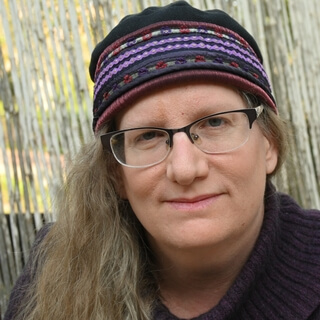
Welcome to Awakening Torah-Musar Mindfulness.
I am Rabbi Cacio Uriel Steinbauer,
The founder and director of M'chon L'kadusha,
The Institute for Holiness,
Kehilat Musar,
The Musar community.
I'm delighted that you have joined us this week where we meet every Sunday Bezrat HaShem with God's help at 3 p.
M.
Eastern Standard Time.
You're welcome to join us on Zoom,
Live on Facebook feed,
Twitter,
LinkedIn,
And YouTube.
You may visit us at our website at www.
Kehilatmusar.
Com.
Before we begin our learning and practice together,
We always pray our intention,
Our kavanah,
That our practice of learning Torah,
Musar,
And the Dharma together,
And practicing Musar mindfulness,
That we engage in an act of radical self-care,
One where we are also doing this act to draw closer to the source,
To the divine,
Where we commit to learning and practicing together to strengthen our midot,
Our soul traits,
And our souls to be of service to others and God,
Indeed,
To bring God's good to others.
We use the first and third kavanah intentions that we always begin with weekly,
Which you can find also on our website at this week's blog.
We begin with our kavanah.
Before doing acts of caring for the self,
We say,
This is something I am doing to strengthen my own soul in order to be a benefit to others in the future.
And before doing this act that strengthens our relationship with the divine,
And indeed,
With our sangha,
With our vad,
With our community,
This is something we're doing to strengthen our relationship to the creator,
With the creator,
And with others,
So that we can be a better conduit of God's good to others when they need us.
An encounter with this Torah text through the lens of Musar mindfulness requires that we practice mindfulness of how we are triggered by the text,
What arises for us in the text to be mindful and recognize and allow what arises in the embodied felt sense.
We know what we are clinging to what expectations we might have,
What desires or versions.
As always,
I attempt to discuss the pashat,
As I always have said that many of our midrashim are from our beloved ancestors who could not and would not accept the text or experience of the text as it was.
They had to imagine it differently in order to live with the Torah,
The Hebrew Bible,
Its demands and what God expected of them and indeed us,
And sometimes even because of how God seemed to have behaved in the text.
Now we begin with our parshah this week that we studied yesterday on Shabbat,
Bezrat HaShem,
With God's help.
It is called Vayishlach,
And we are told from the onset that Yaakov,
Our ancestor,
Jacob in English,
Sets to return to Canaan,
His home where his parents had lived,
But he is fearful of his brother Esav.
We recognize this and we allow this and we investigate why.
Why would Yaakov be fearful of Esav 20 years later,
Now at the age of 35?
Why would any of us fear encountering and reuniting with our sibling when we haven't seen them in 20 years?
What Yaakov has not done is that he has not worked through what he had done in his past.
He hasn't taken responsibility,
A charayot,
Of really understanding the consequences of his behavior and bearing the burden of the other.
He has not done teshuva,
The act of repentance,
Of returning,
Of taking responsibility for one's behavior,
For apologizing for it,
For committing to not doing it again.
And then when it does arise again,
Which it usually will in some other form or way,
One will not act the same way.
Yaakov has not done teshuva.
Esav has bared the burden of this silence for 20 years.
Yaakov has bared the burden of his guilt and lack of responsibility for 20 years.
What does Yaakov finally do to prepare for this encounter?
And is it teshuva?
Number one,
He divides his family,
He prepares for war.
He prepares for a way for half the camp to flee,
Should Esav attack,
Which he fears might be the case because Esav is on the way with 400 men,
A militia with him.
Number two,
He prays to God for protection.
And number three,
He sends a gift in roves and droves of 550 animals to Esav.
All this,
Is this taking responsibility and doing teshuva?
I don't think so.
Let's continue.
Yaakov's preparation shows that he hasn't grown or changed,
It seems,
At first.
He only assumes the specter of a vengeful Esav.
His preparation shows how Yaakov perhaps would have behaved had he been in Esav's shoes.
This is a projection of Yaakov.
So how does Esav prepare for this encounter?
Presumably coming to meet his brother,
To receive responsibility,
To receive teshuva,
To accept forgiveness,
To forgive.
He comes with 400 men,
Which our rabbis are divided upon.
Our ancestors see this perhaps as an act of hostility,
That he's coming for war.
Indeed,
This is usually the size of a militia.
We've learned from our other rabbinic texts in the Tanakh and Torah.
But let's look more closely.
We see that once Esav is on his way,
The way that Yaakov addresses him is as Lord Esav.
Lord,
Lord,
Lord,
Over again.
He is putting himself in a position of submission.
And it is from Aviva Zornberg in her book,
The Beginning of Desire,
That she teaches that Yaakov placates Esav by insisting that one of the main issues of Yitzhak's blessing has not in fact been realized in him.
He has no power.
He's marginal to all societies.
He has been in exile.
I have not become powerful or important,
But have simply been a ger,
A stranger.
It is not worth your while to hate me,
She quotes,
For father's blessing,
Since he blessed me,
Be master over your brother.
And you see that that has not been fulfilled in me.
This is a moment of conciliatory behavior.
Yaakov goes on to say,
I have acquired much,
Hinting that he has that which to pay off his brother.
So if you recall that Yaakov's trouble conscious and his memory of Esav's resolve to murder him back in chapter 27,
Pasuch,
Verse 41.
Yaakov is imagining and planning for the worst.
This gift,
Lastly,
Of Yaakov's behavior of sending 550 animals is like a tribute paid by a vassal.
At first it is called a mincha offering,
One in which he is seeking to have some form of reconciliation.
And as we move into the verses where they finally do encounter one another,
What we may call the reconciliation verses of chapter 33,
Verses 1 through 11,
And then verses 12 through 17,
The process of disengagement.
Look at Yaakov's behavior.
He bowed low seven times in full length pronation,
A symbol of submission.
He is limping over to his brother Esav and then bowing.
This is an exact reversal of the blessing Yaakov extracted from his father back in chapter 27,
Pasuch 29.
Indeed,
It is this encounter and this witnessing from Esav watching his now disabled brother limp and bow in full pronation on the ground to him seven times that basically breaks open Esav's heart if there was any animosity.
Any plan to hurt his brother has now been washed away.
Esav had expected to meet the old Yaakov,
The hated sibling who had overtaken him.
As Gunther Plaut teaches in his book the Torah on page 222,
Esav was prepared for violence,
But in his brother's fateful meeting,
All is suddenly changed.
The reconciliation occurs because it is Yisrael,
Not Yaakov,
Whom Esav meets.
He is changed.
Yaakov has been changed from that heavily physical encounter with the man-angel consciousness that he wrestled with.
He is a man who is asking for forgiveness not in words but in manner indeed as he limps toward his brother,
A repentant,
Not deceitful and not arrogant,
The essential simple and uncomplicated Esav who himself has matured senses this at once and runs to kiss his newly found brother.
" They both wept on one another.
The exchange,
The acceptance of the gifts,
If you notice that there's a change in language.
Yaakov keeps insisting that Esav accepts his mincha,
His offering,
His gifts and finally changes it to bracha,
No longer a mincha.
Yaakov signals to Esav that the 550 animals is reparation for essentially stealing that paternal blessing 20 years earlier.
And then you notice the silence and you know from learning with me and all the previous parashiot that we've learned together,
The different Torah portions from the Hebrew Bible,
It is in the silence that we need to pay attention.
Esav does not reciprocate the bracha.
He does not reciprocate any gifts.
He is silent.
He accepts,
He accepts the forgiveness.
He forgives,
He accepts the bracha,
The gift,
Thereby intimating that what takes place is the settlement of what transpired 20 years earlier.
They part in peace,
Each going their separate ways.
Find me now in our seated guided meditation.
If you need to stand,
Please do so or if there's any discomfort,
Unpleasantness or chronic pain,
Please lie down in your practice or sit as you need to,
Even walking meditation.
Please keep your eyes open if able to remain alert and awake.
If you are seated as I am,
Please ground your feet,
Allowing the earth to hold you as we begin to settle and arrive.
For our practice,
We witness Yaakov behaving unwisely earlier,
Not with mindfulness,
But out of fear and aversion to something that he should have taken responsibility for.
He must go through so much suffering,
His own and that which he caused others for 20 years before he could come to wise behavior,
To mindful behavior.
And how many of us also have not lived in practice in the present moment,
But remain frozen in time,
Stuck in what we have done in the past?
Allow your eyes to shut if you feel safe and comfortable,
Listening to my words as your anchor for now.
From time to time,
You will hear me fall silent to allow you to settle with these words in this practice.
Roberta Hessenas teaches us about being frozen in time,
About remaining stuck in what we've done in the past.
She quotes,
One of the realities of a broken relationship is that if there's no move to healing,
If what you do is run away from it,
Then the moment gets frozen in time.
And perhaps even amplified,
Yaakov has had 20 years to replay Aesov's hatred.
Indeed,
We feel that and sense that in the intense physical encounter that Yaakov does with man-angel consciousness.
As you recall your own past life where you have not lived in practice in the present moment,
Where we too have become frozen in time,
Where we remain stuck.
Arise and allow whatever arises for you in this moment.
You may wish to choose as your anchor in your meditation,
Whatever emotion arises.
And as thoughts arise and attempt to pull your attention away,
You may shift your anchor to whatever arises,
Investigating what is here for you right now in this moment.
We move into silent meditation together.
For those of you new to meditation,
From time to time you will be carried away from either by either thoughts that pull you to something in the past or by planning something in the future or even emotions that are unpleasant or pleasant.
Notice if there's any aversion.
Notice if there's any clinging,
Being curious and open like the beginner's mind.
Being a witness to yourself what is here right now for you.
And when you do wake up to being taken away as we all do in our meditation practice of a Pasana,
We gain our insight and awareness by waking up to it and bringing it back to our anchor which may be our breath or whatever we're paying attention to in the present moment.
I will ring the bells when we are to come out of our silent meditation.
Thank you.
God bless you.
God bless you.
God bless you.
God bless you.
God bless you.
God bless you.
As we continue in our silent meditation,
Note any strong inner states that arise within us through this Torah study or through our sitting.
As we engage with any encounter of our ancestors each week,
Strong inner states can be a source of turbulence that affects the equanimity,
The minukkah ha-nefesh,
The calmness of the soul.
It is through our inside mindfulness practice to recognize and allow and investigate and nurture ourselves through these states and to know that they're just states that will pass with time,
That we need not cling to them or avoid them.
We develop the capacity to witness.
And it is through our Musa practice for the past weeks of our Cheshbon Hanefesh journal that we develop awareness of the inner states that occupy us and cause us and others suffering.
As we develop our capacity for inner distancing,
We do this through Torah study,
Through meditation,
Through prayer.
As we move in the last five minutes of our silent meditation,
Notice whatever is alive for you.
And with kindness and compassion,
Trade yourself.
Name it.
Honor it.
.
You you you you you you you if you have wandered off and thought or deep in a sensation in your body or has some emotion carrying you away bring yourself back to the present moment gently and slowly open your eyes if they are shut bringing yourself back to our inner circle to hear where we are together in our practice we started Yakov's journey at age 15 a boy acting from greed and delusion wanting what Avraham had just passed down to Yitzhak as his birthright to witnessing Yakov is a man at age 35 who requests from his brother Asav that he please accept his gifts of 550 animals stating I have plenty it is only when Yakov has finally woken to the good and what he had and practiced gratitude of what we call in Hebrew haka ratatov which means recognizing the good that he was able to move from the greed and delusion of that 15 year old to a 35 year old who was at peace and happy with his lot to where his brother Asav could say I have enough my brother we say in the Jewish tradition who is happy he or she who is satisfied with his or her lot with what he or she has Yakov disabled limping from a dislocated hip that will be with him for the rest of his life Yakov who has faced his demons Yakov who has submitted to his brother who recognized not only the good but what he had done Yakov is satisfied with his lot and it is us in our practice that we witness this together in community can we to forgive Yakov and any other ancestor from which we hold that their behavior should have been different can we do that for ourselves in our own practice I encourage you to engage in the moose our practice of forgiveness each evening as we forgive Yakov for his unskillful and unwise behavior earlier in his life and even before he finally encounters Asav as we say as our prayer before God as witness God someone has sinned before you they have done and it is here that you can specify the act or just say an unjust act and I will say that Yakov acted with greed and delusion with unwise unskillful behavior I have felt anger resentment pain and bitterness I've held on to my demand that they should have said or done something differently I choose no longer to hold on to that tension to cause my own suffering of the hurt that accompanies my memory of what was said or done therefore I hereby cancel and annul all demands expectations and conditions I have placed on this person they are totally responsible for their own actions and deeds it is my prayer that they never do anything like this again accordingly I forgive them and ask you do the same may we use this as our practice each evening to forgive those in our lives who have caused us pain suffering or harm and may we also forgive ourselves we honor God in our practice and our ancestors our community our Torah and Dharma I am honored to be your teacher and to be here together to enable offerings like this we rely on your donations of any amount to offer these teachings and sittings donation in Dana as it's called in Pali a tradition of insight Buddhist meditation and true ma in Hebrew a tradition in Judaism if you are following and listening on insight timer please donate any amount if you are listening through any of the other podcast mean mediums please offer a donation through our website or by contacting us at Kehilat Musa at gmail com on behalf of the Institute for holiness Kehilat Musa I thank you we also accept sponsorships for our weekly teaching and sitting in honor of someone or in memory of someone may their memory be for a blessing sponsorships are $50 to sponsor one day of teaching and we include your honoree or deceased in the announcements may our practice lift up their souls merit our practice together to make this a better world we welcome your questions comments and concerns please be in touch and I wish you Shalom Shalom Shalom