Welcome to awakening to our mindfulness.
We will begin in a minute or two.
Allow yourself to settle and arrive.
Please switch your Welcome.
Welcome to Torah Musa Mindfulness.
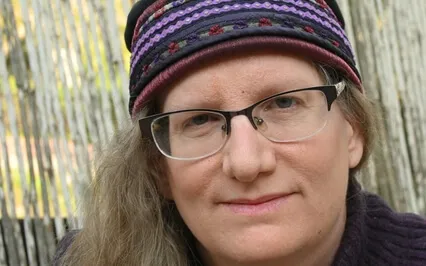
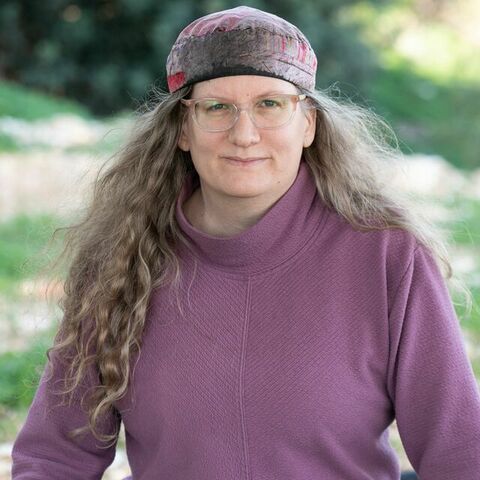
I am Rabbi Hasi Oriel Steinbauer,
The founder and director of the Institute for Holiness,
M'chol N'kadusha,
Kehilat Musar,
The Musar community.
We are just beyond delighted to host you,
To gather all of us together here in Kehilah,
In Sangha,
In the Vad,
In community,
To take refuge and to really delve into the Hebrew Bible,
The Torah,
In our weekly Torah portion,
Which we meet every Sunday at 3 p.
M.
Eastern Standard Time,
10 p.
M.
Here in Israel,
Where we are based.
We welcome everyone of all walks of faith and lack of faith.
All are welcome,
Beginner to advance.
So before we begin,
As we do every week,
We begin our practice and learning together with a kavanah,
With an intention,
An intention for today,
What we seek to get out of our practice,
What we seek to give to our practice.
And so I share with you now two of the three classic kavanah that we keep here at the Institute for Holiness,
Kehilat Musar.
And this in particular,
Because we see this act as a radical act of self-care,
That we are spending this time learning and sitting in guided meditation and silent meditation to really strengthen our souls.
So we say in the line one,
And if you're joining us only on audio,
You'll be able to hear that before doing acts of caring for the self,
We say now together,
This is something I am doing to strengthen my own soul in order to be a benefit of others,
To others in the future.
And then we also go to the third kavanah down here,
Before doing acts to strengthen your relationship with the divine.
We say together,
This is something I am doing to strengthen my relationship with the Creator so that I can be a better conduit of God's good to others when they need me.
So with that beautiful intention that we carry today,
We merit great growth and transformation and making ourselves and the world a better place on our path to kadusha,
To holiness,
That we really take this step by step in this journey,
Taking refuge together.
So as is our practice every week,
We actually reflect on the parasha,
The weekly tor portion that happened yesterday.
Yesterday on the Jewish Sabbath,
Where we read in synagogues all over the world,
The weekly portion,
This past week,
And it allows us to study the portion during the week of what our classic commentators have to say,
What our own leaders and people that we love to learn from what they have to say,
And what our own soul and learning have to teach us when we sit and really delve in it.
So hopefully you've had an opportunity to do so.
The following Sunday,
When we meet together,
Bezrat Hashem,
We will be looking at Shemot.
We're entering a new book,
Exodus in the Hebrew Bible,
Torah.
So do spend this coming week looking at the Torah portion so that you're ready to arrive and be here from the lens of Musar mindfulness,
Of what we can really get out of our ancestors' experience from their midot,
From their soul traits,
How we can apply it to our own lives.
That is what we're seeking to do.
May God help us.
So vayechi.
I just want to pause and say this has been an amazing journey for us to have shared the whole book of Bereshit together of Genesis.
And I'm deeply honored to have been given this platform to teach and to learn and be with you.
It's an honor and a gift and really fulfills my purpose in life of what Hashem wants for me to offer.
And I carry a great responsibility in that.
So I really ask that you reflect back to us at kehilatmusar.
Com,
Www,
And at kehilatmusargmail.
Com.
What does practice means to you?
What do you get out of it?
And what does this community mean so that we strengthen one another and I can continue to provide curriculum and what is needed to move forward.
So this is a treasured book.
All of them are,
But Bereshit,
Genesis is like,
I feel like carrying our baby,
Carrying our baby from Adam and Chava and their sons,
One who brutally murdered the other,
Onto Noah ten generations later and all his difficulties with his own son.
And then ten generations later with Avraham who becomes Avraham and his difficulty with his son Yitzhak.
And then of course we see the difficulties with son and father perpetuate itself in this difficult patriarchy,
This difficult way of our ancestors that we still carry with us today.
So we enter with compassion.
We enter with a beginner's mind and curiosity to see what it is that we can learn from them and from the text.
So I want to begin with some obvious notes from this text that in chapter 47,
Pasuch verse 29,
When Yaakov,
Yisrael is on his deathbed,
He is sharing with Yosef,
Do me kindness,
Offer me truth and kindness.
It's this way of that someone's on their deathbed,
This is what they request,
This is what they want,
This is what we give.
And you have to imagine and remember Yosef's troubled relationship,
Even with his own father who favored him and what that caused with the other brothers.
So this is someone who is approaching his own Abba,
His own father on his deathbed with that which he carries.
So he then requests that he be buried with his elders,
With his family to be returned to the souls.
And so we again,
These are just obvious misfot,
Obvious behavior for us that we bury where our elders asked to be buried or how they asked to be.
And in 48,
Chapter 48,
Pasuch 1,
Verse 1,
We visit the sick.
So Yosef is told that his father is sick and he goes and he brings his sons,
Perhaps even to bring his sons to model.
This is how you visit the sick,
This is what you do.
And so on his deathbed,
Yaakov and Yisrael have this admission of what I would call even guilt that he wants his son to know that his mother was not buried where he intended her to be buried,
That he had to bury her on the side of the road,
That she just passed away in the middle of birth quickly.
And it really is a tradition of ours in Mitzvah to bury a woman who's died in childbirth as soon as possible to honor the body.
And so this is his troubled admission of guilt on his deathbed.
And so I begin with us just to hold that and think,
Why wait until our deathbed to admit our guilt?
It is a key Musar practice that we do cheshbon chanefesh,
An accounting of the soul journal daily,
Five minutes before bed,
We look at our words,
Thoughts and deeds as they relate to how we treat ourselves,
Others,
And our relationship with God,
That we can see if there's guilt there,
That we can see if there's that which we need to share with another and work through.
And especially around the time of after Tisha B'Av,
The ninth of Av,
Where we start to really enter the period of Elul and Teshuvah leading towards Rosh Hashanah,
The New Year and Yom Kippur,
The Day of Atonement,
That this is the time to admit these things and to have those conversations.
If anything,
This book teaches us,
Especially Vayechi,
Is that we need to learn from our ancestors not to remain silent like them,
Not to leave the elephant in the room,
Not to perpetuate this familial trauma by not communicating.
So this is the first.
OK,
The second deep moment here.
OK,
This is really intense.
He's on his deathbed.
He wants his grandchildren Menashe and Ephraim,
Who we will always term Ephraimu Menashe,
The youngest gets privileged over the eldest.
That this is the scene in Chapter 48,
Verse 17,
Where Yisrael is essentially supposed to honor the elder blessing,
The eldest blessing on Menashe with his right hand.
And Ephraim is supposed to be on the left.
And he actually switches them.
So Ephraim is over here and Menashe is over here.
This is the right hand.
And something amazing happens.
Massive tykun,
Massive correction,
Massive.
Only someone in this family and this whole journey of Bereshit who intervenes does so physically and verbally before the act,
During the act,
In order to try to stop the perpetuation of something that has caused undue suffering to each generation in this family.
And that is privileging of the youngest over the eldest.
And we may say to ourselves,
This is ordained by God,
This was commanded,
This is here.
Find if you tell yourself the story that you need to tell yourself.
But you still can't deny the effect it's had on these families and the suffering and that we learn from it today,
That we don't do that anymore.
And probably shouldn't,
Privileging one child over the other because of birth order or the lack of it or that God has given us a vision to privilege the youngest over the eldest.
So this is the amazing thing that happens if you've seen this.
Israel,
Yaakov has placed his right hand on Ephraim's head and all of a sudden Yosef sees the evil,
The actual verb,
The shorash,
The root is reish,
Ayin,
Ayin,
The wrongness,
The incorrectness of this behavior.
He sees it and he knows because he knows from experience what this leads to because he lived it.
He,
The youngest,
Was privileged over his brother Esau and he almost lost his life to it.
It was actually threatened.
He has to flee,
Go into exile 20 years,
Has to go through unbelievable,
Kind of,
I don't even know how to describe it.
It's a transformation but it's a painful dislocation of his hip that causes him disability long term and in order to come to form reconciliation with his brother Esau.
So this is someone who knows what this behavior leads to.
Yosef physically intervenes to change the behavior.
He physically lifts the hand,
He attempts to lift his father's hand to correct the position.
And just to let you know how important this is to Yosef,
The high importance,
Is that the precision of the language used here in this pesuk,
In this pesukim,
And the repeated use of right and left,
Right and left,
Seven times in combination.
So we see Yosef clinging.
We see Yosef having attachment,
The type that causes his own suffering,
His needing it to be the way that,
Although we might agree,
Is the correct way because he knows the long term suffering that this will cause and might cause.
So he physically tries to intervene,
To lift his father's hand,
To change it.
He actually speaks to his father,
Does a little bit of tohacha,
A little bit of aba,
Change your behavior.
This is not correct.
This is not what we do.
And the aba has quite a beautiful,
Humble response.
Yes,
Yes,
I know that this is the way it has to be.
And yeah,
There might be some struggle with that for us in our practice.
And to just recognize that if there's any embodied sense of something coming up right now,
Really,
Does it have to be that way?
And it has.
So and I just want to say that thousands of years later,
Right,
We perpetuate this with our blessing,
That we bless our children,
Our male children from many families,
If not most,
In my family,
We actually bless both boys and girls with Efraim,
Menashe,
Esar,
Ravka,
Rachel,
Lea together.
But we say Efraim before Menashe instead of saying Menashe v.
Efraim.
So interesting.
So people struggle so much with the relationship of how Rachel was favored over Lea that we'll find in many communities that they will change the order of the imahot,
Of the matriarchs,
How they're listed in the Amida,
For example,
Where they'll say Lea before Rachel because they feel that that is a tikkun that's respecting what should have happened or what did happen,
Like the fact that he marries Lea first,
Even though he preferred Rachel.
Interesting,
We don't really find this as much in communities,
Even these liberal communities,
Where they change the bracha,
The blessing on their children to Menashe v.
Efraim.
And so we'll just conclude this part by saying that I said that this is massive tikkun,
That we finally have Yosef who is trying to set things correct in the moments,
Even a little before he doesn't succeed,
But at least he tried.
And this is a first,
This is a first we see in the Torah.
And it's beautiful,
It shows this intervision,
This intervention is in progress.
And so I want to finally share a tiny bit with you about that Yisrael,
If we go on to the next part,
We see where he's supposedly offering,
I wouldn't call it blessings,
He's not offering blessings to his children on his deathbed,
He's,
You know,
Some call it that he's offering visions of the future or telling the way it's going to be much more so for how they'll be as a tribe than the individual.
But the first three are curses in some sense,
It's how my children receive them,
My children being eight and eleven,
They're like,
These are not brachot,
These are not blessings,
These are curses in some sense.
So he finally speaks to his anger towards his children.
He finally speaks his suffering.
And this is in chapter 49,
The Pesachim,
The verses three through seven,
Where he finally shares for Reuven how disappointed he is.
I mean,
The fact that he even like cries out,
You know,
You turned over my bed.
It's like,
How humiliating in some sense for Reuven.
And of course,
It's not to justify or even condone what Reuven did,
But think of this in front of all your siblings.
This is the moment that your Abba,
Your father decides to lay out the sheets for everyone to see.
And again,
This brings up this whole issue of why wait till your deathbed to share with your children how you feel about them and their behavior.
Let's try to integrate in our Musa mindful practice that we are actually having these conversations now in the present moment and not wait for and that's not emulated Yisrael Yaakov's behavior.
He does the same thing with Shimon and Levi,
Finding them being extremely violent,
How they reacted to the rape of their sister Dina,
How they treated all the men and people and Shechem.
And you know,
He doesn't want to be in that console.
But I will say through all of this,
He really emphasizes at the beginning before he even decides to curse and bless them,
Share their future,
That he emphasizes that they must remain brothers united together.
And this is not some like,
I don't know,
Like sentimental thing.
What is key behind this is this,
This sense that even though I don't want to be in your tribe and in your console,
Because you're violent,
And because you acted immorally,
And,
You know,
As we say,
Even in the Dharma of trying to make wise decisions with one's sexuality and ability to use that,
That Reuven obviously violated that and did not behave wisely.
That in the Jewish tradition,
He obviously violates something much stronger than just wise or unwise behavior,
It's seen as quite an aversion,
A sin to lie with the spouse of your father.
So but to basically say it's almost like the prayer,
The Braha we say,
And the Am Yom Kippur that we stand here with sinners,
Meaning also ourselves,
But we are all one,
We are all here and that we will stand and be united and be in this prayer together,
Be in this admission of sin or guilt or unwise behavior and decisions.
So Israel and Yakov essentially saying here is that even though I don't agree with you,
I'm still going to be in relationship with you,
There's still going to be consequences for your behavior.
And then he if anything,
He he knows this,
He's lived this.
Yosef has also they all have on some level,
But the ones who really demonstrate this that I'm going to forgive you in the sense that I'm going to be in relationship with you.
There's still divine retribution,
There's still consequences for your behavior,
But we're going to remain united as a people,
As tribes,
As brothers.
And that's something beautiful to even say that even though I'm going to tell you now how much I disagree with you and disliked your behavior,
I'm still going to let you stay next to me on my bedside while I pass away.
There's something significant there.
Finally in our teaching today,
We witness the final reconciliation between Yosef and his brothers.
And you might think to yourself,
Wait,
Didn't we already do that?
Like didn't they already?
Didn't they already like weep and cry on one another and Yosef forgave them and and what we think happened?
Yes.
Yes,
We did witness that.
And what this shows us is that forgiveness is not a one time event.
It's not as if you forgive and you move on and you never talk about it again,
Never deal with it again,
Never need of forgiveness again or to forgive again.
So here we witness that sometimes we will need to visit either the sin that we've done,
The wrong that we've done,
We will need to visit it again and again.
And perhaps some of us will even need to forgive again and again.
It's a process.
And now one that can be triggered by major events like the death of a patriarch here.
And that's what we're witnessing is Israel and Yaakov,
Both names,
Both both men united.
He's on his deathbed and he's dying.
And this triggers the brothers fear that Yosef is going to take revenge on them.
You have to remember this ancient Middle Eastern culture.
Well,
I shouldn't say it's ancient.
It still exists with us a bit today.
But definitely back then,
The sense that you hurt or kill someone,
There's going to be the revenge that that family is going to take out on you or your family.
And that gets carried on for generations.
So in the sense that like you wait for the patriarch to pass and then you can commit the thing.
Think about Esav and Yaakov.
Esav wants to wait until Yitzhak,
Their father,
Passes away before he plans to murder his brother.
It's a plan.
So they suddenly the father dies and suddenly they're,
Oh my gosh,
What this reflects is they have not forgiven themselves.
There's no self forgiveness here.
And I might venture to say this painful as it feels inside,
That maybe they can't forgive themselves.
Maybe there are sins,
There are acts that are just unforgivable.
This might be one of them.
Throwing your brother in a pit to die,
Selling him into slavery.
I don't know.
I hold it.
But I think to myself and my practice that if I had done such an act,
I don't think I could forgive myself.
And so this might be what we witness here.
So this causes Yosef to cry.
You know,
It's like,
Really?
Oh my gosh.
17 years later and you still don't trust me.
You still don't trust yourselves.
You still have forgiven yourself.
You still haven't realized that I'm not going to do this.
Maybe I'm not even you.
That really,
Yosef really has come,
As I said last time last week,
That he really feels that God is the one who brought him down in order to save lives.
So we witnessed this beautiful whole thing in chapter 50 verses 14 through 21,
This final reconciliation where he finally says no.
And it's so interesting the language.
He never says,
I forgive you.
And this time the brothers out of their fear,
Of course,
Send a messenger.
We think that's a messenger.
They might have themselves said it.
The language is ambiguous.
And where,
You know,
They are finally admitting their guilt,
Their sin,
Their peshah,
Their transgression.
And so he's getting,
Well,
He's getting either through a messenger or not directly.
He's getting that admission.
But he never says,
I forgive you.
Instead,
He always puts it to God is the one who will see to the consequences for your behavior.
So this is what we call reconciliation.
In some form,
It actually might be what's in some sense is a Jewish,
Mussar mindfulness way of forgiveness.
And what do I mean by that?
Well,
If I can pull up the text quickly.
The concept of forgiveness is not tied to consequence,
Meaning that we choose to forgive to remain in relationship.
This is what Yosef does and did.
That's a reflection of his forgiveness.
But in no way does that take away that there still be consequences for one's behavior.
And even in the Dharma and Buddhist teachings,
There's a real understanding of consequence that our behaviors have consequences,
Sometimes good,
Sometimes not.
And so if I can pull this up,
I will share it with you.
So that is where I wanted to share with you today.
Yes,
So we say here that this distinction between forgiveness and consequence that I can forgive and there are still consequences for the offender's behavior.
And we look at impact more than attention.
And that the essence of forgiveness is that the forgiver allows his or her relationship with the forgiven to be healed enough that they can still have a relationship together.
Okay,
So it's like as if saying you have hurt,
You have injured,
You have rung and you will suffer or live with the consequences.
But despite all that,
I'm here in relationship with you.
And this is what we witness.
So with that,
We are going to move into our sidded practice.
If you are someone who is caring and well aware of living with trauma,
And you sense and feel that your window of tolerance,
It's too much this practice in the city,
Open your eyes,
Connect to what is around you.
Come into your breath.
Do not remain in the meditation.
If you have any chronic pain or issues,
Please stand even do a walking meditation while you listen or lie down,
Keep your eyes open so you'll remain awake and alert.
For the rest of us,
Please come to a sidded seated position that you are upright,
Dignified,
Created in the image of God,
Not West Point stiff,
As my teacher john kabat zen says,
Really allow your sit bones to go into the seat feel yourself carried.
This is such a joyous moment to have finished the book of bearish see together we say has that has that meet has it may we be strengthened to continue our study and learning and practice together.
Three deep cleansing breaths.
Allow yourself to settle and arrive.
Do a gentle nurturing body scan with the beginner's mind with curiosity Where are you right now today?
What is your felt sense in this moment?
We will move through a classic rain practice an acronym for our recognize a for allow and accept I for investigate and n for a nurturing non identification with what we unearth within.
So we've carried so much from our ancestors from Adam Hava through Noah through Abraham and Sarah to Yosef and Jacob Israel.
Where is it right now,
And you where you are stuck?
Where is it like Israel Yaakov on his deathbed that he has to wait to his deathbed to share his guilt.
Where he buried his wife,
His favorite wife.
Where he admits and finally shares how he feels about his sons.
What have you not spoken?
Where are you stuck?
Where is there either a version or clinging or an attachment?
What is it that you need to say and begin to recognize and allow and slowly investigate?
Where do you feel it in your body?
What does it feel like?
What is the felt sense right here right now in this moment?
You can give quiet word to it.
Perhaps tight,
Like a ball.
Hot sad doll.
Perhaps it's emotions.
Perhaps it's actual sensations in the body.
Where do you feel it and how does it feel?
Perhaps it's a lump in your throat,
Tightness in your shoulders.
Perhaps the buttocks are even clenching the thighs.
Perhaps even the toes.
What have you not given voice to and where is it lodged in the body?
For those of you new to meditation from time to time,
I will go silent to allow you to deepen your reflection,
Your investigation of the felt sense of the body.
Know that I will return with my voice if you travel off with your thoughts,
Which you will.
That is part of the practice.
Do as my teacher Joseph Goldstein says,
Simply begin again.
Bring your attention back to your breath,
Back to your felt sense of the body.
We will sit in a few minutes of silence to move through an investigation and acceptance of any aversion or clinging attachment.
We will reveal feelings on As we move into the end of the RAIN practice of nurturing and non-identification,
What if you bring loving attention to that spot in your body where you are holding that which you haven't said and you need to?
What if you ask what it needs from you?
What if you gently ask if you can be with it?
I invite you to put your hands on the location on your body where you feel the felt sense of this former stuckness.
Sending love and healing through your hands,
Through your breath,
To that felt sense in your body.
See if you can be with it in silence.
I will ring the bell when we are to come out of our practice together.
You doing better than the.
.
.
.
.
.
.
.
.
.
.
.
.
.
.