Welcome.
Allow yourself to settle and arrive.
We will begin in one minute.
You have joined awakening.
Okay.
Thank you.
Thank you for joining us.
We are about to begin awakening Torah,
Musa mindfulness,
Our weekly practice together where we learn Torah through the lens of Musa mindfulness.
And we always take the weekly partial from yesterday from Shabbat that has just passed where we traditionally study the Torah portion.
And for us this week,
We enter a new book of the five books of Moshe of the Torah called Shammot Exodus.
And I'm just delighted to have you here.
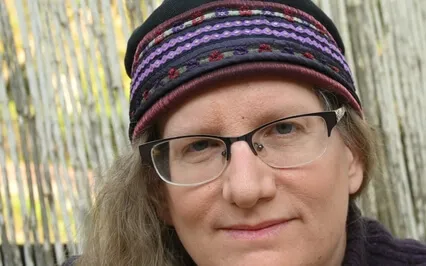
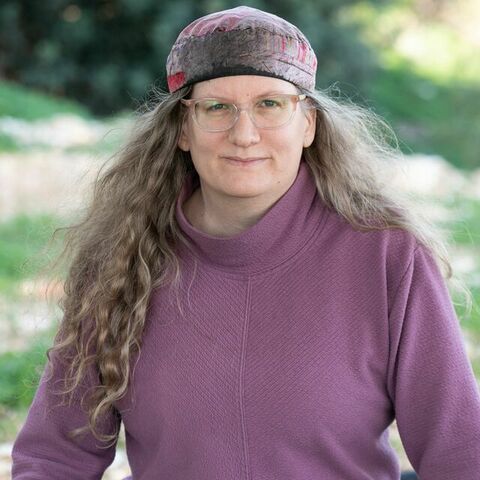
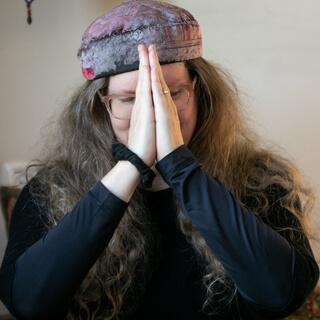
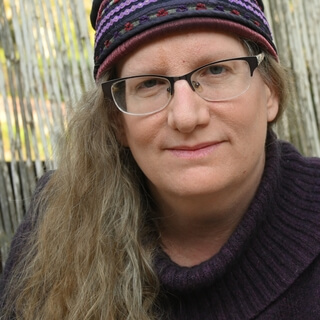
I am Rabbi Hasio Ori El Steinbauer,
The founder and director of Muhon de Kedushah,
The Institute for Holiness,
Kihilat Musar.
And we always begin with our intention for this practice for the kavanah of why we are doing what we're doing,
Why we are joining in community to do this practice together.
So I am going to share screen with you.
For those of you listening on audio.
I will read out loud what is before us,
And this is what we do every week together.
So you will see before you,
Bezrat Hashem,
Three kavanah,
Three intentions,
We always do the first and the last.
So this,
We see this practice that we do on Sundays,
3pm Eastern Standard Time as an act of self care to really allow ourselves to be into character development of our midot,
Of our soul traits.
And so we say this is our intention,
Our kavanah,
Together.
This is something that I am doing to strengthen my own soul in order to be of benefit to others in the future.
The last one is our relationship with God with the divine however we may encounter or have that relationship or not.
We say together now.
This is something I'm doing to strengthen my relationship with the Creator,
So that I can be a better conduit of God's good to others when they need me.
So with a deep breath as a gift from God we allow that intention to enter.
And also come out with the out breath.
That is what we are here to do today together.
So as I said we're going to enter Shemot.
And I'm deeply grateful to enter this new book together,
This new siddurah,
Shemot in Shemot.
The Shekhin anu moment,
It's thanking God for bringing us to this moment so we'll say together Shemot hakadu nai Elohe namalekha walam Shekhin anu v'kiyamanu v'hikyanu lazman hazeh We thank you for bringing us to this moment to be able to be in community,
To learn from Torah and Musar mindfulness to grow as people in service of others.
So Shemot,
So much happens in Shemot,
We can't cover it all obviously.
But I do want you to recall that back in Vayechi,
Back in Bereshit,
Say for the last Torah portion,
We witnessed,
Even before Vayechi,
We witnessed Yosef as this visor,
This second in charge of all of Egypt,
Taking on social policy to get not only the Egyptians but basically the whole region but especially the Egyptians through a famine,
A famine that lasted seven years.
And that policy,
As you'll notice went in stages,
It went from having them give money for the bread and the grain to when they ran out of money,
Giving their livestock and their animals whatever they might own for grain and bread to finally giving their land,
And then finally their bodies,
Essentially,
Becoming indentured servants.
And this is something that they went in willingly,
Not out of naivete but because they needed to survive,
There's no judgment there.
We just want to be aware and analyze what happened.
And Yosef really probably has a certain skill set a toolbox in front of him is modeling what to do based on what he's witnessed around him already in this culture.
So although we have the vantage point of looking back and perhaps even judging thinking,
Not such a good idea to have social policy where you turn the whole population into,
Except for the priests,
Of course,
Who don't get their land taken away,
But to turn the whole population into indentured servants and essentially as slaves to the office of the Pharaoh,
And that the Pharaoh should then like own all their land and then basically anything they produce they have to give a certain percentage to I believe it's 20%.
So you've set up now this social policy and this new way of being where it doesn't,
It's not the best setup.
It's what's needed in an emergency moments of this famine.
But then I want to also remind you that Yosef brings down his family from the land of Canaan into the land of Goshen in Egypt where they are given the best land in order to shepherd and care for both the pharaohs livestock and their own.
This is a community that is thriving in the famine.
This is a community that actually is reproducing during the famine it's growing where no one else is.
And you know from how things are today that when there is a group of people who actually aren't native citizens native to the land that they're doing really well and everyone else is suffering the famine.
This is not the best foundation and set up for what,
What is and what will come.
So this is where we are in Shemoh,
A new king a new emperor a new Pharaoh comes to power and who lo yada at Yosef he doesn't know Yosef.
Okay.
I want you to hold on to that term yada to know,
Because it's not like the way we know things often in Western culture where this is concept of I know a fact.
I want to share briefly with you from this wonderful texts and source a the GPS to our commentary is wonderful resource.
And on page five here we read know that this is the first appearance in Exodus in Shemot of this verb,
You're valid iron is a key term in the Exodus narratives,
Occurring over 20 times in the first 14 chapters,
The usual rendering to know hardly does justice to the richness of its Semitic range in the biblical conception like with our ancestors what we're witnessing right now.
Knowledge is not essentially,
Or even primarily rooted in the intellect and metal mental activity.
Rather it is more experiential and is embedded in the emotions and the embodied sense,
So that it may encompass such quality is as contact intimacy concern relatedness mutuality.
Conversely,
Not to know when you say lo yada at the or I don't know I don't know someone or I didn't know,
Or I didn't know the situation.
It's not it's not to know is synonymous with this association with indifference,
Malleation,
Estrangement.
Okay,
A human culminates in the callous disregard for another's humanity.
So here we have this keen saying I don't doesn't know yourself.
Okay,
That's the first you also for ancestor and all these people.
So this when you don't know is that you don't have rahmim compassion,
Where you see and know the needs of the other and bear their burden.
You have no interest in that.
And so we see this king acting out of fear,
Fear,
Fear based leadership.
There's no wise discernment going on and there's a prejudice it gets taken out on a group of people and on our ancestors on the emerging Israel community,
The Hebrews the Jews,
And it starts with trying to crush their spirits with hard labor,
So that the goal is to stop the reproduction,
They have grown so much that they are a threat to this key.
They are choosing to see them as a threat because they're a large population.
And when,
When basically they are put into a conscripted labor against their will there's no they're not being paid it's a simply again a form of indentured servitude form of slavery.
It's meant to crush their spirits of the stop reproducing well that's not effective,
It actually doesn't work as social policy,
They continue to reproduce.
So,
The the borrow moves from leadership it to the populace.
First he begins with the midwives.
There's a beautiful story in here if you have a chance to study this partial I recommend that you do.
There's the assumption that all of us have engaged in this when we come together.
So here we have these midwives named Shifra and Pua,
And they are given in social policy instructions by the parvo by the king,
That they must murder any Hebrew baby that is baby boy that is born.
So right when the,
The,
The child is born and comes out what they call birthstool,
They're supposed to check if it's a male or female and murder the baby boy.
These two women decide.
No,
They're not going to do this,
They have what we call omets live an amazing amount of courage.
And what is the foundation of that courage what actually helps balance their media of courage that allows them to act out this compassion in this way.
It is that they fear God,
That is the language used that they fear God,
And they did not engage in fantasize,
And fantasize to kill these children.
So you may be wondering yourself what does it mean to fear God back then.
Of course in our Jewish tradition there are many opinions,
And probably not one precise definition,
But you should know that in their,
Their defiance of this tyranny of this,
Of this directive by the paro is the first recorded act of civil disobedience.
And they,
They really decide to defend a moral imperative,
And when we say that there's a fear of God it's associated with moral and ethical behavior meaning it can notes a conception of God as one who makes moral demands on us.
And it functions as the ultimate restraint on evil on one side,
And the supreme stimulus to do good to do what is upright.
It is what we today also would say is wise discernment of living that upright path on the path towards holiness kadusha,
And it's living with integrity.
So these two women,
These two midwives,
They,
So the term in Hebrew is loasu,
They decided not to act,
But they do even more than that.
The time,
The time,
It is a team,
Okay,
At the Tino,
Tino Kim,
They sustain they bring life to these voice.
So it's not just that they refrain from murdering,
They decide to sustain these children and perhaps even the mother or mothers.
And so there's,
They're acting out one is a compassion a balanced compassion to see these mothers and these children,
And also have this real balance of year of all and and fear of God to understand the moral imperative and to live it,
And having balanced knowledge in the process.
So we're seeing the birth and Shammot of people who have this moral impulse,
It's there,
The fire is there.
And we don't see any rule of law.
So these are people that are having to act individually.
And so you get the next impulse after this amazing act of civil disobedience,
That they're actually even willing to die because they could have been killed by the leader and the king,
And that we see this.
The part is not,
You know,
Satisfied that this is it.
In the end,
He decides to do another measure of social policy to add to that and fantasize that didn't happen through the midwives and he calls upon all citizens,
All Egyptians,
All Egyptians to murder the Hebrew baby boys to throw them into the Nile.
So,
Um,
It's interesting that you see this birth of a new form of genocide and evil on a grand scale,
And also the birth of the vigilante of that someone coming with that impulse of the fear of God and the balance of morality,
Who's going to attempt to fight this and overthrow it and of course,
Which will come later and we'll learn this is comes the relationship with God,
And where the rule of law will come.
So this vigilante justice,
When there's no rule of law,
Where one has to rely on one's own internal compass,
Which they,
They use and it's termed as fear of God.
So that one remembers okay so one remembers what is required of them,
That they are to act.
It's not just an awareness,
So I want to point out we meet Moshe Moshe Rabbeinu Moses in English.
He is one of the Hebrew boys who isn't murdered,
Who is saved again by women who with clear kavanot,
Clear intention,
Putting their life at risk attempting to save this boy,
Mother,
Sister,
And then the daughter of Haro.
Even her servants who are witnessing this they also participate.
They,
They are all a,
The foundation and the cradling and the holding of keeping this child alive.
He emerges as this young man who goes to see his brethren you have to be very careful how we pay attention to the verbs that are used here is simultaneously why he went out,
He purposely goes out to see his brethren and he sees you have God who is coming who hears the cries,
Who remembers,
Who sees.
This is all the yada,
The knowing is coming alive and balancing,
And it leads to great rachmanot,
Compassion,
That one acts with zerizut,
A balance,
Alacrity,
Enthusiasm,
You can have that fire and act out have great ideas but the follow through is what has to be developed as a practice to have balanced zerizut,
Balance,
Enthusiasm.
So we see this young man who went out.
He sees an Egyptian murdering an Israelite,
A slave,
And he murders,
The Egyptian.
He flees,
Because he feels that he's going to be caught for that behavior,
Flees to another land,
Again sees a group of women shepherds trying to get to a well to water their flock.
They are being treated poorly by the other male shepherds there.
He intervenes again,
This is someone who is extremely has a strong distaste and intolerance for injustice.
So much so for these individual level on the small local level,
When he sees that injustice he the impulse is so strong he acts out.
And what we witness here is that when he comes into relationship with God later in chapter three,
3.
1 where he experiences this burning bush and speaks those beautiful words of he nani,
Here I am,
Meaning here I am to serve.
He,
You get to see and really learn where his curriculum is where this Moshe Robino or Moses is going to need to have to grow to expand his window of tolerance.
He's someone that can respond to individual acts of injustice,
But when he's called upon by God to go on the global level to go save a people,
His own people.
He's like,
Whoa.
Fear emerges,
And a lack of proper balance humility.
He is low self worth.
He feels I am not the person for the job,
I cannot speak well,
And he gets into a dialogue and argument with God with the sense of the.
I can't do this.
And Hashem God's responses.
I will be with you.
You think that would be enough,
But it's not.
It's not.
So,
Hold on to these because you might want to look at when we finally move into our guided sit in meditation together.
Is it enough for you to feel that God will be with you.
And if it's not just to recognize it and honor it,
Because it wasn't enough for Moshe.
And then we move to a this ongoing dialogue now in chapter four one it goes all the way through chapter three into chapter four,
Where Moshe argues again I'm not the person for the job,
I can't do this.
And then God says,
Let me show you these miracles you'll have this staff that turns into a snake,
You'll have this whiteness this what we call leprosy but it's not really that the sea break out in his chest and go away there,
The sense of using miracles to cause faith,
Trust in God and courage to act.
And this didn't work so well either.
It won't work so well for the Israelites either.
And so by chapter four,
A super 10 verse 10,
He has his Moshe has finally moved to a version.
No way I am not the person for this job,
The job.
And,
You know,
God tries this kind of God center approach as a responsive,
Who's the who's the God who's the person in a sense who gives speech who enables.
And this doesn't work for Moshe either.
Finally,
And for 11,
God loses God's patience,
There is anger there is not bearing the burden,
But immediately balances that contains it.
And so God says,
You know,
God's strength is coming to support you and he will be the one that speaks.
And that's what strengthens his humility to take up the proper amount of space,
We in Musaarsi,
Anava as humility is taking up the proper amount of space.
And it's only through the support of another human being,
And perhaps a family member to but another human being that gives him the strength that he can move forward and do what's called upon him to do.
So hold that and keep that in mind when we move into our practice.
I'm just going to close by saying that this concept of remembering so we're taught here that God remembers that God knows to,
You know,
God knows what's going on here is it remembers sees it.
There is this unfolding of rahma note of this like,
You know,
Divine compassion in addition to the human compassion and feeling others pain,
You know,
We define the both in the Dharma but also in Musaar mindfulness this feeling someone else's reality identifying with the need of the other person bearing the burden of them ready taking action to assist.
So,
This is what we learn about to remember the show rich the stem the root of zine half race in.
It connotes much more than just recalling something in the past like when we say today in English,
I remember this is not the same thing.
It's,
It means to be mindful to pay heed.
There's a sharp focusing of attention on someone or something.
It embraces concern and involvement it is active it is not passive.
And it basically leads to action.
So we're finding these dote are all coming together and shamans that have been building in our ancestors that they've been strengthening over time are being challenged by over time of their own spiritual curriculum of what they needed to work on and strengthen.
And so,
In.
And we see that we are the balance humility,
The balanced compassion has to be there,
Really,
Seeing oneself in the other,
Trying to relieve suffering wanting to acting and then having that courage,
And then the follow through of zerry zoot of the lack ready of enthusiasm all these wonderful me though that we will work on,
Have our mindfulness of to balance and strengthen,
So that we too can move in and extend and strengthen our window of tolerance to move from individual acts of bringing justice to to the global level,
Which is what is needed right now through climate change and this pandemic.
It is where we need to work in community and strategize to be able to act on a larger level.
So,
I will just close with that by saying that this is all contrasted with leadership with power with the Pharaoh in in Egypt which this is the second one now it's already changed who know you that who he does not know.
So the first one didn't know,
Joseph.
And now this one doesn't know God.
No,
You don't.
Adds more suffering to the Israelites and to the slaves of that they now will not be able to have straw,
But they're required to produce the same quota.
So,
I'll close with saying that when Moshe finally is with our own in his brother in before power and power will not agree to let them go serve their God and worship their God.
Moshe sees the added suffering that this power is causing,
But sees it as God causing also because he for the first time,
Argues and shows his disappointment and speaks,
Which is this is where his low self esteem is low self worth is located in his mouth in his speech that which is oral.
He says,
And I feel like this might be like God actually setting up an opportunity for Moshe to practice and develop his speech to strengthen his need of an above humility to strengthen his speech skills or his argumentation skills,
His courage,
It might be even balancing his strong will to act physically like killing the Egyptian moving the rock and helping the shepherdess is gain the water that they need and shooing away physically the other ones.
He's very much choleric he's very much that which is embodied and does with his body to God helping him develop also speech so that he may not be always acting with that justice that impulse with his body and through physically to others.
So,
We see in chapter five,
Psalm 22 verse 22,
That he argues with God,
He said,
Why did you have me go before paral and tell him to let us go do this,
And now he's causing more demands on the slaves that are just hurting them.
And it's you're not helping them,
And why,
Why are you sent me to do this.
And he,
He is in a sense he complains and God this is when God says you will see there's gonna there's a scene,
You will see it's time.
This is unfolding.
So with that we are going to see,
We are going to practice a compassion loving kindness meta practice in our Dharma and Musa mindfulness tradition.
And so,
I want you to find a comfortable position.
If you need to stand because you have chronic pain issues or just too strong of discomfort where it actually takes you out of the present moment.
Please stand secure yourself next to a seat,
So that you are held and contained.
And for those of you need to lie down please give yourself permission to do so keep the eyes open so you remain awake and alert for the rest of us.
You want to come to a seated position,
Upright,
Get comfortable and allow your hands to rest.
If you feel safe,
Close your eyes.
If you need to keep them open just lower your gaze ground your feet to the ground so that you are carried and held three deep cleansing breaths.
I will guide you with my voice and instruction.
You will notice your breath and attempt to stay in the present moment as the practice of mindfulness,
Your thoughts will wander from time to time,
Perhaps it's even sensations in the body that will carry you away,
Planning for the future thinking about the past.
Just know that this is part of the practice you simply begin again,
Bringing yourself to the present moment.
Your breath is your anchor if the breath is difficult for you,
Then allowing my voice to be your anchor or any sounds around you.
The key to our practice of most our mindfulness is just that it's a practice.
It is one where you'll want to practice each day.
As you know,
The more you practice something it becomes habituated it becomes a habit.
Neurons that fire together wire together.
So if we practice the habit of loving kindness and of compassion,
Those qualities those midot become more the place that we live from they become more balanced.
So even if it seems forced for you that are new to this practice of who you are,
Change happens little by little.
Instead of forcing something or trying to make it happen we simply incline our mind and our body in that direction.
Just having it as an intention as a cabinet of something that we intend to bring starts the process.
And that's what we've begun today and will continue to do.
I encourage you to sit with this daily.
It requires patience and commitment.
And this is why we have the key law the community the vibe,
The Sangha to support us in our practice.
We begin with compassion practice a meta practice of chesed loving kindness toward ourselves.
We begin with a feeling of strength,
And we begin with a feeling of being filled in compassion.
The traditional form of this practice is that we combine a repeated inner intention with visualization with the evoking of feeling of compassion.
The gift of breath flows within us the gift of breath.
We feel the treasure of our own life.
And we also feel how much we guard ourselves in the face of our own sorrows.
We'll begin by bringing to mind someone close to you,
Whom you dearly love.
Picture them.
Feel your natural caring for them.
Realize how you hold them in your heart.
Allow yourself to be aware of their measure of sorrows.
They're suffering in their life.
Feel your heart open to wish them well.
Let them comfort to share and their pain to meet it.
Baring the burden of compassion.
And really you will recite the following phrases after me.
May you be held in compassion.
May your pain and sorrow be eased.
May your heart be at peace.
Breathing in their suffering and breathing out compassion.
With compassion.
Now we will visualize and imagine that our beloved one turns to us with their compassionate gaze.
Acknowledges within us the sorrows that we carry.
And they say to us with the same tenderness.
Repeat after me.
May you be held in compassion.
May your pain and sorrow be eased.
May you be at peace.
As they breathe in your suffering and breathe out compassion.
Allow that compassion to enter you and touch your very felt sense the embodied sense.
Feeling how strong and balanced it is in within you,
Strengthening your own self worth.
Knowing that you are seeing that somebody yet that knows you that deep in your took us in your deep in your stomach and your heart knows you and acts from that knowing and you them.
This is what Moshe felt when he saw his brother and being beaten and killed by the Egyptian,
Almost as if he couldn't contain himself.
And now watch how our beloved ancestor Moshe will be one in his own spiritual curriculum will have to grow towards the rule of law,
With his input pulse towards compassion and justice.
As we strengthen and balance our own self worth,
Knowing that we are created in the image of God.
We direct that same compassion towards ourselves individually.
You will repeat after me.
May I be held in compassion.
May my pain and sorrow be eased.
May I be at peace.
You can whisper inside yourself Shalom Shalom Shalom.
That sense that you are dignified created in the image of God.
With coupled with your chesed your met of loving kindness.
Compassion.
You will act with wise discernment growing your wisdom growing your window of tolerance to act on behalf of others on humanity on the earth.
This week in our practice as we sit now,
Heading into some moments of silence.
You will practice further and extend this circle.
This concentric circles of obligation to the suffering of your friends to your neighbors,
To your community,
To all who suffer.
Even to difficult people to your enemies to all beings,
Taking this practice one day at a time until we meet again.
There's rot a sham God willing next Sunday.
We move into silence.
This awareness of your felt sense of this experience in your meta loving kindness compassion chesed or a humming practice.
All of us will be will come out to join again and community.
Thank you.
Thank you.
Today's practice with our cover notes and our intention to engage in practice and learning together so that we could strengthen our own spirits and soul,
So that we can be a benefit to others to strengthen our relationship with God,
To be a conduit to bring God's good to others.
Thank you.
Slowly and gently open your eyes.
I want to thank you for joining us back in this shared zoom live on Facebook,
LinkedIn,
YouTube and Twitter,
Thank you for your practice.
Thank you for being with us to practice,
Most our mindfulness as we explore the Torah and our teachings,
The drama together to grow,
To be able to serve others.
This teaching is sponsored by Debbie Hoffman who has sustained this Institute for holiness with her so DACA with her righteousness and giving of Tuma of charity.
And this is a form of sponsorship which we welcome from everyone and anyone who wants to honor the teaching and memory of someone who has passed where we can merit our teaching to raise up their soul and also to help others in need today.
And you can also do it in the side of in memory of someone in honor of someone.
And Debbie has given the sponsorship and honor of me as the founder and director of the Institute for holiness key here at most are.
Thank you,
Debbie.
You help sustain us so that we can bring God's good to others.
We also of course except Donna Tuma donations of any amount through any method you can think of usually PayPal Sally for those who are abroad for in Israel we have paybacks and the other one my mind just flew out.
Any,
Any amount will be full of my gratitude on behalf of the Institute to help us continue to make this free will offering to you weekly.
And may this help sustain you,
As it does as we take refuge in community together in the teachings in God,
And with the teacher,
And with the Buddha wisdom.
I thank you.
I look forward to seeing you next week on Sunday this vatation.
Please do be in touch with any questions or let us know how your practice is going.
Thank you.
Shalom Shalom Shalom.