Welcome to awakening.
Dora Musa mindfulness.
We will begin in two minutes,
Allow yourself to arrive and settle.
Welcome to awakening,
Dora Musa mindfulness,
Allow yourself to arrive and settle.
We will begin in one minute.
Welcome to awakening,
Dora Musa mindfulness.
You are joining the Institute for holiness.
Mahalo,
The community.
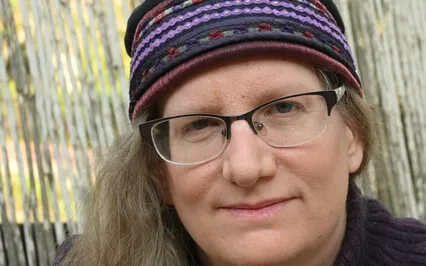
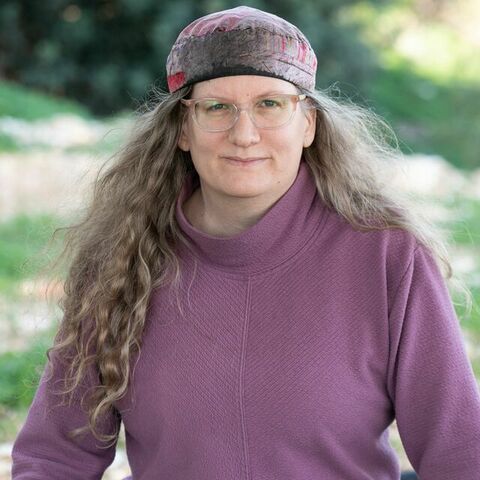
I am Rabbi Oriel Steinbauer and the founder and director.
We are just beyond delighted to have you join us week by week every Sunday.
This rotation God willing at 3pm Eastern Standard Time for our practice and learning together,
Looking at yesterday's Torah portion.
We are going to use practice to look at the weekly tour portion from the Hebrew Bible to study it during the week prior and to listen to it,
Chanted lanes on Shabbat morning this rotation in the synagogue or online,
And really allowing you on the Sabbath to sit and learn Torah,
So that you come to the session with us ready to really delve into this from a moose or mindfulness perspective.
So God willing you've had a chance to do that we will look into the tour portion of me gates today.
Coming still from the book of Genesis better sheet.
Before we begin,
We always enter our covenant our intention for today's pride.
I'm going to share that with you for those of you listening on audio,
And you will hear it being read.
And for those of you who wants to see this again,
You can go ahead to our website at www dot kiki lot moose are calm and look for the latest blog.
So,
This,
What we are doing right now together for the next 30 minutes or more.
It's really an act of self care,
It's strengthening our practice.
And so we say for our cover now for intention,
This is something I am doing to strengthen my own soul.
In order to be a benefit to others in the future.
This is also a practice and act that we are doing to strengthen our relationship with the divine with what I may call Hashem or God.
This is something that I'm doing to strengthen my relationship with the Creator,
So that I can be a better conduit of God's good to others when they need me.
That those are our cover not our intention for today's practice as they are every week.
Well,
As I said,
We're jumping into me kids,
I will share some perspective about it from a most hard perspective,
Entering it with as much humility with God's help and mindfulness.
We want to really face of this intergenerational trauma of violence,
And very difficult.
And so we want to honor that under that,
That we might need compassion and boundaries around our practice and ourselves to take care of ourselves.
As you might recall,
Yosef our beloved ancestor at the age of 17 was sold off into slavery by at least nine of his brothers and ends up spending significant amount of time,
About 12 years in prison.
As a slave who was wrongly accused and ends up serving in this prison.
So this is someone who's lost his youth is vitality his 20s.
He's now in his 30s,
As we enter me kids.
And I just want to have us recall that in the previous partial at the end towards the end we noticed a shift in the 17 year old who wasn't aware of his brother's own reaction and response to him sharing his dreams to him sharing with his father reports about them to how they encountered and experienced him being favored and loved more by their shared father.
And so I want us to hold that in mind that when he actually is in prison with the baker,
And the cup there.
I'm going to do that.
And so I want to recall here,
A wonderful quote by a couple of our modern teachers.
A first year from Gunter plot,
Who says that 13 years as a slave,
Even though at times a privileged one left their mark on the young man.
And he had been his father's favorite a pampered youth,
And that this trauma of near death and subsist,
This is some subsequent sale of himself into slavery has brought profound change and gone are kind of the oral mental tunic that beautiful man that he wore that was a gift from his father,
And gone is these kind of easy arrogance and so we see for the first time a sense of humility,
And that is basic qualities are really in this faith and trust in God.
And in particular he has this growing wisdom that's indicated by very minor detail,
And the last pursuit where he becomes sensitive to people's faces,
Which is one of the key practices and being mindful of the other and judging the other favorably and seeing them as created in the image of God,
The soul being often seen and experienced through the face through the eyes.
And so we see him that he is aware of these this Baker and this cup air that how distressed they are.
And he says let me offer let me help let God,
Listen to your dreams and interpret them.
And he has this sensitivity to this,
And it's this new found,
As I said maturity and wisdom.
So we take that with us as we head into me kids that he understood from the first time that someone's upset in front of him.
Where he was kind of oblivious to this.
When he was 17,
Not unlike many of us to give him the benefit of the doubt and to judge him favorably is part of our practice.
And so we see that he's really aware where he hadn't noticed his brother's jealousy and anger or if he did,
He kind of didn't know how to read it or experience or you maybe even respond to it.
So I want to enter with that this growing sensitivity of yourself.
As we move into me kids again a very difficult partial from a different perspective,
You know,
We're often quick to judge people who may be seen as acting out their anger.
This is someone who has lost part of his life it's almost as if it's a it's a it's a part of death.
And so we say that all the brothers didn't kill him they only enslaved him it's.
There is a little bit of death when you've missed all of your 20s and into your 30s.
And to honor that I want to point out he stuck in Paris prison for 12 long years.
And that's not something you get back.
And so we often see reactions and a clinging attachment to that we expect when someone's gone through trauma or experience like this oppression that they should know that and not take it out on others because they were treated that way.
But really,
That's a projection.
It's a projection on those who are actually fearful of the response that in some ways may be justly divinely coming to them.
But of course if we want to not cause harm and suffering we're going to practice not to do that.
But let's say,
Let's hold that for a moment that we hold it for having that attachment to responding to expecting Yosef not to treat his brothers poorly,
Because what we're witnessing in me kids is someone who is angry,
Someone who may be acting out a bit of his power.
The rabbis and rabbinic to Jesus or course are going to have their own reading of this to make it more comfortable for themselves his behavior,
Which is basically seeing it that he's testing his brothers.
I must just offer a lot of compassion to everyone around here because to the rabbis,
Wanting to give you know rabbinic ancestors to give the benefit of the doubt to Yosef,
But also just honoring that Yosef is a human being,
And when he is caught up in the pain and the response of seeing his brothers come down to Egypt to meet fine and see them,
He's not going to be 100% mindful and this mastermind to.
Okay,
I'm going to test my brothers and see this unfold and know how to work through this.
It's if there is any mindfulness and testing,
It's probably changing moment to moment,
And is a little messy,
As it is when we try to mix power and domination and also acceptance and forgiveness.
It's muddled,
And we witness that here.
And so,
Just want to say a few more words about this that we honor that he spent so much time in prison,
And really has in some sense of strength and courage come out of it again as he seems to be really based in a very strong relationship with the Almighty.
And that is really balanced that bit the horn that trust in God and also a moon that faith which is different than bit the horn but we're witnessing him having this,
This strength because of it.
So,
What else do I want to share with you briefly before we practice some more.
Okay,
So in chapter 42 and smoking 21 so cough.
Through 24,
And we witness,
Joseph,
Who again is like now this second in command in Egypt,
Helping the Egyptians move through this seven years of plenty and then seven years of famine,
And he his brothers have come down from London on because they to,
They are experiencing the famine.
They come down to your food to save themselves to keep their families alive.
And he witnesses it he had taken through this experience and dialogue with him that he had taken Shimon one of the brothers and had him bound.
Before the other brothers eyes,
And the brothers say to one another,
And I quote here,
We are being punished for what we did to our brother Joseph.
For we saw his suffering.
And did not listen to his pleading.
And then move in,
Who is the one that attempted to save him.
And not necessarily save him from slavery,
But save from from death save from from that group mom mentality that was ripping off that jacket of yourself wanted to devour him,
It's a sense of like flame the flesh,
And that we witnessed the visible young man in Hamburg teach us last week that a Reuben reminds them and says and I quote,
Did I not tell you do no wrong to the boy.
But you would not listen.
Now we must pay for his blood.
Here,
Thinks that your surface dead.
And,
You know,
We found that he arrived at the bore at the hole and had toward his clothing and in a morning practice in.
And so we witness here in that,
That he,
He thinks your surface dead.
But what's more important than what the what the commentators pick up is the Joseph was pleading.
Now,
My first response to that is,
Well,
Of course he was.
Just because the text and the Torah doesn't tell us everything show us everything.
Is it that far of a stretch to imagine that you just took a 17 year old boy stripped him and threw him into a war that probably was extremely deep.
In order to forget him from the whole world.
That he wasn't screaming and crying and pleading and asking for help.
What do you think was going on,
He just sat there,
Silently.
So,
First is it that kind of dialogue with the commentators and text.
If this is new to you and you do accept wow he was I didn't realize he was pleading in the war.
So,
Just to deliberately ignore his please,
And how that emphasizes the cruelty of the act even more as if we needed that evidence in order to believe how cool the act was.
He's our brothers who threw him into a pit and went and sat down and eat.
You want to add the please on top of that,
Then hold that right now,
Hold it in your learning and practice that this is a 17 year old boy who is essentially being raped in a certain form,
Not obviously through any orifice in his body,
But a removal of himself or remove from the world a domination,
A humiliation that loses everything.
So we want to allow ourselves to have that embodied experience and feel that,
And the text.
This is part of our practice and most our mindfulness to not run away from the difficulty of these texts to not go through a version or denial,
And also not to clean and have an attachment to a certain way in order to move through this text to be aware of our reaction and response to it.
So,
I'm going to give you one last quote where it says that of Joseph's trauma,
That his cries in the pit are not recorded in the Torah.
Eva zone work suggests that in the pit yourself is an object when he is an object when you're when you're treated so much that way that people can rip off your clothing to close you in humiliate you dominate you and throw you in a pit you're,
You're an object already.
Okay.
He's an object there's no description of his experience no reference to how he feels the brothers treat yourself as a commodity and Torah does to Torah does to and we the ancestors carry this and experience it.
So recent studies of trauma suggests that where there is no witness to a trauma,
And obviously there are many witnesses to this trauma,
But they're the ones that are not speaking it and being honest to both their father themselves each other and the Joseph.
It is difficult to speak about it once voice is lost.
Joseph voice is lost.
And if one cannot tell the story,
Hurt the self is lost.
Okay,
We're going to hold that.
We don't know that Joseph has this privilege and so do we,
God in the text and the Torah wants us to witness this to hear this to know this to have this insider knowledge.
So many of us been through traumatic experiences and wish that we could hear the perpetrator admits that they were wrong and to take responsibility to know that there is some divine retribution that they're aware of they're being punished right now being held responsible.
Some of us don't get that in a traumatic experience.
So here we're being given a window that Joseph is getting this,
He's as painful as it is to hear it,
That he you know he wept.
And there is something positive about that,
To be able to have that recording to have that know that your brothers are aware of what they've done.
So,
I will just go on to say that we want to carry this now into him.
There's so much that happens in this partial obviously we're not going to deal with,
With everything but it's,
This is enough,
This is enough learning right now for us to sit together and are going to do this.
So,
I hope you have a seated seated meditation practice.
If you have any burning please do so next to a chair to ground you and hold you.
If you have any trauma or an chronic pain in the low back or anywhere else please a lie down but keep your eyes open to remain awake and alert.
For the rest of us who are seated whether we're if you're on a soft who is seated meditation cushion that allow your knees to feel carried by the earth in the ground for the rest of us.
It is in the feet that we allow this beautiful earth to hold us cradle us.
Feel your seat bones in the seat.
Right,
Alert,
Yet comfortable at ease position.
One where your breath can enter greatly.
Exhale any tension.
Breathe in peace.
Exhale tension.
Allow yourself to arrive to settle.
Shut your eyes if you feel safe.
If you don't just lower your gaze.
You can ask on or where you are right now.
And if you feel strong sensations in the body or strong emotions that feel too much for you if you ask can I bear this.
Can I sit with this learning and teaching and practice right now.
And you are hearing no honor it.
Open your eyes ground yourself,
And what is around you right now.
And for the rest of us who are able to sit and be with this.
I will now guide us in a meditation and we'll move into some silence together.
Now your hands to rest either on your heart or in your lap.
And as we move through a body scan.
Allow yourself to gain awareness of what is real for you,
What is the felt sense right now in the body.
Starting at your head down your face,
Your neck and shoulders,
Your chest.
Any heat or tension,
Anything that you may label as unpleasant.
Allow yourself to honor whatever is here for you right now.
Down to your lower back.
Down your thighs.
To your shins and calves to your feet and your toes.
Don't forget your hands and your palms.
Recognizing what is here and if you feel any sense of denial of a version of clinging attachment.
Allow that right now to arise.
Whatever feels most difficult for you right now.
See if you can fully let it be.
Allowing the willingness to pause.
To be present with the life that is here right now for you.
Now any any difficult emotions to be present with gentleness and tenderness.
You may whisper to yourself,
This too,
Or this too shall pass,
Or yes,
Or I can hold this.
I can be with this.
This is about opening to your experience,
Even when it's unpleasant,
And perhaps painful.
As we investigate the felt sense of what we are experiencing,
Know that this is not a cognitive or analytical process.
While we may have stories or beliefs,
It is simply a portal to our direct experience that we keep returning to the attention in our body.
Where do you feel most vulnerable right now?
And what are the sensations,
Bringing that curious interested mind and kind attention to your experience.
Some of the following questions may be helpful in your investigation.
What is the worst part of this?
What most wants my attention?
What is the most difficult thing I am believing?
What emotions does this bring up?
Perhaps fear,
Anger,
Grief?
Where do I feel these emotions inside?
What is the felt sense of these emotions as sensations in the body?
Clenched,
Raw,
Hot,
Sore,
Aching,
Empty,
Squeezed?
Allow your own self-experience in this moment.
As we move into nurturing,
Or non-identification for some of us,
We stay connected with the vulnerable experience inside.
Sense that you are asking and listening from compassionate presence.
And kindly ask yourself,
If the most vulnerable hurting part of you could communicate,
What would it express?
How does this part of me want me to be with it?
What does it most need?
Perhaps a larger source of love and wisdom.
Taking refuge in the Torah and Musa mindfulness,
In the Dharma,
In your community right here and right now in the Vad,
The Sangha.
Taking refuge in God and the Buddha.
Knowing that you are being carried,
That you are not alone,
That you are here with others who are doing this practice together.
And who arrive each week on this last night of Chanukah.
As we light the brightest lights at this darkest moment.
You are not alone and your light is shining through as we all carry one another right now.
Take some moments to breathe consciously and adjust your posture in a way that helps you fully contact your most awake experience of heart and mind.
Call on your wise compassionate self.
If you don't have that strength right now call on the wise and compassionate self of a friend,
Of a family member,
A pet,
A teacher,
A spiritual figure.
Anyone whose wisdom and love you trust.
As we cease from any doing,
As we allow ourselves to bask in the love,
Acceptance and forgiveness and compassion and protection that we have cultivated during our practice.
Ask yourself what has shifted from when I began this practice this meditation today.
And we move into silence,
I will ring the bells when we are to come out.
Silence.
Silence.
Silence.
Silence.
Silence.
Silence.
Taking some moments to rest in the presence and heart space of whatever has emerged,
Relaxing with the in breath,
Letting it fill you with the out breath.
If you have any new or residue residual difficulty.
As we move into one more minute of silence.
You may ask yourself what did I experience or learn about myself that I want to remember on this eighth night of Hanukkah.
As we remember our ancestor Yosef and all his brothers.
The growth of one step forward two steps back with even yourself,
And everything that he does,
And me kids the great responsibility to carry humanity through a famine,
Yet unable to carry the burden of the trauma that was done to him by family.
Silence.
Silence.
Come back into the shared space together.
Bow and honor your practice going to God.
Honoring your community in this practice.
Thank you for being here today.
We all attempt to practice and grow together.
And this holy work,
As we're on this journey towards kadusha to holiness.
And as the founder and director of the Institute for holiness Kehila,
Who saw I thank you for your donations we do ask that you contribute any amount for these weekly teachings and sitting together.
We do so through reaching out to us at kiki lots of sorry gmail.
Com.
All the information is on our website at key that was our calm.
And if you're listening and insight timer there is a way to offer donations we are live live streaming on Facebook,
Twitter,
LinkedIn and of course YouTube and here on zoom with all of you now.
Thank you.
We also welcome sponsorships and memory of someone may their memory be for a blessing or an honor of someone that is someone that you turn to for wisdom and trust that you want us to celebrate and bring into our practice and into our hearts.
So with that,
I wish you all who are practicing or observing Hanukkah Samyaka very happy Hanukkah one full of light and warmth that we so badly need.
And I look forward to seeing you next week,
Please feel free to reach out with comments and questions we always grow and learn from being in contact with our supporters and those who are part of the key he allowed the community and learn and practice most our mindfulness with us.
And with that,
I wish you Shalom Shalom Shalom.
Take care.
Thank you for joining.