Welcome to Awakening.
Torah Musar Mindfulness.
This is the week that we are covering Beshalach.
This is what we studied in synagogues throughout the world.
And Lain Enchanted,
Last Shabbat.
As you recall,
I have been sick and so we are a little bit behind.
But we are going to do Beshalach Chakshav right now.
And then,
Excuse me,
We will move to Yitro tonight,
Bezrat Hashem,
God willing.
So,
Awakening Torah Musar Mindfulness.
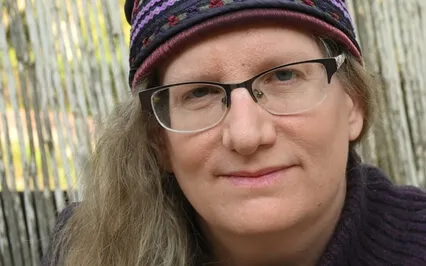
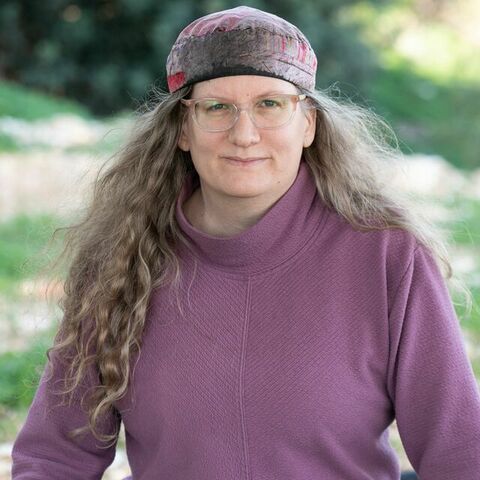
I am Rabbi Hasya Uriel Steinbauer,
The founder and director of Hamachon L'Kadushah Kehilat Musar.
The Institute for Holiness,
The Musar community.
I am delighted that you have joined us for this weekly gathering and learning together and guided seated meditation.
So,
Just for those of you who are new to this,
We meet weekly on Yom Rishon on Sundays at 3pm Eastern Standard Time.
Either on Zoom,
The Zoom link on our website at kehilatmusar.
Com,
Or on any of the live streaming services that are available on our YouTube channel,
On Facebook,
LinkedIn and Twitter.
And we meet to hear some words of Torah through the lens of Musar Mindfulness,
What my institute specializes in for us to be able to look through the wise traditions of Musar,
Where we work on character developments,
What we call midot soul traits,
And an applied mindfulness practice,
Including mindfulness coming from several of the Buddhist traditions,
In particular Theravada and Vipassana insight meditation.
So,
Before we begin,
And just to give you some outline of what this will look like,
We generally sit and learn together for about 20-25 minutes and then we move into meditation practice together to build our awareness and our mindfulness practice.
Before we begin,
We always begin with what we call a kavanah,
An intention for our practice.
And you will see before you if you're watching on video that you have three small paragraphs in front of you.
We will cover the first and the last for our intention,
Our kavanah for today's practice.
For those of you on audio joining us on podcast or an insight timer where I'm a teacher.
You will be able to hear,
We will start at the top,
Where it says,
Before doing acts of caring for the self,
We say,
This is something I am doing to strengthen my own soul,
In order to be a benefit to others in the future.
And then we move to before doing acts to strengthen our relationship with the divine.
This is something this right now this time we spent together,
Learning and practicing is something I'm doing to strengthen my relationship with the Creator.
So I can be a better conduit of God's good to others when they need me.
And we go in with this radical belief that this is a deep,
Beautiful act of self care for you to strengthen yourself,
So that you can be of service to others in God.
So that is our premise for this gathering and time together.
So,
In Bishalah,
We are dealing with somewhat of a conflation of two midot of two soul traits of Amunah,
Faith,
And bitachon,
Trust in God.
And many students of Musa mindfulness do mix up these two and mix them up and sometimes there is different definitions for them.
Amunah,
Faith is really a sense of,
I believe in you.
And then in particular towards God,
It's I believe in God.
And it's not something that you either have or you don't have that is not how Judaism views Amunah,
Faith is faith is something that can be practiced and developed,
And in particular we're taught in Musa that one has to experience the felt sense that God will take care of us,
Right,
To develop this faith.
And this is what God actually began to do in Bishalah on the route from leaving Egypt into the desert.
And that is the kavanah,
The intention.
Now is that the impact,
This is where we're going to learn this language of,
You can have the attention to behave a certain way or have a certain outcome,
But the impact of how it's received or experienced by others we are not in control of,
Not even God.
And so God has this intention to carry this people out of slavery out of Egypt.
And my alt-intensive purpose is thanks with great intention,
Great that I'm saving these people,
I brought them out,
And this beautiful thing.
And,
But that's not necessarily the impact on the people and how they experience it,
Which we're not in control of,
We're not in control of how people are going to react to a situation.
So,
Let's begin with a short Musa teaching of what is actually bitachon from one of our classic Musa texts,
What is trust,
When we say trust,
We mean trust in God.
But of course you can trust in others also,
But in Chovavot,
Halevavot,
Duties of the Heart,
Classic Musa text by Rabbi Bahia ibn Bukuda,
He teaches that bitachon,
Trust in God,
Is a tranquility,
A calmness of the soul and liberty of the mind.
So right off the bat,
If you had time to actually read this Torah portion,
The shalach,
Even in any language,
And get a summary of what's going on here,
You'll notice that there's crises in the wilderness.
There,
Let's just do a brief review before so that you can determine based on this definition if you think that this is what we're experiencing.
So the crises in the wilderness.
Okay,
What do we have here?
We have four on the way to Harsinai,
Onto the mountain.
Okay,
So we have on chapter 15,
Verses 22 through 27,
We have the lack of drinking water,
Which is a crisis.
And then there's a shortage of food,
Which is chapter 16,
One through 36.
And then you have further lack of water,
Chapter 17,
One through seven.
And then you have really an unprovoked aggression,
An act of war by a desert tribe called Amalek.
And that's in chapter 17,
Eight through 16.
This is the first time that B'nai Israel,
The children of Israel,
Will have to engage in a war of defense.
So,
Now that I've given you like a brief overarching summary of what went on in this week's parasha,
A lot more obviously went on.
We don't witness tranquility of the soul and liberty of the mind.
So we don't see balanced mida,
Balanced soul trait of the tachon of trust in God.
And then he goes on to say,
Living with trust in God is living with a deep sense of insurance that things are happening in the world are both God's will and for the good.
And in particular,
There's a sense of security that God is doing something for your benefit correctly and the best of their ability and know how.
And then he actually gives seven criteria for placing one's trust in someone.
They must be compassionate.
They must never desert you.
They must be strong enough to accomplish what you need.
They must know what is good for you.
They must be responsible for you throughout your life.
Their well being must be in their hands alone,
And they must be generous and kind.
So based on those seven criteria,
Rabbi Bahia even Kuda feels that God alone can fulfill these criteria.
Ideally,
Obviously when you are an infant a toddler and a child,
You want those fulfilled by your parents to God willing this rock to show.
And that's one of the first foundational relationships to build trust.
But this is clearly what perhaps God is,
You'll notice right off the bat we're told that God has said,
I'm going to test them test the people through this kind of water and food dependence.
And it's debated about what it what it actually means to test them.
You know Rashi,
Our classic rabbinic commentator comes and says well it's just simply to test them to see if they follow the rules of when they're supposed to collect the man that has fallen.
It's like bread slanted on the on the ground.
And when they can collect it and when they shouldn't it,
They shouldn't collected.
And,
And,
And that they shouldn't let it rest overnight.
There is Rashbam,
His grandson,
Great,
No his great his grandson,
Yes I keep thinking it's his great grandson.
You know,
He really sees that God's creating a dependence on God for this basics,
Substance.
And through that this relationship that they will develop this emunah,
This faith,
And betachan,
Trust in God.
Okay,
That God will take care of them it's through like an experiential,
Obviously experience,
Chavayah.
Now,
I have to say,
Right off the bat we need to,
We need to put this into perspective.
You're dealing with people who have been enslaved.
Most of them that's all they know.
The dependence on God is already there God need not create a test.
Because when you enter the desert.
There's going to be crises of lack of water and a lack of food.
And I want to put this into perspective because a lot of people see been a Israel the children of Israel is being ungrateful,
Not having faith.
So we're told that there are 600,
000 men which means there's going to be 600,
000 women.
And you can guarantee that there's probably another 2.
5 million children at least.
And now I want to put that in perspective,
Where you have hungry,
Thirsty children who are dependent on you as the parent to feed them to give them water.
They're screaming they're crying.
All they can do is react,
Because they need that sustenance in order to survive,
They feel like they're going to die.
So it's not just the adults who are complaining as we use that language complaints the wrong verb it's the verb that's used in the Torah,
But really,
Are they complaining.
You need food and water.
Are you complaining.
And if you actually notice,
God doesn't get angry at them during these three scenes Moshe loses his patience and gets angry at them at one point.
But there's definitely this feeling this lens of the Torah is making a judgment on these people.
But I want to put it into perspective.
So I would say that food as that they have a lack of trust,
A lack of the default and God,
And that that is what causes their suffering.
I want to start and put a step back before we even get to the meter being unbalanced,
It's difficult to have a balanced meter in anything really.
If you're hungry and you're thirsty.
So really it's the lack of food and water and knowing that it's going to be there.
It is.
And their reaction to it it is definitely the reaction to that,
That causes more suffering,
So there's the stimuli.
There's a lack of food and water,
Which one's going to have their own response to,
And hopefully as lot with as much wise discernment as possible.
But this is what leads to eventually this suffering around it,
This like crying out and maybe even reactivity is the best word.
So basically,
We need to look at and address something brilliant that God has shown us here.
So as soon as the people are screaming and crying out.
God tells Moshe for them to get up and move.
And then Okay,
So if we go to chapter 14,
Chapter 14,
Verse 1516,
It's very subtle so most people miss it.
So,
This is when they actually they are crossing.
Let's see here.
Yes,
This is when they're crossing the sea.
But this is this is this is a purple for all the situations where they're calling out that sometimes to build faith to build the experience in it and to build your own trust.
You have to sometimes take what we call that leap of faith,
You have to go ahead and do.
And then you learn.
Okay,
So here.
So,
Um,
So Moshe says,
You know Moshe cries out to God,
You know,
First he cries out to Bena Israel have no fear,
Stand by witness what God's going to do to you again all this like kind of passivity that they are to do nothing,
And God will act and take care of things as the center actor on stage,
But if you get to pursue a number 15 God says to Moshe,
Why do you cry out to me tell the Israelites to go forward.
This is profound.
Don't react don't scream out,
Don't sit and witness act.
Go forward,
Move your feet.
And that's part of this process.
Okay,
So that's quite beautiful,
And then he tells them to lift up his rod and split the sea but they're told to go forward before that act happens.
Okay,
So we're going to hold on to that this,
You know,
God is there as a pillar of a cloud,
A pillar of fire,
Trying to be with them having this intention to show I'm here I'm carrying you through the desert,
Trying to build this relationship trying to build this faith and that the contrast and God.
And obviously the people as I said the impact is that the people are not always going to receive God's intention the way that God means it,
And they move from just complaining to almost delusion to actually act acting out towards a motion and you would think it would be the opposite.
You would think that with each act where they're finally given water and food and sustain that that would build their,
Their trust and their faith.
As it says here in our wonderful Jewish publication society these scholars who really look at the Torah portion from as much of the history that we know from scholars that was going on at the time,
What words might mean in that context and things of that sort,
They're saying,
One might expect popular resentment to diminish in the wake of this ongoing divine response to meeting their needs.
But in fact the opposite occurs.
Okay,
And this really begins to be like little earthquakes,
A weakening of these relationships and the strain of life in the wilderness.
Okay,
So,
And even Moshe puts it into language if you recall our teachings that one must know God,
You would Dalit,
I am a knowing which is,
You know,
In biblical terms is this fear of God having this moral compass.
Then there's the heart is I and half race to remember that you were to remember that you know God,
You remember your moral compass,
Obviously being mindful of it,
Being awake to it.
And then we get touch from our shin mem race to actually observe and protected.
So we even have motion in chapter 16 verse six saying,
The people don't know God,
And it's like,
I don't know if I agree with that I think they do know God.
They're just not awake or not mindful they're not able to be,
Especially with 2.
5 million children at least crying out in hunger and thirst.
So let's continue and then we can move into our city.
So in biblical JPS,
The Jewish publication society wants to teach us that faith and Mona,
And the Bible and the Hebrew Bible is really not a belief in a doctrine,
Or even a subscription to a creed.
It rather reflects trust and loyalty that find expression in obedience and commitment.
We have to remember that this is a new relationship between the children of Israel and God and that that's going to take time to build and grow.
And it would be,
It's almost for us who are witnesses to this sometimes it's painful.
It affects our own practice.
When we can react to what's going on where we either judge the children of Israel as they're,
They're not grateful.
They don't trust in God,
Or judging God.
You know,
These are just slaves they've just come out where is your patience and understanding and notice that we're being triggered and we're,
We don't want to get caught up in that reactivity we want to do our own practice.
While we're looking at this Torah and to have as much compassion as possible.
And.
Okay,
So I'll go on to say that God does respond,
Not react response to the people's complaints with two provisions two beautiful gifts.
The first is material which is the man the food and the quail the the birds for the meat to eat.
And then there's a spiritual need that's addressed.
God introduces the institution of Shabbat.
That God rested on creating the world and that these slaves who have never ceased work,
Which Shin Bet Taf means to cease to rest.
They've never had a Shabbat.
They've never had any kind of spiritual sustenance to take care of them to perhaps even read re energize them for the coming time for the coming week.
So this is a gift given to them God recognizing that they've been going and going and walking and they're thirsty and they're hungry they need a day of rest the day where they don't go out and collect food.
The day where they just abide to be still to arrive.
And that's going to take time that gift is going to have to be practiced,
Like our mindfulness practice and meditation practice has to happen and build over time.
So,
Um,
I will close with saying that this cycle I told you that we are going to start noticing and notice in the Sherlock that they're getting caught up in reactivity is God basically wants to be able to basically wanting them,
In a sense,
This dependency of the knee Israel on God for food and water to be in relationship.
And then the people making their own obedience to God contingent upon God's giving.
And the reactivity all around that this cycle.
And that when a people.
And we know this from our own personal lives when we get so caught up in a cycle of.
This happens in parent child relationships parent,
You know I'm going to,
I will give you this if you follow this,
The if then relationship child.
Well,
I will only do it if you do this,
Especially as they get head toward tweens and teenage years.
So,
We all know that this cycle.
Does not build a moon off faith and trust and cannot be sustained for 40 years in the desert of what will come.
And when the people is divided like this,
And can't figure out how to be in healthy relationship with wise discernment,
You suddenly witness the ability for even an outside threat to come.
Because it's not a strong community.
So here at the end of our partial our weekly Torah portion and the Hebrew Bible called the Sherlock.
We witness an aggressive desert tribe called a black who attacks the children of Israel unprovoked.
And this is going to be Israel's first Israelites first offensive war.
They not only attack the attack those who are weakest,
The disabled the elderly the children,
Those who take a long time who are in the back of the tribe of the community trying to move forward.
And Israel will only win this war.
When they learn to work together.
When Moshe's hands will be held up and carried when the people's eyes will lift up and turn.
And this is something that they will have to relearn and re practice throughout this time in the desert,
And it's one that we will witness and keep in mind.
And,
And we may be tested ourselves too so that's what I want us to keep in mind as we move into our meditation,
That really,
We want to notice what's going on for our own felt experience.
So let's move into our seated meditation together.
Again,
If you are someone that lives with any chronic pain or discomfort issues please stand for the meditation,
Even go on mindful walking meditation,
You can lie down with your eyes open.
Keep yourself awake and alert for the rest of us,
Please come to an upright seated position.
Allow your hands to rest in your lap.
I'm still recovering so you're going to hear me cough.
Thank you for all your well wishes and prayers.
I'm deeply grateful.
Okay,
So allow your feet to be planted on the ground be carried by Mother Earth,
So that you feel grounded and held during this meditation,
And be present.
Take three deep breaths.
It's difficult to breathe right now due to a cold or COVID or bronchitis,
Do your best.
I will move through a short guided meditation into silence.
At the end of which I will ring a bell three times for you to know when to come out.
Let's begin with a body scan to see where you are in the felt sense of the body.
Begin at the top of your head,
Forehead,
Behind your eyes,
Your jaw,
Even the tongue resting in your mouth.
You can quietly label your experience as either pleasant,
Neutral,
Or unpleasant.
Go to the back of your head and your neck,
Down to your shoulders,
Noticing whatever's there for you.
It might be sensations in the body,
Stiffness,
Soreness,
Or heat.
Perhaps you feel alive,
Comfortable,
Loose.
Down your chest,
Down your arms,
All the way to your fingertips,
Down your upper back.
Notice what's going on in your stomach and your chest.
Is there anything in your body that is calling for your loving attention,
Full of chesed and loving kindness?
Where can you send nurturing in your body right now?
So travel down to the low back and your hips and your sit bones.
Notice the chair or the meditation cushion or the sitting block,
How it carries you.
Down your thighs,
To your calves,
All the way to your toes,
Recognizing the felt sense of the body.
As you move into asking yourself the A of RAIN,
Of allowing,
Can I allow this?
Whatever is going on with me,
Can I be here with it?
For those of us who do react to the text in our beloved Torah,
Ask yourself,
What is it?
What would I need to do in my practice to be able to move from reactivity,
From that which is unpleasant to neutral?
What mida,
What soul trait do I need to strengthen?
Is it a compassionate impulse and state?
Perhaps it is kovod,
Honor,
Recognizing that each of us is a soul created in the image of God,
And each of us carries our own pain and sometimes suffering.
As we carry in our hearts,
Our beloved ancestors of B'nai Israel,
The Israelites leaving Egypt out of slavery,
Leaving everything they've known.
How do you maintain your compass?
Your yud,
Dal,
Adayin,
Your knowing,
Your remembering.
How do you hold your relationships?
Move out into the unknown.
One of the antidotes to greed,
Hatred and delusion is first just recognizing that there is suffering.
And that is often through our own reactivity to a situation.
It is here now in our practice as we move into investigating the felt sense.
This adayli,
Sit,
This practice of ours helps fill the space between the match and the fuse so that we don't get caught up in our own reactivity and cause our own suffering.
What is your body calling for right now?
Are your thoughts traveling off to somewhere in the past trying to remember something?
Perhaps your thoughts are planning for something in the future.
Maybe there are strong emotions pulling you away from the present moment.
When you wake up from this experience which we all go through,
This is the practice of mindfulness meditation.
You simply begin again.
You come to my voice,
To your breath as your anchor,
To sensations in your body as your anchor.
Perhaps the sounds around you.
We will move into silent meditation.
We will move into silent meditation.
We will move into silent meditation.
We will move into silent meditation.
We will move into silent meditation.
We will move into silent meditation.
We will move into silent meditation.
We will move into silent meditation.
We will move into silent meditation.
We will move to our nurturing and non identification with whatever is here for us right now.
We will move into silent meditation.
We will move into silent meditation.
We will move into silent meditation.
We will move into silent meditation.
We will move into silent meditation.
We will move into silent meditation.
We will move into silent meditation.
We will move into silent meditation.
We will move into silent meditation.
We will move into silent meditation.
And I want to thank you for your donations,
Your dana,
Your tuma that helps sustain us as an institute to offer this free will offering.
And for your sponsorships in loving memory of someone or in honor of someone.
We thank you.
And for your support to help us to feed the earth and us wherever you are in the world.
Thank you for joining us on awakening to our mindfulness and the 16th sitting.
Thank you.