Shalom and welcome to awakening.
This week being awakening tazria Torah,
Musa mindfulness.
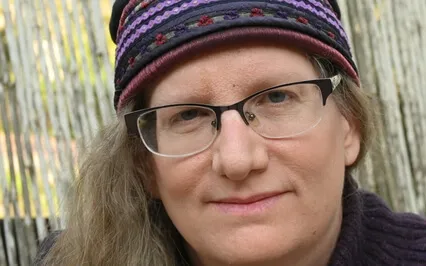
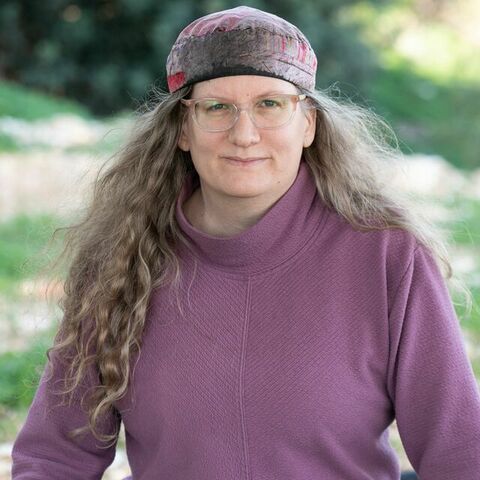
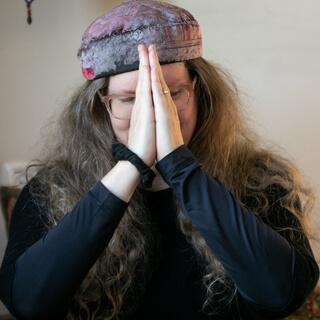
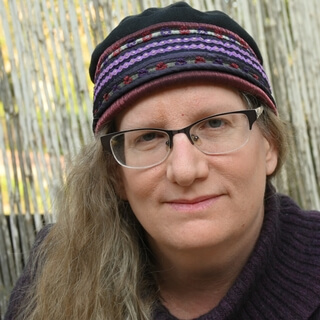
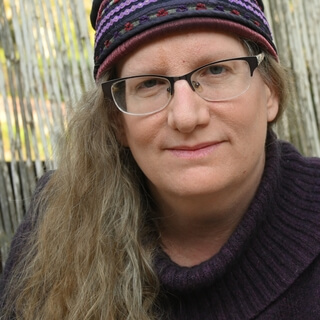
I am Rabbi Hasia Oriel Steinbauer,
The founder and director of Hamachon L'Kedushah,
The Institute for Holiness,
Kehillat Musar located here in Israel,
And open to the whole world via zoom with our classes,
With our teachings,
Our talks and our sitting meditations.
And with retreats,
I welcome you.
We meet on Sundays at 3pm Eastern Standard Time to cover the Hebrew Bible,
The Torah,
The weekly Torah portion that happened the Shabbat the day before.
It is Jewish tradition to study that parasha the week before.
And then to hear it read,
Or to lean it yourself in the in the Beit Knesset in the synagogue or with a minyan of 10 or more adults.
So we are looking at tazria the week before the Shabbat that just happened.
I was unable to meet with you this past Sunday.
So here is a recording of what I can offer you today.
Thank you for joining.
We are going to begin with our Kavanah,
Which we do every session our intention for today's session.
It is a Musar mindfulness practice to have an intention before you engage in any spiritual discipline or practice,
It has been well recorded that when you have an intention,
You're more likely to be successful and meet what you are setting out to do.
So we always begin with the same two each week.
Number one,
Before doing acts of caring for the self,
We say,
This is something I'm doing to strengthen my own soul,
In order to be a benefit to others in the future.
Our practice is always other oriented,
As a way of doing avoda service to Hashem,
The divine to God.
The last one,
Down here at the bottom is before doing acts to strengthen our relationship with the divine.
This is something I'm doing to strengthen my relationship with the Creator,
So I can be a better conduit of God's good to others when they need me.
It's a beautiful intention and a beautiful Kavanah.
So we allow that to enter us to be present with it.
And for those of you listening on audio,
You've had a chance to hear those Kavanah,
Those intentions for today.
For the rest of us,
We were able to look at it through shared screen.
Okay.
So as with all of our practice and learning together,
You should know by now if you've been meeting with me regularly,
That we always have to have the context of what proceeded this week's parasha.
We can't just come into it kind of like new,
As if there's no established history,
As if there's nothing that precedes what's happening.
And the same thing kind of with life.
I mean,
Although it is very much a part of our mindfulness to try to approach people with beginner's mind,
With new eyes,
To not come to the relationship with them,
With the assumptions that we think we already know them and what they're going to say or how they're going to behave.
We try to do each moment new.
But with Torah,
And particularly looking at these partial from the lens of our mindfulness.
We really need that background,
That background knowledge to carry what our ancestors have already done and shared with us.
So I want to begin with a quote from the Jewish Publication Society produces a wonderful Torah commentary and each of the five books of Moshe,
Of Moses.
And this is on,
Of course,
Vaikra and Leviticus.
And so we're in Tazria.
And what I like about this commentary is that it comes to us with the knowledge of what anthropology has to say,
What historians have to say.
It gives us a different lens than just the parshanim,
Just the rabbinic commentators who tend to focus more on midrashim,
The stories of our tradition and on grammar and the text itself.
So we have here that in Tazria,
We suddenly have this highlighting of one of the lesser understood functions of the Israelite priesthood.
So up until now,
As you know,
The priesthood,
Meaning the high priests,
Aharon and his sons have really only been training to take sacrifices and to help make expiation on the behalf of our ancestors.
Everything's located in the Mishkan.
It's all about either animal sacrifice or bringing of flower.
That which is part of what academically we would call the cult of the of the Mishkan of the sanctuary.
And all sudden now we have this really lesser understood function of the priesthood.
And it's this role goes way beyond officiating in the cults or attending to the administration of the sanctuary,
Which is what it's been limited to up until now.
So also we're reading on Chapter 14,
Pasuk 11,
Yod Alef,
That we read about the Kohen Hametah here,
The priest who purifies the perfectory priest,
If I'm saying that correctly.
It's this is someone this is the priest who regularly dealt with visible,
Sometimes contagious illnesses.
They would go out of the sanctuary because in which we'll touch upon in a minute to look at the at the illness,
Whatever it was,
Or the skin disorder or whatever might have been going on in this case,
The sahara and the skin disorder or illness.
And the the priest seems to combine medical and ritual procedures.
But what for it's safeguarding the purity of the sanctuary.
And of the Israelite community,
Which are considered threatened by the incidence of these diseases.
And so he would instruct the the our ancestors in this case,
It was our own or one of us would instruct what to do.
And he was responsible for kind of enforcing the prescribed procedures.
This is I mean,
If you're going to if you're going to really do a close reading of the Torah,
Which we are doing together,
I don't want to call it outrageous,
But this is this is so new.
It's as if we've gone into another world.
Think about it.
If you come in with this history,
There's not much of a concept of purity and impurity,
Which is Tahore and Tommy.
None of our first patriarchs and matriarchs seem to be living or dealing with this.
At the same time,
They also don't have a centralized place of holiness,
Space of holiness.
They're basically in the land,
Which in and of itself is holy.
But there's no prescribed one location like the Mishkan,
Which is considered in some ways the holy of holies.
Right.
And has the holy of holies in it,
Where suddenly.
The glory of God will reside either in community or or make God's presence known in the Mishkan.
And suddenly there's this hyper vigilance and hyper awareness and hyper concern.
For the concept of purity in that space,
And even that is new when we had people bringing gifts.
To build the Mishkan,
There was no concern of purity.
There was no concern if those objects had touched a dead person or been around one or a dead animal or,
You know,
A woman in need in her menstrual cycle had touched it or a woman who had just given birth,
Who may be still bleeding.
None of that was discussed or even around.
And even when they were building it,
The same thing,
You know,
There was no concern that Betsa El who oversaw the whole building of the Mishkan,
That he was pure.
It starts to slowly infiltrate when we have these seven days of isolation,
Which happened last week in,
You know,
Starting with basically Vyra and moving into South.
And even addressing it in Shmini,
Where the priests are isolated for seven days,
Why are they isolated?
This is the first time of isolation,
Of quarantine,
Even for a good reason where they're isolated because they're having this anointed oil put on them,
Which suddenly has the concern that they are pure.
They're in this space,
This holiness space that is suddenly going to be concerned about purity.
But even then we don't see it applied to everyone.
We don't hear it applied to the population.
We only hear of concern that the anointing oils on the head of Aharon and his sons,
They can't touch the two dead sons and a dove and a V who.
So we suddenly see for the first time a concern about touching a dead body.
When you have the anointed oil on the head,
They can't leave the sanctuary because of it,
Or they won't be able to preside in the offering.
So someone who somehow comes in contact with this dead body won't be able to officiate.
And,
And,
But it's never listed as a concern of Tahore and Tamei,
A pure and impure.
Then all sudden,
I swear,
I am totally blown away by this.
The more I study this very closely,
The more I'm like,
Whoa,
Like something totally,
It feels like something totally new.
And obviously I don't think that can be the case in the sense that I don't,
I just feel like we're missing a certain trajectory from our history and our ancestors that showed that this was a living way of being before the Mishkan.
And even now,
And if it's not,
Then this is radical.
This is radical in the sense that you suddenly have the Kohanim taking authorization and power.
You know,
Of course in the Torah,
It's sanctioned by God,
But suddenly you have this group of people that levy him and the Kwanim who are claiming and building this whole new way of being all they say commanded by God,
Which chosen the Torah of a huge concern for purity and impurity.
And this is how life is now going to be oriented in the Mishkan and even in the community.
And I receive it and experience it as a bit shocking.
And so I have to work around my practice around it.
And so let's move into what it is.
What's this kind of new way of life.
So obviously in our Torah portion,
For instance,
Impurity matters a huge amount in the Mishkan and the Kohanim have to be extra careful not to become Tamei and pure because they can't enter the Mishkan and later on the Beyhamikdash and the temple.
And we start to learn that someone who is Tamei and pure can't eat or touch certain holy foods such as sacrifices or gift for the Kohanim.
Okay.
So that's what we start to see a shift.
And how this comes out as a concern is you start to see this concerned with how it manifests on the human body that there'll be something called Saharat,
Which we don't really understand exactly what it is.
It gets translated as leprosy,
But we don't believe it's really leprosy.
But it's some type of skin disorder or disease.
There's a rich history among our Parshanim among our rabbinic sources that discuss this.
Is this have to,
Is this just reflect on the actual character of the person?
Meaning does it reflect who they are that they've received this?
So the big thing that you need to understand is you can't go in this with the modern mindset.
We have to go in with the knowledge that,
And here,
This is where it's very helpful of JPS here teaches us that in our ancestors minds and right now in the Torah,
There's not a distinguishment between sin and impurity really in the mind,
Okay.
In the heart.
So in the human's relation to the divine,
To God,
All sinfulness,
Meaning being off the derrick,
Not following God's commands,
Not being an alignment with the path.
It produces in impurity.
So this is where we didn't see this as strongly and maybe we did and it just wasn't worded that way.
You know,
Maybe part of God forbid Moshe ordering the murder of the 3000 people who were not with God when during the golden calf incident,
Maybe because they had engaged in sinful behavior,
They're impure.
I don't,
It's not worded that way.
We don't see it.
But now in this system here in Leviticus and the whole book,
You know,
The holiness code of the coin name of the priest,
You're seeing that impurity could lead to sinfulness,
If not an attended to and failure to deal with that properly with impurity could arouse God's anger or response consequence.
So this is the requirement of like sin offerings,
Even when it seems that the person's not sending the classic example is Tazria,
Right?
The woman who has been caused to receive seed,
Meaning she became pregnant through sperm and then gives birth after the birth.
She is impure due to blood or blood loss or something to deal with that,
Which gets tied to Nida and the menstruating woman that you know,
She is to bring a sin offering.
And so you might question,
What did the pregnant woman do?
Like she didn't sin,
But you have to understand that mindset.
If she's in impure due to the blood,
Right.
And the blood loss,
Then there's assumption that there's some type of sin there.
We don't know what it is.
We don't even know what it would have been in their hearts and minds.
There's just a concern that less there be less there be a sin because of the impurity involved.
So in order to be able to re enter of life,
Public life of the Mishkan and to be able to approach the kohane and to give an offering,
She must give a sin offering in addition to a burnt offering.
And this allows her to reintegrate into the cult life of the Mishkan and,
And even maybe of the community of the society.
We don't know how much they were isolated.
Okay.
So that's to start with that.
What I really want to focus on,
You know,
Everyone focuses on what this was okay.
When the people had the skin disorder and the kohane had to leave the Mishkan and go out into the camp and even take the person outside of the camp in some ways,
Like be in isolation with them,
But this,
You know,
A lot of commentary focuses on what it was like for the people and what it was like for the person.
But I suddenly had a really deep reflection.
This is where I feel like these are gifts from God.
When I,
When I get these,
These readings and these ideas that I suddenly realized that I think this has a lot to do with just the kohane himself and the kohane.
It's a constant training of them to keep humility,
To be aware of their proper amount of space in their leadership and what they should be taking up and what they shouldn't and to keep their hearts open,
To be compassionate,
To be part of the people and suddenly seeing them as separate or above.
So let's just do a quick reminder from Shmini,
The partial before,
You know,
We had the death before our own sons labeled as sanctification of God,
Of glorying of God,
Glory,
Glorying at that we had unwise speech and judgment by Moshe towards his brother and silence and the responsive,
Uh,
Her own until later when we have our own interpretation of the law,
Where he actually decides to not follow the law as it stands,
But to reinterpret it for that acute moment where he's in mourning.
He's not supposed to be in mourning as the high priest,
But he is decides not to take part in the sin offering.
And then you have Moshe silence.
So I want to go back even to Sav where we learned that the kohane,
The Parsha two weeks ago,
Right to Shmini and then Sav where you,
We were taught that the kohane has to collect the dirty Ash.
It's nasty to be honest with you that it's leftover from burning the animal sacrifices.
And every morning he must change out of his beautiful white linens and it collect this Ash and bring it outside the camp.
Why,
What does this do as a spiritual practice?
Especially what does this do as a spiritual practice to someone who could be leaning towards arrogance to too little humility.
He has this position of power where he sees that he's considered kadosh ladonai Holy to God.
He is in need of a daily spiritual practice to bring him back down to the roots of who we am,
Who he is,
That he's created and Dustin ashes like the rest of us,
That he has to do this really dirty,
Minimal task as part of the maintaining of the Mishkan and believe and go out among the people to see them,
Probably to communicate with them some go outside of the camp and to deal with these ashes.
Okay.
So this is like this training of the kohane,
Right?
So also the now here in,
In Shmini,
No Tazri,
Right?
You have him,
The kohane,
This one who is the kohane,
How may to hair the purifying priest has to leave the Mishkan has to go out to the camp,
Take the person who has sahara at,
Leave the camp,
Go outside where the ashes are and be with them and check them out.
He has to be around the impure person,
The person that's probably impure.
Okay.
The kohane,
Who's not supposed to be around impurity.
That's very profound.
Very,
It's almost like God creating this type of commandment and way of being that I'm going to put you where you're most vulnerable to keep you grounded,
To keep you among the people,
To keep you balanced in humility,
That I'm not only going to have you do these dirty ashes.
I'm going to have you be around disease.
That could be contagious.
And I'm going to have you be around this,
Something that might be impure.
That's then going to,
If you touch them by accident,
If you anything,
There's just such this small veil,
Almost like the Kapoor it's right.
Like between the holy holidays and the non-holy of holies,
Like that's the relationship here.
And I'm going to remind you when the kohane goes out,
It says,
He had to see now,
Where did we find this?
This is where we need to always go back to where,
Where do we remember this?
Who had to go out and see his people?
Moshe,
Moshe Rabbeinu.
He had to go out and see anytime our ancestors have to know what's really going on.
You need to see the soul of the person to really connect,
To be able to have compassion that gets acted out.
They have to see,
They have to go out and see,
And then they can act properly.
Right?
So the kohane,
And this is the odd thing,
Any of these,
The sukreem or the kohane goes out,
It says it twice that he must go out and see.
And that,
You know,
It gets interpreted that that second scene is a really seeing the person.
The first part,
The first part is seeing the sahara,
The disease or whatever it might be,
Because that's his number one job is maintaining the sanctification of the Mishkan,
Making sure nothing impure enters.
But the second scene is suddenly I have a human being in front of me.
And okay,
So I just want to say that this is all a train training along the way in mindfulness,
Mindfulness and ritual,
This is what we see happening with these precise,
Like this precision of sacrifice,
This precision now this hyper precision of purity and impurity,
Like the bringing of sacrifice,
Right?
So she mean,
He added another layer last week of a layer of mindfulness that we,
Which is most intimate to our lives,
What we consume,
What we're going to put in our mouths,
What is now kosher and what is not the laws of kashrut.
So suddenly we were becoming even more concerned.
Like first we had offerings.
If someone was just bringing for joy,
Or for sin offering or a sham,
A guilt offering.
And now we're suddenly having laws about what we put into our bodies.
And,
And,
You know,
It's,
It's,
It's,
It's evolving.
Okay.
So now,
Now we have this new state,
This new state of mindfulness,
That suddenly you can be pure and or impure.
Okay.
So it's another layer of practice through which basically both God and ourselves will be sanctified,
Right?
It's how we care for our bodies.
It's how we care for our communities.
It's also,
How do we care for the most vulnerable?
It may seem cruel that we,
That the person who has sahara is put outside the camp.
Okay.
But it actually might be a huge act of kindness.
Why do I say that?
Because if you're dealing with nastiness of like sores and who knows what else you might want to be alone,
You don't want to be looked at.
You don't want to be talked about it.
It might have this like in,
In,
You know,
Where we even get a glimpse of this,
Actually,
If I can recall where I saw it,
Let me find the source for you is actually early on.
I actually later in Kings two and Malachim a bet in chapter 15,
A Pacific five,
We actually have a Judean King.
One of our Kings,
Our ancestors who was actually afflicted with acute sahara.
This is skin disorder.
And he remained all his life in a place called bait half whole sheet.
It gets translated as a house of quarantine,
But whole sheet means free freedom,
The free house.
And so there's something there.
All right.
It's something like,
It doesn't always have to be negative when someone has to go out,
Think about even God forbid with Corona,
We isolated people.
We had our relatives stay in one room.
We brought food to them.
They were not to be among us sometimes.
So here the person goes out,
They're waiting,
They're checking it out.
And so it's,
It's,
It's,
It's in some ways,
There are some societies.
I have to tell you when we study ancient middle Eastern societies,
Where someone had the Sahara,
There were societies that would have murdered the person.
And they just would have isolated them completely.
They would have just put them outside the camp and said,
You're not welcome back in.
You can't even like communicate with us or be a part of us.
So you're finding Israel that the Israelites,
Our ancestors are trying to find this middle ground and have some semblance of compassion,
Some semblance of the responsibility and their own ancient ways of being right.
So how do you deal with this most vulnerable and this most intimate part of ourselves giving birth having this skin disorder menstruation.
So like,
And again,
If I bring up the isolation,
The quarantine of Aharon and his sons before the inauguration,
You know,
There's something else there.
Sometimes people may need or want to be alone to heal,
To not have the pressures of everyone around them,
Especially if you're dealing with a society that's so hyper vigilant about impurity.
Now it would be very hard to live among everyone.
So then of course you could question,
Well,
Maybe they shouldn't have had such strict way of being this hyper,
You know,
Vigilance of impurity,
But that is the way things are unfolding in Vayikra on the way of the life of our ancestors.
Just remember that meets vote commandments are always a spiritual practice.
They fulfill an educational on a disciplinary role in,
In,
In our tradition and in relationship between the human and God.
I just want to point out one little thing here that the circumcision that suddenly is told will happen on the eighth day for the male son.
It almost makes you question if this is some type of atonement for the deaths of Novdov and Avihu who also died on the eighth day came out of the inauguration.
We're serving that,
You know,
Suddenly circumcision is told that it overrides Shabbat,
Which,
You know,
Is the death penalty.
If you do anything that you're not supposed to do on Shabbat is this circumcision overrides it just like a heroin over overrode the law of eating the sin offering.
So you're finding some interesting stretching and interpretation of the law,
Almost like a figuring out.
So the thing that we want to keep in mind is like,
Do we sense in the mindset of our ancestors,
This,
This physical feedback of giving sahara on the body might be feedback for them.
Mine,
It probably was feedback on the person's actions that this rash on the skin or that type of sahara growing on clothing or later on in the Sora in the home is,
Is a warning is a sign from God that you're most likely sending that there's something off.
And it's seen as an act of rahamim of compassion,
That God is giving you this little warning so that you can bring yourself back into alignment and which obviously the person who is reintegrated after the acute sahara either becomes chronic or leaves that they are reintegrated through immersion and then an offering.
So yeah,
There's something really deep here that we won't understand completely.
And we might even have really strong reactions to and against.
We're not,
We don't live this way.
We don't live in the world of purity and impurity for even of those who have us who observe the Taharata,
The family purity laws revolving around Nida,
The menstruating woman,
It's still not the same.
She doesn't need to bring a sin offering and an Ola burnt offering and reenter the Mishkan or the bait me dash.
It's very different.
We don't,
We don't have this hypervigilance around a sanctuary around us which it makes you kind of wonder if they didn't build the Mishkan would this now whole way of being around impurity,
Impure and purity be the way of life for our ancestors or would have been different.
Obviously it's like it's different for us,
Right?
There is no beatening dash.
We were kidnapped and sent out throughout the whole world in the diaspora.
We don't have this centralized space in place of holiness.
So gone,
Gone are those laws and ways of being and also is gone the centralized presence of the glory of God.
And so there's a deep relationship like the hypervigilance of purity because God is so close and the less need for that.
But the consequences God is not so close,
But God forbid I say this,
We might not want that because of what it requires,
Which I'm not sure is so life affirming.
We have to,
We have to look at that and hold that.
Okay.
So I brought up that,
That I really think this is a training in the,
The Kohanein.
Okay.
And yeah,
You see this neat connection also when we remember what the Kohanein Aharon did with eating the sin offering or not when his two sons were taken.
And he decides to say that,
You know,
We're not going to eat it,
Even though we're commanded to eat it.
You find something similar going on here with the laws of Saharats where,
You know,
Up until now,
The Torah actually tells us later,
This comes with Bubby bar,
That someone is not allowed to cut their hair,
The Kohanein or not.
Like with a man with a beard,
He's not supposed to shave it.
That's comes later in chapter 19 and Vayikra the Kohanein are extra worn,
Never to shave their beard with a razor that comes in chapter 21,
The Nazir and as you are,
I'm not allowed to cut their hair that comes in Bummy Bar six.
And so you had these laws and so you can't do this,
But then of course,
When it comes to the laws of Saharat,
They are commanded to do exactly that.
They are to shave off all their hair with a razor and the beard,
Except for the part of the disease.
And so it's basically a privileging of the laws of Saharat.
They see,
You know,
In some ways it's showing you that there's a greater concern for Saharat and the its disease,
Perhaps as a contagion,
But probably more importantly,
That it can cause impurity if it is impure,
That those are those Trump,
Those are more important than the other laws.
But it's very,
You know,
It's important to see these connections and what's going on here.
Okay.
So what else do I want to share with you before we move into practice?
Let's see here.
So I already mentioned to you,
The kohane has like expanding roles in the community and societies like now the teacher and he's the police officer and he's the judge.
Those are my modern terms put on him,
But that's essentially what he's doing.
Yeah.
We're going to want to pay attention to this because look,
Who's the cohinga dole?
Look who look who is taking this first major role and place and position in society and his sons.
Look at everything that they've been through,
You know,
Involving themselves,
At least the cohinga dole and the building of the golden calf and never really being fully held responsible or having consequences for that,
Except if you want to see the taking of his two sons as consequences for it,
God forbid.
And maybe in some sense,
The circumcision of the sons at eight days is really an atonement for all the impurity of B'nai Yisrael and their sins in the desert.
I don't know.
It's just positing that out there.
So I just have to say that we're going to encounter these texts,
Especially now in Vykera and Leviticus,
Where we're going to have our reactions to them.
And in particular,
We may not understand.
We understand these fully.
We don't have that privilege and that insight to be fully knowledgeable of what's going on with our ancestors and why they were doing what they were doing.
And we can do modern readings on this.
OK,
So I do see a shift.
So I mentioned how obviously we're now having this hyper vigilance around the Mishkan and any human.
What will come up with being human in relation to it?
And then obviously later on,
When the temple is destroyed and we're put all throughout the diaspora,
We're really seeing a trajectory of moving towards more and more compassion for that,
For whom is most vulnerable.
So let's do a quick reading of that and we'll move into our city.
So if you look at Rabbi Lisa Groushkow,
I hope I'm saying her name correctly.
Forgive me if I'm not.
She has a chapter on Tazria in our Musartor commentary where she talks about that section on Raah,
The Kohen scene,
Seeing the disease and seeing the person,
That it's really an act in Raah Hamim.
And.
And,
You know,
We could interpret that that's not the case,
That there was just a concern for the sanctification of the sanctuary,
But I think because it is listed twice,
You're supposed to see something deeper in it.
And if you recall.
Aharon has always,
Even with Moshe,
Been compassionate and tried to have a concern for the other.
So I don't think it should be any different now,
Even though we are getting very into technicality of how to keep the sanctuary pure.
So what do I want to share with you here?
I think if you are going to be involved in an understanding that our ancestors saw that the people were somehow responsible were sitting on some instance or somewhat responsible for the Sahara,
If anything in modern society,
We've moved to a huge shift and I don't want to call it blaming because we're not looking for blame.
That's not healthy or positive,
But like not looking at any self responsibility at all for what we put into our bodies,
What could cause disease,
A contagion.
And we've gone completely to the other end of the continuum where we want to say,
No,
That person's not responsible for their illness.
They're not to blame.
Like we shouldn't ever bring up what did you do to cause this?
Okay.
And we don't do that because there is judgment there and it comes across as blame and we can't fully know.
So there's no act of humility and understanding that.
So on one hand,
I understand it as this practice that we want to have wise speech.
We don't want to be going around saying to people,
What did you do to cause your cancer?
Right?
What'd you do to cause your obesity?
What'd you do to cause your heart disease,
Whatever it might be.
Right.
But for us today,
We should be looking at ourselves.
We need to bring that,
That pendulum back to a healthy golden mean that healthy middle through our moose moose or mindfulness practice where we're not going to just assume disease and purity sin or all one.
And we're not going to assume that there's no relationship at all either,
Or that there shouldn't be.
Instead,
We're going to come to this healthy medium and look at our own cells.
What am I putting into my body?
God brought me kashrut and my ancestors so that I am practicing mindfulness of what I put into my body.
Is it life affirming?
Is it life affirming for the animal and the,
And what's around me in society?
When I start to get a disease,
Whether it's a skin disease or anything else I could possibly get sick with,
Which will happen to all of us.
We're all in that world.
We have one foot in illness and one foot in health,
Every single day of our lives,
One foot in life and one foot in death.
The minute we're born,
Don't allow yourself to believe any different.
That's the impermanence of life.
That's the wisdom that we gained from the Dharma.
So we want to look at ourselves and say,
What,
How have I been living?
Is there anything I can do to bring myself back more into alignment,
To bring health,
To do my part,
To work with whatever doctors or health you're going to work with similar to how it was worked with the Kohanim back with our ancestors,
We could do everything we can.
We pray to God,
We give Sadaqah,
We do what we can,
But we look at where is our self responsibility.
That's what I want us to take from this,
Even though that's controversial for a lot of people.
And with that compassion,
We should always,
We should have self-compassion towards ourselves,
Obviously,
And to anyone else,
If anything,
This teaches us the Kohane having to go out,
Leave the sanctuary.
We need to go out.
We need to be among the sick and the vulnerable,
Check in on them,
How we can help them,
How we can help ourselves.
This is all very beautiful and deep in this tradition that we learn from Tazria and that we're going to learn even later on.
So I want us to keep all that in mind.
In our practice this week,
We want to notice where we have the least compassion towards ourselves and others.
And are we trying to gain distance from them?
Do we fear them or their disease or maybe their behavior that we think is behind it that might have caused it?
We need to look at our own cheshbon hanafesh,
Our accounting of the soul journal to see what's going on with our words,
Thoughts,
And deeds.
So we're going to channel and bring in the Kohane,
That Kohane who made the hair,
That purifying priest.
We're going to move into our seated meditation.
If you can sit,
If you can't,
Please stand,
Please lie down,
Do walking meditation,
Whatever you need.
If you're someone like me who lives with chronic disease and chronic pain,
Who lives with a hidden disability,
You need to take care of yourself.
You need to practice this in a way that's healthy and balanced for you.
And we're going to channel that purifying priest within ourselves.
And we're going to move into our practice now.
So if you are going to sit,
Go ahead and bring yourself to an upright position,
Whatever that means for you as upright as you can be,
Meaning it could be an internal uprightness of dignity.
And you're going to want to start with three deep cleansing breaths.
You're welcome and invited to close your eyes.
Allow the breath to fully enter.
If you're not ready to close your eyes,
Just lower your gaze to about four feet in front of you.
The point of closing the eyes is to limit the stimuli that comes into us so that we may be with the knowledge that God is giving us inside.
What is here and now for us right now?
With each breath as you allow it to settle on,
You allow yourself to settle and arrive.
Practice what is here for you right here and now.
Any strong sensations in your body calling for your compassion,
Your loving kindness,
Your attention.
Allow yourself a deep inner bow to it,
Even naming it pain in the stomach,
Discomfort in the low back.
I will visit you later.
With the attention,
The Kavanah that we are going to be here now with my words,
With our breaths as our anchors.
Noticing if there are any thoughts that are pulling your attention away from the present moment,
Something that you're planning for for the future.
Perhaps reminiscing over something that happened in the past.
See what is here for you right here and right now.
And the same goes for any strong emotions that might be here either a clinging,
Trying to attach yourself and holding on to something,
Some emotion or feeling.
Or maybe there's an aversion happening,
Trying to push away either something you dislike,
Discomfort.
See what is here for you.
All with non-judgmental mess if we're going to define mindfulness as being present being fully present in the here and now with non-judgmental mess.
And I love to bring a smile to it and even a deep curiosity.
This gift of life,
What is here?
What is now?
What does God want me to be awake to?
We call this the beginner's minds.
That is the orientation of our practice.
Recognizing and allowing and accepting whatever arises.
It is no mistake in the Jewish tradition that we are reading Tazria and the like in the Vyikra and Leviticus as we head towards Pesach,
Towards Passover,
Where we as a community and in our individual homes are doing our own purification.
Our own reading of our houses,
Our homes,
Our spaces,
Our spaces and places of holiness.
Fitting them of impurity that we call chametz,
Leavened products and materials.
Slowly purifying our own mishkan,
Our own sanctuary.
We do this with our bodies as well.
We will stop eating chametz,
Consuming that heavy leavened food.
So in this week and the next,
As you become the kohen ha'met ha'here or the kohenit ha'met ha'hereth,
The priest who is purifying,
The purifying priest to channel that.
Go ahead and channel with two forms of ra'ah,
Ra'ata,
She or he that sees.
Sees the chametz and ritzit,
Sees the impurity,
Labels it with compassion,
Brings it to the beit ha'choshit,
That freedom house,
Quarantines it,
Says that it's not appropriate right here and right now in my space,
My sanctification,
My mishkan.
Purifying when the time comes for that which is pure,
That matzah,
That flatbread that hasn't risen,
That we like the kohen will go out and see the people,
We'll see ourselves at double seeing.
Purifying ourselves,
That spiritual practice for the kohen to maintain balance,
Humility,
Anava,
That we too as we consume soon this flatbread to maintain our humility,
That we don't take up too much space in our bodies with the bread products that we consume.
It's all a part of a mindfulness practice of what we put into our bodies,
How we maintain our houses,
How we maintain our communities,
Always doing so with curiosity and compassion and chesed,
Loving kindness.
We'll move into our silent sitting meditation practice as we investigate the felt sense of our bodies,
Of whatever is here for us right here and right now,
Nurturing ourselves at the same time.
I will ring the bell when we are to come out and join together again.
Thank you.
Thank you.
Thank you.
Thank you.
Thank you.
And your last minute of seated meditation together.
Investigate the felt sense of your body to see if there's been a shift from when we began this meditation to where we are now.
And gently ask yourself,
What is it that you want to remember from this experience?
Perhaps reminding our embodied knowledge that whatever we're reacting to or whatever is difficult or that we're stuck in in our bodies,
That they arise and they do pass,
That there's only a short shelf life.
Even those of us living with chronic pain or disease know that it shifts in our practice if we're aware and our mindfulness meditation practice with great insight that some days or some moments are worse and some are better.
And we may walk away knowing that knowledge.
We may know it intellectually,
But our practice teaches us to know it in here embodied in the felt sense.
I hope you can hear the beautiful birds saying good night to the sun here where I am in Israel.
Gently and slowly allowing your eyes to open if they were closed or bringing your gaze back up to this shared screen space,
Our own sense,
Our own Mishkan,
Our own sanctuary of holiness in space and even holiness in time.
God bless you.
Thank you for your practice.
Thank you for dedicating this time to taking refuge in community and taking refuge in the service of moose or mindfulness in the Dharma,
Taking refuge and our time together with our teachers and our ancestors and give yourself a small little bow also to your own practice that you committed this time and fulfilled.
God willing this cover now this intention to do this self care so that you can serve others and bring God's good to others.
And we thank God.
So God bless.
We thank you for your donations and sponsorships here at the Institute for holiness Kehilat Musaar in order to bring this offering weekly.
Do visit us at www.
Kehilatmusaar.
Com to learn how to donate and to sponsor weekly sittings in memory of someone or in honor of someone.
And do join us every Sunday at 3pm Eastern Standard Time God willing if my health is there I will be with you.
Bizvat Hashem.
And I look forward to practicing and learning with you next week.
Take care.