Shalom,
Welcome to Awakening Torah Musar Mindfulness.
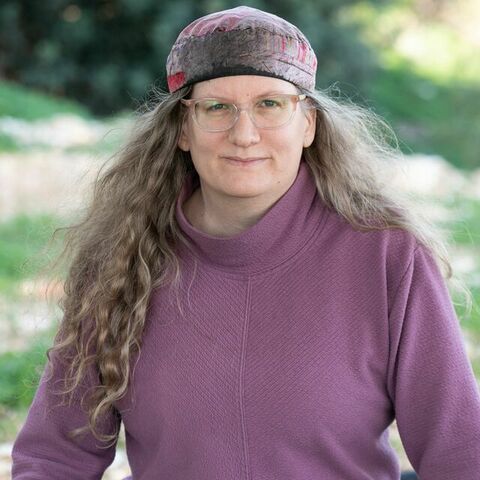
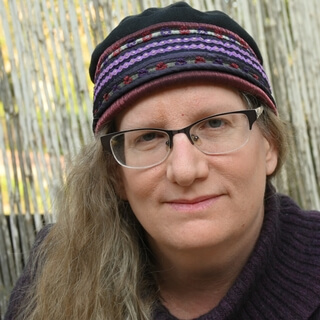
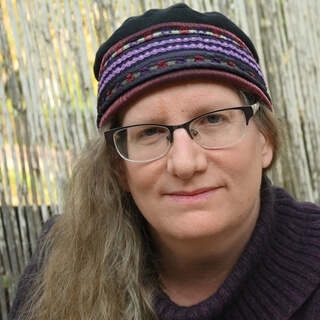
I am Rabbi Chassi Oriel Steinbauer,
The founder and director of the Institute for Holiness,
HaMachon DeKedusha,
Kehilat Musar Mindfulness.
Delighted to have you in our weekly public offering of Awakening on Sundays at 1230 Eastern Standard Time and 730 PM Israeli time.
B'srat Hashem,
God willing.
So delighted to be here with you on Sunday,
April 23rd,
2023.
Today in the Jewish calendar,
The Hebrew calendar,
We are facing so many numbers and dates now.
We are on the second day of the Hebrew month of Iyar.
We just had the new moon,
Rosh Chodesh,
Where members of the Institute,
Which you're all welcome to join,
Came together to celebrate Rosh Chodesh,
The new moon of Iyar,
And to celebrate my birthday.
What a beautiful thing,
Baruch Hashem.
The Hebrew birthday was on Friday,
Which is the Lamed of Nisan,
The 30th Nisan,
Rosh Chodesh,
And the Gregorian,
The secular birthday fell on Earth Day,
On Shabbat,
On the 22nd of April.
So it's an honor.
One of our other practitioners of Moshe Mindful and one of the Vadim that I teach,
Emily Fox,
Celebrated her birthday on Shabbat on Saturday.
And so it's a great honor.
If your birthday has passed or will come up,
Please let me know and I would love to honor and celebrate you.
And you are welcome to sponsor in honor of anyone,
One of these sittings,
One of these teachings.
So we're going to honor right now,
Carolyn Benson,
Who is a beloved Torah student of mine.
We meet weekly to learn Torah and Hebrew grammar,
Biblical Hebrew.
It's quite lovely and beautiful.
And she has sponsored this sitting today in honor of my 49th birthday.
So thank you,
Carolyn.
Delightful to have all your sponsorships in support of the Institute.
And so in honor of my birthday,
I invite you all to give what you can to this beloved Institute that we all so delight in,
This amazing center of the world that is the only that combines Theravada Buddhism of the Dharma of the knowledge from the Buddha,
The wisdom of mindfulness with Musa practice from our beloved Jewish tradition.
So if this is meaningful to you,
And you feel that this Institute is very important,
Has a place in the world and is really bringing God's good,
Which is our intention,
May we merit this,
Please give any amounts in honor of my birthday of the Institute.
Delighted to have you,
You can find all the donation information at the website of kehilatmusar.
Com.
So what are we covering today?
We are covering yesterday's Torah portion,
The Parsha,
Which was a double Parsha.
You're going to find three double Parshiyot in Vayikra and Leviticus and obviously lots of theories and reasons why.
My theory is just that Leviticus is the most difficult book,
Vayikra,
For people to study and understand and relate to.
And so our rabbis in their wisdom decided to create these double Parshiyot to have us get more quickly through the book.
May we do so with mindfulness.
So this week is Tazriyah,
Well yesterday was Tazriyah Mitzorah,
Okay?
And it took place on Aleph of Yair,
The first Rosh Chodesh,
First day of the month of Yair,
On Tafshin Pei Gemel 5783.
It was April 22,
2023.
So let's start with what we always do,
Which is our Kavanot,
Our intentions for today's practice.
So for those of you watching on video,
You have vision,
You have here our three Kavanot that we always share every week.
For those of you listening by audio on our podcast,
Which you can find at any podcast,
The video you can of course see,
It's live streaming right now even on YouTube,
So please subscribe to our YouTube channel there.
So we see this practice weekly as doing an act of radical self-care.
You are taking this time to sit with me and learn and practice,
And that is making you over time a more mindful person,
A more kind person,
Someone who's on this path and the potential of the path to bring God's good to others.
And so this is an act of radical self-care.
It's an amazing thing to dedicate time where someone really takes care of themselves.
And may it be so.
May we merit this,
Right?
So we say that this is something that we are doing to strengthen our own soul in order to be a benefit to others in the future.
We also say that we see that we see this as an act that we're doing on behalf of others,
And we're doing this to strengthen our relationship to others so that we can be a better conduit of God's good to others when they need us.
So by learning and practicing in our mindfulness meditation and really practicing around the middot,
The soul traits,
We are really allowing us to be fully present in our relationships to strengthen them.
And the final thing is we're strengthening our relationship with the divine B'zrat Hashem,
God willing.
So this is something we're doing,
Obviously,
To strengthen that relationship so we can be a better conduit of God's good to others when they need us.
So may we merit this,
That all beings be free from harm and suffering,
That they have health and joy,
And all the beauty and potential and possibility of this world.
And may we all work towards it.
So we are ready to jump into what is going on with this Torah portion this week,
Double parasha.
Okay,
So in the Torah,
And this is going to come across as new,
Even though you might be thinking,
What,
How do they even develop this?
How do they do this?
In the Torah,
In the Hebrew Bible,
A person and our ancestors,
We're now being taught through these chapters,
Is either tameh,
Impure,
Or tahor,
Pure.
Now,
You notice I'm not saying unclean and clean.
It has probably nothing to do or maybe 5% sometimes about cleanliness,
The way we understand it today and why we use soap and water.
This is much more about something that I think we have very little understanding of and appreciation that we don't practice today so much we don't mean people will try to make connections to the ritual washing of the hands before we eat.
They'll tie it to the practice of nida,
The menstruating woman and what's called taharat mishpachah,
The family purity laws.
They'll tie it to some other practices,
But really,
The day to day of walking around that I'm either tameh,
I'm impure,
Or I'm pure,
Those days are lifnei bab,
Those days are gone.
And the most modern practitioners of Musa mindfulness and of Judaism are not walking around with that mindset and it doesn't affect whether or not they perform meat's vote.
It doesn't affect whether they enter a synagogue,
Doesn't affect whether they show up in Israel if they don't live here and go on or near the temple mount.
It's very different,
Okay?
So much so that we might not,
We have to have the humility in this practice to be open to learning and questioning and to realize that we're not going to understand everything.
We're just not.
Our ancestors have passed down their lives,
Their ancient narrative,
Their ancient texts of 4,
000 years ago,
How they saw things and how they practiced and sometimes it's not going to relate.
So this is one of them.
So you're either tameh or tahor,
You're either impure or pure.
Obviously,
It can mean many things.
And sometimes it can be a way that we describe a person's character,
Right?
We can actually say,
Oh,
That person is pure of heart,
Or we never say they're impure of heart,
But we have this idea that if someone's good and kind,
An upright character,
They have a pure character,
Right?
And then obviously,
And this is much more in alignment with the Torah usually,
Is that this world of purity and impurity is much more technical.
It's on a level between the divine and our ancestors and what's expected of them,
Of how the state that they are to be in,
In order to approach the mishkan,
To give offerings.
So it can be something even triggered outside of a person,
Unrelated to a person's heart or character,
Right?
So the,
The key example will be a woman who's just given birth.
She has nothing to do with her character,
That she's suddenly in a state of impurity,
Most likely caused by the birthing and the child and the whole process and blood loss.
And it has nothing to do with her character.
Like she didn't cause it.
So for instance,
When she has to bring a sin offering,
In addition to an olah,
You know,
She's in an impure state for a while,
Depending on the gender of the child.
I should more like say the genitalia of the child that's born.
And,
And this is about her character.
Okay.
It sounds as if she's done anything bad.
Like she hasn't,
We don't say,
Oh,
She has to bring a sin offering because she gossips before she gave birth or during or after,
Like,
That's not,
That's not on the map.
Okay.
So obviously someone can be tamay through impure through having things on their body,
What we will cover a little bit later,
What known as sap sap,
You know,
We don't,
It's a skin disease.
And I don't even know if I want to use the term disease.
It's a skin phenomenon.
Okay.
And this is a kind of impurity,
A tumah,
That's a topic of our parasha.
You could also become impure by contacting a dead body.
And this is considered by our ancestors,
Our rabbis to essentially be a V a vote,
A tumah,
Right.
The,
The grandfather,
The great ancestor of tumah,
Right.
The,
The,
The,
The,
I don't want to call it worse.
That sounds like a judgment.
The greatest potential of impurity is being in contact with a dead body.
Okay.
So you can also come in pure when you're in contact with someone or something that is impure,
Whether it's a person that may be having a seminal emission or a woman having her period and,
Or you come across a dead animal,
Whatever it might be.
And these are all potentials for that.
And so why does this matter?
Because all of a sudden now we've received this way of being and bodies of law where one cannot approach the Mishkan and the temple and offering.
I don't want to call it temple sanctuary,
The tabernacle,
Cannot approach it if they are in a state of impurity.
And in particular,
This is very important to the Kohanim,
The priest who will serve.
They have to be very careful that they're not because no one can enter the Mishkan that's impure.
So this is essentially the topic of,
Of our,
This week's parasha,
As I said,
It's a double parasha,
It's Azria Metsura.
There's lots of description of what has to happen.
If for instance,
You have the skin phenomenon known as Sahra'at,
You have to stay alone outside of the community with your hair uncovered and clothes torn.
It sounds like a mourning procedure.
It sounds like a potentially shaming,
Although that's a value judgment,
Not sure if it's there,
Could be punishment oriented.
Most of the scholars will say that it's not a concern,
That it is a contagion.
It is not a health issue.
And what's the proof for that?
So a rabbi,
Dr.
David Hoffman,
And his work on Vayikra and Leviticus goes to great pains to show,
For instance,
At the time of the,
The Beit Nikdash of the temple,
It was actually a procedure and it's documented that the Kohanim were ordered or agreed upon that they would not go out looking or responding to any calls for looking for anything tame on people,
Their clothing,
Their houses,
Whatever it might be,
Any,
They wouldn't,
They wouldn't do that job,
Which is like the key job of a Kohen.
You thought the key job of the Kohen was running the Mishkan.
So then you read this and you're like,
Oh,
They're dealing with millions of people on a daily basis who are constantly coming into contact with impurities.
So they're constantly having to go out and manage this impurity.
And that's really,
In some ways,
The daily job of the Kohen.
So we know that during the time of the temple,
According to the work of David Hoffman,
That this was suspended during the,
What's the term in English?
The festivals,
The three,
The free major festivals of Pesach,
Sukkot,
Shavuot and Sukkot,
The pilgrimage festivals.
There we go.
Thank you.
So when our ancestors used to come as pilgrims and that,
That looking or answering the call to come look at something that might be impure person,
Place,
Thing was suspended,
Was suspended.
So if it were a concern of cleanliness of contagion of a health issue,
It would have still happened during the pilgrimage festivals.
They still would have been concerned with it.
But the fact that it was suspended is telling you,
This is about something else.
This is something that we don't fully understand.
Right.
So what,
What,
What else do we think it's,
What is it?
You know,
It's,
It's really something between God and our people.
It's a state that we are expected to be mindful of and to be aware of how we behave and what we come into contact with and that how it's going to affect us and others so that we can be in relationship and approach the Mishkan and be,
Be able to do so.
Right.
So as I said,
It's not fully,
Completely understood,
But let me just move through some of this material with you that I want to touch upon.
Yeah,
It's known more,
People like to say it's more of a spiritual illness.
You know,
John Kim,
John Payne,
And his work on simplicity parenting talks about soul fever that sometimes children will need what we would adults call a mental health day when it's really less like soul fever,
They're just really can't handle going to school that day.
And so if you're mindful that this child has checked out and is in need of a break,
It's like,
That's like kind of the spiritual illness,
Right.
That's going on here.
So let's move through some of this material that I want to point out,
And then I'll hone in on,
I think what we're going to really pay attention to.
There's so much here,
Obviously,
We can't cover everything.
Okay,
So the main thing we need to be aware of is that when we're impure,
It can lead to sinful sinfulness.
And what does that mean?
If we don't attend to it,
We end up causing impurity to others,
Therefore isolating others from the Mishkan and their participation,
We end up even maybe affecting what's going to happen in the Mishkan itself.
And therefore we end up affecting our relationship with the divine.
So much so the fear of our ancestors,
If you're going to look at,
Okay,
What is the worst fear scenario here is that we will push or drive away God,
Right?
And that God will not be able to reside among us in the community and in the Mishkan.
So that's the seriousness of it in the sense,
Right?
And now one of the key things that we need to pay attention to also is our ancestors,
What we might call,
People call it ancient human or ancient man.
I just want to say,
There's really no distinction between sin,
Meaning causing harm and suffering,
Doing what's wrong,
Doing what you weren't commanded to do,
Not living in your moral compass and alignment with that,
Right?
Not doing what our ancestors called fear of God,
Right?
Knowing what's right from wrong and living that.
They made no distinction between sin and impurity between Tame.
And that in relationship to God and to the divine,
All sinfulness,
It produced impurity.
And so this,
As I said,
The failure to deal properly with our impurity aroused God's anger,
Aroused God's distance.
So the point and the requirement to present like a sin offering,
For instance,
It doesn't necessarily presume offense.
Like we brought up the woman giving birth.
She didn't commit any offense by reproducing,
Right?
By giving forth life with God's help,
Right?
It's really there because our ancestors and God felt it was needed to remove impurity.
And so there's no necessarily violation of law,
Yet a sin offering was required.
So that's a part of what I want to touch on here.
Now,
There are certain phenomenon that our ancestors basically began to assume was a punishment sent by God for our wrongdoing.
And that that punishment,
You want to call it punishments,
Maybe you want to call it a consequence or karma,
Right?
That punishment was seen as a gift from God.
Even the language used in the Hebrew,
And when God says that I'm giving you the skin phenomenon,
It's,
And especially on houses,
It says,
Like,
I'm giving you,
I'm giving you as if a gift.
Now,
How this is very important to our practice and most of our mindfulness and in general,
How can be affliction that God sends us be seen as a gift.
Now,
For some of you,
You'll immediately relate to this.
You'll be like,
I've had that.
Like I,
I,
You know,
Like I had a student recently who said that he had been using alcohol and properly and causing harm and suffering to himself and his family and others.
And then he ended up crossing a line,
Not being aware of his,
How far he was taking it.
And it eventually led to addiction.
And then when he went to visit his doctor,
His doctor is telling him that his liver is beginning to die.
Right.
And he realized that this was a gift from God.
This was a moment it's wording is like kind of a slap in the face,
Right?
A second chance opportunity was given to say,
This is it.
Your liver is dying.
You are about to die.
Look what you've caused yourself for your behavior,
Take responsibility,
Take ownership.
And one day at a time,
Try to align yourself,
Get back on the path,
Get help,
Right?
Get help.
And the help here in our Torah portion,
Believe or not of the Kohanim,
The priests,
They get called,
Hey,
I noticed,
I think I,
I think I might be Tame or I think my house might have impurity.
I think this is what's going on.
The Kohanim comes,
He checks it out and he is the one that pronounces,
Oh,
You know what it is,
It is,
Or no,
It's Tahor.
You're,
You're pure.
It's fine.
Right.
So our ancestors definitely saw this con you know,
Contracting a Tumar impurity,
A through this,
The skin phenomenon was sent by God.
You know,
We see it later on in numbers,
Right?
Chapter 12,
One,
Three,
When Miriam,
The beloved sister of Moshe criticizes him and she receives a sent by God.
Okay.
So the skin phenomenon,
Which some people call skin disease,
Right?
It's signaled out in the priestly code.
It is the most it's it has the most instruction.
It's very involved in what they have to pay attention to what's going on.
So it's,
It's obviously undoubtedly it was prevalent for a prevalence for our ancestors,
Both in the Bami bar in the desert,
But also in biblical Israel.
And you know,
Some of its factors are its visibility.
That's obvious.
You can see the person has it or their hat.
Well,
If you visit the house or they tell you about it,
Or if it's on like an object and this same,
We,
Again,
We don't know if it's also a contagion or not.
So you'll notice even in the language that's used,
Right.
If we're going to look at the symptomatology that nega right.
Affliction affection is,
Is being used here to generic term for a plague,
Any type of disease like that.
And it really has the same shores,
The root of touching and it reflects a widespread ancient beliefs that God essentially,
Or gods even in Mesopotamia and Egypt afflicted persons by their touch.
And so,
You know,
You have that in the example with Yaakov,
Jacob is touched by the angel man that he wrestles into the socket of his hip.
So this being touched is a general term for affliction.
It's really seen as someone suffering disease or phenomenon as a punishment from God.
And this is what we have here in this skin,
Skin phenomenon.
So what is the behavior,
Right?
And how does one purify themselves?
First of all,
There that,
That one can even purify themselves.
Let's just,
Let's just say that for a second,
Right.
That our ancestors made sure that was built in that even if you are sinning or not,
And that's phenomenon happens to you either given by God or that you're just required to bring an offering because you're in a state of Tumav and purity,
That there's always a way out that you want to shift towards purity,
Right?
Towards the Taha Ruth,
Right?
To be Tuchor because you want to be able to participate in the communal system,
The institution of the Mishkan and to be able to give offerings,
Right?
And,
And,
And some of this happens through great ritual,
Right?
Of either isolation or shaving of eyebrows,
The beard and the hair.
If you had a beard to isolation,
To sometimes just having to remove things from the house and not be in the house to reading the item through maybe even just immersion in the Mekve to just carefully watching.
There were all sorts of procedures.
And then eventually one had to bring an offering to because of the impurity.
All right.
So what else do I want to share with you?
And some of the beautiful rituals also were mimicked what,
How we treated and how we inaugurated the priests.
So for instance,
Putting the blood on the ridge of the right ear and on the big toe.
And this was all describes the installation of the Aharonite priesthood essentially.
And so this too was the use to purify our ancestors.
So obviously living waters,
My Imchamim was also incorporated.
I'm trying to see what else I wanted to cover with you.
Also,
You know,
Discharges from sexual organs.
It was very important,
Whether it be a healthy ones,
The normative ones,
Like having the one vested,
The ones menstruation or ones that signify that someone was sick or having a disease or a virus or illness.
That that what's important about it is it's important to remember that in like most ancient near Eastern religions,
Everything that pertain to sexual organs and even sexuality had a role in the cult and ritual.
And what our ancestors decided to do is like,
Okay,
You're going to have a role in the cult ritual with these organs and what ends up being impure and pure,
But it's not going to be brought into the temple in order to engage in ceremony or acts of actual sex or prostitution or anything of that effect.
Instead,
It's going to be handled and honored outside the camp,
Dealing with purity and impurity,
And then you are to bring an offering.
So it's across the board and very much a part of our ancestors lives that they learn to separate themselves to be fully aware of what they come into contact with.
You know,
The impurities threaten the status of the entire community if left untended.
So this is a communal practice,
One that we can't even really begin to even touch.
We don't,
We don't have a awareness and understanding of the impurity that's going on in our communities and how it's affecting us,
Whether it's done through sin or not.
There's,
There's not that,
That combination.
We might have a sense of it,
A feeling of it.
We might witness it on some level,
But we're not to the extent where we're calling a Kohen,
A priest or anyone and saying,
Come check out this impurity.
It's due to my sinning or not.
So that we can rectify this so I don't affect the whole community and affect our shared,
Shared religious space,
Right?
A shared space to be in relationship with as God commanded,
As God wanted.
So I think I will leave that here as that,
And then say in closing that what do we need to pay attention to here?
How,
How has this affect our practice?
Why is this important?
So let's look at a couple of things.
Give me a minute.
I think we can all relate to,
Even if we don't agree or think that God is causing illness or disease on us because of how we behave or to visit as a gift,
To give us a warning before more affliction is put onto us.
You know,
It might start off in the house and then move to our body or move to our objects.
So I think we can all relate to,
Especially if we are on this path and we completely understand Dharma,
Right?
The Dharma and about the path of karma,
Essentially that we're responsible for our behavior and it's going to have consequences,
Right?
And so if we go around with what our ancestors assumed were the things that were were the things that were bringing on Sarvaat,
For instance,
A proud look,
Meaning someone who's acting arrogantly,
A lying tongue,
Someone who is lying,
Right?
Using improper speech,
Not practicing Shmirat Lashon,
Guarding the tongue and how we speak,
You know,
Causing harm and suffering with our speech.
Hands that shed innocent blood,
Obviously murder,
Right?
That's a,
That's a no brainer.
A heart that devises wicked thoughts.
So we're going around with harmful thoughts,
Either towards ourselves or others.
Feet that are swift and running to mischief,
False witness that bears lies,
Right?
Here,
Here's more lying.
Sowing discord among brethren,
Like walking around with ill will and acting out of it,
Right?
This is so much of our practice to be aware of the veiling factors,
The hindrances that arise in our lives and our practice,
Whether on the cushion or not,
And then to realize,
Okay,
How am I going to work with it?
This is a gift.
Okay.
If you want to see the veiling factors,
The hindrances as a gift from God,
They are,
They're here to say,
Wake up,
You're having this,
They're being sent.
This is your curriculum.
This is what you are to work on and do.
Why?
Because when you practice around these,
Instead of acting out on them,
You have this opportunity to move through the beautiful seven factors of awakening,
Right?
Bringing more awareness,
Kindness,
All that's involved in balancing our middoth,
Our soul traits and being of service to others and to God.
So it really,
We all can identify,
Even if we're not like fully understanding or even living out the concept of purity and impurity,
We all can understand how things arise in our lives and how they end up affecting not only our lives,
But those that we're in relationship with and realizing that we are all one,
That there is a unity there.
What we call the unity of God is really the unity of all beings.
So when we are choosing to ignore what is going on with us,
Either illnesses arising,
Phenomenon is constant,
Restlessness,
As I said,
Any of the hindrances,
The veiling factors,
It's really an opportunity for us to practice Rahami mercy,
Compassion towards ourselves and self-compassion,
Particularly,
And for us to see the whole person,
The whole being,
Whole body,
And to be able to do that also to others.
And this is what our ancestors wanted us to teach through this practice,
That if you look closely,
Even here in Vayikra chapter 13,
Pasuk 3,
The third verse,
We are told that the Kohen must go out to see,
The priest is sent out to check out this impurity or not,
And the verb to see is used twice.
And we learn that first because first he needs to see the affliction,
The nega,
Right?
See what's going on.
And then the second time,
He needs to see the whole person,
He's the whole situation,
What's going on here?
How can we bring these factors of enlightenment,
Right?
Of awakening,
Of insight into the situation with the most compassion.
And that's what we need to do.
And what we do on a daily practice of Musa mindfulness,
Right?
We wake up and we have to see what's happening today.
What's happening with my body and my state.
Am I treating myself well?
Am I treating others well?
Or am I walking around causing harm and suffering?
So I have to see,
I have to see what's in the state of what's going on.
And then I need to see my whole self and not only my whole self,
All the conditions and social factors around me,
Right?
That might be involved in what's going on with my state,
What's going on with my state of my house and how I'm treating myself and others,
What's going on with my state of my community,
Of how I might be seen and treating my community.
This is all related,
Very much related,
Right?
And there's a gift,
Often illness or phenomenon that might be unpleasant or unwelcoming.
It's really a gift,
An opportunity to pause,
Slow down and see and investigate.
And then with nurturing and non-identification to say,
How can I do tikkun?
How can I repair?
How can I pivot?
And that's our practice.
That's what we learned from Tasriyev and Mitsora.
It's so important that we see each other in our full entirety,
Because that allows us to see that each of us are created in the image and likeness of the divine,
That we have that spark of Hashem,
Of God within.
And therefore,
We can't objectify or not see the whole situation or person.
And then therefore,
That leads to often harm and suffering of how we treat them,
Right?
With indifference.
So this is a key insight from this double parasha.
I think that's the last part I wanted to share with you is,
May we use all that comes to us,
All phenomenon,
To be able to practice mindfulness around it,
To be able to look at it for what it is without reactivity or over-identification,
To see what's this phenomenon that's been gifted to us by the divine.
And what is the wise response?
How can we take refuge in community and in the teachings and with our teachers to make the best decision on behalf of all humanity to move forward together?
So with that,
We're going to move into our mindfulness meditation practice together.
I invite you to assume your posture that really signifies to you that I'm moving into my meditation practice now.
So that might be at the edge of your seat or standing or walking or even lying down.
I invite you to assume either closed eyes,
Lower gaze or eyes wide open,
Depending on who you are and your background with trauma or not,
Or maybe you're actually in it right now.
You have to be aware of what you need in this moment.
So do welcome that.
And you want to sit upright,
Created in the image and likeness of the divine so that you really feel dignified,
Which you are.
And allow three deep cleansing breaths,
Inhalation,
Inviting awareness,
Exhalation,
Inhalation,
Inviting full presence,
Inviting yourself right here and now like you're your own best friend.
I welcome you to join me to be right here.
Inhalation and exhalation.
And on this last one,
I invite you to raise your shoulders and let go fully letting them fall to their natural position.
Letting a natural smile to emerge if it's there for you.
The gift of stillness,
The gift of coming to that quiet that quiet stillness and silence where we are able to recognize that quiet still voice of the divine within fully settling deep into the felt sense of your sit bones or your feet,
Or perhaps if you're lying down your back,
Whatever is here for you,
Just allowing that full recognizing and accepting what is really here.
So I'm going to take us through a mindfulness meditation practice of discovering our deepest longing,
Which is really to be in alignment to be living the this path,
Realizing that it's the journey that we feel seen and loved and held.
So when you feel settled,
Ask yourself,
What does my heart long for?
Your initial answer if you're like me might be to be healthy.
Some of my students wrote in and shared to lose weight,
To make more money to find a partner.
But I ask you to ask again,
And listen deeply,
Accepting whatever spontaneous answer arises.
And then we're going to continue in this way for the next minute in silence,
Asking yourself the question,
Pausing and paying attention in an accepting and non reactive way.
Your answer will begin to deepen and simplify.
This is a practice and patience and relaxing of listening to your heart to your deepest longing.
We move into one minute of silence.
This longing might be expressed as a longing for love,
Presence,
Peace,
Communion,
Harmony,
Beauty,
Truth,
Liberation.
When you recognize what you most deeply and truly long for in this present moment,
Surrender to that longing,
Wakefully say yes.
Allow the energy of this deepest longing to fill your body,
Just to fuse your hearts and awareness.
What is your experience like to fully inhabit this longing?
We will sit with that for one minute of silence.
I invite you during this week of practice to explore this with your spiritual friend,
Where you sit comfortably facing each other.
The first can be the role of the questioner and the one listening can respond.
Just asking what does your heart long for and even saying out loud what comes to mind.
And after simply listening,
The one just says thank you with a general bow.
You then can switch roles.
You can share your experience together,
What that was like.
So at any moment throughout your day,
If you find yourself driven by noticing phenomenon that are distant to you from others and God,
Or the conditions necessary to balance your me-dote,
Whatever me-dote,
Soul trait you're practicing,
The conditions necessary to bring insight and wisdom to be closer to God and others,
You can ask yourself,
What does my heart really long for?
Connecting to the purity of your spiritual yearning.
It's a way of asking what really matters?
What do I most care about?
That is the same for our beloved ancestors.
They paused and said,
What really matters?
What really matters is serving God,
Being close to God and in relationship and having this upright community that is living and attempting to live by rule of law in service of God and others.
I most care about being close to God and caring for others and being upright,
Living by my moral compass and alignment with what God expects and wants of me.
That heart yearns to know,
To live with integrity,
That the inside matches our outward behavior,
The outward behavior,
The outward behavior matches the inside.
What a gift.
This is what our ancestors shared with us.
They shared with us their diary,
Their love note.
They said,
This is what our heart most longs for.
This is what really matters.
However you live it out,
However you express it,
We move into a minute of silence.
I will ring the bells when we are finished with our meditation.
If your eyes were closed for this practice,
Gently and slowly open them back up,
Allowing the light to enter.
Join us back on this sacred Zoom screen or joining us live stream on our shared YouTube channel or perhaps on Facebook or LinkedIn or Twitter.
I'm Rabbi Chassi Oriel Steinbauer,
The founder and director of the Institute for Holiness.
I'm so grateful for your practice,
For your donations,
In honor of my birthday and the Institute.
Please give generously.
It enables us to bring God's good to others and to do this amazing life path of Musa mindfulness together.
And thank you again to Carolyn Benson,
My beloved student of Torah,
For sponsoring today's awakening in honor of my birthday.
So grateful to all of you who've been there with your loving thoughts and prayers concerning my spouse and healing in honor of our anniversary.
So grateful to all of you for this amazing,
Sacred community,
This sangha,
This vaad,
This kechila,
This kachal.
Thank you.
Wishing you an amazing week and the month of Eeyar of counting the Omer.
I look forward to practicing and being together with Rav Atashem next Sunday at our usual time.
Take care of yourself.