Welcome,
Baruchim Habaim,
To the Institute for Holiness,
Kehilat Musar Mindfulness's weekly awakening,
Hitrurrut,
Awakening the Torah,
The weekly Hebrew Bible portion,
From the lens of Musar Mindfulness,
The combination of two ancient traditions in Judaism and Theravada Buddhism,
The Dharma and Musar,
To not only get the most out of the Torah portion,
To really delve into what the Divine wants of us,
Expects of us,
What our ancestors have shared and passed down to us,
To have us on the path of rightful and righteous living,
To be in alignment with the path.
So welcome.
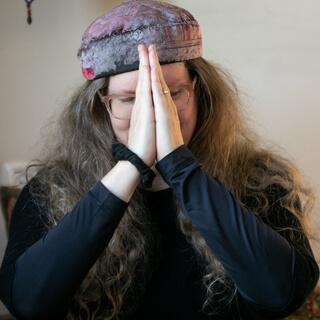
I am Rabbi Chassia Uriel Steinbauer,
The founder and director of Hamahonda Kedusha,
The Institute for Holiness.
And you're welcoming us on Sunday,
April 16th,
At 7.
30 Israeli time,
12.
30 Eastern Standard Time,
9.
30 AM Pacific Standard Time.
And we are covering the Torah portion of Shemini,
The eighth day,
That took place on April 16th,
Which was Kaf Daled,
The 24th of Nisan,
The Hebrew month,
Tafshin Pei Gemol,
5783 of the Hebrew year.
Delighted to have you.
We begin,
As always,
With our intention,
Our Kavanot for this session,
Which if you're watching by video,
You will see them here.
If you're joining us live,
Live streaming on our YouTube channel,
Please subscribe,
Or watching through our website,
Through the link to the video,
Or joining us by Zoom,
Or any other social media of LinkedIn,
Twitter,
Facebook.
Welcome.
So if you're listening through audio,
Either because you don't have sight or prefer a podcast,
I will be reading these out loud,
Having a summary of what our intention,
Our Kavanot are for this session.
May we merit filling them to the benefits of all beings.
So we see this act that we're doing together,
This meeting and practice together,
As an act of radical self-care for the sake of something beyond us.
And that is that we see that we are doing this practice of awakening together to strengthen our own soul in order to be of benefit to others in the future.
And then we are also doing this to strengthen our relationship with others so that we can be a better conduit of God's good when they need us.
And the final thing we're doing is to strengthen our relationship with God,
With the divine,
With Hashem,
With however you may call the divine.
This is something that we're doing to strengthen that relationship so that we can be that better conduit of God's good to others when they need us.
So may we merit this today,
This time together.
So I'm going to stop sharing screen right now if you are watching,
And I move into a summary of today,
Which is always important to us about who we are and what we are covering.
So give me one second here.
Okay,
So in Shemini,
Just as a brief summary of what's going on for us,
It does come after Tzav.
And if you recall what happened in Tzav is our ancestors,
Moshe was basically,
Moshe Rabbeinu was essentially becoming in kind of a new role of what we call the priest maker.
He's involved training the priest,
Had them in isolation in the Mishkan,
Training them,
Preparing them for service.
And that happened over seven days during Parshat Tzav two weeks ago.
And now in Shemini,
Meaning the eighth day,
This is the day that they are to not only like leave the Mishkan,
Meaning leaving the isolation,
Leaving the separation.
And they will basically leave these seven days of what is called the Miluim,
The inauguration of the last week's Parshat,
To begin the regular mundane holiness of running the Mishkan,
Essentially.
Okay,
It's a big day.
It's like opening day of a new business,
A really holy one,
Right?
Where you're so much is expected of you,
Both by the community,
But also maintaining the relationship with the divine.
So Aharon,
Who is the brother of Moshe Rabbeinu,
Who his role is the high priest,
Kochen Gadol,
He prepares Karbonot,
Sacrifices.
And he and Moshe basically bless B'nai Israel,
The children of Israel,
Our ancestors.
And in this whole process,
They enter the tent of meeting again and come out.
A fire of God consumes the Karbonot,
The sacrifices that was put out.
And this is a huge powerful sign for the community of God's presence.
And seeing this,
All the people sing out and bow down.
This is what happens at the first part of this Parshat.
Then something unpleasant,
It can't even begin to capture what's next.
Even if we try to use the language of pleasant,
Neutral,
Unpleasant.
There is a death of two sons of Aharon by God.
And it's very alarming and can be very triggering.
And often there's a lot of reactivity on the part of those of us who love the Torah,
Read it weekly and yearly in our lives and study it.
So this is what comes.
Their names are Nadav and Avihu.
And Nadav and Avihu,
Two of Aharon's sons,
Who were just in their seven days of training and isolation,
Getting all ready for this big day of opening to the mundane holiness of actual service in the Mishkan.
They bring something called strange fire.
Why is it called strange?
Meaning it's not fire that was commanded of them.
They bring it before God with their own fire pans and enter the space of the Tent of Meeting where Aharon and Moshe had just entered and then left again before the sacrifices were accepted earlier.
They are actually consumed by the fire.
The fire of God comes down and consumes Nadav and Avihu in kind of an odd way because they're described that their body is there,
But they were taken.
We can't exactly know what went on,
Essentially.
When Aharon,
Their father,
Finds out,
He is silent.
He actually becomes silent.
He moves into silence.
He moves into stillness and not necessarily a positive or life-affirming or pleasant one.
We can't know exactly,
But that's his response or reactivity.
So that's the scene that happens as a summary.
I'll go deeper into that soon.
Then the rest of the Parsha,
God teaches about the rules of the system of fit eating among Bnei Israel,
Among the Jewish people.
What is going to be considered pure,
Tahor and tameh,
Impure,
Among animals,
What can we eat,
What we shouldn't.
So they cover land mammals,
If they have split hooves and chew their cud,
If they're birds,
They have a list of 20 birds that are absolutely forbidden and so there's the assumption that any bird that's not on the list,
In theory,
Is kosher,
Is fit.
Insects,
If there are kinds of grasshopper or locusts listed in the Parsha.
So that's everything that's covered.
So that's Shemini in a summary.
Now we're going to delve in,
Because we always have to pick something small and manageable.
That's part of the practice of Musa mindfulness,
Is to,
When we take on a Kabbalah,
For instance,
Receive a teaching,
A practice from our teacher,
It has to be something small and manageable that we can be successful at.
So may I merit right now with you,
There are two scenes that I want to cover.
The first is when the dove and Avihu are taken by Hashem,
By God.
And in particular,
I'll bring different Parsha name,
Different sources,
What they all have to say.
But I'm not bringing it so that you actually are convinced by any of those sources.
We'll never know exactly why,
What happened,
Happened.
I'm more interested in you noticing not only how many of them are,
How varied they are,
But just what's going on,
The reactivity,
Trying so hard to find a reason,
An answer,
Almost as if to contain this,
But contain our own reactivity that this happens.
So I will start off with just ethically and morally saying that most of us,
When we read that God took the dove and Avihu,
Are not okay with this,
Are not okay with God doing this.
We don't understand it.
We feel that it comes across as immoral and unethical.
These are two boys,
We don't know exactly their age,
Who just spent a week in training and on their first day of service and shouldn't have been taken.
And of course,
Those of us who try to practice humility,
Anavah,
In the sense of learn from everyone in every situation,
Have that same approach to God in the sense that we can't actually know why God did what God did.
And maybe there is some higher wisdom,
Higher insight that we just can't know and won't have access to,
That this is done for a just reason.
Because those of us don't,
We're deeply troubled,
Have reactivity around when God comes across as not acting for a just reason,
Right?
It doesn't go with our relationship with the divine and how we are to continue to be inbreed in covenant and relationship.
So that's where reactivity begins,
Okay?
If you want to understand what's behind it.
So let's just delve into some of these,
Okay?
So first we have,
You know,
The sifra comes and says,
Oh,
They brought a voluntary offering and celebration of the dedication of the tabernacle,
A midrashim,
Bringing different reasons like Leviticus Rabbah says that there was this kirvah,
This nearness,
Right?
That they were doing this krivah,
The sacrificing,
Drawing near with the alien fire,
That they did it out of love.
And then you have all the way to modern scholars like Imharan who suggests that the offense of the two priests lay in them using incense brought from the outside area of the altar to the entrance of the tent and meeting,
And that you're not to bring outside.
It's considered tamay,
It's considered impure,
And so therefore brought in something impure to a pure area.
Then you have those who say they penetrated too far into the sanctuary.
Look at the very language,
They penetrated too far into the sanctuary.
They're doing something,
They're crossing their boundary crosser,
Something that they're not supposed to be doing.
It goes on to,
So I will share two famous ones,
Rashi,
The famous parshah of ours from France,
A thousand years ago,
Brings Gamara,
Rav Yishmael,
Says they died when they entered the Mishkan when they were drunk.
So you might be wondering,
Where does it say that in the Torah?
Where does it say that they're drunk?
It's because the proof after the death later on,
God actually commands and warns that the remaining Kohanim,
The remaining priests are not to go into the Mishkan when drunk.
That comes later on in chapter two.
And that's because we don't,
If we look at,
If we look at the reasons given,
Especially some of them,
They're totally in alignment with our practice of Musa,
Our mind,
Meaning our ethics,
Our values,
Right?
Our moral compass.
So for instance,
Even in the Dharma,
That part of the Eightfold Path,
One of them being that you're not to consume and drink,
To part of the Eightfold Path,
One of them being that you're not to consume intoxicants.
And so we know that drinking alcohol affects a person's brain and behavior and can even be dangerous.
And so Rashi here,
Our beloved Parshan from France,
He notices that God immediately commands Aharon,
His children,
To never,
Never go in to the Mishkan,
The tabernacle,
After drinking alcohol.
So Rashi made that connection through Rav Yishmael,
Okay?
Then we have Ha'emek Ha-Devar coming from Eastern Europe,
150 years ago,
Who actually takes the approach that actually it was their love of God.
There's a Devikut,
Wanting to really come to unification and closeness with God.
And that they wanted to express their love.
They had good intentions,
Right?
If anything,
Like pure intentions.
But the problem was they invented their own way of expressing this love.
It wasn't commanded.
It's not what God wanted.
And so if you look in the Torah,
We're specifically told later,
Earlier,
Actually,
That we're not to turn to the left or the right.
We're not to add to laws in the Torah.
We're not to take them away.
And so that's where Ha'emek Ha-Devar is getting his concept of it.
And this might even tie into one of the precepts of the Yisra'el path.
It gets worded as,
I want to call it like a healthy expression of love and sexuality,
Is really respecting and understanding boundaries.
And not to bring things on your own accord.
Like the love of God was very one-sided from the Dav and Afihu.
If anything,
There's a bit of a vav,
Arrogance there of,
I love you and I'm going to love you the way I want to love you.
And you'll want this and accept it.
Clearly not what God commands in the Torah for them.
At the same time,
If we are going to,
We're looking at,
Of course,
A spectrum of what could have been wrong with these offerings,
Right?
I think the simple and the most beautiful and humble and upright of explanations,
If we feel like we need to have one,
It's actually something just really simple,
Essentially,
Which is that they were expected based on their social position.
They were prominent leaders and they were expected to live by limits and boundaries.
You know,
Really not only being models of living by the commandments and laws,
But they really had to exhibit and model for our ancestors' discipline and modesty.
And so what really,
They didn't really flout any specific prohibition.
Instead,
It was considered wrong,
Sinful,
Given their rank,
Given their social position.
It's like in the teachings of the Buddha and the Dharma,
When there are monastics who receive certain types of practices and laws,
Or you might want to word them as laws,
But precepts,
How to live a certain path.
And then there's the householder,
Which is you and I,
Of how we are to practice and live.
And very different,
Much smaller list,
Much more contained.
So here in the Dharma Navi,
Who are considered like a rank of a monastic,
They are a priest,
Right?
Now the priests,
Of course,
Marry in the Jewish tradition,
But they are of an exalted rank that makes them different than the rest of the Jews,
The rest of us,
Right?
So this is the reason given why they perished.
Now,
All of us can sit here and go,
None of these reasons really sit well,
Or really cover why two young adult men or children were taken.
Okay,
So first we want to note that.
But more importantly for our practice is we want to notice the responses,
Which really reflect reactivity of the parashanim,
Of our ancestors,
Trying to really figure out and kind of contain why did this happen,
With coming up with all sorts of reasons,
And then to notice the reactivity within us.
And that's part of the practice.
And not always are we going to,
Is it going to sit well and necessarily go away?
That would actually just be a form of denial,
Of aversion,
Of pushing away.
So we want to learn from this example,
That one of these really difficult sections in the Torah and may their memories be for a blessing,
The daven avihu,
That we really take this time to really use our insight and wise discernment to watch our own reactivity around this.
And of course,
We can learn from our ancestors in the parashanim.
You know,
We're not against the idea,
For instance,
Of not consuming intoxicants,
Especially for the exalted high rank in service of something.
We're not against these things.
We can understand them.
We can live by them.
Okay.
All right.
That's the first.
I want to see what else I wanted to share with you.
I think that's it on this end.
Okay.
The next,
Excuse me,
Is I want to look at Moshe's anger,
Moshe Rabbeinu.
Okay.
So later on,
After Aharon is silent on hearing the death of his sons,
I don't know if we want to call it murder or just being taken by God.
I'm open.
That apparently Moshe gets angry.
This comes in Vayikra chapter 10,
The verses before 20,
Where he thinks that his nephews,
The two sons of Aharon who are left,
Which are Al-Azhar and Itamar,
That they offered a korban,
A sacrifice,
In the wrong way.
And so he passes judgments,
Which might be part of why it's a sermon or not.
But Aharon,
His brother,
Actually speaks.
He's not silent here.
He speaks.
He defends Al-Azhar and Itamar by explaining what they did.
And after this dialogue,
Moshe even goes on to say in Pasuk 20,
Vayishma Moshe ve'ita be'anav.
And Moshe heard this.
He listened to this.
Now,
Shema is a very specific word in our tradition,
Which means listen and do.
It's two sides of the same coin.
It's not just sound waves going in the ear.
It leads to behavior.
So Moshe heard this and it was good in his eyes.
So what does it mean that he heard this?
He listened to this and it was good in his eyes,
Meaning he calmed down the anger.
He stopped reacting out of his anger that he maybe even started behaving kind of kindly with an eye in Tovav,
Looking at his nephews and Aharon.
Something more than just listening went on,
Even in his presence,
Perhaps.
And this is very key,
Okay,
Because our tradition starts to pay attention to Moshe's anger.
And not only his anger,
Because we all have anger,
Right?
To us,
It's just part,
It's one of the midot,
The soul traits,
The personality traits that we live with and we practice around in our Musar mindfulness practice.
But it's the reactivity when anger arises that is the problem.
And sometimes the reactivity can be an internalization of it,
A stuffing,
So that it hurts the person experiencing the state of anger.
But the case that we're dealing with here is Moshe is someone who actually actively acts out his anger.
So what is brought actually by the Biyur,
Wonderful source here.
And let me see here if I can find it.
No,
It's not the Biyur,
I take that back.
Where is it?
I wrote it down here for you,
137,
Later.
Okay,
This is actually brought in the Sifri,
Chapter 31,
Verse 21.
So it says Moshe's wrath caused him to fall into error.
And so it's looking at these cases,
Right?
He falls into blunder.
So Rabbi El Azar says Moshe became angry three times.
I bet I could guess it's more than three,
But this is the three that are going to be covered.
And each time of these three times he fell into error.
So the first is he was angry with El Azar and Itamar,
The sons left with Aharon.
And he demanded,
Why haven't you eaten the sin offering,
The chatat,
Right?
In the holy place,
Very angry,
Reactivity.
There wasn't a calm,
Kind inquiry.
Maybe even an observation beforehand.
Then elsewhere,
Later on in the tour,
The cases when he gets angry at what he calls the rebels and when he decides to hit the rock.
And later on,
He's angry with the officers of the host.
And that he felt angry in that situation.
I'll show it each time he falls into error when he became angry.
And what's beautiful about our tradition is that even if someone is considered as righteous and holy in his leadership and who he is,
Moshe Rabbeinu,
Our sages want us to understand that even Moshe can be unbalanced in his midah of chaos and anger when he,
Through his behavior of acting out.
Okay.
But what's beautiful behind this wisdom,
This insight,
Is that it's not anger in and of itself,
Of course,
But what happens when anger happens,
When we are not mindful of it,
When we're not aware and practicing self-restraint around it,
Is that it clouds us.
And it leads us to act out in ways that we then regret later.
So we already know,
And this is coming from in Nechama Lebowitz,
She says that Moshe was already by nature quick-tempered,
So a choleric personality.
And his anger,
But she's,
You know,
And then she goes on to say his anger was always provoked by a dread of sin or seen injustice and violation of the law.
And she goes through the examples of when he acts out his anger,
Right?
And he says he becomes angry every time that his trust in God,
When he saw trust in God weakening and faith waning,
It's always in response to an inadequate fulfillment of a task or lack of faith in God.
And so here's another example where someone might have pure or righteous or upright intention,
Right?
We might even see pure intentions,
Right,
But the impact is what fails,
Is what's wrong,
Right?
So here's Moshe,
He's acting out,
He's having reactivity in his anger,
And maybe for righteous reasons,
Fear-driven sometimes that people are not honoring God,
Living in faith,
And so he then doesn't take time with wise discernment and investigate,
To even go down and investigate,
To question slowly with soft kind speech,
Like,
Al-Azhar and Itamar,
Why aren't you eating the chatat offering?
What's going on?
Not,
Right?
So why is this important,
Right?
What do we want to learn from this?
I mean,
So much so that we even have in our wonderful ancient tradition,
Vayikraba comes along in chapter 13,
One,
That imagines how they want Moshe to have done tikkun,
A rectification,
Done teshuva,
A repentance,
A returning of correct alignment of wise discernment and acting out,
Responding with compassion,
With wisdom,
The way that we ideally wish that he would have responded from the beginning,
L'chavchila,
Right?
So they say that Moshe sent a proclamation outside the whole camp and said,
I made a mistake in understanding the halacha.
And Aharon came,
My brother,
And he taught me,
He taught me what was right.
This midrash is beautiful.
It really goes on to show us how they wish Moshe had responded,
Even though they're not wording it that way.
Maybe they really did believe Moshe responded this way.
And maybe he did.
It just shows a beautiful way of understanding that he heard his brother,
Right?
This is from the actual pasuk from Vayikra 1020.
You remember,
He's listened,
He heard.
So that means action,
Same side of the coin.
And it was good in his eyes.
Well,
What was good?
What did he hear?
What did he act with?
So this is why this midrash comes,
Right?
In order to open us to this idea that Moshe was not upset or resentful in being wrong,
Or maybe he was right,
But there was a higher,
Higher intention and impact that might not have even been expressed in the mitzvot,
The laws that were commanded at the time and given.
Whatever it might be,
There was no,
The anger that he had really dissipated and subsided.
He wasn't upset.
He wasn't resentful.
He was happy to know the truth.
It was good in his eyes,
Right?
And this is beautiful.
This is a way of what we call wise listening,
Mindful listening that leads to mindful speech,
Mindful doing,
Wise acting,
Wise behavior.
So it's difficult and it's part of our practice.
And this is what we learn today,
Not only from the whole unfortunate deaths of Nadav and Avihu,
But how Aharon and Moshe try to really struggle and negotiate how to continue forward with such awful deaths on the first day of service,
On the first day of mundane holiness.
May that strengthen all of us when we think that we're having a difficult time with our practice to think back to our ancestors who were such exalted rank,
Right?
Or considered like monastics,
That these Kohanim and Moshe Rabbeinu,
Our highest prophets make mistakes.
They fail and they get up and keep going.
They rectify.
So the fact that Midrash Rambah says that he wanted everyone to know that he was wrong and Aharon was right and Aharon was his teacher,
Right?
We learn from everyone.
That is a Nav,
Someone who is greatly balanced in the mida of Anavah.
He is humble.
We say that Moshe Rabbeinu is the most humble man,
Prophet,
Person in our tradition.
And this is one of the examples why.
Because he's able to admit,
At least in this Midrash,
When he's wrong and to share who his teacher is and what is the upright,
Wise way to respond and live.
So with that,
We have a great deal of wisdom we've learned today.
May we incorporate all this into our practice of what is the past and how to be on it together to really support one another and take refuge.
So I invite you to assume the posture that is best for you to move into our mindfulness,
Meditation practice together.
You can sit like me in a chair,
Come to the edge so that you are upright.
You don't kind of lean back and possibly drift off and sloth and tarp are falling asleep.
You're welcome to walk,
Do walking meditation or stand or lie down if needed.
If any of you are dealing with any chronic pain,
Any issues of that sort,
Please support yourself and do what's necessary to assume the posture that is best for you in this moment to arrive here together.
So we're going to assume the posture.
We're going to take a deep breath as usual,
Three deep inhalations,
Inviting awareness,
A full exhale,
Letting it all go.
Inhalation,
Inviting presence and writing insights,
Inviting stillness.
That is the intention.
Exhale.
Notice if your shoulders lower like mine did.
And finally,
Really inviting that you be fully here,
That you let go whatever might have preceded this practice,
Whatever might come after to invite yourself fully here.
Inhalation and exhalation now allowing your breath to settle to its own natural rhythm.
No need to control it.
We're not here to make something happen with our breath,
But just being here.
And the practice of mindfulness meditation is where we really just witness what is before us,
Whatever arises.
And we have usually our choice points,
Our area that we are going to focus our attention.
So usually that's on the breath,
Noticing the inhalation,
The exhalation might be noticing where you feel it in the nose or the mouth or in the chest or the tummy rising,
Where you feel it coming out and entering.
But for some of us,
The breathing is too hard,
Either because of asthma or lung issues or post COVID.
And it's not the best taste to be your anchor where you're going to focus your attention.
So I invite you to pay attention to the sounds that are around you,
But you want to just focus on one area.
This is how we build concentration over time.
And in the practice,
We just have our attention on the anchor.
And of course,
The practice is that sooner or later,
The thoughts will wander.
That's what they do.
We have millions of thoughts throughout the day.
They will jump to something else.
There might be storytelling,
There might be planning in the future.
There might be,
You know,
Reminiscing about something happened in the past,
Fantasizing,
Dreaming.
And then we wake up and we realize,
Oh,
I had gone off.
And as my beloved teacher,
Joseph Goldstein will say,
You simply begin again.
You bring your focus to your anchor.
And we do this in,
Out,
All through the practice,
Noticing whatever arises,
Asking,
Can we be with it?
For some of us,
It'll be strong emotions.
For some of us,
It may be one of the five hindrances that arise,
Really strong attachment to something or aversion that's really unpleasant.
For some of us,
It might be sloth and twerp or just really getting tired in our practice.
And then we have to wake up again.
For some of us,
It might be boredom.
We just tell ourselves,
Oh,
This is so boring.
We can't be present for the practice.
Noticing whatever arises,
Thoughts here and there,
Emotions,
Sensations arising in the body.
And the practice is just to witness it all without reactivity,
Without judgment.
And you may be thinking,
How can I do this without judgment?
I'm judging whether or not I'm having thoughts.
There is a big difference between judgments and wise discernment.
We can wisely see that we have gone off the path.
Judgment is when we beat ourselves up for it.
Judgment is when we knock ourselves down for it.
Judgment is when we have expectations that are unrealistic for the practice.
It is not a kind voice.
It is not a voice that we want to feed.
We don't want to befriend.
Instead,
We treat ourselves with self-compassion,
Recognizing that whatever arises will eventually pass.
That all is impermanent.
So I invite you today to welcome whatever reactivity that you had or have in response to Nadev and Avihu's death.
I want you to invite it right in front of you,
In your mind's eye,
If you're able to see it.
If you're able to feel it,
What does it feel like in the body?
Where is it located?
Perhaps it's in the chest or in the stomach.
Perhaps it is a heavy ball.
Can you describe to yourself what it feels like?
What does the reactivity to these awful deaths,
To our lack of knowledge,
To why God would take them,
Having to live with,
Having to live with that,
What does it feel like?
Having to live with that.
What is our own silence expressing,
Maybe teaching us or not?
Sit with any reactivity that arises for you.
This is where we can learn from our practice that we can actually be a witness,
Watching the reactivity,
What it feels like,
Noticing how it shifts or changes over time.
You'll sit in one minute of silence as you just observe it.
If your thoughts have wandered,
Bring them back to your anchor.
Bring them back to your attention,
If any reactivity,
And to the narrative,
The story our ancestors and God have passed on to us about Nadev and Avihu.
Notice if it's changed,
If it's shifted,
Maybe what color it is,
The lightness or heaviness of it.
If there's heat or coolness.
We move into a practice of self-compassion around this,
Recognizing first with mindfulness what is here for us,
What is real.
We don't need to react,
To push it away.
We don't need to over-identify other.
We remember,
We remember that taking refuge in our Vahd,
In our Sangha,
In our Kahala,
Our Kahila,
Our community,
That we are not practicing alone,
That we have shared humanity,
That everyone else sitting in this practice together right now is also investigating the reactivity,
If any,
And that we can carry this burden together,
Learn how we can be with reactivity without acting out,
Even if it's anger.
How we can watch anger arise,
Have a certain shelf life,
And then dissipate.
And then the final step in our self-compassion practice is just that,
Is now really befriending ourselves,
Bringing compassion to our own experience,
To our reactivity,
If we're having any,
With words of kindness.
How you would speak to your best friend who is having a hard time about their own ancestral story.
How would you kindly speak to them?
How would you tell them that it's okay,
That you're there,
That you can be with this,
Your presence alone,
As a kind friend,
Really with gentleness,
With loving kindness,
Chesed,
Metta,
Allow it to really fill you and your experience right now,
Fill you up,
Knowing that you can practice and be able to apply this outside of the practice on the cushion to when you have reactivity,
That you need not act it out.
Now with the sounds of the bells,
Allow your eyes to gently open if they were closed,
Taking your time to join us back into the sacred Zoom space.
If you are joining us on screen,
Thank you.
Thank you for your practice.
Thank you for joining us today.
Thank you for learning with each other for the merit and benefit of all beings.
May we bring God's good to others.
May we learn from our master narrative and texts and from our ancestors and from God.
I thank you again for joining us this Sunday.
Next Sunday,
We join again,
B'zrat Hashem,
Where we jump into a double portion,
Which is Achar Haimot Kedoshim,
I believe.
No,
First,
Let me remember is,
No,
First is Tazria Metzora.
How could I forget?
Because it's my birthday,
Parsha.
Tzavah Parsha.
Yes,
My birthday is coming up.
I'm Lamed,
30th of Nisan on Rosh Chodesh Iyar.
Please offer Dana,
Donation,
Sedaka to the Institute for Holiness in honor of my birthday to support us and our work and all God's good that we attempt to bring to all Musar mindfulness practitioners and to the world.
And we will cover B'zrat Hashem next Sunday,
Tazria Metzora.
It is a double Parsha,
So we'll have to really narrow it down,
Try to study it and read it this week with commentators,
Parsha Niem.
Listen to it,
B'zrat,
If you're able to in a synagogue or a minyan or even online.
And come,
Come with your heart open,
Ready for Musar mindfulness and practice and celebrate with us.
If you're not a member yet,
Please consider membership to the Institute in honor not only of my upcoming 49th birthday,
But to strengthen the Institute and to strengthen your own practice to join a sangha,
Vod and our community online or in person to really jump in.
We'll be opening up to some spaces for practice in a Vod in the summer.
And what else do I need to tell you?
Just delightful that you're here and that you join the practice.
If you're watching live streaming on YouTube,
Please subscribe.
You can also subscribe to our newsletter,
Both the website and when I send it out.
So thank you again.
God bless you all.
May we all enjoy the new moon,
The month of ER coming up on Yom Shishi,
Right?
Friday.
Yes.
Take care of yourselves.
Bye.