Baruch Hima Baim,
Welcome.
So good for you to join us here at the Institute for Holiness,
Kehillat Musar Mindfulness.
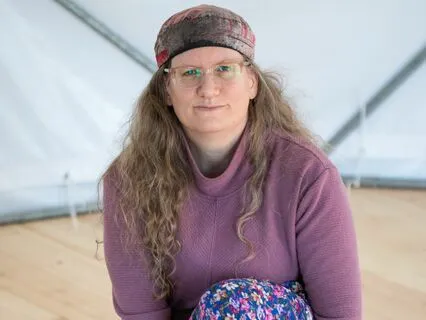
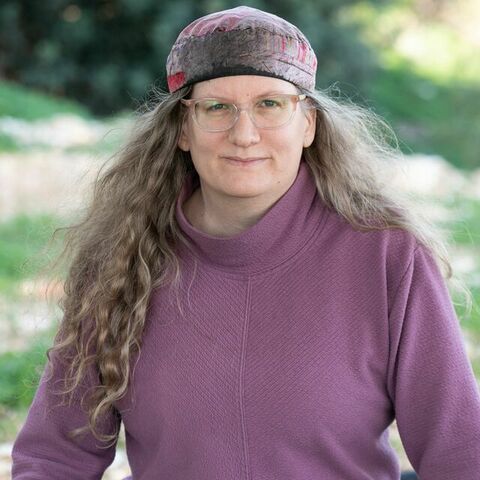
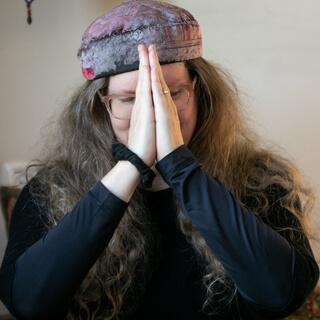
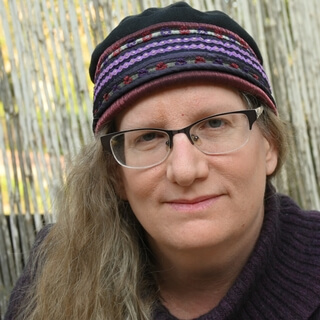
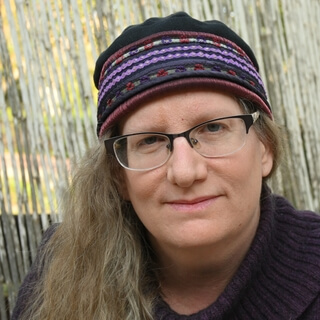
I am Rabbi Chassio Uriel Steinbauer,
Founder and director of the Institute for Holiness.
So delighted and such a blessing to be able to come together for these public offerings on Sundays at 7.
30 Israeli time,
12.
30 p.
M.
Eastern Standard Time,
9.
30 a.
M.
Pacific Standard Time.
Wherever you're joining us in the world,
All are welcome.
So delighted to have you.
So what are we covering today?
What is it that we do here?
What is our project?
So we basically look at the Torah portion that took place for us here in Israel the day before.
So on Shabbat Saturday,
June 10th,
Which was the 20th,
I believe,
Or the 21st of Sivan,
Kaf Aleph of the Hebrew month of Sivan,
Tafshen Pei Gemol 5783,
The Hebrew year.
We here in Israel jumped into and learned from and listened to the Torah reading of Shalach or Shalach Lacha.
All right.
And so in the diaspora outside of Israel,
You will be learning from and listening to Shalach this coming Shabbat.
So a week from today or a week from yesterday.
So however,
Wherever you're located,
You'll either gain more insight into it from what you learned last week and the Shabbat if you're here in Haaretz in Israel with me,
Or you will have part of this as part of your learning and perspective to go into the coming Shabbat.
Either one,
It's all a blessing.
B'srat Hashem,
God willing.
So before we begin,
We always do our kavanot,
Our intentions for today's session,
Which are the same each week.
And let me go ahead and share screen for those of you who are watching on video.
Give me one second as I pull this up.
And those of you who have sight,
For those of you who don't,
You will hear me read this and you'll be able to listen to it on audio on our podcast.
Whether you're live streaming right now on YouTube,
Please subscribe,
Or watching on Facebook or LinkedIn or Twitter,
Wherever you may be joining us,
Or perhaps through the Zoom link on our website of Kehillat Nusar.
This is all a part of us being connected and trying to find ways to interact and join.
So please do send us your comments and questions either through the YouTube page or on our website or in email.
Or if you're on Zoom,
You're welcome to enter into the chat box any questions that you have or comments and I'll attempt to address them towards the end or the following week.
Okay,
So here are our kavanot,
Our intentions for today.
May we merit these on behalf of all beings.
So we see this act of engaging and awakening Torah,
Musar,
Mindfulness together as an act of radical self-care.
We are engaging and learning Musar mindfulness to learn from our ancestors and from God,
From our master text,
From the master narrative of the Hebrew Bible,
In order to learn what our ancestors wanted to pass on to us,
What wisdom is there for us to grow and continue on this path towards holiness and liberation.
So we say this is something I'm doing to strengthen my own soul in order to be a benefit to others in the future.
We're also doing this time together,
This about 45 minutes together,
As something we're doing to strengthen our relationship to others.
So we say I'm doing this to strengthen my relationship to others so I can be a better conduit of God's good to others when they need me.
And for those of you,
Depending on your relationship with God or divine,
Just see,
You can see all this is the universe,
Right?
The universe is good,
That which is pure and good out there that we want to be this conduit to,
Right,
To others.
And finally,
We're also doing this to strengthen our relationship with the divine,
However we define that relationship or the divine,
Hopefully something evolving always over time,
That this is something I'm doing to strengthen my relationship with the creator,
The Zerat Hashem,
God willing,
So that I can be a better conduit of God's good to others when they need me.
So those are our kavanot,
Our intentions for today's session.
And I will begin as I always do with a summary of today,
Yesterday's Torah portion,
Shalach L'cha,
And then we'll delve into what I think is going to be of use and of importance today.
So also as part of our kavanot and merit,
Today we are sponsoring this session and it is sponsored to the health and well-being of all,
Particularly those who are suffering and always have suffered or have lived with for a long time,
Very poor air quality.
So obviously,
In nations around us like India and China and others,
They've struggled and lived with this for a while.
And now coming with the wildfires coming down from Canada and that smoke entering North America and United States and other places,
It's having a real profound effect on both fear,
Right,
The veiling factor of fear and worry and restlessness and doubt,
But also people's real health,
The sense of health and well-being of breathing.
So today's session is really in honor of health and that all of us work together towards finding healthy,
Wholesome,
Wise solutions to climate change.
So may it be so,
Right,
From my mouth to Hashem's ears.
Okay,
So what's going on here with this Torah portion?
Let's give you a brief summary and then we'll jump in more.
So in this Torah portion,
It's the fourth parasha in the book of Bamibar,
In the book of Numbers.
Moshe,
Our leader and ancestor,
Sends 12 leaders known as scouts or spies to check out the land of Cain,
Okay.
And they're,
In Hebrew,
They're known as meraglim,
Which kind of translates as spies.
And after 40 days,
The meraglim return from their mission.
They're sent there very specifically,
Very specific questions were asked of them to seek out certain answers to those questions,
All laid out in the Torah portion.
Their report is an interesting mixture of fact mixed with interpretation and then narrative and storytelling that,
As it continues,
Builds on delusion,
Fear,
Worry,
Restlessness,
Doubt,
All these major veiling factors,
Veils that are obstacles to them from seeing with insight,
With what is real and truth and not based on fear and delusion in heart,
Head,
Mind,
Spirit.
Okay,
So they go on to say that there are giants in the land,
Not only giants,
But giants that fall from the nephilim,
These kind of mythical creatures who are angels who come down and reproduce with the humans and produce these huge giants,
Taught to us back in Be'er Hashit,
And that B'nai Israel,
Our ancestors,
Would not be able to go into the land and live there.
Kalev,
Right,
One of the spies,
The scouts,
He disagrees and he says B'nai Israel would be able to conquer the land,
All right?
So it's this kind of reactivity with reactivity,
Okay,
Storytelling and then reactivity,
Like not so much a response but an argument back,
Okay,
So we have this going on,
Right,
This should sound familiar maybe even in your own life,
Where you move through some type of fear,
Doubt,
Delusion,
You have the storytelling that keeps rolling,
Which I'll get into later,
And then your people in your life respond by not necessarily listening or addressing your fear or concern but instead argue back or try to show you the truth,
Right?
So what happens?
The people in general are witnesses to all this and listen to this delusion,
This argument,
This sharing and counter-argument back by Kalev and even Yehoshua,
And the people,
They scream,
They cry,
They threaten to go back to Egypt,
It's really sad to witness,
Right,
And the part of our project and going through this is to witness that and to be a witness to it,
All right?
So then there's even more reactivity by God,
By Hashem.
God wants to wipe out B'nai Israel,
Moshe then responds to God,
Prays for the people,
So instead God says that they'll get their wish,
What is the people's wish?
The people's wish is that they return to Egypt,
That they get a new leader and return,
And God says they'll wander in the desert for 40 years and they will not be able to enter the land,
Okay?
Then some people change their minds and they try to enter the land of Canaan anyway,
They are attacked and they lose their lives,
They are attacked by the Canaanites that are present because God is not with them,
Because the people are not with them bringing the ark.
So the Torah then concludes this Torah portion and this story,
This master narrative,
Introduces additional mitzvot,
That with the mitzvah of separating a portion of challah,
Which will happen in the land,
And when baking as a gift to God,
And also wearing tzitzit,
Which are these kind of ritual fringes that are worn on the four corners of a garment,
Right?
And they,
We're told,
Are there to remind us of the other mitzvot.
We'll touch base a little bit of what exactly they're reminding us of.
Okay,
So now I'm ready to jump in with you.
That's our summary.
This is full of it,
Right?
So according to the Torah,
The wilderness period,
The b'mi bar,
Right?
It was marked by two sins,
Okay?
Obviously,
You hear in this Torah portion,
God says,
I was tried 10 times by the people.
So 10 nisayun,
10 conflicts,
10 troubling times in their relationship,
And what's going on here.
But two master sins,
If we're going to put it that way,
Right?
The apostasy of the golden calf,
Right?
The sin of the golden calf,
Which happens in Exodus 32 through 34.
And now what we might term the faithlessness of the scouts,
The spies,
Which is here in Numbers chapter 13 through 14.
So only these two sins,
The golden calf and this of the spies,
The faithlessness,
Is singled out for special mission in this whole survey of the wilderness tract,
Given in Deuteronomy later on when it's recounted.
This happens in chapter one and chapter nine.
And only in connection with these two sins,
Does God threaten the whole annihilation of the people of Bnei Israel,
Of our ancestors.
And in also in some ways,
Like it's an annihilation of the fulfillment of the patriarchal promise,
Right,
Through Moshe,
But even back to Avraham and Yitzhak and Yaakov,
Right?
And I think in the summary,
I'll just say that the scouts report starts off as factual.
Okay.
And then sometimes we have to remember that we can start off with the facts and then we have to quickly see,
Have we moved to narrative?
Have we moved to storytelling?
And this is what we're going to look what happens here.
And then it moves for them into storytelling.
It moves into an,
It also moves into a negative report.
Okay.
Not sure if they had this conversation,
The scouts,
Before they arrived home.
What are we going to tell Moshe and everyone?
Do we agree?
Do we can have a consensus of what we're going to tell?
Or is this all building in their own heads?
And all of a sudden,
Eight of them find out that they are of one mind,
Which is caught up in fear and delusion,
Right?
And doubt.
And so this basically,
This negative report,
And then continuing of the storytelling around it,
Sets off a wave of reactivity in the people,
Which happens in chapter 13.
There's an exaggerated description of the dangers.
This leads to even vocal opposition among the people in chapter 14.
And then finally,
Like a full of reactivity might even be seen as a threat.
The way it's worded is this.
We're going to return to Egypt under new leadership,
Which is finally how it concludes in chapter 14,
Four verses four through 10.
Okay.
You have to remember what came before this.
Okay.
First,
The closest story that came before this is Miriam and Aharon's public Lashon Hara,
Speaking poorly about their own brother,
About Moshe.
And you could imagine when leaders behave this way,
Then of course,
The people in general are going to have reactivity.
Um,
So even before this whole episode of Miriam and Aharon,
Think back to either Bami Bar or Nassau,
Where Moshe himself has amazing reactivity that it seems like it might have been kept silent and between him and God,
But we're not 100% sure.
But it's the case when the people start to complain that they don't have meat,
Which means dog,
Dog,
Game,
It means fish.
They want their fish.
They want that flesh to eat.
And Moshe starts having unbelievable reactivity around this fear that maybe they're not going to get it.
Fear of God's reactivity,
That God's going to get angry and punish.
You can totally see him just moving down that track.
He's like a train that can't get off course.
And to the point where Moshe,
You know,
Has total disbelief and lack of faith in God,
Where he says,
There's no way you're going to be able to feed this amount of people,
Which is probably about 2.
2 million people.
Which is really astounding,
Because if this God,
Our God was able to take 2.
2 million people out of the institution of slavery and out of Egypt to this land,
Then surely God can feed this people.
But that doesn't matter anymore.
We're not in the land of facts.
We're not in the land of I'll prove this is the truth to you and therefore get you out of your delusion and your worry and your doubt.
What moves people out of delusion,
Worry,
And doubt is not being presented with facts in the moment,
Not presented with a counter argument.
What works is just listening,
Being present for them,
Calming them down in their fears,
Letting them recognize that they're having that and they're caught in their own reactivity.
We'll touch more base on this,
But this is what's happening.
So Moshe has his moment,
If you'll recall back to Per Sheolta or more,
Where he actually,
Even in the end says,
Just kill me.
He has a total toddler moment where he's having that tantrum on the floor.
Just kill me.
Just take my life.
It's over.
My bucket is full.
I can't take this anymore.
Okay.
So maybe this is happening privately between him and God,
Because this is surely a moment where he's not having faith in God,
Doubting God,
Not trusting in God.
This is clearly a moment where if we're going to think he's going to be punished or having consequences for his behavior in the moment,
It's this moment.
But because he's not,
We assume this happened privately between him and God,
Because it's the very thing that later on when he will hit the rock,
But it's not even hitting the rock,
Where he'll attribute the water coming out of the rock to Aharon and himself,
Which shows a lack of faith and trust in God is that when he is received his consequence that he will not be entering the land.
So it makes us think that he didn't do this publicly at first,
But what you're having is the leader having total reactivity,
Then his siblings,
And then you're having these spies,
These leaders.
Now listen,
These are 12 righteous people,
Right?
12 is a 12 or 10.
I'm missing at my head.
That is it.
Sorry,
People.
I'm totally that's okay.
Whether it's 10 or 12,
I think it's 10.
They are,
You know,
Leaders,
Right?
Princes,
Head of the tribes,
Were selected and brought forth for their leadership.
These are leaders.
So we have Moshe and then the siblings,
And now the leadership,
Full of reactivity,
Except for Kalev and Yehoshua,
Of course,
Joshua.
So this is,
You have to realize the culture and what's going on here.
And people are witnessing the leadership having their own reactivity and issues going on.
And then this is the environment in which we're in.
Okay.
So what I want to begin to point out is that I really want to posit to you,
And I hope this is a helpful model to you to understand that what is happening here on a communal level is the Sota model that we had discussed in Parshat Naso.
The Sota,
If you don't recall,
Go back to the video on Parshat Naso to see what I have to say about that.
It's the case where the husband does not trust his wife,
Even though he has no evidence that she has been unfaithful to him.
And he physically makes her go to the temple to undergo swallowing some liquid with Torah verses of the Sota verses in it to undergo a kind of a magical ritual in order to see if she is guilty or not.
Obviously not guilty of naaf,
Which we discussed earlier,
Adultery,
Which would have been dealt with differently.
But is she really unfaithful or not?
Okay.
So that's what we're dealing with.
So in that Sota model,
As I posited,
In a marriage,
In a heteronormative,
Heterosexual relationship,
There's the husband and the wife and there's God.
And then that Sota model,
God is not in that relationship anymore.
There's been a total lack of respect,
Of trust.
It's a very patriarchal marriage.
It's one of dominance,
A kind of a top-down model where he alone will decide how this is going to happen.
It's an unequal marriage.
And so when the distrust happens,
Which is the narrative,
The storytelling that happens in the husband's mind and heart of fear and doubt and lack of trust and faith,
He moves through this Sota model where God is missing.
And supposedly if she has no sign that she was not unfaithful,
Supposedly they return back to their home in some type of peaceful marriage.
I posited it's not peaceful at all.
It's not even reconciliation.
It's a form of irreconcilability,
Like in the sense of we're going to live together,
But there's not peace here because she's been humiliated,
Shamed,
Violated.
She's never going to trust and open to the husband in that way again.
And it's signified to us in the fact that they make her drink verses with God's name in it,
Which will disappear,
Which will cause God's name to disappear because it already is a metaphor on a larger level that God is absent from this relationship.
And so that's it on a local,
Small,
Private home level,
Which of course affects the whole community.
Otherwise this whole ritual wouldn't happen.
But what we're witnessing here and why these two major sins are discussed and brought up again in Deuteronomy of the golden calf and the sin of the spies is essentially a commute Sota model.
Now,
What do I mean by this?
A commute Sota model is that you had this breach,
This covenant with God,
Total unequal relationship,
Right?
Total patriarchal relationship.
And,
And in the sense,
Right.
And God and the people have distrust for one another,
But either way,
There's this fear-based reactivity,
Doubt,
Lack of trust and faith.
And one leads to the golden calf behavior,
The fear that the leader will not return of Moshe.
And the response is a Sota response.
Moshe requires that the golden calf be melted down and that the people have to drink the golden calf liquid.
Okay.
A form of humiliation,
Shame.
Some people think that maybe that identified who were the people who had done,
You know,
Who participated in the golden calf,
So then that the Levine could murder them,
Which was 3000.
And the end,
The other Sota model here,
Right,
Is the breach,
The distrust,
Right?
Is this what's happening now?
The faithlessness of the scouts as it's known,
Where the very language used in chapter 14,
Verse 32,
33,
Is that there is a Zana,
Right?
From Zona,
From a prostitute,
Haltari,
Right?
The sense of you are like a woman who is not faithful,
Right?
A woman who has prostituted herself.
And that this,
That's how the scouts,
The spies are described,
What would happen with them,
Right?
Out of their fear and doubt.
And so then this is the first time where you're not even put through a Sota ceremony.
There is no causing them to drink some verses or anything here.
Instead it's divorce,
Right?
It's divorce,
But it's even worse than divorce.
I wouldn't even say it's divorce.
You know what it is?
It's marriage that,
It's marriage,
What's the word I'm looking for?
It's a chained wife model.
It's where the husband will not give a get,
Which is a Jewish divorce that needs to happen.
And unfortunately in Jewish law,
It's one-sided.
Only the husband can initiate and allow for divorce.
Okay.
It's still very patriarchal model.
So here,
God is not even divorcing the people.
God wanted to,
God actually wanted to annihilate them.
God wanted to commit,
You know,
Like murder,
Right?
In the sense,
Instead it's not,
I'm not going to divorce you and let you go and return back to Egypt.
Right.
And so you can go marry some other God which is what the model would be,
Idolatry.
Right.
Instead it's no,
You're going to be a chained wife,
A chained woman.
I'm not going to allow you to marry or grow to any other gods.
And you will be chained to me for 40 years in this desert.
But,
And then you'll die before we enter the land.
Okay.
That is the model there.
It's very,
It's very dark.
I would say this is for me,
One of the lowest points and even,
Even sadder for me is,
And I noticed my own reactivity come up is when the people try to say,
Oh my God,
We'll go up.
We made a mistake.
They even like,
Lechaskim,
Right?
What happens to them?
They get up.
And that verb that's always used,
It means they get up early in the morning in order to perform a mitzvah.
That's what always happens,
Right?
Avraham gets up early in the morning to go offer his son,
God forbid,
As a sacrifice.
So here the people get up early.
They decide we're going to go into the land.
We're going to,
We're going to do what God,
We're going to be courageous.
We're going to go do this.
No,
God's not with them.
It's all about the punishment model.
And there's no reconciliation even of the Sota personal model where we'll remain in marriage together,
But we're not really going to trust one another.
There's not,
There's a,
There's been a breach.
All right.
So all this reflects the suffering in,
In each individual's head and experience and in relationship and on a communal level.
All right.
So before I say a little bit more of that,
I just want to say a couple of things before I close on this,
Before I summarize,
Which is the way our tradition kind of sees this,
That you could either see this faithlessness of the spies,
Of the scouts,
As something is uniquely terrible,
Right?
This is sin of the M'raglim,
Or you could see that this is a bucket,
Right?
Of 10 trials,
10 things that God was pushed by the people.
And the bucket is getting full and full and full until it overflows.
Right?
And so the M'raglim,
The scouts case is the one that just throws it all over.
And that's why God is having so much reactivity after these 10 trials.
And maybe it's actually a combination of both.
And God clearly feels rejected.
The people actually,
In all honesty,
Do reject on some level in the sense that they say,
Let us appoint a leader and return to Egypt.
Right?
But one clear thing is happening in the tradition sees it as a form of what's called L'shon Hara,
Which translated as the evil speech,
But it's,
It's unwise speech.
And that speech causes harm and suffering.
It can be slander.
We call it the ba here in the text,
This idea that they are speaking badly about the land,
Which is God's land.
And so you're essentially speaking poorly and badly about God.
Okay.
And what I want to see that's happening is to really try to see these scouts is having negative self-talk.
They're really having negative self-talk.
They see themselves as poorly as poor.
There's really a lack of gratitude,
Which is kind of the opposite of L'shon Hara.
You know,
Rabbi Sonja or Sonia,
I'm not sure how to pronounce her name,
Kay Plitz.
She wrote a wonderful article called Savlanut,
To be patient and to love,
Which appears in the Musar Torah commentary,
Where she really looks at this concept of Savlanut,
The Shoresh Samech V'Lamed as to care,
We would say to carry a burden,
Right?
To suffer with someone.
But really her brilliant reading is this idea that what it really means to practice Savlanut,
Patience,
As it's translated in English,
It really means to carry the burden with,
To bear the burden with.
And she says it's to seize one's own pain without burdening others.
I'm going to push that even farther.
What Savlanut is and was needed by our scouts,
By these leaders is to seize their own reactivity,
To seize their own negative self-talk without burdening others,
Without just speaking what is in the mind,
Right?
A thought is a thought.
Not every thought needs to be shared.
All right,
So seizing their own reactivity.
And she goes on to say that this is love as a verb.
Love is to endure,
To forgive,
To celebrate and care,
Not only of others,
But of oneself.
The scouts,
Had they been practicing,
Had they realized that,
Wow,
I'm totally moving to restlessness and worry and fear and delusion.
I am making up stories in my head.
I am not seizing my reactivity,
Right?
I am not enduring.
I'm not caring for myself.
I'm not forgiving myself,
Right?
And so by the nature of cause and effect,
That law of God and the universe to us,
Right?
The lack of trust and faith and courage that goes on is internal,
Is theirs,
Right?
And that leads to their own anger and impatient and disappointment that they then almost like vomit out onto the people because there isn't self-restraint,
Because there isn't a practice of sabbanot with our leaders here.
Even with Moshe,
Even with Aharon,
Even with Yehoshua,
Even with Haleh,
What do they do?
They simply react to the people's reactivity,
To the spies reactivity.
And this is a very key moment,
Actually,
I want to point out.
And when the scouts share their fear and their negative report,
I believe it's here,
127.
I want to take a look if this is the case.
No.
Maybe 108.
How does Kalev come back to them and even Yehoshua?
They counter react.
They counter react and say the land is good.
The enemy is impotent.
And God is with us.
These words just anger the people more,
Right?
Who then threatened to stone them.
It's a cycle of reactivity.
So what was needed in that moment?
So this is where I'm going to bring my skin knee example here.
Think about you in your childhood,
If you even have a child or grandchild or,
You know,
A child in your life somehow,
And they're riding their bike,
And they fall,
And they skin their knee,
And it's bleeding.
And they're crying,
And they're kind of caught up in their reactivity.
And they and you run to them,
And they say,
Oh,
I fell,
And I'm bleeding,
And skin my knee.
And then they're like,
Crying,
Sobbing.
And if you try to say to them,
Oh,
It's not so bad.
You'll be okay.
We'll just put you know,
Get over it,
Or we'll pour some water on it,
However you might respond.
Usually,
Then the response is,
You know,
Riding so fast on my bike,
I hit the curb,
And I flew down.
And oh,
My gosh,
It ripped a huge hole,
And I'm bleeding so much.
Okay,
So already,
It's gone from fact to storytelling around it.
And then,
Depending on how you react,
Or how you respond,
Especially if you try to counter their actor story,
Tell them the truth,
The way it is,
Then there's even more storytelling,
Like,
Oh,
My gosh,
A car almost hit me,
The bone almost popped out of the knee,
Whatever,
Right?
So this is what's happening with the spies and the scouts.
They are full of their own fear.
They're full of their own reactivity.
And they come with the story.
And so you have to try to think on behalf of our ancestors with compassion,
What could have gone differently?
What could have what could we have said?
What did our spies and ancestors need in that moment?
They don't need us to come back with them,
Counteract with them with some truth.
In that moment,
Right?
They don't need to come back with our reactivity.
They need us to listen.
They need us to validate they need us to bear witness to bear the burden with them.
So you could imagine at that moment,
Caleb could have turned and said,
Oh,
I see you.
That was scary for you.
That was hard.
I see that you are having doubt and worry.
Yeah,
I get it.
What might have done?
What that might have done?
Creating the space between the match and the fuse between the stimuli and our response is the breath.
So this is shared this master story,
This narrative with us by our ancestors,
That we see the common humanity,
That here are leaders,
The very heads of the tribes and even our prophets,
Right?
Miriam our own and Moshe have,
They're so frail,
Right?
They're so human,
They have their reactivity and so to we,
And we will.
And this is the common humanity that teaches us then with compassion of Rahamim,
That wonderful Nida in addition to Sablanut,
They're like a one coin,
Two different sides,
Right?
That we can then bear it with them,
With compassion and see,
Oh,
That was hard,
Wasn't it?
That was scary.
That was full of doubt and worry and restlessness and fear.
And then we can turn in on ourselves and self-compassion.
And it's radical practice of radical self-care.
It's just such an honor to offer this to you and practice together,
That we can attempt to do this anytime we start to feel the reactivity arise in us.
So I will just close to share that of the two mitzvot,
I think they're both related,
But of the mitzvah offered at the end of Tzitzit,
These ritual fringes that they can wear,
Were taught in order to remind people of the mitzvot.
I think there's something more radical behind why these Tzitzit come,
Right?
Our tradition teaches from Menachot in the Babylonian Talmud in 43B,
That sight leads to memory and memory to action.
So you might be thinking,
When we see the Tzitzit,
Are we supposed to remember,
God forbid,
This story,
Either the golden calf or the spies in particular,
Right?
The scout sent,
We're supposed to remember that,
Right?
And then have that memory lead to our own action.
But what are we remembering?
We don't have to remember necessarily,
Like go down this like kind of re-traumatizing path of what happened to them and what went on.
What we're remembering is the reactivity.
We're remembering that there was a lack of practice,
A lack of self-restraint,
A lack of communal support of compassion,
Right?
And so we can then look at the Tzitzit and have,
Okay,
I'm remembering that I can practice.
I can recognize if I'm starting to storytell,
Right?
Or have negative self-talk.
I can choose to practice,
To practice self-restraint,
To contain that,
To see myself in the common humanity of my ancestors who also went through this.
And it's difficult,
Right?
We have to practice.
And to remember that memory leads to action.
So then what is our action in this moment?
Once we realize that we can practice,
We practice.
We practice.
We stop the storytelling.
We have compassion towards ourselves.
We reach out to our spiritual friendships,
Our kavrutos,
Our vad,
Our sangha,
Our community.
Yeah,
I'm having a lot of reactivity.
Can you sit with me?
Can you just listen to me?
Can you be there?
Can you bear witness?
Can you bear this with me?
And to share and to move out of the hindrances,
Out of the veiling factors,
Out of the obstacles that don't allow us to be fully present here in the present moment with what is right before us,
Right here and right now.
And with that,
We're going to move into our guided mindfulness meditation,
A short one today.
So I invite you to assume one of the postures that is comfortable for you,
Comfortable and upright,
Meaning full of dignity,
Created in the image and likeness of the divine,
One in which you feel that dignity,
Right?
And at the same time with ease.
So it could be seated,
Could be standing,
Walking back and forth or lying down.
And if you are seated like me,
I always like to go to the edge of my chair so that I can sit upright and hold my feet to the ground so I feel grounded and held by God and Mother Earth,
Right?
And I invite you to close your eyes if you wish,
If you have vision and to help you kind of block out visual stimulation,
If that's comfortable and safe for you.
If not,
Just lower your gaze or wherever is comfortable and safe for you.
And we begin with three deep cleansing breaths,
Inhalation and exhalation.
And inhalation and exhalation.
And this last one,
Really allowing your shoulders to raise so that you can then lower them on your exhalation.
Inhalation and exhalation.
Feels so good.
Help you feel that too,
To begin to fully arrive,
To come to stillness,
To give yourself this gift of practice together here,
Refuge in community together,
Allowing yourself to really just invite ease and really settling,
Using my voice as your anchor or your own breath.
Really just being here together.
Yes,
Fully arriving,
Feeling yourself let go with whatever came before today,
Whatever might have arisen now with sensations or emotions in the body,
Or maybe you find yourself in thinking mode,
Right?
A kind of monkey mind,
We call it,
Where you're planning for the future,
What's going to happen after this awakening.
Just simply recognize whatever's going on with you to accept it,
To really felt,
If you have the felt sense of it in the body where it's located,
And no need to identify with it,
No need to push it away,
No need to tell a story about it,
Just letting it be,
Letting it pass and bring your attention back to your breath and my voice.
Compassion,
Or akwamin,
Is something that is cultivated with inner intention,
One that we practice both on the cushion or the chair and outside in our lives.
I invite you to bring someone close to you whom you love dearly in mind.
It could even be yourself.
Picturing them and feeling your natural caring for them.
Notice if you feel it in the heart sense.
Let yourself be aware of the sorrows in their life,
Any pain or suffering.
Feel how your heart opens to wish them well,
To extend comfort,
To share in their burden and pain,
To meet it with rakwamim,
With compassion.
This is our God-given birthright,
This response of the heart.
I invite you to whisper to yourself and to your dear one,
May you be held in compassion.
May you be held in compassion.
May your pain and sorrow be eased.
May I be a witness for you.
May I be a witness for you.
May I be a witness for you.
May your heart be at peace.
May your heart be at peace.
Now we think of the mevaglim,
The lovely scouts and spies,
Our leaders,
Moshe and Miriam,
The Aharon,
And all of our beloved ancestors in the Midbar,
In the wilderness.
We say and hold them,
May you be held in compassion.
May you know that I see you.
May you know that I see you.
May your fear and doubt and worry be eased.
May your fear and doubt and worry be eased.
And worry be eased.
May I carry the burden with you.
May you take this gift from our ancestors,
This common humanity and compassion,
To know that they have given us this path and this gift not to fix the world of pain,
Which we obviously cannot do as one individual,
But only to meet it with a compassionate heart.
To relax and be gentle in order to practice self-compassion.
Sensing this tender-hearted connection with our ancestors,
Even extending compassion to God and the whole reactivity that we witnessed in Shalach L'cha.
And we close with loving statements towards ourselves.
May I be held in compassion.
May I be held in compassion.
May I be held in compassion.
May my fear and restlessness and worry be eased.
May my fear and worry and restlessness be eased.
May I have the wisdom and strength to stop the negative self-talk.
May I have the self-restraint and wisdom to stop the negative self-talk.
May I stop the storytelling,
The narrative.
May I stop the storytelling and narrative.
May I witness a thought as a thought.
May I witness a thought as a thought.
May I be a conduit of God goods to others.
May I be a conduit of God goods to others.
And may we all be at peace.
And may we all be at peace.
May we all be at peace.
And if you have your eyes closed,
You can begin to slowly open them.
As I move to ring the bells to come to a close in our practice.
Gently and slowly open your eyes if they were closed,
Allowing the light to come back in.
Giving yourself to a great bow to Hashem,
To God,
To the divine.
Taking refuge in the teachings of the Torah and Musa and the teachings of the Buddha.
Taking refuge in community and the Institute for Holiness,
Kehillat Musar,
Belsanga and Vahad.
Taking refuge here together in our practice here.
I'm Rabbi Chassia Uriel Steinbauer,
So grateful for you today in this practice.
I'm so grateful for you and your family.
I'm Rabbi Chassia Uriel Steinbauer,
So grateful for you today in this practice.
Please do give your donations to support our public offering of this every week.
Please feel free to reach out with questions and comments,
Whether it be in the comment section of YouTube or sending email to us.
Or of course here in the chat box on Zoom.
Wishing you all health and well-being.
Take care of yourself.