Welcome to awakening.
We will begin in one minute.
Allow yourselves to settle and arrive.
Welcome.
Allow yourselves to settle and arrive.
Welcome.
I'm delighted to have you joining either on Zoom or live streaming on YouTube or on our Facebook page also.
I ask that you hold your questions and comments for the end of the session.
But we'll have time for Q&A.
I'm delighted to have you here.
Welcome to awakening Torah Musa mindfulness,
Gauge and studying the weekly Torah portion.
This week we will be diving into being class,
Which here in Israel hearts,
We've already studied this past Shabbat we landed in synagogues.
And outside of Israel,
You will experience it this coming Shabbat if you are involved with synagogue life or minyan where you hear the Torah.
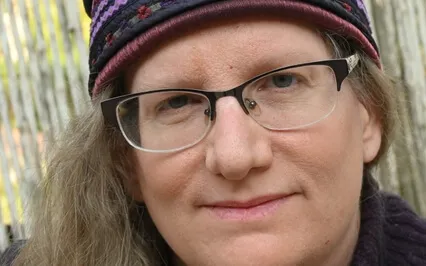
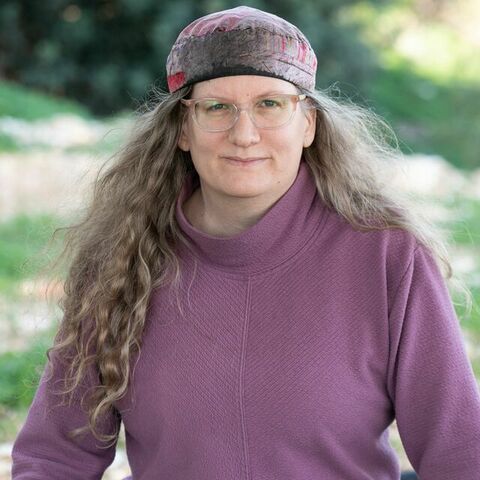
I am Rabbi Hasi Oriel Steinbauer,
The founder and director of the Institute for holiness,
Kehilat Musar.
This is our weekly free offering to the community to welcome all of us to take refuge together in our practice and self care.
And as I said before,
I'm delighted to have you here.
So first to honor.
Today is a fast day on the Jewish calendar.
It was supposed to fall on the 17th of Tammuz which was yesterday on Shabbat,
But we don't enter on fast on Shabbat.
So it's being observed today so for those of you who are fasting.
I just want to honor that to take care of yourself.
And we understand what you're going through for those of you who are to hold you in our hearts and spaces and for those of you who aren't.
You can see this as a space in which we're holding community.
It is an honor basically of the walls being breached by the Romans before the fall of the second temple.
And so I just want to acknowledge that today so we are on the 18th of Tammuz or on Sunday.
July 17 here at our weekly sitting at 1230 pm Eastern Standard Time or here in Israel at 730 pm.
And we always begin with our kavanot our intentions for today's practice.
So I'm going to go ahead and share screen with you.
And for those of you who cannot actually see or are here on visual.
I mean,
On audio I will be reading it out loud so that you can hear our intentions for today's practice which is the same every week.
So before doing acts of caring for the self which we see this act right now is caring for the self.
This we say out loud to ourselves,
This is something I'm doing to strengthen my own soul,
In order to be a benefit to others of the future.
And then we also acknowledge that we're doing this before this act for others because we're also straining ourselves to be a benefit to others we say this is something I'm doing to strengthen my relationship to others,
So I can be a better conduit of God's good the divine's good in order to others so when they need me.
Okay,
We want to be a conduit of what we see as divine goodness.
And finally,
The toy before doing acts to strengthen our relationship with the divine however we define the divine.
This is something I'm doing to strengthen my relationship with the Creator,
So that I can be a better conduit of God's good to others and even myself when they need me and when I need to care for myself.
So,
Those are our intentions may we merit that they come through us and come for better care for others after this session maybe bring less harm and suffering into the world.
So we will begin how I always do,
Which is with a short talk on what we can learn from a moose our mindfulness perspective of this week's partial another difficult partial another difficult tour portion in class basically comes to us as a priest he's in the priestly family.
He is someone who,
When God last week,
Commanded that Moshe and all of his living em all his levy officers that they should actually go ahead and murder those who participated in the idolatry behavior with the more bites and the media nights and they were basically commanded to go ahead and start committing murder and pin the cause is the first to pick up.
So a lot of people in think that pimp house,
It was very zealous and took matters into his own hands,
But if you pay attention,
Very close to the text last week at the end.
It's God who actually commands them to go ahead and do such an act,
But he is the first to go ahead with weapon in hand and head to go ahead and do this.
So what is the scenario.
There is an Israelite one of our ancestors who goes ahead with a mobile by woman and actual princess of their high priest,
And they enter a tent in order to engage in intercourse,
He enters the 10 and actually murders both of them.
So it's a horrific act for a lot of us to witness and watch.
It's a where we fear the act of vigilante justice almost feeling like,
But I want to temper it by saying actually this was commanded,
And there's probably even more violence after him not that that makes us feel better,
But that we can realize that pin has is not someone who goes around murdering people he did this this one time,
Again,
It's not what I'm going to focus on what I'm going to focus on actually,
I want to give you this background that we're witnessing this violence again this cycle of violence,
Okay and this like neither the soul trait of the result of zeal that it's coming out.
After all this 40 years in the desert you're now having a new generation,
Who is attempting to follow what is commanded of them with zeal and even murder,
And he's awarded with what's called a breach alone.
He's given a covenant with peace that he actually won't be harmed by the media nights who will actually come for revenge killing later on to the Israelites another cycle of violence,
And he will therefore have like kind of established dynasty in the cohen name,
Similar to how the David's line was kind of promised a dynasty.
And he will also agree to covenant.
So,
This is the context of this partial but there's something else that's underneath it that's amazing going on.
Okay,
So the first is you might have noticed there are these wonderful by not slow slow.
The daughters of slow thought he was a man who passed away in the desert they say for his own sin,
I think that terminology if we look at ancient Near Eastern studies is basically kind of assume that we all die of our own sense sooner or later,
It's almost like we're in that karma,
And that none of us is free from sin,
But that he wasn't involved in the whole rebellion with korach and the rest of the people who rebelled with korach.
So they approach Moshe,
Okay,
First of all it's five daughters five women who are not married yet.
And what's your tradition back then to marry off the daughters to somebody in the family or the clan or the tribe,
And they approach Moshe,
And they say that their concern is that their concern is actually not that they personally get an inheritance if you were very close attention to their language,
They rather are affirming that they want their father's name that it won't be lost simply because he,
He hasn't had a son that he want to make sure that the father's name and inheritance gets passed on.
And so,
How will it get passed on,
They will be like a temporary transfer for almost their own body,
And they will eventually marry is someone in their client time and that will pass to that man or their own son that they reproduce.
Okay,
So it's feminist but not feminism in the sense that we want them to get their own inheritance for themselves as a daughter,
The full rights that a son does.
And what I noticed in this text Okay,
If we want to apply moose or mindfulness is how they approach.
So first they approach.
They do so,
And not in,
Not in the way that like a core rock and his band do they don't come and start yelling at a her own motion and they don't understand that they're bad leaders and they're wrong.
They just approach,
And they say it say it very fair minded they're the right people to speak it.
They're doing it at the right time.
It's kind,
It's gentle it's honest.
It's a motion I might not be ready to hear it because he actually doesn't know how to rule in this case he turns to God,
But this is all the makings for what we call wise speech,
And they approach and basically motion that they process God and God says they're right,
We need to come up with a mechanism in which this there's not if a father doesn't have any sons that it'll transfer temporarily to the daughters until they finally marry or have male children.
So that's the first example in our story.
We also have this amazing woman who has mentioned,
And I hope you noticed it if you study this our shock,
Which by the way we are in chapter 25 Pacific 10 through chapter 30 Pacific one,
The verse one okay and we are in numbers in the Torah portion called pin has.
So they're taking a census of the people,
Why another census and they have one at the beginning.
Well,
Let me put this slightly.
Lots of people have been murdered or killed or have passed away.
And they need a new census,
They need a new census knowing who's going to split up what land when they actually get into the land of Canaan.
They need to know who's still alive.
There's lots of reasons,
But in this census which is always labeled by men and passing down through men how many men are listed in the tribes.
And that's a woman mentioned.
And so if you look at chapter 26 she is mentioned,
And verse 46.
It says right here and the name of ashes daughter was some rough.
I'm looking here.
And then Sarah,
Actually earlier in Genesis share names appear her name appears as one of the people one of the 70 souls,
Going down from the famine of kind of on all the way down to Egypt so you may wonder,
How could she have survived,
Theoretically 400 something years of the institution of slavery and ended up 40 years later in the desert so of course mid rash and the Jewish tradition has something to say about that.
So in my opinion,
It's probably another woman that's a girl that's named after a woman who is passed away or not just like we do to men all the time we give them an offer harm it's like you have all the names and even have relatives who've passed away in the Ashkenazic tradition Sephardic you often name even after living relatives.
And then Sarah,
If that was her name when she went down to Egypt.
She is of significance okay enough to be mentioned,
And that name has been passed down but that's my opinion it's not what the rabbis go with okay if you want to look at rabbinic tradition that we're going to look at.
So,
Of course,
Tradition says,
You know,
She's the only female in this geological list,
And that her name probably appears here because her father died without a male son.
So she's in the same category as the daughters of so flow had okay that's explained so according to JPS which is the Jewish publication Society of lovely.
Dr.
Milgrams work in numbers.
This is his reasoning of why it's here.
The mid rush of course sees it as that she's very special she's wise.
She's gentle she knows how to not only what words to bring to someone.
She knows how to bring them okay and both are very important and why speech,
Not only what we say but how we deliver it.
So this is where we're practicing our moose or mindfulness so the mid rush one of the famous ones is that the brothers returned to Egypt,
They know Joseph is dead.
This is earlier obviously,
And they they run to her and they say,
You need to deliver this message to our Abba our father Israel,
Yeah cool and do it while you're playing the beautiful keynote which can be either a violin or a harp,
And you know address in such a way that he and so she sits down and she's playing beautifully,
And she sings this first three times basically that her uncle Joseph is still alive,
And that he is ruling all over Egypt.
And he is still alive.
And so,
Basically it kind of goes into your code into Israel and he hears it he's able to hear it,
He doesn't have like a massive heart attack if someone kind of ran into his tent and it's like,
Joseph still alive right.
Instead she delivers it in this kind of gentle way,
Supposedly like rule Hashem the the spirit of God even comes in him and he says,
I've heard you,
And he says,
And you will be rewarded essentially that you will never die.
Sarah Sarah,
Depending on what you call her.
So in this picture as she gets awarded with God and yahkov that she will never die and this is supposedly this the same self that we have here in this census and numbers,
So you can do what you want with it but what I take from this is again another example,
And I don't think it's by accident that it's women who are delivering wise speech.
Okay,
If we have anything we're witnessing,
And a lot of this cycle of violence and even back with the brothers with Joseph,
It's the same ways and the men have a hard time with why speech,
They have a hard time choosing the words and also delivering it.
And I don't mean that an essentialist sexist way as if men cannot do this.
And they can deliver it well even think of Moshe's father in law,
Who is a non Jew in the stories right,
He comes and he gives him wonderful advice at the right time,
What is needed.
And this is Yitro who I'm speaking of.
So,
Here in this case we have these women we have the daughters as so low fog.
And then we have the Sarah Sarah her example of how she's here and why she's here.
And I think that's really significant and beautiful for us to consider in our own practice.
How are we today,
Going to take these lessons and learn from people that we need to be really precise about what we say,
I think if any of these tour portions that are teaching us lately is how precise,
We have to be with our speech but also how it's delivered,
Because we've seen what happens when the opposite happens.
It's this terrible cycle of violence.
And the final thing I will share briefly is Moshe Rabbeinu our beloved ancestor at the end Moses who carries us through the desert our ancestors.
He comes at the end he's going up to the mountain right this isn't you're not going to die yet but he sent up a question to kind of look at a Israel,
The land of milk and honey that has been promised to the people.
And he uses very significant language Okay,
Now I'm in chapter 27 if you're following along,
And he.
We're up on this mountain,
And we're starting like in the area of verse 1516.
And first of all,
This is a,
This is actually a wise speech moment for Moshe,
This is someone who remember he was very concerned about having difficult speech,
Not being able to speak at all a heavy time.
So here he is.
And what is his concern.
It's beautiful.
And here,
This is the key moments of Moshe where where we really do see him in his balance me dot and beauty and strength okay where he really carries the people in his heart.
Okay,
Even though there have been other times where we can argue.
He was quite reactionary and violence okay we can carry both of these and not have to deny either one.
So here's the example,
He says to Moshe,
I mean to God,
Excuse me,
He says,
I please appoint someone.
Please appoint someone after me,
Who will carry this people and carry this people into the land.
That's incredible.
Okay,
When our own went up to die around didn't ask God to appoint someone of course he had like this lineage line that it was just assume his son would come up next,
But most his concern is about the people in this moment,
And that they have somebody who will carry them.
Okay,
So that's significant.
The other thing that's very sad actually it hits my heart.
I wonder if it will hit yours,
Is that God actually reminds him of his sin,
Which I think is sad and not wise speech necessarily because you're not supposed to do that to people they can hear it once they don't need to hear it more than that.
But he actually,
He when God says to him.
He says and pursuit 14 verse 14 that when the committee,
The community was contentious when the beneath Israel were basically rebellion,
They weren't really rebelling they were just having a hard time and wanted water.
He says you disobeyed my command to hold up my sanctity in their sites by means of water so God reminds him of this before he tells him to look out and look at the land.
And for the first time if you look at Moshe addresses him.
This is gone in the third person.
This is the first time motion does this.
This is significant.
So normally motion speaks to God one on one,
A first person.
It's really incredible actually.
And instead here in the correct so you see this kind of this this thing descending like God first motion is really close to him,
Speaking first person,
And then the motion moves after the core of in the actual core of the motion moves to second person.
And now here third person.
Basically he's just rebuked by God again,
Who remind him of his sin and motion no longer feels intimate safe close to Hashem,
In the same way to God.
And he never speaks to God again directly but only through mediation,
So he adopts the third person characteristic that addresses basically kind of what's a GPS teaches is like the sinful petitioner who's fallen out of grace that's how someone who's approaching God usually approaches God in the third person in that position in the tunnel in the Hebrew Bible.
And so,
For me,
That's a painful sad moment,
It's a moment where,
Obviously we're recognizing and all the violence and all the consequences of behavior.
It's coming through.
And we hold that and we hold it in our practice.
So let's move us into a guided mindfulness meditation practice now.
So for you,
You need to come to whatever posture for you is dignified and upright it can be an internal uprights not stiff,
But awaken alert for some of you that may mean lying down.
I recommend with eyes open so you don't fall asleep for others you can be standing or a walking meditation.
If you're seated like I am,
Then just come up to an upright position.
I would like you to ground your feet with Mother Earth holding you so that you feel held in case you have anything that comes up you know that you are here in your physical space your sacred space to do this self care and practice.
And if you feel safe and able and you want to close out external stimulation and you have vision,
Then I recommend you close your eyes or lower your gaze.
And we will begin with three deep cleansing breaths inhalation welcoming presence exhalation beginning to arrive inhalation inviting ease exhalation coming to stillness inhalation welcoming whatever is here for you right here and right now and exhalation coming to a comfortable dignified position,
Allowing your hands to rest in your lap,
Or you may want to put them on your heart.
It's very comfortable for you to be here.
Present awake and alert.
And you'll begin with noticing what is here for you right here right now.
Are there any strong emotions that are calling for your love and attention.
No need to judge them.
No need to identify with them,
Or push them away.
You can even do a small mental noting sadness,
Sadness,
Boredom,
Boredom,
Joy,
Joy,
Whatever is here for you.
And for some of us it might be strong sensations in the body maybe even unpleasant or pleasant or neutral.
Just recognizing what is here,
Sending the breath to whatever sensation is calling for our loving attention,
Allowing yourself to arrive.
More so than before.
And finally for some of us,
It'll be thoughts,
Doing what they do.
Always here always changing,
Carrying you off maybe you've been thinking about something in the past,
Or planning for something in the future,
Simply recognizing that you were carried away for a brief moment.
Bringing yourself back to your anchor,
Whether it be your breath,
Or the sounds around you,
Or my voice.
For those of you new to meditation,
From time to time I will go silent.
And it's your opportunity to just focus on what carries you here what we call the anchor will allow you to be here in the present moment.
With curiosity,
With kindness.
With what we call a beginner's mind.
Now I invite you to include mindfulness of thoughts in your general mindfulness meditation.
Just as you follow the sensations of your breathing,
Or the sensations in your body.
There will be a stream of thoughts in the background.
Sometimes the stream of thoughts will be in response or reaction to my words of Torah that I share with you.
Simply let them be.
Let them rise and fall like waves of the ocean around the breath.
Sometimes we can even count the number of thoughts that come to us as we begin to learn how many thoughts come and go.
Whether after three breaths,
Or six breaths,
Or 10 breaths,
A strong thought will arise and carry the attention away.
As soon as you notice this thought,
Name it gently,
Just according to its predominant quality.
You can use simple notes like planning,
Remembering,
Judging,
Worrying,
Fearful thought,
Imagining,
Happy thought,
Interesting thought,
Pleasant thought,
Creative thought,
Painful thought,
Unpleasant thought,
Neutral,
And so forth.
Simply naming and acknowledging the thought is supportive of the witnessing quality of mindful loving awareness.
Once you have noted a thought gently for some time,
You will notice that it dissolves like a cloud under sunlight.
Thoughts are ephemeral.
They have no substance except what we invest in them.
Notice how it feels the very moment you shift from being absorbed or lost in thought to simply name it without being swept into it.
After your current thought has diminished,
Simply return to mindfulness of breath and body until another strong thought,
Emotion,
Or sound pulls your attention away.
Notice which type of thoughts have an effect on your body.
What thoughts trigger you most?
What are their bodily effect?
For example,
When I think back to my reaction to Moshe and the text and his change of use of verb tense from first to second to third person,
That is the stimuli.
That is what has happened.
That is the experience.
And then there was my reaction,
My response,
Which actually when you have stimuli and then you have reactivity,
You actually increase your suffering.
So I had to be mindful of that.
I didn't want to add to the story to what the actual experience was.
Some thoughts automatically bring strong emotions and those emotions actually can be found in the body.
You can take this time to witness the interplay between thoughts and emotion.
We will spend this next few minutes in silence where you can step out of the stories of thoughts.
See any common patterns and rest in the field of mindful loving awareness of whatever here is here for you right here and right now.
I will bring you out of the meditation when it is time.
Thank you.
We will finish in about one minute.
We will finish in about one more minute.
We will finish in about one minute.
We will finish in about one minute.
We will finish in about one minute.
When you are ready,
You can gently and slowly open your eyes back into this shared sacred Zoom and live streaming space.
Thank you so much for your practice and being here today.
We will be able to hear your experience,
The practice,
Anything else.
If you feel that you need to have the screen off or even the name removed,
Please do so.
Otherwise,
We are all here.
If you have any questions,
Please feel free to ask them.
Anything else you feel is important for us to know,
You can go off mute and share if you like.
Thank you.
We have something in the chat box.
Thank you.
If anything else comes up,
Feel free to jump in.
We will be able to hear your thoughts and thoughts.
We will be able to access this.
We do ask that you do if you are able.
We also accept sponsorships.
We will announce that at the sitting and basically offer that our merit be in their memory or honor.
We meet every Sunday,
God willing,
At 1230 Eastern Standard Time.
All are welcome,
Jew,
Non-Jew,
Anyone who knows Hebrew or not,
To engage in really looking at what is offered in the weekly Torah portion of the Hebrew Bible and applying our practice of Muster mindfulness.
I'm grateful to have all of you.
Thank you so much for being here and your practice.
I look forward to seeing you next Sunday.
Take care.
Bye-bye for now.