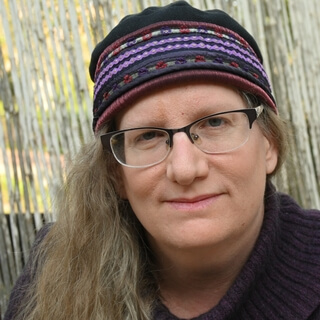
Shalom and welcome.
Welcome to awakening Torah,
Musar,
Mindfulness this week being awakening of Pekude,
The Torah portion from the Hebrew Bible that we studied yesterday on Shabbat on the Sabbath.
Hopefully you've had a chance to delve in and look at it.
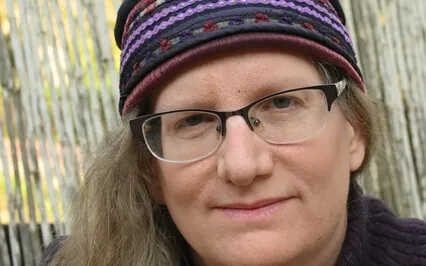
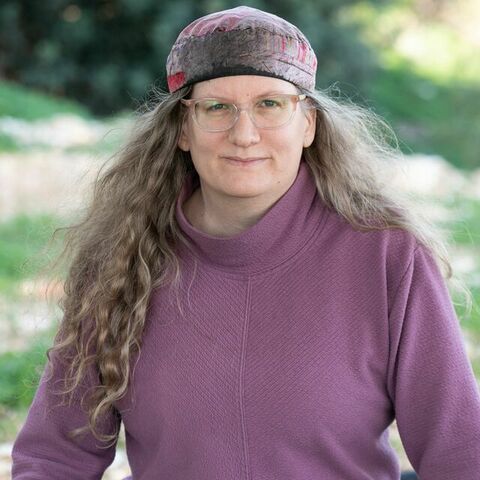
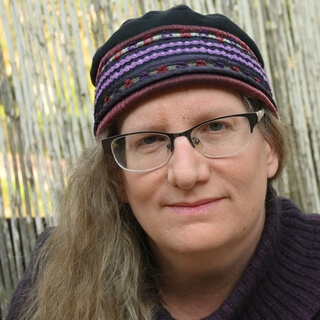
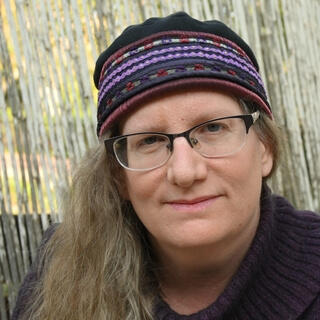
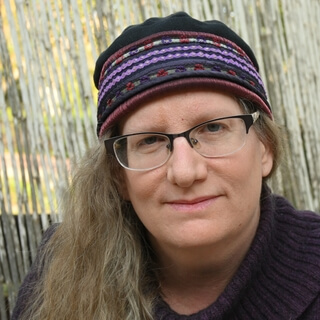
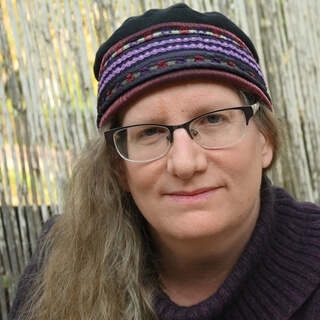
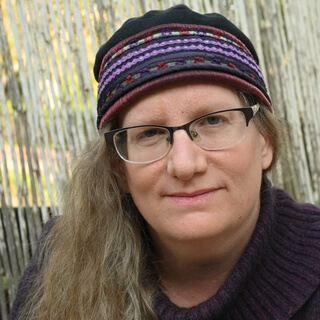
I am Rabbi Hasya Uriel Steinbauer,
The founder and director of Muhammachon L'Kadusha Kihilat Musar,
The Institute for Holiness Kihilat Musar.
And I'm delighted that you've joined us.
We're here every Sunday,
Bezrat HaShem,
At 3 p.
M.
Eastern Standard Time,
Where we delve in looking at the Torah portion from the lens of Musar mindfulness,
Which is our specialty,
Our passion,
Our love,
Our purpose in life.
So we live stream every week,
Facebook,
Our YouTube channel,
LinkedIn and Twitter.
And of course,
You're welcome to join us on the Zoom link,
Which you will find at our website at www.
Kihilatmusar.
Com.
That information will be in the chat later as needed.
So welcome.
We always begin with our kavanot,
Our intention for this week's practice.
So I'm going to go ahead and bring that up as a share screen.
For those of you joining us by audio,
You will hear me reading to you.
So we always do the first and the third intentions of this in front of you.
So the first says,
Before doing acts of caring for the self,
Which is what we see here at the Institute for Holiness,
What is it that we're doing right now in this half hour,
45 minutes together,
A real radical act of self-care so that you can be of benefit to others.
So before doing acts of caring for the self,
We say,
This is something I am doing to strengthen my own soul in order to be of benefit to others in the future.
And then our final kavanah,
Our final intention is that we are seeking this practice together,
This learning,
This talk and seated meditation to strengthen our relationship with the divine.
So we say this together.
This is something I am doing to strengthen my relationship with the Creator so that I can be a better conduit of God's good to others when they need me.
So there are our intentions,
Our kavanah for today's session.
So we are blessed to have arrived at the last Torah portion,
The parashah of the book of Exodus,
Of Shemot,
Which we always say at the end,
Hazak,
Hazak,
Nith Hazeek,
May strengthen,
Strengthen,
May we be strengthened to continue our learning,
To continue to learn from our ancestors and to take this as a wonderful practice,
As a gift to us.
So the last parasha is the one we're delving into,
Which is a pekudeh.
And it's a match with the previous two Shabbatot ago,
Which was Vayakhel,
They're usually a double portion,
But not this week because we actually are in the leap year in the Jewish calendar,
Which is a lunar calendar.
And we have a second month of Adar.
So because of that,
We don't have to have this double portion.
So if you've been following along,
You'll know that our ancestors are in the midst of building a sanctuary,
A tabernacle,
A mishkan in Hebrew,
With their hands,
With their giving of the nadiv lev,
The generous heart.
They are building with their wisdom when they have this chokmah lev also in each segment of the population is giving and doing in their own ways.
It's quite profound,
Because you have this whole concerted effort with great intention to build something that will be the benefit to others,
It'll benefit the whole community,
It'll be building this holiness and space.
And in a sense,
Through this work through this using of hands and head and heart together with great intention,
Mindfulness and directed in the right path,
It allows the presence of God of Hashem to dwell.
It's as if it's Hashem,
The presence of Hashem,
What we might call kavod Hashem,
Right kavod Adonai is already there.
It's making the invisible visible.
So we are told repeatedly over and over again in this parasha that the people did exactly as God told Moshe who God commanded them,
Right God commanded Moshe to command the people,
And they fulfilled it exactly as God commanded it is repeated over and over again here in chapter 39.
We have in a passuk verse 32 and 42 and 43.
And it even goes on to then say Moshe fulfilled the in the four in the chapter 40.
We have it in passuk verse 16,
19,
21,
23,
25,
27,
29,
32.
Why?
Why all this repetition?
Why do we need to be told over and over again that they fulfilled it just as God commanded?
So you may recall what happened during kitzi sa where the people had great intentions to connect with Moshe to connect with God,
Build a golden calf,
Build something that was not on the path that God commanded what God wanted.
So the impact was not at all what either Moshe or God wanted.
It did not go well for the people.
I guess we may say it didn't go well for G-d or G-d either.
So all sudden you have these people,
Our beloved ancestors who are fulfilling what they've been commanded to do exactly like bivyuk,
Right down to each little stitch.
And we are being told that because in that acting out,
In that performance of what G-d actually wants from them and to fulfill that suddenly you are witnessing the potential of that realized.
It's now being made manifest.
So it's like we've been given a window into the extremes of the kitzi sa of what can happen when people want to connect but they don't follow what they've been commanded.
And then we have this other extreme of tikude where they follow exactly and G-d fills the top vernacular at the end.
So of course life is more complicated than that,
Right?
Life is messy.
We are messy.
So we're going to be somewhere in between this,
Not necessarily building golden calves,
But not necessarily also following completely exactly what G-d commands and having G-d's presence be so obvious,
Made so visible.
So we'll want to hold this.
We'll want to hold where we are.
I will finally finish with saying that when Moshe starts actually putting everything together,
Bringing the whole sanctuary,
The tabernacle,
The mishkan together,
That he begins with that which is inside,
That which is most holy and sacred,
And then moves out from there.
And so too with us and our mussar mindfulness practice,
We have to begin with self-care.
We have to begin with the daily cheshbon hanefesh,
That accounting of our soul,
Of looking at ourselves,
How we behave,
How we speak,
How we're occupying our thoughts and what we're doing with them.
We look at that on a daily basis to build the best versions of ourselves so that we are being closest to holiness on this path to holiness,
That which is most sacred,
Building within.
And then we move out into these concentric circles of obligation,
How we take care of those most close and dear to us,
And then our neighbors,
And then our communities,
And then our towns,
And then our states,
And then our countries,
And then the world.
So we want to keep this in mind because the mishkan and how Moshe is commanded to bring it all together and build it is really,
Again,
In God's wisdom,
A model for us of how we're to live on a daily basis and what we're to be practicing.
So with that,
The presence of the Lord known as kavod Adonai,
Coming from the word kavel,
Kavod Adonai,
The last time we saw this being used was describing Poro's heart.
The Pharaoh's heart became kaved,
Like kaved lev.
He became stubborn because the heart was heavy.
And so all of a sudden now we're seeing a beautiful flip side of this is that the kavod Adonai is what fills malei et the mishkan,
Filling the tabernacle.
And so it's like the weight of God is there,
Is presence.
It's been made visible.
But that was already there.
That's what's so beautiful about this.
It's that when everyone contributed and contributed with this nadiv lev,
This beautiful,
Generous heart,
It really was through their hands making manifest the presence of God.
It was between them and each other,
Our beautiful ancestors.
So we see this wonderful teshuvah,
This wonderful returning to the upright path,
Returning to being in relationship that is consensual and one that is a reflection of what both want instead of one projecting onto the other or one acting out of fear.
And so I will just close with sharing that at the end Moshe himself could not enter.
Hulu yahol l'hikaness,
Or lavo essentially,
Lo ohel hamued.
He could not enter the tent of meeting.
And what's behind that verse is that he tried.
So even Moshe is learning the limits of his relationship,
What's appropriate for him,
Where he can go and where he cannot.
And I really think that what's behind it is,
It reflects that that work is supposed to be the people's and not his,
Meaning had he been allowed to enter when the kavodah donai entered,
The people might have mistaken him for God,
Or thought that they were one.
They might have mistaken that same type of privilege and power that they kind of handed over to Moshe,
Which led them to the golden calf in the first place.
So it was so imperative that Moshe could not enter.
So we keep this in mind and even in our own lives,
Where can we not enter?
Where is it enough?
Where is that kavodah?
Where are we taking care of ourselves so that we are building the sanctuary within that which is sacred and holy before we move out?
So with that,
We're going to move into our seated meditation practice.
I invite you,
As I always do,
That if you have any chronic pain,
Any real deep discomfort today with sitting,
Please stand for the practice or move into a walking meditation or even lie down,
But keep the eyes open so you remain awake and alert during our practice together.
For those of us who are going to be seated,
Go ahead and adjust yourself to find yourself in a comfortable upright position.
Not West Point stiff,
As my teacher,
Jon Kabat-Zinn,
Likes to say,
But rather dignified because you're created in the image of God,
The image and likeness,
Where you can feel that you are awake and alert,
Allow the sit bones to really settle and be carried by your seat.
Plant your feet on the ground.
Unless you're on a zafu,
A seated meditation cushion,
Let the ground hold your knees or wherever you're touching and being held by Mother Earth.
For those of us in a chair,
Really ground the feet.
Know that you are here.
If you're triggered in any way during the meditation,
To be sure to open your eyes,
Look around the room,
Make sure that you feel that you can come back to the present moment and to be here,
That you need not continue with the practice as I guide.
So for those of you new to meditation,
Generally,
You want what we're going to do in this mindfulness meditation practice is to use your breath or sound,
Perhaps even my voice,
Or perhaps even sensations in the body,
Something as your anchor.
Usually it's the breath,
But for some people,
The breath is a difficult thing to become the anchor,
The thing that they hold their attention to.
So you want to either use the breath or the sounds around you,
Including my voice,
Is that which you'll keep bringing your attention back to.
Why do I say back to?
Because your thoughts will take you off.
You will go off elsewhere.
That's natural.
We all have it.
We all do it.
The practice is not that we will have no thoughts.
The practice is that once we become awake to that we're gone off with the thoughts or the sensations with the body or the emotions that we're experiencing,
That we will wake up and bring it back to the anchor.
That is the practice.
It sounds simple.
It is not.
We don't beat ourselves up if we do go off.
Instead,
We have compassion.
We smile to ourselves because we're doing this with curiosity and joy,
With a beginner's mind.
This is all a part of being refuge and community that we do this together.
On the behalf of others,
May our practice merit less suffering in the world.
With this,
We're going to begin.
I want you to close your eyes if you feel safe and comfortable.
We're going to take three deep cleansing breaths.
Notice with every deep inhalation,
There is a rising of the body.
And with the exhalation,
The shoulders begin to lower and relax.
Allow yourself to begin to settle and arrive.
No need to control the breath,
No need to make it extend for a certain length of time.
With a quiet attention,
We will now scan the body and the mind.
Using whatever fear or vulnerability you might be feeling.
We have all been made hyper aware of the wars raging throughout the world,
But in particular,
One between Russia and Ukraine.
And this has a sense of causing fear and vulnerability in all of us.
So as we move through our head and our neck and our shoulders to our shoulder blades,
Down our arms,
Into the chest,
Into the heart,
Into the belly,
Notice if that is what is real for you right here right now,
A sense of fear or vulnerability.
Connect with your longing to feel safe,
Protected and loved.
Maybe you feel it in your sit bones,
Your lower back,
In your thighs,
Even down to the arches of the feet,
Remember a place in the world or in your imagination where you feel deeply at home,
Where you belong.
It might be a spot in nature or in your bedroom,
Maybe in a coffee shop or a synagogue,
Cathedral,
By a lake.
Take some moments to evoke it with all your senses.
Imagine the forms and colors,
The smells and the sounds of this healing place.
Can you feel yourself there being held by the peaceful,
Comforting and beautiful energy around you?
Now bring to mind the face of anyone who helps you to feel loved and safe.
It might be a grandparent or a beloved teacher,
A pet,
A spouse or a dear friend.
It might be a spiritual figure.
It might be God,
Moshe,
Miriam,
The Buddha,
The Bodhisattva.
Whoever appears,
Sense that they perceive your vulnerability,
Your longing for safe refuge.
Look into their eyes and see them sending you a message of love,
I am here with you now.
I care about you.
Feel their physical presence.
Let their energy surround you and hold you in the embrace of safety.
Give yourself some moments now to take in the love and ease that is offered.
This loving kindness meditation known as metta and palli and cheses.
The word metta,
In Hebrew,
Awakens us to our connectedness with all life.
Today we begin with the care of our own being,
Just like the Mishkan being built from the inside out.
This simple practice is direct and powerful to awaken us from the trance of unworthiness,
Of fear,
Of worry.
By regarding ourselves with kindness,
We begin to dissolve the identity of an isolated and deficient self.
We are not that.
We are the Mishkan within,
We are created in the image of God.
This then creates the grounds for including others with our unconditional loving heart.
Breathing in warmth and energy,
Breathing out the sense that you are letting go into openness.
Silently or in a whisper,
We will begin offering prayers of loving kindness.
We begin with,
May I be filled with loving kindness.
May I be held in loving kindness.
May I feel safe.
May I be at ease.
May I feel protected from inner and outer harm.
May I accept myself just as I am.
May I touch deep natural peace.
May I know the joy of being alive.
May I find true refuge within my own being.
May my heart and mind awaken.
May I be free.
With each repetition of the phrases,
Open to whatever images and feelings arise.
Approach this with curiosity as an experiment,
Sensing the words and images that best serve to soften and open your heart,
To turn your heart from kavod lev,
That of the pharaoh in Egypt,
To kavod adonai,
That presence,
That honoring of our own well-being and heart.
Take as long as you like offering yourself these phrases and reflecting on them.
At the end of our meditation,
We will sit quietly for a few moments,
Noticing the feelings in the body and heart.
We will see if there's a new sense of space and tenderness,
Or more feeling at home in our own being.
If you become agitated or upset,
And these prayers for loving kindness can seem discordant or artificial.
If you are in a grip of fear or shame or confusion,
This may even bring in the feeling of highlighting how undeserving or bad we may feel about ourselves.
And without judgment,
With self-compassion,
We say to ourselves,
May this too be held in loving kindness.
And simply begin again,
Attempt to resume your meditation,
Accepting whatever thoughts or feelings arise.
Thank you.
Practice daily.
We can begin to fill our inner sanctuary,
Our inner Mishkan,
With holiness,
That which is sacred,
Strengthens us to be able to move out to care for others.
So now we will allow our awareness to open out in all directions,
In front of you,
To either side,
Behind you,
Below you,
And above you.
Just as we shake the lulav and etrog,
The four species during the festival of booths of sukkot in the Jewish calendar,
And we move them in all directions,
So is our awareness.
In that vast space,
Sense that our loving presence is holding all,
All beings.
The people in Africa,
The people in Latin America,
The people in Asia and Middle East who are also having their wars.
We sense our loving presence and holding the beings in the Ukraine and Russia,
Anywhere where anyone is suffering.
Our loving presence holds the wild creatures that fly and swim and run across the fields.
The cats and the dogs and other pets that live in our homes.
The life forms that are threatened with extinction.
The trees and the grasses and the flowers,
Children everywhere.
Humans living in great poverty.
Those who are dying and those who are newly born.
Imagine that our Mishkan,
Our kavod can hold the earth in our lap,
In our bosom,
And include all life everywhere in our boundless heart.
Where of the goodness inherit,
Of the godliness inherit in all living beings,
Again we offer our prayers.
May all beings be filled with loving kindness.
May all beings know great and natural peace.
May there be peace on earth and peace everywhere.
May all beings awaken.
May all be free.
From Tehillim Psalm,
Kofgemol 23.
Gam ki elekh begeh salmalvit.
Although I will walk in the shadow of the valley of death,
Lo i'rara,
I will not fear evil.
I will not fear harm.
Ki ata imadi,
Because you are with me.
Feel God,
Hashem's presence inside your Mishkan inside.
Strengthening you so that you may be able to go out after your practice and strengthen others.
Gently and slowly open your eyes when you are ready to lead us back into this sacred space that zoom allows to make manifest that we have created holiness and space and time.
Bow to God,
Bow to the wisdom that we have received from our ancestors,
The Torah and the wisdom of the Buddha.
Bow to your inner practice,
The strengthening of your Mishkan,
Your soul,
Taking refuge together in community at the Institute for Holiness at our lovely center together.
I'm deeply honored that you have chosen to spend your about 40,
45 minutes on this Sunday together.
Thank you.
May you continue this practice during the week.
It is a beautiful practice to continue and do.
We accept your donations known as truma and Hebrew or dana and pali to support this offering from the Institute on Sundays.
You can find all information you need at the donation page or the support page of the website.
And of course,
Sponsorships we accept every week in memory of someone or in honor of someone.
And so with this week,
We honor all the brave people who are committing themselves to stopping the wars that are raging and helping the refugees,
For example,
Leave Ukraine and enter a place of more safety.
So for here in Israel,
Where the Institute for Holiness is located,
We have been accepting refugees and they need support.
And so this sponsorship this week is in honor of all those who do support these people to carry them out of the crisis,
Out of the acute moment.
So it doesn't turn into chronic trauma that we may alleviate suffering.
Can you hear us on me?
It'd be so may it be God's will and our own.
Thank you again for your practice.
I look forward to seeing you next Sunday.
This is Rata Shem God willing,
Sending you strength and courage.
Thank you again.