Allow yourselves to settle and arrive.
Welcome to Awakening Torah Musar Mindfulness.
This week our Parsha being Miketz,
Which is basically Pharaoh in English,
Paro,
Awakening from his dream.
And what does it mean to really awaken?
So we will jump into that in a minute.
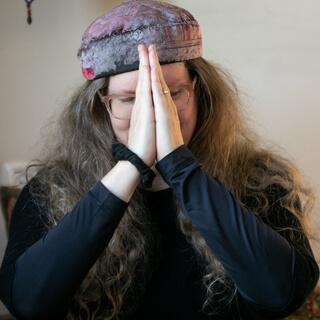
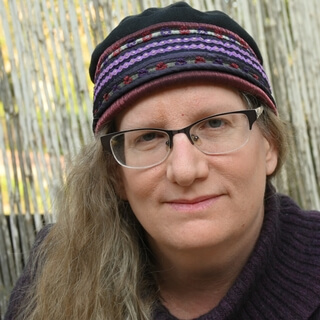
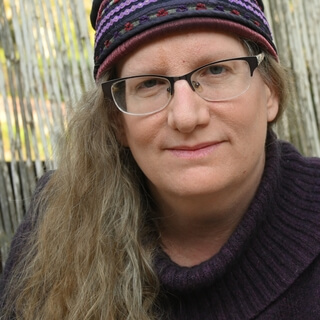
I am Rabbi Chassio Uriel Steinbauer,
The founder and director of the Institute for Holiness Kehillat Musar.
I'm delighted that you are here on Zoom and also live streaming on our YouTube channel or on Facebook or joining us later on video or on our podcast.
So delighted for you to be here.
So as I announce every week,
This was covering the Parsha,
The weekly Torah portion yesterday on Shabbat,
Which was a special Shabbat.
It was one where we brought out three Torahs,
One for the new moon of Tevid,
The Hebrew month of Tevid,
One for Chanukah,
And then when we did Hallel,
The beautiful songs,
And because of Shabbat.
Very special.
And so on that date,
Which was the Lamed,
The 30th of Kislev,
And Tafshin Bet Gimel in 5783,
The Hebrew year,
Which was yesterday,
December 24th,
2022.
So today we have the privilege to jump in the next day,
Having either learned the Torah portion the week before or listened to it in our communities or took time to study and read it.
We get to spend some time really looking at it together from the lens of Musar mindfulness,
Which is our love and delight and specialty here at the Institute for Holiness,
Where we really integrate both the Jewish tradition of Musar and the mindfulness tradition of Theravada Buddhism of really gaining the insight that we can just basically support each other,
Cause less harm and suffering,
Really come to more kindness,
More compassion,
And who we are and how we interact with this master narrative of ours,
This text,
And this long tradition of studying the Torah together.
So as I said,
Our Torah portion is Miketz.
Today is the 25th of December for all of you who are observing the eighth night of Hanukkah tonight.
I wish you happy Hanukkah for those of you observing Christmas,
Merry Christmas.
And for those of you observing any other holiday or festival of light,
May you shine,
Especially since if you look outside at the new moon,
It's a tiny sliver.
So we need the most light possible tonight.
And really may we all shine our inner light towards one another in this practice.
So before we jump in to Miketz,
Which is,
This is awakening Miketz,
Which is so delightful.
I have to tell you,
I think this is our 10th sitting together in the book of Beir Rashid in Genesis.
And we're going to move into our intention,
Our Kavanaugh for the practice,
Which we share together every week.
So let me just pull that up together.
And for those of you who are watching on video,
And have vision,
You will see the shared screen.
For those of us who are listening on audio,
I'm going to read them.
So we basically see this practice together,
This time that we dedicate anywhere between a half hour or 45 minutes as a radical act of self care.
And not just self care for just the self,
It's a that we're strengthening our own soul,
In order to be of benefit to others that were very other oriented in our orientation and in our practice,
Which we see as service to the divine.
So the second one,
We say we're doing this on behalf of others,
For strengthening our relationship to others in this practice here in this Vod Sangha community together,
So that we can be a better conduit of God's good to others when they need us.
That's,
This is what's so important is that we want to bring the more light more good,
Right?
For the benefit of others.
And finally,
We say we see this this time together strengthening our relationship with the divine,
However,
We may define the divine or that relationship.
All are welcome here.
So this is something we're doing to strengthen our relationship with the Creator so that we can be a better conduit of God's good to others,
Including to ourselves,
Which is very important.
So we want to hold that may mean we may we all merit that today,
In our learning and in our practice,
Because as we'll move into a mindfulness meditation practice,
And after some learning,
Okay,
So me kids,
I always give you a brief summary,
Because every Parsha,
As you know,
If you've studied it,
Too many stories,
Too many ideas to just focus on this short amount of time together.
So I just want to give you a brief summary.
Here you have the Egyptian Pharaoh,
Which in Hebrew is parto.
He has two dreams.
He has all his dream interpreters and wise people from his empire kingdom,
However you want to word it from his land,
Come and try to interpret them and is he's not satisfied with any of their interpretations.
So all sudden,
The cup bearer,
If you might recall the cup bearer back in the dungeon in the jail with Yosef,
Our ancestor,
Who is the son of Yaakov,
The great patriarch of Avraham Yitzhak Yaakov.
He meets this cup bearer in prison who has this dream.
And Yosef gives him an interpretation from God about that dream,
And it ends up coming true.
And so the cup bearer suddenly remembers this Hebrew slave,
This young man in the prison and says to Pharaoh,
I remember this Hebrew,
Young Hebrew slave who interpreted my dreams and interpreted correctly.
So immediately,
Pharaoh summons him.
He's cleaned up essentially to look like an Egyptian.
He's shaven.
Everything is,
It begins to appear as such.
And Yosef says that God will interpret the dream.
It's not him.
And he interprets the two dreams that he has as one,
That it will reflect essentially seven years of plenty,
Meaning there will be great crops and people will be fed and there will be enough agricultural supply for the population.
And it'll be followed by seven years of famine.
And that he not only interprets the dreams,
He then goes on to give advice.
So you have to think of who this is,
A former Hebrew slave standing in front of the Pharaoh.
This might be an opportunity for him to be like,
I better,
I better shine.
This is my moment,
My 15 minutes of fame,
Right?
As the famous saying goes,
And he offers some advice here.
He says,
Make sure you appoint someone wise who will store the food during the years of plenty in order to carry and take care of the population in the years of famine.
So Pharaoh is so blown away by this that he says,
Who else has the spirit of God in him and is so wise?
And he decides to appoint him.
Okay.
So the famine begins to spread outside of Egypt,
Moves up into the land of Canaan in the modern day,
The state of Israel.
And as you know,
Yaakov,
Our ancestor,
Is there with his other sons.
And he decides to send down all his sons,
Except for his youngest,
Which has been Yamin,
Who is the full brother to Yosef born from Rachel,
His favorite Yaakov's favorite wife.
You remember those problems,
All that favoritism caused right earlier.
So he's holding on to Benjamin.
He sends the rest of the sons down to Egypt to get food.
And Yosef recognizes them immediately because Yosef now has been appointed essentially as a visor,
A second in command to all of Egypt in order to store this food during the years of plenty so that they can survive the famine.
So now we've entered two years of the famine.
The brothers are coming down and he recognizes them.
They don't recognize him.
And lots of people and commentators will,
Why not?
You know,
All sorts of questions.
We have to remember that he is now 39 years old.
He is completely shaven.
He's wearing Egyptian clothing.
He has an Egyptian name.
He's using a translator between them to pretend he doesn't speak Hebrew or understand it.
So he's speaking Egyptian to the translator.
So I don't think it's that difficult or much of a stretch to assume that if you were lowered far down on the floor and someone's up way up on their mantle and chair,
And they look like an Egyptian and speak like an Egyptian,
That you're not going to project and think it's the brother that you threw into a pit when he was 17.
But maybe,
Who knows,
But that's the situation,
Right?
So basically he recognizes them.
And what I want to say behind that recognition is that he finally sees them,
Finally sees his brothers.
You'll have to recall that when he was 17,
He didn't see his brothers.
He didn't see how uncomfortable they were that he was loved and favored.
He didn't see how much it was really uncomfortable and unpleasant for them when he shared his dreams.
He didn't see how much they began to dislike him and even moved into hatred and jealousy.
There's lots of reasons we could go into that,
But he really just didn't recognize them or see them.
And now he is.
And in that recognition,
He basically accuses them of being spies.
He wants,
This is all like a scheme.
We read it as a scheme that he's aware of what he's doing,
Why he's doing it.
I'm not sure how much that's really there,
But just to understand that this happens in the story that he accuses them of being spies and basically in prisons,
Shimon,
Which that's one of his brothers.
And you have to think of who is Shimon.
So during the whole story of when the brothers threw him in the pit,
It was Reuven,
The eldest,
Who said,
Don't harm the boy,
Don't spill any blood.
He had all the plan of going back into the pit,
Pulling him out.
It was Shimon who actually suggested murdering him.
You have to remember Shimon and Levi.
These are your most violent ancestors.
We all have them in our past.
These are it.
These are the two that went into Shechem in response to their sister,
Dina,
Being raped and they murdered all the boys and the men.
So you got to get in your head who this Shimon is.
Is he going to have an issue murdering his 17 year old brother?
I don't think so.
So this is who we're dealing with.
So he,
He imprisons Shimon and all the others are told to return to Yaakov back up in the land of Canaan.
And he says that you must return with Benjamin with the youngest son,
Or he would,
Shimon will remain here in prison and as a slave,
Basically the rest of his life,
They go back and they're horrified.
They have to tell Yaakov what's going on.
Yaakov at first,
Of course,
Is like,
No way am I sending Benjamin.
I'm not going to lose him too.
He thinks he's lost Yosef.
So at first he says no.
And basically the famine really settles in,
In such a way that Yaakov has to think more than just of himself.
He sees that people are beginning to starve.
He even sees that Benjamin is in need of food.
And so he has a change of heart,
Meaning he begins to also open his eyes and recognizes what's going on.
That's a big thing for Yaakov also.
You'll kind of see Yaakov and Yosef mirroring one another a lot and their behavior and what's going on.
So he sends them down and the brothers return with Benjamin and this is whole,
The story goes on.
Essentially they have this big feast together,
But then there's a silver goblet that's planted in Benjamin's pack,
Kind of to set them up.
And Benjamin is threatened that he will have to stay as a slave essentially when he's caught with the goblet.
What happens here is kind of a miraculous,
I mean,
Lots of things happen in this Parsha that are pretty amazing because every person is stretched.
Every person has to rely on their strengths and then will also get pushed in their weaknesses,
Which we can all kind of identify with in our own practice of Musar mindfulness and our own me-dotes,
Our soul traits.
Where are we weak?
Under such stressful conditions of a famine,
Then you're basically treated by a crazy visor that you don't realize is your brother who's basically accusing you of being spies.
It's a very stressful situation.
One of your siblings is put into jail.
The other one now is being threatened to be kept as a slave.
Yehuda,
Basically the fourth born son stands up.
And if you recall earlier in the Parsha,
Last week or the week before,
Yehuda is someone that we already see transforming,
Who knows how to begin to take responsibility for when he doesn't behave so well.
He stands up and basically says,
You have to take me as slave instead because this boy cannot be separated from his father because you'll essentially end up killing the father if you don't let this boy return.
This is like this whole Parsha here.
It's really intense.
And what I want to focus on today with you,
There's lots that we could touch on,
Obviously,
But there are some key texts that I want to share with you so that we can learn around this.
So the first,
If I can pull it up,
Is there's this theme here of fear and consequence.
And we want to be aware even in our own practice in life,
When we're driven by fear and what ends up happening,
Either what is the habitual behavior or what are the consequences?
Are we aware of it?
Can we practice around it?
So what we have here is that the fear is this famine that's going on.
And Yaakov,
As I said,
Sees the pain and he listens,
Sees that people are starving and he listens,
Which was just kind of new for him.
And this is just one person who does so.
So let's look here.
Let me share with you page five here.
The same thing happens with the brothers.
When the brothers essentially are told that they're going to have to remain there or Shimon is or all of them essentially at first are threatened to remain there as slaves or in prison,
They all immediately begin to share with one another that this is the consequence for their behavior,
That this is God's punishment coming to them for how they treated their brother.
They have this insider talk.
We get to be witnesses to it in the Torah.
Yosef also gets to be a witness to it because they don't know it's Yosef.
And they don't think he speaks Hebrew or understands it.
And basically they are remembering the time that they put him into the pit,
But even more so than that,
They're remembering that he cried out.
And not only did they not do anything about it,
If you'll recall,
They went and they had a meal and ate.
So they thought their cruelty,
Okay,
It was an act of cruelty,
Essentially,
That made them deserve punishment.
So Ramban from Spain 800 years ago says that he thinks they're really focusing on and how cruel their behavior was that he was crying out Yosef from the pit.
This is how we actually get to learn that he was crying out.
You don't hear that in the first scene in the Torah.
So he was pleading and crying out.
And they feel that that cruelty of not recognizing,
Not listening,
Not acting the threefold that needs to happen when we practice compassion.
We need to recognize,
We need to see that someone or something's in need.
We need to listen and figure out what that need is.
And we need to act,
We need to fulfill it.
And so their cruelty was that they felt it was even more cool than selling him into slavery in a sense.
This is what Ramban says,
It's because their own brother begged for help and they did not show mercy or compassion.
And they're coming to their own awareness of like this,
What they had done is coming to them.
And so it's this guilt that is there of seeing the pain and not listening.
And what ends up happening through this whole dialogue and like a mirror is Yaakov begins to see the pain of the famine and listens and acts,
Sends them down,
Even though he's totally fearful that he's going to lose Benjamin.
Yosef also through his setting up that they get tested through different ways to determine if they've changed or not.
He too begins to recognize them and see them and act.
And this is happening,
This growth in mercy,
This growth in Rahamim of compassion is happening simultaneously.
And it's quite amazing that it's happening during the most trying of times.
And so it's a very,
It's happening during a famine.
Not many of us can tap into that toolbox that,
That Dali,
That's a pale of compassion when we're starving.
And we're also fearful and all that comes up with it,
Right?
But that you get to see this change happen in the family as it's happening.
They're beginning to see the other,
Listen to the other,
The acting from that pain and suffering.
So we even see this here.
I'll point out a verse here for us to learn from and where I wanted to take you to one more source.
If you look in chapter 43,
Pesach number 30,
Verse 30,
It talks a bit when he actually sees his brother,
Benjamin being brought down and he's so overtaken that his youngest fullest brother is there that he hurries out of the room.
He's overcome with feeling toward his brother and he's on the verge of tears.
He went,
You know,
He goes into another room and he just cries,
He wept.
Okay.
And so in that,
In the Hebrew here,
It's very important.
This is why it's so important if you can to begin learning Hebrew,
If you don't know it,
It says here,
Okay.
So they,
My hair,
Yosef,
So he hurries out,
Right?
He,
Nick Meru,
Right?
What happens?
He recognizes them,
Right?
Where does he recognize the actual term here is Rahamah El Achiv.
So what does this mean?
So it gets translated as overcome with feeling,
But it's not,
There's this recognition of mercy,
Of compassion that is arising,
That is coming up.
Essentially there's a,
His mercies,
His compassion is heating up.
There's a,
There's a fire within that is starting to come out and alive in which it needs to,
Right?
It needs to be there for us to care for the,
Not only care,
Not only recognize,
But to act on it.
If we don't have that fire of alacrity,
Of zehri zut,
Of enthusiasm,
We're not going to act out on the compassion.
It'll just remain as empathy.
It'll have a certain distance to it.
Oh,
I feel sorry for you,
But no,
It has to,
We have to act on.
We have to try to relieve the harm and suffering and that's what's happening here.
So he's totally Nick Meru,
Rahamah.
This also exists in Kings 1 chapter 3,
Verse 26,
What it means to have compassion for,
You know,
Here,
Benjamin is not an object of pity at all,
Or even his brothers.
Instead,
The sight of him arouses these overwhelming feelings of tenderness and affection of compassion.
The type that only can be relieved through tears.
And this is very important because Yosef,
If you think about his position of power right now,
He could have destroyed his brothers in a second.
He could have seen them,
Thought about what they did to him,
Imprisoned them,
Or even have them be killed.
This is the extreme that he could have done,
But he didn't.
And that's an important thing to know.
So already he's practicing that self-restraint that comes with the feeling of vengefulness and revenge.
Think about how that young 17-year-old inside his 39-year-old body felt.
Wow,
I cried out and you didn't even listen to me.
You sold me in the slavery,
But that wasn't him.
No,
He's an amazing model to live up to.
We might not even get there,
But there's lots of fine nuance if you watch him through this tour portion,
How he tries to practice,
Tries,
Keeps trying.
He wants to trust them.
He wants to have compassion.
He wants to see if they've changed.
He wants to love.
He wants to connect.
He wants to be in relationship.
I mean,
Don't we all with family that some of them are really sick.
You have to admit that about some of our ancestors.
There's really unhealthy behavior here,
Right?
And that has happened in the past,
But he's this model,
This amazing model that doesn't say as often you hear people say,
Like,
If somebody's sick or unhealthy for us,
Then maybe we just shouldn't be in relationship with them.
I don't know if that was a choice for our ancestors.
Maybe it was,
But instead you get more of a model of this.
This is my family.
I don't have to like it.
I can even tell them so,
But I'm going to figure out a way to live with them.
I'm going to figure out a way to have compassion.
I'm going to figure out a way to practice around this instead of either isolating or kicking them out or whatever can happen as we move through how to deal with unhealthy family behavior.
So this is obviously one model here.
The last text that I will bring you,
I don't think I even need to bring this one to you.
No,
Not right now.
What do I want to say with you?
Big closing.
Yes.
And then we'll move into our practice.
Thank you for your patience.
I just have so many sources in front of me and I want to share them all with you,
But I obviously can't.
So this is the final night of Hanukkah for those of us who observe,
Meaning we will be lighting the eight candles plus the shamash.
So there are nine total on the Hanukkiah,
Which is very properly called a menorah in many places in the world.
And on this final night of Hanukkah,
We really practice this compassion,
This seeing,
This recognizing,
This listening,
This acting by bringing more light,
More insight,
More awareness,
Not just light of the candles or the light of our soul,
But the light of this wisdom of this practice of Musa mindfulness.
And it gets,
It's a performative aspect when we take time to practice and do the mitzvah of lighting the candles.
And this is really part of the practice of bringing practice,
Of bringing more compassion into the world that moves us with this warmth and this light.
We really are about this practice of that we even mentioned as our covenant at the beginning of this practice of bringing God's good to others.
This is adding this light and that we continue with this.
This is just the beginning.
It's not as if the eight days that we were,
We light and we're done.
This is the beginning of us really taking this light and bringing it out into this amazing world with such difficulty,
But also such beauty.
So with this,
We move into this practice of Hanukkah and actually delving into this portion today,
This Hebrew,
The Torah portion of this concept of malim b'kodesh that we lift up towards holiness on this path towards holiness.
We go up in holiness.
This comes from Beit Hillel,
As you might know,
The famous Haruta learning partnership between Beit Hillel and Beit Shammai.
They had this famous discussion about do we take away a candle each night,
Which is Beit Shammai,
Or do we add a candle each night?
We end up favoring Beit Hillel that we add a candle each night because he relies on this concept that we go up in holiness.
We don't come down.
I'll share that text with you quickly.
I think I feel good with what we've shared so far.
So this is the question for us as we leave today before we're going to do our mindfulness meditation practice,
But as we move into it,
We want to really think of how to integrate this into our lives.
How is it that we continue to go up in holiness?
It's a demanding,
It can be feel sometimes overwhelming concept and task,
Right?
And that's where I want us to really focus that we start with one candle at a time.
We don't say we have to do and be everything all at once.
That's true even as Jews in our Jewish practice.
Nobody does all the meats vote all the time.
I mean,
You just can't.
I mean,
Many of them have to do with the temple in general.
Maybe you learn some humility around that,
Right?
But this concept that we just always attempt to take that one step more,
That one candle to go up and holiness.
And so with that,
I'm going to move us into a mindfulness meditation practice,
But in particular,
One that is opening us to compassion,
Recognizing and seeing and acting in others,
Of course,
Towards ourselves.
So I invite you now to assume one of the classic four postures.
It can be in a seated position,
Either in a chair or on a seated cushion or on the floor.
It could be lying down.
It could be standing or even walking.
And as we move into it,
You want to assume an upright position,
Dignified,
Created in the image and the likeness of the divine,
Obviously not West Point stiff,
As the thing goes from John Kabat-Zinn,
Our beloved teacher.
But one where you really feel good.
There should be a sense of joy of,
Yeah,
This real sense of beauty and balance,
Essentially,
As we sit here.
Round your feet,
If you do feel them on the ground,
I invite you to close your eyes if you have vision and you feel comfortable.
You can let your hands rest on your lap,
Put them on your heart,
Wherever you need to care for yourself today.
And we begin always with this time of inviting awareness.
You can even whisper it to yourself.
I'm inviting awareness.
I'm letting go with whatever came before today.
I'm becoming aware of my thoughts.
Where am I right now?
You can even whisper,
Am I here?
Invite a loving inhalation of ease,
Exhalation,
Beginning to arrive.
Inhalation of ease again,
And exhalation coming to stillness,
Allowing your breath to settle,
Come to its own natural rhythm,
Allowing yourself to scan your body slowly,
Gentle,
Without judgment.
What is here from you as you start in your toes,
Move up to your feet,
Feel your ankles,
We often hold tension there,
Sending love and release up through our calves and our knees,
Through the upper part of the leg and the hips,
Noticing if there are any motions,
Whether pleasant or unpleasant.
Basically taking Lodge,
Setting up home in one of your muscles and in your body,
You can invite that emotion to release and let go,
Moving up into the belly,
The low back into the upper back,
The chest,
Allowing a sense of ease,
Rest,
Presence into the neck and shoulders into the throat,
Allowing your jaw to rest,
Even opening your mouth.
Tongue to rest inside the cheeks,
Even the muscles behind the eyes,
The muscles behind the ears,
Through the scalp,
This gift to yourself to be here with curiosity,
With kindness,
Recognize what's going on for you,
Allows you in practice daily to begin to really recognize what is happening in others in your life.
And then finally,
Let go of the tension,
And others in your life.
Recognizing means consciously acknowledging the thoughts,
The feelings,
The behaviors of the other person,
And those that are affecting us.
It's like awakening from a dream.
And this first step of the trance is to recognize,
Do we witness that the person in front of us is stuck?
Are they subject to constricting beliefs,
Emotions,
Physical sensation?
We know from our own practice,
The common signs of trance include the critical inner voice,
The feelings of shame or fear,
The squeeze of anxiety,
Even the weight of depression in the body.
Simply recognizing is a mental whisper.
It's saying,
I see you,
I see your pain.
I'm able to see you because I see myself.
And think about our ancestor Yosef was able to see his brothers,
Because he began to see himself when he had his two children,
Menashe and Ephraim.
He names one of his children,
That I've forgotten my ancestral home.
I've forgotten the pain that the past and when he's able to forget meaning not allow that past memory to hold him hostage.
He's able to recognize and see his brothers.
And so that's where we move into the allowing of the experience of the other,
Just as it is,
Letting the thoughts,
Emotions and feelings and sensations,
Just to be there without trying to fix or avoid.
Think of all the back and forth in this partial where he gets that insider knowledge of listening to his brothers admit their guilt,
Admit that they know what they did,
And that it was wrong.
He doesn't try to avoid he doesn't try to fix he has his emotions around and he does cry,
He lets himself release and cry.
And so to in our practice,
Once we recognize the pain,
The harm and suffering of somebody else,
We allow we allow it to be there.
Without judgment,
We attempt to use our wise speech,
As we let be by silently offering an encouraging word or phrase,
Or when they're ready to hear it to them.
And all the while when we are offering compassion to someone,
Why we begin to recognize and feel,
We begin to investigate what most needs attention.
How can I help?
How can I give them what they need?
What does their most vulnerable part of them need now?
How can I offer a compassion that is bringing God's good to them,
Creating a sufficient sense of safety,
Making it possible to connect with the others hurt,
Perhaps their fears,
Any shame,
And we nourish with self compassion and compassion towards them.
Let me recognize that they are suffering,
Whether it be a message of reassurance,
Of forgiveness,
Of compassion,
Chip of love,
We reach out with courage,
We reach out,
Knowing that we could make a mistake.
This is where we trust in the potential of the path that we will practice wise right speech,
Allowing our intentional gesture of love of kindness in any way to comfort,
Whether it is I'm here with you.
I love you.
I'm listening.
It is not your fault.
Trust in your goodness,
A healing hand placed into the other's hand,
Wherever they will feel embraced by your warmth,
Your radiant light,
Allowing this act of compassion towards the other.
Allow both of you to rest in any wakeful,
Tender space of awareness that has arisen.
Take this practice towards yourself and towards others.
And have the courage this week,
And every week after Hanukkah to extend this recognizing this feeling and investigating this allowing and this nourishing this offering of compassion.
We move into a minute of silence before I ring the bell to welcome us back into the sacred space together.
Gently and slowly.
Open your eyes if they were closed.
Welcome you back in to the shared space together.
Allow yourself to give yourself an inner bow to your practice,
To your teachers,
To your ancestors,
To God,
To the Buddha and his teachings,
To this shared practice together.
This is a Vod and the sangha and this room together so delighted to be here with you,
That we integrate what we can from our ancestors in the Torah and our practice of Musa mindfulness.
Thank you for being here.
You're welcome to unmute yourself and make any comments or questions if you wish.
Otherwise you can remain in silence.
So with that,
We meet every Sunday,
This Rata Shem God willing at 730 Israeli time,
So 1230 Eastern Standard Time.
All are welcome.
Any walk of faith or where you are in your life and your practice.
You'll find all the information you need at our website to subscribe and join our community.
And please do attempt to read the Torah portion for next Shabbat,
Either the week before or on Shabbat,
The Sabbath itself so that you will be ready to jump in on Sunday with me.
It is the new year,
The secular new year.
Next Sunday,
We will be meeting people always ask.
So come with your hats on or whatever way it works for you.
And we thank you for your donations and sponsorships to support this weekly awakening that we're able to offer.
And as I said,
I'm delighted that you're here to all of you and may you have a blessed week.
And I look forward to connecting soon.
Take care.
Bye bye.