Baruch Hashem,
Welcome,
Baruchim Habaim,
To Awakening Torah,
Musar,
Mindfulness.
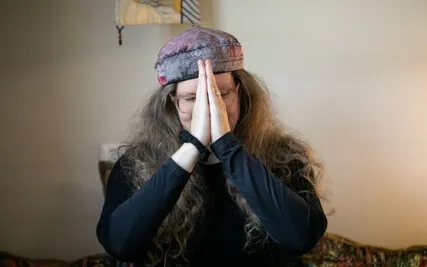
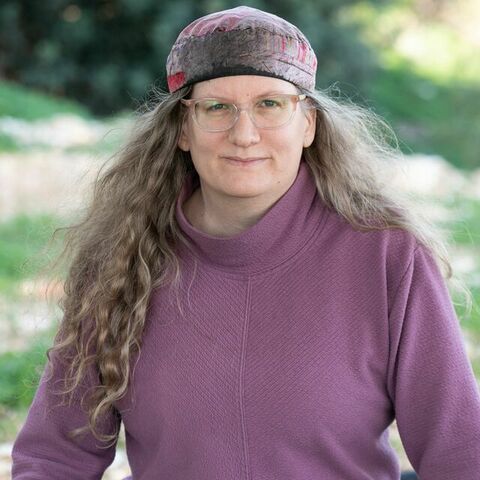
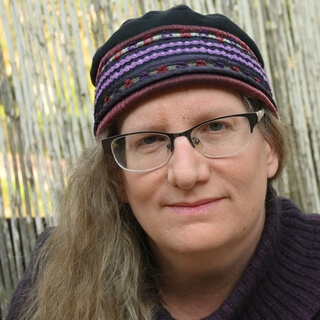
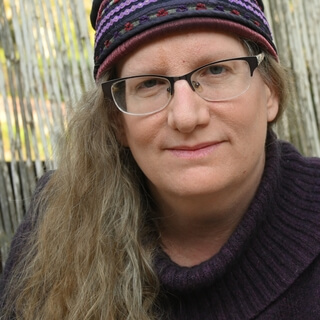
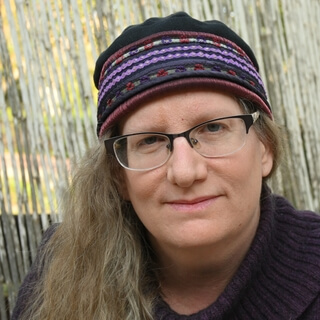
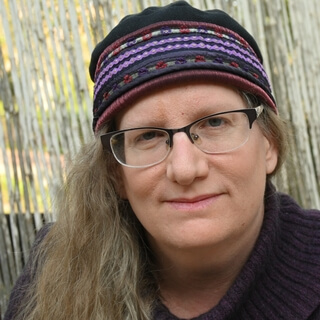
I am Rabbi Fassu Uriel Steinbauer,
Founder and director of the Institute for Holiness Kehillat Musar,
Mindfulness.
Delightful to have you here on this Sunday,
May 7th,
2023 at 7.
30 pm Israeli Standard Time,
Welcoming people from all over the world,
Whether you're joining us on our YouTube channel,
Live streaming right now,
Or through the Zoom connection,
Or through any of the social media that we have,
Please subscribe and join us so that we can learn and practice together as usual.
So we,
This week,
Are covering the Torah portion from yesterday,
From the Shabbat,
The Sabbath that happened for Parshat Emor in the book of Leviticus,
Vayikra,
And that took place yesterday on May 6th,
2023,
And it took place on Tet Vav of the Hebrew month of Eeyar in the Jewish year of Tafshin Pei Gimel,
5783.
So hopefully you've had a chance to jump in and look at Eymor and we'll be able to enter it together from the lens of Musar,
Mindfulness,
To practice.
Before we begin,
We have our shared Kavanot,
Our intentions for today's practice,
As we usually do every week.
For those of you who do not have vision or are listening on podcast and cannot see what's before you,
You'll hear me read it.
And for the rest of you who do have vision or are watching on video,
Then you can see these intentions,
These Kavanot before you.
So we see this awakening time together as an act of radical self-care,
And that we see this as something we're doing to strengthen our own soul in order to be a benefit to others in the future.
And we also see this as an act that we are doing for others,
That we're strengthening our relationship with others,
That we can be a better conduit of God's good when they need us.
And the final thing that we're having the intention,
The Kavanot,
To do in this practice together is essentially strengthening our relationship with the divine,
And that we're doing so that we can be a better conduit of God's good to others when they need us.
So may we merit this today on behalf of all beings everywhere.
So we enter today into our summary of this parasha,
Eymor.
So what happens?
So we have a shift from what happened last week.
If you remember last week in the double parasha of Achrei Mot Kedoshim,
The laws shifted to all of B'nai Israel,
All of our ancestors who were considered to be given guidance on the path to live a life on the path towards holiness and to remain pure,
To be able to approach the sacred area of the Mishkaim.
And now we have a shift,
I would almost call it a shift back,
But it's definitely a pivot to addressing just the holiness code of the Kohanim,
The priests.
And what happens here is the priests have a special status of Kedushah,
Of holiness,
And that they need to be extremely careful of huge practice and awareness and mindfulness to stay tahor,
To stay pure,
In order to do the work in the Mishkan and to eat the truma,
The food gifts that were given to the Kohanim.
They cannot eat them if they are in a state of what's called tameh,
Of impurity.
So we also learn in this parasha that the Kohanim cannot come into contact with dead bodies,
People who have passed away,
Other than their immediate relatives.
This is not the case for the Kohen Gadol,
He can't even come into contact with his dead parents.
So certain animals also cannot be sacrificed,
Depending on the shape that they're in.
If they have what's called a mum,
If they have some type of a petza,
Like a wound or a defect of sorts,
These are certain physical characteristics which prevent also the Kohanim from performing.
So we have both the Kohanim,
The priests and the animals being now considered for their physical fitness,
Based on the standards and prejudices of the day back then.
And this is just to honor,
Not even as a disclaimer,
This parasha in reading it can feel really painful and isolating to those who have any type of difference from society which is considered normative.
I don't want to call it a physical defect because I don't see it as such,
But like if you're blind,
If you have,
I don't know,
A shorter leg than the other leg and it causes you to have to either walk with help or a wheelchair,
If you cannot hear,
All sorts of things that were considered mumim,
Wounds,
Other ways of being that were not considered normative were then,
That animal is excluded from being offered as a sacrifice.
And also the Kohanim,
If he has any of these,
He is exempt from,
He's not allowed to participate in the services in the Mishkan.
He still can benefit from eating the shumaa,
But he cannot participate in the Mishkan.
So Kedushah,
Holiness,
Also exists in time in this Torah portion.
We learn that the Torah describes what are called the Mikra'e Kodesh,
Holy occasions.
And so we get the biblical cycle of the festivals throughout the year of Pesach and Shavuot and then Rosh Hashanah,
Yom Kippur,
Sukkot,
And of course Shabbat,
Which happens weekly,
Is discussed.
And then the Torah provides more details about the Mishkan,
How to light the menorah,
The lamp,
And how to prepare the bread for the shulchan,
The table where the bread was put.
And finally,
At the very end,
Someone in the camp of our ancestors,
The B'nai Yisrael,
Someone who comes from the tribe of Dan,
Who comes from the mother Shlomit,
Daughter of Divri,
He curses God when he's in a physical altercation,
A physical fight.
We actually don't know his name.
We only know his mother's name,
His grandfather's name,
And the tribe he comes from.
He blasphemizes,
If I'm going to put that into a verb,
He curses God in his anger,
In the heat of the moment when he's in a physical fight with another Israelite.
And the lack of anger management causes,
He has reactivity,
And in his reactivity he curses God.
And the response is they don't necessarily know what to do,
Even though it was commanded that you're not to curse God back in Shemot and Exodus.
And I think the reason being is it shows how serious capital punishment of taking a life is to our ancestors,
That they have this foot on the brake,
This pause of what we should consult God here.
We don't really want to take this person take this person's life if we don't have to,
Right?
So this is a summary of what we see in this Torah portion.
And what I'm going to focus on are two things.
One,
The blasphemy case,
And I'm also going to focus on the story,
The tradition around Lag BaOmer,
Lag meaning Lamed Gimel,
Which means the 33rd day of counting the Omer,
Which is commanded of us to do between Passover,
Pesach,
And Shavuot,
The festival of weeks,
We are to count the Omer.
This is obviously a harvest practice that was done by our ancestors to count a certain measurement known as the Omer of the barley sheaths.
And then eventually at the end of that 49,
50 day cycle to bring those to the temple in celebration of Shavuot.
Okay.
So this is what we're dealing with here.
So on the 33rd,
For those of you who don't know what Lag BaOmer is,
Or only know very little,
Obviously different communities practice it differently,
Meaning in some North American communities,
It's not really even discussed at all.
And then here in Israel,
It's a major,
Major,
I don't know what you want to call it.
It's not a festival.
It's,
I guess you would call it celebration.
But what's odd about it is that we have between Pesach and this 33rd day of the Omer,
And we have practices of mourning.
And you might be wondering,
Why are we having mourning practices?
Well,
I'm going to get into the story of why.
And so on the 33rd day of Lag BaOmer,
These mourning practices are lifted.
And it's like a day of jubilation of celebration here in Israel.
People have bonfires if allowed and permitted,
Again,
Not good for the environment.
Obviously,
Barbecues and all sorts of festivities around it.
It is a hugely followed and respected from both secular Jew to observant.
And so what's the story behind it?
So Rabbi Akiva,
One of our greatest sages,
Had 12,
000 pairs of students,
That means 24,
000.
They were chavruta from Gevat to Antipras.
And they all died.
Every single one of his students died in one period of time because they did not treat each other with respect.
Now this source is coming from the Talmud Bavli,
The Babylonian Talmud in Yevamot 62b.
And the world was desolate until Rabbi Akiva came to the rabbis in the south and taught Torah to Rabbi Meir,
Rabbi Yehuda,
Rabbi Yosei,
And Rabbi Shimon and Rabbi Al-Azhar,
Ben Shammua.
And these five kept the Torah standing at the time.
Okay.
So what's huge about this is,
You know,
When people like the full range from scholars and historians look at this moment,
They think,
Okay,
There was a plague going on.
And excuse me,
All these students died in the plague.
But to understand from the perspective of our ancestors,
You don't die in a plague simply because it's a some type of phenomenon that happens,
Right?
You die in a plague because God sends that plague,
Right?
And the way our ancestors understand this is that this lack of respect between the Havrutot and between the learning partners,
Between these students,
Leads to the death of them.
And we're really to look at basically what should be beginning to question from Musa's mindfulness perspective is,
What is this to teach us?
And what is this to teach us about showing respect to others?
And so there's a tradition that these deaths happen in the first part of the county of the Omer period.
And that's why we have mourning practices,
Like we don't cut hair during this time.
Don't listen to live music,
Things of that sort.
And these practices end on the 33rd of the Omer,
Lagba Omer.
And because of this,
Most communities observe customs of mourning in the first part of the Omer.
And then on Lagba Omer is a time of celebration.
And after many communities actually stop mourning,
There are those communities that continue,
But most stop mourning.
Now,
One of Rav Yekiva's students was Rav Yishma Bar Yochai,
And people celebrate his life on Lagba Omer.
And this is because they believe that years later,
After a full life of teaching Torah,
He ended up dying on Lagba Omer.
So many people celebrate by making bonfires,
Singing and learning Torah.
Another great sage that actually has his yard site on Lagba Omer is the Rama,
Rabbi Moshe Isserles.
He's a major halakha authority in the Ashkenazi tradition.
He died on Lagba Omer in 1572.
And so this is the first case that I want to bring from this Torah portion because it always falls,
His yard site falls during the Parshat Eymor.
Now,
The other case is in our Torah portion is the case of the blasphemer,
Right?
The person who curses God.
So I want to look at that text.
If you're following along,
We are in Vayikra in Leviticus chapter 24,
Verses 10 through 12.
So it says that the son of an Israelite woman whose father was Egyptian,
So his mother is Israelite,
Is a Jew,
Father is Egyptian,
Comes out of Egypt together as a son,
That he stepped out among Bnei Israel and a fight broke out in the camp between this son of the Israelite woman and a certain Israelites.
Okay,
So there's an actual,
The verb that's used is very important because it really signifies that it was a physical altercation,
Vayinatsu.
Okay,
So the son of the Israelite woman blasphemed God's name and made a curse.
So what does he do?
Vayi'yikov ben ha'isha.
Vayi'yikahel.
It's like a double,
Double,
It's like a a sure cursing,
A sure really acting out.
He was brought to Moshe,
His mother was named Shlomit,
The daughter of Divri,
From the tribe of Dan,
And then he was placed into what's called a Mishmar prison,
Where they ask God what to do.
So there,
For most Westerners and modern practitioners of Muslim mindfulness and in general those who study Torah,
Often have great reactivity to this story and even the story of Lagva Omer.
And in that reactivity we have judgment,
We have aversion,
Which is one of the veiling factors,
One of the hindrances to our awakening.
So we have judgment and aversion and reactivity.
We are really reacting to the story.
We don't like it,
We don't like capital punishment,
We don't like the idea of God commanding that someone be killed in response to their behavior,
Or that a plague comes and kills 24,
000 students in response to their behavior.
It makes us deeply uncomfortable.
It's not in alignment with a lot of our modern Western values.
So first we need to,
In our practice,
Be aware of any reactivity arising within,
Of any judgment,
Of any of the veiling factors.
Are we having any aversion to even listening to the story,
To having to have this be our subject today from the Torah portion?
I don't want to shy away from the difficult things that we need to face and address in our practice.
So why did I pick this?
As you know,
In Muslim mindfulness practice,
We pay attention to and believe in cause and effect,
What is called karma.
We believe that there are deeds and then there are consequences for our deeds.
And we need to realize that this story uses what is called hyperbole,
Where you're basically kind of exaggerating the story in order to have a certain effect on us,
To teach us about certain behavior that is just not acceptable.
So the hyperbole here is obviously the death of 24,
000 students of Rabbi Akiva,
And also the death of the Mechaleel,
The Ablasmer.
And in that,
We have to look at what's really behind,
What is it that we're supposed to,
What is the cause?
What are the deeds that we are to be paying attention to,
That our ancestors through this hyperbole want us to wake up to and pay attention to?
But sometimes we can get lost in the narrative and then our own reactivity and our own narrative,
Our own story and reaction to the effect at the end,
Right?
The consequence.
We don't like the consequence,
We don't agree with it,
Maybe not in alignment with our values to do capital punishment or a plague.
So we can't even look at the cause or the deed.
We can't pay attention to what maybe our ancestors are trying to impart to us.
So part of our Musa mindfulness practice is to learn how to engage these ancient texts handed down to us to practice and learn around and see what can I learn from this?
So what is it?
What's going on in both these cases?
Both these cases,
The Mechaleel,
The Ablasmer has a lack of anger management.
He's in the middle of a physical alteration.
He has reactivity,
Right?
Total reaction to the fight and what's going on.
And so he engages in not only unwholesome and unwise and unskillful behavior,
He engages in what is considered in our tradition,
Particularly among our ancestors back then,
And behavior that is a sore,
Which is a forbidden.
You are not to speak God's holy name or names,
Particularly the holy name.
And you're surely not to do it when you're cursing God and anger towards the other person,
Perhaps even towards God.
That's the first thing.
The second of the Havrutot,
The learning partners of Rabbi Akiva,
They have no kavod,
No respect for one another.
If anything,
There's ill will,
Which is one of the valing factors,
Right?
One of the hindrances,
They are not able to,
Nor do they act in alignment with their Torah values of how they are to be treating one another and behaving towards one another,
That we are supposed to see that Nikodat Hashem,
That divine spark within,
Even when we don't like the person,
Even when we don't agree with them,
We are to treat them with kavod,
With respect,
Simply because they are created in the image and likeness of the divine.
That is enough that they are human.
That is enough.
And they lost sight of that.
They lost sight of that.
And then the valing factor,
They were not able to come to the awakening factors.
They were not able to move out of what I call that ugly side,
The shadow side that we all have,
That we all can go to,
And sometimes can't get out of until unfortunately we reacted and caused harm and suffering to ourselves and others.
And that's what happens here.
They treat each other so poorly,
Such a caustic,
Unpleasant,
Not life affirming,
The opposite of environment of these haruto,
These learning partners together,
That a plague is visited upon them as if to say,
You have totally,
Not only have you desecrated Hashem's name and the holy Torah that you are practicing and learning and supposed to be learning for the Shem Shemaim,
For the sake of heaven,
You're actually disrespecting and not bringing kavod to Hashem,
To God in that moment,
In order to learn Torah that way and to disrespect your learning partner and other people.
And so through this shadow side,
This ill will,
The consequence,
The karma is in fact.
And so the same thing with the mekele,
The blasphemer,
He,
You know,
We all get angry.
It's a,
It's a natural arising of emotion,
Of a mood,
A state,
But it's what we do with it,
Right?
Are we going to react?
Are we going to,
Or are we going to create a space between the match and the fuse and,
And respond wisely,
Right?
In a wholesome,
Skillful way that is also mutar,
That is permitted,
Maybe even a hiyuv that's obligated,
Right?
We're obligated to,
Even in the heat of the most difficult moment,
We're having a physical alteration.
We are to come out of that and remember,
This is a person created in the image and likeness of the divine.
I'm not going to go down that shadow self,
The shadow path and curse God's holy name and God.
Okay.
So we might still not agree with the effect.
We might not agree with the consequence of the students and the blasphemers behavior.
We can strongly disagree.
We can say,
I don't agree with capital punishment.
I don't agree with plague,
But there's still something there for us to learn,
Even in the hype and the hyperbole that we need to be careful of our shadow side.
We need to be careful when we lean in toward ill will to where we forget our values,
Where we allow the valing factor to take over that we aren't able to come to insights and wisdom that we want to behave in a certain way on this path for its holiness.
So this is the gift.
This is the gift of parashat Emor to us today,
That we want to be aware of judgment and aversion and reactivity and see what it is,
Even in these difficult texts that we can learn and apply,
B'srat Hashem,
God willing,
To our own daily practice.
So with that,
I invite you now to assume one of the four meditative postures,
Whether it's standing,
Walking back and forth,
Seated position,
Either on a chair or on a zafu,
On a meditation cushion,
Or lying down,
Eyes open,
If you have vision.
For the rest of us,
If you feel safe and comfortable,
You may close your eyes to be allow yourself to help come to the present moment and not focus on whatever visual stimulation there is.
And for those of you who need to keep the eyes open,
Please do perhaps lower your gaze so that you can minimize distractions that come from the visual plane.
And with that,
Right now,
We're going to take three deep cleansing breaths.
So we're inviting presence,
We're inviting awareness now with this first inhalation,
Inhalation.
On this next one,
You're invited to inhale and raise your shoulders up and exhale,
Coming fully here,
Inviting stillness,
Inviting our full awareness.
And finally,
Inhalation again,
In this sacred circle together,
Sharing this gift of oxygen,
We come to the full awareness that we are here,
The simple knowing that we are bringing the marriage of alertness and ease together,
A sense of groundedness and balance in the body,
Not forcing anything,
Not trying to make anything happen,
Beginning to settle and arrive.
And the simple knowing of this mindfulness practice is with each out breath,
The sense of settling,
Of grounding,
Of arriving in this body,
In this present moment.
And with each in breath,
Inhalation,
A sense of enlivening,
Of energizing,
Allowing our breathing to find its own natural rhythm,
Not forced,
Attuning and aligning our attentiveness,
Our mindfulness with the simple process of body breathing in and body breathing out,
A simple knowing of this moment to moment fluidity of the breathing process.
And while we are grounded and being aware of the body in the present moments,
We pay attention to whatever arises,
Anything arising from the teaching,
Inhabiting the body a little bit more now,
Bringing the mind into the body with our attention,
With our intention,
Knowing the body sitting,
Knowing the body sensing,
Knowing the body listening,
Knowing the body breathing,
Establishing mindfulness within the body with its own body,
With its spectrum of sensations,
The places that we feel ease,
Restful,
The places where there might be tension,
Tightness or discomfort,
Sensing the range of sensations that arise,
Have a certain shelf life and pass as all,
All experiences pass.
They're all ephemeral,
They all arise and fall as the breath,
Noticing the processes of the body changing and fluid,
Knowing the body as a body,
Any narrative or commentary that is arising in your mind,
Allow them to sit in the background of your experience.
And the foreground of your mindfulness is sensitivity to the life of the body just now.
And the mind will wander from time to time.
That is the nature of the practice.
You are practicing mindfulness when you wake up to this and you realize that your mind went off wandering,
The attention becomes scattered,
Fragmented,
And we intentionally gather it,
Sensing the simple process of breathing,
Grounding and collecting.
Once again,
Opening into the fullness of your body and the experience right now,
The pleasant,
The unpleasant,
And that which is neither coexisting,
Arising and passing.
As we move through the mindfulness of the mind,
We expand our fieldness of awareness to a sense of whatever mood,
Whatever mental state is present for us right now.
Is there restlessness?
Is there calm?
Does the mind feel dull?
Does the mind feel bright?
Is there a spaciousness to your heart?
Is it contracted?
Developing this simple knowing and caring,
Noticing these moods and mental states and how they might impact your bodily experience in this moment,
A tightening,
A softening,
An agitation,
Or caring,
Calming,
Sensing how the mood of the moment generates ways of thinking,
Thoughts of worry or agitation,
Thoughts of kindness and sensitivity.
So we think back to the moment of the me kaleo,
Of the blasphemer,
And the heat of a physical fight and the mood of the moment,
The rise of blood pressure generated its own way of thinking,
Its own agitation,
Its own veiling factor,
Ill will,
Anger,
Noticing how difficult moods generate more narrative.
So this poor blasphemer,
Right?
Swearing,
Blaspheming,
Saying God's holy name,
Cursing God's holy name,
Cursing God,
In the moment is this narrative that is emerging out of this particular experience without any filter,
Without any space between the match and the fuse,
Without any awareness to practice self-restraint.
Notice how we can make choices about where we place our attention and the quality of mindfulness we bring,
Being able to step back from the flurry of thinking,
The storms of stories,
Being able to return to the body.
If you're in a seated position,
Feeling your feet on the ground,
If you're seated on a cushion,
The feeling of your hips and buttocks well situated in the chair or cushion,
Your knees to the ground,
Being able to return to the awareness of the body,
Just breathing,
Simplify,
Collecting,
Calming,
Being able to know a thought as a thought,
A mood as a mood,
Without reactivity.
Our practice of mindfulness of the body is a protective mechanism.
The quality of cultivating this is a protective awareness,
Learning how grounding,
Establishing mindfulness in the body protects our heart from surges of reactivity,
Protects us from the patterns and proliferations that don't serve us well,
That cause harm and suffering,
Learning that we can simplify,
We can see,
We can know,
We can be in the moment to moment mindfulness,
Breathing in mindfulness,
Breathing out mindfulness,
Breathing in sensitivity,
Breathing out with sensitivity,
Breathing in with kindness,
Breathing out with kindness,
Establishing wakefulness,
Knowing the body as the body,
Breathing as breathing,
Moods as moods,
Thoughts as thoughts,
Sounds as sounds,
Stories as stories,
All impermanence,
All changing,
Listening inwardly,
Listening to the moments,
The ground of stillness and the ground of responsiveness,
One that is wise,
That is wholesome,
That is skillful,
That is pure,
That is permitted,
That is even obligated,
That we honor each and all,
Everyone,
Holy Soul,
Each and everyone created in likeness,
And the image of the divine.
As I ring the bell,
Just listening wholeheartedly,
Without filtering or judging,
Simply knowing of hearing.
If you have your eyes closed gently and slowly open them,
Allowing the allowing the light to slowly enter,
Welcoming us back in this sacred zoom circle together,
Live streaming on my YouTube channel and other places on social media.
Thank you for your practice today.
Today's session is sponsored in memory of our beloved teacher Rabbi Yonatan Jonathan Omer Mann,
Who passed away last week on the 2nd of May.
And the funeral was today in California in the United States.
Rabbi Jonathan Omer Mann was one of my first teachers of meditation.
Some 27 years ago when my youth,
He created a wonderful organization in Los Angeles in 1981,
And really was a pioneer in Jewish meditation,
Although not in Musar mindfulness.
And today,
May we merit that in his honor,
This Torah,
This Musar mindfulness that one we help arise his soul to make a Leah to Hashem and that we make his memory for a blessing and how we integrate these teachings and then our practice.
So if you don't know about him,
I encourage you to look him up and learn what you can.
I'm sure there's a YouTube or something out there that you can maybe even meditate with him and may it be so I look forward to us practicing next Sunday together we have a double Torah portion which is common in the book of Vayikra and Leviticus.
It is our last Torah portion of this book of Leviticus of Vayikra and it is Bahar Bechukotai.
So I welcome you to read it,
Study it with the parasha name,
The commentators and come with ready with an open heart to see how we can practice and learn together Musar mindfulness to see what our ancestors and God have to teach us to help us with our practice and on this path towards holiness.
So thank you again for today in your practice.
Please do give your Dana and Shuma and Sadaka your donations to allow us to continue to offer this public offering each week.
We welcome any amount that your heart can give today you can find that donation material on our website,
Kehilatmusar.
Com.
Take care of yourselves.