Shalom,
Welcome Baruchim Habaim to Awakening Torah Musar Mindfulness.
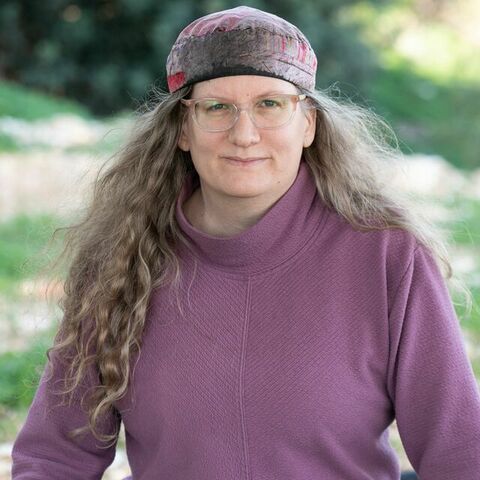
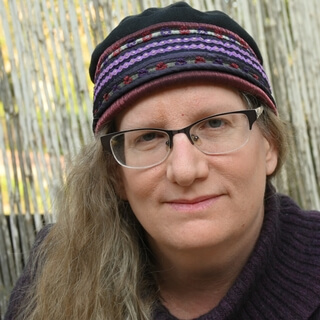
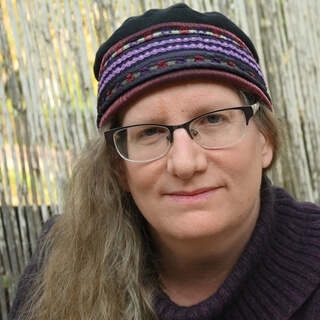
I am Rabbi Chassi Uriel Steinbauer,
The founder and director of the Institute for Holiness and you are joining us on Sunday,
July 23rd,
2023 at 7.
30pm Israeli time,
12.
30pm Eastern Standard Time,
9.
30am Pacific Standard Time,
Wherever you're joining us from across the world,
Welcome.
It's a delight to have you.
We of course will be looking at the Torah portion,
The Sidra,
From yesterday on Shabbat,
The Jewish Sabbath of July 22nd,
Which was the third of the month,
The Hebrew month of Av,
In the year Tavshin Pegimel of 5783.
Delighted to have you to jump into this.
So before we begin,
We always share our Kavanot,
Our intentions for today's session.
So if you are watching by video,
Live stream on YouTube or from our blog or any of the other social media outlets,
You will be able to see the Kavanot,
The intention soon on the screen if you have vision.
For those of you who either don't have vision or will be listening to the podcast or the audio file,
I will read them out loud and you will hear our intentions.
We use the same intentions,
The same Kavanot every week.
May we merit them.
So we say,
We see this act,
This 45 minutes that we spent together as an act of radical self-care in order to be a benefit to others.
So we say,
I am doing this right now.
I am learning and practicing Musa and Mindfulness with Rabbi Chassia here from the Institute for Holiness,
Kehillat Musa and Mindfulness.
I am learning and practicing Musa and Mindfulness in order to strengthen my own soul,
In order to be a benefit to others in the future.
This is so true.
This is my daily intention,
My daily Kavanot.
We're also doing this not only for our own radical self-care,
But for acts for others.
We say,
This is something I'm doing to strengthen my relationship to others,
So I can be a better conduit of God's good to others when they need me.
And finally,
We say,
We're also doing this 45 minutes together called Awakening Torah Musa and Mindfulness to strengthen our relationship,
Excuse me,
With the divine.
However we define that relationship and however we define divine.
So this is something we say that we're doing to strengthen our relationship with the creator of all beings,
So that we can be a better conduit of God's good to others when they need us.
So there are our three intentions,
Our three Kavanot for today.
It's a delight to share those with you and maybe merit fulfilling them today.
It's a great honor to be here today.
It is difficult for many people in our community,
Starting from Rosh Chodesh,
The new moon of Tammuz,
Moving through the fast of the 17th of Tammuz into the three weeks.
If you don't know what any of these terms mean,
Feel free to Google them from a trusted Jewish source.
My Jewish learning or whatever source that you trust most.
And then we move into from the Rosh Chodesh,
The new moon of Av,
Which we just had a couple days ago.
We move into what are called the nine days where we're preparing for our morning rituals,
Our national morning for the Chorban,
For the destruction of the temple.
But it's so much more than that.
And that will happen on Tisha B'Av,
The ninth of Av.
And so if you had felt,
The way I'd like to word is you just feel out of sorts.
Things are not meeting exactly.
We call it like a bit of a disequilibrium.
I find this every beginning of Tammuz all the way through to past Yom Kippur.
So that's what's going on.
In addition to the heat and the humidity in the northern hemisphere,
Along with everything with the challenges of global warming or climate change that we're all confronting.
So I just want to honor if that's your experience,
Because that's where we are right now.
We're in the middle of this.
And when I said it's so much more than the loss of the temple,
You had to realize that basically how we Jews had lived with the temple in the land was completely different than what happened afterwards.
There was a whole new Judaism that formed,
Rabbinic Judaism,
That was already beginning to develop.
But this was a game changer.
When we were colonized by the Romans and our temple destroyed and we were kidnapped and brought to Rome and other lands,
It basically caused massive trauma onto generation after generation and having to have us sort through and form a new way of relating to God and of service to God.
Because the service that was in the temple was no longer possible.
So when I say I'm mourning on Tisha B'Av,
I'm not mourning the physical building of the Beit Nikdash of the temple,
Although that has its own set of projections,
Right?
Because I wasn't there.
I can't know.
It's more that I'm mourning what happened to our people and a full understanding of what that caused and set into motion for the next 2,
000 years in the diaspora.
And it's only recently with us returning to our ancestral land that I'm really beginning to appreciate and understand more and more with God's grace that loss.
So with that,
We move into a new book of the five books of Moshe,
The five books and the Chumash in the Hebrew Bible.
We move into Devarim.
Devarim is known as Deuteronomy in English.
I'm just going to give you a little background of it and a summary of our Torah portion before we hone in on what we're going to pay attention to today.
So Deuteronomy has two Hebrew names.
The popular name,
Obviously,
Sefer Devarim is short for essentially a longer name,
Which is Sefer Ve'elei HaDevarim,
The book of these are the words,
Right?
And it's named on our ancient practice of naming books after the key opening phrase.
So the second name is actually Mishneh Torah,
The repetition of the Torah.
And this appears frequently in rabbinic literature.
It came to be known,
Obviously,
From the Latin Vulgate and then to English and to Deuteronomy.
And that name actually stems from a misunderstanding of Deuteronomy in chapter 17,
Verse 18,
Where the phrase first appears,
But actually means a copy of the teaching.
So nevertheless,
It's an apt distinction for the book,
And it really recapitulates the teachings from Genesis,
Be'ereshith,
Through numbers,
Through B'mibar.
So in Deuteronomy and Devarim,
It regularly refers to itself as this teaching,
Right?
Sefer HaTorah Hazot,
This book of teaching,
Right?
And or Sefer HaTorah Hazeh.
And it seems to use this often,
Even the teaching of the Moshe,
Of Moshe,
Right?
So Devarim,
Like the rest of the Torah,
Was copied with extreme care.
And it's actually the text among,
Its text is actually among the best preserved in the whole Hebrew Bible.
So we believe the Masoretic text is based on manuscripts from the 9th and 10th centuries,
And then themselves based on older manuscripts.
So that's a general background of the book itself.
I'll say a little bit more about what teaching means.
Let me tell you a little bit of summary just of this parasha.
So it's in the 40th year of wandering in the Mibar,
In the wilderness,
Right,
For our ancestors.
And B'nai Yisrael,
Our ancestors,
Are almost ready to enter Eretz Yisrael.
Rokhatan ha-machalam,
She'akoni yibidavro,
Amen.
And Moshe gives a long speech.
It's actually so long that they say it goes on for 37 days.
Why not 40?
That's a whole other discussion.
And he reminds the people of their journey after leaving Har Sinai.
Now,
To remind people of their journey that they actually didn't take.
What do I mean by that?
These are the children who were under age 20 who are the ones that get to enter the land.
So maybe some of them took that journey,
But definitely not from Egypt,
And probably not even from Har Sinai.
So it really was their parents and their grandparents.
And so Moshe,
You'll notice here in this,
In Devarim,
Speaks to them as if they were there.
We'll keep that in mind,
Okay?
So Moshe recalls how he needed help to lead B'nai Yisrael.
This is a beautiful key moment here.
And how he appointed judges to govern the people with him.
And Moshe reminds our ancestors,
The children of Israel,
Of the episode of the Me'ragalim.
Now,
You may think to yourself,
Why would he remind them of the spies and the negative report?
Why not,
For instance,
If you're going to come up with a bad episode,
Unpleasant,
Judgmental,
Have judgment lines,
You think he would choose the golden calf.
But the spies loomed much more for Moshe than the golden calf,
Most likely because it involves the consequence and punishment of Moshe himself.
So we'll hold on to that.
So the spies obviously gave a negative report about the land,
About Eretz Israel,
Which essentially is giving a negative report about God.
Because if you criticize the land that God is giving you,
You're criticizing God.
So B'nai Yisrael lost faith and they were punished.
No one from that generation besides Kalev and Yehoshua would enter the land.
God tells Moshe that B'nai Yisrael,
Our ancestors,
Should not fight against Seir,
The descendants of Esav,
Nor should they fight against Moab and Amon,
The descendants of Lot,
The wonderful nephew of Avraham Avinu,
Our patriarch and ancestor,
Abraham.
So B'nai Yisrael actually defeat the armies of Sihon and Og,
Their land actually east of the Yarden of the Jordan River,
Is given to the tribes of Reuven of God and half of Menashe.
Moshe reminds these tribes that they must cross into Eretz Israel and fight with the rest of B'nai Yisrael before settling there.
So that's a generalized summary that I want to start with.
I'm going to briefly teach you about Devarim and this teaching,
And then we're going to move into what I want to focus on today,
Because we obviously have to pick something.
There's too much to cover.
So this teaching,
Right?
We get this a lot.
Moshe undertook to expound this teaching.
This instruction would have been better to convey the wide range of meaning expressed by Torah.
And it basically expresses from Torah,
Right,
To teach and instruct.
It involves civil and ritual procedure,
Prophetic teaching,
Reproof,
So much more didactic narrative,
Moral exhortation,
And Moshe frequently refers to Devarim as this Torah.
And that basically it connotes both law instruction that must be taught,
Studied,
And pondered,
And it's expected to shape character,
Attitudes,
And conducts for those who see.
So it's really wisdom literature.
It's really where we hone in on the path,
The path for its holiness,
Right?
And later,
And obviously later times,
The term Torah itself,
Right,
Was applied to the whole entire Hebrew Bible,
Particularly the five books of the teaching or instructions par excellence,
Right?
So,
But it really began with Deuteronomy,
With Devarim.
Okay,
So what are we going to focus on today?
First we're going to focus on,
I think something very humbling and brave that Moshe does is that he admits to the people that he could not bear the burden of them alone.
That's not a small thing.
It's not a small thing for the national leader of millions of people to stand in front of them before his death and say,
I could not bear the burden of you alone.
I had to ask for help.
I had to instruct and find wise,
Discerning people back then,
Men,
To lead with me.
Okay,
Why is that significant,
Right?
He says,
He even says in the language here,
How can I bear alone?
I cannot bear the burden of you by myself.
How can I bear alone the trouble of you,
Your burden,
Your bickering,
Right?
He said instead,
He helped pick people who are wise,
Right?
The very language here,
Chachamim,
Unvoim,
Viyudim,
Right?
Knowledgeable,
Insightful,
Having mindfulness,
Wise,
And obviously with wisdom,
That's what we said.
And knowledge,
Right?
That which,
It's a certain type of knowledge.
It's a knowing,
And that knowing is from the verb yadah,
Has a real strong history throughout the whole Torah.
So someone who not only knows God,
Knows God through the fear of God,
Because that's what religion meant in the Torah before the teaching.
One knew,
One believed in God or had a relationship with God when they feared God,
Right?
It meant that that fear meant that it was going to expect certain behavior of them.
One just didn't think about it,
Or it was emotion or thought.
It was,
It required a response of behavior and deed,
Okay?
So he selected these leaders.
Now,
Why is this significant?
As I told you,
That burden at first,
Before he assigned leadership,
Was wearing him out.
He ended up asking for help twice.
When his father-in-law,
His non-Jewish father-in-law,
Gave him the wisdom to assign,
Essentially just judges to preside over the people by 10,
000,
100s,
10s,
Whatever,
Onward.
And then he sought out help later on,
Other leaders who would help kind of carry the people with him,
Right?
Bringing them to their destination.
And so this is very significant.
And why I think it's very significant is that it's preparing us for what comes next,
Right?
When the leader admits that he needed support and that it's going to be those who are wise and discerning and experienced,
Right?
Capable men who feared God.
This is coming from Exodus when he asked earlier,
Right?
In Shemot chapter 18,
Verse 21.
And Yitro recommended seven qualities in all,
Right?
Basically trustworthy men who spurn ill-gotten gain,
Right?
And it requires certain middot and certain foundational behavior of what we would call wise behavior,
Wise speech,
Wise effort.
All sorts of things that should begin to ring a bell for us of the eightfold noble path,
Right?
The eight factors of the noble eightfold path of discernment,
Of virtue,
Of concentration.
So we're beginning to see that the qualities of this leadership required these leaders like Moshe to embody them and to live them,
Okay?
You can't embody them without living them.
And matter of fact,
I would say they had to have demonstrated that behavior in order for it to become part of who they were.
And then people would be able to know that.
So,
And let me just get to where I want to share this with you.
I'm getting to my notes,
Thank you for your patience.
Okay,
So this leads to what I want to pay attention to next,
Because what you're going to find in the teachings of Torah as we're starting to really unfold in Deuteronomy and Devarim is not only are certain leaders or people supposed to demonstrate certain deeds that reflect noble and upright and wholesome and wise behavior and soul traits,
Middot,
But that also begins to get reflected in how we Jews over the past 2000 years of Rabbinic Judaism,
How we relate and speak to one another and learn from one another and learn the laws and the path of how to behave.
So in the text,
I want to get the exact right verse for you.
Let's see if I have it written down here.
Let's see here.
Let's go to this text.
Thank you for your patience as I jump around and all my Sephora I'm here.
Okay,
So in chapter one of Devarim,
Deuteronomy,
In verse 16 and 17,
Moshe is telling that I charged your judges at the time saying,
Hear the causes between your brethren and judge righteously between a man and his brother and the stranger that is with him.
You shall not respect persons in judgment,
You should hear the small and the great alike.
You should not be afraid of the face of any man for the judgment is God's but we want to look at this language here,
Where he says,
Hear the causes between your brothers.
So he says here,
Hear between.
And this really captures our commentators and the comments that go through the generations reflect through their actual learning and sharing aggregates of the eight factors of the noble eight fold path of discernment,
Virtue and concentration.
In particular,
I will name them there.
They show wise discernment,
They show wise speech,
Sometimes called right speech,
Right discernment.
So wise or right,
I'm going to use wise,
Wise effort,
Wise view,
Wise resolve that go into wise discernment,
Wise action,
Wise livelihood,
Wise mindfulness,
And wise concentration.
All of these are part of the path and factors evident in them.
And what is the Shamoah Bane?
This is judge and listen here between the brethren is pay impartial attention to both parties.
But what does that mean?
And I want to just tease that out that how could they fall into this eightfold path,
And the path towards holiness is part of what we practice here in Musar mindfulness.
So this is the gift that God and our ancestors are giving us in the Vareen is this way of showing us the path,
And how from one pursuit,
One verse,
It's so profound and foundational,
But it is the practice,
The cultivation of the teachings of this eightfold noble path of the path towards holiness.
So let me explain what I mean.
So if you're following along in the Hama Lebowitz,
And the study of the Vareen,
Deuteronomy,
I'm going through pages nine through 12.
Okay.
And on page 10,
She brings in,
She brings many sources to show this.
But in particular,
She brings here in first the source from the Talmud,
Bavli,
The Babylonian Talmud,
And said,
Hedron 7b,
About how in the court,
They made sure to not hear the words of one litigant before his opponent,
Opponent arrived,
Because that might give the impression of not being impartial,
Right?
And it might also lead the person to favor he who speaks first.
And so,
Basically,
We learn out from this,
That one doesn't present their case to the judge before both parties are in the room together.
All right.
So,
So of course,
What our ancestors tease this out some more,
Right,
They really want to get to this wise effort,
This wise concentration,
This wise discernment of how do we live out this real high mitzvah and commandment and desire to serve God by being impartial to both parties.
This is so foundational to how we as Jews are to live and be in the world,
That it's such a larger reflection of all of our deeds that we can find right here in this basuq.
So then what they go on to say that even if both parties are present,
Right,
There's still a danger to be avoided in the interest of justice.
So what do they mean by here?
It says that the judges need to be patient and hear them out.
So that's what they're teasing out.
Why does it say Shema versus like Shema,
The commandment or Shema'u,
Right,
And Shema'u,
It's really teasing out from the how the verb is written,
That the that of course,
The judges need to take their time,
Allow everyone to bring whatever evidence they have and pay attention to every nuance,
Every utterance that takes place before them.
So the word here here means pay attention,
Have mindfulness,
Be awake,
And alert,
Right?
Grasp,
Fully understand,
Right?
Put in that wise effort,
Right?
Why it's this whole wise view and wise resolve,
Okay,
The equal treatment to be accorded to both litigants,
Right,
Is found in the word between,
Bain,
In between.
And finally,
One of my favorite teachers and a great,
Wonderful rabbinic family,
Originally first from Spain,
Portugal,
I think Spain,
Is the Beardugo family,
Who ended up having to settle in Morocco because of the persecution against our people in Spain in 1492.
So he and his family,
The Beardugo family,
A large,
Huge rabbinic family,
Settled in Morocco became the leaders of the Jewish people there.
And so one of the family of Rabbi Moshe Beardugo,
He was very pious and scholarly judge.
He had a practice from learning from this verse.
So he's actually cultivating this path and really wants to learn and have it inform how he's supposed to live and be as a judge,
The best person,
Best judge he can be.
So what does he do?
He learns from this verse that he's going to avert his gaze from both parties,
Because he felt if he actually even gazed and looked at one of them,
He was bound to get flustered.
And at that moment,
He wouldn't be able to offer impartial attention.
He wouldn't even be able to have in some ways,
Wise concentration,
Wise mindfulness,
Okay.
And so he said that the text,
Hear the cause of your brethren,
Hear between them,
Right?
He says it was a duty of him simply to hear and nothing more.
He allowed the words of the litigants to reach his ears without differentiating between them by sight,
By visual.
Obviously he was differentiating by listening.
There's only so much the human can do on this path.
We're not seeking perfection.
There's no such thing that will only lead to suffering.
We are seeking to be the best,
Highest version of ourselves.
And so we do,
We make the best with what we can.
So in Rav Berdogo's mind,
The Dayan,
The judge,
He is really saying,
I decided to limit one,
One thing that would make me partial,
And that's the vision,
Right?
So he simply wanted to hear,
To let the words sink in,
Okay?
So that's what he learned from the text,
Quite beautiful.
And then it goes on and on,
You know,
Taking from looking at other versions of how we're supposed to be impartial between parties,
Taking from Exodus and Leviticus and Deuteronomy.
The final thing that I want to add here is the last thing that I just love,
That I feel reflects the aggregates of the eight factors of this noble eightfold path of the Dharma and Theravada Buddhism,
Is he says here that,
What does it mean that we're not supposed to favor,
Right?
That we're supposed to be impartial to both parties.
And it says specifically in other verses that you should not favor the poor or the mighty,
Meaning it gets interpreted as the wealthy.
And you might think poor just means person with a lack of income,
Right?
But what our ancestors teased out for that,
And they were like,
What else could it be?
Because we don't want to sin.
We don't want to cause harm and suffering to others if we don't fully understand and basically learn all applications possible from this pursuit so that we can be as impartial as possible,
Right?
This is their path towards holiness.
This is their awakening,
Right?
This real discernment,
Virtue and concentration.
So they learn out from that,
That actually poor here doesn't mean financially poor.
It means someone who has a reputation before they arrived,
Right?
It's not favorable to them,
Meaning they're poor and their meats vote and they're good works and they're good deeds in the world.
And we are not supposed to pay attention to that,
Right?
If we're going to treat this person with impartiality,
We're not going to pervert the judgment of them.
We are actually going to look just objectively at the basis of the facts presented to us in the present moment.
And instead of basing on someone's prior behavior,
Right?
This is so foundational to actual Dharma practice and in particular mindfulness,
Right?
Where we are asked to meet every encounter,
Every interaction with others as completely new.
Did not come in with that bucket of past interactions and experiences,
Excuse me.
And see the person again with beginner's mind,
With the new,
New eyes,
With curiosity.
And that will assist us to be in the present moment instead of basing on our encounter on what narrative in the current moment we're telling about that person from a past interaction.
So that's so important for Dianima judges is that when they have a person standing before them who has a past reputation,
Doesn't have a lot of good works before them,
Right?
That they see this person for who,
You know,
Just who they are in the present moment.
And that is so profound.
And I,
I share this with you.
Just to give you some context of Rob Moshe Be'er Dugo,
As I told you,
He's also known as the Mashbir.
His dates are 1679 to 1730.
But literally there's like another son and another son and another son in the Be'er Dugo family in Morocco still to this day.
And even Eretz Israel,
Huge rabbinic family coming obviously from Spain being evicted or they were going to be killed or forced into conversion in 1492 and onward to today.
So what I love about what he brought and everyone else from our tradition,
And I feel like reflects in general of the beauty and the potential of this path in rabbinic Judaism and of Musar mindfulness is the teasing out of every possible angle,
Right?
And is the practice putting the right effort in to be noble and to be on this noble path and this path towards holiness.
And it's a gift to us.
It's a gift that we could find right there from one Pesach,
One verse.
What a blessing.
So it's an honor to share that with you today.
I hope you too feel and vigor from it and enthusiasm to know that there's just such fine detail and laying out of that eightfold path for us of how we are to be on this wise path into practice,
Taking refuge in community here at the Institute for Holiness,
Taking refuge in the teachings of Torah,
Dharma,
Musar,
Taking refuge and our ancestors in the teachings of the tradition and here with our teachers.
So it's a blessing.
So let's move into our mindfulness meditation today together to practice around this.
And it's really going to be a grounding meditation,
Which is so important for us to see the potential of this path and to be in it in the present moment.
So what I mean by grounding,
Grounding means that you really ground your feet and your sit bones.
If you're going to be in a seated posture,
If you're going to be standing and grounding your feet really strong,
Almost like a mountain pose.
And then for those of you going to be doing walking meditation,
Grounding the feet fully as you walk,
Really feeling mother earth.
And for those of you that need to lie down,
Feel free to take any of those four postures,
You will feel the grounding and every touch point on the bed or the couch or the floor,
Wherever you're lying down.
For if you're like me,
You're going to ground your feet and sit at the edge of the chair.
So you have an upright posture,
Right?
Upright,
But not stiff.
And it has this amazing paradoxical quality of being alert,
But also at ease.
And what's so important in this practice is learning how to pause,
Breathe,
Having that space between the stimuli and our response.
And then being able to ask those most profound wise questions.
What is needed right now in this moment?
What is an appropriate response from me?
So we're going to move into that together.
So please assume your posture,
Really rooting your feet into the ground,
Really rooting your feet into the ground,
Feeling the weight,
The cavort,
Right?
Coming from heavy cough,
That Dalit,
Right?
This really weightedness,
Which is a certain seriousness of respect and honor.
And it's sitting here.
And we began with three deep cleansing breaths.
You may close your eyes.
If you have vision,
You feel comfortable.
Inhalation,
Inviting presence.
And exhalation.
This time,
Raising your shoulders,
Inhalation.
And exhalation,
Letting it all go.
Inviting that joy of arriving to this present moment,
The ease,
The comfort.
And finally,
Inviting your full intention to gather all of you here,
Right here,
Right now,
With me here in this shared sacred space on Zoom or on our YouTube channel,
Wherever you're checking in today.
Inhalation.
And exhalation.
Now fully arriving.
Letting your breath settle to its own healthy,
Natural rhythm.
No need to force or control anything.
Really with kindness and wakefulness.
Learning how to resource ourselves and practice embodying a sense of intention on this journey together.
Allow your intention,
Invite your intention and intention to come into the domain of the body.
Allow your attention to meet the landscape of sensations of your body sitting,
The body breathing.
The body breathing.
This practice can be used all week and even outside of meditation,
Formal meditation practice.
Giving full attention to the sensations of grounding,
Being held by the earth.
Contact with whatever you're sitting on.
This practice of touching the earth,
As it is called in the tradition of the Dharma,
Means really lingering,
Lingering here right now together with the steadying sensations of contact.
With your feet to the floor,
With the seat.
If you're lying down with all the touch points there.
This grounding really has this beautiful potential and joy to bring us to the full present moment,
To the gift of being alive.
It's a support,
A foundation for our practice.
And as I said,
Whether we're engaged in formal meditation practice as we are right now on the zafu,
On the cushion,
Or in the midst of daily life.
We bring a certain kavod and honor of uprightness.
We're all created in the image and likeness of the divine.
We're really receiving the sensations of contact and appreciating them.
The spine arises in this grounding.
Sense the spine belonging,
Embodying a sense of wakefulness and connection to the present moment.
Grounded and upright,
Restful and awake.
These two orientations of the path support this spacious sensitivity to the body.
Holding the body in a spacious and friendly awareness.
Let the climate of the mind be one of kindness,
Of chesed,
Loving kindness,
Of metta.
One that allows and breathes however things are in the body,
However things are in the mind.
Allow your awareness of this moment to embody,
To be really oriented to grounding,
To wakefulness,
To friendliness.
A friendly allowing.
Breathing with the experience of the moments.
The experience of the moments.
And indeed,
That's what I believe our ancestor Moshe is doing in his 37 days of his final speeches.
Before he gathers to the ancestors,
He is breathing with the experience of the moments.
It is reflected in his words as he shares that he had to learn not only to breathe with the moment,
But carry the burden,
To bear the burden with others,
Not alone.
Setting our intention,
Recalling how we do this to be in radical self-care and care of others and fostering a relationship with the divine,
Our three kava note at the beginning of this practice.
Really strengthening that three-fold relationship to life and the path.
Bringing those intentions to mind.
Seeing if we can engage with those intentions as an act of kindness,
An act of chesed to ourselves,
To others,
To the divine,
Right?
For those who share their lives with us.
Engaged in this practice right now is really a commitment to embodying the medos and cultivation of this path through kindness,
Appreciation,
Compassion,
Self-compassion,
This abiding equanimity.
Seeking to bring these medos,
These soul traits more fully into the world,
More fully into our experience and our relationships.
So we dedicate our practice as a gift of kindness of meta to ourselves,
To all living beings,
To Hashem,
To God.
We spend the next moments,
The next minute in silence before I ring the bells.
Your eyes were shot slowly and gently open them to join us on this sacred Zoom screen or on the YouTube channel,
Wherever you're joining us today.
Give a bow to yourself and to God and to your community to practice together.
I'm so grateful for today to enter this new book,
Devarim of Deuteronomy.
I believe that we are on the 40th sitting together.
I could be wrong.
I think I'm correct.
Isn't it funny that I don't know my exact numbers?
Let's look here and let's pull this up and see if we can see.
Yes,
We are on 40.
And that's actually quite a miracle because that means we're on the 40th parsha,
Like a sidra of sharing every Shabbat.
And it reflects really the 40 years in the Midbar,
In the wilderness,
The 40 days that Moshe went up and down to receive the Aser HaTadibrot,
The 10 utterances,
And the 40 days that the Meir Hagrim,
The spies,
Were visiting the Eretz Israel,
The land of Canaan at the time.
40 is this kind of really righteous and important number in the tradition.
So it's a day for us,
May it be so,
That we merit fulfilling our covenant,
Our intentions.
And may this teaching today and our practice together really feed you and nourish you to practice during the week and to join me next week,
Where we will jump into next week's parsha,
Which is,
I think it's the Eretz Canaan,
Yes.
So please do,
If you have time to read that,
Read some of the parsha,
Name the commentators.
Excuse me.
And yeah,
We'll be able to learn,
Engage together.
Please consider offering donations to the Institute for Holiness for this public offering and for everything that we do.
You love the work that I bring and offer to the community,
To the world.
And you're always welcome to be in touch with sponsoring one of the awakening sessions in memory of someone or in honor of someone.
And may it be so.
So I want to wish all of you an easy fast.
If you are fasting coming up on Wednesday evening to Thursday evening for Tisha B'Av.
For those of you who are not fasting or don't observe necessarily,
May you take this time to reflect what this time and date means for people who went through such great trauma and still have that intergenerational and transgenerational trauma passed on in so many more unfortunate episodes throughout Europe for the past 2000 years.
As everyone is well clear,
But there's so much more than a lot of people don't know before the Holocaust,
Before the Shoah.
I mentioned one of them in 1492 in Spain,
When the Jews were basically exiled from Spain and they were given the option to force conversion or to die or leave.
So here you have the family,
The great Mishpachat Berdugo.
And so it's important to reflect what this means and how we can not only be aware of the trauma,
But where's the resilience in all of this and to use our path of Musar mindfulness and the Noble Eightfold Path to really strengthen all of us to not only bring less harm and suffering into the world,
But the actual opposite,
The positive,
Right?
Which is bring God's good to others in the world.
So God bless you.
Take care.
I will see you on the other side of Tisha B'Av.
God willing.
Take care.