Shalom,
Baruchim Habaim,
To awakening.
Welcome to Awakening Torah,
Mussar Mindfulness.
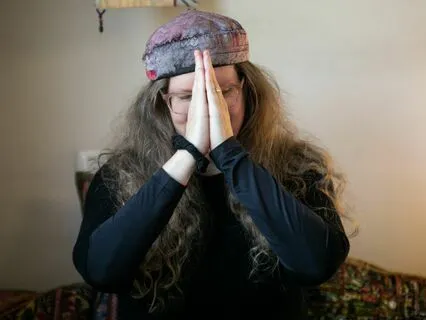
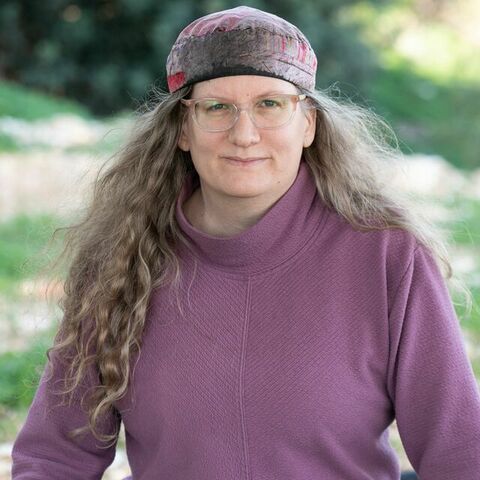
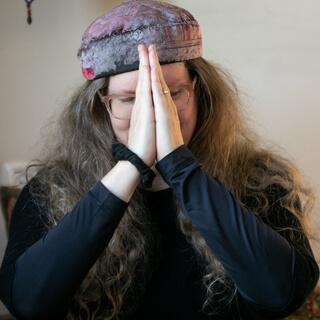
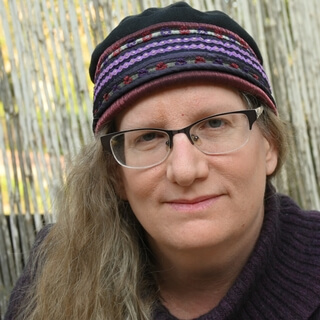
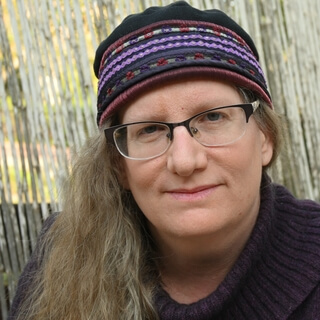
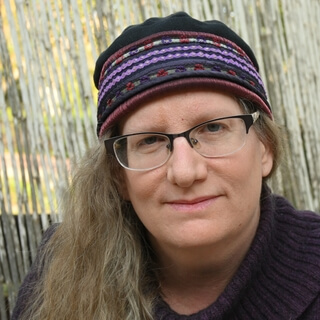
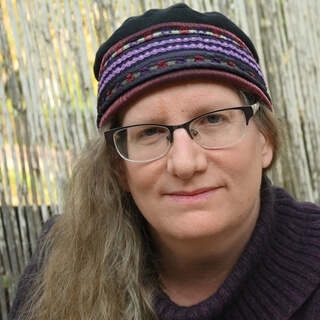
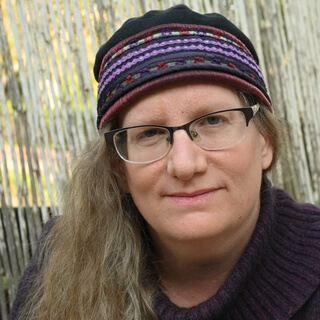
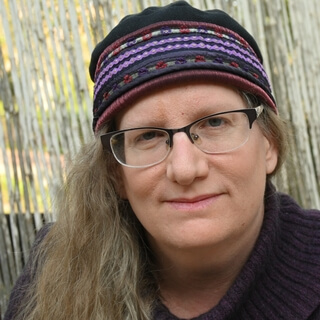
I am Rabbi Fasio Uriel Steinbauer,
The founder and director of Hamachon Lekadushah,
The Institute for Holiness,
Kihilat Mussar Mindfulness,
Where we integrate the ancient wisdom traditions of the Dharma,
Of mindfulness from Vipassana insights,
Theravada Buddhism,
And from Judaism from Mussar,
The wonderful tradition of a spiritual discipline of rectifying,
Living with balancing one's soul traits known as Middot.
So what do we do here in this holy institute?
We offer this public offering every week of looking at the weekly Torah portion.
From the Hebrew Bible,
We are in the book of Numbers in Bami Bar,
In the wilderness,
And we just had this past Shabbat in Israel,
In Parshat Chukat.
And if you're in the diaspora,
You will be learning Chukat and Balak,
A double Parshat,
This coming Shabbat,
This coming Saturday.
So today is Sunday,
June 25th,
Excuse me,
2003.
And in the Hebrew calendar today is the 6th of Tammuz.
We are in the new Hebrew month of Tammuz.
And so yesterday was when we had learned in synagogues across Israel,
Heard the Torah reading for Chukat on the 24th of June,
The 5th of Tammuz.
So what is it that we do here?
Before we begin anything,
If you're new to us,
Welcome.
If you're not,
You know the routine.
We begin with our covenant,
Our intentions for today's session,
That we may merit bringing these to ourselves and our spiritual discipline and our work on this path towards holiness,
And may we bring it to the world.
So I'm going to share screen with you.
If you have vision and you can see the screen,
If you're watching on video,
If you're joining us live streaming on our YouTube channel,
Please feel free to subscribe or join us from our blog on the website or any other social media.
If you're listening to the podcast or other audio,
You will hear me read this.
So these are intentions every week.
So we see this weekly gathering to look at the weekly Torah portion,
The Hebrew Bible,
As a love letter from our ancestors and God of what we're supposed to take from this in order to guide our lives.
What are we supposed to learn from our ancestors?
How can we apply what their experiences are to inform our lives,
To be able to make wise,
Helpful decisions in life,
To make it a good life,
One that we bring God's good to others and cause less harm and suffering.
So we see this as a radical act of self-care that we take this 45 minutes together every Sunday to really take care of ourselves,
Delve into the study and mindfulness meditation together after the teaching.
And we also do this on behalf of others and our relationship with the divine.
So we say,
This is something I am doing to strengthen my own soul in order to be a benefit to others in the future.
And this is something I'm doing to strengthen my relationship to others so I can be a better conduit of God's good to others when they need me.
And there's also something that I'm doing to strengthen my relationship with the divine.
However I may define that relationship or the divine.
I say something I'm doing to strengthen my relationship with the creator,
With God,
With Hashem,
So I can be a better conduit of God's good to others when they need me.
For those of you who would prefer to say a better conduit of the universe is good or good of all humanity,
However you need to word it,
That it's authentic to you is deeply encouraged.
So those are our kavanot,
Our intentions for today's session.
May we merit them.
You are welcome to reach out to us to offer sponsorship of these weekly sessions in memory of someone who's passed away or in honor of someone.
And so today we jump in to first our summary of Bukkat.
So brief summary and then we'll hone in on what we're going to pay attention to.
So what happens in Bukkat?
Lots of beautiful things happen but also some challenging,
Difficult things like a typical Torah portion,
What we call parashah.
So we learned about the parah adumah,
The red heifer,
The red cow,
The ashes from it are actually mixed with water to become a purification tool to purify anyone who is tameh,
Which means impure.
But the tameh,
The impurity here is one who's come into contact with a dead body,
Which is considered the highest level of impurity in the Jewish tradition and in many traditions of the ancient Near East,
I believe Babylonia and others.
So it has a special term of like avot,
The highest,
It translates as father,
But meaning just the highest level coming into contact with the dead body.
To give it some context,
You're dealing with a people and relationship to its divine that is trying to,
In some ways over time,
Have a monotheistic revolution,
One in which it wants to bring to the world and announce that there is one God and it is a God that chooses life and wants us to choose life to remove us from the death cult,
The worshipping of the dead,
The censoring of ritual and religious life around the dead,
Which is what was happening in ancient Egypt,
Which is a form of slavery as we were our ancestors were part of the institution of slavery.
So it's removing us from that impurity.
Okay.
Miriam,
Who is the eldest in the family of Moshe,
It's Miriam,
Aharon and Moshe,
She passes away in this Torah portion.
And right as she passes away,
The people,
B'nai Israel,
Our ancestors,
Suddenly lack water or maybe lack an awareness,
Like the awareness that there might not be water or not enough or the fear of arises and they complain about it.
Now water in our tradition is very much tied to a relationship with Miriam.
She is the beloved ancestor who took the women outside of the sea of the Yam Suf,
The sea of reeds after escaping the institution of slavery in Egypt.
And she leads them in song and water is associated with her.
It's even in her name.
So the people were obviously provided water when Miriam was alive and thriving and around.
So they complain about it.
And God tells Moshe and Aharon to take a staff,
Speak to a rock or speak that this is going to happen,
This miracle,
What is it?
To get water for the people.
And instead,
Moshe speaks at the people with anger,
As we'll go through,
And attributes the water coming out of the rock after he strikes it twice and speaks about this.
He attributes the water coming out to Aharon and himself using we.
We will get this water out.
Watch us.
We will get this out and not to God.
So we're going to touch upon what does that mean?
What does that look like according to our ancestors in this ancient tradition?
So they are able to get water out.
He hits it twice,
The staff,
And it gushes out water.
So the people stop complaining for a bit,
A little bit.
Then God tells Moshe and Aharon right after this,
And we'll look closely at this language to that because you failed because you didn't have faith in me,
You failed to cause sanctification of me of my name.
You failed to sanctify me.
You will not enter the land of Israel.
So they too are part of this punishment that was done to the people in the previous two times ago where they were going.
And over the age of 20 was going to die in the desert and not enter the land.
So now we find out that Moshe and Aharon are also a part of that community that will perish in the wilderness.
Then Hashem tells it's time for Aharon to die,
To go to his ancestors,
To our ancestors.
He's the second eldest.
So Moshe is losing his two siblings,
Those who are closest to him,
Which is a very trying,
Very difficult time.
So Aharon,
Moshe takes Aharon with his son Elazar to the top of the mountain so that he will take his specialized clothing as the Kohen HaGadol,
As the high priest,
And pass them on to his son.
It is an institution,
The institution of the priesthood is passed down from father to son in our tradition,
In the ancient tradition.
So Elazar puts on the clothing of the Kohen HaGadol and when they come down,
All of Bnei Yisrael mourn for 30 days in response to Aharon's death.
And finally Bnei Yisrael,
At the close of this Parsha,
Begin to complain again about a lack of food and water.
God sends deadly snakes that bite some of the people and they perish.
And then God commands Moshe to create a copper snake and put it up on a pole and whoever looks at this will be healed.
And then they go on to fight the armies of Sihon and Og and Bnei Yisrael win.
Lots that we could discuss here,
Lots that might bring up questions or issues or even problems with what we understand to be this project of Bnei Yisrael.
But obviously we can't cover everything.
That's why we have to do this year by year because there's just more that we have to do all the time.
That's the lovely thing of studying the Torah.
So what do I want to concentrate on?
I want to concentrate on what happens with Moshe and Aharon.
Obviously our ancestors and the Parshanim,
The classic rabbinic commentators from the time all the way in the Gemara through the Middle Ages until now,
Grappled with what is it exactly that Moshe did wrong or Aharon and Moshe did wrong to cause such a consequence,
Such a punishment by God,
By Hashem.
And so they analyze it.
Is it that he was angry?
Is it he spoke,
Came with a kind of anger and rage towards the people?
Is it that he struck the rock?
Is it that he attributed the water coming out to Aharon him?
Is it a combination?
What could it be?
After studying this deeply,
What I realized our Parshanim are missing,
Our classical commentators,
Is they did not have more of the modern scholarship of looking at anthropology,
Looking at the history of the other ancient Near Eastern cultures around Bnei Israel at the time.
And what they add to this is quite insightful because it really analyzes what is the project,
What is,
What's the master intention,
The master covenant of God with this covenant of Bnei Israel.
What is it that they are to together bring to the world?
I had mentioned that part of that was to kind of stop this worship of the dead and this dead cult to be dead,
Death centered and choose instead life centered.
But a big part of it also is to understand it's moving the people and all peoples in general,
But moving the people away from magic,
From idol worship,
From the concept that there are multiple gods to see that there is this one God.
And it's so full of intention and covenant that you have to remove people away from the practices that they associate with ancient Egypt and other cultures that may be involved in either the death cult or in magic or idol worship to new practices and traditions at the time in order to move them away from the associations,
From that relationship.
OK,
So we're going to we're going to delve into this.
So what is this?
OK,
So.
I want to be very specific about this.
So let's look at the language first and the Torah.
So.
If you're with me,
You're in Numbers chapter 20 and we're in.
We're in verse six,
I'm just going to read this in the English and then I'll fine tune with the Hebrew,
We have to pay attention to,
Because it's very important to look at the Hebrews I've taught all along.
So Moshe and Aaron came away from the congregation to the entrance of the tent and meeting,
They fell on their faces.
They're really,
Again,
Upset that the people are complaining about the need and want of water.
And the presence of the Lord appeared to them and the Lord spoke to Moshe,
Say,
You and your brother take the rod,
Assemble the community and before their very eyes order,
Order the rock to yield its water.
OK,
That's in verse eight.
OK,
So the language here is they debarked them,
El hassei la,
Ve'enayhem.
OK,
Speak to toward toward the rock,
El,
Toward,
OK,
Toward the rock,
Right before to their eyes.
Right,
And then it will yield its water,
It will it will come from there.
And now she should produce the water for them from the rock and provide drink.
OK,
So they are just on their faces.
You have to remember when Moshe falls on his face,
Our beloved ancestor,
He's showing that his bucket is full.
He's not able to practice at that moment.
He's not able to create the space between the match and the fuse.
He's fallen.
He's checked out.
You know,
It's like it's the fight or flight.
And here's the flight down to the ground.
And here comes the fight when he arises because he's not practicing.
What is he not practicing?
Not practicing around a chaos,
Anger,
Right?
Honoring.
But let's look here.
So Moshe took the rod from before the Lord as he had commanded him.
Moshe and Aharon assembled the congregation in front of the rock.
And he said to them,
OK,
He said to them,
He says to the whole cahal,
The whole community of Bnei Yisrael,
Listen,
You rebels.
Listen to that.
Listen to that language.
Let's see here.
Shim'on ha-morim.
Could you imagine speaking this way to your people?
Listen now,
You rebels.
OK,
Then he says,
Ha-min ha-seh lehazeh,
Not see lechem mayim.
So we get you water for you out of this rock.
It's the equivalent today would be like nasty people.
I can even think even worse.
And you really want you really need or want water.
Should we get this for you?
You know,
It's this really biting negative language.
There's not a practice here.
There's not wise speech.
There's not a practice of savlanut,
Of patience,
Of bearing this burden.
Right.
And then Moshe raised his hand and struck the rock twice in his ride.
So there's another acting out of his anger.
OK,
This is the fight mode.
OK,
Before we had the flight.
Out came copious water and the community and their beast strength.
Now,
I just want you to be aware if you're in that community right now,
You're all you think about everything they've gone through.
OK.
Two parashiot ago,
Their great leaders went out as spies for them on their behalf to go check out the land.
They come back with some of them giving most of them giving a negative report.
God punishes them and everyone over the age of 20 to perish in the desert.
The people try to some of them try to change their mind and go and say that they sin and they were wrong and they were going to go fight.
And this is all right.
That's a back and forth.
So this generation,
These people and then,
Of course,
Came Kora last week,
Right?
Because they're looking for new leadership that will help return them to Egypt.
They were looking for new leadership to listen to them.
They're looking they're looking for a way out to escape this punishment,
This situation in the present moment.
They don't like this.
They don't want it.
Right.
And all of a sudden you're there and you're like you're thirsty.
And so your animals and your leader,
Your beloved leader and his silent brother was most the time silent.
What does he do?
It he yells at you.
He yells at you in plain that you're a rebel for for wanting water and and kind of humiliates you,
Humiliates you.
And like as if you've done something bad or wrong by complaining and wanting water.
OK,
So even if there is something wrong here,
Like you say,
The the way in which they are asking for water is not the proper way to do so.
Does it merit this reactivity on the behalf of Moshe?
Does it merit him dishonoring them?
OK,
So by dishonoring those who created in the image and likeness of the divine,
You are doing the same to Hashem.
OK,
That's what we need to pay attention to here.
And what does Hashem say after this is all done?
If you're following along,
We are in Numbers chapter 20,
Verse 12.
And it says right here to Moshe and to Aharon,
What does he say?
He answers.
He responds.
He says.
Lohei man tem bi.
You did not have faith in me.
Ve'hakdisheini le'anei b'nei Yisrael.
You did not call sanctification of my name of me.
You did not sanctify me right in the eyes of the people.
OK,
And therefore you will not lead this congregation into the land that I have given them.
Who's the congregation,
The congregation of people under 19?
OK,
I guess.
Right.
So that's how we ended here.
So something obviously that this has been debated among our ancestors,
As I've told you,
For thousands of thousands of years.
What exactly is the problem?
What is wrong here?
What what did Moshe do?
OK.
So God tells us very plainly that they did not have faith.
And God.
To try to figure out what that is exactly,
What did they didn't have faith,
They didn't have faith,
I don't know,
And maybe the water wouldn't come when it'd be sufficient.
But the more important thing is they did not call sanctification of God,
Of God's name in front of the eyes of the congregation.
They did not sanctify God.
And what does it mean to sanctify God?
This is very important.
OK,
In our tradition.
We say when.
To sanctify God or sanctify anything,
Really,
Is is what we call kidush Hashem,
Right?
A real sanctification,
But an honoring of God.
And how is that?
What's that honor?
It's behaving in a way.
To cause others to come closer to God.
Let me say that again,
It's behaving in such a way to cause others to come closer to God.
And so what our understanding as we move further into this is that Moshe and Aharon not only missed an opportunity to do and create kidush Hashem,
The sanctification of God's name,
They did the opposite.
They caused B'nai Yisrael,
God is saying.
To move away from God.
To move farther away.
Can we get venture why right now,
Before I share more material with you,
Your greatest leaders are standing before you.
They're humiliating you.
They're yelling at you.
They're calling you names.
Is that someone you want to follow and follow their God?
No.
OK,
And then they attribute the water coming out when Moshe did.
And Aharon didn't challenge him.
They attribute the water coming out to themselves in in his anger,
In his rage.
It was a mistake.
And as we know,
Mistakes have caused an effect,
They have consequences,
They have karma.
And the effect is.
Did not sanctify God's name,
Did not cause the people to draw closer to God.
And that he and Aharon will pass away in the Bamibar,
In the wilderness.
So.
Let me share with you briefly some other sources around this.
And then we can move into our mindfulness meditation together.
So.
I'm going to move in.
My source this week is the Jewish Publications Society's book on numbers on the Bamibar.
And I'm in particular,
I'm looking at the excursus of number 50,
Looking at the academic writing around this.
So on page 452,
We're first told.
And.
That in this direct address to his people,
Moshe ascribes miraculous powers to himself and Aharon.
Indeed,
By broadcasting one word,
The note,
See,
Shall we bring forth right?
Moshe and Aharon might be interpreted as having put themselves forth as a God.
This is very important once you consider the cultural context in which they come from.
Let's let's share a little bit more of this study here together.
So against you need to understand against the backdrop of where our ancestors are coming from and what tradition they're in.
Right.
Against this mosaic religion is reflected.
And is totally like a negative is always going kind of against the Egyptian,
The ancient Egyptian practices with their priests and magicians who compel their gods right through verbal formulas.
Right.
And if you as contrast,
If you follow every time Moshe does announce a miracle of God,
He always announces ahead of time,
Hey,
Guess what?
Hashem is about to perform a miracle at this time and then he's absolutely silent.
Moshe performs his miracles in dead silence.
And then,
Like,
For instance,
The instance of the plagues back in the Makot,
Back in Egypt.
Right.
And not only does Moshe act without speech,
But on four different occasions,
As a seating to borrow his plea,
Pharaoh's plea to ask for their cessation.
He leaves Pearl's presence,
The Pharaoh's presence and praise to God alone.
Right.
Why?
So that he's not mistaken for he then magician for an Egyptian magician.
OK,
He always offers his intercessory prayers for Israel in private.
Again,
To dissociate him from the pagan counterpart.
This happens over and over again.
So if you might want to say if there's one of the master projects of the Torah and our people passing on this tradition to us and to the world is the central element of Moshe's role,
His prophetic role was to sever Israel from idolatry and from all adulterous seductions of their past,
Essentially.
Right.
So he God helps him with authenticating signs,
Miracles and to make sure Israel understands they divide.
They originate from Hashem,
From divine will and not just because of nature,
Because of magic.
God repeatedly instructs Moshe to describe the miracle in advance and to designate the precise moment it's going to happen.
And then he's silent over and over again.
So you have to realize that our ancestors,
B'nai Israel,
The Israelites were steeped in their experience of Egyptian sorcery and they could have easily attributed the marvel,
The amazingness of the water coming out of the rock,
Not to God,
But to the craft of Moshe,
Especially when he says,
Shall we get this water out here for you?
You rebels.
And then hits it.
It doesn't look like an act of God here.
That is not sanctifying God's name.
That's not having faith.
It's incredible,
Really,
Actually.
And so the gulf that Moshe had spent this whole time.
Of trying to create a gulf between how he behaves and his Egyptian counterparts,
Right,
It's supposed to be as wide as possible through mindful behavior and specific ritual acts that were done in silence after they're announced and it completely is thrown out the window with this act.
And this is later.
This is years later,
Right in the desert.
This is like poor Moshe.
Think about in your own life,
Right?
Right.
You've practiced,
You've practiced,
You practice.
You had some obviously some behavior you don't like or agree with.
Part of you is trying to work to change yourself.
We all do this as part of our tradition.
Maybe we even have some behavior that we really don't like.
Maybe we're really impatient with people.
Maybe we yell and our family.
These are just some examples.
And we practice and we practice many,
Many years.
Carrying this burden with our family and community,
And then all of a sudden it's years later and just scream at people or you lose your patience and it feels like you've totally failed.
You feel like it's like that second arrow.
And then there could even be judgment that you failed.
Right.
The third arrow,
We say in the Dharma tradition.
And this is Moshe.
Moshe,
Our leader,
Right?
He God bless him,
Works so hard to follow how he was supposed to do this,
Remain silent.
And then his bucket,
He just lost it.
He just lost it.
So in this moment,
May we have compassion for him.
Maybe learn from him that here are greatest leader and prophet failed.
And so we too can and most likely will fail in our practice.
Most of us don't carry the burden of 2.
2 million people out of slavery to new lands with greater power,
With greater responsibility is that greater task to sanctify God's name.
So I think I will close this by just saying that you can now understand why it was such a wrong thing.
Right.
It even goes on to say here,
It's very important.
I think this is very intelligent.
It says right here that Moshe spoke out rashly.
Right.
This is the whole discussion.
It says he blurted out indicating that his sin may not have been exactly what he said.
But the bare fact that he spoke at all,
Let me repeat that.
It might not have even been.
Okay.
Yeah,
I think it's multiple things.
I think it is that he spoke that he attributed it to him and all her own.
He did it in angry speech and that he spoke at all because we now know that master project was that he was not supposed to speak after it was announced that water was going to come from there.
And now we have beautiful insights into why Moshe was selected at all,
Which our tradition for ages doesn't know why exactly he was selected to lead our people.
They reasons,
Right.
But never once have I ever read,
If you find a source,
Please send it to me that it's because he didn't speak and he didn't speak well.
He even said when he started his relationship with Hashem,
I don't speak well.
I have heavy lips,
Right?
Heavy tongue.
I cannot be the person for this job to go to speak to paro to try to free the people.
I am not your man.
Right.
And all along,
God's like,
You're perfectly my man.
You're perfectly the person who will be the prophet to leave because you'll be able to say enough.
You'll be able to announce that this miracle or this thing is going to happen.
Right.
And then you'll be silent.
You'll be silent because it's easier for you to be silent already because you're silent because you have these heavy lips,
Heavy tongue.
It's difficult for you to speak,
Whether it's physical or emotional or combination.
He is selected because of that.
In addition,
Maybe to other qualities and things.
But this is the insight that we gain here.
Beautiful,
Because often in our lives,
In our practice,
We don't know exactly why things are happening the way they are to us or why we're headed down this path in this way.
Years later,
Often we can go and look back and be like,
Oh,
It makes sense now.
Right.
I can see it.
And this is one of those moments for us with Moshe.
Right.
We finally get to learn,
See,
Witness more fully why he was selected,
That this was key to his role,
That he be someone that has difficulty in speech.
Okay.
So let's move into our mindfulness meditation practice today.
We want to carry with us within this week is a practice of Musa mindfulness that always kind of having as the forefront in your behavior.
Why am I doing what I'm doing right now?
What is its impact?
My behavior?
What's its impact on others in this moment?
And like and then reflecting later as a cash on her naffish and accounting of the soul.
If I had to do it all over again,
When I act similarly.
Right.
And obviously,
I think if we approached Moshe and Aharon,
They would say,
No,
I wouldn't have behaved that way.
I wouldn't.
Right.
So we're going to keep in mind that for us today to cause sanctification of God's name,
To draw people closer to bring God's good to others that we need to do that.
We bring God's good to others.
We speak kindly.
We show respect to each other.
We use wise speech.
We practice cavort honor.
We behave ethically in our business and life transactions.
That we practice Musa mindfulness to do Tikkun of our own me dot and in our lives so that we can cause less harm and suffering and bring God's good to others.
That we use wise speech to speak appropriately,
Make wise,
Wholesome,
Better choices in our lives.
So the opposite of all of this is a desecration of God's name.
And so that's part of our practice.
So if you're like me,
Come to your seated posture.
If you are seated,
You're welcome to assume one of the other three classic mindfulness meditation postures.
You're welcome to walk back and forth with no place in general that you're going,
Specifically.
Standing or lying down with eyes open if you're lying down so you don't fall asleep on us.
We're going to engage in a short meditation practice together.
So if you feel safe and comfortable and you want to,
I encourage you to close your eyes.
If not,
You're welcome to lower them just to kind of stop visual stimulation from occupying your attention.
So instead,
We're going to really invite presence.
Invite that we be here right now in this present moment together.
So go ahead and do that with your Kavana.
Invite that you be fully here.
Invite ease with the inhalation and exhalation coming to the present moment.
This next inhalation,
Raise your shoulders and lower them exhalation.
I always have a smile that comes naturally with that.
Feels so good to raise the shoulders and then release.
Coming to ease,
Coming to the full present moment,
Coming to stillness.
What a gift from God,
This oxygen.
We are sharing here in this sacred Zoom space together.
Whether you're joining us live streaming or watching later or listening later.
Know that you are sharing this world,
This space,
This universe together.
Inhalation and exhalation.
Allowing yourself to fully settle in your sit bones if you're seated.
Wow.
Really the gift of fully arriving here together.
Allowing your spine to be erect but not stiff,
Created in the image and the likeness of the divine.
Allowing your breath to come to its own natural rhythm.
No need to force it or control it.
Allowing your awareness to scan through your body,
Softening and releasing any areas of tension.
Anything calling for your loving attention.
Bringing your loving attention to where you detect your breath.
Perhaps at your nostrils,
Your mouth,
Perhaps in the rising and the falling of your belly or chest.
If the breath is not a good home base for you,
Then it's a good place to bring your breath to.
Allow your anchor to be sensations in the body,
My voice,
Or the sounds around you.
Bringing a relaxed,
Curious attention to whatever sensations arise,
Moment to moment.
Realizing that the gift of this daily practice is building the space between the stimuli and our reactivity.
We build this beautiful inner witness,
One that is kind,
Compassionate,
With what we call the beginner's mind,
Full of curiosity.
And our life experience right here and right now in this body allows us to really pay attention to the rising and falling of all experience,
Whether it's emotions,
The feeling tones,
Sensations in the body,
Or thoughts as we might be holding on to something in the past,
Or ruminating,
Or planning for something in the future.
We are able to witness this all without reacting.
We build this spiritual muscle with daily practice over time.
Where is your loving attention now?
Each time you notice that your mind has wandered off as a moment of mindfulness practice,
Gently bring your attention back to the inflow and outflow of the breath,
Or your chosen anchor,
Offering a relaxed,
Wakeful presence.
Wakeful presence.
Now,
Scanning your body,
Noticing if any particular sensations are strong,
Calling for your loving attention.
What do they feel like?
Perhaps you might be aware of heat or chills,
Tingling,
Aching,
Twisting,
Stabbing,
Or vibrating.
Maybe there's something relaxed and calm,
Open,
With a soft,
Open awareness.
Feel the sensations as they are.
Noticing.
Are they pleasant,
Unpleasant,
Or neutral?
As you fully attend to them,
Do they become more intense,
Or do they dissipate?
Do they change?
And when the sensations are no longer strong experiences,
Return to the mindfulness of breathing,
Or your anchor of choice.
And always practice the art and practice of mental noting,
Gently labeling your experience with a soft tone,
Always in the background of your attention,
With majority of it being your actual experience,
Not the story you tell about it.
You might ask yourself,
What is happening inside me right now?
Noticing if any sensations are predominant and ask,
Can I be with this?
Imagine if our beloved ancestor,
Moshe,
Paused.
Notice what was happening inside.
And if you can,
Pause.
Our beloved ancestor,
Moshe,
Paused.
Notice what was happening inside.
And asked himself,
Can I be with this?
I want to act within my values,
My Torah values,
My Torah Dharma,
In alignment with my higher future self.
How do I want to behave in this moment that meets those conditions?
Learning to be centered,
Balanced,
And present.
Wisely aware of changing experiences,
Of changing life.
Coming to silence for the next minutes.
I will ring the bell when we are to come out of our practice.
If your eyes were closed,
You can gently and slowly open them back up,
Joining us in this sacred space together.
Giving yourself a bow to Hashem,
To God,
To the practice,
To our ancestors for handing this down to us,
To your teachers,
For your courage to arrive and to practice.
Thank you.
Thank you for joining us,
Learning what we can from Pukat to apply to our own lives and practice this week.
I look forward to being together next Sunday at 7.
30 Israeli time,
Where we will jump into Pukat together.
And I think then we meet up,
The diaspora outside of Israel,
With what's happening in Israel.
May we merit fulfilling this and bringing God's good to others.
Thank you so much for today.
Please offer what donations and dana you can to support this weekly public offering.
Be in touch with us with your comments and questions.
And I thank you again for supporting the Institute for Holiness,
Kichil Atmosar Mindfulness.
I'm Rabbi Chassi Oriel Steinbauer,
Signing off for today.
Take care.