Welcome,
Allow yourself to settle and arrive.
We will begin in one minute.
Okay,
Welcome.
Baruchim Habaim.
Today on Sunday,
June 29th,
2023,
Here in Israel at 7.
30pm,
You are joining Awakening Torah Musa Mindfulness.
And in this case,
This week,
We are covering Awakening,
Parshat Bo 5783,
The Hebrew year of Torah Musa Mindfulness,
Where we take the practice and lenses of Musa Mindfulness to learn the most wisdom and insight from the Hebrew Bible,
From the weekly Torah portion,
To apply to our lives.
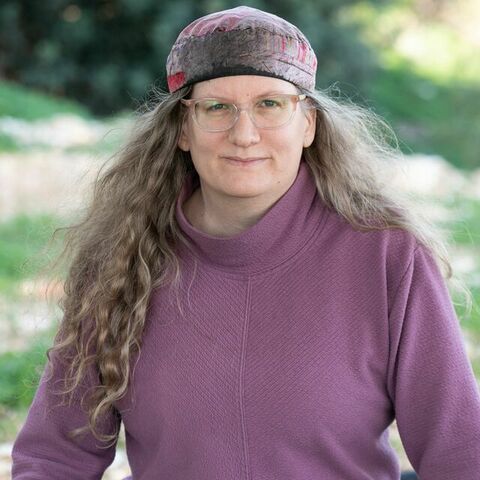
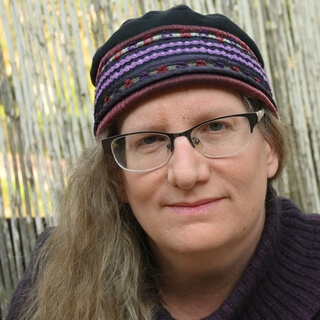
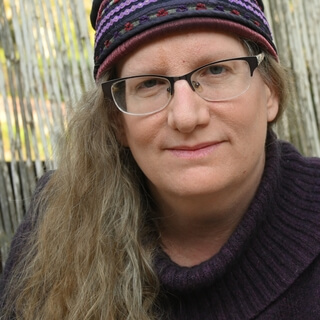
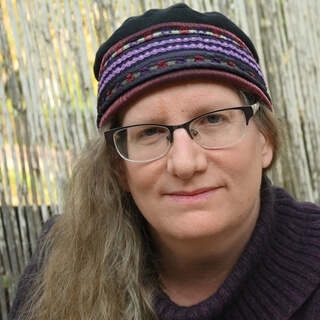
I am Rabbi Hasia Uriel Steinbauer,
Founder and director of the Institute for Holiness,
Kehilat Musar.
And I'm delighted that you've decided to join us for this weekly public offering to practice together,
To learn together.
So we cover the Torah portion from yesterday on the Jewish Sabbath on Shabbat,
Where it was January 20th.
What was it,
John?
28th?
Yes,
28th,
2023.
On our Hebrew calendar,
We entered yesterday,
Vav,
The 6th of Shabbat,
The month of Shabbat,
In Tavshen P'Gimel,
The 5783.
So as we do every week,
For those of you who are new to us,
We begin with our Kavanot,
Our intentions for today's practice.
We highly believe in setting intentions in order to get the most out of our practice together.
So you'll see before you,
If you're watching on video,
Three Kavanot,
Three intentions,
Which are in this beautiful relationship together.
They're not really separate.
For those of you listening on audio or podcast or an insight timer,
Welcome.
I am going to go ahead and read these so you'll be able to hear them.
So we say before doing acts of caring for the self,
Before doing acts of caring for others,
And before doing acts to strengthen our relationship with the divine,
Which is what we see in our practice of Mussar mindfulness,
We are looking at radical self-care,
Ben Adam le'atzmo,
Ben Isha le'atzma,
One's relationship to oneself,
Then Ben Adam le'chavaro,
Ben Isha le'chavara,
Doing acts for others,
Care for others is our relationship between ourselves and other human beings,
Other acts of life,
Other whole beings on this planet.
And finally,
We say before doing acts to strengthen the relationship with the divine,
Okay,
That's Ben Adam le'machom.
I wouldn't even say Ben Isha,
Isha le'machom.
Okay,
So we say that this is something that we are doing right now together.
This is our covenant,
Our intention.
This 45 minutes together of Mussar mindfulness and awakening is something that we are doing to strengthen our own soul and to strengthen our relationship to others and to strengthen our relationship with the creator in order to be of benefit to others in the future.
In order to be a better conduit,
We are a vessel of that which is God's good to others when they need us,
That it may flow through us so that we don't have any blockage from our middot,
From our soul traits,
From any of the hindrances that we might be caught up in and states in our life,
That we be able to really be an alignment on this path of balance,
Shavir chasahav,
This golden mean,
This path,
So that we can be of the best service to others and to God.
So,
May we merit this today and our learning and practice.
I'm going to go ahead and stop sharing screen for those of you watching on video.
So I always give a brief summary of what is the Torah portion.
We're essentially covering chapters.
And let me,
I think it's nine to know it's 10 chapters 10 fully 1112.
Even going into 13,
I think up to 16 verse 16.
It's very long,
Parsha,
Trying to cover too much.
As usual,
Yes,
Yes it is versus one through 16 and chapter 13.
And this is what we'll be looking at the cloud in general,
Largely,
But then we're going to move into very specific teaching and learning from the store portion so that we can focus our practice so.
What do we cover in this Parsha,
And then we cover the eighth plague,
The I don't even like to call it a plague,
And the word is auto auto assign assigned from God it's never called a Maca or a Maca plague or beating.
So this eight sign in Egypt and it's rhyme is a swarm of locusts are Bay,
Right,
That block the sun,
This locust block the sun and eat crops.
And then the ninth sign comes,
And that is such a heavy darkness,
And that for several days no one could see each other or move.
And then God tells me Israel that they should,
They'll soon be freed by God,
And that they should ask their Egyptian neighbors for gold and silver.
Then the month of your team it's right I'm actually exiting from the Exodus from Egypt becomes the first month on the Jewish calendar commanded by God.
And that's what I'm going to focus on today but I'm going to continue with my summary,
God commands me Israel to sacrifice lambs and place some of the animals blood with his up on the doorposts of every Jewish home on every home of the children of Israel and the Jews,
And that this is a sign this blood on the doorpost for God to pass over their homes.
During the 10th and final sign,
Or what some people call a plague.
The death of the firstborn males of Egypt,
And even the death of some of the animal firstborn,
Then future generations are told to celebrate of an Israel the children of Israel to celebrate the Exodus from Egypt,
You'd see at me time by eating matzah,
Which is unleavened bread,
Right,
Or products and not eating humming,
Which is leavened for seven days and by sacrificing a core bond Pesach,
Which is the pace offering the lamb offering.
And then the last vote,
The last plague power hotels been a Israel,
The head of Egypt now tells the children of Israel to leave,
And the Egyptians even push them out.
They depart,
Our ancestors depart in a hurry.
So much so that the dough that they have does not have time to rise.
That is a general summary of this portion.
So for us,
I think I will give some background in of before we move into exactly the pursuit and the what we the verse that we'll focus on,
Which is in order to understand Moosa in the Jewish tradition and even,
Even the path of the Dharma.
In some ways,
Is this a concept that in actions,
Doing is shape character.
This is,
I would say foundational understanding of the human being,
And find foundational to the path,
The path towards liberation the path towards insight and wisdom the path towards holiness.
It's this concept that,
That the human being is influenced by actions,
And that essentially our intellect and emotional life every every section and part of us is conditioned by the things that we do and the things that we don't do.
And but particularly by the things we do both what we would call pleasant and unpleasant or neutral and sometimes good and bad right evil,
And for the good.
And so even in this,
This understanding that even if the person is doing evil or unpleasant or harmful acts in,
And that the person's mind is really dominated both indeed,
And in thoughts that are evil or that are causing harm and suffering.
It basically the concept of the Torah,
And of Judaism and a Moosa and mindfulness of the Dharma is that this person has the ability through to Shuba through turning to the correct path one that moves away from harm and suffering towards doing acts that are for the good of society for the good for the other the good for the self,
That whole combination good for the divine by these little baby steps,
Each day they turn and they start doing these acts daily on a basis which we would understand is constantly occupying oneself with Torah and its precepts with Moosa with mindfulness with the path of the Dharma right through a even even if the intention is not to become good even if the intention is not through godly intent and to build this relationship with the divine.
This will inevitably veer them towards the good.
Towards it so this is really profound statement that even the wrong motivation will lead one to the right path,
And will in some ways in a really strengthen their character for the good over time.
And this is quite profound.
One I think it's extremely hopeful.
Because it's basically saying that all of us when we are at our lowest points in life,
Through sin,
Through harming ourselves and others causing suffering that at every and each moment,
Even each breath.
That's a gift from God,
We have the opportunity to take that deep breath that pause and say,
I'm going to do this other acts,
I'm going to one step at a time one foot in front of the other and day in and day out it's like that story that need rash of the water dripping on the Evan on the stone over time,
Creates a marks indentations inside.
And,
And surely if water does this over time on the rock,
Then surely good deeds,
Being right speech right livelihood right thoughts,
Right deeds and an alignment with the path of really doing to Kuhn Hamidot of really repairing and correcting where our soul traits are not balanced,
And being on this path of kindness and compassion,
It will do more than just indentations to our soul and who we are.
It will change and shape who we are.
And this is something that we do in taking refuge in community.
This is something we do and taking refuge with teachers,
A teacher.
This is even taking refuge in the teachings of the Buddha and the Dharma and in God and Torah and Judaism and Moosa mindfulness that they shape us daily.
It's a very hopeful way of looking at the human being and life and so if you're at one of those moments even in yourself feeling really low,
Really feeling like I made that mistake again or I keep hurting myself or others,
One step at a time.
It will help because these actions shape character,
Very,
Very much so.
So,
Our,
Our,
Our religious and spiritual training this this practice this daily discipline and Moosa mindfulness.
It doesn't proceed from mind to deed.
It's a reason to action.
In the hope that this conviction right will ultimately lead to appropriate actions.
It is this almost a leap of faith it's doing,
We shall do and we shall hear doing,
And then it shapes it on flows over time you even hear and great is some of from our greatest teachers of the Dharma will say,
Don't trust me,
Go and do the practice,
Go and learn for yourself go and do the practice and see how it unfolds see it's what happens.
It's not that I'm going to sit and learn the Dharma or Moosa or the combination,
And then I'll be convinced and then I'll go practice,
If I think it's okay or I think it's good or such.
It's not that way at all.
It's it's it's doing it,
Then reflecting,
Okay,
Over time.
And so,
This is where we are together.
So let's focus in on our pursuit.
I'm in chapter 12 of Shemot,
The book of Exodus,
Verse two.
Okay.
A whole dish is a lesson,
Roche for the shame.
Rishon who left them.
Okay,
So this month,
Where they were right before the saw to do yet to meet time to exit,
Have the Exodus from Egypt.
It shall be for you,
The ham and the plural for you,
The beginning of months,
The beginning of your life starts right here and right now.
In this moment,
The beginning of these months,
It shall be for you the first of months of the year for you.
The first meets VAR given to our ancestors to Benin Israel to the children of Israel to the Hebrews,
Deciding when each new month begins with Roche for dish,
The new moon.
It's so significant that a lot of ham meaning for everyone.
It's not just for one person or one thing.
A,
It's for close the door all the way please for that.
Excuse me I had a child coming into the room to sit with us.
It's very important and so we take this verse in our practice.
It's for our own lives at each and every moment,
This month,
This moment,
Shall be for you the beginning of months the beginning of your life,
The beginning of your practice.
And this is it this is this beautiful command excuse me.
This is this put it back up please.
Sorry,
Excuse me.
Thank you.
Okay,
Excuse me everyone sorry a light fell.
Excuse me for one minute as I go around and try to fix this.
Okay,
Thank you for your patience.
It's one of those things when you have children and family and they come in.
They have a need.
So,
Um,
This is such a key verse okay and then I'm going to share with you what's from Shamrock Robber why this is so significant right besides it.
This being a key verse and the beginning of needs for the beginning of commandments for our ancestors and to apply to us today.
So in Shamrock Robber is this beautiful midrash is beautiful sharing that goes off of this verse has something significant about this verse.
So,
It says it's like a king who has a treasury full of gold and silver and jewels,
And the king has one child.
Okay,
We are the children,
Right we are the child and the story,
And the king is the Almighty the divine.
Okay,
And while the child was young,
And this is all of us in our life and in our practice,
Just like B'nai Israel were young when they're starting off the king took care of all the treasures,
But when the child grew up the king said,
When you were little I took care of all this.
And now you're mature and I'm giving everything to you.
At first,
The Holy Blessed Be One took care of time in the story of creation and our people story.
We see this in the creation story where it is said the sun and the moon shall be signs for the set times,
Which God created and controls.
Once B'nai Israel matured God handed it over to them as it says this month shall be for you.
So we're suddenly given this gift,
Which was there for us all along right.
This responsibility we're suddenly mature enough,
And our practice and our spiritual path,
And so we're realizing that we are in control of our time of our practice and us moving forward.
This gift of Rosh Chodesh,
The new moon,
This gift that these shall be the months for us that we shall set these sacred times these occasions.
Within our power and our control and it's a great responsibility.
It's a great gift.
All right.
So,
According to this Midrash when B'nai Israel left Mitzrayim,
Left Egypt,
They achieved a kind of spiritual growth.
And God gave them control over time of the months of setting them and when the holidays would be right when do they fall.
They fall at certain times on certain days of the month based on the new moon.
So,
New months do not begin all on their own,
B'nai Israel have to watch the sky and spot the new moon and Rosh Chodesh,
The new moon,
Can only begin when they say so.
And when deciding the new moons begin B'nai Israel also decide when all the holidays will take place.
This is extremely profound,
Because when we have achieved a certain spiritual growth today in our Musar mindfulness practice,
We are given that great responsibility and time of God saying to us,
You have control over your time.
You have control over your practice.
You are in control and responsible for your reactions,
Your reactivity,
And how you're going to live.
And it's up to you to make that time on a daily basis to commit to your practice,
To set your calendar,
To do the practice,
To celebrate the sacred occasions,
The sacred moments when there is growth in your practice and who you are.
We do this in community and we also do this as individuals.
And so,
There's something extremely special about control over time,
In the sense that it really signifies that we are free.
Slaves do not have control over their time.
Even those who are considered not equal,
Right?
Up until recently,
Women,
For instance,
Even though technically we're not slaves,
Particularly women of white privilege in the West were not necessarily slaves,
But they didn't have control over their time.
They were controlled by father and then husband.
So,
Think about this.
Think about suddenly where you are in 2023.
What a gift,
This V'Hashem 5783,
That we have control over our time,
That we can in community set these new moons and these holidays,
And we can set our daily practice.
So,
Show up,
Celebrate,
Do what is needed to be done for the sake of bringing God's good to others,
Right?
Bringing God's good to others for the sake of being available to others to be on this path together.
This is really visualized in the whole reform of the calendar in this Parsha as the start of a holy new world order of life that is to be dominated by the consciousness of God's active presence in history.
So,
Our practice,
The gift of controlling of the calendar in our practice and what we do on a daily basis and in celebrating being with community is endued with this consciousness of God's active presence,
Not only in history,
But right here and right now and again with each breath and again.
God's presence is here.
It's a gift.
It's within.
It's between us.
It's our breath that we share and our mindfulness meditation practice.
So,
I invite you now to assume your posture.
Assume an upright posture that is upright to you.
It doesn't mean that you have to be seated with a straight back,
Particularly if you have any chronic pain or chronic issues.
You can assume one of the classic four positions of mindfulness meditation.
It can be lying down,
Or it can be walking meditation.
It can be seated,
Either in a chair or on a zafu,
On a sitting meditation cushion,
Or it could be standing like in a strong mountain pose.
Whatever is best for you right now.
Make that decision for yourself,
Control of your practice,
Control of when you begin.
And just like I said in your calendar,
I'm going to take a sip of tea,
Please,
Before I begin,
You do so too.
Thank you.
Okay,
So I'm going to assume my posture in a chair,
I actually move to the front of the seat,
Because that helps me sit in the most dignified upright position,
Created in likeness in the image of the divine and we shall sit like it.
Not West Point stiff,
Right,
We're not looking for that.
John Kabat-Zinn always reminds us not to sit West Point stiff,
But instead just dignified and at the same time at ease.
I invite you to close your eyes if you have vision,
Or either lower your gaze.
We're going to take three deep inhalations three deep breaths.
Here we go.
The gift of oxygen and ease and letting go,
Begin to settle in with ease,
Inviting awareness with this next inhalation and then in the next installation we're beginning to really arrive.
And again,
Inhalation and exhalation fully letting go fully arriving this gift to yourself right here and right now in this moment together.
I'm going to introduce you with my voice in a guided meditation practice.
And then you will hear me ring the bell at the end to signify that we are done with our meditation practice.
I invite you right now,
While you're sitting here in some ease and calm together.
I invite you to reflect and bring any stuck place,
Any place where you found yourself getting caught in either a difficult emotion,
A difficult thought,
Difficult sensation or any in reaction if any to the teaching to this concept that the calendar is now yours.
It's a gift of your spiritual growth and your maturity for you to take personal responsibility and such your practice daily.
I invite you is there any stuck place in response or reaction to that,
As we move into this meditation deeper,
Just gently name to yourself the primary emotions that have become activated.
If you don't feel any sense of stuckness if anything you might feel joy or pleasantness,
Simply honor that also there's no need to make up reactivity or stuckness,
Allowing yourself to generally reflect just enough about your situation,
Where you can get to the most challenging part of that feeling and that teaching of the personal responsibility and your daily practice.
You are here,
Recognizing whatever is going on for you whatever emotions are present,
Recognizing any thoughts or thought patterns any storytelling,
Either in reaction to the teaching or whatever might be going on for you right here and right now,
For some of us it'll manifest and strong sensations in the body.
Anything that we might call unpleasant,
Just recognizing whatever is here for you right here and right now,
I will move into a minute of silence while you allow and foster this recognition is in your body,
This embodied presence this feeling of what is going on for you.
Slowly shift into allowing bringing your attention to whatever feels most difficult,
And what you have recognized with the intention of letting it be allowing is the willing,
The willingness to pause the willingness to stay presence with life that is here for what it is.
This is us allowing any difficult thoughts or emotions or sensations to be present with us.
And this requires gentleness,
A tenderness,
Allowing yourself to care with kindness and self compassion for all of us to carry one another.
If you allow yourself such things as this to.
Yes,
I can hold this.
This is about opening to our experience,
Even when it is unpleasant,
Even when it is painful.
As we move into investigating,
We are inquiring into the felt sense of our experience,
Rather than seeing something in our mind as an analytical process or something of cognition.
Well our original stories or beliefs can definitely be a portal to direct experience,
We want to keep returning our attention to the body to the felt sense and sensations that we feel most vulnerable.
We attempt to bring an interested and kind attention to this practice right now.
Some useful investigation questions are.
What is the worst part of this for me,
What most wants my attention.
What is the most difficult or painful thing that I am telling myself right now that I am believing what emotions does this bring up,
Such as fear,
Anger,
Grief,
Where do I feel these emotions inside.
What are the sensations,
Clench jaw rawness hotness aching empty squeezed,
Allow yourself to assume the facial expression and body posture at best reflects whatever emotions and feelings you have even just temporarily,
As we move into nurturing ourselves and this non identification,
Listening from a compassionate presence.
What is the most vulnerable part of you right now,
What could it communicate to you,
Words,
Feelings images,
What does the most vulnerable part of me wants from me what does it want from you to be with it.
Sometimes we need to bring love and a source of wisdom,
Allow moments of breathing consciously now bringing in the gift of that breath that oxygen the gift from God,
And adjust your posture in such a way helps you fully contact your most awake experience of your heart and mind,
Calling on your higher self,
The one that's in alignment with who you are and your values and who you want to be call on your wise and compassionate self.
If you can't do that right now call on a friend,
A family member,
A teacher,
Rabbi,
Spiritual figure,
Like the Buddha pet.
You need to whisper this to yourself inviting love,
I invite love,
Inviting acceptance,
I invite acceptance forgiveness,
I invite forgiveness,
Compassion,
I invite compassion,
Protection,
I invite protection all that your most vulnerable part of you needs.
Allow yourself to extend care through words and touch a hand on your hearts imagery such as seeing your inner child embraced seeing yourself surrounded by lights,
Allow yourself to receive the message from your higher self your most awake heart and mind,
The gift of God,
That Nick would that point inside,
Created in the likeness and image of the divine.
What is it whispering to you right now what is it wants you to remember a hodge has a ham,
Has a ham this moment is yours right here right now.
This is the time to cease any doing and rest in the presence that has emerged,
Relax and allow it to fill you,
Even if you are feeling some new or residual difficulty,
Offer this recognition and acknowledgement,
The internal bow within no need to push away,
No need to over identify,
We will take this next minute and silence to be with whatever has emerged for us.
If your eyes have been shot,
Allow them to gently and slowly open.
Welcome us back in this sacred zoom space,
Or live streaming on our YouTube channel or wherever you might be meeting with us.
Thank you for your practice today.
And thank you for we sign off to just take this practice today and journal a bit,
Even for just up to three minutes of what you learned about yourself that you want to remember from today's practice and allow yourself to have some unstructured sharing,
Either for yourself and journaling,
Or for someone with someone who's a spiritual friend,
That you could spend that time doing that like a Kavruta.
So again,
I am Rabbi Chassu Oyer Steinbauer,
Founder and director of the Institute for Holiness Kehilat Mussar.
You've joined us on this lovely day of Sunday,
January 29.
It's an honor and a privilege to teach and share with you and practice this awakening Torah,
Mussar Mindfulness,
Where we really delve into the learning and practice of Mussar Mindfulness.
Please visit our website.
For more information to subscribe to our newsletter and to become a member.
We welcome your sponsorships and your donations to support this public offering and all that we offer here at the Institute.
Wishing you well,
Wishing you peace,
Safety,
Love,
Health,
And well being.
Thank you again for today.
Take care.