Shalom,
Shalom.
Welcome to Awakening Torah Musar Mindfulness.
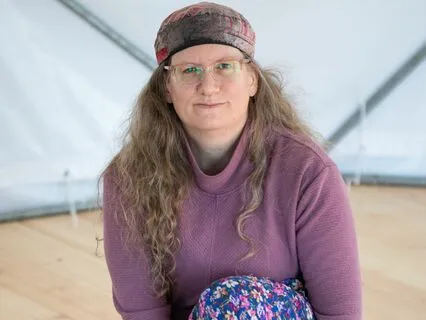
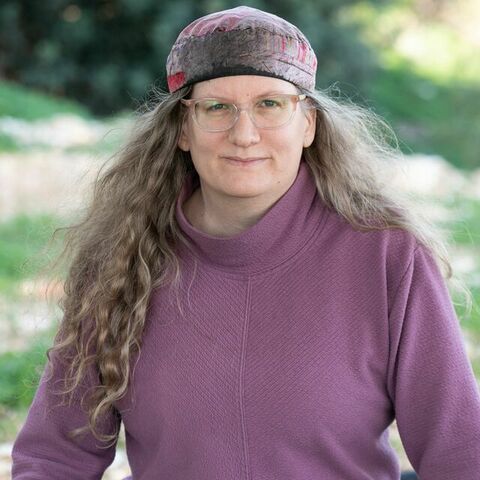
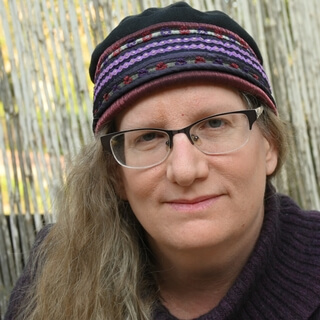
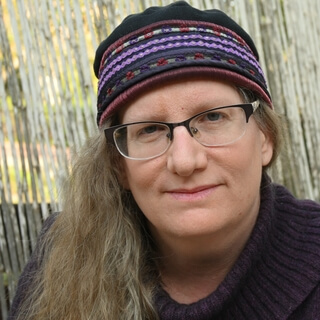
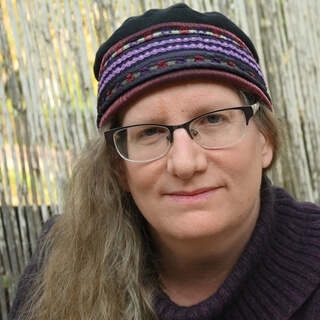
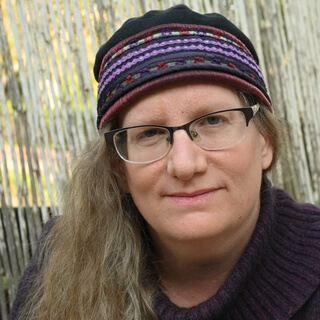
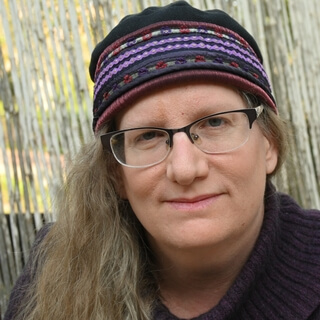
I'm Rabbi Chassio Uriel Steinbauer,
Founder and director of the Institute for Holiness Kehillat Musar Mindfulness.
Delighted to be with you whether you're joining on Zoom or live stream at our YouTube channel,
Please subscribe,
Or finding us on our website in the blog section,
Clicking on the Zoom link or live stream,
Whether you're on Facebook or Twitter or LinkedIn,
We are delighted and just honored to have you.
Today on Sunday,
June 4th,
2023,
We enter our 33rd sitting together of this year in the Hebrew Bible,
The Torah portion that we come together to learn from God and our ancestors of how to really integrate this beloved master narrative and texts and how to use it in our practice of Musar mindfulness,
Which is so important to us.
So we here in Israel,
Basically have entered into the last Shabbat yesterday on June 3rd.
We enter the Torah portion of Beha'alotecha,
Very long word that basically means the kind of mounting of the lamps,
Right?
In your mounting of the lamps of the nervot,
Right?
Beha'alotecha.
Any of you practitioners who are joining us from outside,
The chutzah,
Outside Israel,
Will actually come to this Torah portion this coming Shabbat on,
What is this?
Monday,
Tuesday,
Wednesday,
Thursday,
Friday,
Saturday,
Six days from now.
So the 10th of June.
So when the Hagav Shavuot happened,
It ended up splitting up where we met,
That we weren't going to be on the same Torah portion on the same week.
But it happened for us in Israel yesterday on Shabbat,
June 3rd,
The 14th of Sivan,
The Hebrew month of Sivan,
In the Hebrew year of Tavshin P'giml,
5783.
And as I said,
You will come to it on the 21st of the month of Sivan,
Kach Aleph,
Outside of Israel.
So I welcome you.
We're going to jump into a short learning,
What this Torah portion is about,
One specific thing,
And then move into a guided mindfulness meditation practice in order to really integrate this as an embodied experiential spiritual discipline,
Which it is for us.
So before we begin,
What do we do?
We always share our Kavanot,
Our intentions for today's session,
Which are always the same.
So if you are watching on video and you have vision,
You will see these Kavanot,
These intentions before you.
If you are low vision or blind or you're listening on audio on our podcast,
You will hear me read these intentions,
These Kavanot.
So we see this act of coming together to learn this Torah together with Musa and mindfulness as an act of radical self-care.
So we see that before we're doing this act of radical self-care together,
Then we realize that this is something I'm doing to strengthen my own soul in order to be a benefit to others in the future.
So that's our first Kavanot,
Our first intention for today.
The second is that we're doing this also on behalf of others.
We're doing this to strengthen our relationship to others so that I can be a better conduit of God's good to others when they need me.
This is what we all say individually to ourselves.
We also see this practice today is strengthening our relationship with the divine.
So we say this is something I'm doing to strengthen my relationship with the creator.
So that I can be a better conduit of God's good to others when they need me.
This practice of Musa and mindfulness is unabashedly other-centered,
That we bring God's good to others as a service to God.
Serving God means caring for others.
This is a big part of why we practice,
Why we balance our middot,
Why we are on this path towards fullness,
Towards liberation,
Towards practicing,
Making sure that we are not causing harm and suffering,
And even more so on the positive side,
Same side of two sides of the same coin,
That we are bringing God's good to others.
May it be so.
So may we merit the fulfillment of this on behalf of all beings today in our practice.
So what happens in Becha Olo Techa?
A lot happens,
As usual.
And we're not going to obviously be able to cover everything,
But I'm going to give you a summary.
And then,
Excuse me while I look for my summary,
I think it might have fallen.
Yes,
Give me one second while my notes fell here.
I hope I can find it.
If not,
I will go off memory.
It's really been one of those weeks,
As you might have seen the recording of last week of Parshat Nassau,
I've been terribly sick and just still coming out of it.
And you can hear it probably.
And yeah,
You know,
It's like a lot of self-compassion,
A lot of patience,
A lot of practice.
So,
Okay,
Let's move in here.
All right.
So Aharon,
The brother of Moshe,
Right?
Moses,
Our great leader.
He is commanded to light the menorah in the Mishkan.
And the Leviim,
Members of the tribe of Levi,
Prepare for their work in the Mishkan.
And then some people couldn't bring the korban Pesach,
Which was required,
Right?
During the time of Pesach.
Why?
Because they were taught they were in a state of tameh.
They were in a state of impurity.
So God offers them a make-up date called Pesach Sheni,
Which is essentially like a month later.
So I will just briefly even say then how beautiful to be a part of a spiritual path,
The spiritual discipline that recognizes that not all of us can be ready when the national collective holiday happens.
Not all of us as individuals can be on the same page to practice and fulfill that obligation,
That joy,
That joy to fulfill the observance of the festival of Pesach.
Okay?
So here are the tradition recognizes that not everyone's going to be able to do that.
And there's going to be a make-up date.
Okay?
So just keep that in mind when you are on your path towards holiness,
You're on this practice together,
That you individually may not be on the same page as what your collective,
Your community,
Taking refuge in community and whether it be your sangha or your vaad or your synagogue or wherever you may participate in its observance of certain festivals and holidays and practices.
So what is it that they can,
How they can pivot and respond and hold you in compassion to accommodate you later.
Right?
And that you're worthy of that because you are a child created in the image of God,
Each and every one holy soul.
So this is what Pesach Sheni teaches.
Okay?
Then in this Torah portion,
We're told again about the time the Mishkan was built.
A cloud would cover it in the day and a fire at night.
And when the cloud or the fire would move B'nai Israel,
Our ancestors would follow it.
God tells Moshe to bring two silver trumpets and their sound would gather the children of Israel for special occasions,
Whether it mean heading on the path of the march,
Heading to war,
To war,
Mirchamav,
Or the new moon or the festival.
Okay?
Rosh Chodesh.
So after almost a year at Harsinai,
Our ancestors began traveling through the desert.
It's time for them to march.
So they begin,
Our ancestors begin to complain about the man,
That miraculous food that God caused to feed them at all days and all times,
Essentially.
And what are they demanding?
They're demanding meat.
Well,
Meat to them meant dagim.
Okay?
Dog,
Fish.
To be,
You know,
Just briefly say,
You know,
My children used to always say,
Why don't we call fish meat today?
Because it's an animal and you're consuming an animal and it is meat.
Right?
And it made sense to them.
So let's just say it made sense to our ancestors that they associated meat and the craving and desire for it to mean dag,
To mean fish.
Okay?
Fish in Egypt.
All right?
God tells Moshe that they will get so much.
Okay?
There's a lot of reactivity going on in this Torah portion.
Let's be aware of it.
They'll get so much of it that it'll be coming out of their noses.
Who wants fish meat coming out of their noses?
Right?
So God sends many quail,
A certain type of bird,
And that's what they eat for a whole month.
And finally,
At the end,
The siblings,
The brother and sister of Moshe,
Rebbeinu and Moses,
Miriam and Aharon speak badly about Moshe.
Technically the verb is in the feminine singular.
It is Miriam who speaks badly about Moshe.
And there's Aharon again,
Mr.
Silence,
Standing in his passive way next to Miriam.
And by that passivity takes place,
Takes participation in the lashon hara,
In the gossiping that happens about the brother,
In the complaining about Moshe,
About the brother.
Okay?
So let's keep this in mind.
This is Aharon's whole role.
Right?
Remember him back in the golden calf?
He's told what to do by the people.
He tells them what to bring.
And then what does he say to his brother?
I threw in the gold and this is what came out.
Okay?
This is the type of person we're dealing with that,
You know,
A lot of passivity,
Maybe even a little bit of passive aggressive behavior going on.
So Miriam is the one who speaks badly.
Aharon is there for the ride.
Doesn't stop.
You know,
Basically we say in lashon hara,
In evil speech,
And basically not right speech,
As we say in the path of the dharma.
Not wise speech,
Not life affirming,
Right?
Not,
You know,
On the path that when we,
Someone speaks it,
It hurts the person who hears it.
And it also hurts the person about whom it's spoken about.
So,
You know,
Here's Miriam and here's Aharon in his participation through silence.
He's participating.
It's hurting him.
It's hurting her.
And it's hurting Moshe.
And then by extension,
It's hurting the whole community,
Right?
And it's hurting God.
Because we know how it is for our ancestors.
So she speaks badly about Moshe and his wife.
And Miriam is struck by God with sarra'at.
Again,
We don't really know what this is.
It comes across as some type of skin disorder or disease.
It really is a way to mark the person that they are in a state of impurity.
And Aharon speaks.
What does he do?
He begs.
He has no power to heal her himself.
He's lost his nivyut.
He's lost his prophecy,
His strength of being a prophet.
He tries to,
Almost by implication,
Tries to heal her.
Nothing's happening.
He begs.
He turns to Moshe and begs Moshe,
Please heal her.
Please say something,
Do something.
And Moshe says the famous line,
El na rafa'na la.
Please now,
I beg you,
Please heal her.
Heal her right now.
Okay?
So that's a brief summary of what's going on in this Torah portion.
I have very specific things that I want to address today.
So on this path of Musar mindfulness,
We are very much aware that our own reactivity and that how we can cause ourselves suffering in that process and others.
Okay?
Dukkah.
And sometimes we do it through the narrative and the storytelling that we tell ourselves.
Sometimes it's through one of the valing factors,
The hindrances.
We might have a lot of doubts.
We might have sloth and torpor.
We're just not being active enough.
There's too much clinging and attachment,
Trying to control and hold on to the way things are,
Or it can be even aversion,
Trying to push away that which we don't want.
All of these manifest as valing factors that really affect,
Show up in our practice and in our lives that end up really having to be a big part of what we pay attention to in the practice so that we can either practice self-restraint and stop that behavior or self-expansion and bring that which is positive and life-informing,
Moving then into the awakening factors and the practice of bringing that which is life-firming into our daily practice.
I just want to make sure that I get the the final one that I wanted to share with you.
Restlessness and worry.
Yes,
That's a huge one.
We can also get caught up in restlessness and worry.
This is what we're going to notice with our ancestors.
Restlessness and worry.
Doubt also is a huge one.
What do we mean by that?
You will notice here in our Torah portion,
Which we are in chapter 8 in the book of Numbers in Bami Bar,
Where we start off in chapter 8 and we go all the way through,
Just to let you know,
Until 12.
16.
In chapter 11,
Pesach Aleph,
Number 1,
We are told that the people were like mit onenim.
V'hihi ha'am,
Mit onenim ra,
Ve'oznei Hashem,
Which was evil,
Bad in the eyes of God.
Ve'ishmar Hashem,
And God heard.
Ve'ichar Apol,
He got very angry,
Full of rage,
So much so that it's reflected in the nose,
The redness of the nose.
V'tiv ar bam eish Hashem,
And a fire of God broke out against them,
Our ancestors in the camp.
V'tochar biksei ha'machanei,
And it consumed the edge of the camp.
So immediately all of us are like,
What does it mean that the people were like?
It even says,
Keh.
V'hihi ha'am ke mit onenim ra.
They're like mit onenim,
Evil in the eyes of the Lord.
So Sifrei Bami Bar,
Text comes to say that mit onenim means making themselves resentful,
Looking for an excuse to separate from God.
Now,
Obviously there's a lot of judgment in that statement.
We don't even have to go that far.
It is enough for us in our practice of the Dharma and of Musar on this path to realize that all of us in our lives and in our practice have times either through restlessness and worry or doubt or too much attachment or aversion pushing things away that we make ourselves resentful.
We story tell,
We create narratives,
Right?
We make that which is probably neutral or maybe even pleasant,
We make it unpleasant or make it even more unpleasant than what it maybe is as a stimuli.
Through our reactivity,
Through allowing the veiling factor to veil us,
To veil the purity,
That which is within us to shine through,
Right?
In the awakening factors.
So this is really,
The root itself,
The Alef Nun Nun,
It means to grumble and complain.
And the Midrash here,
The Sifrei Bami Bar,
Is really noticing that the form it comes in,
The Binyan,
Which is the verb form,
Is the reflexive form,
Known as Hitbail.
It is an action people do to themselves usually.
So the Midrash learns that the people had this,
You want to call it like complaining,
Grumbling,
Bad attitude.
It came from within.
It came as a reaction to what was happening.
And they were making themselves resentful and then they acted it out.
And this is known as the edge of the camp,
The Biksei HaNachanei,
We have a whole thing that those who came with B'nai Israel out of Egypt were the ones that were starting this.
And then you know what happens.
You know what happens in your own life and practice when you're not practicing well and you allow yourself to be that agent,
That vessel of resentment or of complaining and of grudges.
And you end up speaking it out and it ends up affecting others around you.
It's like Lashon Hara,
It's like an unwise speech.
It's that pillow that gets popped open full of feathers and the complaints just go.
And everyone kind of picks up their own feeding of those feathers,
Feeding their own fire,
Right?
This restlessness,
This worry,
This doubt,
This clinging,
This aversion.
So we have to pay attention that this Torah portion really is coming to have us look at our own behavior and have compassion for our ancestors that they went looking for something to complain about and making a bigger deal of something that really wasn't that bad.
They had man,
They had constant deliverance of food from Hashem on a daily basis.
They weren't starving.
They went to look for what was missing,
What they decided made the situation unpleasant.
Meat,
Dog,
Fish.
How many times do we do that in our own lives?
So holding that in mind,
As we continue down this path,
I just want to say a few more things about this.
Let me get to my notes.
Okay.
So let me just put this in context.
The march from Sinai to the Transjordan.
This is what happens from chapter 10 to 22.
The march took 40 years,
But the bulk of this section in our Torah portion is really concerned with the opening and closing months,
Right?
And it's about the movements that Israel only moves when God generates it through the Anan,
The cloud and the Esh,
The fire,
Right?
Leads Israel to the land that God promises.
God moves it.
God stops it.
God causes it to take a detour.
God advises it.
God nourishes it.
God gives it victory.
In doing so,
God is constantly renewing that which is ephemeral.
God is constantly renewing miracles,
Right?
The man,
The cloud,
The fire,
The sustenance,
Everything that's given to them.
As if this is permanent.
Why is God and God's wisdom doing this?
Because you're dealing with a population.
Our beloved ancestors are survivors of the institution slavery and is trauma in them.
It's passed down intergenerational,
Transgenerational,
Right?
And that trauma,
When someone is caught in that cycle of trauma,
It hasn't been fully processed and moved.
And one seeks that which is permanent,
Which doesn't exist.
We know this is the rule.
One of the four noble truths is that everything is ephemeral.
Everything is impermanent.
Eventually whatever arises will have a certain shelf life.
It'll pass.
Even you,
Even me.
So,
You know,
When you,
We survive a traumatic event like slavery over 450 years,
You are seeking permanence.
You are seeking that which you can rely on,
That you can take for granted,
That will be the same day in and day out.
No surprises here.
No change.
And that is what causes harm and suffering through this full 40 years is a huge part.
And God and God's wisdom and mercy is trying to provide a little nugget of permanence.
Here God's with them and with them through the whole time.
God in some ways is like that which is permanent,
Although God fluctuates and changes,
Of course,
As of course the relationship does too.
God is trying to provide this,
Right?
These renews the wonders of the Exodus,
The man,
The quail,
The water from the rock,
The victories in the negative and the trans Jordan.
All these,
Right?
How does Israel respond?
Right?
Because even though the man's there,
It's then gone.
And even though the quail's there,
It's then gone.
And even though the victory's there,
It's then gone.
And even though the cloud and the fire are there,
Then they're gone.
They have to learn to internalize and accept that which is impermanent,
That which passes.
Right?
And how do they respond?
Because they're not ready yet.
They don't have the skill set.
They're not able to pivot in a life affirming way.
They respond with unbelief and rebellion.
And then it affects their leadership.
The chieftains respond this way later on in chapter 13 to 33.
Miriam and Aharon respond this way in chapter 12.
Moshe himself in chapter 20,
Verses 10 through 12,
Responds this way.
So we see the effects.
We see the effects of the restlessness,
The worry,
The doubt,
The attachment,
The unhealthy attachment,
The aversion,
Right?
All these hindrances and valiant factors arising in our beloved ancestors and community.
We just have so much compassion witnessing this and realizing,
Wow,
This comes up in my own life.
Right?
I know this.
I've experienced this too.
I can see this going on.
Okay?
So I think some final little nuggets I'll share about this,
If I have anything more.
I just feel like on some level,
The man,
Like everything that God commands and brings into the life of our ancestors has some real strong symbolic meaning.
You know,
It's like the clothing of the Kohanga-Dol and the shivitim of the tribes on the shoulders.
Like everything has some significant meaning that is also an embodiment of a spiritual practice to help us remember,
To help us to do.
And this is how the man also holds this.
Right?
So what is this man?
It's like a sort of bread,
Right?
It decays quickly.
It attracts ants.
The annual crop in the Sinai Peninsula is extremely small.
Right?
And it's ephemeral nature and it's undependableness,
Even though God sends it day in and day out.
Right?
It appearing irregularly or even for several hours each day.
It obviously is like supernatural,
Originating from God,
From heaven.
Right?
It is the foodstuff itself as well as its appearance.
It's this miracle.
But what we've learned about miracles is that you can't rely on them and nor should you.
Right?
What happens when our ancestors believe that miracles is what's going to sustain them?
And ethical,
Moral,
Daily practice of being on this path towards holiness,
It's not miracles.
Miracles are that thing that arises and passes.
Right?
So it's like where we take refuge in community.
We take refuge in God.
Take refuge in our teachers.
That is where the path is.
Right?
Not in these external things.
And so I just want to say that we have to be aware and so kind that when we are stuck up in any of these hindrances,
Right,
Whether it's the restlessness and worry or the doubts or the aversion or the attachment,
Right,
For some of us sloth and torpor,
Just kind of passing out tired in life,
Right,
That we're going to affect our leadership.
They are human too.
And so poor Moshe,
What does he do?
Right?
He has to deal with this.
And he's at it.
He's at wit's end.
What does he even do?
He says,
Take my life if you can't.
Like he has doubt that's so strong he doesn't believe God can provide in this moment.
This is huge.
This is unbelievable because this is your leader.
And if the leader can't hold faith in this moment,
If the leader has doubt that strong that avails everything to the point where he says you can't provide this,
I can't do this alone,
Just go ahead and take my life now.
Very melancholic,
Very melodramatic,
Probably very real for Moshe in that moment.
You have to realize that this is going to affect the whole community.
It's also going to affect the relationship with the divine.
To realize that now day in and day out as we move through this 40 years together,
That God for a lot of you can really be the reflection of our karma,
Of the law of cause and effect.
That God essentially is the model and the behavior and the showing of that which is the outcome of our behavior and very well should be and maybe doesn't get visited in our own lifetime.
Maybe we'll get visited on our ancestors.
And we see this in and out in this coming 40 years together.
With that,
On this journey that we are about to enter,
Just realize we are going to face our ancestors and how they feel so wretched.
How does Moshe say it?
He says,
Be-ra-ati.
It doesn't get any more difficult than that.
He says,
Let me see no more of my wretchedness.
Such a difficult moment for him.
Be-ra-ati.
How often we have all felt that hitting that rock bottom.
So we're here and we will practice.
We'll strengthen one another.
I invite you to assume one of the four postures of mindfulness meditation now as I lead us.
In a mindfulness meditation to help us internalize this practice together.
And for me,
I'm going to be in a seated position in a chair at the edge of the chair so that I can hold an upright posture that's dignified because I am a child of God created in the image and likeness of the divine and you too.
And so we don't want to be stiff,
But we want to be awake and alert and relaxed.
So how do we do that?
We take one deep inhalation right now,
Even raising the shoulders and then let the shoulders drop.
Isn't that relaxation,
That ease just so delightful.
What a gift.
Thank you.
And then again,
Inviting the inhalation.
Exhalation,
Letting out.
Now with real Kavanagh with intention,
Inviting your full presence here that you come to a state of ease,
A state of being here,
Of stillness in the present moment,
Inviting yourself to be fully here.
Inhalation.
And exhalation.
Now allowing your breath to fall to its own natural rhythm.
Really just being here with whatever arises,
Knowing that we can be with it all.
We can really carry ourselves through this.
No need to control the breath now.
I welcome you to close your eyes if you have vision and you feel safe to do so.
Letting your hands rest where they are comfortable.
Otherwise just lowering your gaze to that which is in front of you.
And today's practice is really focusing on that which is impermanent,
Which is everything.
Really welcoming with whatever arises and noticing that it arises like the breath,
Has a certain shelf life,
And then passes.
Really bringing your attention to the breath,
How it enters the nostrils,
Feeling the air leave the nostrils or the lips,
The full body breathing.
Ah.
Feeling fully present,
Noticing whatever arises for yourself.
No need to change anything.
Notice if any strong emotions are calling for your loving attention.
Noticing,
Noticing if any strong sensations are gathering in the body that are calling for your love.
Just to simply notice them,
Recognize them,
Allow them and accept them.
Noticing the embodied felt sense of them.
Where are they located in the body,
The emotion or the sensation?
What is here for you?
And if you're having any challenging or unpleasant state arise,
Maybe even one of the hindrances,
Notice with compassion,
With nurturing,
How it's there.
Continue with your breath and notice in about a minute and a half how it too will pass.
It will shift,
It will change.
Ah.
Really reflecting this time in silence often on where we might have that which is ungrieved.
Maybe a loss,
Maybe even an unacceptance of impermanence,
That which is in us.
That we too,
Like our ancestors,
May move through doubt,
Restlessness and worry.
We might try to hold on and control something.
Maybe we're pushing something away.
So where in your body right now where you might feel that ungrieved impermanence?
Just briefly reflect how you might have managed this vulnerability and avoided the grieving.
Right?
By our ancestors running to the quail,
Collecting as much as they could and spreading it all out and slaughtering it and maybe even eating it raw right then and there.
They're avoiding the grieving,
They're avoiding the fear,
They're avoiding the worry and the doubt.
This is how they manage their vulnerability.
Making sure to react and to stay busy.
How have you manifested avoiding grieving?
How have you managed your vulnerability?
What in you right now may be asking for acceptance and inclusion?
Imagine if our ancestors had been more skilled in that moment.
We're able to make a more skillful,
Wholesome,
Wise choice and actually just recognize,
Wow,
We're feeling this.
We're really moving through doubt.
This three-day journey leaving Mount Sinai,
Har Sinai,
Really triggered us.
Let's just stay with that vulnerability right now,
That experience of fear,
Of worry,
Of fear of what's going to happen next.
They could have shared and they could have listened and they could have honored.
Maybe then they could have found the pleasant or that which is neutral in the mind.
Maybe they could have even awoken to the good and gave thanks.
What is calling for your attention right now to deepen in your practice right here and right now?
Allowing yourself to answer the call within to offer your loving attention.
Treating yourself as your own best friend.
What does your higher soul need to hear?
How does she or he want to support you in this moment?
We'll enter into a moment of silence before we end our practice today.
Giving yourself time afterwards to journal,
To reflect on your own impermanence and loss and how you manage.
I will ring the bells when it is time to come out of the practice.
If you had your eyes closed,
Please take this moment to gently and slowly opening them,
Allowing the light to come back in.
Giving yourself a deep bow to God,
To your own practice,
Taking refuge here together with the Institute for Holiness.
So grateful to have you.
Thank you for the teachings from the Buddha and the Dharma and from Musa and Judaism.
So grateful for these wisdom paths to be on this path towards holiness together today here.
Thank you for joining and thank you for practicing.
So,
Because we are in a moment of silence,
We will be practicing.
So,
Be kind to yourself this week,
Take time to practice.
Join us next Sunday as we look at the next parasha that will be here for coming up for Israel,
But for the diaspora outside,
You'll meet it the following Shabbat,
Which is good for you to be able to prepare for.
We'll be answering Shelach,
Shelach L'cha,
So take time to read and reflect.
Meet us where you can.
Do give your donations,
Your Dana,
Your Sadaka to enable me and the Institute to offer these public offerings.
Grateful for whatever you can give,
Reaching out to us,
Excuse me,
On our website or to me personally in the email and wishing you all well,
Wishing health,
Full health and healing,
Refu'ah Shlema,
Speedy recovery to all those in need,
Which is so many right now.
Take care.
Thank you again.
I am Rabbi Hasia Uriel Steinbauer on behalf of the Institute for Holiness.
You have joined Awakening Bechohalatecha 5783 Torah Musar Mindfulness.
Take care.