Shalom,
And welcome to the YouTube channel of the Institute for Holi.
Baruch Hima Baim,
Welcome.
You were hearing our YouTube channel speaking to you before we began.
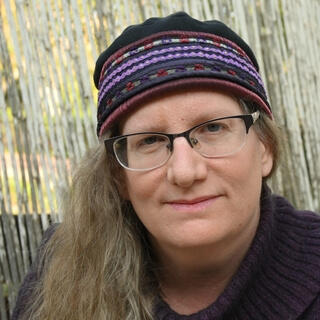
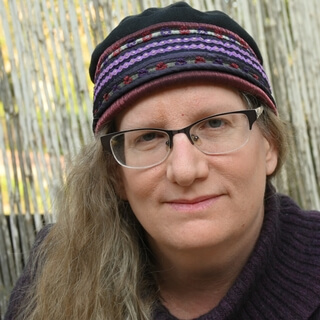
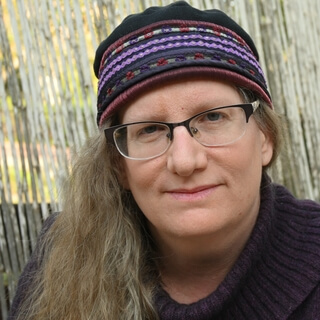
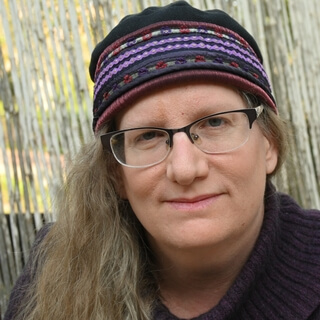
I'm Rabbi Chassio Oriel Steinbauer,
Delighted to have you here at Awakening Torah,
Musar,
Mindfulness,
Our weekly public offering.
To delve into the weekly Torah portion,
The Hebrew Bible,
From the blessed,
Wise traditions of Musar and Mindfulness,
To gain all that we can from our ancestors and God and what we're supposed to learn from these ancient texts and narratives that have been bequeathed to us,
Essentially.
So today is Sunday,
April 30th,
2023.
It is the ninth of the Hebrew month of Iyar.
And we will be covering the Torah portions,
The double portion,
That happened yesterday on Shabbat,
The Sabbath for the Jewish people and Judaism.
It was covering Aharei Mot and Kedushim on the eighth of Iyar on April 29th,
2023.
So hopefully you had a chance to delve into it and read commentary and be able to arrive having that background knowledge with you.
B'zrat Hashem,
God willing.
So before we begin,
It is our practice to share our Kavanah,
Our intention for today's session.
So we will begin with that.
If you are watching visually,
You will see three Kavanah,
Three intentions before you.
If you are listening on our podcast on audio,
You will hear me read these.
So we see this practice of joining together every Sunday,
God willing,
At 7.
30 p.
M.
Israeli time,
12.
30 p.
M.
Eastern Standard Time,
Or 9.
30 a.
M.
Pacific Standard Time.
This is an act of radical self-care and taking refuge in community.
And in order to do this act of radical self-care,
We have this intention,
This Kavanah that we say we're doing it to strengthen our own souls.
In order to,
In order to be of benefit to others in the future.
And the same thing,
We see this act of this practice together,
This 45 minutes about,
Is doing it on behalf for others because we want to strengthen our relationship with others so that we can be a better conduit of God's good to others when they need us.
And the final is that we're doing this to strengthen our relationship with the Divine,
However we define that relationship,
However we understand God,
HaShem,
The Divine.
We're doing it to strengthen our relationship so that we can be a better conduit of God's good to others when they need us.
So may we merit that today and our learning and practice on Acharei Mot Kedushim.
Acharei Mot,
Of course,
Stands for after the deaths of Nadav and Avihu,
The two priests,
Sons of Aharon,
The Kohen Gadol,
The high priest who passed away,
Who were taken by HaShem when they offered what was called strange fire last week.
And we discussed how troubling that was and how in some ways we will never have the full understanding or picture of why that happened.
So we move into Acharei Mot and we move into Kedushim,
Which is holiness,
Right?
Holiness.
Could we ask for anything better than holiness?
May we merit that today and our practice.
So let's jump in with our summary as we usually do.
So as I said,
This is a double parasha.
And what comes in Acharei Mot is essentially the instructions,
The commandments to Aharon,
The Kohen Gadol,
Of how to do the Yom Kippur service in order to obtain,
To practice,
To cause,
To be a part of the process that allows for kapara,
A full atonement for the sins of both Aharon and community.
And so there's the goat offering of the korban chatat,
This sin purification offering.
And one of the other goats,
After blood is sprayed around the mishkan in particular places from that goat that is slaughtered for the offering,
Is sprayed also on the other goat.
That goat is released,
Basically sent away into the midbar,
Into the universe,
Into the wilderness.
So that's what's covered in Acharei Mot essentially.
And essentially what happens is all of a sudden,
Okay,
You have this ritual that's been given.
Why?
Because they need to have some way to affect taharut,
This purity,
Cleansing in some ways,
Even though I don't like to use that word.
How to affect purity in the mishkan,
Especially after you just had the death of two kohanim,
Two priests,
And who have done so most likely through an act that was not acceptable based on the terminology and language use of strange fire.
So we now know about what's commanded as a ritual in order to affect that purity in the space after there's been dead bodies in the space and also acts that were not commanded or accepted by Hashem,
By God.
So then we have this profound,
Amazing shift in kiddushim.
In order to understand kiddushim,
If you were able to open the Sefer Torah,
You would find that we are essentially in the middle and you're opening to kiddushim.
You're opening to what has been termed the holiness code.
And that term was first used by A.
Klosterman in 1877.
And what's profound about it,
Because up until now,
We might have assumed that if there's going to be discussion of holiness and how to enact it and live it in order to maintain purity,
Perhaps,
That this would be further instructions to the kohanim,
That they are to maintain that level of purity and holiness in the temple space,
But that's not what happens at all.
All of a sudden,
There is a shift that is so profound.
I think it kind of,
If we pay close attention,
It's that type of systemic and seismic shift that we should feel the earth shaking beneath us.
All of B'nai Yisrael,
Kol ha'adat,
Everyone,
From the water drawer to the kohen,
Everyone in between,
Women,
Men,
Children,
All are to come and to hear the holiness code,
What is expected of them.
And the primary focus of the holiness code is behavior between a human being and her neighbor,
Between a human being and his friends,
Between family members,
That holiness,
How it's to be lived out is to happen in community.
It is something that is to happen among us,
Not isolated,
Not among the priest caste only,
Isolated in the mishkan or the temple.
This is profound.
And not only is that the profound shift,
For the first time,
You have an obvious shift from specific deeds,
Specific commandments of what to act out with precision,
To an underlying layer,
Foundational layer of values being exposed,
Being unveiled before us.
Let me explain more.
We are to be holy,
All of B'nai Yisrael,
Because God is holy.
So some of the many mitzvot,
Many commandments that are touched on,
On all aspects of life,
Really,
Farmers have to leave a corner of their fields for people in need.
Now,
Most of us aren't farmers today,
But think about in your life,
Whatever your career,
Profession,
Job is,
That every time,
Whatever it is that you are producing or doing,
That a corner of it,
A section of it is given to those in need,
With them always in mind.
That's the first.
If you're a boss,
You pay your workers right away.
If you're in business,
You use precise measurements.
You mean you don't lie,
You don't hide and try to get away in order to make more money off of people.
If you're a judge,
A dayan,
Right,
You treat everyone fairly.
You don't favor the poor,
You don't favor the rich,
You don't favor those with privilege or those who are being discriminated against.
There is a complete idea of fairness,
That you can't put a stumbling block in front of a person who is blind.
And this is understood if not just blind as in someone who is born without sight,
Without vision.
It's understood for those of us who are just blind to the privileges of life,
Of how to operate in life,
Of how things work.
This could go for refugee or immigrants or even just those of us who are not in the privileged class.
We just don't know how things work or function as easily and readily.
So it's easy to take advantage of us in that group,
Right?
We're blind to a certain privilege and functioning of the system as it works,
So you can't put that stumbling block in front of them,
Right,
In front of us.
And the same thing,
You can't curse a person who is deaf.
Okay,
That's also not understood to be limited to people who were born without hearing.
It's a concept of why would this even be a commanded if the person can't hear you cursing them?
What does it matter?
What does it take?
Because the Torah and God and our people are concerned with your behavior also and how it affects you and perhaps anyone else around.
But if it's just you and a deaf person in a room and that person's faced away from you and you're cursing them,
You might have thought,
Why is this being commanded?
It shouldn't even be an issue,
But instead the Torah is saying,
Every time you utter that curse word,
It is a blemish,
It is a veiling factor strengthened on your own heart and soul.
It affects you just as much as it affects that blind person or deaf person or anyone that is able to hear or witness this,
Okay?
So it's an awareness of multifaceted positions of not just the one being spoken to,
But the speaker and anyone else around who is able to hear.
There's an increased awareness of the effects of our behavior and that holiness requires that we hold it all,
The relationship between the divine and us,
Between us and others,
Between ourselves and our own selves,
Right?
So this is a profound shift and exposing of what is at the root to be human and to be part of Bnei Israel,
Okay?
There's also this,
You're not to gossip and to take revenge and listen to this,
Oh my gosh,
We're commanded to love our neighbor as we love ourselves.
So we are two commandments,
Essentially.
It's very,
It's hardly ever discussed this way,
But this is what's going on.
You must love yourself.
Okay,
That's obviously there in the commandment.
You must love your neighbor as yourself,
Neighbor,
Brother,
Everyone that we consider underneath that box.
We're also commanded obviously in the V'haftah to love God.
There's something really profound.
The holiness code is about love,
Love as a verb,
Love as specific,
Holy,
Wholesome,
Wise,
Righteous,
Upright,
Moral behavior.
That is love.
And then there are some people that even get discussed.
What gets discussed,
This is very profound.
This is going to expose values right here.
There's a huge section on who we are allowed to marry and who we should stay away from.
Who are we are to have proper boundaries,
Proper boundaries for sexuality,
For sexual acts,
For marriage,
For any kind of family system to be able to thrive.
And so for the first time,
You have us shifting and you can imagine our ancestors receiving this going,
Like,
Okay,
We were dealing with the commandments,
Right?
And we were dealing with these,
How to bring offerings to the Mishkan,
Whether they be,
You know,
The offering that you want to give because you want to celebrate with family and friends and feed the Kohanim or a sin offering or any of the Ola,
A burnt offering.
And all of a sudden you have this shift where you're being told about daily ethical behavior,
But there's something profound underneath it because you realize that what's being commanded and discussed here is a system of how God and community expects and wants it to hold itself and to strengthen itself.
So imagine some of the values,
For instance,
Underlying the prohibition of incest,
For instance,
That might be like,
Oh,
It's obvious.
I'm not going to,
I'm not going to marry or enter a sexual relationship with my sibling.
That's not so obvious in the ancient Near East and Mesopotamia and Egypt.
And it's not so obvious,
First of all,
You should know historically,
But here,
What is God and our ancestors trying to communicate to us?
You want a happy home life.
You want high moral standards,
What we call a fear of God,
Which means a real strong moral compass of knowing what's right from wrong,
Good and evil.
You want the welfare of the nation to be included,
Again,
This threefold triangle of being who we're concerned with.
Those are the values underlying the prohibitions of who we are to marry and who we're not and who we're to sleep with and who we're not.
Some real strong values being communicated that's going on in this Parsha.
So that's just a general summary.
There's a lot more,
Obviously,
Going on in this Parsha,
And I just want to touch on all of them and delve into what I think is most important for us today.
Because obviously,
If you are following and part of the Institute for Holiness,
Bezrat Hashem,
Kehillat Musar Mindfulness,
That you're aware that holiness is the path that we are on.
It's not a destination.
It is a path.
And so this Holiness Code is a big moment for practitioners among our community that we're all taking refuge in.
So let's move through this so we can see what's offered here.
Let me move to my notes.
I want to move.
Yes.
Okay.
So our ancestors and the Parshanim,
The commentators over the centuries,
You know,
Wrestle with the Holiness Code,
Wrestle with that you shall be holy because I am holy.
Because,
You know,
Why does this need to be said?
Aren't we just supposed to follow the commandments and the commandments alone enough to be holy?
There's a little bit of angst,
A little bit of trying to clarify what does this mean and why this is being brought.
And you have a whole range of opinions that are definitely brought in our tradition of what you shall be holy can mean.
You know,
It ranges from the concepts of purity and impurity.
It goes on concepts of making sure that we avoid anything that will defile either ourselves,
Community or the Mishkan.
There's ideas of sanctification,
Separation from that which might lead to impurity.
It even gets into what's a Kiddush Hashem.
This is coming more in the Middle Ages of the concept of martyrdom for the sake of God and basically separation,
Right,
From that which is forbidden.
And Rambam,
Coming from Spain 800 years ago,
Goes on to say that the mitzvah to be Kiddush,
To be holy,
Tells us that not everything is covered by the rules in the Torah.
Now you can imagine this statement makes people very uncomfortable,
Right,
Because we want to believe everything's in the Torah.
Some people want to believe that.
And that whatever is there is what we do and what we're commanded.
I want to venture,
So he goes on to say like sometimes we have to learn the Torah values that are basically behind these laws and the concept of holiness and to be able to apply those in our lives beyond what the specific laws and rules tell us what to do.
And the way it's understood is that something might not technically be forbidden in the Torah,
But we still know that we shouldn't do them.
So the classic example that is brought is someone could be eating a total kosher diet following the laws of kashrut,
Of what is considered fit,
Pure and impure food that's laid out in the Torah.
But they could be eating like a glutton and overeating and over drinking and all that.
And that's not how they should be.
If you say that you should be holy,
There should be this understanding that you should be living a certain way,
Right?
But I want to say that I don't think it's that Kadosh is exposing rules or values that aren't covered by the rules in the Torah.
I think they're there all along.
I think to be holy and what's associated with it,
Right?
These values,
It requires a level of discernment and interpretation,
Of course,
Which thank God we have this amazing rabbinic tradition that spends over 2000 years interpreting this and sharing this in community and guiding all of us.
But really what's happening is an unveiling.
If we think about the veiling factors coming out of the Dharma in Theravada Buddhism,
It's this concept that there are states and behaviors that are veiling factors that basically cloud us and cause us to experience suffering and maybe even harm.
And that the practice is to unveil these veiling factors to the awakening factors,
The factors that help us be in alignment with our higher selves that cause the least amount of harm and suffering,
But even more than that.
And so this is what I think is happening when we are commanded you should be holy,
Because I am holy.
God and our ancestors are just unveiling what was already there.
How do we know that?
Think back to Avraham Avinu.
Think back to the midwives,
Shifra and Pua during the time of Egypt were commanded by Barbaro to commit genocide and kill all the Hebrew Jewish boys.
They both said,
All three of them,
That there was no fear of God in this place,
Right?
What is fear of God?
Now it's Yirat Hashem.
Yirat,
Obviously,
We can't translate this word exactly into English.
It simultaneously means fear and awe.
Very difficult concept to really understand or live as a modern Western person,
If you are coming from the West.
This concept that really what's behind when someone says,
I had to lie,
For instance,
Avraham is saying I had to lie and say that I was Sarah's brother because there was no fear of God in this place.
There's no Yirat,
No awe and fear of God in this place that I thought you would kill me and take her,
Right?
What is he saying?
He's saying that there's certain behavior that is not being lived and exhibited that show the values of that place that show one's relationship and alignment with their higher selves,
Alignment with God.
And because he didn't witness that behavior,
If anything,
He witnessed the opposite.
He witnessed behavior that was causing harm and suffering.
He's witnessing people treating each other poorly,
Maybe even themselves.
There's no inner moral compass.
There's no real understanding right from wrong and living it out.
Right.
And that's the same thing with the midwives.
There's no fear of God in this place.
Right.
So and they both of them resort to behavior of lying in order to cover up what they've done.
And you might think,
Oh,
That's that's objectionable to lie in the process of the exposing the lack of ethics and morality in a community.
But no,
That's what's actually really interesting behind it.
This lack of holiness code,
Right?
Moral code.
So I just want to say that it's really an unveiling for us.
And so much of our practice in Musar Mindfulness is really not only strengthening that gift of the Yirat Hashem within this fear all inside the strong moral compass of being righteous and upright and moral.
That's been bequeathed to all of us.
That is a gift.
That is our birthright.
But some of us actually through time and experience have received so many veiling factors based on the obstacles in life,
The difficulties,
The hindrances.
That it is our job and practice over time,
Our mission statement,
One of several,
To remove those hindrances,
To remove those veiling factors,
To remove the obstacles,
What we say circumcising the heart in order to show and expose holiness.
Expose the values underneath,
Expose that strong inner moral compass,
What we call Yirat Hashem's fear and awe,
That we know what's right from wrong and we live it.
Right?
We live it.
We live it with really courageous acts.
Right?
Like the midwives refusing to murder the baby boys.
They risk their lives.
Right?
What about the other side of it if they had committed genocide,
Murder?
What would they live with?
How could they live with themselves?
Right?
So we need to always think about what are the consequences of our behavior,
If we act or don't act.
So,
That's holiness.
Let's move on a little.
I want to say that one of the key things,
Because this is something that I said at the beginning,
But it needs to be reiterated,
Which is,
This is meant to be done in community.
How do we know?
Because a whole kahal,
Everyone is called to hear the holiness code,
The laws that are before us.
And it's not as if,
As I said,
That it was limited to those who were either considered the pious men or just the Kohanim,
The priests.
It says speak to all the children,
The congregation of the children of Israel.
So,
It's a chapter given for everyone,
A full assembly,
That you should be holy.
And therefore,
What we understand from that is,
There's something really profound.
Talk about a value behind this.
This can only be achieved within community,
Not in isolation.
Our work,
Our curriculum,
Our practice is in community.
It's not running away from our relationships as if I can get away from my family and just go sit at a retreat,
Then I will be okay.
I can be holy.
The holiness is in the behavior of how I treat my spouse and children and parents and siblings and extended family and community and onward.
It's in community.
It's through these values and precepts of how we're going to be in a relationship and try to be as upright as possible.
So,
We have something very profound to really begin to internalize.
The final thing that I think is very important to share at this moment together is,
While some of our parshanim and ancestors,
As I said with Rambam,
For instance,
Even Nachmanides,
Maybe even in discussion with Rashi,
Comes to say you should be holy,
Denotes a further requirement added to all the requirements entailed in the total range of the written commandments.
I don't think,
And again I said this earlier,
This is like the Rambam,
That I don't think that it's a further requirement.
I think it's a requirement that's been perhaps veiled all along or not obvious.
It's the underlying values,
It's the foundation.
And so,
He goes on to say that,
For instance,
Holiness,
To abstain from behavior that causes harm and suffering,
Is the sphere of personal conduct and piety.
That is up to us to practice self-restraint,
To make sure that we're not engaging in with the hindrances and harming factors and veiling factors that hurt ourselves or others.
And at the other end of it,
He says this holiness code,
This you shall be holy,
Denotes what's later commanded and written in Deuteronomy and Devarim,
Chapter 618,
That you shall do that which is right and good.
Which we already knew from Avraham,
Before we even received the Torah,
Talk about values passed down,
Of Yirat Hashem,
This fear and awe of God means this inner moral compass,
Right,
To do what is right and good.
And that,
He goes on to say,
Complements all the written Torah commandments that we've received with a demand on our personal conduct in the social sphere.
So we are meant to do what's right and good on behalf of others.
That is how we are to be behaving.
There's something quite beautiful about that because it's recognizing,
As both Torah and Dharma do,
That our practice has to be twofold,
It has to simultaneously be abstaining from that which causes harm and suffering,
Isn't wholesome,
Is not wise.
And at the same time,
To be doing that which is wholesome and wise and good on behalf of others,
On behalf of ourselves,
Basically affects ourselves as we do for others too.
So with that,
Obviously there's so much more we could cover,
There's so much in these beautiful double parasha,
But that's what we're going to be with today and hold as we move into our mindfulness meditation practice together in pursuit of holiness,
Which is our practice to be on this path together.
We are quite blessed.
So I invite you to your meditative posture,
Whatever that might mean for you,
To be on the edge of the chair like I am with your feet rooted on the ground,
Really feeling your sit bones upright,
Created in the image and likeness of the divine,
Not stiff at ease.
And for others,
It might be standing,
Particularly if you have any low back pain,
Walking meditation,
Or lying down.
And I invite you to close your eyes,
If you feel safe and comfortable.
If you have any trauma on your background or in the present,
Then just lower your gaze or even keep them fully wide open to know that you are safe and here among community.
And we want to invite the Kavanaugh the intention that we be present.
We invite awareness that we invite stillness.
And we begin with a deep inhalation of welcoming our sitting practice,
Inhalation and exhalation and inhalation and exhalation.
And as one bringing your own Kavanaugh your intention to today's practice,
Whatever you need,
Inhalation and exhalation.
And we begin,
Allowing yourself to fully settle and arrive,
Whatever that means for you,
Inviting a sense of ease and calmness.
To your practice and to you,
Taking refuge and community.
And remembering the universe present saying I will visit you later.
Maybe even using the tool of mental noting of tiredness judgments,
Whatever it might be.
For many of us,
It might be thoughts ruminating about something in the past,
Planning for something in the future,
Anytime you notice your mind wander off which it will simply invited back.
The minute you are awake that you have gone off and your thoughts is the practice is mindfulness.
It's just really awake to all this.
Here fully here there's no other place we can be but in this present moment.
And here again.
Here again.
What a gift to be alive and to be here together practicing.
May you be filled with loving kindness.
May you be safe from inner and outer dangers.
May you be well and body and mind.
Maybe at ease and happy.
And now holding yourself.
May I be safe.
May I be peaceful.
May I be healthy.
May I live with ease.
May I be kind to myself.
May I accept myself.
Just as I am.
May I accept my life,
Just as it is.
Tap into your deep resources,
The gift bequeathed to you by the Almighty.
That strong inner moral compass.
The gift of the Torah is given to all.
Let's hear from the Parshiot that this is to everyone.
Chapter 18.
Verse 5.
You shall keep my laws and my rules,
Which a person shall do,
And live through them,
I am God.
Our ancestors,
Their deep love for God and the Torah,
Very carefully picked up on this language of which a person shall do,
Even though the previous sentence was that you in the plural shall keep my laws and rules,
And deeply understood at that That the Torah is making a switch with Kavanah,
With intention,
To just a general person,
To anyone,
Everyone,
In order to understand this,
The Torah for a person,
Over and over again,
As our Sifra understands,
Our Midrash,
That someone from any nation who observes the Torah is like a Kohen Gadol,
Is like the high priest,
Pulling on many Pesukim and the Tanakh and the whole Hebrew Bible according to our traditions and our passing on the Midrash and stories.
It shares an important message,
This Pesuk,
For everyone who joins us at the Institute for Holiness.
It's important throughout the world that the Torah is open to people from every background,
Just like the Dharma and mindfulness is open to all people from every background.
We honor the ancestral roots of the Buddha and the tradition coming out of many different Asian countries.
We honor Hashem and B'nai Israel,
Our ancestors,
The children of Israel,
Coming out of our ancestral land and roots in Israel,
In the desert,
In the Middle East.
It is open to all people of every background,
That all people have value and dignity and can serve God and be loved and rewarded by God.
It's what Western,
Very American form of Judaism coming out of the Center for Jewish Learning,
CLAL,
Used to say back in 2000s,
That it's time to take Jewish public.
What does that mean?
What does that mean to us today as we're sitting together?
You have to understand the particular history of genocide and intergenerational and transgenerational trauma of the Jewish people.
That has led us to,
In some ways,
Be very protective,
If not closed off to our teachings and tradition,
Very suspicious of anyone who wants to learn and join.
And I'm happy,
It's a great privilege to say here we at the Institute for Holiness have always been open to all,
Jew,
Non-Jew,
All those who want to come and learn the wisdom from the Torah and our tradition of Musar,
That all can practice,
That all can observe and gain.
It is our birthright.
It's within all of us.
So don't fear,
Whether you are Jew or non-Jew.
The time has come.
May we be free from danger.
May we be free from the storytelling and the narrative that tells us no,
We can't share this wisdom,
Or it's not ours to share or too afraid or ashamed,
Or we don't belong.
Maybe we'll be safe from this narrative and storytelling from this inner and outer harm.
May we be free from the fear that causes us not to be here in the present moment,
That essentially freezes us so that we're not living.
And into the deep liberation that God gave us the minute God took us out of slavery in the land of Egypt,
To know that deep profound liberation is within that we know what causes suffering.
And we know the end of suffering.
We deeply know joy,
And the causes of joy.
It is this path,
This path of Musar mindfulness,
This path toward holiness.
May we awaken to the truth of God's loving presence,
And really be free from the suffering that we cause ourselves and others.
As you sit in this last minute of silence.
Allow yourself to be held in this class said,
And this loving kindness,
What we also call meta really being held by a peaceful,
Beautiful energy.
I will ring the bell when we are to come out of our practice.
Gently and slowly,
Allow the light to filter in your eyes if you have vision and your eyes were closed.
Welcome back into this sacred zoom screen,
Whether you are joining us live streaming on our YouTube channel please subscribe.
Joining us from our websites,
Please do subscribe to receive the newsletter.
Consider becoming a member.
All forms of social media,
So grateful for your practice today taking refuge in the Torah and Musar and mindfulness and the Dharma,
The teachings of our ancestors,
Hashem,
Moshe,
And the Buddha,
Taking refuge in Arvad and Sangha and community here together.
Today's awakening Musar,
Mindfulness Torah is sponsored today by Lisanne McEnroe,
And I pray to Hashem I pronounced your name correctly to honor you.
Please correct me if I'm if I'm wrong is sponsorship in honor of my birthday that passed last week,
In order to support the Institute.
So grateful for your sponsorship.
And you too are welcome to sponsor us in honor of someone or in memory.
If you may wish to bring more joy into the world bring God's good to others.
Just reach out and we would be delighted to have your sponsorship and to honor you.
During this awakening session.
Again,
I am a rabbi.
Founder and director of the Institute for holiness to heal up Musar mindfulness.
I look forward to practicing and joining together next Sunday with Hashem,
Where we will jump into a single parasha of Amor.
So please take this time this week to read it,
Study it.
And then we will come together on the glosses to see what Musar mindfulness can really bring more insight into the parasha and what we can gain and learn from it.
I wish you all health and well being.
Take care of yourselves.