Welcome back dear listeners to the Neshema Project podcast where we explore spiritual tools for human thriving.
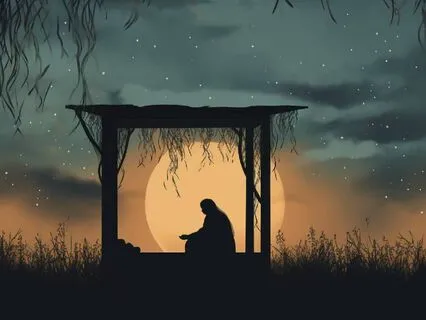
We are in the midst of the Jewish festival of Sukkot where we build Sukkot,
Impermanent and fragile dwellings for us to sit in where we are asked to be joyous and celebrate the holiday even in the midst of the ephemerality and impermanence of life.
Today I'd like to present a text that dives deep into the waters of impermanence,
Finding buoyancy amidst life's ever-changing currents.
So let's go together to explore this profound theme and I'd like to start today by bringing a teaching from the Meha Shiloach.
The Meha Shiloach was a commentary by Rabbi Mordechai Yosef Leiner of Izbika who lived in the 19th century and its teachings on the Torah from a Polish Hasidic master and it's a beautiful mystical text that really encapsulates these themes of impermanence and ephemerality that are so prevalent on Sukkot.
So as I read this text I invite you to listen deeply and let each word resonate allowing the layers of meaning to unfold for you.
Here's the text.
He begins by quoting a incident from Talmud Bechorot where Rabbi Yehoshua has a debate with the sages of Athens and they ask him a series of challenging questions.
Amidst these challenging questions they challenge him with a request.
They say,
Build us a house in the middle of the air and through invoking a divine name Rabbi Yehoshua situated himself between heaven and earth in the air responding bring me bricks and mortar and I'll construct it here.
This mirrored the challenge they presented.
They recognized the tangible strengths and substantiality of the fire or the sun or the earth and so they prodded him demonstrate the strength in this ethereal place this impermanent place in the middle of the air.
Rabbi Yehoshua's reply was profound.
The power he conveyed was in the space between the heavens and the earth.
A fleeting impermanent realm that was hard to grasp much like the transient dwelling of a sukkah.
By asking for bricks and clay Rabbi Yehoshua beckoned them to delve deeper and understand the essence of this space by building a dwelling place in the midst of the air and midst of the impermanent realm.
Rabbi Yehoshua asks us to delve deeper and to see how we can find fulfillment and substantiality and joy within this impermanent changing ephemeral place in the midst of the air.
Just as our ancestor Jacob named a place Sukkot after building a transient shelter so too is our connection to the impermanent and airy dimensions of existence.
In this story Rabbi Yehoshua's encounter with the sages of Athens takes us on a journey between the material and the ethereal.
The call to build a house in the air in the middle of the air not on the earth and not in the heaven is both a challenge and an invitation.
It's a reflection of our own human journey where we balance between the tangible world around us and the ever elusive essence of life.
In the very heart of Sukkot lies the sukkah,
A fragile temporary dwelling.
This structure captures the essence of impermanence.
It's not meant to last much like the fleeting moments of our lives.
The teachings of Kohelet Ecclesiastes echo this sentiment.
The words hevel havalim which we often translate as vanity of vanities might also be understood as breath upon breath or air upon air.
Each breath we take in and out in and out constantly changing constantly moving.
Each breath we take is an affirmation of life yet also it reminds us of life's transient nature,
Life's ephemeral nature.
Just as each breath comes and goes so do the experiences and moments of our lives.
In mindfulness practice the act of conscious breathing is central.
When we breathe with intention we not only nourish our bodies but we ground ourselves in the present moment.
We become keenly aware of the impermanence of everything around us and within us and we can find joy in that space by building a place to sit for that's what we do in the sukkah.
We sit in the sukkah.
We have a dwelling place,
A sitting place in the air amidst the ephemerality of the world,
The impermanence of the world.
Just as when we sit and we breathe in and out during meditation we have a place to sit amidst that ephemerality,
A place to experience joy.
So the sukkah stands as a beacon of this awareness.
As we dwell within its walls we're exposed to the elements,
Protected but vulnerable.
In this sacred space we come face to face with the delicate balance of existence.
The beauty of Sukkot lies in its call for us to embrace this impermanence,
To be present amidst life's changes and to find harmony within its cyclical nature.
Drawing upon the well of spiritual wisdom both from our tradition and beyond we find a shared message.
Embracing life's impermanence is the key to truly living,
To acknowledge change,
To sit with it,
To breathe it in and breathe it out and to let it guide us on our journey.
On our journey there's a wonderful story from King Solomon where he sends out Benaiah,
One of his attendants,
To go find a ring that when somebody who's sad puts it on it would make them happy and someone who's happy puts it on it would make them sad.
And Benaiah goes out looking for the ring and he can't find it until finally he goes to a jewelry shop and they engrave it with three letters Gimel,
Zion and Yud which stand for Gam,
Zeh,
Ya'avor,
This too shall pass.
And when he gives the ring to King Solomon and he looks at it he realizes that whenever somebody who's happy looks at that they might become sad because this too shall pass.
And whenever anybody's sad looks at it they might become happy because they realize that this too shall pass.
This is the essence of Sukkot,
This too shall pass.
So as you step into the Sukkah this year or simply take a moment to breathe amid nature or sit on your meditation cushion may you find a sense of peace and presence.
May you embrace the air upon air of your existence and may you journey with grace through the impermanent yet profoundly beautiful tapestry of life.
Thank you for being with me today on the Neshona Project.
I'm wishing you all a deeply reflective Sukkot and until our paths cross again take care.
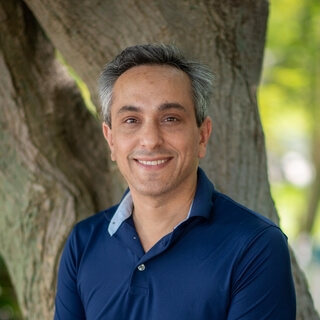
I'm Rabbi Ben Newman.