Hello,
My name is Jacqueline and I'm often asked by children and adults,
People of all ages,
How do you write a story?
Well,
I'm going to share with you some of my tips and some of the things that I use to write a story.
So the first one is start with an idea.
Now these ideas can come from anywhere.
It could be something that you enjoy doing,
Something that you see around you,
Remembering an interesting event or a happening,
Or just something that someone says.
Even if I'm having a conversation with someone,
Just something that they say can spark an idea in my head.
So if you can't think of an idea,
Here's some things to get you started.
So you could start with a favourite toy,
A favourite sport,
A favourite animal.
You could have two animals that you would like to see together in your mind,
Or an animal and a toy,
Have an adventure.
You could write about robots.
If you like playing with Lego,
Your Lego could come to life.
There could be a time in history which interests you.
It could be about a building,
A castle,
A tunnel,
Anything like that that interests you.
Or if you like trains,
You could write about steam trains,
Underground trains or any vehicle at all.
It could be an event you went to,
A conversation you overheard,
Something you saw or something you heard,
Anything at all that inspires you.
And I always tend to write these things down.
So I've always got a notebook to hand and I've always got ideas written down.
So we've got an idea in our head.
So the second part is growing the idea.
Now before I start to write,
I sit with the idea and I think about it.
I allow the thoughts to come in and I allow these thoughts to develop.
I see pictures in my mind,
I move things around and I just really sit with the thought for a while before I do anything at all.
So the more I think about it,
The more the idea starts to evolve.
Now things may change,
Things may fade out,
Things may come in,
But that's okay.
Just allow these thoughts to happen.
Now,
As the more I think about the idea,
The more the plot starts to form and then I start to add the characters and then I can sense the characters.
I can see the characters and I know where they're going.
I know what they're going to be doing.
And so the idea starts to grow in my mind.
Now when I've got a clear idea in my mind,
Not talking about the whole story,
But just sort of the plot,
The idea if you like.
Then I'm ready for my next step.
And step three is to begin writing.
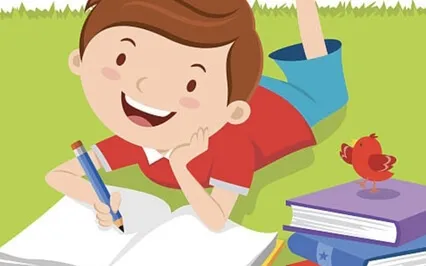
Now some people like to write in a notebook,
Some people like to write on a computer.
And the choice is really yours.
Now I do it both ways.
I have lots of notebooks that I write things down in depending on what kind of stories I'm writing.
But I also like to write on my MacBook.
But when I'm normally starting my story idea,
I normally write it in a notebook.
But anyway at all,
Just start putting down your ideas.
And the reason that I say put down your ideas is because we don't always remember our thoughts.
So when ideas come to mind,
We think we're going to remember that later.
But the amount of times I've lost good story ideas because I didn't write them down,
I thought I would remember.
Yes,
I can't tell you how many I've lost.
But always write down your ideas.
So as I begin to write a story or working with this first idea that I have,
Other ideas come to mind.
And I always put that on a separate piece of paper.
So I jot down the ideas.
Just keep jotting them down.
Sometimes I won't use them in the story.
Sometimes I'll use them in another story.
Sometimes I will use them in the story.
But at least when I know I've written them down,
I know I've got them safe and I'm not going to lose these ideas.
So just keep writing.
Just write as it comes to mind.
Don't worry about the order that you're writing in.
Don't worry about being precise with your words or the conversations that you're going to have.
Just write whatever comes to mind.
Don't read over what you've written.
Just keep writing and allow this idea that you have to grow and grow and grow.
The more you write,
The more the ideas will come.
And the more the idea will grow.
So when I write like this,
I am growing the story.
Sometimes with the end first.
But I don't worry about that.
I just put everything onto the page.
And when I'm happy that I've poured everything out that I can,
I then take a look at it.
And already in my mind,
I know how the story is going to build.
So once we've done that,
We can move on to number four,
Which is the story outline.
Now by now,
You should know how you want the story to begin and how you want the story to end.
And it doesn't matter if you don't stick to this,
But it's just a way of starting to build the story.
And especially the middle part of the story.
Now the middle part of the story is a juicy bit.
And where your characters will grow,
The story plot will really start to explode.
And this will delight the reader.
So using everything you wrote down before,
Start to move these ideas and sentences around to form the outline of your story.
So you'll start with the beginning.
And normally I have the beginning and the end and then build the middle.
So I want to get from A to B.
And that's the bit in the middle that I want to build.
So go through your ideas,
See what you've got there,
Move them around,
Add other bits.
But at the moment,
We're still not worrying too much about our spelling or our grammar.
All we're doing is trying to get that skeleton part of the story down.
So we're just trying to get the story to move forward and to evolve and develop.
So when you're happy that you've got this done,
Then you go on to step five,
Which is building your story.
So now we read over the story outline.
And this is where we add the necessary detail,
Which will allow the reader to picture the people and events in their head.
So for example,
And these are very simple examples.
If you started your story with,
Once upon a time,
A boy played in a field with a ball.
Now this doesn't give much of a description for the reader to imagine.
We haven't said anything about,
You know,
We haven't described the boy,
We haven't described the field,
We haven't said anything about the ball.
We're not bringing the story to life.
So the better way of writing this is,
And this again,
This is just an example.
We could write,
The six year old fair head boy loved playing with his football on the freshly mowed grass in the nearby field.
So now it's much more descriptive.
That person can now imagine that the boy,
Six years old,
We know roughly what height he can be,
He's got fair hair.
So we can imagine that and he's playing with a football and we know it's on grass because we've said it's freshly mowed and it's in a nearby field.
So it sounds much better.
So now we can write this in many different ways.
So giving descriptions and explaining things,
We allow the story to grow and we keep the reader interested as they can then start to see the things in their own minds eye as they're reading.
So that's what we're doing in step five.
We're building these things in the story.
So we're adding those details,
Which is going to make the story much more interesting.
Then we move on to number six.
So we always have a beginning,
A middle and an ending to our story.
We know what we're trying to achieve with our story and how we want our main character to grow throughout the story.
So as the story grows,
We may have to move things around so that it flows better.
And this is OK.
Many,
Many times I think I've completed my story and then when I read it through,
I realize that a whole paragraph has to be moved up and that's OK.
And that's what this building the story is part of doing.
So we keep working on it to achieve our goal.
We may find something doesn't work at all and it doesn't make the story flow smoothly.
So we just take that bit out and we can add something new in its place if we feel necessary.
Then we move on to number seven,
Where we read through our story multiple times.
So when we feel our story is nearly complete,
We read through it again and again and again.
And also we read it out loud,
Too.
So the story really comes alive when we read it out loud.
And during this time,
We can tell what needs to be added,
What needs to be taken away or what simply needs changing because it doesn't flow very well.
And also,
I would recommend that you read your story to others.
Sometimes we don't notice our unintentional mistakes,
Whereas a fresh pair of ears hearing it for the first time can pick up on these things.
And then the final one,
Number eight,
When you are completely happy with your story,
Add a few small drawings,
Which adds a little personality,
Especially to the characters.
And then you're ready to share it with the world.
So my final tips are don't give up on your dream of writing a story.
Don't think you are not good enough to succeed.
Don't listen to negative people.
Don't be afraid to ask for help.
And don't stop writing until your story is finished.
And when your first story is finished,
Begin the process all over again.
I hope this has helped you.
These are my tips.
If you've got any tips,
Then please leave them in the comments.
That will be great.
Anyway,
Have a great day and happy writing.
Bye for now.