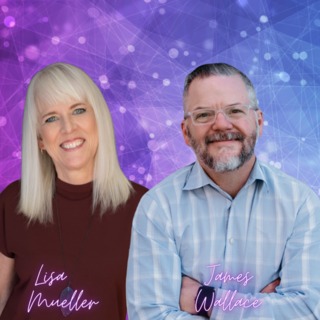
Welcome to the Practical Consciousness Podcast with James and Lisa,
Where we help you tap into your highest selves in everyday life.
Hi everyone,
Welcome to the Practical Consciousness Podcast.
I'm Lisa.
And I'm James.
And today we're talking about the power of intentions,
How our intentions move our energy and influence our actions.
So like intention has a lot of energy in it,
And it creates energy and what we do fuels our actions.
So we're going to talk about that and how shifting our intention can actually change the energy behind our actions.
So there's different intentions that you might have depending on what it is that you're doing.
But if you think about something that you've done recently where you weren't really happy with the way things came out,
You can kind of think about,
Well,
What was my intention before I took action?
Right,
Yeah.
So let me ask.
.
.
Oh,
Go ahead.
No,
No,
Go ahead.
Ask your question.
Well,
I was just going to ask you to give us an example of maybe something that you can think of where the intention that you had,
How it propelled the energy that was created in whatever it was that you did.
Yeah.
Well,
This is something like really I'm kind of messing around with a lot right now.
And it's kind of a new,
I mean,
It's not a new concept to me,
But it's definitely.
.
.
I mean,
I understand intention and I understand intentionality and being purposeful in my consciousness setting my intentions.
But what I've recently kind of learned by some of the shadow work that I've been doing is that intention,
If you think about when we talk about the seven levels of energy,
We talk about the catabolic energy and the anabolic energy,
The energy itself is its origin,
It's in the intention.
And here's the messed up part.
A lot of the intention that we set or that we move forward with,
Right,
We take action on the intention is so deeply subconscious we don't even realize our.
.
.
Like we fool ourselves in our own intention.
Right.
A lot of it's automatic.
Right.
And so,
Okay,
So you asked for an example,
Let me give you a kind of a simple one.
This just recently happened to me actually.
So I was trying to decide whether I was going to do this kind of volunteer activity thing.
And at first I told myself,
Well,
Yeah,
Sure.
I want to do this because it's a good thing to do.
It's a generous thing to do.
And these times right now we're in the middle of COVID-19 stuff.
It's like this would be a good thing to do.
And so if I would have just left it at that and moved forward,
I would have done the volunteering activity and it would have been whatever it was.
But I know based on the intention that I was setting that I was kind of lying to myself on my actual intention.
And so it's disingenuine,
Right?
It's not my truth.
I'm not taking action from my actual higher conscious self.
I'm allowing something else under an undercurrent in the intention.
Right.
Was it like an ego based type thing?
Definitely.
Yeah.
Yeah.
Fear is actually a fear based thing.
And so,
And so then what I did is in this example was I said,
Okay,
Well what that's that's that's BS.
I'm that's not true.
Right.
I kind of called myself out on it.
And then I was like,
Okay,
So,
So if it isn't that,
What is it really?
Why am I,
Why am I considering doing this?
And the truth was I was,
I was hoping to impress some somebody,
Right?
By doing this charitable thing,
It would be perceived as a kind act.
Yes.
Because I wanted this person to think I was a kind,
Generous person.
Kind person.
Yeah.
Yeah.
And that was a lot of people.
And so the action would have been exactly the same,
Right?
The action would have been going and doing the charity work,
But the result could have been completely different.
And so once I kind of realized what it was and,
And kind of dovetailing on our last episode about mindfulness,
I didn't try to change it.
I just looked at it and under and was like,
Oh,
Okay,
Well that it was almost kind of a relief because I was,
You know,
I was being honest with myself and I wasn't judging.
I wasn't judging doing it either way.
I was just looking at the energy either way.
And so one would have been an energy at a level three energy.
Yep.
Wanting to get something for me.
Yes.
And the other would have been,
Or if I would have done it authentically,
Just out of generosity,
That would have been level four.
Right.
Completely different energy.
Completely different.
So the outcome would be different because the energy propelling whatever's happening forward is completely different.
Yeah,
Exactly.
So it's,
It's interesting to think about it that way because how,
How often honestly do any of our listeners or even you,
How often do you stop and think about your intention?
Well,
A little more often nowadays because I've been practicing mindfulness.
Yes,
Yes,
Yes.
But yeah,
I mean lots of things that I do are automatic.
It's habitual.
It's just automatically just going about business the way I normally do.
Right.
If I,
If I stay in my ego mind,
Yeah,
A lot of things that I end up doing,
Saying yes to something,
Regretting it,
You know,
Feeling stressed later because I don't have time to do this.
Why did I say I would do this?
Why did I offer,
You know,
And it's because the original intention wasn't,
Wasn't correct,
Wasn't authentic to me.
Right.
And that's the trick,
Right?
Anybody looking at any thing that we do,
They can't know our intention ever.
No.
But we judge other people based on what we believe their intention is.
It's never the action.
I mean it's the action,
But really it's the story we're telling ourselves of why they're doing what they're doing.
Yeah.
That's what triggers us.
Action is just action.
The reality is just,
You know,
Putting one foot in front of the other,
Opening a door,
Whatever it is,
Putting a number in a spreadsheet.
I mean it's just an activity.
Yeah.
The intention is,
Is really the only thing that matters behind it.
That's the most thing that's important.
Yeah.
And what's funny when you're,
When you keep saying the word intention,
I'm remembering when that word really started to come into my reality and I,
It was Oprah days back when I used to like,
She was the first spiritual type person that was waking me up and she talked so much about intention and in the beginning I was confused by it,
But I get it now.
I get it now that,
You know,
Because before everything was so automatic,
I didn't really was like,
Well,
What do you mean?
What's my intention?
But now that I pause more often,
I can be like,
Oh,
Well,
That's where,
When you would listen to Oprah,
What was confusing about it?
Because I didn't get what intention was because things were so automatic and my ego was so involved that I have my story and I was like,
Well,
You know,
I did that because whatever,
You know,
Whatever my story was.
I see what you're saying.
So back then your intention was,
I wasn't aware of my intention.
Well,
And you didn't need to be aware of it,
Right?
Because you're saying it wasn't something you consciously thought of.
It was just,
It was just an undercurrent of your thinking.
Right.
But it was causing me pain and suffering at times.
Hey,
I got,
I have an example of something that happened recently.
This is kind of an interesting one.
It just popped in my head,
So I'm not sure where it'll go.
But remember I talked about how it was painting the rocks,
Yes.
Painting the little rocks and putting them out on the trails in the neighborhood and having people find them.
And I have a little neighbor girl who I was hiding them in her yard and she was finding them.
I was having so much fun,
But then I was going on walks with my daughter and I wanted to show her some of the rocks and I was noticing that most of them were gone.
And I was getting upset about it,
That they were disappearing.
How could somebody do that?
Why would they take the rocks?
So I actually had to say,
And she even asked me,
Like,
Well,
Why did you put them out?
Aren't you happy that somebody liked it so much that they wanted to keep it?
And so I had to step back and think,
OK,
Well,
Why am I doing this?
I mean,
Part of it is I'm really enjoying the creative process.
Like I'm just I'm an I'm an artist.
I haven't been working at my jewelry bench lately.
So this has been my creativity is painting these rocks.
And so now when I paint them,
I I think about what's my intention when I place this rock in a place.
What what what,
You know,
What's my intention?
And originally I was thinking it was why I just want I want people to and to see it and be like,
Wow,
That's really cool.
But it must have been something slightly different because I was getting upset when they were taking them.
Yeah.
Yeah.
I mean,
That's that's a great example,
Because you you recognize the feeling you didn't like having.
Which then you now can make the connection that,
OK,
I was attached to these little rocks.
I was attached.
They were my rocks.
Yeah.
They were taking my rocks that I put out in the middle of a path.
And then you and so you realize you were upset because you're you thought your intention was also fun and lighten people's day and brighten the world up and that kind of stuff.
But there there was more to the intention.
There was more to it.
I was attaching like my worth in my creativity,
Like look at this thing I created.
You know what I mean?
So then when somebody steals it,
Then you're like,
Whoa,
That was mine.
Yeah.
But no,
They're not mine.
They're for everybody to enjoy.
Great example.
Yeah.
And if you think about it,
Going back to your what you said earlier about the fact that you when you were watching Oprah,
You were like,
What?
I don't get it.
So for our listener,
For many of our listeners,
Maybe early in their in their on their path or whatever,
Intention is like a big deal.
It's it's it's it's almost it's like the essence of most thought.
It is.
Yeah,
I think it's really important for people to to to take a pause,
Which we're going to talk about pausing in our next training that we're going to do for the tribe.
Take that pause and and really ask yourself,
What's my intention?
Exactly.
We don't do that.
We don't we don't do that.
And you have to be super vigilant,
Too,
Because because of the attachment,
Like you just said,
Or the fact that the reason why the intention is not necessarily aligned with your higher self potentially is because chances are there's some egoic fear kind of control element that is driving the the intention.
It's at least the undercurrent of the intention.
And we come by those honestly.
Well,
I talk about the ego.
A lot of people think,
Oh,
You know,
They know it's you know,
They're afraid of their ego or they don't want to be considered egoic.
But we all have an ego and we all come by the development of it.
Honestly,
We were children when it started to be developed.
So don't don't feel bad about it.
Yeah,
Yeah.
It's part of it's it's part of being 100 percent human.
Yeah,
The ego is there.
It's just what are you going to do about it?
But the reason I know the only thing I was going to say was the reason I brought it up is you have to be vigilant from the perspective of your ego is so good at manipulating you that,
Just like my example,
You'll you you you you B.
S.
Yourself so well,
You believe it,
You believe it.
Yeah.
But but it's still not pure.
Even if you believe it,
You could make the argument right that the energy is because you believe the B.
S.
Then the energy is is is good,
But it's not.
There's a misalignment that happens.
Yeah.
And aligned.
Right.
And so just I just caution our listeners to make sure that they're being honest with themselves as much as possible.
Nothing bad will happen.
You know,
If anything,
My experience has been,
If anything,
You actually begin to love yourself more for the honesty,
Just like you respect a person who's honest,
Even even when you don't want to hear what they have to say.
It can bother you what what what their honest thing is.
But you respect the honesty.
Most of us respect the honesty.
And I'm finding that it's the same when when there's a relief that comes when it's like,
Oh,
You know,
I'm I'm misaligned with with you know,
I'm I'm telling myself something knowing that it's coming from an actual place of love.
Right.
That that that the ego is looking out for is right.
It's it's trying to protect us from being hurt.
Yeah.
And so maybe the ego thinks that,
OK,
If if I if you realized you really wanted something or you wanted to impress somebody,
Then,
You know,
You've that's hurt you in the past.
So I'm not gonna let you see that.
But when I do finally see it,
It's like there's a relief because it's like,
Yeah,
Well,
That's true.
That's really what's going on here.
And then I get to make a choice,
Like just like you said,
Then I get to make a choice.
Yeah.
Do I move forward with misaligned energy?
Or do I investigate this more?
Do I have free will?
Right.
Exactly.
Do I in this case,
What I did was I,
I was I went I kind of kept going down that path of,
Well,
Why do I care what this person thinks?
You know,
It's kind of the shadow work.
And then when I got to the end of that path,
I realized what the real fear was.
And I was like,
OK,
Well,
That's that's that's nothing that's nothing to prevent me from doing the real generous thing just for the purpose of being generous.
Yeah.
And then that was that was authentic.
So you already took action and now you're just altering your intention?
No.
Before I took the action,
I realized I still haven't taken the action,
But I realized,
Yeah,
Let me give you a kind of a simple example,
A really simple example and kind of give you both sides of it.
So let's say.
Let's say I go to wash the dishes.
And as I'm headed to go wash the dishes,
I'm thinking to myself,
Why am I the one that always has to wash the dishes?
Everybody else who lives in this house can see the dishes are dirty.
They could certainly clean them.
Why am I the one doing it?
That sounds familiar.
Have you been in my head?
So then I start scrubbing the dishes,
Right?
I'm resentful and I'm angry.
And then so that's one.
That's the intention.
The intention of washing the dishes is we're on a spite and feeling show them.
Feeling taken advantage of.
Yeah.
And,
You know,
It's not fair.
It's what I call the child architect.
It's not fair.
Well,
I'm going to do anything.
OK,
So maybe if you're just honest with yourself,
You just see that for what it is and say,
Oh,
I'm clearly resentful and I'm clearly feeling taken advantage of.
And the story is whatever it is.
Just doing the dishes,
Knowing that will change the energy of doing the dishes.
But then let's say the energy of doing the dishes was I really it's almost like Zen to do the dishes.
I really enjoy doing the dishes.
And I actually do a pretty good job.
In fact,
I would say the dishes that I clean look a lot better than the dishes that the other people in my house clean.
Can I hear your wife's laughing in the background?
Yeah.
No,
No.
What she's what she's thinking to herself is he never does a dish.
I'm playing I'm playing my wife right now.
OK.
OK.
But but the point is that she goes and does the dishes right.
And then I'm doing the dishes and then I'm feeling much more energized and much more.
Yeah.
I'm enjoying the exercise of doing the dishes.
Well,
I think another thing could happen,
Too,
By pausing and having that thought.
Right.
Maybe you ask for help.
Maybe instead of doing the dishes,
You say to someone,
You know,
I did the dishes every day this week.
It would be really nice if you would eat the dishes today.
Yeah.
Or you might go have a conversation with somebody and say,
You know,
I got to share with you a feeling I realize I'm having.
And you know,
I'm feeling like I'm being taken advantage of.
And or,
You know,
Not maybe you would say that way.
You'd say I'm I'm I feel like my contributions are not valued.
Yeah.
Whatever.
You get the idea.
Yeah.
But it's a different outcome.
Like you say,
Whatever your action is that you take,
It's it's different by shifting your intention.
Yeah,
I love just becoming aware of your intention.
That's the first step.
We talk about that all the time.
Just keep just awareness,
Awareness.
You don't even have to make a change.
Just notice it.
Notice that you have free will.
You can do whatever you want,
But just keep noticing.
And then eventually there'll be a shift.
There will definitely be a shift.
You can't you can't keep noticing and having that awareness without having a shift eventually happen.
So I wanted to share with you in this vein of this intention setting.
In a recent meditation I was sitting in,
When I meditate with Gus,
God,
Universe,
Source,
Oftentimes Gus will coach me.
It's a good coach.
And I got I was I was kind of in a meditation and I was thinking about gratitude and I was thinking about intention setting and how I could determine when my intention is true or whether my intention is BS.
And Gus asked a question of me.
And the question was,
What would happen in your life if your intention in everything was simply to experience gratitude?
Wow.
I know.
I know it's like,
Whoa,
I'm still pondering on that.
That's a good one.
What would happen in your life if your only intention in everything was to experience gratitude?
I love that.
I think our listeners,
That's a really good one to close with and have them ponder that.
Right.
Like everybody should.
Yeah.
And we wanted to,
In the spirit of being practical.
Another practical thing we wanted to give you guys to do as to potentially a homework assignment or something is.
How much are you setting intentions?
Like at the beginning of the day,
Are you setting a purposeless intent or purpose,
Not purposeless,
A purposeful intention?
Or or or when you before you step into a meeting.
Yeah,
Right before you walk into the meeting room and especially like maybe,
You know,
It's contentious or something,
Potentially you feel like it might set your intention.
Yeah.
Before you have a conversation.
Yes.
Set your intention.
Set,
Set your intention,
Regardless of what the other person's going to do.
And in order to do that,
You have to pause.
You do just,
It can be one or two breaths,
But you have to pause.
You can't do it while you're plowing in to the situation.
You need to pause.
Yeah,
Good point.
It doesn't take long.
It doesn't take long.
It doesn't.
Don't trick yourself into thinking you're doing it when you're plowing into the room.
Yeah,
Good point.
Because I can,
My ego would do that.
So again,
I'm thinking,
Okay,
My intention,
But no,
Just take,
Stop.
Take a few breaths.
Yep.
What's my intention?
And then enter.
And there's always time.
There's always time.
Yep.
And then,
Um,
You know,
I have a ritual in the morning where a journal.
And I always set three intentions for the day.
And then I do my journaling and then I do my gratitude.
So that's another really good way to start practicing being more conscious in your intention setting is to say this,
This is how my day is going to go.
Yeah,
I do it before I meditate.
I have like a little altar that I go to and talk to my guides or God or whatever.
It's like a little prayer spot.
Yeah.
And I just set a few intentions for the day,
Ask for guidance and then sit and do my meditation.
Right.
And that's,
That's setting intentions for the purpose of like setting a tone for the day,
That kind of stuff.
And it also helps you be conscious of your intentions.
Yes.
Yeah,
It's perfect.
It's just a practice.
And the more you do it,
There'll be shifts.
There will be shifts.
You'll make shifts in the way you make your decisions and choices that you make.
Yeah.
We'd love to hear from the listeners,
You know,
Go to the Practical Consciousness Facebook group and let us know,
You know,
What,
What's coming up for you when you,
When you investigate your intention,
Intentionality and,
And,
Um,
You know,
What's,
What's some other practices that other people are doing out there?
Yeah,
That other people,
Yeah.
So make a,
Make a comment on this,
On this post.
There's going to be a post in the,
In the Practical Consciousness Facebook group.
So just make,
Make comments there and we can have a conversation.
I think that's a great idea.
Or comment on an anchor.
You can also comment on an anchor too.
Oh yeah,
That's right.
You can.
You can comment on that too.
So that's a good close.
We want to thank everyone for listening and we'll see you next time.
Bye bye.
Thanks everybody.
You're welcome.