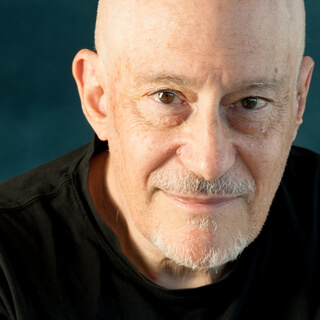
In this conversation with Koshin Paley Ellison,
We talk about what keeps us grounded in reality.
You know,
Here at the Zen Center,
The foundation of our practice is three things,
Which is Buddha,
Dharma,
And Sangha.
But one is the Buddha mind on a kind of literal perspective.
It's,
You know,
Are we paying attention to at least having some gratitude for the historical Buddha,
Some person that lived,
I don't know,
25,
2600 years ago.
You know,
When we do that,
When we actually are,
When I do that,
When I'm feeling grateful,
On a kind of a literal level,
Like,
My goodness,
I'm so grateful for someone who lived a long time ago,
Who has put forth ideas that have really supported me.
And then on another level,
On a relational level,
It's this kind of sense of,
To me,
Like,
These are parts of,
To me,
These are the medicine for the shadow,
Right?
And is to realize,
Like,
Oh,
Relationally,
How am I really appreciating my teacher?
And my own inner teacher,
My own wisdom.
So both like the outer teacher,
Like it's,
For in the Zen tradition,
It's very important to have a teacher.
You know,
In many ways,
I think of my own analyst as a teacher of mine,
Also not in the same way,
But you know,
As a very important,
She has been,
You know,
We've had a long relationship for 20 years.
And it's been incredible and continues to unfold in surprising ways.
So having that kind of also gratitude and my actions towards my own wisdom,
Am I actually cultivating conditions that actually support them?
Yeah,
Yeah.
It's very humbling question.
Yeah.
Because most of us are getting distracted,
We're on Instagram or wherever.
And then we're just like,
Oh,
How do I collect myself?
So I can be here with you.
And,
And also like my,
You know,
My teacher is a Japanese teacher.
And he,
You know,
They only ask that once a year,
I send him a little piece of mochi and write him a thank you note over after New Year's.
And but there's something,
You know,
That's a really beautiful thing.
Like,
How do you ritualize and make some ceremony into appreciating those who teach you something?
And have you really thanked them?
It's very interesting,
Right?
To like,
Literally do that.
Like,
How are your actions and actually supporting,
Thanking the people who have taught you something in this life?
Do those people know how they've been actually helpful to you?
It can be very generous to write them a note,
Give them a call.
Right?
And to me,
Like,
That kind of shifts my orientation into living a life where,
You know,
In Buddhism,
We call it,
You know,
Clinging to small self,
Just like,
Like,
Me,
Me,
Me,
Me,
Like Chiyono with the bucket,
Right?
Like,
When am I going to get it?
When am I going to get it?
When am I going to get it?
I,
I,
I,
I,
Right.
And so to me,
The remembering of Buddha,
Historical Buddha,
That people have taught us our own inner teacher,
Very good medicine.
Yeah.
And then the Dharma is,
Historically,
It's like the teachings of the Buddha,
Like what they taught,
Very important to study.
How are you actually,
Each day,
Plugging into and appreciating some wisdom teachings?
So that we're actually,
There's a wonderful Soto Zen nun in Japan at the Nisoto,
Actually,
Where Chiyono did practice,
And now she's the abbess there.
And her name is Shindo Oyama Roshi,
This incredible woman in her 90s,
And we just met with her in April,
Which was a great privilege and honor.
And,
But she,
You know,
She always says,
What you can do,
We can't control the outcome,
But we can create great conditions to nourish the mind.
And so are each of us,
Each day,
Creating great conditions,
Not good conditions,
Great conditions.
And so one of the ways is,
You know,
Reading some wisdom each day,
Taking in and allowing ourself to be receptive to wisdom teachings,
Whatever your tradition is,
You know,
And whether that's poetry or spiritual texts,
You know,
For me,
It's,
You know,
Teachings from the Soto Zen tradition,
But it's,
How do you really allow that in?
And another way,
You know,
In a kind of relational way,
How are you and how am I receptive to learning today?
Like,
In this moment,
Am I receptive to learning and allowing surprise,
To like,
Set down certainty and pick up curiosity and wonder?
So to me,
This is also another good medicine for the shadow.
And the third is Sangha,
Which,
You know,
Historically is the community of people around Shakyamuni Buddha,
The monks and nuns and lay people.
And,
But relationally,
It's like,
How are you nourishing your community?
Who is your community?
And are you actually allowing yourself to belong?
Many of us don't really allow ourselves to belong at all.
And how do you take care and get to know your neighbors,
Get to know your barista?
You know,
Like I actually,
One of my Zen students asked me a couple of years ago,
Like,
How's my practice doing,
Teacher?
And I said,
You know,
Tell me about the checkout people at your local grocery store.
What are their names?
What do you know about their lives?
And they were like,
What?
I said,
That's a good barometer of our practice.
That you're curious everywhere you go,
Building a sense of community everywhere you go.
And,
And we know now from that,
In case it wasn't clear,
That Sangha and community is so important,
As we know from that study from two years ago,
That 35% of Americans feel lonely most of the time,
And don't report not having a single friend.
Yeah,
35%.
And that includes people who are married,
Right?
Which is kind of devastating.
Yeah.
And not surprising in a certain way.
Because we forget to even offer our attention to the people we live with in a real way.
And so to me,
This last one of Sangha is incredibly important.
And to really learn how to pay attention to nourishing both kind of our gentle community relationships,
Grocery store,
Bank,
Post office,
Cleaners,
Restaurants,
But then also to really nourish a spiritual community of some kind where there's some circle around some sense of meaning and connection.
And we know from that also from the Harvard study that on longevity that our friend Bob Waldinger is the head of he,
You know,
It's very clear,
Like,
Your social relationships are the great predictor of our lives,
The health of our lives.
So really,
And to me,
Having good friends is also a great barometer for shadow,
Because they if they're a really good friend,
They're gonna poke at you.
You're doing that weird thing,
You know,
Or you're,
You know,
What are you doing?
Yeah,
Really kind of getting clear.
Yeah.
So I appreciate,
Really do appreciate the richness of what you shared.
And I'm not in any way going to try to summarize all of this,
But just kind of take one entry point into it,
Which is that contrast between,
Say,
That narrow vision of me,
My situation,
My problem,
The isolation,
And kind of the opening,
And maybe the intentional opening about,
Hey,
The concept that we're interrelated is not just a philosophical concept or a nice spiritual concept to put on a shelf and revere.
But who is this person serving me coffee?
Or who is this person as the cash register?
And how am I interacting?
And in the moment,
A sense of changing the orientation,
And that it's not that the principle of interrelated only applies in certain circumstances or with special people.
Yes.
Yeah,
It's like you start to,
To me,
The barometer is also like,
Wow,
You realize that everyone matters.
Yeah,
Yeah.
And so you started with the idea of the gratitude to the Buddha,
And the gratitude to the teacher.
And so,
And then it goes on in a way it widens,
You know,
Like that gratitude,
The top,
You know,
The pyramid is the Buddha and the teachers.
But that sense of maybe that there's that sense of being part,
Being a living human being,
Is being interconnected.
And having that gratitude to all the members,
All the nodes on Indra's net,
You know?
Yes.
Yeah,
I mean,
It's really,
In many ways,
The whole thing is gratitude.
You know,
To be grateful for this life.
And I remember when my grandmother was dying,
You know,
She,
My grandma and me,
And she was like,
Wow,
You know,
She had endured so many terrible things,
You know,
Family dying in the Holocaust,
And a very,
Very painful marriage for more than 50 years.
And yet she was so grateful that she had the chance to live.
And that even the last seven years of her life,
She could,
As she described it,
Really live.
And it was only because of it,
She was not regretful,
Which was so interesting.
And to me,
Such a great teaching,
That she was not regretful,
She was really clear.
Yeah.
That because of all of those things,
She was able to feel gratitude because she knew excruciating pain and trauma.
She could love more fully.
So it was like,
You know,
Many people have this fantasy,
Like,
Oh,
I've wasted so much time.
She never said that.
I never got that feeling from her.
She always saw that each thing can be a teaching,
If we allow it to be,
Even if it's terrible.
Mm hmm.
Yeah,
Yeah.
And so,
Obviously,
Some people have a predisposition to that.
And for other people,
It's much more difficult to do.
And that's where the training comes in,
Or something about developing that capacity.
Because it's not just be grateful and figure it out.
I mean,
Somebody,
It's sometimes very difficult to find a place of gratitude.
Yeah.
And I think that's why we need help,
Right?
And we need good therapists,
We need good friends,
We need good teachers in this life.
And because without it,
We can get very confused.
And also very caught in our loneliness.
Mm hmm.
Yeah,
Yeah.
So to kind of make a bumper sticker out of it,
Kind of,
If you feel you feel beset by problems,
You know,
Like you're banging against the door and nothing happens,
It's a sign that you need to go out and interact and make friends or find help.
Good idea.
Yeah,
Well,
I think,
You know,
We could always develop more and deeper friendships and deeper relationships.
You know,
I work with a lot of dying people,
And never,
Ever have I heard,
I'm so glad I was so fearful.
I'm so glad I hesitated my whole life.
I'm so glad that I know was so nervous and didn't decided not to do things because I was nervous and scared.
You know,
As the great poet Hafiz says,
You know,
That fear is the cheapest room in the house.
Mm hmm.
Oh,
How I wish we'd have better living conditions.
That having such a small room of fear.
I've never experienced from the voices of the edge,
The people meeting death.
Always remind us that is really about the quality of our relationships.
That actually,
That's what matters.
In the end,
Doesn't matter if you write a book or had a title,
What matters is,
Did you love?
Well,
Did you not hold back?
Yeah.
Yeah,
Yeah,
Yeah.
And hold back,
Of course,
Is fear.
And so,
We're going talking about the dynamic between feeling the fear,
But also not being stopped by it,
Finding help,
Finding support,
Supporting other people,
And that kind of whole focus on engagement.
Mm hmm.
Yes.
And I would even be tempted,
You know,
Just as a way to push a little bit of to push a little bit what you're saying,
To say,
Even if you don't have a religious practice,
Or a specific spiritual practice,
Maybe considering the idea of intentional engagement,
Intentional connection,
The pursuit of community as a spiritual practice.
It's so,
It's so important.
And in that sense,
We kind of come back to the comment you made originally,
When I asked the question about the shadow,
And you pointed out shadow is not just the bad stuff.
But it's also the good stuff that we don't avail ourselves of.
And that's a great example of,
You know,
Our ability to connect and to love and to be bolder,
And is maybe something that we don't fully utilize.
Mostly not,
Mostly not.
So crazy.
Yeah.
And I feel like that actually needs more attention.
And I feel like that actually needs more attention,
Because the fear and the hatred are so,
Are being expressed all the time.
And so really learning how to express something else is critical.
Yeah,
Yeah.
So maybe that in an environment of fear,
Hatred,
Division,
The motivation to exemplify,
To act from a place of actually going beyond that,
And finding the strength,
The courage,
The ability to connect the generosity,
The gratitude,
That allows us to be more connected.
Beautiful.
Yeah.
How is this feeling Serge?
So I'm staying with this because it feels very right.
And I'm wondering actually at this point,
Whether there is something to add,
Or whether it's just a question of staying with it.
And emphasizing it as a way of saying,
Well,
Maybe this is where,
What we want to share with people.
This feels sweet,
And poignant to me.
Yeah,
To really engage our lives more fully,
To really find ways to engage,
Like really,
To me,
It's the most important thing,
To actually figure out what we value,
Which most of us know,
And bring our actions into alignment with that,
And building,
And through that,
Building community,
Nourishing community.
I don't know what's more important.
Yeah,
Yeah.
And so the only thing that I would add to it is to say that if you hear it,
If you listen to this,
Do not keep it as an interesting idea that you're going to quote next time you talk about things with people,
But just to ask yourself,
In what way you're going to do it this week,
Or even today,
In even a very,
Very,
Very small way.
Yeah.
And then do it.
Yes.
Yeah.
Beautiful.
Thank you,
Christian.
Thank you,
Serge.