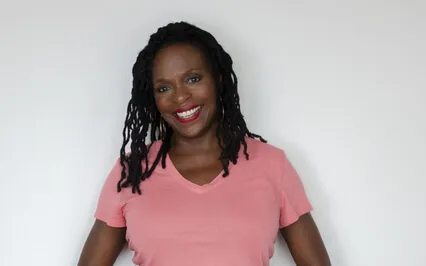
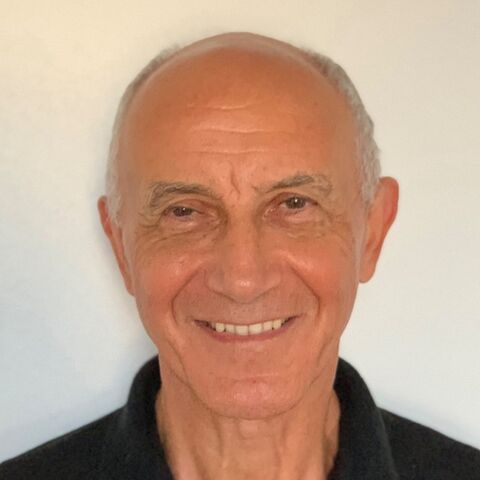
So I'm with the Reverend Dr.
Jackie Lewis.
Hi,
Jackie.
Hi,
Serge.
How are you today?
Good,
Good,
Good.
So we're going to be talking about fierce love.
Yes.
Thank you so much for the invitation to do so.
One of the things that,
Uh,
That I've been thinking about,
And I know you are as well is about how fierce love can answer our human yearning,
Our desire to be seen and known and loved and have our lights shine as opposed to being dimmed.
Yeah.
Yeah.
Yeah.
Yeah.
And you described beautifully how the lights are dimmed and why,
And what it takes to actually come back to the full brilliance of being a human being.
Yeah.
I think one of the things that,
That,
Uh,
That really deeply concerns me is that the world is full.
You and I know of people who have been dimmed,
Who've been wounded,
Who've been hurt,
Who have not been seen and known and loved,
And they are making decisions about policy and they are hiring and firing and they are making laws and they are on the subway,
Right?
And they are in the classroom and they are wounding other people and hurting other people and dimming other lights.
And so,
Um,
I'm my,
My two core theses in the book,
Fierce love,
A bold path to ferocious courage and rule-breaking kindness.
One is that ubiquitous call to love our neighbors as ourselves,
Right?
All the world's made to religions say something like,
Um,
Love your neighbor as yourself,
Do unto others as you'd have them do unto you,
Or,
Um,
Don't withhold something from someone that you need for yourself.
One tradition says,
Don't break anyone else's heart.
Can you imagine that world don't break anyone else's heart,
Anyone else's heart,
But it's hard to love your neighbor as yourself if you don't love yourself.
And that's,
That's the starting point of this book is to turn compassion and forgiveness and love and to kind of non-possessive delight or an unconditional regard to your particularities,
Turn it on you,
Right?
Who am I really?
And can I see myself and love myself?
Can I own my failings and my superpowers?
And can I acknowledge that sometimes my superpowers are my feelings?
And so we're,
We're,
We're talking about is now,
Uh,
Not the arguing or,
You know,
About the concept of love your neighbor as yourself,
But the how to,
You know,
That it's not so easy,
Uh,
To love your neighbor if you don't love yourself and it's not so easy to love yourself.
And so how is it,
How can we find a way to love ourselves?
Yeah.
Thank you,
Search.
I think it is really hard.
And I want to start there that we're not taught that that's not like you read a book and like,
This is how we do it.
Or our parents go,
Hey,
You really got to love you.
In fact,
I think we are taught that it's narcissistic or grandiose or,
Um,
Something like this to really pay attention to ourselves.
So I think it starts with truth.
I think it starts with telling the truth.
Who am I really?
How can I look at myself with a,
With an open gaze?
How can I say,
You know what I'm cranking when I don't eat,
Or I've got a very kind spirit or I'm a peacemaker or I'm argumentative,
But I help people see the other side,
The things that are you are you.
And in my tradition as a Christian pastor,
You know,
We say,
You know,
We're all made in the image of God.
And I wonder if we could,
How would we adapt that in any tradition to say,
Everybody's got a divine spark or everybody's a little bit Holy.
And in a way it dishonors the deity to not love yourself,
Right.
To say,
You know,
When I was a child,
Someone would say,
God didn't make no junk.
You know,
You're,
You're,
You're wonderful because you have been created by love.
You are,
You know,
A unique representation of what God is like in the world.
And so can we imagine owning that?
And,
And when I was younger,
Search,
I would laugh at,
No kidding,
Those affirmation books,
You know,
Tell yourself you're puts a sticky in the window and say,
You're great.
You know,
Like,
I don't laugh about this anymore because where we pay attention,
What we see,
What we notice is what we believe.
So I now am a person who flosses my teeth and brushes my teeth saying,
You know,
It's going to be a good day today.
You are going to bring your best self to it.
If you make a mistake,
You're going to forgive yourself.
If you fall down,
You're going to get up.
Yesterday you learned new lessons and you're better today than you were yesterday.
And it's going to be okay.
I would say that to my child.
I would say that to my grandchildren.
I would say that to my friends.
So I say it to myself and it helps re wires me.
So this is where it is.
You tell the truth.
You don't pretend you don't have a facade.
You don't,
You don't lose your authenticity.
You stay inside your true self,
Your true self.
And let that true self feel loved and seen by you as a practice.
I say for loving the other.
So,
So yeah,
I see the difference between say empty affirmations,
Because in this case it is saying,
Okay,
I want to give a chance for this to be true.
I will see in what way it can be true.
So it's not that you're lying to yourself and pretending,
But you're actually giving yourself a chance to see the wisdom of that.
Yes,
Absolutely search and knowing that the best way to love yourself in this practice is to also say,
Not going to nail it every day.
Just not gonna like,
I'm not going to,
But I'm going to grow this muscle.
I'm going to practice this and rewire my brain.
And I'm going to grow this muscle of loving my self.
I was so,
I had to make a really tough decision this week about not having in-person worship on Christmas Eve.
We were so looking forward to it.
We've rehearsed for it.
We've planned for it.
And I'm the risk manager for my community and it's my decision to make.
And I made it and I was so upset about it.
I was just sad about it and anxious about it.
And it took me a whole day to get comfortable to say,
Jackie,
Even if people are disappointed or sad or angry,
Do you think it's right?
Yes.
If someone else decided it,
Would you be comfortable?
Yes.
Does it feel to you like it's going to be safest?
Yes.
It wasn't instant search,
Right?
It was a day of agony.
And then saying,
Be gentle then Jackie with yourself.
Cause you got a lot of people to be responsible for,
And that's a good decision.
And my partner,
My husband affirmed that.
And in the end people affirmed it,
But I was the one who had to decide inside myself to love myself,
Even if I was wrong.
We won't make as much offering if we're not in person,
That's the truth.
We won't maybe have as beautiful of an experience.
That's the truth.
Still,
I love me and I did the right thing.
So,
You know?
Yeah.
So you described very nicely that sense of how to not be alone against yourself and how we gain strength by being supported by having people who have our back.
And so this is about recreating the experience of having support by finding support within yourself.
That's right,
Serge.
And that's a really important theme in the book that I come back to.
In the last chapter about learning how to see,
And I'll say something about that in a minute to just bring another thought alongside this,
Which is also around that support.
The other kind of thing in the book,
Along with some really personal stories,
As you know,
Is Ubuntu.
And we have heard this word,
It actually is in a book called The Fifth Discipline,
Which is a business book about how to grow leaders,
But it comes from South Africa and it means a human is a human through other humans or a person is a person through other people.
And someone would say,
I am because we are,
I am who I am because we are who we are.
And can you hear how that is so communal?
My identity,
My surviving,
My thriving is wrapped up in yours so that if you're hungry,
My stomach growls.
When you don't have healthcare,
It has to shape how I vote.
Your family's life is my family's life.
And it's so beautiful and powerful that it comes out of South Africa and how,
Despite apartheid and all the upheaval and all the violence and the anger,
It's Nelson Mandela who came to value the humanity of his captors through Ubuntu and Desmond Tutu teaching about Ubuntu.
They rewire South African life by understanding this ancient wisdom of being inextricably connected one to the other.
So now this idea of what I'm going to do for myself is to learn to love myself and affirm myself and raise that muscle.
But that's also not separate from me learning to love you,
To love you unconditionally,
To love you and to see that your destiny and mine are connected.
So my posse,
My husband is a part of my community,
My posse,
My grandchildren,
My kids,
My siblings,
My dad,
My work colleagues,
All of us are in this together.
We are all in this together to say,
I see you is the greeting in the Zulu.
I see you,
Serge.
I see you.
And because I see you,
Not just your face,
But your kindness or your superpowers or your foibles,
Or your itchy places or your sorrow,
All of that.
When I see it,
The Zulu people say,
Then that's when you exist.
Falbona,
I see you.
Sinkona,
I exist.
To see each other,
Which is to notice each other,
Which is to listen to each other,
To learn each other is what makes us real together.
And the rabbi say a moral life is learning how to see.
John Lewis,
See something,
Say something,
Do something.
Learning how to see is fierce love.
Yeah.
Learning how to see.
And that's really wonderful.
That's because of the community,
That sense of we're all in it together.
If I don't see you,
Of course it creates a hole.
And if I don't see myself,
It also creates a hole because I fail you by not seeing myself.
And so there is a sense of it's displaced from narcissism or selfishness to actually occupying your place in the community.
Oh,
That is so well said.
I wish I had written that.
It is our duty to help each other exist.
It is our job,
Our calling,
Our vocation to create community by seeing and by being seen.
To not withhold,
To not hide,
To not make a facade,
But to be transparent,
To be authentic,
To put our real self in the room,
In the community,
In the neighborhood so we can make a whole humankind.
Yeah.
And so all the more painful when actually the pressure of society makes some people be othered or as you use the phrase raced,
That sense of taking the sense of seeing yourself through others' eyes in which you are other,
You are not seen and you don't exist.
That's right.
I had my first unseen or being or being miss seen,
I think I'm making my word up,
But misunderstood or mislabeled when I was five and a little girl named Lisa called me the N word for the first time and made and raced me.
I'm not just Jackie,
Richard and Emma's daughter.
I'm not just a girl.
I'm a black girl,
An N word girl that's nasty.
So think Serge with me of all the ways that we have raced each other,
Raced black and brown people,
Raced Jews and Muslims and six,
Unseen indigenous people,
Invisible to them,
Again,
Making up words because of the way we stole this land and continue to steal it,
Continue to make them invisible and or attribute all kinds of negative things to someone because of their ethnicity or race or sexuality or gender.
Those violences,
Serge,
Those are violences of unseeing erasure,
Racing and erasure,
I think to put those two words together.
Then you now have generations of people,
Generations of black children who've been told that they don't matter,
That their lives don't matter.
The ones raised by the ones raised by the ones whose backs were flayed for misbehaving,
Ripped from families,
Shackled.
The ones raised by the ones raised by the ones put in boarding schools to un-Indian them.
The ones raised by the immigrant whose land was taken in treaties and then they come get the land and they come to what should be their home across the Rio Grande and they are taken from their parents at the border.
These things are horrible wounds that we've offered to each other because of caste or class or color or religion or ethnicity.
I think we have to look at that straightforwardly,
See that and not be indifferent to that.
We can live a moral and just society and make reparations for what has happened.
That's part of seeing as well,
To see the wrong and make it right.
In that sense,
You're not describing seeing the wrong as if you're from another planet and you're looking at it and you're not connected.
But it's seeing that actually the place where you live is polluted and incomplete because of that.
There is a good selfishness in restoring that.
Yeah.
It's making your nest whole as you make the world whole,
Right?
The beautiful concept of tikkun olam that our Jewish friends say to heal the world.
You're not healing the world over there.
You're healing the world in which you sit and live and eat breakfast and go to work and make a living and raise children.
This whole world is our home that requires care from all of us and restoration from all of us.
Yeah.
Yeah.
What we're doing is it's a question of how we're connected to our inner existence.
To our inner experience of it in order to allow ourselves to feel that.
So it's not an abstraction.
I think that's right,
Serge.
That kind of inner connection.
So interesting for us to talk about that today.
I was in a small group conversation with my church yesterday saying,
I'm really feeling,
I'm a justice warrior.
Anybody who listens to this,
Who's Jackie Lewis?
I'm in the streets.
My fists are up in the air.
I'm shouting.
Let's make it better.
I'm like healing the anti I'm the anti-racist pro queer,
Pro women,
Pro environment.
Let's fix it.
But what's happening in this season of my life is the deep,
Deep conviction about how much that inner work,
The inner life has to do with manifesting the outer world that we want.
Like,
Oh my God,
That's why I got that psychology degree.
Okay.
I get it,
God,
But this idea of we will extrovert,
We will put in the world.
What we can create inside.
And if what's inside is chaos and anger and blame and wait and competition and violence,
Then that's what we put in the world.
But if we can cultivate joy and peace and kindness toward ourselves,
And I'm going to say toward the selves in us,
Right?
Because there's parts of us who are thinking,
Oh,
I hate that part of me,
But we can be kind about that self too.
We can love the other in us,
Then we can love the other outside of us.
Yeah.
Yeah.
Yeah.
So that's beautiful.
I want to just take a moment,
Slow it down a little bit.
And so we're talking about is the idea that's not to make that opposition between inner experience and outer world,
But to see how they're connected.
And there is a bidirectional flow that sense of being more connected means also actually actualizing,
Changing the world as it needs to be.
And also not being into that separateness of othering others,
But finding more of that wholeness and connection.
I think that's fine.
And I playfully say,
I'm not a contemplative person or I don't really,
I'm not the quiet sitter,
But truly in the way that Richard Ror would want me to be non-dualistic in my thinking that I am contemplative and I am meditative and I am holding contemplation and action together.
And I am holding inner work together with outer healing,
Inner,
Inner healing and outer healing,
Heal the soul and heal the world.
And that is a new articulation of a long held commitment.
And what,
Again,
Notice what we notice is what we do.
And so I would love for our listeners should not be thinking either one is an outward justice person,
Or one is an inner yogi.
One is a human looking inward and outward to make a better world.
Yeah.
Your contemplation is not separate from action.
It feeds the action.
It is the spirit of this action.
The action is contemplating at the same time as acting.
So it's a different sense of self at the same way as we're not separating the self and the community.
So that kind of a larger sense of self that's coming from there.
I love that.
That's right.
It's like we are an organism,
One organism.
I love science fiction.
So I love Octavia Butler making a new world in which God has changed and we are God and we are all one or the war of the worlds,
Which is a bleaker story.
But when it was finally time to defeat,
Defeat the enemy,
Which is this organism that has come to kill humanity,
It is,
It is clear that all of those machines and all of that network is one organism.
And so to stop it,
You stop one thing,
Right?
So to flourish,
Let's flourish one thing,
That child who has Head Start or dental care or good school books,
The flourishing of the one child is the flourishing of the whole organism.
The flourishing of the senior is the flourishing of the whole humanity.
Yeah.
Yeah.
And including you put the dental care,
Something very specific,
Very concrete.
Yeah.
Yeah.
Yeah.
Let's make sure everybody flourishes.
So we all flourish and we can do that.
We have enough resources and love to do that.
We just have to make a priority of it.
Yeah.
Yeah.
So does this feel right to end here?
Is there something that you would like to add?
It feels totally right to end here with a blessing for love to be found,
To be noticed,
To be seen,
To be held.
Love for you,
Listener,
And an intention about your flourishing and love for the other and their flourishing because the other is a part of you.
Thanks Jackie.
Thank you,
Serge.