Thanks for joining us here on Pretty Spiritual where we're attempting the unthinkable about how to navigate this messy,
Beautiful,
Imperfect life with spiritual tools,
What,
Principles,
And our own personal stories.
So we're not experts,
We're not religious,
We're definitely silly.
We're honest,
Real,
And willing to share.
So join us as we connect,
Bond,
And grow together.
Yay!
Hello everyone!
Hi friends!
Hello!
It is so great and amazing that we are all here today.
I am so thankful that you are joining us.
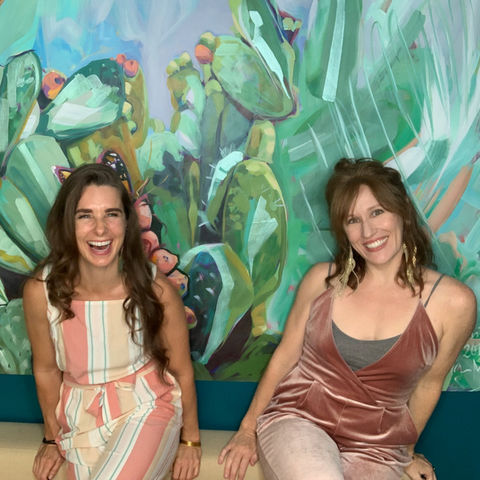
My name's Lindsay Pony.
Hi Pony!
Hi little Pones.
Hey everyone!
I would love to introduce you to Ella.
Hi,
I'm Ella.
And over here is our beloved Annie.
Hey!
We are all together and we are very excited to shift and pass the blame onto someone else about whose topic is this.
Whose fault is this?
Who did this?
You did it!
I blame Pony.
I'm gonna go ahead and blame Pony.
The great news is I know how to blame myself very well.
And here we are today to talk about blame and I am taking full responsibility on this one.
I chose the topic.
We're glad.
There is the extreme side of blame where we can find ourselves perpetually finding something else to blame,
Rarely taking responsibility for our actions.
There is the other side of blame where we choose to constantly blame ourselves even when there is no way we had any part in the unfortunate outcome.
Some people truly believe they deserve the blame.
Let's not leave out the option for blaming fate or some other kind of higher power when there is no thing or no one to blame.
The possibilities for blame are aplenty here in the blame game.
What are some of the reasons we blame?
Blame is a defense mechanism used to preserve our sense of self-esteem.
Blame keeps us safe from looking at the gap of who we believe ourselves to be and who we actually are.
Blaming is an unconscious strategy to keep us from having to make changes or address our actual reality.
No one wins the blame game.
In fact,
The more we play,
The more we lose.
Is it possible to grow in awareness and understanding of our blaming natures?
Could we steer towards self-responsibility and evolve out of the small state of blame absolving all people,
Places,
And things,
Even including ourselves?
Tall order.
But let's try.
So who do you blame?
Yourself?
Your mother?
God?
The neighbor?
Let's get into it.
I'm so excited for this topic.
Have you participated in the blame game?
In what ways has blame served you in your life?
Ella?
Yes,
Ma'am?
I'm looking at you to take the blame right away.
Here it is.
I'm taking it.
I love that introduction.
Thank you so much.
It's so natural to blame.
Like what a great solution to blame someone or something else so that we don't have to change ourselves.
It's such a really crafty solution to all the problems we experience.
I've experienced all the kinds of blame that you were describing.
I've experienced the blame that gets directed at myself.
And one of the most difficult places that I've seen that is with chronic illness stuff.
That underneath my suffering,
In pretty much all cases,
There's this idea that if I feel bad,
I did something wrong.
So there's this second arrow that almost always shows up for me around not feeling well that I put the blame on myself.
This is somehow my fault.
And it's really painful to acknowledge that.
And it's also really helpful for me to take a step back and think about how human brains work.
That if there's this big life-changing situation that I can't understand or fix or really make any sense of,
Then it makes so much sense that my brain,
Whose job it is to like,
This is really uncomfortable.
How do we make sure this never,
Ever,
Ever happens again?
Solution blame.
It's like it goes to that because what else has it got in terms of understanding and control?
And thinking about it from that perspective is really helpful because I'm the type of the person who noticing the second arrow likes to add a third,
A fourth,
And a fifth.
Like,
Oh my God,
I'm always doing this to myself.
I'm so mean to me.
You know,
And like turning it into this thing where really it's just like,
Oh,
That's what brains do.
You know,
They're trying to find a way to keep us safe.
And when they can't understand why something is happening,
Blame is one really expeditious way to kind of grasp after control.
Because if it were our fault,
Then we could do something differently next time and not experience the suffering.
I've definitely experienced that around illness.
And then the other way that I really experienced blame,
You know,
And believe it is I think that other people aren't showing up for me right.
It's this kind of unwillingness to be kind with my own experience.
And so I want someone else to shortcut me into that because I can't get there myself.
And then when they don't,
It's like the suffering I experience gets magnified.
And then I'm like,
F you for like handing my own suffering back to me,
You know,
Like,
Fix it,
Put make it better and then give it you know,
Like,
I don't want this.
And usually it's it's all the more painful when I expect somebody to attend to my own internal life and take care of it,
But I'm struggling to do that myself.
So blame makes so much sense.
I don't need to look at myself,
I don't need to change my attitudes or my behaviors or set boundaries or ask for what I need if it's somebody else's fault.
I'm also even though it works,
You know,
To separate us from self responsibility and self awareness and loving attention to our inner experience.
It also doesn't work,
You know,
Because we're not getting the care and love and attention we actually need for the parts that are hurting.
So I'm hoping that when we get to the tools part,
We can talk about ways that actually lead us back home to attending to what's happening for us instead of putting putting the burden on someone else.
Wow,
Thank you so much.
You really put into words this so much suffering that I've been having like you just really put into I got a real dose of it this morning.
Right in it.
My experience with blame has been very murky and confusing.
And I was in the realm of not even recognizing that I have a big habitual state of blaming,
Just right away,
Right away.
And if it's my own self blame,
I oscillate from just constantly blaming myself in my internal world and everything that's going on.
It's definitely my fault.
It's always been my fault living in that and then in my external world when something happens,
Putting the blame on them immediately.
Well,
It's because of that it's because of you it wouldn't.
And it's this cyclical habitual cycle that I have just started waking up to the example that helped me to get there.
There was lots of little waking up along the way where I would notice that I it didn't feel as good anymore to blame.
That's really what started to kind of wake me up.
Like I would I would notice that I was blaming and I was noticing I wasn't getting relief and through other people.
I think the self blaming piece I might not have noticed.
I know my partner had tried to bring it up and of course,
I'm not going to listen to that person.
I think my own real life experience to see myself at the gym,
This really sweet person was new and we would work out together doing some weightlifting.
One time after working out together the next day she said,
Can I you know,
I'm just going to be honest.
So I was like,
What?
So here it comes.
So I really stood attentively and listening and she said,
I'm finding it really stressful working out with you.
And I don't want to partner up anymore.
Wow,
Good for her.
I know.
There were so many reasons to be mad and blame me.
First of all,
How did you just do that?
I'm not allowed to do I can't do that.
How did you not just work with me forever and just suck it up?
Swallow it down.
How do you even know what feels stressful and if someone else is I just Oh my God.
And so luckily,
I've since I've been working so hard on awareness and all this,
I didn't just go into straight defensive mode and start outwardly blaming this person.
But I really noticed throughout the day how I would look at her and I would be so mad and I would have so many blaming thoughts.
This is your fault.
Lifting is stressful.
It's just stressful anyway.
You should take responsibility.
And I had so much love for this person.
She's so sweet and so wonderful.
And we had become really fast friends that it was just this perfect environment for me to see that there was a lot of blame going on here and that it felt really misplaced and that I didn't want to do that.
So I'm using that example of blame for that person because it took me a lot to wake up to the blame.
What I started to learn is that there is more information under the blame than on the surface.
And I will get into how to look below the blame when we get into our tool section.
You are a perfect little pony.
You are perfect pony.
That's so great.
I love your personal example,
Pony.
Thanks for sharing that.
Such a hard place not to blame.
Yeah,
I still want to blame her.
It's so great.
I just keep seeing that every day when I go in practice.
Thanks,
Jim friend.
So I love hearing both your experiences and I am a blame taker.
And I'm definitely not an angel and I absolutely can lay blame with the best of I do have some good.
But I want to talk about the internal blame.
And I am so good at agreeing with people when they state emphatically that something's my fault,
I just sign on.
I'm like,
That's correct.
It is my fault.
And so I think this comes from,
You know,
Just having insecurity early on.
But then I had a very long life of drinking.
And I a big part of that was I always took the blame for things because if I kept that was my way of keeping the peace and then it would just I thought distract people from my bad behavior,
You know,
And I could kind of keep doing what I wanted to do.
So I developed this strategy to protect what I wanted to protect by always saying yes,
Absolutely.
It's all my fault.
I'm bad crocodile tears,
Da da da.
So now almost nine years into my spiritual journey and with a lot of the emotional healing I've been doing in the last year and a half,
I find that this no longer works.
I had just been a worked for a long time.
It made me feel safe.
And lately I'm like,
I don't really like this with people in my life who tend to blame outwardly a lot.
I find that I now get resentful.
Whereas before I would just kind of smooth it in to the strange under world of my life and you know,
Put it where with the rest of the stuff I didn't look at.
I'm like,
Get down there.
But now I'm like,
I don't really like that.
So I've been thinking about it.
And this topic was so great because I had to actually think about it.
Like what is this look like in my life?
What am I doing about it?
Part of it,
A,
Is noticing it in the moment.
I sometimes have a hard time of even understanding what's going on and I'll just,
If I get overcome or whatnot,
I'll just go with the flow.
And then,
So part A is just noticing that there's some blame occurring that I'm not responsible for.
And B is taking responsibility for speaking up for myself,
Which is hard because usually it's in a situation where someone's heated,
Right?
And there's something that's gone wrong and there's an outward expression of frustration or anger.
And I'm scared of confrontation is the story that's in my head.
And so I have this other story where I have a spiritual solution so I can absorb their whatever and it will blow over and then it's fine.
But I'm like,
That actually,
That doesn't work for me anymore.
I have a part in the blame game.
Just looking at it from this angle,
Like I absolutely have my own problems with blaming things and not taking responsibility.
But in the context of learning how to not accept responsibility for blame that's not mine,
My part is not setting down what's not mine.
And then I get resentful and then I blame the other person.
In the tools I'm going to talk about some very little wobbly steps that I wrote down last night that I can start practicing.
So this is all very real time experimental stuff for me.
And we can learn together.
Wobble steps.
Wobble steps.
Weeble wobble.
So sweet.
Well,
Let's explore how we can meet the experience of blame with some tools and possible redirection.
Ooh.
Ooh,
We.
If possible.
We'll just keep blaming,
Whatever.
Plenty of options.
They all work.
They all work.
Ella,
Do you want to start off with the tool?
Sure,
I do.
It has come to my attention in that way that you were describing,
Lindsay,
With your gym friend where we're not ready to see something until we're ready and then all of a sudden we can see it.
And the causes and conditions are ripe in my life for me to start seeing how much blame there is kind of just as background noise,
Like subconscious background noise in my own mind at all times.
And I could call it blame and I could call it judgment and I could call it lack of acceptance.
There are all these different ways to understand it,
But it manifests as this kind of like clenching and tightening up around life.
And so like I was saying before,
I have this tendency to really blame myself for having very human reactions to life.
So it is a human reaction to tense up when we feel aversion towards something.
That's just what creatures do.
When we're experiencing pain or discomfort,
We brace ourselves against the pain or discomfort.
But how it's been happening for me is that I clench up against the pain or discomfort and then the cycle of like internal blame starts where I'm layering all of these blaming ideas and thoughts against like I'm really holding the blame against myself.
So I've been starting to really look,
Become aware of and be willing to look at the ways that just in the background of my life,
There's this subtle blaming background noise almost all the time.
And it's really sad to see that.
And I can see how I'm blaming myself and blaming others.
And I can also see the way that forgiving myself and or forgiving others,
That those that act of forgiveness accomplishes the same end,
Which is that I start to settle into my humaneness in a more graceful way that doesn't hurt so much to live through.
This is a tool that all of us have mentioned at some point in the past,
But it is really fresh and alive for me right now.
And this tool is RAIN,
Which is an acronym for the compassion and the wisdom parts of mindfulness.
So R stands for recognize and recognize means something is happening right now.
So for me,
Recognize usually happens because when I'm clenching up,
I can recognize like,
Ow,
Ow,
That hurts.
My body's tight,
Or I'm like,
Clenching my fists,
Or if it's in the case of somebody like handing something to me that I don't want to be mine.
Usually I have a big physical reaction to that.
So like R is like,
You have my attention life.
A stands for allow and allow doesn't mean I like what's happening or I condone it or even I accept it.
It just means right now this is reality.
It's like this very,
It's this very quiet decision to get on board with this is what's happening right now.
I stands for investigate.
And that doesn't mean investigate my thinking,
Or my stories or my internal narrative about what's happening.
It means get inside my own human body and feel where,
Where are the pockets of blame.
And so for me,
Often what that feels like is like my heart is racing or my shoulders are kind of hunched in if I'm blaming myself.
Oftentimes I'm like tensing the big muscles in my body.
So like my legs are really tensed up.
And so I go into my body and I feel like all of these physical sensations,
And I try to stay with them for as long as I can.
And then N,
Which stands for nourish.
What does the tensed up,
Clenched up,
Blaming part of myself need in this moment to be able to relax into humanness,
Into life,
Into relationships,
Into being gentle and loving the person I am right now,
Even,
Even when she's hurting or even when she senses the ways that other people are hurting.
The very short version of that that I've been practicing when I recognize the clenching is I just slow down and I just put my hand on my heart and I say,
Forgiven,
Forgiven.
It's like a jump from recognize to nourish.
And if you're new to practicing RAIN,
I just want to say that it took me something like three years to get past I.
But all practice is worthwhile no matter how far you get into that acronym.
Whoo,
That's all okay done.
So so nice.
Thanks,
Ella.
That was my favorite explanation.
You just taught me so much.
Trying to learn so much in that.
Thank you.
The creating intimacy piece is so important for this part of the tool.
Working with and accepting and forgiving all the things that Ella was talking about.
My really human experience.
That piece has been really clutch because when I'm blaming myself and I'm blaming others,
There's certainly not any space here for all of this to just be okay for it to all really be okay and just exactly as it's supposed to be.
And I liked how you talked about how blame could be a lot of different things,
Whether it's non-acceptance or judgment and just how that getting really intimate with how that feels in the body and what that's like and if it's serving me any,
You know,
How is this serving me?
And recognizing for me that in the place of blame,
I was really just trying to protect myself and it just quit working.
It didn't feel good anymore.
And I love that for this example with my friend at the gym,
How much I loved and appreciated them and then for that to be side by side,
It was the juxtaposition of the feelings of love and acceptance and then like blame and aversion and hate and how hardened I was,
You know,
For a very next day from going from loving them so much to like them being the problem and it being wrong was,
It was just so eye opening and baffling and painful and hard and I'm so grateful for the experience to see that taking responsibility for my feelings and actions without that part of it,
I cannot learn and grow.
And I don't,
I'm more willing now to,
I'm getting to learn how to feel into my body and this space and what's actually here instead of just hardening off my heart in my life so that I don't have to feel anything.
The tool for connecting with myself,
Creating intimacy with myself so that I can meet the truth of the moment and putting the blame aside so that I'm able to touch into the actual moment of what's going on here.
A way for me,
Ella expresses so well with how RAIN can be used to do that.
Another way that we could do this is at whatever stage you notice your blaming impulse come up,
Even if it's after,
Right?
So even if it's later on in the day,
Like,
Wow,
I was really blaming that person or myself,
Whatever it is,
For or after,
Ask yourself the following questions and then journal about them.
And then spend time with this experience,
With this opportunity of where you notice blame.
So even if it's just making a little note in your phone and then going home later after the incident,
To ask yourself,
If I couldn't blame in this situation,
What would I have to feel?
And the second question being,
What about that feeling is so hard?
With my gym friend,
If I didn't blame her,
Then I'd have to feel the impact of my tone and the effect that I have on others.
And this is my identity.
Of course,
There's ego in there.
Just my whole questioning of my being and who I am is at the forefront of,
Oh,
I hurt someone.
Like,
I hurt someone and they were able to tell me.
And then I want to circle back around to the blame of,
I'm bad,
I'm wrong.
I could just stay in this blame.
Or I could ask myself,
What about this feeling is so hard?
What's so hard about the feeling is the dread of my too muchness,
Myself,
My being and how I operate in the world and what it's like for other people and hurting people.
And then essentially what it's like to be in this body and with myself and the being that I am now and how there's change that could happen.
Or there's ways I could help myself and be more gentle with myself because essentially how stressful I am with other people and forcing and demanding and telling them how to live is in the moment as well.
That's going on for me inside and how I treat myself and it's painful.
So that's,
There's so much more writing that could be done and looked at with those questions of what's going on here.
But all of that to say like underneath the blame,
There is so much more information here for us that can be useful.
Instead of just living on the surface of like,
They're bad,
They're wrong,
I'm bad,
I'm wrong.
If I can drop down and get below and see what's here,
What's useful for me,
What's really going on,
Why am I armoring myself,
What would it feel like to be really believe that I am okay just as I am right now,
This situation is okay,
They're okay,
It's all okay and to exist and be in this moment as imperfect or as much as I don't like it,
Whether it's pleasant or unpleasant as it is,
That's a lot.
Thank you,
Poni.
That was perfect.
What a wonderful real time example too.
I can so relate when someone lets me know how my behavior impacts them and then the shame like just staying in that spot of like I'm bad.
So like,
Oh,
Okay,
Right,
Okay.
What's here?
What's here?
Well,
A lamppost to look and see.
I'll shoot it out with a BB gun.
I don't want to see this.
I set it on fire.
Annie,
What tools do you have for us?
I am so excited to talk about tools that I learned from other people because I didn't even realize how few tools I had and researching this,
I found a therapist and I guess she's also an interfaith minister,
But her name is Nancy Collier and we have her page up on our tools page.
So if you want to go and read more about this,
You can there,
But she really talks about blame and its role in relationships and she gave this really,
I'm going to share the examples she shared and then some tools that I made up so we can all practice them together,
But she talks about a dad who his daughter's late for an important gymnastics meet and so along the way there's bad traffic and he's upset because she's going to be late and so he starts saying if you hadn't dilly dallyed,
You're always so selfish,
You just do what you want to do,
You never think about the time because underneath of it,
Like we've all been sharing,
He's really sad and concerned about her missing this important thing,
But like that can't be touched so it's just this control.
How can I control how I feel?
And I have,
I can understand how the daughter feels.
I don't have a parent that does that,
But I've been in relationships with people who communicate that way and it gets confusing for me because I am like,
Yeah,
I do dilly dally sometimes,
Yeah,
I can be selfish and then I'll take on the entire story of I am bad.
Oh,
You're right.
Some things I made up,
We're not sure if they're going to work,
Let's all practice some,
You guys message and let me know,
I'll report back and let you know if they work,
But I've also picked it up from Ella and Lindsay sharing things that they've shared that work for them as far as having boundaries.
So this I think is just to having a boundary,
Right?
So the first part is noticing I'm uncomfortable,
This doesn't seem right.
And then the second part is I'm going to stop you right there.
Got that line from Ella.
I'm going to stop you right there.
I acknowledge your frustration.
I will reflect on what my part might be,
But I don't accept blame for all of the emotions and frustrations you're expressing.
That's really long.
I'm going to repeat it.
I'm going to stop you right there.
I acknowledge your frustration.
I will reflect on what my part may be,
But I do not accept blame for all of the emotions and frustrations you're expressing.
And so I was chatting with Pony about this on the car ride over and this revolutionary idea I had for having a boundary.
And then she gave me an even extra revolutionary suggestion of what if once you get comfortable just having that boundary,
Then you could take the conversation a step further and invite the person that you're in the relationship with to go underneath.
Just like my friend said,
If I'm being honest,
So that's how she started.
So then that already told me that this person is about to say something that is hard or that is really true for them.
So really bringing in that piece of setting the scene for like,
I really want to talk about this.
If I'm being honest,
What happened for me when you were doing that is that that really hurt me or really making it more human so that letting in that that side of them when they kind of soften and let their guard down,
It helps me to kind of take off some of the armoring that I have to to help me soften and do more investigating of what's actually going on here than what I think is going on here and why I'm so quickly like blaming or whatever.
Yeah.
But yeah,
It'll be a very,
It's really just being clunky and attempting it first to see and just no matter what really keeping the focus on yourself and not ever being like,
Well,
When you did this or when you did that,
No,
It's like,
As we're having this conversation,
I'm really considering what's going on for this whole situation here and what's happening for me right now is I feel really scared.
Like when I let that out and say that piece or when someone says that to me,
It really helps me to drop my defenses because I'm like,
Oh my God,
This human is scared or there's fear here or like,
It's really that getting intimate piece right there where we whether we're getting intimate with ourselves or being really intimate with another human being where we feel like we can kind of put down all the armoring and all the fighting and all the blaming and all of that that we do so we can be what's really here in this moment.
No,
I like that.
I like the part about,
Especially with a safe person,
Right to the,
This makes me scared because that's the true part for me of why I'm always dishonest,
Which is what it is for me is dishonesty and then inside I blame,
But I don't blame outwards,
But I'm like,
They're mean.
If you're dealing with a safe person too and you're willing to put down your own armor like your gym friend did that by itself like you were saying is an invitation to intimacy because some you're watching someone else kind of role model.
What that intimacy looks like.
And sometimes when I'm,
I'm with someone who's doing that.
When after they've demonstrated what it looks like to get intimate with their internal experience then if they ask me a question like where does it hurt for you?
That can be an invitation to,
Oh,
It's so painful to me to know that I had that impact that I don't,
I don't want that to even be a possibility.
So I want to argue with you,
You know,
Like I want to argue with your feelings because it's too uncomfortable for me to acknowledge that I have that impact on you,
You know?
And again,
Like if you're dealing with a person who's willing to take that kind of backwards inward step with you,
That can be great.
And if you're dealing with someone who's just angry and isn't wanting to have that kind of a conversation,
Then you can remove yourself.
Yeah,
You can just have the boundary.
If they're a safe person,
They can take that invitation to do that.
And you'll know right away if they're a safe person or not.
Because a lot of times people are going to get defensive.
Yeah.
Also,
So natural.
Yeah,
It's just a natural thing.
And if that happens,
At least you did that one piece of modeling,
Even that one piece of living by example of what it's like to let that armoring down might be something that they get to take away with them,
Even if it's 10 years later.
So well,
And the thing about a safe person is you'll probably have a relationship with them.
So you'll get to practice.
And that's my last tool is saying a prayer.
Because for me,
This stuff's really scary.
So I'm like,
What if I don't have to just draw on my own resources to have the courage to try to practice this stuff over and over,
Even if I don't know what the outcomes will be,
Say,
You know,
Higher power.
I'm scared.
Please help me speak up.
Please help me speak truthfully.
That's all.
Yay tools.
So much great stuff.
Thank you,
Ladies,
Very much.
Thanks,
Pony.
What a great topic.
I learned a lot.
Oh,
Me too.
Do you guys have blame stories or tools to share with us?
Oh,
We would love to hear it.
You can reach out to us on the interwebs on our website,
Which is pretty spiritual podcast.
Com.
You can also find us on all the social places.
Say hi.
Come check out our Instagram.
We put silly stories on our Instagram stories.
We have a good time.
It's so great.
Well,
What will we be talking about next week?
So we got a request from one of you to talk about jealousy.
Probably the romantic variety.
And we have nothing to share.
So sorry.
Not that I have plenty if these girls have nothing to talk about.
I'll carry the episode.
So tune in next time.
Can't wait to see you there.
Thanks so much.
Love you.
Bye bye