You've arrived at Pretty Spiritual Podcast,
Where we examine everyday life and attempt to make it spiritual.
We share personal stories and practical tools to connect and grow.
Come on in.
Hello everybody.
Welcome back friends to Pretty Spiritual Podcast.
I'm Annie.
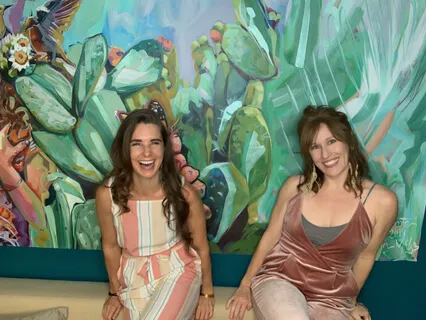
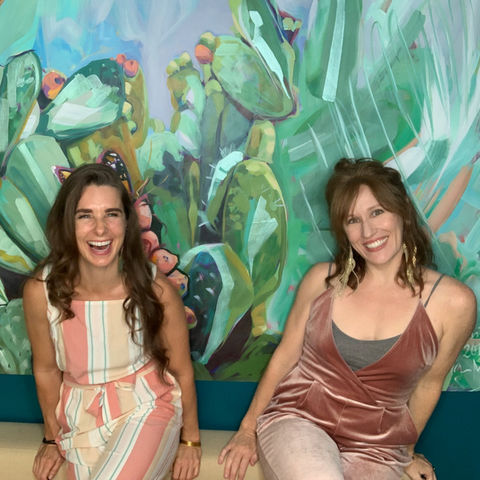
I'm here with Pony.
Hey everybody,
I'm Lindsay Pony.
And we are here with our very special guest,
Annika,
Who is calling in from Australia.
Hi everyone,
I'm Annika.
Thank you for having me.
Yeah,
We're so glad you're here.
Thank you for the 19 hour time zone difference.
Is that what we are bridging with the magic of technology?
Yep,
Yep.
I'm here from tomorrow.
So very cool.
That's right.
And thank goodness.
And so very cool.
We can put a little pin in the map now.
Australia,
A guest.
Yay.
So in our effort to expand our sharings and deepen the experience and hope that we might share with this podcast,
Every other episode,
We are inviting a guest onto the podcast and asking them to choose a topic important to them.
Annika,
Bless her little heart,
Chose reducing stress.
I can't imagine why anyone would pick the topic of stress in the year 2020.
That's exactly what I was going to say.
What will I ever share about?
There's nothing to talk about.
So we have a lot of practical and spiritual tools to share with you about reducing stress in this most stressful of years.
But first,
Let's just contextualize why stress is impacting people in 2020.
It's important to say stress isn't always bad.
It's the rush that kicks in to help you complete your work,
Finish that school project.
It's also the rush that can save your butt when you're in a life threatening situation.
Your breathing increases,
Your muscles tense,
Your pulse speed,
Your brain uses more oxygen,
Becomes more active,
Really kind of kicks you into fight or flight,
Which can do a lot and is great for short term spurts.
But say you're living in six months of stress in the year 2020.
You know,
Grinding it out,
Grinding it out.
Say there's a global pandemic.
Say you're homeschooling your children online while you work full time.
Maybe say you're living with your parents as an adult because you lost your job or can't find one because of COVID.
Say you live in Kenosha,
Wisconsin or Portland,
Oregon,
Where Black Lives Matter protests are being met with state sanctioned violence.
Say you live in California where there are wildfires everywhere.
The air is poison.
Just perhaps,
Just perhaps this is all hypothetical.
Just maybe,
Just maybe.
So what's more,
Communities of color experience even higher level of stress than white adults.
There's a report out by the American Psychological Association called Stress in America 2020.
Period.
Period.
And it's real.
So when stress becomes chronic,
There's this prolonged state of tense muscles,
High pulse,
Overactive brain,
And all that can disturb your immune system,
Your digestive system,
Your cardiovascular,
Your sleep,
Reproductive.
And the National Institute for Mental Health has said that chronic stress can lead to heart disease,
High blood pressure,
Diabetes,
And other illnesses like depression or anxiety.
I feel like we're really cozy with all those facts.
Let's just say the whole system is in danger.
So I didn't say all that to stress everyone out.
Oh,
Come on.
We got to set the tone here.
Yeah.
So we just want to acknowledge that this is the playing field that we as a world are all in and acknowledge that most people's lives right now are upside down and turned around.
And so if you feel stressed chronically or acutely,
We want to tell you you're not alone.
And we also want to talk about the tools that we're using right now to manage that internal stress that we are able to indicate our sweet little selves as healthy as possible in body,
Mind,
And spirit.
So with that introduction,
I want to turn it over to Annika.
And Annika,
Why don't you share some of your story with us and also tell listeners why you chose this topic.
Thanks,
Annie.
Great to be here.
My first time,
A guest in a podcast,
So bear with me.
So why did I pick stress?
I'm a Kiwi.
I've been living in Singapore for the past four years or so.
And just as I left Singapore,
COVID hit.
So like a lot of millennials,
I'm now out of a job and moved back home with my parents in Melbourne.
I've always known it would be tough to live with my family,
But I didn't really know how tough it was until recently I got diagnosed with a condition called alopecia.
Now alopecia is a condition where basically your immune system attacks your hair follicles and you lose your hair drastically.
It's actually more common than we think.
And in adults,
It's often caused by stress.
And when I was told this,
My initial response was,
Oh,
But I'm not stressed.
I'm really not stressed.
I don't feel it.
What are you talking about?
And I thought,
You know,
Even if I am a little bit stressed,
It feels like losing hair is a very extreme response to stress.
To which the doctor basically says,
Yeah,
Yeah,
It basically means you're extremely stressed,
Which wasn't very helpful.
And you know,
When I was talking to my friends about it,
They really,
I suppose,
Grounded me.
A friend of mine listed a bunch of things that my life could probably be stressful about in the text.
And I'll just read it out.
He basically said,
What,
You're not stressed?
What about career,
Jobs,
Living at home with parents,
Hiding things from parents,
Relationships,
Pressure from family about relationships,
Disclosure to family about nature of relationships you want.
And one of these have been stressing you out.
And you know,
When I saw all of these written down and I thought,
Well,
You know,
This is,
This is basically my whole life with my family.
And I imagine it's the same for a lot of people moving back home.
You know,
For example,
Hiding things from family,
You know,
You wouldn't just bring your tender date home to your parents house,
For example,
Right.
Especially if your family is concerned with it.
And I imagine a lot of people have disappointed their parents with their careers and partner choices as well.
But moving back home permanently,
You kind of have to just face it all.
And you know,
I imagine it's a lot like going home for the holidays,
Except it's Christmas and Thanksgiving all the time.
My nightmare.
That's your life.
Exactly.
And I guess for me growing up,
I was an immigrant kid.
We moved to New Zealand from Bangladesh.
And you know,
Being an immigrant kid,
You always learn to live a double life.
Outside of home,
You have to integrate and assimilate.
And then when I come home,
I have to be the Muslim Asian kid.
That's my background.
And when you're living these two lives,
A part of you is always hidden away to some extent because you always have to blend in.
And you know,
That's all fine.
But I moved out of home since I was 18.
So I've always had to have always had my own space to go back to.
And now moving back home,
This is actually the first time in a long time I've had to start fully living sort of these two lives again.
I've been taught always to be the right way and to do the right thing.
So accepting stress has always been hard for me.
You know,
Growing up,
I was raised by the classic tiger mom or tiger dad.
You have to always have the right job.
You don't have a real job unless you're a doctor or an engineer.
We always hear this.
Your skin isn't light enough.
You're not tall enough.
You know,
You need to marry the right guy at the right time,
Have kids,
Da da da.
And just being surrounded by all of that.
You have your armor on and it's really easy to brush off initial things that signal stress like heart palpitations.
But I know I have to do something about it.
Hair loss is least of my worries.
Like Annie mentioned before,
Extreme stress can lead to a lot of depression,
A lot of anxiety.
And,
You know,
These are worse things to worry about than losing a bit of hair.
So like a classic overachieving tiger child,
I am now on a mission to get an A plus at not stressing.
Now I'm determined to be in the top percentile of calm people in the world.
That's just what I am.
I'm so proud of you.
We are so proud of you.
You're doing so great.
Thank you.
Awesome.
Oh my gosh,
That was amazing.
Thank you so much for sharing that.
Annika,
Thank you.
I love hearing about your experience.
I'm so honored that you share it with us.
And it's touching to hear about your relationship with your family and how you are attempting to navigate it.
I am so curious because I also know Pony has shared about her perfectionism.
I'm sure you guys can chat offline about being the perfect relaxed person.
Yeah.
Oh my God,
I feel the stress building.
I'm just thinking about it.
Of course.
That's right.
What about you,
Poms?
Wow.
Thank you so much.
I'm so glad that we can come together and talk about this.
Even though it seems,
And as Annika was touching on,
It seems so clear like with the list of things that yes,
There is stress,
But this,
What I found for me and my experience with this and what I realized this week,
So thank you podcast is familial,
Cultural,
All of this.
I gathered the information that we aren't stressed.
We're good.
We've got it.
Push it away.
It's all good.
I don't notice it.
I don't see it.
I'm all good.
It's all fine.
And if I was stressed,
I certainly kind of with our culture,
We wouldn't like share with each other about it and talk about it.
We just pull ourselves up by these bootstraps that no one has,
You know?
And I really feel like the more that I look at this and our,
Our culture and just like talking about our black and Brown fellows and how much more stress they are put on,
On a daily it's built in.
It's really been starting to hit a lot more deeply with me,
But just being okay with,
And talking about the stress that I wanted to talk about past,
Present and future.
This is,
I just mean,
That's the type of stress that I was denying.
I'm denying my past stress.
I'm denying my current stress.
And I'm also not recognizing the amount of stress that I am projecting into the future and setting up my nervous system for.
I am just this big constant ball of stress that I am not acknowledging.
The type of environment that set up to continue feeding into itself and just creating more stress and more stress.
And I'm,
I'm good.
It's fine.
It's all good.
The stress that I can become aware of and deal with that this has been like my journey really is coming into the awareness and the acceptance.
The acceptance part is so important because I didn't want to talk about my family stuff that has put me in habitual state of unwellness to wrap it up in a bow because I have five minutes to share right now.
So just there's that piece.
And then now I'm adult.
I'm no longer,
I'm so lucky to not be with my family.
I just,
Annika,
My heart,
Call me anytime.
Okay.
Cause yeah,
The amount of stress that is here that I'm smushing and pushing away.
I have got to start recognizing.
So this is past stress that I'm talking about.
And then with what I was liking to call pre-stress recently when I was getting ready to go back to work,
Work is such a great thing.
And I think it's again,
Very cultural where like more work,
More doing more producing more showing up.
This is,
This is what we do.
We're producers.
So for the consumers,
Obviously,
So we can consume,
But any,
I digress right now.
What I'm saying is that I was having major pre-stress that I wasn't willing to notice about work.
And I was also pushing and shoving down how stressful my job is.
I'm raising small children.
I am dealing with high flutin people who have high needs and act like they don't.
And I'm having to do all of this all together.
So talking about stress,
The main thing that I want to talk about right now is that I have to become aware and I have to accept the stress that is here.
I need to really check in with my environment,
With what happened in the past to help build this.
The well is what I like to call it that I'm pulling from this,
You know,
Of my spirit for so long.
I was so ashamed.
And so I needed to be so good and so much better so that I can be worthy and be able to just take up space and live that I couldn't look at.
I'm stressed.
I need help.
I'm hurting.
I could not look at the environment,
The well that I was pulling from.
And so what I want to talk about when we get into the tools is just building a safe container.
I am the container.
We'll talk more about that in the tools,
But the last little part that I was going to say is before work,
I like to obsessively check my email,
Right?
This is,
This is what I'm talking about.
So the things that I do have control.
Hello.
The things that I do have control over,
Right?
Like,
But I'm,
I'm not looking at that.
I'm not paying attention to that.
I'm just like,
Well,
I'm going to get the email and then I'm going to see the email and then I'm going to be able to like be stressed about the email,
But I don't,
I don't process it that way.
So I'm really excited to get into the tools so that we can talk about what it takes,
What are some helpful ways to build a safe container,
To be able to be with what's here and moving more towards that.
I'll tell you more when we get there.
We're not there.
Relax.
Thank you,
Poni.
I love it.
So for me,
Up until a few years ago,
Stress was just the normal state for my nervous system.
I was constantly tense,
Clenched with a hyperactive brain and this state of anxious stress meant that my autonomic nervous system,
Which is the body's unconscious control system,
It like regulates a lot of the organ and body function was primarily in the sympathetic nervous system.
So sympathetic sounds great,
Right?
But in regards to the nervous system,
It means stress.
So your heart pumping,
Your muscles are clenched,
You're just like ready to fight or battle or survive,
Which is great,
But over an extended period of time,
It's actually really exhausting.
So residing in this fight or flight state led me to all kinds of emotional and physical challenges,
Clinical anxiety,
Gastrointestinal stuff,
Don't even think about sleeping.
And then one of the outcomes,
Which I've talked about extensively on this podcast,
Go off,
Is my TMJ and I clenched my face.
And I think two nights ago I cracked my third tooth.
Congratulations everyone through a mouth guard.
This is like hippopotamus level power in my jaw.
So it hurts super bad.
So there's real problems that happen as a result.
Like Pony and Annika said,
When this is all going on,
I'm often not acknowledging that my body is in a state of stress,
Right?
My brain's like,
You're fine.
Things are fine.
It's okay.
But then my nervous system is actually operating apart from my intellectual reasoning.
So my body's like,
You're not fine.
We're flipping out.
We're cracking teeth.
Things are bad.
So the last couple of years I've been learning a lot of tools to A,
Notice when I'm even in a state of stress and then B,
Use these tools to coax my body from that fight or flight high stress sympathetic nervous system into the parasympathetic nervous system,
Which is the rest in digest state.
And I know personally when I've switched over from the sympathetic stress state to the parasympathetic rest,
And relaxed state because my tummy usually makes this like verbally grumble noise,
You know,
And it's like this signal.
It's like,
And my,
My body's like switching over.
It's like,
Okay,
We're,
We're all right.
So in the last month on top of all this 2020 stress in general,
I have had a lot of stress about the fires in California.
They're near us.
They're smoking the air.
First days,
Friends in towns nearby are being evacuated and I get scared and I wasn't giving enough acknowledgement and space to the fact of the stress that this was creating in my body.
And like everything else in 2020,
There are some aspects to these fires that I just have no control over,
But there are some tools I can use to manage my stress so I don't make myself sick with worry in the meantime.
So on that note,
Let's talk about some spiritual and practical solutions for reducing stress right now.
Yes.
Stress solutions.
Annika,
What are you working on?
So I'm doing two things at the moment.
The first one is self care with balance.
Being the overachiever I am,
I basically put myself in a major self care mode.
So I'd be drinking water,
Exercising,
Sleeping regularly,
All good,
All the standard stuff.
But then I read a quote from the internet somewhere as you do that self care isn't about just lighting candles and having a bath.
It's about making yourself do the healthy things,
Right?
So then I went a bit extreme with self care.
I wanted to run marathons.
I'm in physio now because of that.
And I wanted to just meditate for hours,
Which wasn't working.
I have to say if you don't usually meditate,
Jumping into a one hour session is not a good idea.
Nice.
Start with a 10 minute one.
That's a lot better.
So for me,
I think balance is not about being too hard on myself,
But not having a pity party either.
So that means making sure I'm exercising.
But if I really don't feel like going for that long run,
I'm at least walking around the block.
Or if it's my rest day,
I don't stay in bed all day.
I recover by stretching and also really making time to have space to myself and being present in those models.
Things like enjoying my cup of tea without browsing the internet or taking Instagram photos.
And I find this is great because with the absence of normal stress releasing activities,
Like I used to play netball,
I used to go dancing and none of that is happening anymore.
So it's really,
You know,
It's really easy to forget your worries when you're focused on your dance partner or when you focus on winning a game.
But it's much harder to do when you're quarantined away with your own thoughts.
So it's a bit of practice to really be in the moment when I'm trying to enjoy time away to myself.
And then the second thing is,
And I thought this was really cool.
I found this in a TED talk.
It's not to take things personally from my family.
And so there are two steps to this.
The first step is to think about the other person's perspective.
For example,
If you have a child and it's bedtime and they cry and they say,
I hate you,
You're not offended,
Right?
Because you know,
It's not about you.
They just want to stay up.
And similarly,
When my mother says,
You know,
Your skin is too dark.
It's a very common message to hear in Asian cultures.
I know it's not about me.
There are loads of skin lightening products out there,
For example,
That say,
If you don't have a lighter skin,
You won't get the job you want.
You won't get the guy you like because you're too dark.
So,
You know,
No wonder.
But I also know a lot of the time it's not easy to think about the other person's point of view.
And that's when you have to consider that maybe it is about you.
For example,
You know,
If I said,
Lindsay,
You're an orange,
You know,
You wouldn't really care.
Like it would be weird,
But you wouldn't care because you know for a fact you're not an orange,
Right?
I mean,
I'd take it personally.
She's a peach,
But that's mine.
That's how I roll.
Is that even your spirit fruit?
Basically,
You know,
To that note,
When my family worry about,
You know,
How will I find love?
How will I find a husband if I'm losing all my hair?
It affects me because I associate my hair with my attractiveness.
And in those instances,
It's really important to have empathy for ourselves and to reach out.
The TED Talk actually says,
You know,
Speak up,
But how to speak up to your Asian family is a different topic.
So I kind of adapted.
So speaking up or rather reaching out,
I know therapy isn't always accessible or affordable,
Especially when you don't have a job.
So a lot of the times,
You know,
Reaching out,
Your friends become really important.
You know,
When they say that you're supposed to talk to yourself,
Like you're talking to a friend,
A lot of the times that's just easier said than done.
And it's really hard and it takes a lot of work.
And sometimes it's just a lot easier to just reach out to a friend and just let them talk you out of it like a friend would.
And I know this,
You know,
The other day,
A friend of mine messaged me and said,
Oh,
You know,
I had a really tough day at work and I missed class and I feel like a failure in life.
And I just went ahead and listed all the way.
She's not a failure in life.
So in this instance,
My friends have been incredibly supportive and have made me realize that,
You know,
Losing my hair isn't really much of a big deal.
Happens a lot,
Happens to a lot of people.
A lot of the times it goes back,
A lot of the times it doesn't.
But no one ever looks as horrific as I think I look.
And doing this actually made me realize that I'm not alone in a lot of things.
And you know,
A lot of the times I'm not as crazy when it comes to a lot of things either.
So yeah,
That's,
These are my couple of tools that I'm still working on at the moment.
I haven't perfected,
I have to say,
But it's a working progress.
Annika,
Thank you for those really great tools.
And I'm sorry that your family talks to you like that.
You're wonderful and you're beautiful.
Lindsey Poney,
What are your tools?
What's up?
Lay them on us.
All right,
Surely I've got some tools.
First I wanted to say,
Annika,
I love it because before I had ever meditated,
I was like,
Oh,
I'm just gonna go on a 10 day sit.
A 10 day sit and thank God my cousin's husband,
Who's married to my cousin,
So essentially knows me,
Was like,
Maybe you should just try meditating first.
So both him and us.
So I just relate so much and how this is coming back around for me is how important friends and resources are,
Especially in times like this and how it's,
You know,
We can't get out,
We can't see people.
And one of the lists that I read said,
You know,
Still have those zoom dates,
You know,
Like still meet over FaceTime,
Still be calling.
And one of the quotes that I really liked,
Said a friend is someone who knows the song in your heart and can sing it back to you when you have forgotten the words.
And just like you were saying,
Annika,
So one of the things as I've been working so hard on self compassion and self love for myself has been really talking to myself like I would a loving friend,
How I would how I am to my friends,
People really think I'm loving.
They tell me,
But the way that I swear anyway,
And the way that I treat myself,
I really,
Really need self compassion and I need self love.
And when dealing with stress,
I especially cannot,
If I don't care or have self compassion for myself,
I cannot even begin to take care of myself and then I can't begin to take care of others or help be the change that I need to see in the world.
So this is really,
Really important work.
And I'm so glad that it's taken me a minimum of eight years to see the environment in which I you know,
The causes and conditions that have created the environment,
The well in which I pull from that was potentially essentially,
What do you call that poison?
I mean,
Really,
It was so I'm so glad for all the work that I've been doing.
And all that's really important in creating a safe container,
Because I cannot begin to acknowledge or deal with the stress if I don't understand what I'm pulling from.
So there's a lot of back end work.
And that's why I wanted to talk about past stress and present stress.
And the reason why I didn't talk about future stress is because that is something that we have no control over.
And we don't even need to be looking to the future of stress.
It's just not oftentimes for me,
I've found an addiction to what one could call excitement or fear.
And I wanted to bring that up because when I first heard that I was kind of annoyed,
Which tells me there's something in there for me.
I've learned over time.
I was like,
Oh,
That's,
That's,
That's like,
Over time,
I'm like,
I,
So I just want to kind of lay that out there for anyone who might want to be annoyed at it.
Just take a glance.
I know maybe,
Maybe,
Maybe,
And if not continue.
And for me,
It really helps me to see in the ways that I am perpetuating these states,
These habitual behaviors that I have.
And the tool that I'm going to talk about right now,
Is harkening back just to what helps me get there is awareness,
Acceptance and action.
So that's a quick little place for me to remember that through awareness,
Through radical acceptance,
And then getting into action,
I can begin to deal with whatever is here,
Whether it's the depression,
Whatever it is,
The stress.
And so I'm going to let you know that the main thing what has helped me so much to see with whatever is happening for me,
I cannot get even close to it if I'm not willing to sit and listen.
So whether that be meditation,
Whether that's one minute,
Listen,
You don't got to do 10 days,
Come on,
You know,
You don't have to pop in for the hour.
Okay,
You don't have to find the exact cushion you need.
It's not even about that.
What if you just started right here right now,
You just stopped,
And you just took a really big,
Deep inhale,
Just as big as you can and held it for two,
And then just exhaled as much as you could.
Right?
So even just getting that feeling tone,
What is the feeling tone?
What is the nature of what is here right now?
You can do that anytime.
It's portable.
It's an amazing tool.
Take it anywhere,
All the time,
Start there,
Start wherever you can with that.
One meditative moment,
My favorite,
Most favorite thing right now,
And I was so upset when I even heard about this,
And just like,
Repulsed.
How dare you?
So again,
With the contentment that I've found is like my set point,
Those are areas that I can really,
Oh,
More looking there,
More looking there.
But it's so simple,
Because it's,
It's yin yoga,
It's yin yoga.
And I'm like,
Oh,
First of all,
I hated yoga,
Because I don't want to do anything good for me,
Because I hate myself.
Have I gotten the message yet?
Anybody else?
This is so sad and true.
And I really did not have that kind of awareness before.
So this has been many years,
But yin yoga is an amazing practice,
Where you get to lay there and essentially,
You just let it happen naturally.
So of course,
As someone who's like,
I'm just like,
Oh,
Get everything done,
Do all the million things,
God do a million things.
So then I'm like all these things to actually stop and practice yin,
I highly recommend you.
There's so many wonderful women on YouTube or men or whoever,
I'm really trying to find some other examples of bodies and people moving away from yin yoga that I wanted to talk about is another thing that I love so much as I've been doing essential oils,
Which I thought was shushi,
Bougie,
Yaya,
Woo woo stuff I don't care about,
But I have this rub,
And I rub it on my neck.
And it is the nicest,
Most wonderful thing I brought it so I'm gonna do it to you if you'll let me touch your sweaty body.
Okay.
I've been carrying that around and doing these little things for myself.
So a little bit of essential oils and with my last 30 seconds,
What I really wanted to talk about is there's an app it is called portal it is free portal,
You get to have these beautiful,
Different sounds that go into your ears of the wrist,
I bury and rain,
I don't know the words,
I better not make it up about a dog,
Amazing places in other where they've just recorded the sounds.
And you go there and you're in a different world.
So really sensory stuff and like using my body was something I wasn't willing,
Because it wasn't safe.
It's all about that safe container.
So there's a lot of back work.
But I'm just kind of wrapping this all up in my experience in just a couple minutes.
And of course,
You know,
Join us again on the podcast,
We'll talk more about it.
None of this is wrapped up with one quick thing.
But we're here to just really deep dive into our own weird experiences all the time.
So thank you so much.
Thank you,
Lindsay pony.
That was perfect.
Go on and validate me.
I'll have to try the young yoga because I totally get you when I'm lying there.
I'm always constantly thinking about what to do next and all the things I have to do and I will send you some.
I got some.
Annie,
Please tell us that you have the answer to all our stressors.
Oh,
Yeah.
So I also love meditation as a tool for stress.
And it can be scary to sit still when I'm really revved up and in that stress state.
But ultimately that race car heart and race car brain slow down.
And I usually have kind of an energetic release,
Whether it's like a little wiggle or a little baby cry or something,
But my body systems will start to return to normal.
And I love that just breathe in and then breathe out.
What a great place to start.
Yeah,
If I'm can't sit still.
And there are two guided meditations on insight timer that I have been using right now just for calming my body.
When I'm in this state of stress,
Working actively to switch over from that sympathetic nervous system into the parasympathetic nervous system.
So one is called the healing sponge meditation by Belinda White.
Holy moly,
It's so soothing.
Fills you with this golden light and you I just,
It's very relaxing.
And that one's about 20 minutes.
And I would suggest laying down and just letting it wash over you.
And then there's a second one that's also really helpful right now for me for stress,
Called the grounding guided practice by faith Christiansen.
I think that's like eight minutes.
So both of those have been really helpful tools.
Movement in nature is another tool.
So go in the garden.
My I just talked to my friend Rocio today and she goes and swims in the bay and she said it like shocks her whole body into the present moment.
Like,
Oh,
I'm right here.
This is it.
This is me right here.
And you can snuggle a doggy.
You can take a hike.
So those are good for me for stress to just be outside because if I over screen sometimes in anxiety at my synapses start firing real funny.
And then my final tool for stress is preparation is not sexy.
Oh,
Yeah.
Okay.
So this one is very special to my heart because I historically love to get into a helpless place with stress where I think,
Think,
Think about a problem,
But I don't take any solutions and they suffer.
Oh,
I suffer.
So if you share my special brand of anxious,
Stressed out procrastination,
Join me and be as prepared as you can be and then let go of the outcomes.
So case in point,
These fires that are ravaging Northern California,
They happen every year here in Northern California.
It's called fire season.
It's real.
And every year the local government and like every agency you can imagine puts out these notices.
They send you mailers,
The flyer department sends mailers,
Please be prepared.
Pack.
Here's how to have a go bag.
Here's how to do emergency kit.
And I'm like,
Recycle,
Recycle,
Ignore,
Deny,
You know,
And I'm filled with stress the entire time.
And so this year I do have to admit the fire last year in this year,
The fires are really heightened.
Like things are just much more extreme here and the fires are much more deadly and scary to me and probably everyone,
But I did something different.
I took action.
What?
I faced my stress and instead of just kind of whimpering at night to my wife,
How I'm scared of fires,
I got together our important documents.
I uploaded copies of them into a safe portal online,
Like our marriage certificate and our passports.
I packed toiletries and extra medications and some clothes in a go bag that I packed in our car.
I packed some emergency supplies.
I made one for the backyard in case the car is not accessible.
Like I followed the directions.
Nice.
I followed the directions and it's really soothing.
And so the,
Yeah,
I did crack a tooth,
So I'm not saying it's going to 100% take away all your stress guys.
But at the same time,
There's this like second layer of unnecessary stress that I had been managing and like we've been talking about pretending wasn't there that like,
If I avoid this,
Then it isn't really that bad.
And instead I was like,
You know what,
For me,
It's a spiritual tool to like face what's happening and take action.
Cause like I said,
I go into that freeze,
Helpless state and I get,
I just kind of get victimy,
I guess is the word.
I don't know if that's the right word,
But so I took action and it feels like spiritual tool.
I have relief.
I'm still scared,
But I also,
Every time I get scared,
I think,
Wow,
You did everything that you could do reasonably and the outcomes are out of your hands.
That's right.
That's future stress.
That's future stress.
I can't sign up for no.
And we all have just been talking about how much our bodies are sweet little bodies don't actually have the capacity to handle the stress of all the potential future problems that may happen.
Don't think about them.
Whatever you do.
Yeah.
Yeah.
And I do love like this moment right here,
Right now.
I can,
I'm breathing.
I have food.
Like if we take it down to the bare necessities,
We are really okay.
Right here,
Right now.
We're okay.
Enough.
We're okay.
This reminds me of earlier this year because before COVID we had the bushfire season and we live in a bushfire area.
So we all have to be prepared for our house to burn down.
And I remember there was a fire close to our house and I was freaking out.
I was just like,
Our house is going to burn down.
And my parents were like,
So we have a lot documents scanned.
Like yeah.
And then I was like,
But a whole house will burn down.
And my dad was just like,
So we have insurance.
Like we'll live.
Yeah.
You know,
Being prepared,
I think is a massive,
Massive tool.
That's what Tiffany is like.
She's like,
We'll be okay.
She's like,
As long as we're okay and we rescue our dog,
This is all right.
I'm like,
This is revolutionary.
Radical acceptance.
Radical acceptance.
It's just so amazing,
Accepting over and over again.
Thank you so much,
Annika,
For sharing,
For coming all the way to open California from Australia.
Wow.
From coming from the future.
The digital visit.
Yes.
A message from the future.
It'll be okay.
That's right.
We have it on expert knowledge that tomorrow is going to come,
You guys,
Because Annika is in the future.
That's right.
And it's going to be a good day.
It's going to be a good day.
Aw,
That's sweet.
It's going to be a day.
And let's see with our mood management and our awareness of our attitudes,
What we make of it.
Oh,
Pony,
You're so wise.
Who knows?
Who knows?
We'll see what happens next time.
And we can't wait for you to come back and join us when we do this again.
Yeah.
We'll see you in two weeks.
In the meantime,
We'd love it if you left us a review.
Come check us out on social media,
Pretty Spiritual Podcast.
And we love you.
So much.
Thanks,
Annika.
Thank you.
Thanks for having me again.
It's been great.
So Annika,
That was so fantastic.
Will you tell listeners if they want to connect with you,
How they can find you on social media?
Uh,
Yeah,
My online handle is missgreenfairy.
So you can find me on Instagram,
Message me or follow me.
I would love to connect.
And on another note,
I have started the initial stages of recording a podcast with another friend of mine.
It's called Right Heart Left Brain.
It's about the everyday choices women in Asia face when it comes to their daily lives and the decisions they have to make with their brains and their hearts.
So watch out for this.
It's to come.
That's so exciting.
So excited.
So your handle is at missgreenfairy.
So it's M-I-S-S-G-R-E-E-N-F-A-I-R-Y.
Yes.
Cool.
Cool.
Not misses.
No,
Ma'am.
Not misses.
Missgreenfairy.
We,
I cannot wait to check out that podcast.
Yeah,
I'm excited about that.
We will look on your social media to see when it drops.
And we're so happy.
Thanks so much.
Yeah,
Thanks.
That was a pleasure.