You've arrived at Pretty Spiritual podcast,
Where we share our spiritual journeys to empower yours.
Come on in.
Yeah,
Okay.
No,
Seriously,
Come in.
Hello,
Friends.
Welcome.
Hello there.
Hello.
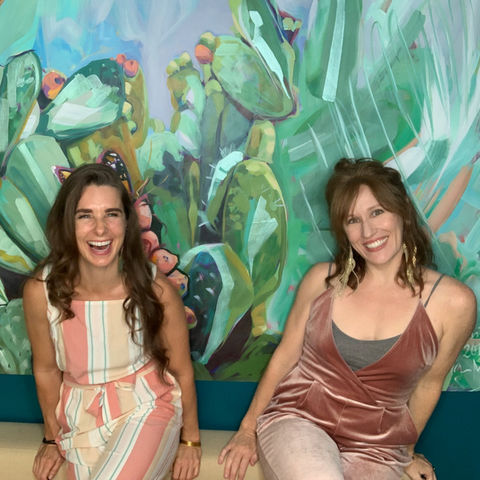
I'm Annie.
This is Lindsay pony.
That's me.
And today our topic is how to get help.
Whoo.
Oh,
Yeah.
Oh,
Bust out the streamers.
All everybody you know,
We are ready to figure out how to get help.
This is such an important topic.
And we touch on it a lot in our episodes in the tool section.
But I have been personally experiencing many opportunities to ask for help.
And so I thought that it would be helpful for me and maybe other people to do an episode that just focused on what does it mean to advocate for yourself at the doctor,
How to find a therapist,
You feel safe with how to ask for a second opinion on a medical diagnosis or prescription recommendation,
How to navigate mental health help how to say no.
So of course,
There's no one right way to get help.
But we're just hoping this episode,
For the most part provides you a sense of not being alone on your journey.
You are not alone.
And also that you get some additional resources as you navigate your own mental and physical wellness.
Pony and I were just talking before this episode,
About we made up a little name for ourselves,
That we're both sensitive critters.
Because we are both very sensitive people who for so long pretended were not sensitive people.
And we used all this armor and random solutions to not feel like we were sensitive in a world that isn't creative for really sensitive people.
And but at the same time,
So we're very,
We have so much in common,
But in the same time,
We have really different stories.
And just like you,
Each of you listeners has your own story.
So as you hear us sharing ways that we've asked for help,
Or tools we're using,
It doesn't have to match yours perfectly.
But hopefully you'll find something that will carry you along on your way.
Yeah.
Well,
First things first,
If you are in crisis mode and have suicidal ideation,
Please don't be ashamed.
You are such a person of value.
Please contact the National Suicide Prevention Lifeline.
That number is 1-800-273-8255 or 800-273-TALK.
And there's also online chats.
There's veterans and service members may also reach the Veterans Crisis Line.
You press one after dialing.
That's a good,
That's a really good place to start because if you,
I think that sometimes when people have had suicidal ideation or wanting to harm themselves,
It's a great spot for you to reach out and get help in that moment instead of waiting.
That's a good indicator.
We hope that if that's going on for you,
You can call or chat one of those people and start there.
Yeah.
We just wanted to share that because it's a resource and it's really important.
And the title of the episode,
Maybe if you keep somebody needs help right this second.
And I would suspect if someone is calling you a lot and saying that they're having suicidal ideations,
That you could call that number and they would probably have resources for you.
Because I know as in my experience,
When that was going on,
I felt really helpless and I didn't and couldn't help the person who was having those issues.
And just now as we're reading that,
I'm like,
Oh my God,
I could have called that.
Yeah.
We get to learn as we go.
Yeah,
That's it.
So we are not experts,
But we have a lot of experience on the receiving end of navigating professional help.
And both of us have benefited greatly from professional help.
And in some cases been harmed from help or lack of help.
We'll each share some experiences that are happening either right now or in the past for us.
And then we will talk in the tool section about practical tools for how or when to know when we even need help,
How to ask for help and suggestions how to advocate for ourselves when we're getting help and we need something more different pony.
How have you been able to get help in the past or what ways are you getting help in current time that you'd like to share?
And you can also share about things that have blocked you from getting help.
If that's pertinent,
Whatever comes up.
Annie,
Thank you for this topic.
It's one that I don't want to talk about.
Isn't that funny that I need so much help.
I get so much help.
And also I don't really want to talk about what it's like.
Honestly,
I have a very hard time asking for help in my personal relationships.
It will not happen.
I am of a,
What my therapist see there's help there.
Somatic therapy.
I am of what they call the self-sufficient archetype.
I get it all done myself.
That is what I do.
And we've talked about not talking about things until they've been like wrapped up with a bow and are all pretty.
You know,
And that I mainly have to catch myself and rework when I'm going through really hard times and check in with myself and remind myself who are my safe people who would love to hear from me right now.
And then trusting that the intimacy that I build is safe.
Mainly it's a defense mechanism because I don't want to be abandoned.
So if I get really intimate with you and I tell you all these things are going on,
Then I'm going to be abandoned because that's some old,
That's what would happen to me previously in my main core relationships.
I wanted to preface just how Annie and I have very different stories.
And I think it's important for me to say that I feel as though I was abused as a teenager through the medical system and the type and amount of drugs that they put me on.
It is my experience that my mother was able to go to the doctor and say that I was a problem and that I had mental issues.
I didn't really know about this until I talked to Annie one night in one of our random phone calls and she was like,
Oh,
I never knew about this.
And I thought,
Oh my God,
I've never talked about this.
At some point in my life where I was not even 20 years old,
I made it out of my mother.
My mother kicked me out at 17,
But I still had this story of like,
I'm defective.
I have mental issues.
I have to take these drugs.
They just kept giving me all these different,
I have been on every drug.
I know the names I've been on them.
I can tell you the side effects because that's mainly what I had.
Nothing really changed in my life except I got really bad side effects from a lot of these drugs.
Again,
This is just my story.
I see this work in other people and I,
I am not against it.
This is my experience.
And for me,
When I woke up at like 19 or 20 years old and I'm was on lithium and I'd been having seizures because no one had even taught me that you have to go.
And like,
It's not that they hadn't taught me.
They were just like,
You can't have too much lithium buildup inside of you,
Or that would be bad,
But no one circled back to be like,
Hey,
Young teenager who has no resources and no help.
And no one has really taken care of you your whole life.
You should get your lithium levels checked.
And so as I'm passing out all the time,
I saw a picture of myself and my eyes were,
I wasn't there and something snapped me out of it at that time.
Thank God.
I said,
I'm not,
I'm not taking these.
I'm not taking medication anymore.
So that's kind of just a pre story.
There's way more.
I can't get into it,
But to say that there was what I feel like was abuse at the time.
Now that has that colored why today,
My asking for help doesn't include medication for me.
That doesn't mean I have a friend yesterday who said,
Maybe you should get on Prozac.
I'm like,
I'm going through some really hard times right now.
And I respect there.
I said,
I'll consider it.
You know,
Like I,
I respect them.
They are very safe person to me.
And so I'll consider lots of things in my life.
And I will take account of a lot of things before I just bap it away like some fly.
So that is kind of my share on getting help in the past and how it's kind of colors,
My thing things going on right now.
So I would say it's a block,
You know,
Also in a way,
But I do a lot of management and awareness,
And I guess those will be things that I can talk about more when I get into the tools.
I feel kind of strange right now.
That's the thing that I talk about,
Like how I get help right now is I really listen to myself right now.
And I do a quick check in and I'll talk more about that in the tools,
But that's why I'm saying,
Wow,
I feel kind of weird and like I've over shared and that it doesn't have a pretty end point,
But that's okay.
I can sit here in uncertainty.
I can practice that and build my tolerance and let the things that I've talked about kind of settle and we'll see what else comes up.
Gosh,
I'm so grateful that you shared that.
I think that you sharing is incredibly helpful for more people than you might imagine.
And it helps me.
And I remember being so grateful that night when we had that phone call and you shared with me about your experience with your mom and kind of being forced to take medications.
It just helped me get to know you better.
And so it meant so much to me.
I'm getting all teary.
I'm crying.
So there for me,
As far as historically,
There are so many times that I didn't know how to get help.
And in addition,
Like pony,
I'm,
What did you call it?
The archetype,
The self-sufficient archetype.
Oh yeah.
So I didn't even know I needed help because I was so sure that I was okay.
That was how I managed things.
So this means I didn't know how to ask for help with alcohol abuse.
I didn't know how to help ask for help after a violent assault.
I didn't know how to ask for help with the resulting PTSD and anxiety and bulimia.
Like I just thought this is all kind of reasonable,
You know,
Fortunately circumstances beat me down enough that I had to get help and pony.
And I were talking about this before the episode.
If you're struggling with something like alcohol abuse and you don't know how to get help,
There's so many resources,
But you can always reach out to us on social media and we will help you get connected with some help.
So we just want you to know you're not alone.
So I had this history of 17 years of not asking for help or even knowing that I needed help.
And then when it all kind of came crashing down friend actually suggested a somatic therapist to me because I could not manage my bulimia anymore.
Fancy that.
What do you mean bulimia is unmanageable?
I have a plan here.
What do you mean this slipped out of my fingers?
I just feel like I was really the boss here.
So that brought me straight up to my knees and a friend who had a similar experience,
Which is one of my tools is finding people with similar experiences who are in a solution that maybe I don't have yet or are actively working a similar solution to me.
She recommended this somatic therapist.
And that was for me the gateway of starting to learn how to ask for help because for the first time I had this kind of safe place that felt entirely non-judgmental where I could unpack all this events and almost she would teach me scripts for how to ask for help.
But the current event,
The event is sure.
Nice.
Oh my gosh.
Our sweet little podcast is just,
Can you imagine just stumbling upon it and being like,
Who are these ladies and what are they talking about?
They're all so grateful.
Whoever finds us well to our listeners,
We're so grateful for you.
And we know you're on your journeys too,
Which is why all of this makes sense to all of us throughout this podcast,
Entire time I've been sharing that I'm on an SSRI for PTSD management and anxiety management.
And it's really helped me,
But unbeknownst to me,
I have been taking the dosage incorrectly.
So I just so relate to pony when she said how she felt completely jacked up by medication,
Because even though this was the right medicine for me,
I wasn't having the dosing correctly.
I had been instructed by my general practitioner,
My primary care doctor to alternate the medication dose every day.
So take 10 milligrams,
Then 15 milligrams and 10 milligrams and 15 milligrams.
I,
You know,
I hadn't worked with a psychiatrist and it may,
I trust this doctor.
We have a great relationship.
She seemed to know what she was talking about.
I have since learned that that actually is a really common side effect,
Which I experienced for years was brain fog,
Hard time with executive functioning,
Hard time making decisions for getting words,
Just feeling like in a brain fog.
And I had some help,
Which is how one of my tools for how to get help.
A friend who is also on her own mental health journey kept reflecting to me,
Maybe you should talk to a psychiatrist.
I'm like,
No,
No,
No.
I have everything dialed in.
Just like I was managing bulimia on my own.
I've got it all figured out.
And she just kept over a year.
She just kept gently like weaving it in,
Making the suggestion.
And then I tried and it's quite hard to find a psychiatrist during COVID.
And I was doing all this blackholing on research.
She helped me locate a psychiatrist.
She helped me set up an appointment,
Not in a codependent way,
But just in,
It was really amazing.
And when I started seeing the psychiatrist,
The very first thing she said is no wonder you have brain fog,
You're taking your medication incorrectly.
And we leveled it out.
And I was like,
Is this how people's brains work?
Cause they had been like PTSD brain for so long.
And then it was brain fog brain.
And then all of a sudden I could think I had my executive functioning come back online.
So that was two examples of past me needing help and not knowing how to ask for it,
Having this kind of breakthrough in life where I have now been on the spiritual journey for 10 years,
Where I'm willing to ask for help,
Even if it's messy,
Even if I'm confused sometimes,
Even if things go awry and then having this most recent event occur with outside reflection of someone saying,
Hey,
You might need help and me being willing to listen.
Whereas before I would have been like,
You do not know what you're talking about.
I'm fine.
Or even if I'm not fine,
I'm managing and I don't like the suggestion you have.
So let's talk about the tools that we're using to ask for help empower ourselves,
Get the courage to either take a suggestion or invite someone into our experience pony.
What is working for you these days?
Yeah.
My greatest outside help right now,
Other than groups,
I'm not allowed to talk about is my somatic therapist.
I went to,
I've been in therapy for many,
Many,
Many years,
But personally for me,
The archaic,
Just talking to someone who I literally,
My last one I thought was asleep one day.
I really think they were.
And I told Annie that,
And she was like,
Oh,
Maybe you're ready to grow.
Cause I was also,
I was too afraid because of my abandonment issues to leave my own therapist because I am so afraid of abandonment.
I shan't ever abandon anyone.
It can't go any of the ways cause abandonment can just not exist.
So thank goodness surrounding yourselves with people who are in some type of recovery or working towards things that you want solution based living.
I've been with my somatic therapist for probably three years,
And I have been able to do really incredible,
Incredible work in there.
And I am so grateful for being brave enough.
And cause I tried to keep both my therapist.
That's amazing.
That's how much I can't.
Oh,
So I just bring that up and cackle because one must soften the heart and forgive the self through laughing.
That is how I do it at being courageous enough to make such a big change and the courage to be able to see ourselves or the courage to be able to listen to if some,
If we have some beloveds that are able to be a sacred mirror and talk to us in the ways that we need,
If we're needing some type of help trustworthy people.
And I think just in the tools I wanted to talk about empowering ourselves,
If that's the stage that you're in,
Of course,
Again,
Being able to find out for yourself,
Do you need medication?
There's all kinds of checklists online.
I highly recommend if you're curious,
If you need some kind of mental help and extra outside,
There's all kinds of checklists.
So for whatever's ailing you,
You could simply put it into the search bar of,
Am I fill in the blank?
Do I need help with fill in the blank?
And then they'll have checklists for those type of things that might be able to get you closer.
So that's one,
But for me personally,
To empower myself,
Empowering myself,
Finding the stabilization,
Recognizing that the past before I was very destabilized as a young person.
And so getting to come back to my core and my center and create a place of safety is a lot of what I do in my somatic therapy.
So I highly recommend that.
And so then some of the tools to be able to do that on a daily basis is recognizing that it's up to me to find and recognize ease and restfulness in myself.
So for someone like me who's come from a really chaotic background,
And that's how I was raised and brought up in,
I have to cultivate and essentially build with my own hands within myself,
My safety and my refuge.
And one of the things the tools that Annie gave me was 10 ways to love yourself.
And one of them says,
Stop terrorizing yourself.
So it's,
I remember when I thought that the alarm bells were going off,
Like I've had these alarm bells,
Just like the fire alarm going off.
And I was in therapy one day,
And I realized that I could go to it and put my hand on it and turn off the bells.
There was no reason for them anymore.
And my last little tool is that I do a lot of talking to myself.
People call this reparenting other it's like inner wisdom integration.
There's all kinds of ways to express like what we're doing within ourselves,
But it's essentially gathering up all the parts of ourselves,
Whether they're younger,
They're scared,
They're in fear,
And to gather them and to talk to them as though you are the wise resource that you need right now.
And it's a practice.
So I put my hand on my heart and I say,
Oh,
So like when I overshared earlier recognizing,
Oh,
I'm feeling kind of gross and yucky.
I write so I recognize,
Put my hand on my heart and I go,
Oh,
That that's okay.
It makes a lot of sense that it's hard to be vulnerable right now.
And to share like this.
And oh,
I see that it feels really scary because maybe when he used to do this before,
It wasn't safe.
And I'm with you now.
And we're safe now.
We're actually really safe right now.
And I'm going to take really good care of you.
And we can do some deep breathing.
And we can look around the room.
And we can see that we exist in a new timeline.
That's one of my mantras.
Because I forget.
And yeah,
So I kind of bring in these,
This wise resource person to kind of hold and rock and be with these other parts of myself that really needed that at the time that weren't able to have it or get it.
And now I supply that I take care of me for me.
So this has been my little journey that I've shared out loud with you about getting help in the ways that I get help and then how I show up and empower myself and help myself when that is available.
And then I'm able to do that.
I've had to do a lot of resourcing and work in therapy to get to this place to be able to do that.
And I'm so grateful that that's been available for me and to me.
And it's a practice.
So thank you,
Tony.
Thank you.
I love you so much.
Thank you.
So sweet.
I'm a sensitive critter.
You are a sensitive little critter.
It's the sweetest.
I am so grateful that you shared those somatic tools because mine are really practical.
And so I feel like anyone listening can maybe get a broad spectrum.
Yeah.
So the things that I wanted to talk about are just almost like script type stuff and actions to take if you need help and you don't know where to start.
So for me,
Turns out I tore some cartilage in my hip and I finally after a year went to an orthopedic surgeon and they said,
Oh,
You need this surgery.
You need an arthroscopic hip surgery.
And so what I would have done before is either a,
Just not going to do it.
I would have just been like,
It's muscular.
I just needed yoga out.
What's wrong with me.
I'm being a baby.
So when I went to the orthopedic surgeon,
Like took my body seriously enough to take care of it too.
When I went,
I asked so many questions.
So they did an MRI and they have a machine in the back to read the visuals.
And I asked that they bring me back there to see what was happening because they can do a printout just of the way.
I don't know why.
And so it wasn't something they normally do,
But I asked,
Cause I'm like,
You want to open up my body.
I want to see why.
So they brought me back and I got to see a visual of where the torn cartilage is,
Where the injury is,
All these things.
So I got that information.
And then I kept a disc of my X-rays and my Anna MRI,
One of each.
And I'm going to go get a second opinion.
And this is the thing.
I love that pony said this about the therapist and pain,
Both the therapists for a while and keeping them on because you can't hurt their feelings.
Right.
And so we're not hurting a physician's feelings when we get a second opinion,
This is my body.
I have to live in it.
If I make the decision to do this surgery,
I'm not going to this orthopedic surgeon's not going to be living in my house every day,
Watching my experience.
So I'm just really empowering myself to ask every question I need to ask,
Have control all the information I need,
And then feel really positive about the next step I want to take.
So that's my suggestion with like physical health is if you have any doubts,
Get a second opinion,
Ask as many questions as you need.
Also with just work,
Talking with doctors,
I've been talking to more now because Hey,
Early forties.
And I'm,
I ask things like,
I don't understand,
Can you explain,
Please explain why you recommend this.
And then,
And I've been helping my mom with this too.
She's been going to the doctor.
And so I've been talking to a lot of doctors on her behalf and I'll say,
Do you have a resource sheet?
I can read more about this medication or procedure or process.
And,
And they're in a hurry and often,
Especially if it's a specialist,
There may be impatient and that's not my responsibility.
My responsibility is taking care of my body or helping my mom,
You know,
Navigate her healthcare choices.
So I can be really polite,
But I can be firm and say,
I'm sorry,
I realized that time is short,
But can you please explain?
I still don't understand,
Or maybe connect me to your nurse practitioner who can help me understand better.
So that's with physical health.
And then with my mental health,
I want to just make t-shirts for everybody that says,
Ask a psychiatrist,
But if you are on psych meds,
The fact that I was on psych meds without the guidance of a psychiatrist in retrospect alarms me,
But I didn't know to not think that was a problem at the time,
But it's like,
I wouldn't go to the orthopedic.
I wouldn't ask my primary care doctor to tell me if I need surgery on my hip,
I would go to orthopedic surgeon,
You know,
Which is exactly what I did,
But it's so commonplace.
I think in our society to have general practitioners,
Especially after COVID the spike of prescriptions for SSRIs just hike because so many people are depressed and rightly so like people need help so reasonable,
But,
And I respect it's really hard to get appointments with psychiatrists I will just say I really,
For me,
I'm so grateful that I had guidance and I have guidance right now from a psychiatrist that I feel safe with who really listens to me.
She takes time and talks with me with each of our appointments is an hour.
She does psychodynamic therapy too.
So she's like listening to my experience,
Watching my body,
You know,
She's taking in all these cues,
Not just walking in and saying,
What's your symptoms.
Here's a prescription.
And also just now working with a psychiatrist and what my earlier topic of being becoming willing to take suggestions.
I don't have to take every suggestion that's given,
But the psychiatrist kept reiterating that she thought I was depressed.
And I was like,
Look lady,
You don't know me.
I'm totally not depressed.
I'm anxious and I have PTSD,
But I do not have depression.
And she just,
She asked if I was open to trying an adjunct to the SSRI check with to help with the depression.
And,
And she said,
I think it will really help you.
She gave me all this information about it.
We talked about it for an entire session.
One time she said,
It's up to you,
Let me know what you think.
And so I prayed about it and meditated about it.
I've been taking it now.
And since I have,
I get up every morning and change out of my pajamas,
I put on clothes and like cute outfits and makeup,
Which is something I haven't done,
Which I love these things.
And I haven't done in years because I just didn't have any juice,
But I didn't associate that as a thing called depression.
But it's like,
Oh,
I have this person who has professional understanding of things that may be happening in my brain that I don't have and I'm getting help.
And then if you are interested in starting to work with a therapist and you just like overwhelmed,
I have a friend who just started working with therapists for the first time.
And she'd always felt very cautious because she was worried about being so vulnerable with somebody,
You know,
She like didn't trust.
She's had a lot of things happen where she doesn't trust people.
And so she's had never trusted someone.
So here's some suggestions for seeing if you want to work with a therapist first,
Just read their profile,
You know,
Like what are the modalities that they work in?
Do they specialize in the things that you need help with?
Like if you have trauma in your past,
Are they trained working with trauma,
Like all these different elements kind of do a pre-screen and then reach out and ask first ask if they're taking new patients or new clients.
And if they're not,
Don't anymore about it,
Then ask if you can have a phone intake and almost all therapists offer like a 20 minute free kind of intake and just see if you like them.
I can usually tell just by someone's voice and the way they speak,
If I'm going to feel comfortable with them,
And then you can just ask questions that you have,
Hey,
This is what's going on.
Do you think you can help me?
What's a session with you?
Like what should be my expectations be?
And then you're empowered to make the decision of,
Do I want to work with this person or this person?
Those are my suggestions for physical health,
Mental health,
And therapy.
And those are all just really based on my experience.
It does not mean this is the only way to do it or the right way to do it.
Please God know that.
But most of all,
We just want you to know that you matter.
And if you think you need help,
You probably do.
And not in a like snarky way,
But in a there's truth in that if it's coming up,
It's real and you deserve help.
You,
You matter.
I would just like to say that the,
You know,
This is really tender stuff.
There's so much to explore and it's okay if it hurts and it's hard.
And we hope that you have are able to find courage and strength in whatever it is that you need on your healing journey.
Takes,
We care.
We love you so much.
Now you love you.
Yeah.
You love you connect with us,
Leave some comments,
Tell us where you're at,
What you're working on the tools that are working for you.
And we'll talk to you next time.