Welcome to Unscripted,
Conversations exploring where we've come from and where we are going.
We begin with a single word and we go wherever it takes us.
There's no agenda,
There's no script,
Just the passion to share the conversations that matter.
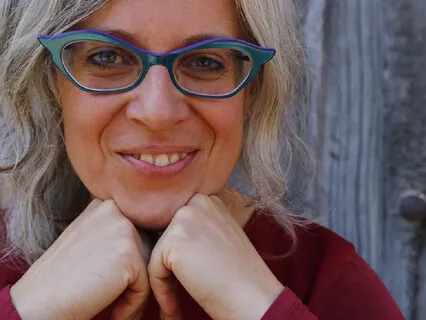
Today I am following the word trail with Maria Dimokros.
Welcome Maria.
It's such a pleasure to have you here.
Same for me.
Hello everyone.
Would you like to tell everybody a little bit about you and what's important to you?
Yeah,
For sure.
My name is Maria.
I'm Spanish,
As everybody can hear probably.
At the moment I'm living in Spain,
Inland,
In the mountains,
Which is relevant to our conversation as well.
I have a daughter,
She's 11,
Which is also relevant for our conversation and our future.
I am a coach and I'm also an Alexander technique teacher,
Which has to do a lot with habits,
With learning and unlearning and learning that through our bodies.
In my previous life,
Almost feels like I study also art history and music.
So I try to combine all that in what I offer and also into this conversation.
That's beautiful.
Thank you.
And your word for today is?
Simplicity.
Fantastic word.
But tell us what it means to you.
Can I tell a little story so we can go back a little bit and you know where it comes from?
This last August,
Where I live,
The mountain was burned.
There was a huge fire,
Two big fires provoked by someone.
I was 35 kilometres away and I could see the smoke.
This is like two kilometres away from my house.
And as I said,
And as I explained it to you,
I start trembling.
For me,
That was a huge shock.
I've always been very involved with the environment,
With the things I buy,
The things I spend my money,
My way of living.
But in a way,
This was too close.
So I spent a couple of days lying in the helmet,
Almost incapable of moving,
With lots of ideas in my head.
But basically with a strong feeling of rage I have never felt before.
And fear.
And lots of questions about the present and the future.
And it struck me with clarity,
The idea of I need to rise up.
I need to set my boundaries,
My limits to say this is enough.
And also I need to simplify my life because it's impossible to go on the way we are going.
So there came the word simplicity.
And I start puzzling also about how do I take this down?
How do I make this real into my life,
Into my work,
And into the way I relate or I go about things nowadays?
So simplicity means pretty much cutting down to basics,
To things that really matter as a human being.
And isn't it interesting that the impetus for that,
That came from,
As you said,
Rage and fear.
Very primal instincts.
And how have you been sort of exploring that application to your own life?
Maybe these emotions a bit is a good way to begin with.
Because one of the things I've learned and maybe one of the things I'm good at is that naming things that are happening and are uncomfortable truths.
And I think this is one of them.
Sometimes I really get very pissed off in my surroundings because I have the feeling that we are,
And I include myself many times,
So overwhelmed with what is happening and the uncertainty and the transition and then not knowing where to go and how.
But it's just too much.
So we look sideways.
We turn our heads.
I can understand,
As I say,
I also do it myself,
But I really think there's not much time to hide for a long while.
That's what rage and fear made very obvious for me.
I also see that many of us want to step too quickly on our way from the out of the fear and the rage instead of just letting the emotion expand into your body and give you the strength that you need.
Because from there,
Which is something very physical,
You can really get strength.
You can really get to dance it,
To express it,
To scream it,
To move it without necessarily harming anybody,
But gathering the strength in your body.
And then from there,
Waiting to see what needs to be done and then do it instead of trying to puzzle in our heads about a solution or what can I do,
What could I do?
So for me,
That was a very big lesson,
Actually.
Uncomfortable,
But powerful.
It is because we don't want to,
As you say,
It's not comfortable.
We don't want to look within,
But the strength is within.
We try to,
I suppose the analogy is that we put scaffolding all around ourselves,
That we are putting support in all around ourselves or we are blaming what's outside of ourselves and never taking that moment to be still enough to feel what's inside.
The resources that are in there.
I think the strength,
The power,
It's pretty much inside.
It also may be overwhelming because as the power is there,
There's also a big responsibility to care for that power and to give it a direction.
It may be the good direction,
It may be not the right direction from the beginning,
But to give it a direction and to take action.
When you realize you have the power to create something new,
You also need to embrace the responsibility for doing so.
And also the responsibility for making mistakes and to embrace those mistakes and to keep moving.
That's such a different,
That's such a big shift from the way that we have been operating collectively and not speaking about individuals necessarily,
But collectively that is not,
Collectively there hasn't been the permission to do that.
I think that feels like the right word.
The embracing the mistakes,
Accepting and taking the responsibility.
And I think that's reflected back to us in politics in particular,
Because politics is one of the most visible ways we have of seeing what our collective is like and that how politicians will wriggle out of taking responsibility for something.
Oh,
It's this or it's that that's caused the problems.
Do you know what I mean?
Does that make sense?
I know what you mean.
I think if we take into the realm of politics,
And I can only speak here as a citizen,
Not as an expert,
Of course,
Of what politics is about,
I think at the moment it's quite astonishing when we are going through.
In my country is,
I don't have the words to name it,
But I think it's not just here,
It's everywhere.
But in a way also what amazes me there is that we have the power to,
We have much more power than we believe,
But we don't rise.
And I'm not saying rising in an angry world or in a violent world,
Which who knows,
Maybe we did a little bit more sparking to things than just talking about things.
That's also what I realized,
Like we are so much driven into the mind.
And I think also,
I was listening to a conference this summer,
I cannot recall from who said this,
It would be great,
Maybe I can search it later on,
But talking about the options to capitalism,
You know,
She said something like the big power is that everything that happens is unnamed.
So that's why I thought it's so important to name these things,
Even if they are uncomfortable truths,
Responsibility,
Rising,
Mistakes,
Embracing.
It's what human life is about,
Not about thinking how human life is,
But living how human life is.
And at the moment we have a huge opportunity to deal with this.
We do.
And you've used the word a number of times and that is rise.
And yeah,
I mean,
I personally,
I think,
You know,
We can use our rage,
We can use our anger,
We can use our fear in a constructive way.
If we are,
As you say,
If we're taking responsibility for our actions,
But this concept of rising and it's to me that this idea is more about this belief that I am not,
I am not a porn.
I am not a victim that I have control.
I have power.
And that shift in that,
I think for all of us,
That shift in the understanding that on a,
Because we are now so interconnected across the globe that we are not insignificant as one person that we have power and we have control as one person,
You know,
As an individual within this great big collective.
Yeah.
Maybe I would like to give you,
Because this rising idea comes in my mind together with an image.
When I was lying in the hand,
I could see in my head,
This woman standing,
Rising powerfully and she had like,
I don't know if I have the words to express this properly in English,
But like a big stick,
Wooden stick,
You know,
That instead of pulling it forward,
Like if I would like to harm you,
She's really like digging it deeply into the ground and saying,
This is enough.
This is my limit.
I'm not going any further than this.
And you neither.
The you in this case doesn't have a face.
Yeah.
I could put some faces into it because this applies to my personal life to where I am.
And this is also very related to my,
Uh,
Womenhood,
You know,
This applies in my personal life to some people around me,
To some men around me,
To my daughter,
Sometimes to my cross a circle of friends,
To my colleagues,
To politics on the way,
It's like,
This is it.
And I can do that gesture.
I can understand firmly and also gently.
I don't need to be aggressive,
But I need to be clear.
That's what the word rising rises in me at the moment.
And that taking a stand,
That line in the sand,
There's huge power in that.
I don't know.
It just feels that,
You know,
We have,
We have become,
Um,
So easily moved by the weight of,
I mean,
I think this works two ways.
I think it works for good and it works and it works for not so good.
But we have become so easily swayed in our opinions and,
You know,
The way that the media works in order to manipulate our perceptions.
And you know,
We've seen this coming out more and more how the media is manipulating very big collective decisions.
And then you have the example of,
For example,
David Attenborough sparking such a worldwide backlash against plastic.
So it can go,
It can go,
You know,
It can go in multiple directions.
And when,
When there is such momentum,
It's often hard to find your own boundaries.
Yeah.
When I hear you,
I get an idea about that could be helpful.
It could be helpful for all of us and needs to realize and to learn lessons from our human nature,
From what means the experience of being embodied and the experience of being human beings.
And I'm not talking here about the big silos of questions as well,
You know,
But this is something also I was thinking about during the summer.
What lessons can I turn from my human nature that helped me find the ground underneath my feet?
Find something within myself I can support myself in and not being so easily driven into my thinking,
Which is another kind of energy is much more in,
You say it in English,
In material like it doesn't have this weight of the,
I'm lacking the word,
You know,
It's not tangible.
That's it.
It's not tangible.
So in a way,
When we are dealing with the untangible,
With something that is more energetic,
Purely like on that level,
It's very powerful and it can drive us in all directions.
But when we connect to our bodies,
When we connect to that part of ourselves,
Because it seems like we don't have a body,
We are one,
We figure out some very basic lessons talking about simplicity,
Which is the word we chose for today,
That can really give us a lot of information about where to and how to.
And if you want,
We could talk a little bit about those.
Maybe it's interesting to share it for all of us.
I think when we embody ourselves,
We come across first of all about that fact,
We do have a body and its substance,
Its material.
And therefore,
It does have,
It needs to be cared for.
So it confronts us with the need to for naturals and care.
And it also learns us a lot about the rhythm.
Because we are living nowadays as if everything is infinite.
And it can be available all the time.
And the same nature,
The same in our body,
Because that's nature.
That's not true.
Not everything is available all the time and not everything will be available all the time.
So the second lesson learns me is that I have limits.
I cannot grow infinitely,
Not in that direction.
I cannot expand physically in that direction.
I cannot take as many resources as we have been doing because there is a limit to it.
And probably we already went far beyond the limit.
And I'm talking here about water,
About natural resources,
All those things we can hardly live without.
So to say about air.
So it informs me about nurturance,
Rhythm,
Limits,
Connection,
Because also in my body everything is connected.
And if I want to keep alive,
I need to be connected also with the ground,
With the air,
With other human beings.
I need to be touched.
I need to be held.
So it really speaks about the need for nurturance and care more than anything else.
And I think,
And this is why maybe also the most important at this moment or not the most but important,
And it's that we have been dealing with life in a way about extracting,
Regenerating things,
Using things instead of giving back,
Regenerating.
And we have a lot of powerful and capacity in ourselves to regenerate things.
But we are just leaving that aside.
And that's what I meant with we can go on this way.
And those are lessons you can learn very well in yourself and in your business.
I know probably this conversation will be listened by a lot of entrepreneurs just like us.
Yeah.
Or solopreneurs.
And the first place to notice that is how are you feeling?
Are you exhausting yourself?
Yes.
Yeah.
Yeah,
Absolutely.
Yes.
And are you nurturing yourself?
And to nurture yourself through your business is,
It is entirely possible,
But you're right with the way that we are driven into mental space to do it all.
It means that it depletes our energy.
You're coming back to the word about rising.
In order to rise,
You need to be rooted.
In order to be rooted,
You've got to listen to your body because your body is your anchor in this world.
I mean,
You cannot exist without your body and your body is dependent on everything around it in order to thrive or not thrive.
Yes,
Certainly.
And I think it's one of the great lessons that we are going to have to relearn,
Isabelle,
Is listening and communicating with our body about what it needs and the wisdom that is innate within it.
Absolutely.
Absolutely.
And,
You know,
There's so many ways in which our lives,
As you say,
That this infinite resource of,
You know,
Things like,
Take something like fast food,
You know,
That is based on this principle of just that we can create as much as there needs to be created in order to satisfy the demand that we've created.
But that's not true.
Ultimately,
That's not true.
Yeah,
It's not true.
And I also really,
Well,
I always want to say I wonder,
I don't wonder anymore.
It's not true and probably it's not needed.
I'm not even wanted.
Because I think when we,
When I thought about simplicity and how to,
How can I simplify my life?
And this is something we all can do.
It's a nice exercise.
It's like you can draw a list of things that you are prepared to let go and probably nothing would happen.
Fast food is one of them,
In my opinion,
Or for me at least.
Because one of the things also that body learns as is diversity.
So that's maybe like this for me,
Not for you.
But there are things you can let go and nothing will happen.
Absolutely nothing.
You would be less safe,
Less happy,
Less fulfilled by that loss.
Then there are other things that you will resent.
And probably for that you need,
And we need to find alternatives.
And then there are some things that without which you don't make it.
But on the very bottom,
Those are not that many.
And I think for those we have the resources.
Not just for us in this very fortunate part of the world,
But for many people,
I don't know,
For everybody around the world.
It's not possible to think that we are going to make this just thinking about ourselves.
That's also something that is very obvious for me.
And that's the way we have been going.
Yeah.
And coming back to the word of simplicity,
One of the simple truths that we have to acknowledge is that we are dependent upon everything in the world.
We are not separate from it.
And it has been one of the great illusions and delusions of modern times is that we are separate.
Yeah.
This idea,
And this is something that really it's very nice to experience in the body,
That connection.
Connection to yourself,
To ourselves,
Among ourselves,
And with everything.
Because we need to be held and supported by everything.
Also,
We need to support everything.
It goes both ways.
Yes,
Because when we're contributing positively,
Then we are giving.
We are creating that support both for ourselves and for others.
Yeah.
But if we're not taking responsibility for our own actions,
Then there's great big structural holes in that support network.
Yeah.
And there's also something that makes it whole,
And I think because we are together in a collective,
Right?
So it's good to mention.
Is the acknowledgement and the recognition of the value of what we bring out there.
Because in a way,
We give each other support.
We are there for each other.
We stand together.
And many times that goes unnoticed or unnamed or unrecognized,
I would say.
I think it's also very important to start giving a value to that part of our energy that is dedicated to support each other,
Which traditionally has never received it.
Say that you not only run your business,
You also raise your children.
Yes.
Or you also care for your elders.
Or you also contribute to your community somehow.
All that,
Even if unpaid,
It's work,
It's labor,
And it needs to be acknowledged and recognized to begin with and to begin with by ourselves.
Yes.
Yes.
To recognize the total sum of what we do rather than defining ourselves by a label,
I am this or I am that.
And I find people say,
I'm a mother or I'm an entrepreneur or I'm a footballer or whatever.
And we put a label on ourselves by what we do,
Not the way that we show up,
The way that we contribute,
The way that we act.
Because as you say,
We don't have a name,
A word.
We can't acknowledge it because there isn't really a word.
I think probably that certainly in the UK,
The word,
The expression civic responsibility,
And that just doesn't come anywhere close to expressing the motivation behind it.
The energy behind it just doesn't come anywhere close,
Does it?
Yeah.
No.
And that's actually the,
It has been the core of my life since I remember actually,
I am kind of obsessed by this search of who am I,
What am I here for?
Who am I,
What am I here for?
And it's tough.
It's a tough question because probably now I am coming into terms that I will never find the answer,
But nevertheless,
I am already.
So for me,
More than civic responsibility,
It goes about who you are and what you are already is what you are doing already.
Sometimes we spend so much time figuring out the what,
The purpose,
The passion and the motivation and it's already there.
It's what happens when you are around someone even without being aware or wanting it.
For instance,
Because this happened to me also in August and I was quite a stroke,
But realizing about what was this essence and how you embody it and how it goes out into the world.
For me,
My essence is to rise this on other people,
To agitate the spirit so that you land firmly in who you are and you can take that back into your work.
I went to the baker.
He comes with a bun every morning,
Beep beep.
And then so I rushed outside and I look at his face and I just felt like,
Good morning.
How are you?
And then all of a sudden he just like,
He's quite usually very silent man.
He gave me the fullest story of what happened that night,
How he was feeling,
What he went through and he said,
Okay,
I needed to tell that now I'm done.
It was two minutes.
I just was present.
I didn't need to say anything.
And then I went back home and I say,
Okay,
This is what happens even if you are just going to buy your bread.
Somebody goes back to himself or to herself.
And you remember,
I think this happened more in ancient or in other kinds of culture than not our own anymore,
Where you have a name by your gift.
Yes.
The one that whispers the horses or the one that gets the right word out of the baker.
I think that is actually more what it's about because that connects us not with a cyber civic responsibility,
But with your nature and your gift for the community.
That's powerful.
It just made me think when you said that I was thinking,
Gosh,
I would have loved to have done that when I was with the support worker team,
When I was doing the homelessness service because we had some staff in particular,
I'm thinking of one in particular,
She would have been,
She who brings out the life story because I'd send her in on what I would think would be a really straightforward homelessness case.
And she would emerge two hours later,
Wracked with this horrendous story of trauma.
And it's like,
That was supposed to be a simple case.
And she just had that gift of where people would say,
Would just instantly feel safe to let that go,
To let someone else catch it.
So yes,
Absolutely.
When we can acknowledge that,
When we can say all of this,
As you say,
If you can actually be aware of what you've experienced and how you've responded to it and how people have reacted to you in those experiences,
You will start to see what that true gift is.
But you cannot do that unless you are actually aware of yourself and aware and you've driven that staff into the ground and said,
This is as far as I go.
You have to set those boundaries first.
And you need to be connected with your body because actually I believe,
This is my own experience,
That the signaling,
The lighthouse,
It's in there.
There is the authority.
It's in the physical reactions you get to things.
When you basically,
I think for me too,
When you contract and when you respond,
They give very different signaling of where,
When,
How something is impacting you or you are impacting them to something,
Basic wording.
I am in the right place.
Yes.
Yes.
So it's whether you are almost like recoiling from something or you are leaning into something and actually directing it almost.
Yeah.
For instance.
On one level.
Yeah.
But this does relate very strongly to your Alexander technique,
Doesn't it?
Yeah.
Cause it,
That awareness of the body and,
And the movement of the body in response to.
Yeah.
In response to a stimulus and also the guidance,
The invitation,
Because it's not a push,
It's an invitation,
A direction of expansion and how you organize inwardly your body,
Your neck,
Your head,
Your back,
Your legs and arms to embody that expansion within yourself.
Then you immediately have a very accurate perception on when that is function is being lost.
It's being held,
It's being refrained and then you can unlock it.
That's a very powerful experience,
But because then you can go into life and you have a rudder about how you are moving about things.
And for me it was powerful because I used to get,
Well,
And sometimes I get lost,
Very lost in my head.
And I look for a,
For a criteria there and I don't find it.
Sorry,
I interrupted you.
No,
No.
I mean the head is full of many,
Many rabbit holes that we can disappear down and many,
Yes,
We,
This,
This has been one of my great lessons over the last few years because I have always been a very not mental,
But head led,
You know,
That I enjoy following trails.
I enjoy exploring concepts.
You know,
That for me has been a place where I have been very happy,
But that's very hard to understand the truth of any of those thoughts unless you allow them to land in the body or for now,
I mean,
So that,
That was my starting point really was to allow those thoughts to land in the body and say,
How did they feel?
But actually that,
That's when I realized that that was still the wrong way around,
That it has to arise,
Come back to that word again,
Rise up from within that we have to draw it up through.
And if you want to go back to our energy centers,
You know,
The energy centers,
The first one is about,
You know,
It's all about who are we and drawing that up through our creativity,
Through our willpower,
Through our hearts,
Before we speak it,
Before we,
We think it,
Before we,
You know,
Before we know it,
All of that is it's,
It's coming up from within.
So,
So really our creativity is born in our bodies and our bodies are our means of actually taking action,
However we choose to do it,
Whether that's with our hands,
With our words,
With our eyes,
With,
You know,
Whether we are singing,
We are moving,
We are whatever,
Whatever we are doing,
Our body is our means of doing it.
So it has to,
Our response has to come from within.
And that's what,
You know,
Our head is an immensely important part of us.
Our intellectual mental capacity is immensely important,
But only if it is in a,
Coming from a place of balance,
That it is in a place of response rather to what we,
We,
We desire to create and what we are here to create,
As opposed to imposing a set of beliefs upon the way that we should act,
But it's not actually in resonance with our body.
At the end our brains and our mind are also part of our body,
The same way that our liver or our heart.
They have their own function.
And when you,
I mean,
We are very complex systems,
But the nervous system can hardly work without information that it gathers from through the body,
Through the senses.
And the same way,
And the other way around,
So to say,
You know,
The body can hardly organize anything without that information being processed,
Digested,
Transformed,
Turned into something else,
Into an impulse,
Into not an impulse,
Into a direction,
Into an action.
So I think that's also another one of those separations that are harming ourselves pretty much like mind and body and then emotions.
It's functional in order to address it,
But I think in reality is very dysfunctional.
The same way then this,
I think therefore I am or,
Or I act,
I feel,
I embody something,
The same way then nature and culture is also a split that is very harmful at the moment.
And I think maybe going back to simplicity and basics is also going back to our nature and then to our individual nature as well.
Realize how unique we are and at the same time how we resemble each other.
And as you were saying that the thing that was coming to me was how important it is to have faith and trust that our true nature is a positive thing.
I think,
I think we have become sort of,
Coming back to some and perhaps manipulation of our perceptions that there is this sort of sense that humans,
Human beings,
Some human beings aren't,
I don't want to use the word,
I was saying that some,
I can't think of an alternative word,
But there is this perhaps perception that some people are just evil and that it,
That we've been painted as human beings,
We've been painted as not,
Oh no I'm just going to rephrase it and just say that having faith in human nature,
Faith in the good in people,
Faith in the good in ourselves,
To respond in the right way.
And I genuinely do think that that faith in our own human nature has been rattled and that when we can come back to that simplicity,
To that rising,
That we can actually say yes,
I have faith in myself to act in a way,
Not just in integrity with yourself,
But in a way that is honourable.
Yeah.
And honouring.
I'm going to push that a little bit forward with another idea which is not very comfortable because I see this also in the sessions very often,
Trying to gain that faith into our goodness,
We try to do that by denying also our evils,
So to say,
And I've done this for so many years.
I just wanted the light,
The best,
You know,
My best being.
It's impossible till you really embrace,
I'm going to be a bit rude here probably,
But you embrace your shit,
So no,
I'm not that sweet woman all the time,
I have lots of rage inside me.
I am furious,
I am chaotic,
I am incoherent,
I can be very wise and next minute I can be like,
If I know nothing,
Contradicting myself,
Which is something which for me is very hard because coherence for me is important,
And I have to deal with all this mess which involves being human.
I think that's something we really need in order to be in peace with our natures and also to understand how other human beings that we really find difficult to understand at the moment,
I could name a few examples of people,
Men,
I would say like,
Wow.
But that wow,
And this has taken me also a while,
It's like if I am preaching that I am connected to everything and we are part of just one thing,
This man is as important as I am.
Maybe he has a different position,
He can scream harder,
He has more actionable powers so to say,
I don't know,
But I am as important as him and we are part of the same body.
That's an uncomfortable thing to settle,
I mean,
I am dealing with it,
Because otherwise I tend to split myself from that whole,
And I have to say also that trying to be an entrepreneur from this way we are doing nowadays,
You can end up pretty isolated.
By believing one of the two,
Or alternatively one of them,
That you are better than anybody else because you are more conscious,
Or that you are a weirdo because nobody understands you,
And you are powerless because you don't connect with other people.
Yeah,
You're right,
It's not a comfortable truth,
It's not comfortable to confront.
I always come back to the fact that you can't have darkness without light and you can't have light without darkness.
They depend upon each other to exist,
And that's as true within each of us,
Within each of ourselves,
As it is about the larger scale.
For me,
I'm very concerned that we understand that balance so that we stop this tremendous swing from one extreme to the other,
Because we are never going to heal the divide unless we heal the divide within ourselves,
As you say,
Of separating ourselves or denying parts of ourselves.
I think it's about embracing who we are,
Embracing complex realities,
Leaving the questions,
Embracing uncertainty,
Fear,
Not knowing,
Creativity,
Power,
Responsibility,
Love,
Smiles,
Complexity,
Simplicity,
All at once.
That acceptance in itself,
Just accepting all of those polarities that exist simultaneously,
Ironically is the way that we come back to simplicity,
Because it is in the simplicity of accepting the complexity that we get back to the simplicity.
Yeah,
Exactly.
And then again,
Embodying that,
Because as an intellectual idea,
Construct,
It can be very appealing.
But then when you go back down to basics to what does it mean in my life,
That I can look at my daughter and I love her tremendously,
But then I can scream as a maniac and be freaking out of my own power in a direction that I really like,
Wow,
What did I do?
This is a very real example I'm not very proud of,
But it happens.
So then it's like grounding those ideas.
Like that complexity drives me back into my simplicity in daily life.
And when I embrace that,
Then I can release,
I can release into what it is.
And I can also release into what needs to be done,
Which is very important.
Yes,
Because that ultimately is the point,
The point of any extreme emotion is for us to move from where we are into a different state.
And as you say,
Unless you actually release that,
Both releasing the hold and allowing it to push you forward,
Unless you do that,
You don't move and then you don't change the way that you are.
You stay in a state of,
That might be rage.
That's where you stay.
Yeah.
And as you mentioned the word very early on,
You talked about rhythm.
And that is a rhythm to this.
You have to feel it.
You have to move through it.
You have to feel the,
What that's teaching you,
What that's,
What you're learning from that experience so that you can come back to it and feel it from a different perspective again,
That without that rhythm,
We are,
We cannot grow.
We cannot grow.
We cannot address any of the dilemmas and problems that we are currently facing.
We cannot nurture,
We cannot thrive.
We look sussed basically,
Which is what we admit.
So simplicity has taken us down some interesting routes.
Yes.
Maybe to,
To close it,
I would like to give you something I developed over the summer,
Which I can pass you the link if you want so that you can download it because it's an application of everything we have been going through.
It's about how to stop,
How to listen,
How am I feeling?
Not in my head,
Not in my emotions,
But in my body.
What do I need?
How can I take care of that niche and what needs to be done and do it in simplicity?
I hope so.
I would like to give you the link.
That would be lovely.
Thank you.
For you to share and I invite everybody to write back and to share with me what they experience.
Absolutely.
And we will of course make sure that there is a link back to you below this episode.
I just want to say thank you so much for taking us on an interesting journey and exploring some both very personal issues and collective issues simultaneously.
It's been absolutely wonderful and a joy to have you here.
Thank you so much.
Thank you so much,
Polly,
To you for this initiative really and for everyone listening to us.
Thank you.
Thank you so much for listening and following the word trails with us.
I hope you found it inspiring and intriguing.
The details for all of my guests are in the show notes beneath to help you continue to follow the trail.
Happy exploring.