Welcome to Untangle.
I'm your host,
Patricia Karpis.
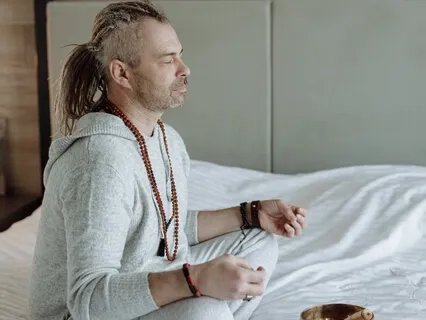
Today's guest is Buddhist meditation expert and author,
Lodro Rensselaer.
Lodro has been teaching meditation for 20 years in the Tibetan Buddhist tradition.
He shares the shame he felt growing up as a Tibetan Buddhist and meditating from the time he was a child,
Yet still feeling a lot of anxiety.
This led him to several practices that have helped his anxiety on and off the cushion.
This is what he shares today.
Now,
Here's Lodro.
Lodro,
It's great to have you back on Untangle.
Thanks for being with us today.
My absolute pleasure,
As always.
The book,
In fact,
Is about anxiety,
But you talk about the secret shame or the struggle that you suffered growing up and even in your adult life.
What did this anxiety feel like for you as a child,
In your family,
And then as you've grown into your adult life?
Yeah,
Thank you for asking that.
It has been like a point of shame where it's like,
Oh,
I grew up meditating.
I shouldn't have anxiety.
Anxious thoughts should just roll off my back and I shouldn't ever indulge them.
And yet,
Over the years,
Because I wasn't really – like I meditated,
But then I wouldn't necessarily work with my mind off the meditation seat.
I would just let the mind go rampant for the other however many waking hours of the day.
That it became a real issue for me,
As you mentioned,
In my childhood.
It was – I couldn't even go to like a sleepover because I was like,
I don't know what's going to happen.
I don't know who's going to be there.
I don't know where I'm going to sleep.
And it became overwhelming.
I never did it growing up.
I saw a therapist in my childhood for social anxiety and continued on into other situations into my 20s,
At which point I really started to work with my mind a little bit more.
And here I am in my mid to late 30s and it's gotten to the point where I'm like,
Oh,
I actually understand how this works now.
But in understanding it better,
I also started to understand how many other people were going through something very similar to me.
And that's the interesting thing that we don't really talk about anxiety in a big public forum.
People generally think that they are the most stressed out person.
Sometimes when I do meditation for companies,
Everyone jokes that they're like the most stressed out company that could exist.
And it's like,
No,
You're not.
You're all like this.
You all have the causes and conditions that are coming together to bring about massive anxiety.
And we're just speeding up a lot of the,
Not to make it too societal too quickly,
But like a lot of the big drivers of anxiety,
Whether it's the nonstop news cycle,
Constantly comparing ourselves to other people on social media,
The fact that our work could be,
People could reach out to us at any hour of the day through text,
Slack,
Email,
You have it.
There's so many ways that we're just being triggered to stay on.
And nowhere did we all agree to this.
There wasn't some conversation where we said,
You know what,
We should like constantly trigger stress in one another,
Constantly feel like we're working,
Constantly feel like we have to stay up with the news,
Constantly compare ourselves to people's pictures that they're posting online.
But we ended up here.
So what once was like me thinking,
Oh,
I have anxiety and I have to learn how to work with it.
It's become so apparent to me that so many of us are going through an incredibly anxious time right now.
And we need to learn how to work with our minds in order to address it.
Yeah.
So you said a couple of things that I want to underscore with a question.
You are talking about both stress and anxiety,
And then you mentioned your own personal social anxiety.
I'm going to ask you about how we work with our minds after,
But I'd love for you to talk about how you,
From a Buddhist perspective,
Define the differences between stress and then different layers of anxiety that we have.
It's a great question.
So let's talk about stress for a second.
If someone came knocking at your door and they're like,
Patricia,
We need you to get this project done tomorrow.
That could be very stressful because you actually are totally booked up between now and tomorrow.
You have no idea when you're going to find the time to do the project.
And that is a stressful thing.
Like no one would negate that.
I'm doubting that whoever would say that to you though would sit around and say,
Please hold yourself in the state of stress between now and whenever this gets done.
It's not like anyone comes and says,
You've got to force yourself into a state of anxiety.
But that's what we often do.
And maybe one way to think of this is an analogy that you saw in the book,
That there's the old two arrow analogy that we're walking through a forest and out of nowhere,
An arrow comes and hits us in the arm.
And what we ought to do is pull that arrow out and start to tend to our healing to the best of our ability.
But what we often do is we start saying,
Who shot me?
Why is it always me that's getting shot?
This is always so unfair.
This is just so common that I'm the one who's going to get shot.
No one else gets shot.
And these stories that we tell ourselves are known as the second arrow.
So arrow number one,
There's stress.
There are situations that are painful in life.
Arrow number two,
We start spinning out lots and lots of stories that keep us locked in that state of stress.
And that's what's known as anxiety.
That's where we've moved into an anxious state where we keep feeding and feeding this emotion with stories until it becomes really big and overwhelming to us.
Yeah,
I like how you describe that.
And we talk a lot on this show about that second arrow and the storyline and the fear and the catastrophizing.
So back to the question of you spent your whole life because you grew up in a Tibetan Buddhist family meditating.
And you say that meditation helps,
But it's not a magic bullet.
And I think what you're saying is the difference was when you started what you're calling working with your mind.
What does that mean to work with your mind?
It's interesting.
My first book came out about 10 years ago and it's so interesting to me because like people will pick it up today and be like,
Wow,
I really like your thing.
I'm like,
Wow,
That's like a very old version of myself.
I'm glad it's helpful.
And it feels to me like it's the first adult book I've done,
Meaning that there's such a big leap between the two in many ways.
But one of them is my early work is like,
OK,
Just practice mindfulness meditation.
Everything's going to be great.
And here I'm like that,
Particularly when we're talking about anxiety,
Might not be the be all end all.
It's really important for us to practice things like mindfulness meditation is such a good foundation so that we start to become more aware of the patterns that arise around our mind.
But then we do also have to do what I'll call post meditation work,
Like in the rest of our waking hours.
How much do we tend to our mind?
And this book in particular has a bazillion versions of here's how we can help ourselves in the rest of the day.
So there's about five main meditation practices,
Mindfulness practice practices,
Knows loving kindness,
Working with strong emotions,
Compassion practices,
Things like that.
But there's also a through line here of what happens when you are waiting in line at the grocery store and your phone buzzes and it's in stress inducing text.
What do you do?
Do you start to spin out the stories or can you start to apply that post meditation work of catching yourself,
Maybe taking three deep breaths in through the nose,
Out through the mouth,
Calming the nervous system so you could take a gap and not immediately react?
Could you ask yourself after the 50th or 100th time you start spending out these stories,
Could you untangle yourself from that moment by asking yourself a subtle question like,
Is this helpful or is this useful?
And somehow becoming gently inquisitive with our experience is just acknowledges like,
Oh,
No,
If it's not helpful,
That's the answer that comes back,
Then it allows us to unhook ourselves that much more gracefully and quickly.
So those are informal practices or prompts that help us to manage that narrative or that second arrow that you're talking about.
What do you suggest for people that inside of meditation,
Inside of the formal practice,
If we're anxious and we're telling ourselves these ongoing stories,
How do we calm our minds during meditation?
Yeah,
It's an interesting question.
There's a two-step process that happens in meditation practice.
And I also think it can be applied to our post meditation experience.
The step one is that we acknowledge that there's a story that's pulling us away from our own wakefulness,
From the present moment,
From a sense of peace.
And we can gently unhook ourselves by acknowledging it and not chasing after it and then come into the present moment.
That's step one.
Step two is where do we want to direct the mind at that point?
Because then we have a choice.
It's a bit of a controversial thing where I really do believe that we are constantly making a choice here.
Do I want to keep going back to that thing,
That thought,
It's so alluring.
Can I chase after it just five minutes?
And we have to be firm with ourselves and say,
No,
No,
That's not what we're here for.
We're here to be with the body breathing.
We're here to be with sound or whatever we're meditating on.
And once we're in that present moment,
We then say,
Okay,
Where do I want to direct my attention?
Do I want to direct it to the breath?
We're doing the practice like loving kindness.
Do we want to come back to the phrases that we're using or the image in our mind of who we're offering loving kindness to?
So it's like this step back,
Step forward approach of we have to not chase after the thoughts,
So as alluring as they are.
I mean,
I'm doing 10,
000 analogies at once here,
I apologize,
But the one that often comes to mind around strong emotions and anxiety in particular is a little bit like a fire is going.
There's a fire outside and what we often do when we feel a strong emotion is we want to react,
We want to do something.
So what we do is we grab our gallon of gas and we just pour it on top and somehow the fire gets bigger.
How did that happen?
This is what happens when we're like,
Well,
Let me just try and use my brain as a problem solving device and try and fix for the impossible thing that may or may not happen in the future.
That's often what we do.
We tell ourselves thousands of stories of let me try this scenario,
Maybe they'll say this and I'll say that and it just makes the fire bigger and bigger and bigger.
The practice here,
If we're able to catch ourselves,
Is that we put the gas can down and we walk up and we just hold our hands up to the fire and we feel its warmth and that's learning to be with the experience as opposed to feeling like we have to change it,
Fix it.
What happens when we're just there feeling it?
At some point the fire burns out without any fuel to add.
It just happens to go away at its own pace.
So same thing when we get really hooked by strong emotions that we realize,
Oh,
I can be with this.
I can actually stay present to this without having to add more.
It's so interesting because you're really talking about how we train our minds when you talk about where do you want to direct our mind.
And this morning in my meditation,
I felt like I kept getting stuck on a single thought loop.
And I would come back to my breath,
Come back to my breath,
But this single thought loop just kept coming back and then I felt like I would get lost in that thought and it happened to be something that was work-related and it was a problem that I wanted to solve.
And I didn't want to let go of it.
What do you suggest in a situation like that?
Is it just the continuous practice of coming back,
Coming back,
Coming back?
Or is there some other tool that you suggest when you get stuck there?
Yeah.
One word that I've been thinking about here in these situations is when we also,
We're like giving ourselves time,
Space and permission to just be present.
When we sit down with our minds and we are going to do some meditation,
Can we give ourselves time,
Space,
Permission to be here and to do it?
If we say I'm doing this for 15 minutes and I'm giving myself permission to just do the work of being with the body breathing,
Noticing when I get distracted,
Coming back 15 minutes,
When those thoughts come up,
The brain insists,
No,
This is an important thing.
We do have to fix this.
We're not saying no,
We're not going to do that.
We say I will after the 15 minutes.
I've given myself permission to be here for the 15 minutes and after that I absolutely can go ahead and focus my attention on something that might need its attention.
But I think there's something,
It's like we're just guarding our mind in this moment.
We're setting some parameters and they're not impossible parameters.
I think even no matter how insistent our mind is,
It might understand,
Oh,
Okay,
We can deal with this when this is done.
It's not like there's a bear hovering over us about to attack us,
Even though it sometimes feels that way.
So we sort of have to delineate in our mind,
This is something that can wait just a little bit so I can actually do this work.
And the intention behind this might very well be,
I know from my own experience that when I train in being present,
I handle situations more skillfully.
That's the motivation and that sets the intention as well.
That's great advice.
And would you recommend that for people that are struggling with that they even commit to shorter periods of time,
This idea of giving yourself the time,
Space,
Permission.
If it's too hard to do it for the 20 or 30 minutes that you've committed to do it for five minutes,
Do it for seven minutes.
Yeah,
I'm very much in the boat that we start where we are and then we can go from there over time.
It's interesting because I think you and I have talked about this in the past,
I believe on this where there is this weird thing that got its way into our society that meditation should always feel relaxing.
People sit down and they're like,
No,
I'm sorry,
I must be doing this wrong because I'm encountering a lot of thoughts in my mind.
When in fact,
We have to do a continual reeducation situation here where we're like,
It's not a situation of being relaxed,
Like we walk out of it like a good massage.
It's a way of getting to know ourselves.
So sometimes it does feel like,
Oh,
Within these five,
Seven,
However many minutes,
It was a little hard for me.
And there's something interesting about the practice that it trains us to be with some of the discomfort that naturally arises in our life.
When the pandemic started,
I had a number of meditation students in our one-on-one meetings coming to me and saying,
So when do you think this is going to be over?
Like somehow I would know as like the direct line to the top scientists in the United States.
And I would always say the same thing,
Which is,
I don't know and I don't think anyone actually knows right now.
And what an interesting moment for so many of us to be comfortable with not knowing.
And no one wants to hear that,
That they have to get comfortable with not knowing,
That they have to become comfortable with uncertainty.
And yet it's something that rears its head constantly in our lives,
Not always on this big societal level,
Often more personal things of,
Ooh,
That person wants to talk later,
What do they want to talk about?
Or stuff like that.
But it's a really interesting practice of even just five,
Seven minutes,
Us getting to know ourselves better and saying,
I don't have to bolt at the moment of discomfort.
I can actually learn to be with myself,
Good,
Bad and ugly.
Speaking of being with ourselves good,
Bad and ugly,
You talk about methods in the book for both letting go and for working with strong emotions.
And how do people know which practices they should be doing?
Should I let go or should I work with my strong emotions?
Yeah,
It's a very personal one.
I often think that this is why it's so good for people to have regular contact with meditation teachers,
That they can ask these questions of like,
Hey,
Here's what's coming up for me in my practice.
And how can I work with it and what practices are best for me and so on and so forth.
It's because it's so hard to just be prescriptive.
Well,
If you are dealing with emotions and you would label one out of ten,
You'd say it's zero to five and it's not that intense,
Acknowledge the emotion,
Come back to the breath.
Or if it's above five,
Six and over,
Maybe that's the time that we switch out and do some mindfulness of emotions practice,
We do some RAIN practice.
I do think that the more we experiment with different styles of meditation,
The reason I hesitate is because there's so many styles out there that are just,
Hey,
I made up this thing that works for me.
I'm calling it a meditation.
I'm experimenting with things that have been around for centuries.
Experimenting with basic stuff that's been so crucial for so many people over so many generations so that we can learn,
Oh,
Here's the various tools that I can have on my tool belt.
And then we become the best meditation instructor for ourselves.
Well,
Today is a day that I need to feel a little bit more grounded.
I can do some mindfulness and breath practice.
There's a lot of strong emotions.
Maybe I do this type of mindfulness of emotions practice.
There's this difficult person in my life.
What a good day for me to bring out the tool of loving kindness.
So it's like we start to have,
Like the more we develop relationships,
These different styles and techniques,
We become the best person to judge what tool is going to fit for the right situation.
Yeah.
And I saw your book like that as a toolbox.
I was next going to ask you about the power of simplicity and how our culture of always wanting more really impacts our anxiety.
We're constantly trying to be better,
Do more.
What do you mean when you say the power of simplicity?
I mean,
Is that a really simple idea as it sounds?
Or is there more to that that you want to share?
Yeah,
I think we have a time where,
But every time has been like this though,
We are living through a time where there's always more we can get,
More we can do,
More we can produce.
And I made a light reference to this earlier that it used to be,
For example,
That you would clock out of work and you would go home and you would go back to work the next day unbothered unless someone had the audacity to call you on your landline and say,
Hey,
We've got a thing we need to talk to you about.
These days,
It sounds so antiquated to even talk about that because it's like,
Oh,
I had a work situation where someone didn't reach me on Slack,
So they tried me on text and it was like seven o'clock at night and it was not at all urgent.
When did this become okay?
And nothing against the person,
Perfectly lovely human being,
But it's just something in our society that we've all been like,
Well,
We should always be on all the time.
And the reason we're going to be on is so that we can be the most productive.
And if it's a work thing,
It's like,
Well,
We need to get our product out as quickly as possible.
We need more money.
We need to get investors to answer to or whatever it might be.
For other things,
It's just because often,
I don't know around your family,
But around mine,
It's like,
Oh,
Hey,
There's this anxious thing that I thought of and I wanted to immediately vomit it onto you.
And again,
Nothing against any family members,
But we have the means to actually do that these days.
It's not let me call them on the landline.
It's like,
Let me reach out on all platforms.
So we have this time where simplicity isn't going to come naturally.
If you were commuting by car or subway or whatever,
And you forgot your magazine,
It used to be that you would just have to sit there and look at people on the subway.
Or if you were a meditator,
You suppose you can meditate.
But these days,
It's like we all have these little devices that are constantly giving us more to do,
More games to play,
More people to be in touch with,
So on and so forth.
If we ourselves do not insert times for simplicity,
If we don't put boundaries around our time and allow for us to just be with our life,
Then we will never experience it.
It's so scary and sad to say that,
But I really believe it.
If we don't say,
Hey,
I don't look at email after six,
Or I only spend this amount of time on social media,
Or I actually do when I ride the subway,
I read or whatever it is,
There's something about actually being conscious.
Where do we need to set aside the things that cause us distraction or cause us stress and put parameters around it so we're not constantly provoked?
That is such an important idea because I feel like everything is so immediate now.
When you have an idea,
You very quickly want to share it,
Either in social media with a person you work with.
It is difficult for us to let go of an idea or something we want to tell someone or something we're dissatisfied with.
How do we hold those things for another time,
Or how do we put those things away until it's necessary and not be nagged by them?
I do feel like our culture is one that just ruminates and ruminates until we find our way of letting go,
And often letting it go is expressing it somehow.
So emailing someone or texting someone or putting it out on social media.
So what do you do to actually intercept that?
Pema Chodron talks about the Shempa and the kleshas,
And shempa is this idea of getting hooked,
And the kleshas are the speed with which the waves come once you've been hooked.
Often we want to stop the waves,
And the way to stop them is to tell someone something or do something versus just be with them.
How do you think about that?
Yeah,
I will never be nearly as eloquent or wise as pema chodron,
And I think what you just said is absolutely right.
It's a really interesting situation where we have to acknowledge in today's world there's going to be constant provocation.
There's always going to be another thing that we could do.
There's always going to be another thing to click.
I mean,
With the nonstop news cycle,
There's always going to be another thing to read that is basically meant to bring us into a state of stress.
I realize that there's some things out there that are like good news channels and things like that,
But more often than not it doesn't feel like that.
It feels like we are all butting up against each other in really unfortunate ways.
So can we establish our own boundaries,
Our own parameters around simplicity,
Around guarding the mind?
So there's obviously the book's called Take Back Your Mind because many of us have to start there,
Just like not being constantly lost in anxious stories.
But once we get used to coming into the present moment more regularly,
We realize we want to live there.
We don't want to live in the anxiety.
And when I talked about a choice earlier,
I think this is what I was referring to.
We don't think of it as a choice.
I think most people who might listen to this were like,
Lothar,
You don't understand.
This is who I am.
I'm an anxious person.
It's not going to change.
The over-identification with anxiety can be so wounding to us.
So to actually step back and say,
No,
I'm a person who currently has an experience of anxiety.
I'm currently experiencing a lot of thoughts.
When I let go of the thoughts,
I can come back to a sense of peace.
Then it's interesting for all parties concerned because it's no longer a Laudro or Patricia saying,
Yeah,
Inherently you're peaceful.
It's you yourself having an experience of that and saying,
I could just be with myself and develop a deeper relationship and the sense of simplicity and peace as opposed to always spending my mental energy on anxiety.
Yeah.
It's a practice for sure,
Because I like that term.
We are constantly provoked and we do have to establish boundaries.
And in the book,
There are two things I wrote down about this.
Number one,
You say nothing is as real as you think it is.
And number two,
Stop fixating on what doesn't serve you,
Of which I wrote down,
How do you do that?
When you say nothing is as real as you think,
What do you mean?
You and I were joking right before we went live that this is a Buddhist book.
Here we're talking about egolessness and emptiness.
And these are very big concepts I know in Buddhism.
But the idea here is that I,
As a Laudro,
Do not exist in the way that I think of myself most days.
That I have this body that is actually constantly changing.
That apparently every cell within this body over the period of seven years dies and is replaced.
So this is an entirely different body than I had seven years ago.
I think of it as one thing,
But that's actually the reality of the situation.
There's the fact that I have these very feeling tones that come up.
I like this,
I don't like this.
I'm actively ignoring this and how constantly I reify those things through my own thoughts and my mental formations and telling myself stories about why I should like this and don't like this and why I should definitely ignore these things and all of that.
There's the fact that I am constantly taking in everything through my sense perceptions.
There's the fact that there's this consciousness that says,
You're a Laudro because you're made up of these other four things.
It just becomes really solid in my mind.
But the fact of the matter is that I'm constantly changing,
You're constantly changing.
What the Buddha taught in the very early teachings that he gave was,
Yeah,
There's pain,
There's suffering in life.
Why do we suffer?
Because we're always craving for things to be a different way than they actually are and we're ignorant in the way that things actually are.
And part of that ignorance is that we think that we are a solid thing and everyone around us is a solid thing and as they change,
It just blows our mind and feels really painful to us.
In the same way that my wife and I have been together,
We're coming up on seven years now and it's a situation where if I still think of her as the person I fell in love with back then,
I'm doing her a great disservice.
I know that I have changed over all these years and I actually have to constantly remind myself that she's an ever evolving human being.
The music she listens to,
Her style,
Her varied interests,
All these things are constantly changing.
And if I'm not open,
Then I'm just going to wear this veil of mixed opinions and old ideas that's going to prevent me from actually being skillful or seeing who she actually is.
It's interesting that you brought up your marriage because the next area I wanted to talk about was the conversation you have in the book about true love in relationships.
And you talk about us needing to be cautious about closing off our hearts and not hardening as we see things.
What do you mean true love in relationship?
Is it that we watch and respect the ways that we each change and grow together?
With so much work,
Getting to know ourselves as you've been talking about here,
Getting to know your mind,
Becoming aware and noticing your patterns and habits,
How does that interconnect or intersect with your partner?
Yeah,
Lovely question.
I'll start by saying that.
It's hard.
It is hard,
Yes.
But I'm laughing because my wife was quick to point when she picked up the book that after however many books I've done now,
I decided to dedicate the one on anxiety to her.
Oh,
That's funny.
We were together when I wrote How to Love Yourself and sometimes other people could have dedicated that one.
Anyway,
It's an interesting thing for me.
I'm constantly noticing where I have my own boundaries and my heart just shuts down around certain people or politicians,
For example.
And it's hard for me to actually get to a point of openheartedness around a politician that I think is harming the earth or some such thing.
And the thing that I always think about around these,
I went to an extreme relationship with someone I don't know,
Someone I'm having a hard time with.
Everything from that all the way to our romantic partner.
There's this thing I think about from the master Thich Nhat Hanh where he said that understanding is the other name of love.
And if we can't understand,
Then we can't love.
And that those two go hand in hand.
He said this a million different ways in a million different books,
But the core idea here is maybe where we need to start in terms of true love.
But I'll pause and just say by true love,
I mean that coming from the Buddhist tradition,
That love is inherent to who we are.
It's there.
It's not something we need to get.
It's not something I go to the local CVS and pick up.
It's actually here and is always waiting to be discovered.
So true love is already here.
How does that then relate to other people?
Going back to the How to Love Yourself and Sometimes Other People book title,
That was the idea that love is already here.
And I can relate it to other people once I have deeper connection to it.
So we could,
When we find ourselves in a relationship,
And that could be a friendship,
It could be a co-worker,
It could be a romantic relationship.
How much are we actually seeking to understand the other person?
And that's a really interesting thing for our times.
How much are we looking to understand other people?
Whether it is,
As we talked about before,
Someone we've spent years with,
A family member even that we have known for decades.
And there is love there and yet we need to continuously refine our sense of understanding who they currently are in order to be fully present and not get confused about them.
And that goes all the way to people we don't know.
So that as people are driving by my street,
As we are talking,
I might look up and say,
Oh,
That's someone I don't know.
And what's their life like?
We're sitting here and we're complete background actors to their wonderful life and their internal dramas and all of those things.
And then of course,
There's the difficult people in our life,
People that we want to close our heart off to.
And maybe one way to actually not completely write them off is to seek to understand them,
To actually seek to understand what is that person's life like,
That difficult politician?
What might they be experiencing?
I actually think often of Representative John Lewis,
Who was such a beautiful heart during the civil rights movement early on.
And the way that he talked about being beaten,
Being deeply disrespected,
Being physically pushed around by white people,
By cops.
And his reaction was,
Who hurt you?
How did you get this much hatred in your life?
Was this thing that was taught to you by your parents?
Was it some other system that brought it to you?
And he would say that he would reflect on these people as they might have appeared as a child or a baby.
And know that there is a time that they did not have this hate in their heart.
And that would give him sustenance.
So there is,
I'm going on tangent here to like all sorts of people.
But I think it really does come into like,
How much can we seek to understand the people around us?
Whether it's a loved one,
Someone we don't know,
Or even difficult people.
And could that give us some access to that sense of love that we're talking about?
That example you gave John Lewis is so heartfelt and amazing to hear what kind of a human being he was.
I had interviewed Jonathan Faust,
Who is the Buddhist teacher and husband of Tara Brach,
Also Buddhist and meditation teacher,
As well as a psychologist and author.
And one of the things that struck me when I asked Jonathan,
What's it like to be in relationship with another Buddhist teacher?
And he said,
Well,
It's hard sometimes.
And he said,
One of the things we had to do when we first got to know each other was to really understand each other's conflict style.
Because we were raised,
He was raised,
I think,
As a Quaker and she was raised in a Jewish family.
And their styles of interacting around conflict were so different.
And this goes to your point about deeply understanding someone else.
What's this like for you in your relationship?
We started out talking about your shame around you've been raised as a Buddhist and yet you still felt anxiety.
And of course you did.
I mean,
We all do.
But here you are married to someone else who's studied Buddhism,
Is a meditation teacher,
Meditates herself.
What's it like with the two of you when you do get into conflict or how do you manage some of the disruptions that are common to all love relationships?
What a beautiful question to ask in a pandemic where we're all locked in together.
I love this.
Because I think if any couples are like,
We don't ever have that,
It's BS in my opinion.
It is a great question,
Like how do we work with conflict when it comes up?
And as you noted,
For us it was really learning about each other's styles or in my case,
Lack of style,
In that I would absolutely try and avoid conflict.
I would shut down.
I would try and remove myself from the situation.
Learn behavior from family,
Sure,
But that's just developed over time.
And Adriana,
My wife,
Adriana Limbok,
She is very comfortable with conflict.
She is very happy to just be like,
Let's get into it,
Let's hash it out.
And there are many versions of this where another early thing in the relationship was,
I'm happy to be transparent about how naive I was about relationships overall,
And early learning for me was that she could change her mind on anything at any time.
That we could say,
This summer we're going to vacation and we're going to go do blah.
And I'd start making plans and she'd say,
No,
I don't want to do that.
And I said,
But we talked about it.
And she'll say,
Yeah,
That's how I was feeling that day.
That's a bizarre example.
But it's like,
Oh,
Of course you have an absolute.
Another version of this is not to hold you to your ideas and that your ideas can change and all of it.
There is some real fluidity to it.
It was a great learning curve though.
I think we did do a good job of figuring out that something wasn't connecting just in our styles and naming what those things were.
And it got easier over time.
I think it's an interesting thing for any couple to sit down and be like,
When we get into conflict,
What's your response?
How do you process it?
And without being like,
I think you do this though.
Admittedly,
Adriana basically did say,
I think you do this.
And she was absolutely right.
You shut down,
You try and remove yourself.
She was completely right.
But generally it's like having open conversations about these things where we just ask,
What is this for you?
It can be very revealing.
So at this point,
I write somewhere in the book about,
It was literally something that happened that day that after however many months in quarantine together,
I was cleaning out the cat litter.
And in her words,
I did it wrong.
I was doing it wrong.
It was one of these situations where I was like,
No,
I'm getting better not being conflict-averse anymore.
And I was like,
No,
This is my way of doing it.
And I realized I was sharp with her.
It was totally unnecessary.
And it was literally just because I was feeling criticized in general.
And the fact was that I noticed it.
I immediately knew what was going on.
I needed a minute to like stop being reactive.
I took that step back.
And it's an interesting thing I find these days between the two of us as both as meditation practitioners,
Which is like,
We have seen how easy it is to fall into a rhythm of I'm right,
I'm right,
I'm right.
And to harden around that and not just as individuals,
But as like society,
My political party is right,
Everyone else is wrong.
My weird fringe conspiracy group is wrong.
My idea of these people,
That's right.
And knowing how much harm that creates,
It's like a rush.
It's like who can soften first?
Who can soften and admit like,
Hey,
I might have been sharp with you or might have criticized you or whatever before just to because if we continue to go on and on and on in that direction of I'm right,
You're wrong without any seeking to understand coming back to that take not harm quote,
Understanding being the other name for love,
Then if we keep hardening,
It's going to cause splinters.
It's going to cause deep breaks.
And the moment we soften,
We're inviting the other person into softening as well.
I was wrong.
I'm open to it.
I'll talk to you about it.
And people can meet us there if we're also able to soften in that way.
We're human,
Right?
And I think when we're challenged,
We do sometimes get our shackles up and need to notice that.
And it's nice to just step back and notice that that's what you're doing.
In a conversation I was in this morning,
Somebody said that they had heard a quote that how important it is to listen with the lens towards learning and changing.
And I think that's a really interesting thing to think about.
We're not just listening with the mindset of what are we going to say next,
But what can we learn?
When am I going to get my way?
Or when do I get to,
Oh,
I'm always learning information.
It's interesting too,
Because I think people in relationships feel like often they need to have the same opinion as their partner.
But it is interesting to be with somebody that has different opinions and different ways of being and to still love and recognize those differences.
In the book,
There's some advice that you offer for beginning and ending our days.
Is there advice for setting an intention or creating a compass for the kind of day we want to have and for creating that openness?
Or maybe it's a set of informal practices that you think might be helpful to start the day.
And maybe it's just a five-minute meditation or gratitude practice or self-compassion if you're feeling tired and out of sorts.
Yeah.
I will say yes to all of the above.
And I think it's good for us to,
For example,
Not necessarily run for the phone the first thing that we wake up.
Because lo and behold,
Depending on how many notifications you have open on your phone that can ping you,
It's probably going to be stressful.
What happened overnight in the news?
Or,
Oh my gosh,
How many people have emailed me?
It's good for us to take a beat before we get up.
I'll just share what I do personally,
Which is to very informally ask myself,
What am I grateful for today?
To just before my feet even hit the floor,
Just to lay there in bed and to say,
Oh,
I've got this person next to me and my cat's getting up there in terms of age and she's still healthy and doing well.
I think of this because he's often on her head.
There's this house that we live in that's nice and quiet and there's all sorts of things I can just start to open to that are very basic things.
Not,
Well,
I'm going to get this promotion.
It's not that.
It's really like,
Oh,
There's a roof over my head.
Not everyone gets that.
And I think it's really important for us to just take these beats in the morning to just reflect on what we can appreciate about our lives,
Some of the goodness that's right under our noses.
When we talked about intentions,
Another thing that I often recommend for people and I sometimes do myself is thinking through not just what do I need to do right off the bat,
But like who do I want to be?
How do I want to show up for this day?
It might even have that sense of like,
Oh,
But I've got all these meetings with students.
Well,
I want to be present.
I want to be compassionate with them.
I want to just be open hearted and open with them.
And can I feel that in this moment?
And can I just be that and then enter the day?
So,
Again,
It's making this choice right off the bat.
Do I reach and try and stress myself out by grabbing the phone?
Do I pause and say I want to make the choice towards happiness,
Towards gratitude,
Whatever it might be?
And at the end of the day,
There is this sense of I often think like while I'm brushing my teeth,
How did any of that go?
Was I able to maintain that sense of gratitude?
Was I able to maintain that intention of being compassionate with the people I met with?
What does that look like?
And if I completely forgot tomorrow's new day,
I can start over again.
So choice,
Awareness and forgiveness.
Absolutely.
And then I think this is your quote and this gets back to anxiety.
So we'll close in the way that we began.
When you get gently inquisitive with your experience,
You can loosen the hold your anxiety and fear have on you and in that moment,
Relax back into the present.
Thank you for writing this book,
Lodro.
Is there anything else that you'd like to share with us?
I will say this.
It's a real conscious decision on my part in the midst of the pandemic that I wanted this book to come out right away.
And I wanted it to help as many people as possible.
And instead of it just helping the people read it,
I wanted the funds to also help people who have lots of life circumstances that would bring about stress and of course,
Anxiety.
The proceeds,
All the proceeds from this book go to Feeding America,
Which is a network of food banks,
And the Loveland Foundation,
Which is therapeutic support for black and brown women and girls.
And when people actually buy this thing,
Hopefully they receive some help and benefit themselves,
But they're also helping others.
I didn't realize that.
Thank you so much for doing that.
What a great idea.
And I'll give people how to get the book in the outro.
Thank you so much for being with us today.
So grateful,
As always,
For you,
Lodro.
Vice versa.
I really am.
I'll wake up tomorrow and I'll be like,
I'm grateful for Patricia.
Thank you.
Thanks so much to Lodro for being with us today.
Thanks again for joining us,
As always.
We'll see you next week.