Welcome to Untangle.
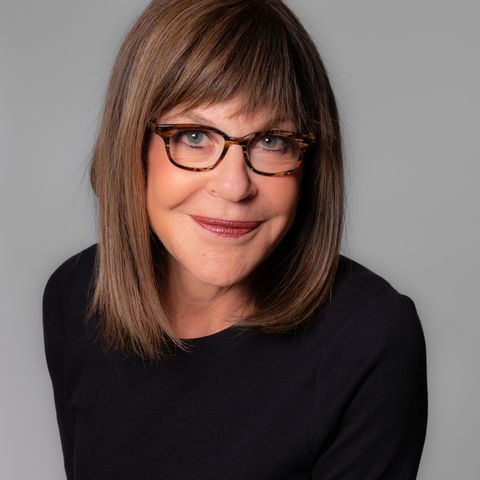
I'm Patricia Karpis.
I'm really excited about today's interview with Anu Gupta,
The founder and CEO of an organization called Be More.
He's a lawyer,
Academic researcher,
Scientist,
And meditation teacher,
And has devoted his life and his work to eliminating unconscious bias.
There's so much to learn here,
And he shares his insight and wisdom,
Really practical tools that gave me hope that we can change our deeply ingrained stereotypes and biases.
So many of us don't have the intention to be biased,
But we've been raised to feel a certain way about race,
Gender,
Age,
Even weight,
And so many other measures that really don't tell a true story about who we are as human beings.
And these biases and stereotypes are infused into the decisions we make in business,
Healthcare,
And in almost every area of our lives.
Listening to Anu,
I felt a real hope and possibility that we can change our habits and patterns and truly unleash human potential.
He's the first person I've talked to who outlines how and why we're wired the way we are,
And has created some science-backed tools and programs to course-correct.
It was such an honor to interview Anu.
Now,
Onto the program.
Anu,
I cannot tell you how excited I am to have you on Untangle today.
Thank you so much for making the time to be here.
Thank you so much for having me.
Yeah,
It's my pleasure.
Let's start by sharing a little bit of background on how you came to your meditation practice,
Because I know that's so integral to the work that you do.
Absolutely.
So I grew up in New York City,
And I come from a family of meditators.
So I was introduced to meditation in high school by my mother,
Mostly in the Kriya Yoga practice.
So that's a lot of breath work,
Lots of pranayama.
And I'd been practicing that for several years until I went to India to study abroad in college.
And I traveled across Ladakh,
Which is kind of a northern tip of India next to China.
And it's populated by a lot of Tibetan Buddhists.
And there I just fell in love with the Buddhist practices,
Visiting a lot of these monasteries that are literally hanging off of cliffs for thousands of years.
And the way to get there was just so intricate.
And sometimes I'd be in a car like,
Oh my God,
We're gonna fall off this cliff.
But once you get there,
There was this like magical sense of peace and presence.
For me,
That's when I first discovered mindfulness practices.
And since then,
I lived in Asia,
In various places from Korea to Taiwan and Myanmar,
And really dabbled in various Buddhist meditation practices.
But being a scientist and a big skeptic myself from the very beginning,
I was always questioning it.
So the neuroscience of meditation really took a hold of just my interest overall.
And about 15 years ago,
I just totally committed myself to the practice.
AMITA SHAHANI-MCCARTHY It's so amazing that you had the opportunity to go to the monasteries in India and just really be immersed in that.
Were you seeking something?
I've read that you talked about how you grew up and what it was like to be in New York City after 9-11.
What was the sequence of events that brought you to wanting to be,
I know you said you grew up in a family of meditators,
But what inspired you?
I mean,
Were you seeking something?
JUAN DIAZ,
MD Yeah,
Well,
I was seeking happiness and also relief from stress.
So I think,
Patricia,
You're right.
I grew up in New York City and I was bullied quite a lot as a child.
I had an accent because I moved here when I was 10 years old,
So people could clearly see that I was an American or here.
And I was also bullied for being perceived as gay,
Which I am,
But at the time I wasn't out.
So part of me always felt like there was something wrong with me and this was something that's like an internal defect that I couldn't fix.
And so many of us carry this from such a young age and I think meditation,
Particularly in college and after college,
Helped me really relieve some of those stresses,
Some of those stories that I had really internalized about myself.
This had to do with race,
With ethnicity,
With the way I looked,
With the way I talked,
The way I walked,
Everything.
It was just all-encompassing.
And it really came to a standstill.
So after working abroad and I got my master's at Cambridge in human development,
Which was an incredible year.
But after that,
I went to law school in the US,
Which if I don't know if your listeners know this,
But it's kind of like a pressure cooker,
Particularly the first year.
It's really intense and I'd come from an environment where it was just like free fall inquiry.
We're talking about structures and systems and how this works and that works.
And in law school,
It's very didactic.
So I fell into a really,
Really deep depression and it wasn't anyone's fault.
It was just that all of the shadow sides that I had repressed and suppressed for so long had all come out.
And I'm totally okay with saying this now,
But in the beginning of my second year of law school,
I attempted suicide because I was just really depressed and was moving through this phase of immense self-loathing.
And this is despite years of meditation practice,
Right?
But I think whatever happened at that moment,
And I still remember that moment when I was going to jump off of this building I lived on,
The 18th floor in Midtown,
Something said,
What are these thoughts you're thinking?
And if people practice mindfulness,
There's a fourth foundation of mindfulness,
Which is really about becoming aware of awareness itself.
So all the thoughts,
All the emotions,
All the feelings,
Everything just kind of warps around and you become aware of all of that happening together.
And that's the best I could describe what happened in that moment.
And for me,
That was really liberating because the second I saw that these were just thoughts,
These stories were being created and I wasn't these stories,
I literally came off the ledge and I called a friend who lived in Harlem at the time,
But she happened to be in my neighborhood.
So I don't know if this is a moment of grace as people with faith traditions would call it or whatnot.
She showed up in my apartment within three minutes.
LS Wow.
JK Wow.
SR Of course,
We talked for several hours and she gave me a whole plan on what to do.
I sought help,
I sought a whole host of things.
And of course,
Also truly,
Truly committed myself to mindfulness even deeper right after that.
LS Wow.
It's so interesting because I know so many of us carry that feeling of unworthiness or something.
We're different and for some reason in our culture,
Being different has a story that goes along with it that makes us feel so filled with shame and discomfort.
And in some of the work that I've read about you,
You also talk about here you were so successful in your education and so bright and how you had an addiction to achievement,
Which really helped you to numb out your feelings.
And isn't it interesting how so many of us do that?
What was that like?
Was the moment of discovery that you'd been numbing out your feelings and you were ready to engage with them,
Was that when you were in India or was that when you were on the top of the building?
When was that?
JK Oh my gosh,
That's such a good question.
No one's ever asked me that.
So I think I'm going to reflect on this with you.
This is such a beautiful question because I called it the degree disease,
Right?
I always wanted all these accomplishments.
But really subconsciously,
It was to seek validation from external sources,
Whether it was family members or friends or it's a larger society at whole.
Like,
If I had these degrees,
If I did well,
If these are the grades I got,
Then I'll feel better about myself.
And I think for me,
I was just on this ladder,
Climbing this ladder over and over and over again.
And I think for me,
When I actually named this the degree disease,
It was probably like two or three years after the incident I shared with you.
I was working as a first year associate as a lawyer,
And had gone to England.
I remember walking around Piccadilly Circus and listening to Tara Vrock,
Who's one of my favorite teachers and former collaborators.
We actually worked on a few projects together.
She's amazing.
And as I was listening to her,
I became aware suddenly that wow,
She'd said something which was really interesting.
It's like,
This whole thing about winning the rat race is fine and all,
But at the end of the day,
You're still a rat.
I literally stood there in front of this hotel,
And I was like,
Oh my gosh,
She's talking about me.
Of course,
Things didn't change right away,
But that's where the seed was planted.
And then it took me about three years after that to muster up the courage to really follow my passion for equity and belonging for all people.
And that's when I started my company in 2014.
WPR Yeah,
And I want to talk about your company.
So you're a lawyer,
You're a scientist,
You're a mindfulness expert.
Do you teach mindfulness or you teach it as part of your program?
JG I teach it as part of our programs.
I have taught it.
I've taught at yoga studios,
And my hope is that I'll be teaching more and more of it,
Even outside of my programs now.
WPR Oh,
Fantastic.
So I love this idea of working with organizations,
Healthcare,
NGOs,
To really help people understand their implicit bias.
It's so important that we begin to do this.
So that was the impetus to start Be More America.
Tell us a little bit about that.
JG Absolutely.
So one of the things,
And this actually happened in law school,
Once I started seeking help,
I'm a scientist,
So I'm always a seeker,
I love to learn.
And as I was working in law school,
I'd be going for pre-trial hearings,
For example,
And I'd just see,
I remember this,
It was in New Orleans for a summer,
And I would just see lots of young kids,
Probably between the ages of 14,
15,
16,
Exclusively black and probably from very impoverished backgrounds.
And the judge was sentencing them for two,
Three,
Four years at a time for really petty offenses,
Things like breaking cell phones,
Trespassing property.
And it was at that moment,
I was like,
What is going on here?
I know the judge,
I know the prosecutors,
I know the people of the court,
And they're generally good people,
But I couldn't understand the cruelty with which they were treating particularly impoverished black people and other black people as well.
And the answer I'd get from my colleagues,
And this is racism,
This is racism,
Okay,
Great,
This is racism,
But then what do we do about it?
How do we change it?
And at that time,
For a very long time,
There's been this idea of systemic racism,
That it kind of pervades all of our systems,
Very similar to patriarchy,
Right,
Which is around sexism and how we value men over women.
And the way it's described or defined is that there are embedded power disadvantages in every policy and structure.
And for me,
I was like,
Okay,
I get it.
So really,
Theoretically,
I get it.
But as someone who loves solutions,
I was like,
How do I change like embedded power disadvantages?
Like,
It's so like,
Lofty.
So after law school,
I convinced my boss,
Who was the general counsel of the Vera Institute of Justice,
Where I was counsel,
To let me lead a research project to identify the root causes of systemic racism.
So for me,
It was that,
As someone who came from the kind of sciences,
Very interdisciplinary from social sciences to contemplative sciences,
I was like,
I'm pretty sure scientists have like really studied this across disciplines.
So we worked and looked at eight different disciplines to identify the root causes of systemic racism,
Without using the word racism.
And we came up with four root causes,
And they are bias,
What traumatic environmental factors,
Lack of resources,
And policies.
So bias is really conscious and unconscious bias that individuals have who make decisions.
And the second presence of traumatic environmental factors is things like toxic waste sites,
Incinerators,
Landfills,
Liquor stores that are very strategically placed in poor communities and communities of color across the country.
So just as we have toxins in our body,
Those toxins are placed in those communities,
Which impact asthma rates,
Which impact health rates,
Which impact their ability to really have a fulfilled life.
And that's traumatic,
Anything that's life threatening and emotionally overwhelming.
The third root causes lack of resources.
So it's anything from safe green parks to access to public transportation,
To basic amenities that we expect in our communities like supermarkets.
They're absent in those same communities.
And then the fourth root causes policies.
So these are policies that are racially neutral,
But enforced in a discriminatory manner.
So for example,
There's been a lot of talk around police violence for not just this year because of the protests,
But even prior to this year.
But there's no like police manual that says you have to stop and frisk black people,
And none of that is written down.
Yet it's happening.
That's the way it's enforced.
So for us,
I was like,
Wow,
These are the four causes together that are aggravating these challenges.
But how can anybody do something about it?
And that's where we go back to the first root cause,
Which is bias.
That's the only thing we as humans,
As individuals have power over,
Because we have power over our thoughts,
Our emotions and our actions.
And when,
And my theory of change was,
If enough people can break bias,
We just need a critical mass.
As Margaret Mead said,
You just need a small group of individuals.
We just need a critical mass of people that can do that.
Then we can actually address those other three root causes.
And that was the theory of how we started V more.
AMITA It's so interesting that you are working on bias.
And I think even going back to what you were saying about the judges when you were in school,
And you went to see the judges sentence young African American children or people for things that felt so unequal.
And I think you said somewhere that you really didn't think that the judges were doing it because they had maybe hate in their hearts or their minds that they were doing it because this was this cultural assumption or this implicit bias that is planted in us at such an early age.
CHAD It's huge.
Yeah.
And you know,
The research,
We did it in eight areas.
So we did education,
Criminal justice,
Housing,
Employment,
Wealth,
Political participation,
Media,
And one other thing that I can recall.
But the idea is this is not just in the courtroom.
This is happening in the doctor's office.
This is happening in the classroom.
This is happening in an interview between an employer and a potential candidate.
And then in the last 10 years,
It's happening in the way we design technology,
In the way we design products.
So I don't know if you recall,
There were quite a few controversies over the last couple of years from companies like H&M to Gucci,
Who had designed a product that was,
For lack of a better word,
Was actually racist or offended a lot of people,
And they had to recall that entire batch of products.
And it's interesting how something like that went from end to end,
From production to delivery in the various retail stores without anybody thinking that this was actually a problem.
And that's the way,
I mean,
Now nobody,
I would at least,
I'm pretty sure I can assume this,
That no one of those companies were like,
We want to make sure we offend people of color.
So we're going to build this product that's going to cost us hundreds of millions of dollars in PR costs afterwards.
But this was the oversight,
Which really goes to say what unconscious bias is.
It's learned habits of thought that distort how we perceive,
Reason,
Remember,
And make decisions.
WHEMBLEY Yeah.
You've also said it's like we're animals,
And we have a brain and a nervous system.
We have received all of this external stimuli that has influenced who we are and how we believe what we believe.
And to shift that requires a pretty significant transformation.
It's culturally embedded.
That's really what you're saying.
It's so deeply embedded.
PEDESTA One thing I would just amend in what you said,
If I may,
I would just say it's actually not a very significant transformation.
We have all the science,
We have the tools,
We have the technology to be able to do this.
What is required is the will of each one of us.
So this is where mindfulness really comes in.
So there's been so many interventions,
And I myself have participated in mindfulness-based stress reduction and a whole host of other mindfulness-based courses.
And the science is really clear.
It takes anywhere from four to eight weeks of daily practice in order for us to adopt a new habit.
And then the hope is that after that,
It just becomes a habit that we instill in our life forever,
Like brushing our teeth or learning how to play an instrument or learning how to cook.
One funny thing that's happened because of the pandemic is I was someone who was averse to cooking.
I would cook little things here and there like pasta or tacos.
But anything more than that,
Please to me,
I'm just going to order in.
But the pandemic forced me to learn how to cook.
And now I'm like,
Oh,
Wow,
I know how to cook.
Tawny Yeah,
It's kind of fun.
And my parents,
Everybody's just like,
Wow,
Like Anu is cooking.
It's like a huge thing.
But again,
It was just a habit that I had that I was able to change now.
Now it's up to me to maintain that habit.
So similar to that bias too is a habit that we can change through daily practice.
And based on the science,
I don't think it needs to be forever.
It's like six to eight weeks of dedicated daily practice.
Jennifer Well,
I'm really glad you said that.
And it does give me hope that you're right.
It feels so scary and so big,
Because it's been so immersed in our culture and who we are.
But I've looked at my own behavior and my own biases and my own triggers.
And I think that's the beginning of the awareness.
So maybe you're right,
Maybe there should be more optimism,
Maybe we can change with this practice.
So when you begin to teach people in their mindfulness practice or at Be More,
How to make these changes,
Or you guide them through this process,
What does that look like?
Is there something practical,
Like people that are listening to us right now can take with them?
Dr.
Seyfried Absolutely.
So our programs,
A lot of them are now digital,
So folks can go check it out on our website at BeMoreWithAnew.
Com.
But there's two elements to our program.
So I'll talk about the contemplative side first.
So our programs are science backed and compassion based.
So I'll talk about the compassion piece first,
The contemplative piece.
So we created a toolkit called PRISM.
PRISM is an acronym for five mindfulness based tools.
And they stand for perspective taking,
Pro-social behaviors,
Individuation,
Stereotype replacement,
And mindfulness.
And the way we go about breaking bias is really starting from mindfulness and then making our way up to perspective taking.
So I'll describe each one of those for a minute,
Just so listeners have a way to actually practice this on their own.
So mindfulness,
As most people are familiar,
Is just the act of noticing what's happening in the present moment.
So that's,
I'm sure a lot of people already have a strong practice there.
But here,
We're actually beginning to notice thoughts,
Body sensations and feelings when we're in intergroup context.
So if I'm with someone who is different from me,
What are the thoughts that are arising?
Where do they come from?
And then being able to associate that from our interaction with the person.
So that's where mindfulness really comes in.
And then we move to stereotype replacement.
So once we begin to notice what those thoughts are,
We actually change those negative associations actively with positive counterexamples.
So I'll give an example.
I'll say a word and notice the first image that comes to your mind.
Surgeon.
Leader.
Yoga teacher.
Now there's no shame in the game,
But can you notice what the ethnicity,
The race,
The gender,
The age,
The height was of this probably a person,
If it was a person that came up?
And that is the association.
But now we can broaden that association by real life examples.
So when I said leader,
How many of you thought of Oprah Winfrey or Malala Yousafzai or someone like that?
It's okay if you didn't.
There's again no shame here,
But it's like,
Oh wow,
I will look up 10 meters of different backgrounds that really reflect human diversity using our dear friend Google.
Pretty easy.
And begin to rewire our brains.
So this is about neuroplasticity again.
So we're building new neural pathways by breaking those stereotypes and really expanding kind of the repertoire of examples we have in our brains.
So after that,
We move to individuation,
Which is something we start in stereotype replacement,
But it's the act of dissociating group-based associations from the individual.
So I'm talking to you,
Patricia,
The second we met,
I had some things come up in my mind about your name,
About your age,
About your gender,
All those things.
Again,
No problem.
But I can notice that these are just my mind's thoughts.
I actually don't know Patricia.
I want to get to know her.
So this is the scale of cultivation of curiosity.
And this is known as individuation.
And that's something,
Again,
We practice.
It's not something we're born with.
We practice that through our interactions.
And then we move to prosocial behaviors and perspective taking,
Which are really what is known in the mindfulness spaces,
Heart practices.
So this is the cultivation of loving kindness,
Compassion,
Joy,
Equanimity,
Generosity,
Even forgiveness.
And that's something we could practice with intention towards certain groups.
And then perspective taking is really about imagining what it's like to be in the shoes of another person.
So the best way I can describe that is if you go to a performance of some sort and you're sitting in the audience,
But you get goosebumps just watching the actors perform.
And it's something about the performance that shakes you to your core.
And it's because this actor has truly embodied the human condition.
Now that actor isn't the person really who they're acting,
Yet they're able to hold that person's perspective as an actor.
And that's perspective taking.
And this isn't something that only actors do.
All of us have this capacity.
All of us are born with this capacity to be able to think about and feel the pain of others.
This is what Sharon Salzberg,
One of my dearest teachers,
Calls really radical compassion,
Radical meta.
And again,
This is practice that we can do on a day-to-day basis.
So that's PRISM.
And the second element of what our programs are about is really the science-backed aspect of our work,
Which is really about bridging the gap.
There is a lot of misinformation and lots of information gaps in our own education around issues of identity,
Around race,
Ethnicity,
Gender identity,
You name it.
So people are constantly walking on eggshells around this stuff.
For us,
We synthesize all that and simplify it so people get it.
We all have the capacity to understand these things.
This isn't rocket science,
So we kind of combine these two things together to help people really make better decisions and then begin to really break bias.
WHEMBLEY-LONG So when you're talking,
I have so many thoughts going through my mind now because it's so rich and so much wisdom here.
But when you're bridging the gap,
You're educating people about differences between race and ethnicity.
And is this when you go into areas like the Human Genome Project,
Where you're really teaching people that there are?
JAY P.
HENRY Exactly.
You'd be surprised that we've worked with doctors,
Engineers,
Teachers,
Corporate executives.
I've worked with over 16,
000 professionals at 200 companies.
And just how many of these incredibly accomplished people don't know how old this concept of race is.
And part of it is,
Our culture is like,
Oh my God,
There must be something wrong with you.
Why don't you know this already?
This is the voice that I had in my head,
Right?
It's like,
Why don't I know this already?
Where does this come from,
This type A,
Kind of this internal critic?
But I want people to be like,
It's okay if you don't know this.
This isn't your fault.
We weren't taught this by our schools,
By our society.
But now I will teach you better,
Right?
And this is all based off of the work of anthropologists,
Sociologists,
Neuroscientists,
Geneticists.
So it's not something that I've come up with.
I've only just brought it together.
So you can rest assured that you can begin to correct the misinformation and bridge the information gap.
So then from there,
You can move forward.
Yeah,
I love your,
The non-judgment part of it,
Because so many of us that have studied so much of our lives and have advanced degrees or whatever,
We think we know things,
But this idea that race is an artificial made-up word,
And that there's so much to learn about the difference between race and ethnicity,
And there are so many layers.
So it becomes super interesting.
When you were talking about PRISM,
I was thinking about this project that a teacher did.
Someone had told me about this,
That a teacher,
Her students were going to go visit a nursing home.
But before they went to the nursing home,
I think they were high school students.
She had them put Vaseline on their eyeglasses and rocks in their shoes.
She wanted them to know what it felt like to be older and to not be able to see or to have your feet hurt.
And there's a kids all did this.
And then they went into the nursing home and sat with a lot of these elderly people.
And it had such a big impact on them,
Just feeling that.
But I love that as a way to teach kids empathy.
How would you teach kids about this versus the groups that you're currently working with?
How do you teach young children or are they already learning because they're more advanced than some of us that are older?
Are they learning that there really aren't these big differences?
Wow.
I think it's a bit complex.
I think it's all of those things.
So I used to be a middle school teacher.
So I came to this work because I was an educator and I was passionate about kids.
And I worked for Teach for America and really cared about educational inequality.
But I realized that we can't teach a lot of these things in our schools right now because of the opposition of the adults.
They don't think this work is worthy.
You're a mindfulness practitioner,
You just know how much parents have resisted teaching these very secular tools to our kids.
So that's where I shifted from teaching kids to adult learning and teaching adults.
Now I think the example you've shared around,
I mean that's such a beautiful example of perspective-taking,
Right?
So this wasn't even something they had to imagine.
They actually had to feel it by putting Vaseline on their eyeglasses and putting rocks in their shoes.
Like now they have a visceral experience of what it's like to be people who are in pain,
And that's going to inform how they interact with those people moving forward.
So I think for me,
Kids are complex.
There are a lot of kids who are being raised by teachers and educators and parents and family members who already believe in empathy and they're being taught that at home.
But then you know I think about kids like Dylann Roof.
So Dylann Roof was the 90-year-old man who killed seven people at the AME Church because he believed in black inferiority.
He was a white supremacist,
19 years old,
Gen Z.
So he's also a kid,
You know,
In my eyes at least,
Because when I was 19 I was a kid.
Yet it's what he was taught.
So we're not going to get rid of this until we teach our kids better,
You know,
We're kids,
And this is our moral responsibility.
And I totally sympathize with all the professionals of advanced degrees who have so much guilt and shame because that's what I had for a very long time.
I wanted to be perfect in this and that,
But I think this is where mindfulness comes in.
It's like,
We still submit.
It's like,
We know things,
But we don't know everything.
Right,
And this openness of the younger generation is a little heartening to me.
I was telling my 13-year-old niece about a friend of mine whose daughter is transitioning to be a boy,
And she was like,
Oh yeah,
We learned about that in fourth grade.
That's so cool.
And I do think that's my hope really is that we can be whoever we are as human being,
Whatever race or gender or ethnicity,
And that's of course all of our dreams for those of us that are thinking this way.
And I did want you to share a little bit about the implicit association test that you often talk about,
Because what I noticed on that,
I went in to take it,
Because I know you had talked about it in a few different interviews,
And I thought it was so interesting that gender,
Race,
Transgender,
Age,
Weight,
There's so many different areas that we have to look at in ourselves.
And will you just share a little bit about that,
Because I know you do use that in some of your groups.
Sure,
Sure.
So I'll say the disclaimer that the implicit association test or the IAT is one of the instruments that can measure unconscious bias.
Now for me,
Like as a student of Peter Drucker,
Who was kind of the founder of modern-day management consulting,
He has this famous saying called,
If you can measure it,
You can manage it.
So prior to this test was invented,
People were just speculating why people,
What they say isn't matching their behavior.
But then we got a way to actually measure what people feel.
So basically what the IAT is,
The way I describe it best is,
It's a matching game.
So what happens is there's two categories that you're given,
Let's say for the race one it's black and white faces that we can identify,
And pleasant and unpleasant words.
And then you have to press ENI very quickly,
And it's on a screen and you're able to see where you have to match things.
And because it's done so quickly,
What's happening on the back end is it's tracking the number of errors you're making and your response lag time at a microsecond level.
And then it could begin to measure the strength of your associations with these concepts.
Now this is important because again this goes back to the second foundation of mindfulness,
Which is feeling.
Vedana is known in the Theravada tradition.
What that really means is everything our senses interact with,
Sense of sight,
Smell,
Taste,
Touch,
Hearing,
Has a feeling tone attached to it.
And it's usually pleasant,
Unpleasant,
Or neutral.
Right?
It's just one of those three things.
Think of a cheeseburger.
For a lot of us,
Very pleasant.
I want one for lunch today,
Maybe after this.
But for others,
Like,
Oh no,
I'm vegan.
I don't know.
Very unpleasant.
Same exact object.
So it's that same idea,
Except now we're doing that for human beings.
So in an ideal world,
It would just be neutral.
Everybody,
When they take this test,
They can just match things and there's no association of pleasantness or unpleasantness attached to people's faces.
But that's not the case.
When it comes to the IAT and now there's been millions of people that have taken in over 2,
000 studies across disciplines.
And we know that a majority of Americans and people in general,
I think it's upwards of 75%,
Have an easier time associating pleasant words with white names and white faces and unpleasant associations with black names and black faces.
And this is also true for a substantial majority of people of color,
For African Americans,
For Asian Americans,
Latino Americans,
Native Americans.
Again,
This goes back to what we were talking about.
It's how our brain has been conditioned.
From a very young age,
We've been fed images and stories about who is worthy,
Who is beautiful,
Who is respectful,
And who isn't.
Our brain has wired that in and this is despite our conscious intentions.
So that's what this test is really revealing.
And there are 9% of people for whom it's neutral.
So for me,
It's like that's the 9% we want to go after and that's who we want to become.
So for me,
This is one way because we can measure it,
We can begin to manage it.
And that's the goal of plasticity,
That's the goal of mindfulness,
For us to adopt better habits.
Well,
And I think what's really so much of that is so important,
But I think it's also helpful for us to understand that our brains are wired in a certain way for good or bad despite our conscious intentions because so many people feel like because they have positive intentions,
They aren't liable for any of these feelings of racism.
And I think this is really important to know.
Yeah,
The gender IIT,
It's so interesting some of the leading feminists like Gloria Steinem,
I mean if anyone has read anything about her work or has followed her work,
She is staunch hardcore person for women's equality across the board.
Of course.
But when she took the IIT,
There was still,
You know,
A slight assumption that men connected with career and women connected with home.
Slight,
Right?
And it's not because she believes that women should,
Of course not,
Like everything she's ever done is contrary to that belief,
Yet it's just how the brain has been trained.
So despite her actions,
Day to day,
The media she's consuming,
The advertising,
The books,
The movies,
The cultural narratives we're telling continue to pigeonhole half of humanity who we now label as women,
As people who are homemakers,
And the other half of humanity will be pigeonholed as men,
As people that have careers or are bread winners.
And of course we ignore anybody else who is outside of that binary.
That's so interesting.
And that's why I think this mindfulness I feel is the revolutionary tool that can totally transform this.
Well and what's also interesting about that is that we assign a good or bad story,
It's pleasant or unpleasant in what you were saying,
To career or family.
And it's actually like there's been a lot of work that's now happening,
Lots of amazing innovations around gender,
And they're not focusing on women at all.
They're actually focusing on men.
They're focusing on how men have been emotionally stunted by the story of gender,
How men can't express themselves,
They feed into a whole host of different addictions,
Mental health challenges.
As a man and a male identified person myself,
I agree with it.
A lot of my story that I shared with you,
I experienced because I couldn't share that out loud given my gender identity.
I was afraid.
What are people gonna think?
They're gonna think I'm a wuss,
I think I'm weak,
I am this and that,
All connected to my manness.
And now I like laugh at it,
Yet I can laugh at myself,
Yet know that this is a common pain point for millions,
If not billions of us.
Imagine people living in countries that are much more repressive than ours,
Where these gender identities are so fixed and so hard,
And it's almost suffocating for them to exist as human beings.
It's so painful to think about that,
And I think white men have the highest rates of suicides,
And so that's really interesting.
So these expectations for them,
I hadn't been feeling all that empathetic for white men,
To be honest,
Until I had heard that.
I was like,
Oh okay,
We all have work to do.
We do,
And I if any listener is a white,
Straight,
Cis,
Whatever you want to call it,
A white man,
I so invite you to this conversation.
I think breaking bias isn't for people who are marginalized or oppressed or somehow mistreated,
It's actually for all of us,
Because we're actually breaking our own internal limiting beliefs and truly live up to our potential.
Yeah,
It's such a great hope for all,
I love that.
Before we close,
I want you to talk a little bit,
I'm really intrigued with this and I don't know if it's been released yet,
But you talk about on your website using technology to help build empathy and connection between people,
And you've got an app that you're,
I think you're in beta testing with the support of the National Science Foundation,
And I'm fascinated by this because I do feel like this could be so transformational for people.
No,
Absolutely.
So we're actually in the midst of a brand transition,
So we were called Be More America for seven years,
Six and a half years,
And we'll be called Be More with Anu starting next week.
So this is a little sneak peek and we're releasing a bunch of digital courses.
So initially we were working exclusively with enterprises,
But now we want to make this information as accessible to anybody.
So there's two digital courses that are hour-long,
Just an introduction into unconscious bias,
One for anybody called Breaking Bias Online,
Another one for specifically for healthcare professionals called Breaking Bias in Healthcare.
And then we're going to be working more deeply for people that are interested in really being on a journey with us.
So we'll be launching a course this year called Breaking Racial Bias,
Which is a four-week immersive experience where we kind of go into the root causes of systemic racism that I talked about,
But then also how to apply the PRISM tools to begin to address that in one's own personal life and professional life and truly break bias.
So that'll be launched later in a couple of months,
But a lot of that information is on our website.
The cool thing about all of our courses is that they're connected to data-driven competencies.
So we built something called the Be More Journey,
And the Be More Journey has three stages.
Learn,
Develop,
Propel.
So the whole idea is first we need to learn what we don't know,
It's a very left brain,
And that's connected to certain competencies like awareness,
Comprehension,
Optimism,
Curiosity.
But once we've learned things,
That's great,
We know how electricity works,
But can we build it ourselves?
No,
Because we need to develop the skills.
So that's where the daily practice comes,
And there are competencies attached to that.
Things like skillful communication,
Empathy and compassion,
Collective identity,
And a few others.
And we feel that once we build,
We learn and develop these skills,
We then propel performance both individually and as a collective.
So in all of our courses we measure that pre-post so people can begin to track their progress on these hard skills that are rooted in organizational psychology and emotional intelligence.
And our hope is,
We got funded by the NSF last year to build this app,
Our hope is with enough people taking this,
Eventually we can build a learning system that could personalize learning based on where people are.
So instead of doing these one-size-fits-all trainings,
We know where the information gaps are,
Where the skill gaps are,
And through AI and ML we can use that for good.
A lot of times right now AI and ML is used to like basically make us consumers,
Send us all these things that we should buy and have things we don't have.
But for me it's like,
Well can we use that same technology to help people be better,
Be more?
That's our hope moving forward.
It all sounds so amazing and I'm so grateful for the impact that you're having on so many people and that the impact that you will have with the future of all of these new tools and courses.
So thank you so much for being on Untangled Today Anu,
I am so grateful.
Thank you so much Patricia,
It was such a pleasure and I'm also really grateful for you for using your platform and everything you offer your listeners to also invite them into this conversation.
Thank you for that.
Thank you.
Thanks so much to Anu for being with us today.
It's a great time to start or advance a meditation practice.
We will see you next week.