Welcome to the Explorers Mind podcast,
Where we will inspire and empower you through conscious conversations with explorers of the inner and outer worlds that have ventured into uncharted territory,
Pursued bold challenges,
Found their purpose,
And expanded their consciousness.
We will journey through the insights and experiences of adventurers,
Scientists,
Conscious leaders,
Founders,
Activists,
And artists,
And provide you with the practical tools you need to get out of your comfort zone,
Expand your mind,
Find deep fulfillment,
And create an inspiring vision for your life.
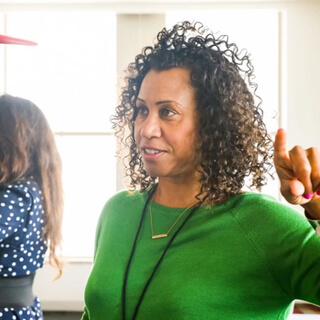
It's time to find your inspiration and open up new possibilities for a meaningful life with your host,
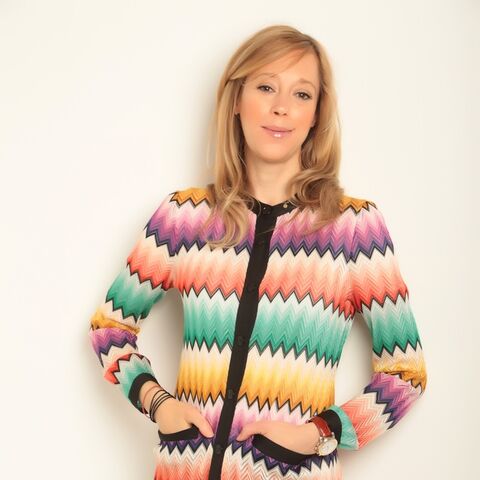
Palma Michel.
Welcome to the Explorers Mind.
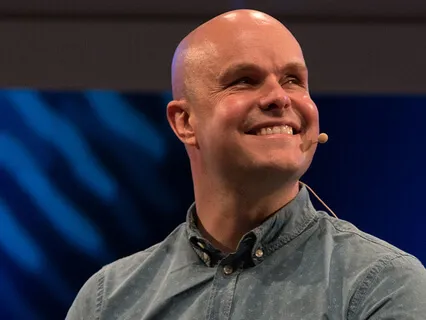
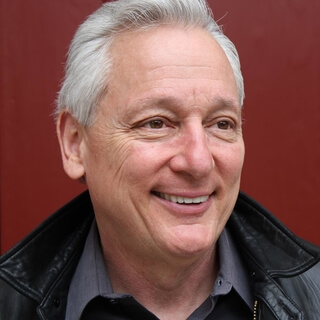
Today's guest is Mark Pollock.
Unbroken by blindness in 1998,
Mark became an adventure athlete,
Competing in ultra-endurance races across deserts,
Mountains,
And the polar ice caps,
Including being the first blind person to race to the South Pole.
He also won silver and bronze medals for rowing at the Commonwealth Games and set up a motivational speaking business.
In 2010,
A fall from a second-story window nearly killed Mark.
He broke his back,
And the damage to his spinal cord left him paralyzed.
Now he is on a new expedition,
This time to cure paralysis in our lifetime by exploring the intersection where humans and technology collide.
As a speaker,
Mark is best known for his 2018 TED Talk,
Focused on resolving the tension between acceptance and hope,
Delivered jointly with his fiancé Simone George.
It gathered over 1.
5 million views in its first six months online and has been translated into 12 languages.
And during the talk,
One of my friends was in the audience,
And she said that not a single eye stayed dry.
He has inspired millions of people in hundreds of organizations and is a Davos World Economic Forum,
InnoTown,
Founders,
EG and YAAD speaker.
Co-founder of the global running series called Run in the Dark,
Mark has been selected by the World Economic Forum as a Young Global Leader and is a former member of the Global Futures Council on Human Enhancement.
He is a UBS Global Visionary,
Is on the board of the Christopher and Dana Reeve Foundation,
And is a Wings for Life Ambassador.
In addition,
Mark is the subject of the acclaimed documentaries,
Blind Men Walking and Unbreakable,
The Mark Pollock Story,
And he has been awarded a number of honorary doctorates.
In preparation for this interview,
I have immersed myself in Mark's and Simone's world,
Watched both films and all his talks,
And I have been incredibly inspired by Mark's Unbreakable spirit and mission to cure paralysis.
Mark,
Welcome to the show.
It's so great to have you here.
Well,
Thanks for having me.
I was so inspired by your story,
Particularly about resilience,
Never giving up,
Looking ahead,
Going into uncharted territory.
It would be really amazing if you could share your story with our listeners who may not all be familiar with your background.
Yeah,
Well,
I find myself in a position now aged 44 in my third period of uncertainty with the global pandemic that we're just really in the middle of.
And I've had,
I suppose,
Two previous experiences of uncertainty.
When I was 22,
I was a student studying for a business studying economics degree.
I was going to go off and start a job in investment banking after graduation.
And I was rowing internationally for Ireland,
As well as for my university.
And just at that age,
At age 22,
I lost my sight very suddenly through detached retinas and went completely blind.
And to short circuit the story,
I set about rebuilding my identity by studying,
Doing masters,
By getting a job in Agri-Food in Ireland,
Not in investment banking in London.
And then I went on to get back into rowing,
Win medals at the Commonwealth Games,
Become an adventure athlete,
Race to the South Pole.
Just 10 years after going blind,
Returning from the South Pole,
It was at that stage that fell out of a window and broke my back and faced another period of uncertainty,
Another period of rebuilding my identity.
I've done that now as I explore the intersection of where humans and technology collide and bring people together to cure paralysis in our lifetime.
So we're just about 10 years after my paralysis and coronavirus has hit.
So I felt all of the same emotions when we all went into lockdown.
The uncertainty,
The change,
The doubt,
The fear,
The pivoting,
And I've been able to test them all again.
And maybe that's what some of those things we'll talk about.
Yeah.
What were the emotions that you felt back then and that you felt during the lockdown period?
The first thing I'll say is looking back always feels much more analysis driven or static and unemotional than it ever does when you're in the moment.
So as I look back,
The first time really when I went from someone with all of my faculties,
Very independent,
Young,
On my way places,
And I lost my sight and my identity as a sportsman primarily,
Then as a student and socializer.
And then I suppose I would have developed an identity in the workplace,
But I was someone who knew where I was and where I was going.
And in the space of two weeks through detached retinas,
That identity was stripped away.
So I lost my sight,
But I also lost my identity.
And I think a lot of people,
Particularly people who work hard at something,
Whether it's career or sport or even in the family or within a relationship or whatever,
Your identity is wrapped up with the things that you do.
And when I went blind,
That was immediately stripped away.
I was no longer on the way to London,
No longer part of my crew and that social network,
No longer part of student life.
It was all gone.
And the first thing,
Which I didn't know was happening at the time,
And this is a sort of post-match analysis that I learned about some years later,
But I went through Elizabeth Coobler-Ross's five stages of grief for the loss of my sight,
Not the loss of a loved one,
Not a death,
But certainly the grief associated with loss of my sight,
And that is denial,
Anger,
Bargaining or miracle seeking,
Self-pity or depression,
And then finally acceptance.
And all of these things happened.
I didn't want to be blind.
I didn't think it was true.
I didn't think it was happening.
I was certainly angry and that manifested itself in frustration with myself,
Perhaps being less than kind to my mum and my dad and my sister,
The people who were closest to me,
Coming out of frustration,
Not an excuse,
But that was the truth.
No bargaining or miracle seeking,
And I hear lots of stories about this.
I certainly saw it in the spinal unit,
That if you're not religious,
That in some way,
I mean,
People tell stories of seeing visions of Jesus or a God of some description.
You turn to God saying,
If you allow me to get better,
I'll be a better person,
But in some way,
This disaster is linked to your behaviour up to that point in some weird way,
And then the self-pity or depression.
They're all coming and going,
Not in order,
Not in stages,
But they're coming and going and eventually,
Eventually get to a point of acceptance.
I'm glad that you mentioned that about Elisabeth Kubler-Ross' model,
That these stages are not sequential,
But they come and go and they can overlap as well.
I find that really helpful.
Yeah.
As soon as we build a model,
Five stages,
A Venn diagram,
The triangle of whatever,
I suppose it's a mental model to try and make sense of the complex and as you know,
Human beings and life and emotions and even competition,
Even the harder side of competitive achievement,
It's not simple.
It's complicated and these models only approximate an answer for,
Just to help us simplify what perhaps we struggle to.
Life is certainly complicated and messy and not logical.
That's not how nature works in any way.
You also mentioned acceptance,
Which I personally find one of the most powerful tools to help people shift from one situation to the other.
Yet,
Very often when I mention acceptance with my clients,
They often say,
Well,
But that would mean that I have to embrace the situation or condone it,
But this is really too awful.
I don't want to embrace it.
How do you approach acceptance and maybe even help people to accept certain situations in your talks and webinars that you're giving for companies?
Yeah.
The acceptance word is troublesome for some people,
As you say,
Some people feel that it's acceptance is enjoyment of the problem or maybe resigning themselves to this being the end game,
Whatever this might be.
But it's not,
For me,
Acceptance is the springboard to the next stage.
You mentioned in the introduction that you watched Seaman and my TED Talk from 2018.
The thrust of that TED Talk is about not choosing between acceptance or hope,
But rather running acceptance and hope in parallel.
What two weeks,
Maybe two weeks after my accident,
I fell from a second story window.
I'm always wondering who's listening to this when I describe it because in Ireland,
UK,
And much of Europe,
It's a second story window,
Whereas in North America,
It's a third story window.
I fell from a pretty far up anyway and broke my back.
I was in intensive care,
I'd broken ribs,
I'd fractured my skull,
Three bleeds in my brain,
Massive internal injuries.
I had a spine broken in two places with no feeling of movement from my waist down.
It was just about a year after I'd got back from a 43-day expedition race to the South Pole.
It was a month before Seaman and I were due to get married.
I found myself in this crazy world of having to do it all again,
Having to work out.
I was going to deal with this very real challenge,
The new challenge of paralysis.
At the same time,
Part of expedition races,
Racing requires you to raise the money to do it.
In the raising of the money,
You publicize what you're doing and then you're down there for 43 days in Antarctica,
Building up a following.
When you come back,
You tend to talk about it and go on the media.
I'd just come back from the South Pole,
I had built a connection with people on Twitter and Facebook at the time,
LinkedIn,
Wasn't going too large on LinkedIn,
But lots of people had followed the story.
The story was life was good for me.
I went blind,
Rebuilt myself,
I raced 43 days to the South Pole.
I was in a sense,
Unbreakable.
Then I found myself in intensive care,
Feeling anything but unbreakable,
Feeling entirely broken physically and mentally.
For the first week or so,
I hardly knew what was going on,
But I had a sense from Simon beside my bed,
My mum,
My dad,
My sister telling me that people were writing messages,
People were wishing me well,
People were saying in fact that it's terrible what's happened,
They felt that it was awful,
But if anyone could deal with it,
It was me.
I didn't feel like that person anymore.
About two weeks in,
In the middle of the night,
I wrote a blog called Optimist Realist or something else.
I was pumped full of morphine to dull the pain.
So I was.
.
.
A little high.
A little high on drugs.
Now I don't know if I was writing to myself or if I was writing to all of those well-wishers,
But I was thinking out loud and I go back and look at the blog sometimes and I was asking myself,
Were the things I used to speak to companies about,
The decision themes that I used to speak about,
Were they just simply a way of me making money to go off on adventure races or was I going to use these themes as tools to deal with this challenge of paralysis?
And I went on then to remember Admiral Stockdale's story in Jim Collins' book Good to Great and his surprising revelation that in Hanoi Hilton in the Vietnam War,
As a prisoner of war,
Stockdale said that the people who didn't make it were the ones who were the optimists because the optimists kept saying,
Well,
We'll be out by Christmas and Christmas would come and go and they wouldn't be out and they eventually became disappointed,
Demoralized and died in their cells.
And the interesting thing was that he,
I think,
Was a realist.
He was a student of the stoic philosophers that I've become increasingly interested in myself and he,
And this is a very long-winded way of answering your question,
He talked about confronting the brutal facts while maintaining a faith that he would prevail in the end and he makes a big point about confronting the facts as a start point.
For me,
That is what acceptance is all about.
Accepting the brutal facts in a relatively unemotional way,
Just as facts.
Everything is what it is.
And then once you have that foundation in place,
You can start to look at the hope side of the equation.
But I think as human beings,
We need acceptance and hope because if we have hope alone,
We run the risk of being the optimists,
Risk of being disappointed,
Demoralized if the best case scenario doesn't play out.
So we cannot cancel hope.
We can,
I don't think we can actively move towards making hope a reality without first confronting those brutal facts and accepting the start point.
I love the combination of those two because I feel hope is needed in a way if you are depressed.
It's kind of the first sort of emotion that kind of moves you out of there.
But if you stay with hope and don't consider any logic or effects around you,
Then you just,
I guess you will be hopeful until the end of your life,
But you're probably not going to change much in your situation as well.
Yeah,
Well,
It's fine to have a lofty goal,
A dream,
Something to go for,
Wild and fantastical hope.
We can all do that and when we're sleeping at night have dreams that we don't actually move towards in any meaningful way.
I mean,
For me,
What I,
A mental model that I use myself based on my experiences and lots of influences is what I call the challenge cycle and that is facts,
Acceptance and hope.
And it's partly based on Jim Collins for the facts piece,
Who was,
I suppose,
A modern day Stoic and the acceptance piece for me is very much leans on the ancient Stoic philosophers of Marcus Aurelius and Epictetus and Seneca and the way they ran their lives.
Now,
I don't know if I would like to meet them for a pint at any stage.
They sounded,
I don't know how much fun they were,
But they were very clearly fixated with controlling and understanding things that they were in charge of,
Their choices,
Their decisions and they used Stoic philosophy to get to this point of acceptance and then hope.
Friedrich Nietzsche said,
He who has a way to live can bear with almost any how.
The idea if we know why we're doing what we're doing,
We can put up with the tough stuff and Simon Sinek talks about it,
Start with why in his sort of top 10 of all,
Probably top five of all time TED talks.
So it's facts,
It's acceptance,
It's hope and understanding why is doing that again and again and again at a micro level on a daily basis and at a macro level,
An extended time frame.
And why is also a question I almost always ask my coaching clients because they obviously come to me with wanting to achieve certain things and I always ask them,
Why do you want that?
Why?
And then I ask again and why and why and why until you get to someone's real motivation.
Often that's hard.
It is so simple,
It is so simple on the face of it but it's so hard,
It's so hard to get to it.
Like,
You know,
I spent the last 10 years since my accident working on a daily basis to bring people together to cure paralysis in our lifetime.
But it didn't feel when I woke up in the morning that that was what I was all about.
That was why I was put on the earth to cure paralysis.
Yet whenever I spoke to marketing advisors,
You know,
They said,
Right,
Well,
You know,
On Facebook,
We've got to do,
We've got to do ads with you curing paralysis in your lifetime.
That's why you do,
That's your why,
That's what you do.
And in fact,
I was so troubled by it that I went,
I was fortunate enough to go and meet with Simon Sinek and I put it to him that I don't think my why is about curing paralysis in our lifetime.
It's certainly what I do.
And he said to me,
Well,
Of course it's not because if you cured paralysis tomorrow,
You would surely do something else.
And prior to breaking your back,
You were doing other things.
He said,
You bring people together to solve complex problems.
And I went,
Ah,
Yes,
That's right.
So my why that I've worked on,
It's everything I do is about helping people to build resilience,
Collaborate with others so that together achieve more than they thought possible.
And you'll notice that there's nothing about my speaking or my online masterclasses or my run in the dark event that happens all around the world each year or walking in my robot or using electrical stimulation or brain machine interface.
None of that is in my why that gets me out of bed in the morning.
That's all what I do.
But it took a long time to get there,
But it feels like that's right for me.
It certainly rings very true listening to you speak about it.
And I also love that you went through this journey that kind of almost like the marketing gurus wanted you to wanted to push you into this.
Yeah,
That's easy.
That's your why you're going to do that.
And that's the message that we're going to bring out into the world.
But there was some kind of dissonance within yourself where you felt,
Yes,
That's one thing I do,
But there is more to that day,
Something else.
And it's kind of,
I guess,
Pointing back to this inner voice that we have or this inner feeling that's quite silent.
It's not really expressed in words,
But that kind of guides us in some way.
And I wonder you speak about kind of,
I guess,
Chatting away through uncertain territory.
What is your,
I guess,
True north inside kind of that guides you?
Yeah,
Well,
I think when I look at the collection of things that I've done,
I think of them as stories.
And so they're quite,
You know,
I sometimes look at my life and think that,
In fact,
They're quite fragmented.
But there's a really clear connection between racing to the South Pole and trying to cure paralysis.
And that is that these projects require storytelling.
They require putting a great team together.
They require finance.
And they require innovation.
And perhaps they require sort of resilience to keep going.
And that,
I perhaps learned all of that,
Or maybe I was drawn to sport because sport involved those skills.
And that's what excited me.
And then when I broke my back,
And I was trying to think,
Well,
What do I do now?
I can't be an adventure athlete,
Blind and paralyzed.
And I did try.
I went to Norway and we were going to enter a race in Siberia.
But thankfully,
It was canceled.
It was canceled,
Right?
Yeah,
You saw that.
I forgot that was in one of the other documentaries.
We were delighted that it was canceled in the end because I found myself,
The three guys I was with,
I was slowing them down.
Whereas when I was just blind,
I wasn't slowing anyone down in the South Pole.
We were actually racing.
We were there for the competition.
After I became paralyzed,
I was going to do these races.
It was just doing it for the sake of it.
I wasn't racing.
And was it also,
Was your heart no longer fully in it?
Yeah,
No.
Yeah,
It wasn't because when I did my adventure racing,
I was in the South Pole,
The North Pole,
The Gobi Desert,
The Himalayas,
Ironman,
Triathlons and rowing.
All of it,
Regardless of the backdrop,
All of it was in a competition,
In an adventure race format.
And when you take away the racing,
For me,
You're just in somewhere that's desperately uncomfortable,
You know,
Too cold or too hot or too rocky or too sandy.
And you're just scratching your head thinking,
I get it whenever the rationale is that there's a race.
I don't get it.
You know,
When you're blind and paralyzed,
You can't see the sunset going down.
It's desperately uncomfortable.
The interest,
It just didn't make any sense to me anymore.
But the skills and why I do what I do in sport and bringing teams together,
It was relevant in sport and expedition racing,
As well as curing paralysis.
We bring together scientists,
Investors,
Technologists,
Foundations,
Philanthropists,
Commercial people and try and find a way to get them to work together.
We help to tell the stories without raising money.
And it's a similar skill set.
I heard you say that this is a goal that you either will solve in your lifetime or you just know that you will have contributed to making significant steps towards solving it.
But kind of the contradiction that initially you were told that what you couldn't move within the first 12 weeks will kind of stay the same.
But now I heard you and Simon say that actually finding a cure for paralysis is also by some scientists now considered as absolutely possible.
So it's no longer deemed as completely impossible.
And that contradiction from the start of your journey with it to now sounds absolutely remarkable to me.
Yeah,
Well,
I think what we discovered in hospital as the true impact of the injury was revealed.
First of all,
You're trying to stay alive,
Then you find out that you might have 12 weeks before you see if you can move anything.
And then you find out that not just the lack of feeling and movement,
It also interferes with the body's internal systems and nerve pain,
Spasms,
Medication,
Pressure sores,
Bladder infections,
Kidney issues,
Cardiovascular problems.
All of these things are part of paralysis.
And as people's injuries get higher and higher,
There are more and more problems.
And in that crisis,
You look to your surgeon,
Who's going to open your back up,
Put metal rods and screws in there,
Do what they can to stabilize your spine inside this 12 week period of spinal shock.
And at that time,
When you enter the world of paralysis and everything is new,
That surgeon is the most senior person in your support group,
You think they therefore have all the answers and they don't.
What they're doing is saving people's lives.
They're screwing metal screws and rods into people's bones in their back.
And perhaps there's a neuroscientist there,
Neurosurgeon there as well,
But they know about that piece of the jigsaw.
The physio in the rehabilitation unit in the hospital tends to know about rehabilitation to get people from lying flat out on a hospital bed and getting into a wheelchair.
And you sort of expect them to know about the research,
About the interventions that might come down the line and they don't.
So it was really only as we started to look outside this hospital bubble,
And I was there for 16 months,
We started to find both commercial and academic facilities and research facilities that were pushing the boundaries of the cure possibilities.
And you come to understand that the research scientist who is the cure innovator out on the fringes,
You wouldn't want that guy or lady inputting the metal work into your back.
So we need different experts for different pieces of the jigsaw.
But I think in the uncertainty,
There can be anger bubbling up and maybe it's part of the Kubler-Ross model,
But there's anger that the hospital doesn't have all the answers or all the resources and then eventually you sort of maybe you move to that point of acceptance.
But yeah,
In the hospital with the resources available,
Doing what people have access to in the community or in the hospital setup,
There is no cure.
We need to do something different with different interventions that aren't available to everyone at this moment,
That still need developed,
Still need refined.
With those interventions,
We have a chance of a cocktail of interventions to produce a cure over time.
Could you tell us a little bit more about those interventions?
Yeah,
Well,
My original approach was in hospital,
Whether you're sporty or not,
I happen to be used to it,
But you spend most of your time going to the rehabilitation gym,
Trying to keep the body moving,
Learning the skills to get in and out of your wheelchair and out of bed to be independent as much as possible.
And then when you leave hospital,
There's nothing.
So there were two things which seem to make sense.
One was we were told that we should move,
That it's not good for us to sit down,
We need to get up and move.
And that wasn't available outside hospital.
Plus the evidence in hospital was that clearly it must have been good for you if that was what was prescribed in the rehab ward.
So I found a facility,
There were none in Ireland,
There was one in England,
Which I did go to,
But I went to the kind of the one that was pioneering aggressive physical therapy,
Which was in Carlsbad,
Just north of San Diego.
I almost went like a training camp and I brought my South Pole teammate with me and he trained up in the techniques and we brought that back to Ireland and we were able to continue to do that.
And I figured that even if it wasn't going to fix me,
I would maximize what I had remaining intact and I would stay flexible enough and I would stay in good enough shape that I would become a candidate for anything more sophisticated that might come down the line.
The aggressive physical therapy is kind of lying on physio benches trying to pull your knee to your chest with the physio,
Moving your leg and doing weights and stabilization and so on.
So really what it's doing is breaking down the walking movement into its constituent parts.
So very quickly within about a year of getting out of hospital,
Maybe six months in fact,
I was able to go to San Francisco and test a set of robotic legs,
Which is an exobionics exoskeleton.
It's like an aluminium and carbon fiber frame that I get into and it has motors at the knees and the hips,
A computer on the back,
Sensors all over the feet and it allows me to stand and walk.
As I move up,
Say my left foot is leading,
As I lean forward onto my left foot and over to the left hand side,
The heel comes up on the right hand side and it takes a step and I lean onto my right and forward,
The left leg takes a step.
Now that's mechanically moving me along,
Which is great,
Good for the head,
Good for your whole system.
It feels like it's not squashed in the chair.
It stretches out the hip flexors.
It's just as we were supposed to be up and walking.
And then I knew that wasn't going to fix me either,
So we're looking around for scientists to work with and the next most available thing.
So I was continuing to do my aggressive physical therapy.
I was continuing to walk in the robot and then we came across a scientist in UCLA,
Los Angeles called Reggie Edgerton.
He was using external electrodes on the spinal cord to allow for voluntary movements called neuromodulation or transcutaneous spinal stimulation.
And Reggie,
I went to visit his lab and learn about his work and he was talking about this idea that if they could combine some way of moving with the stimulation,
That would be exciting to them.
And they looked at the robots,
But the robots were being hard 100%.
We can build,
Humanity can build robots,
Which would allow people to move,
But it would be no good from a scientific point of view if the robot was doing 100% of the work.
And as Reggie was presenting his ideas,
I said to him,
Well look,
Exobionics that I've been working with have just upgraded their software so that if when you're walking in the robot,
If you can do anything with your legs,
The robot dynamically turns the motors down in real time as you do more with your legs.
And being totally paralyzed,
I couldn't do anything with my legs.
So there was no need for the motors to do less.
But with the electrical stimulation,
The theory was that if I could do more,
The robot could do less and they could track it and study it and see what might happen.
Now I subsequently found out that Reggie,
Reggie was going to,
We were going to move to LA for three months and they were going to study me as a sort of a lab rat or a guinea pig.
And their assumption was that it,
That actually it wouldn't,
It wouldn't really do anything.
And it was like a lot of science.
It was,
It was an endeavor to prove what wouldn't work.
But ultimately we found out that in fact,
The theory was true,
That I was able to move my legs,
Not by any means normally,
But I was able to do more and more with my legs,
My muscles built up,
The robot did less as I did more.
And that's been the sort of foundation of the work that we've been doing for the last five or six years.
Amazing story.
And how did,
How did it feel when you were able to move your legs and feel something?
A huge,
A huge amount of,
Of mixed emotions because,
Because like,
First of all,
When they were testing me initially,
I was lying flat on,
On,
On a,
On a bench.
They had the electrodes on and they were just testing me and I voluntarily lifted my left leg up off the bench.
I think in fact,
That video is,
Is,
Is on our TED talk.
I lifted my knee up off the bench and I remember lying there thinking,
Well,
That's good.
And it was me doing it.
You know,
Well,
It wasn't the electrodes.
They weren't stimulating the movement.
They were stimulating my nervous system so that I could connect signals from my brain to my legs.
And I was able to lift them up.
And I went,
I was driving,
I wasn't,
Simone was excited.
The lab were all excited.
And I was,
My reaction was subdued and we were driving back in the,
In the car.
Simone was driving and she was,
She was sort of annoyed with me that I wasn't really excited,
But I had immediately moved on to the point,
Well,
Okay,
That's interesting,
But that's not anywhere close to,
To walking.
I mean,
Over the three months,
That initial movement was what they'd allow me to,
To move more and more,
Get my heart rate up,
To sweat,
Feel like I was actually training again.
And it was in comparison to sitting down and not being able to do anything.
It was amazing,
But I really struggled at the end of the study because although I totally accepted the reality of my paralysis,
That little glimmer of hope,
I had tipped too far into the hope side of the equation.
And I then felt kind of disappointed that A,
I wasn't totally fixed,
Which I knew I wasn't going to be.
And B,
That,
That I couldn't at that time get a stimulator because it was still a research device,
Bring that back to Ireland and continue the research.
And it was that we eventually got a kind of a subsequent prototype and replicated the study in Ireland for six months.
But the barrier then,
And this is kind of where,
Where I've moved with my thinking now that just making myself available as a guinea pig for scientists to test things on,
That's okay and I continue to do that.
Just having the breakthroughs in a lab,
That's okay.
But the real challenge is once you get a meaningful breakthrough,
Any time a scientist spins out a company and tries to get that company funded,
Particularly with these kinds of medical devices,
Biotech and neurotech,
99% of them fail.
And as the electricals,
So we spent maybe four years working on trying to get funding for that scientist,
Reggie,
To be able to commercialise his device.
And it took so many people.
It wasn't a commercial opportunity.
Lots of sort of people with sons and daughters who had injuries,
People who had an interest in the area came together,
Raised $5 million.
That helped with some development and still didn't get there.
Eventually a European company and the US company have come together to merge.
But all along the way,
It was messy,
It was fragmented.
The scientists don't speak the same language as the venture capital guys.
Very often the flange of philanthropists are investors,
But the foundations don't speak the same language perhaps as the philanthropists.
And what we realised was that raising millions of dollars wasn't necessarily our best contribution because foundations are pretty good at that and there are lots of those around the world.
Raising a venture philanthropy fund to take a stake in some of these spin outs,
That has been tried often by people much better than me and failed spectacularly in many cases at doing it on a small scale.
And I looked at my skills,
I looked at the experience that we had built up and more importantly I looked at the problem.
And the problem it seems to me is finding a cure is not unachievable,
But the fragmented nature of the entire cure landscape is such a massive barrier to progress that we'll eventually get there,
But the time frame is going to be so long that it may as well be impossible to do.
So now we're working particularly with partners to try and change this at a systems level,
To facilitate collaborations,
To bring people together,
To help with mission orientated framing,
Helping people to embody collaborative leadership,
To really examine the incentives for collaborative behaviour or indeed the disincentives running against collaborative behaviour.
And right at the centre of that is trust.
There's fragmentation,
It's often because communication is broken down,
Trust is broken down and that's one of the big issues.
So yeah,
That's what we've discovered over the 10 years that collaboration is the key to fix the problem of fragmentation.
Thank you for sharing that.
And collaboration is something that has been talked about as I guess the Holy Grail for so many years.
And I think it was in 2015 that I wrote a paper about collaboration and what works and what doesn't work.
And while pretty much most companies speak about collaborative leadership and that it's really important,
It's so often doesn't work in reality.
And I imagine given that you give talks to corporations about collaboration and have some training courses around that as well,
What are some of the obstacles that you've seen when collaboration doesn't work and what is the cure from your perspective?
Well it's,
I mean we've just done this piece of work recently with,
In partnership with Accenture and they helped us to interview some of the scientists and technologists that we work with,
Some people in the World Economic Forum,
Some people in the Milken Institute who work in this kind of cure space and some people in types of companies that spin out from universities from the scientific breakthroughs.
And we came up with this model of mission-oriented framing,
Embodying collaborative leadership,
Incentivising collaborative behaviour and sitting around all of those three is governance.
It needs to be a suitable governance structure and that's often not there.
But if I take those three points with an event diagram with the centre being trust,
In the complex world of scientific research and commercialisation of that with hundreds of millions of dollars in play,
That's what we're finding are in short supply,
Those three things are in short supply right across the system.
If I flip back to my old life of adventure racing,
Racing to the South Pole,
43 days,
As low as minus 50,
Moving for up to 16 hours a day,
Racing against Norwegian special forces and British Royal Marines over 1000 kilometres.
The interesting thing about that was that on my team of three,
It was a very clear shared mission,
A very clear mission-orientated framing,
A common language.
We knew what we were doing,
When we were doing,
Where we were doing it,
It was all there,
Being collaborative leadership,
The very nature of our team had collaboration nailed in right from the start and then incentivising collaborative behaviour.
Well,
We were sharing different parts of the tent,
Different parts of the fuel,
Different parts of the food.
So,
You know,
There were incentives for us to work together.
Certainly from my perspective,
When I got there,
I couldn't have done it without the guys.
Prior to going,
I don't think the guys would have got there because I committed to get,
I knew what I could offer to the party was I could get the money.
So I got the money.
I was the leader before we went.
And as soon as we get there,
I was very much relying on two leaders,
Simon and Inge.
But you take something relatively,
When I compare racing to the South Pole to curing paralysis,
It's tiny.
The South Pole exploration piece was done a hundred years ago by Amundsen,
Shackleton,
Scott and others,
Tom Cream,
The Irish explorer,
But it seems very,
Very small,
But it had all of the components in place that we don't see in place that we find out were the problem in fragmentation and curing paralysis.
So what I,
Trying to answer your question,
What we're trying to move to now is to work out how we can get,
How we can galvanise a disparate group of people around a common goal with a concrete achievable,
Measurable shared mission.
How we can help people to really embody collaborative leadership,
Not just say collaborative leadership is a good idea,
But actually to embody it by visibly and tangibly displaying that collaborative leadership,
Not just talking about it,
But doing it.
And then also really examining the incentives or perhaps more importantly,
The disincentives to collaborative behaviour,
Particularly in companies and some of the people that you work with yourself.
Like if you just say that you want people to collaborate,
But people are rewarded and recognised and acknowledged for doing things entirely on their own individually,
As many scientists are,
Their funding comes from their lab,
Publishing a paper in the journal,
And then they get more funding.
That is not incentivising collaborative behaviour.
In fact,
That's incentivising fragmented behaviour.
So we really need to examine the incentives or the disincentives that are in place to mitigate against those things that bring about fragmentation.
And it's those three areas that I think that I saw in place in successful expedition teams,
And that I don't see in place very often in the world of curing paralysis.
Now,
Right at the centre of that is trust and mistrust.
And Frances Freeh of Harvard spoke in TED the year that I was there.
And she speaks about the trust triangle.
And she says that she sees in companies three areas of importance.
One is authenticity,
The second is logic,
And the third is empathy.
And all of us have one of those things that we wobble on.
Executives,
Leaders,
CEOs,
We all have one that we wobble on.
And they're fixable,
And we can work on them.
But if any one of them is in doubt,
Trust starts to erode.
She talks interestingly about if you – women in the corporate environment often need to make sure that they get their point up front,
Because men are very often likely to just – even if they don't know what they're talking about,
They're likely to just waffle on.
And the logic may be there,
But the point may not be got across.
And then in empathy,
Of course,
That's about not putting yourself first,
But in fact,
Trying to listen and understand people's points of view and perspectives and opinions.
But if any of those are in doubt,
Then trust starts to erode.
If they're all in place,
Trust starts to build.
And I think if we don't have a shared mission,
If we're going in a different direction,
Trust is attacked.
If collaborative leadership is talked about but not displayed,
Trust is eroded.
And if the incentives are evidently for individual behaviour or individual performance while everyone's talking about collaboration,
Well,
Again,
Trust is eroded,
Because there's simply no logic to that.
That makes a lot of sense.
Thank you for sharing that.
One of my last questions,
If you were to give some advice to our listeners how they can turn their challenges into possibilities or opportunities,
What would you say?
Look,
I think with all of what I've experienced and learned and read,
I've come to acknowledge that sometimes we have the luxury of choosing our challenges and sometimes challenges choose us.
It's just part of being human.
And what we decide to do about it,
That's what counts.
And I happen to think that three decisions are important.
Whether we decide to be spectators or competitors,
That's our choice.
Whether we decide to be optimists or realists,
That's our choice.
And whether we decide to be soloists or collaborators,
Again,
That's our choice.
And I happen to think that regardless of what the challenge is,
It's advisable to decide to be a competitor,
A realist,
And perhaps most importantly,
Decide to be a collaborator.
And what question did I not ask you but you wished I would have asked you?
Oh,
I suppose the,
If anything,
What I'm interested in at the moment and particularly during lockdown,
I've been doing lots of reading about it.
We touched on it a little bit,
But I've been particularly drawn to the Stoic philosophers and I've been reading lots and lots about that,
Learning about that,
Listening to books and podcasts and so on about Stoic philosophy,
Which is really under this theme of sometimes we choose our challenges,
Sometimes they choose us.
What we decide to do about it is what counts and the Stoics talk about that,
Lots and lots.
And then running alongside that,
I've also been learning and studying about flow psychology,
Which is about high performance and particularly around the neuroscience of the flow state.
So you've got this sort of contrast between the ancient Stoics who were philosophers with prior to psychology and neuroscience being a discipline,
Contrasting that with neuroscience and psychology with the flow state.
And what I'm finding particularly interesting coming at this question of dealing with challenges from two entirely different disciplines,
The incredible amount of overlap that we see with modern thinking and science compared to ancient philosophy and thinking.
And I suppose it's the overlap that I'm finding interesting,
Like gratitude practice,
Mindfulness,
Which I need to get on to you to get a session with you on,
Mindfulness,
Meditation,
Gratitude practice,
This whole area,
Journaling.
This is something that the philosophers,
The neuroscientists,
The psychologists,
Happiness researchers all say we've got to do more of.
And maybe the question you didn't ask me is,
Why don't you do all these things which you logically know you should do?
So I don't know what the answer to that.
I'd say in my world there is no should.
But I find I'm really glad you mentioned a combination of kind of the ancient wisdom and the flow and the neuroscience,
Because I'm also absolutely fascinated by that and having experienced kind of these meditative state and flow states kind of then to learn about the science behind it and what happens in our brain and which parts are activated and not activated.
I also find that actually incredibly helpful in getting people into trying meditation and also to bring more flow into their work experiences and boost their creativity.
And equally you mentioned the stories during lockdown.
I also got quite interested in that.
And I heard Laurie Santos,
I think she teaches at Stanford,
Mentioned that gratitude exercise sounds I guess less cheerful than the normal gratitude exercises.
But she basically said the Stoics would say,
Think about everything that you love in your life,
Everyone that you love,
Everything that's nice.
And then just imagine that you're going to lose it by the end of today.
And then the experience that people usually have is they really cherish what they have a lot more by thinking they could also lose it.
But it's not for the faint-hearted,
I would say.
No,
Well,
I mean,
They're pretty,
Actually,
I've just ordered eight Stoic medallions from the daily Stoic Ryan Holiday.
And I never thought when I signed up to listen to the podcast,
I looked at the store and I thought,
Who buys those?
And I signed up for the annual membership and you get one of them free and they have little sayings on the back of them.
And they're brilliant,
Like,
Amor fati,
Love your fate.
So just love the good things and love the bad things.
So it's this sort of radical acceptance,
Radical confronting of the brutal facts.
Love your disability,
Love the traffic,
Love the lottery win,
Love the good stuff,
Love the bad stuff.
Amor fati.
And one of the medallions is that.
Another one is premeditato malorum,
Which is a premeditation of evils or worst case scenario planning.
I mean,
We did that for the South Pole,
But it's an ancient Stoic practice and so on and so on.
And I think to your point,
One of them,
I can't remember what it is in Latin,
But it's basically,
You know,
You could be dead,
You know,
But it's basically the summary of it.
So anything better than life and living is better than being dead.
So basically stop moaning.
But I've got these coins and I'm going to take one because I can't see.
I'm going to lift one when they arrive each morning and then get my care assistance some point during the day to read out what's on the coin.
So I've become one of those strange people who buys medallions.
Well,
We never know what we'll do in the future.
That's part of the excitement of life.
Yeah.
Yeah.
Max,
Thank you so much.
I really love talking with you.
Your presence,
The wisdom that shines through is just incredible.
Thank you so much for taking the time.
Now if people want to stay in touch,
I would assume that the best way would be via your website www.
Markpolloch.
Com.
And then if people wanted to check out your webinars that you particularly also created for corporates,
That would be the same website but slash webinar as far as I believe.
And if anyone hasn't watched Max and Simone's TED talk,
But also Max earlier TED talk or watched the films,
I highly recommend it.
It's deeply inspiring,
But also very uplifting experiences and invites you to dream and dare the impossible and just live a life that's filled with aliveness and hope,
But also excitement and joy and love and connectivity.
Thank you.
I hope you enjoyed this interview with Mark Polo and I would like to invite you to a short guided reflection to turn your challenges into opportunities.
If you wish,
You can note your answers down on a piece of paper or just reflect on the answers.
What do you see fresh or new after listening to my conversation with Mark?
Is there anything that you see fresh or new?
And now I invite you to think about a challenge you are currently facing in your life.
Just take a moment to pick a challenge.
What is the situation?
What's your challenge?
In thinking about this challenge,
Are you a spectator or a competitor?
And if you're a spectator,
What's the smallest step that you could take today to step into the arena and become a competitor?
What's the smallest step that you could take today to step into the arena?
Now thinking about your situation,
What's the best case scenario?
What's the best possible outcome that could happen?
Or what will be your dream outcome?
What's the best case scenario here?
And then moving to the current situation and your starting point,
What are the hard facts about the situation in the present moment?
What are the hard facts right now?
And I'll invite you to accept them.
And looking at your best case scenario and the hard facts of the situation,
What's the first step that you can take to turn the situation into the best case scenario?
What's the next obvious move that you could take today without needing to know any of the other steps,
Just that first step?
And just see whatever comes up for you,
If anything.
And lastly,
Just ask yourself,
Are you a soloist in the situation or are you a collaborator?
And if you are a soloist,
Is there anyone that you could ask for help?
Is there anyone that you could ask for advice?
Is there anyone who you could choose as a collaborator to make the best case scenario more possible?
Just see whatever comes up for you.
I hope you found this exercise useful and if you would like to continue the conversation,
Join us in the Explorers Mind podcast group on Facebook.
The link is in the show notes and let us know about your experience with this exercise or any other insights that you had by listening to the episode with Mark Polo.
I look forward to hearing from you.
Thank you for joining us on this journey of the Explorers Mind podcast.
Now it is time to find your own unique path.
We can help you to connect with your innate wisdom and create an inspiring vision for a deeply fulfilling and meaningful life.
Apply for a discovery session on our website,
Palomichel.
Com.
Until next time,
We look forward to continuing this journey together.