Welcome to the Explorers Mind podcast,
Where we will inspire and empower you through conscious conversations with explorers of the inner and outer worlds that have ventured into uncharted territory,
Pursued bold challenges,
Found their purpose,
And expanded their consciousness.
We will journey through the insights and experiences of adventurers,
Scientists,
Conscious leaders,
Founders,
Activists,
And artists,
And provide you with the practical tools you need to get out of your comfort zone,
Expand your mind,
Find deep fulfillment,
And create an inspiring vision for your life.
It's time to find your inspiration and open up new possibilities for a meaningful life with your host,
Palma Michel.
Welcome to the Explorers Mind.
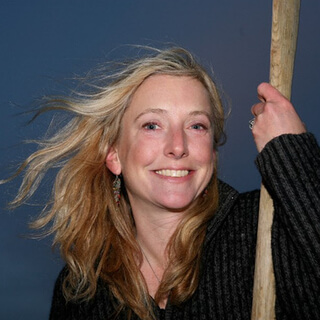
Today's guest is Ariel Garten.
Ariel is a co-founder of Interaxon Brain Sensing Technologies and one of the creators of the award-winning Muse meditation headband.
Ariel is an artist,
Neuroscientist,
Innovator,
And entrepreneur known for integrating art and science.
She's a true visionary and groundbreaking innovator in the world of variable meditation tech.
Ariel and the Muse team have been featured in over 1,
000 media pieces,
Including CNN,
Forbes,
And Fortune.
Muse has been used by companies like NASA,
I am very intrigued to hear about that,
For their mass project,
Hospitals,
And hundreds of thousands of meditators from all around the world.
And what I personally find so fascinating about Ariel is that she's a true polymath and combines a really thorough understanding of neuroscience and psychology with art and also what it seems to me an insatiable curiosity for life and passion for exploring consciousness.
Ariel,
Welcome to the show.
It's so great to have you here and to finally see you having met some of your colleagues that we have never met.
Well,
It is such a joy and a pleasure to finally connect with you and see you.
I've heard your beautiful voice in our meditation so many times,
You know,
They've moved me to beautiful,
Beautiful places.
And now I get to connect the beautiful face to the voice and the heart that I've known through your messages.
Wonderful.
It warms my heart to hear that.
I was lucky a year ago to meet your co-founder,
Chris,
In London.
And he spoke to me a little bit about the beginnings of Muse,
That it was not initially intended for meditation.
And I found that journey absolutely fascinating.
And I've listened to many of your previous interviews,
But I'm not sure if all of our listeners have.
So it would be really amazing if you could tell us a little bit more about your background,
Because I think you were like a fashion designer as a teenager already,
An artist and worked in some really fascinating projects before Muse and then how the Muse connection and journey took place.
Sure.
So I've always been fascinated by the world and how it works and how the experience of being human,
How our eyes,
Our ears,
Our brain create the experience that we have as we live.
You know,
How our hardware,
The neurological and biological mechanisms that we have throughout our body create the experience of life.
And I've explored that through many dimensions.
My mom was an artist.
And so I grew up kind of knowing that you could create something beautiful from your imagination and then see it.
And then,
You know,
I'm looking at one of her paintings right now,
Actually.
I'm looking at the vibrant hot pink and the oranges and the colors that are so alive and that bring me such joy looking at them.
And I always wondered how is it that this visual experience translates into an emotional experience.
And so I was an artist in many different dimensions and also was fascinated by science and the real practicalities and nuts and bolts about how the world works and also neuroscience,
How the experience and the organization of our brain and our neural connections can create these fascinating perceptual moments that we have,
These emotional moments that we have.
So I worked as a clothing designer.
I worked as a,
As I said,
An artist in different disciplines and the creation of Muse actually came from work that I was doing in a research lab with Dr.
Steve Mann.
He's one of the inventors of the wearable computer.
And he had this amazing brain computer interface system that we started to use to create sounds from EEG.
So we would slip a single EEG and electrode on the back of your head.
And EEG is an electroencephalograph.
It's read,
Reads the electrical activity that goes on inside your brain.
As your neurons communicate,
They communicate both chemically as well as electrically.
And the sum total of that electrical signal can be read from the surface of your head.
That's an EEG like you would get if you had epilepsy in the hospital or you would get if they wanted to reach your brain waves.
And so we started to create concerts where by tracking the shift in people's EEG,
We could translate that shift into different sounds.
And we would actually be able to hear the sound of your own mind.
We couldn't hear individual thoughts,
But we could hear large shifts in one state of focus or relaxation and shifts from,
You know,
Beta to alpha,
For example.
And that eventually evolved into what is Muse today.
We went through this process of translating brain activity into sound,
Into light.
And what we recognized was that we could actually give people real-time feedback and insight into their internal processes,
What was going on in their mind,
Their shifts in state from focus to relaxation,
From focus to distraction.
And by showing people in sound or in light what was going on inside their own mind,
We could give people significant insights that could help them learn to shift their own brain state and stay focused or stay relaxed more effectively.
And that became the foundation for Muse.
Because we realized that there was this amazing activity that teaches you about your internal state meditation that is so incredibly impactful in people's lives.
So along the way,
Became trained as a neuroscientist.
I was also a psychotherapist in private practice.
I know it sounds like I was doing a million things,
But somehow in that point in my life,
I was highly productive before children.
Not to say that you can't be productive after you have children,
But just that your set of priorities is different.
Maybe different challenges.
Yeah.
Different demands on your time and mental space.
And you can really give yourself deeply to a different set of activities.
And so I,
Working as a psychotherapist,
Had been trying to get people to meditate and failed.
I'd teach them how to meditate.
They would go home.
I had no idea if they would do it.
They would come back.
They'd say they meditated,
But who really knows?
And may I just jump in here?
Did you have a personal meditation practice also already at that time?
That's exactly where I was going next.
So I attempted to have a personal meditation practice,
But as you can tell from my story,
I was doing a lot of things and I really valued this act of being very busy and very engaged in a ton of things.
And the idea of quieting my mind was both impossible to me and also antithetical.
It didn't even logically make sense.
So I would sit down to try to meditate.
I would be terrible at it because I had a million ideas buzzing around and I would make the assumption that I was not good at meditation.
That act of feeling not good at something was,
Was uncomfortable to me.
And so I,
As much as I knew the benefits of it was unable to really establish a practice myself,
I would read and read and read and be so fascinated and be so curious and,
You know,
At least have the facet of being able to slightly observe my own mind,
But I just couldn't get it.
I couldn't grok it.
And so if I,
As the therapist wasn't able to teach it,
Wasn't able to do it,
Clearly this was not going to be successful for me and my patients.
So as we started to work in the lab and then move from the lab to recognizing that we could do something with muse that could help this process of meditation could solve the problem that I and others were having of what is going on in your mind.
What are you supposed to be doing?
Can somebody please just tell me when I'm doing it right or reinforce me for being in the right state?
Can someone reflect what should be going on inside my mind during meditation and like hold my hand and make it okay for me?
And we recognize that with EEG,
We could do some of that.
We could actually give you real time feedback on what was happening in your mind and meditation in this very,
Very simple way,
Just focused attention versus distraction.
We could tell you when you're focused,
Tell you when you're distracted,
And we could reinforce you for maintaining focused attention and actually make this invisible,
Intangible process of meditation actually tangible and actionable.
Fascinating.
And it was,
I believe in 2009,
Just after the financial crisis,
When you guys came together to found Muse and way back when,
Variable tech,
Variable meditation tank,
Meditation mindfulness wasn't so much a thing yet.
It was still,
I'd say a little bit out there.
How was it actually to start a business and try raising funds for that initially?
So at that point,
Meditation was very out there for people still.
We didn't call it a meditation tool.
By 2009,
We still didn't know it was a meditation tool.
We knew we had an EEG that could give you insight into the mind,
And we thought we would use it to actually help you control technology with your brain.
And so we were still exploring what this technology was going to do and creating the kind of human experiences that made the technology engaging for people and doing things like making thought controlled beer taps,
Because we could figure out how to do that.
And we started on the meditation journey probably in 2010,
2011.
And at that point it was still very,
Very new.
We had to call it a cognitive trainer and we would just tell people,
This is going to enhance your cognitive function.
And we had icons with like brains with muscles on it.
This will make your brain stronger.
This will improve your focus and everybody could get on the ADD train and understand,
Focus is important.
And occasionally somebody would say to us,
Is this like meditation?
And we'd say,
Do you meditate?
And they would say,
Yes,
I meditate.
And we'd say,
Yes,
This is meditation.
But it was like,
It was like at that level of almost secrecy.
And I think it was 2012 that we went to our first wisdom 2.
0 and we met Chad Minh Tang,
Who is the,
You know,
At that point Google's jolly good fellow.
And one of the,
One of the sort of founders in the tech and meditation movement,
Bringing search inside yourself to Google search and touch your tech self was just in its infancy at that point.
And he gave us our very first funding and right there on the Google campus,
Just the three of us sitting in a room.
And he basically said,
If this does what I think it can do,
It will help us bring world peace in my lifetime.
And I'm funding your company.
And that was just this extraordinary moment of like,
Okay,
We're making a meditation tool.
People believe in us.
This is real.
You know,
This is somebody has just told us that we may help solve world peace in his lifetime,
Which is his mission.
You know,
This is significant.
And that was our first moment to really coming out as a meditation tool and building it.
But even so fundraising was so hard.
We would go into VC meetings and show them this EEG technology that had incredible potential.
And they'd say,
What's the killer app.
And we'd say meditation and they'd be like,
Okay.
It wouldn't certainly not be saying that now,
But yes.
So it turns out,
You know,
Eight or nine years later,
Meditation truly was the killer app.
We have hundreds and hundreds of thousands of people that use Muse to meditate.
You know,
All of the other applications that we could have done this for are still like slightly fascinating,
But aren't actually changing mankind in the way that meditation is.
And so we got incredibly lucky to be at the right moment at the right time at a point when meditation was finally becoming not just accepted,
But part of the part of the understanding.
That's one of the things that we should be doing for our health,
All of us.
Thank you for sharing that.
And so before Chad Mankton said,
Wow,
This is amazing.
This could solve world peace.
What was your mission for Muse or your dream for Muse until that point?
So our dream has always been first and foremost to help transform people's lives in some meaningful way.
We didn't necessarily know how we were going to do that.
We thought it was going to be with thought control technology,
Strengthening the relationship between our ability to do things by doing it with our brain,
You know,
Focus on the light and it would get brighter.
But that was never really very satisfying because the technology was not very good.
And so very quickly we pivoted towards,
Kept asking ourselves,
Like,
What is the thing that's going to make people's lives better?
And it was really obvious when we hit upon meditation that that was it.
That is how people's lives get better.
And if we want to help people get better,
We should just be helping them meditate.
And early on,
We even said,
Even if the technology doesn't work,
So long as we get more people meditating,
We know we're going to be doing something that's not causing harm.
It turns out the technology really did work,
Thankfully,
And it really does help you meditate.
But we knew that with that North Star,
We were going to be oriented towards getting people into a practice that would actually make their life better.
For the listeners who are not yet aware of Muse,
How does the technology work?
And I know there are many different iterations now of the initial product,
But could you shed some light on that?
Sure.
So Muse is a brain sensing headband that helps you meditate and now sleep.
It's a slim little device that slips on your forehead and it's kind of just like a Fitbit sits on your wrist and can read your heart rate or your steps.
Muse sits on your forehead and tracks your brain,
Heart,
Breath,
And body during meditation.
So over the years,
We've added additional modalities beyond the brain.
So in the basic mind meditation,
What you're doing is you're literally hearing the sound of your mind while you meditate.
And Muse is giving you real-time feedback to know when you're focused and when your mind is wandering.
The metaphor we use is your mind is like the weather.
So when you're thinking or mind wandering,
You hear it as stormy.
And as you come to quiet focused attention,
You quiet the storm.
So you're wearing Muse and hearing this very simple audio feedback from your phone.
Is your mind stormy?
Therefore,
You're distracted.
Or is your mind focused?
Therefore it's quiet.
Or you hear little birds chirping,
Reinforcing you that you're in the right state.
So it's built on a basic focused attention practice where you want to be maintaining your focus attention on your breath.
And so when you're maintaining your focused attention,
It's reinforcing that,
Yep,
You're in the right state.
And as soon as your mind wanders onto a distraction,
You hear the sound of the wind pick up.
And that's your notification that,
Oh,
My mind is wandering.
Right.
Okay.
Bring it back to focus.
I'm in the zone.
Oh,
My mind is wandering again.
Storm picked up.
Right.
Bring it back to focus.
So it helps you very sensitively understand the movements of your own mind.
And so it gives you this metacognition,
This ability to see what's going on in your own mind and then helps you make the choice to say,
Right,
My mind is wandering.
I want to choose to be back in the place of focused attention.
So it strengthens your focused attention practice.
And then after the fact,
You get data,
Charts and graphs and scores that actually show you what your mind was doing moment by moment and give you the feedback that you can use to further introspect and then learn about yourself and your practice.
And so that's the mind meditation.
Muse also has sensors that track your heart,
Your breath and your body.
In the heart meditation,
You hear the beating of your heart like the beating of a drum.
So you're literally listening to your heart as it increases and decreases and learning a tool called interoception,
The ability to sensitively perceive your internal state.
And then in the breath meditation,
You learn different breathing patterns that can help shift your heart rate variability and shift your physiology into rest and digest.
And what is some of the research that you have seen from a neuroscience perspective on Muse's changes maybe on the brain?
Sure.
There's been now over 200 published studies on Muse and what it can do,
Some as a basic neuroscience tool and some as a meditation tool.
And in probably the most recent interesting study,
Actually there's so many studies,
One of the most recent ones is from the Mayo Clinic and they used Muse with breast cancer patients awaiting surgery and they demonstrated that breast cancer patients awaiting surgery were able to decrease their stress,
Decrease their fatigue and improve their quality of life by using Muse.
In another study from the Catholic University of Milan,
They showed that students who were using Muse were able to improve their reactions on Stroop tasks,
On a go no-go task.
So they're improving their inhibition.
They're able to obviously improve their calm and they were also able to actually shift their brain activity in a way that suggests more persistent focus and relaxation throughout the day.
In the Catholic University study,
It was relative to meditating with nature sounds.
That was the control.
In the Mayo study,
The control was a stress management CD that they normally give out to breast cancer patients and there have been dozens and dozens of other studies we can talk about as well.
And has there been any studies,
I mean these results sound absolutely fascinating,
But then also relate to maybe quieting the default mode network in the brain or self-referential ideas or peak states even.
So I don't know of any research looking specifically at Muse and default mode network together.
Just one moment.
Mommy?
Yes?
Can I hear something?
I would love to hear what you have to say,
But do you remember that when mommy's recording a podcast,
You have to just leave mommy alone until the end of the podcast?
Well,
Mommy.
Yeah?
I finished my construction site.
You finished your construction site?
That's super awesome and I can't wait to see it as soon as this is done.
I have a lot of pieces.
Okay,
I love you.
Close the door all the way,
Please.
It's so sweet to hear his little voice.
I know he's so cute.
And I'd love to talk about your approach to parenting as well in a bit.
That was a hard moment when he said,
Mommy,
I'd like to tell you something.
It's like,
Oh my God,
Like you want to listen to every word your child has to say,
But also I don't want to reinforce you coming in to tell me something in the middle of a podcast,
Which is the one time,
You know,
You're supposed to give me space.
But at the same time,
You don't know if it's something really important.
Oh,
I could tell that look in his face.
He just wanted to find an excuse to talk to me.
I mean,
That was,
That was obvious.
So that was a really hard moment as a parent.
You're actually welcome to keep this whole thing in,
In the podcast.
Normally I would say,
Let's edit this out,
But just keep it in because this is,
This is life,
You know,
With pandemic parenting.
And it was really like a,
An emotional moment for me in that second.
It's like,
He wants to come in.
Okay.
I will let him come in.
I'm not going to,
I'm not going to at the door,
Ask him to leave.
Cause what if he really needs me?
Um,
And then he came in and I could,
I could tell he was fine.
He was just fishing for engagement.
And that's the moment when you want to then not reinforce the engagement,
But you do want to reinforce the love that the love will be there,
That the love is there now from a distance and the love will be there and the hugs will be there and everything will be there immediately after when this is done.
And you know,
That will be the reward for,
For being able to have his own self control and self control is,
You know,
Something where really he's.
Just turned four.
So self control is something that I'm really working on with him,
You know,
Be aware of what's going on in your body,
Be able to make choices,
Have self control.
Mommy loves you always,
No matter what goes on,
It's okay that you did this,
But let's learn about self control.
Finding the balance between holding that space of unconditional love.
Yet at the same time,
Showing that certain behaviors are not okay,
Et cetera.
I don't have children,
But I imagine that's not always the easiest balance.
I got it wrong at first.
So at first my mother was so unconditionally loving to me and really didn't discipline.
And I think I probably didn't need much discipline because I so deeply wanted to please her that the thought of doing something that would be wrong was just like.
I had little girls,
Good girl syndrome.
I,
You know,
You should just want to be a good girl.
It's inconceivable that you could be something else as a child.
So when I had my son,
I felt,
You know,
Of course you just want to let children be children and not impose and not create any shame.
And so I was actually too far on the non-discipline side and wasn't,
You know,
Reinforcing limits because I perceived that that was going to shut him down and cause shame and like not allow him to just be himself.
And so now I've moved further into being disciplined with full unconditional love,
But stronger limits and discipline because I realized that the model that I had growing up that worked so well for me actually didn't work for a four year old boy.
Yeah.
I wonder if there was a pivotal moment where you realize that.
The pivotal moment was when my husband told me.
Okay.
It wasn't something I was being super honest.
Like I was living by the model that my mom gave me and believing that that's what I needed to do.
Even though the model my mom gave me was amazing.
It was so perfect,
But it wasn't right for this child.
Not that I'm,
You know,
A strong disciplinarian in any sense.
I'm still,
As my husband keeps saying,
All the things that you read about,
Like positive parenting,
Those are meant for parents who are already,
You know,
Doing it differently.
You're way too far on the other side.
You got to come a little further back to the middle.
And so I'm a little closer to the middle now because I realized that he wasn't learning the tools that he needed to be a good citizen,
To be able to self-control,
To be able to see when his actions were not positively,
Were negatively impacting people.
And so I don't do it through yelling.
I don't do it through anything harsh,
But I had to reassess my model of what I needed to teach my child because I wasn't teaching him enough.
I think this is really helpful you sharing that because I can imagine that a lot of listeners are either in one camp or the other.
And it's,
I can imagine it's not that easy to find that balance and to be the perfect parent.
But then I would also say,
What does that even mean?
Because there's no such thing.
There is no such thing.
And no matter if it's a little bit more to the left or to the right,
That determines our experiences,
But also our learnings later on.
And we will only know maybe in 20,
30 years from now on what would have been the exact perfect approach.
One of the things that I learned as a psychotherapist is no matter what your parents do,
They will always screw you up in some way.
That's just the truth of it.
And that's okay.
You know,
No matter,
No matter what approach they've taken,
No matter how perfect their parenting is.
So whatever your parents do,
There is no way to get it right.
As a parent,
You cannot put that pressure on yourself and you can continue to do your best and love your child deeply and have fun and enjoy your child.
I received that parenting advice lately,
And that is really wonderful advice.
And that is if you are enjoying your child,
You are doing it right.
If you are enjoying being with them,
Playing with them,
Loving them,
You know,
Being engaged in the moment with them,
If you're enjoying your child,
You're doing it right.
Let's return back to the default mode.
Sorry,
Yes.
And back to default mode network.
Yeah,
So I don't know specific studies with me,
But we can certainly talk about default mode network.
A lot of the research comes from the amazing Jed Brewer,
Who's now doing,
He actually has a set of incredible products for addiction and habit change using his research.
And what was discovered about default mode network and meditation early on is that as you meditate,
You are down regulating the activity of the default mode.
So the default mode network is the connection between your prefrontal cortex and your posterior cingulate cortex kind of back above your ear.
And what the default mode network is,
Is the internal dialogue that happens when you are at rest.
So if you put somebody inside of an MRI and you say,
Just be,
You know,
Just exist,
You will find the activity within this network.
And when you put an experienced meditator inside of an MRI and ask them to do the same thing,
You see a decrease in that activity.
So meditation down regulates the activity,
The default mode network.
And the default mode network can be seen as the inner dialogue.
It's that chatter that you have inside your head constantly.
So when,
As you know,
In the ancient meditation practices or in the more modern interpretations of them,
We talk about monkey mind or the chatter of our own mind and how you're trying to quiet it.
And it turns out that that chatter actually has a correlation inside the brain.
And that's the activity of the DFM.
Thank you for sharing that.
And that for me links a little bit what you just shared before about the parenting,
This questioning,
Am I doing it right?
What many people will call the inner critic,
These self-referential thoughts that put you down.
And from your experience,
Both as a neuroscientist,
But also as a psychologist,
What is this inner critic and what can people do to quiet that inner critic?
Sure.
So the inner critic from a psychological perspective is often seen as the internalized voice of the parent.
So this is definitely,
You know,
Connecting back to the last conversation we had.
And as we grow up,
Our parents tell us things like,
Don't do that.
If you do this,
People won't like you,
You know,
Make your bed or you're a slob.
You know,
We internalize all of these messages about who we are and what we need to do.
And they're often incredibly negative.
A lot of the reinforcement that parents use with children is negative.
You know,
You want them to know the consequences,
The punishments,
The social repercussions.
And so we internalize these voices.
Often it's one voice,
The mother or the father,
Sometimes it's both voices,
It's social voices.
We internalize these voices and then we replay them to ourselves often throughout the day.
And so although the actual parent is no longer there constantly disciplining us,
We have our own internal sense of discipline.
And we tend to use the system in order to motivate ourselves and get ourselves to do things and excel in life and be better.
But indeed the system just demotivates us.
So in short,
The little critic is that voice inside your head that's constantly telling you not nice things about you.
Or the little jerk that lives rent-free inside your mind that's constantly putting you down.
And each of us have probably heard our inner critic at least 50 times today,
Depending on what time you're listening to this podcast.
And it's constantly telling you things like you're not good enough,
You didn't do that well enough,
People don't like you,
You don't have the ability to succeed.
And whenever we hear it,
It erodes our motivation,
Our sense of self and our self-esteem.
And I heard you say in a previous interview that your inner critic was,
Let's say,
Relatively mild compared to other people.
Do you think that this played a role in you being able to be an entrepreneur and go into uncharted territory like that?
Absolutely.
I think that my success in life,
Success as defined by the ability to start a business and go out and do things and take extraordinary risks and bring to market a brain sensing headband that helps you meditate and stand in front of VCs in Silicon Valley without a real background in finance or business and be able to raise money and go out and network and do all of these things.
I think it was directly connected to having very strong sense of self and very unconditional love for my parents and a very quiet inner critic.
I didn't have a voice inside my head saying,
Don't do that,
You'll fail.
I was like,
Okay,
I'm 16 years old,
I'm going to be a clothing designer,
I'm going to take my stuff around to stores and they'll love it.
And I did it.
I didn't have a voice that said,
Oh,
You're not good enough,
You've never gone to school for that,
You're not qualified,
What happens if they reject you?
I might've had like the flickering thoughts,
But I didn't even listen to it.
I didn't believe it.
It wasn't real for me.
And so one of my real missions in life is helping people understand that you don't need that voice inside your head.
The inner critic that holds you back is constantly telling you things that actually aren't really true about you.
And we hear them as truth and actually have an exercise to kill the inner critic that I'd be happy to guide people through right now if that's of interest.
Yeah.
I'd love to do that at the end of the podcast.
How long does it take?
About five minutes?
Yeah,
Let's call it seven minutes,
Six minutes.
Okay,
Great.
I keep that in mind.
But before we go to the inner critic,
I was wondering,
Because in the beginning you said that you failed in some ways at meditation.
Initially when you were trying it as a psychologist,
How is your meditation practice now and has Muse changed your meditation in some ways?
My meditation practice now is amazing to me.
You can only describe it subjectively.
I take regular meditation breaks throughout the day and I meditate in multiple different styles and Muse really was the thing that started my meditation practice.
It was the thing that let me,
As we were building it,
Sit down and go like,
Oh,
This is what I'm supposed to be doing.
And it was sort of holding my hand and saying like,
Yep,
You're in the zone.
You're there.
Just stay there.
And it changed my life.
Like there's no question about it to me that it changed my life.
And Muse has now evolved to have so many different pieces to it.
So we have the meditation for the mind,
The brain,
The heart,
The breath,
The body.
Then we also now have hundreds of guided meditations,
Including ones done by you,
Palma,
Which are beautiful.
And so,
You know,
If I'm waking up feeling a little bit grumpy,
I put on a meditation for morning joy.
If you're feeling insecure,
You know,
One of my favorite in our mantra collection is I am enough.
And so you listen to a meditation about being enough and there is body and breath meditations.
My son loves our kids meditation collection and meditation studio.
And so we'll,
We'll lie down and he'll go on an amazing journey of rainbows and the different emotions and sensations associated with each rainbow.
And now we have a sleep collection with our new device that actually gives you these beautiful guided sleep journeys.
Yours is an underwater adventure where it guides you into a beautiful space where you're able to quiet your mind to move towards sleep.
But it also creates a soundtrack from your body in a way that's designed to help and train you and to sleep faster.
So,
You know,
There's so many different pieces of muse to play with inside of your meditation practice to allow the self-reflection or the inspiration or shifting your frame and state or body practice,
Breath practice.
It's really,
My meditation practice is such a deep part of my life and my way of life now.
I'm incredibly grateful for it.
Yeah,
Same for me,
But also curious to hear a bit more details in which ways your life has improved dramatically.
Because it sounded to me already before the meditation practice,
Your inner critic was fairly mild.
You were high achieving,
Juggling all those things.
Like what were some of the changes you found within your own experiences that make your experiences of life better now?
I was going to say ask my husband.
That's always a good test,
Ask the people in our lives for sure.
Yes,
So I've always been kind,
But I'm much more aware of being considerate now.
I always was very kind towards other people,
But I was often quite blind and blind to the impact of my requests or my actions,
Particularly as a leader.
And so now I have a much greater awareness of my impact on others.
I also,
I've always been like very engaged in life and really,
Really loved life deeply,
Deeply,
Deeply,
Deeply.
But I was not really aware of myself and my emotions and my ability to shift into one or another.
You know,
I was really great at joy,
But I wasn't so good at sadness.
You know,
I would naturally look at it with curiosity,
But it was also afraid of it.
And so meditation practice is open to great acceptance of what is and rather than trying to control things,
This idea of acceptance has been huge for me to accept what comes my way and to be able to be adaptable and shiftable with it,
Whether it's within the world or within myself or my own health.
You know,
There's this quality of an entrepreneur,
Of somebody who is wants to strive and drive and drive forward.
And now there's a big shift towards the being rather than the doing and the value in the being rather than the value of the doing.
Has that made you a better entrepreneur in some ways?
It's made me a better leader.
I don't know that it's made me a better entrepreneur.
You know,
That quality of doing is actually kind of essential to be a driven entrepreneur,
But it's definitely made me a better human and a better leader.
I also notice a much greater wisdom and part of it comes with age.
And a lot of it comes with the training of a meditation practice,
The ability to sit with information and think about it rather than just run with it and act on it.
So I have a much greater ability to actually see a landscape of ideas and navigate effectively rather than just jumping towards the same thing or just doing,
You know,
What might be best for me or what might look best in the moment.
And so it's given me a tremendous patience,
Which is something I never ever had before.
A tremendous patience to sort of sit and observe and think and really make the best action rather than the first action.
And this ability to take perspective and taking it all into account.
Yeah.
And I think maybe the biggest shift and the thing that like underlies everything is changing my relationship to fear.
And I think when I was younger,
I was able to do so much because I didn't have that much fear.
Like my fear was relatively quiet and I would,
Whenever I had it,
I would confront it.
And then I went through a few experiences in life,
Which ramped up my fear system.
And then I actually,
He had to work with my relationship to fear and recognize all of the ways in which fear was holding me back.
And through my meditation practice,
Just be able to sit with the experience of fear and not be afraid of it and understand what I was doing.
You know,
Before it was like sort of this scattershot approach.
This was like a really fundamental,
I'm going to sit here in this thing that scares me.
I'm not going to move.
I'm going to feel the fear and know that it's okay.
Cause it's a sensation.
It's an experience.
It doesn't necessarily mean what my brain wants to interpret as a meaning.
I can just move through something that makes me afraid and get to the other side.
And that's probably been the deepest lesson in all of this,
Because the reason that we react quickly to things is we are afraid.
The reason we don't approach people is because we are afraid.
The reason we do most of our inappropriate behaviors is because of fear.
The reason we procrastinate is because we are afraid of doing the work.
You're not doing well enough.
And when you're able to overcome,
Not that I've overcome fear,
But I've definitely shifted my relationship to dramatically.
When you're able to understand that fear doesn't need to rule you,
You are so much more deeply able to just sit with things and get to the other side and do your work or make the action or make the connection or sit with yourself and your feelings.
You're able to not just get through,
But enjoy the process of being in your life without having to run away from it.
It's so powerful what you just shared.
And what just came up for me is this quote from Sid Banks,
Who said,
If only people would learn not to be afraid of their own experience,
We would have an entirely different world.
And the courage it takes to really face yourself and that feeling of fear is immense,
But it's such a powerful act.
It is so huge.
And you know,
For me,
I did it with therapists.
I did it with people,
With meditation teachers,
With people who could sit there and encourage me and say,
It's okay.
I know this is scary,
But actually it's fine.
And so it can be a very hard thing to do on your own,
But it is one of the most fundamental things we can learn about ourselves in life,
That fear doesn't need to rule you.
And that you can confront fear and move through it with grace and on the other side,
Find the freedom.
I think in the interest of time,
It would be amazing if we could shift to this exercise on how to work with the inner critic.
Oh,
I'd love to.
This is one of my favorite exercises.
So you're welcome to do it along with me and everybody who's listening,
Provided you are in a not driving and in a safe place,
Please go along and follow the exercise.
Cause what we're going to learn to do right now is something that is so valuable.
It is killing the inner critic.
So what is the inner critic?
As I just described to all of you,
It's this little voice inside your head that is constantly telling you not nice things about you.
So I want you to think about one thing that you're interested in.
One thing that your inner critic told you today.
Now for me,
It is that my hair looks stupid.
This is the example I always use.
And even in that moment of like,
You know,
Seeing myself on zoom,
It's like,
Oh,
My hair,
For those of you not listening,
I have very,
Very long hair and it's often a skewer.
And my inner critic is constantly telling me not nice things about me,
About my hair.
My does the same by the way.
Yes.
So I want you all to choose one thing that your inner critic told you.
It might be that you're not good enough that you're stupid.
Oh,
Why did I,
You know,
Drop the pencil?
I'm so stupid.
Choose one thing.
Palma,
Do you have your thing?
I have my thing because mine was commenting on my head too.
Really?
Yes.
That's really funny.
Okay.
So now with that one thing in your mind that your inner critic told you,
I want you to imagine that you're walking down the street with somebody you really love.
Your best friend,
Your child,
Your partner,
You're walking down the street with someone you really love.
And a stranger comes up to them and tells them the same thing that your inner critic told you today.
So for me,
A stranger comes up to my best friend and tells her,
Your hair looks stupid.
What?
How does it feel when you hear a stranger tell your dear loved one something that your inner critic told you today?
That they're stupid or their hair looks stupid?
Or they'll never amount to anything?
What emotion does that bring up for you?
Palma?
How is that for you?
First thing that comes up,
Who the hell does he think he is?
Yeah.
Who do you think you are?
What right do you have to say that?
Oh my God.
Like,
No,
That's not true.
And then the urge naturally arises to want to defend them.
Like,
Get out of here,
Get lost.
Who are you?
Did you feel that?
Yeah.
As you were just talking,
There's more to saying like,
Well,
Just look at your own hair or something like that.
Yeah.
You deflect it back at them.
You want to push it away from you.
And isn't that so fascinating that we accept these things in our own mind,
Every moment without thinking about rejecting it or defending yet.
As soon as somebody says that to a loved one,
We are right to their defense.
How dare you say that there's no way they should hear this.
That's not true.
That's not nice.
That's not real.
Get out of here.
That's not nice.
That's not real.
Get lost.
So we are now going to finally push back on our own order critics,
Because anything you feel about your best friend is the same thing you can and should feel about yourself when you hear the inner critic talk.
It is not true for the inner critic to tell you these things about you.
It is not fair.
It is not right.
It is not helpful.
It is not nice.
And that inner critic can get lost.
So now I want everybody to look at a blank space on the wall in front of you.
I want you to put up a cartoon image of your inner critic.
So this might look like a gray cloud or a little troll or a witch.
If anyone is offended by the idea of it being a witch,
This was not the idea of a pagan witch and I didn't mean to in any way denigrate our images of females.
So we can put that one aside if it doesn't fit.
A gray cloud,
A little monster,
A gremlin,
Whatever it is for you.
The only rule is it can't be you and it can't be your parent.
Palma,
Do you have your image?
For me,
I always use the Cruella image.
Cruella,
All right.
And for anybody who can't think of an image,
Just choose a gray cloud.
So now what I'd like you to do is put out your thumb and your finger and hold it on either side of them,
Just so it's framing the little image.
And we're going to squish.
We're going to bring together your thumb and your forefingers and just squish.
How does that feel?
Well,
It feels playful for me.
Yeah.
It takes out any seriousness.
Yeah.
Yeah.
Makes them a little smaller.
Let's go back and let's just squish them down just a little bit more.
Not all the way.
Just make them a little bigger.
Generally,
When that happens,
You feel some relief like,
Oh,
I actually have some control over this thing.
This is now externalized.
And now I want you to think back to your best friend or your loved one and all the dirty words you wanted to tell to that stranger,
All the anger and the frustration that you had to this jerk that had no right to speak to your loved one that way.
And now let's direct it at your inner critic and let it know it had no right to say that.
You're beautiful.
Your hair looks fine.
No,
You're not stupid.
Get lost.
You can tell it to get lost and get out of town.
Goodbye.
See you later.
No,
Thank you.
Not required.
Not helpful.
And when you're ready,
Go back and squish them once more all the way down and flick him or her away.
How does that feel?
Great.
It felt playful,
But I can also see that it will be helpful for many people because my inner critic is also not super strong,
I have to admit,
But it comes still comes up.
It sings every day.
And looking at you,
I can tell you your hair is beautiful.
There was no reason for your inner critic to open its mouth about anything around that.
And what I found interesting was what came up for me as it reflects less to tell the inner critic off,
But more in that situation,
I would comfort my friend.
I would put an arm around my friend and comfort the friend.
And do exactly what you just did with me.
And then prompted us.
So why are we not automatically doing this to ourselves when ridiculous thought like this comes up to pay ourselves compliments?
I mean,
Obviously we can learn how to do this with meditations like I'm enough and you're beautiful and affirmations or self-compassion exercises,
But it's not always the natural response or very rarely.
Yeah.
And that's a beautiful addition to that.
And that's a beautiful addition to the exercise.
So both get rid of the inner critic and then go in and comfort the self because there is no reason to be mean to the self.
And if you did,
It's okay.
I mean,
It happens.
This was just an old programming.
And now we can go through and reprogram.
We can go through and reset a relationship to ourselves.
Hey,
I'm sorry that I said that mean thing.
I didn't,
We didn't mean to,
We didn't need to hear that.
And we love you deeply and we are smart or we are beautiful or we are capable,
Whatever the opposite was and feel that sensation of love for yourself.
And if you don't feel it,
Cause some people don't,
Don't be sad.
That's okay too.
Or be sad.
You know,
That's,
It's okay.
It's okay to not feel the sensation of love for yourself,
But just begin the exercise,
Begin the feeling of warmth.
And if you're not able to feel it for yourself,
The idea of using a proxy best friend in your mind or loved one is a great way to begin to spark those feelings of compassion,
Like you would feel to another and then allow yourself to move them towards yourself and accept them for yourself as well.
Amazing.
Thank you so much,
Aria,
For sharing this with our listeners.
My pleasure.
So anytime you hear that voice of the inner critic,
Put him or her on the wall,
Let them know,
No,
Thank you,
Not required,
Flushed away.
And then Palma's amazing addition,
Go back and soothe and heal the self.
Wonderful.
I cannot believe that our time is already up and passed so quickly.
There's so many questions I wish I could have asked you,
But this has been brilliant.
And in particular also with your son coming in and also showing that this is real life,
How we're all adapt to all these different situations right now with the uncertainty the challenges of juggling a career and being a good mom.
And it brought up a whole different conversation that we would have otherwise not have had at this moment in time.
So I really love that coincidence.
I loved that this was a safe space for me to allow him in and just exist.
This is our real life.
So thank you for making life a okay.
Thank you so much,
Ariel.
My sincere pleasure and honor.
Thank you for joining us on this journey of the Explorers Mind podcast.
Now it is time to find your own unique path.
We can help you to connect with your innate wisdom and create an inspiring vision for a deeply fulfilling and meaningful life.
Apply for a discovery session on our website,
Palma.
Michel.
Com.
Until next time,
We look forward to continuing this journey together.
Bye.