Hi,
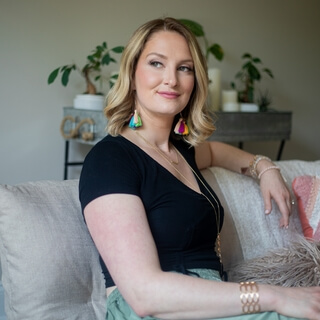
This is Ori Krug,
Board-certified dance movement therapist and trauma and relationship expert.
Today,
I would love to have a chat with you about three science-backed ways to shift anxious attachment in polyamory.
Anxious attachment in polyamory is a common experience that can either lead to deeper healing or lead to deeper pain,
Depending on how you approach it.
As human beings,
We generally form one of two attachment styles within the first two years of life,
Either an insecure attachment or a secure attachment.
A secure attachment is formed when our caregivers are emotionally attuned,
Reliable,
And supportive through physical and emotional discomfort.
An insecure attachment is typically formed when our caregivers are unpredictable,
Unreliable,
Neglectful,
Or a mix between attuned and absent.
Within the umbrella of insecure attachment types,
There is the anxious attachment style,
And you may already know or suspect that you identify with having an anxious attachment.
Anxious attachment behaviors usually include needing constant reassurance from your partners,
Having a hard time saying no or people-pleasing,
And clinging intensely in relationships to try to prevent abandonment.
If you've displayed anxious attachment behaviors throughout your childhood and adult relationships,
They will likely be intensified through your poly journey,
Even if you haven't experienced them in a long time.
In general,
Different types of relationships can help diminish or exacerbate anxious attachment.
For instance,
You may feel insecurely attached to your mother,
But you feel securely attached to your spouse.
In polyamory,
You may be with a long-term partner who has helped you feel safe and secure,
But maybe you experience anxiety and insecurity in other relationships.
Or maybe you suddenly display anxious attachment behaviors with your secure long-term partner while they're experiencing new relationship energy with a new partner.
When you experience anxious attachment in polyamory,
You are presented with a gift.
I know it doesn't feel that way because it can feel like a plague.
I've experienced it too,
Sleepless nights,
Racing heart,
Incessant thoughts.
But these quote-unquote symptoms serve as loud messages telling us that we still need to heal the trauma that fuels this anxious attachment.
So why does anxious attachment in polyamory and in general feel so intense?
Anxious attachment usually feels so intense whether you're monogamous or poly.
However,
In poly life,
You are likely to experience anxious attachment in multiple relationships.
And therefore,
The anxiety can come at a much faster rate with more people in polyamory versus monogamy.
And it feels so intense because it reminds our bodies and nervous systems of a time when we did not feel safe in this world.
That may sound like an exaggeration,
But the events that contributed to the formation of your anxious attachment were all traumas,
Whether they were little unintentional traumas such as being left alone in your crib or big traumas like growing up with a volatile father who often yelled at you or hurt you.
The way we remember trauma is primarily through the body,
And research shows that trauma memories are stored as fragments of sensations in the body and nonverbal brain.
It only takes a subtle sight,
Taste,
Touch,
Or smell to make you feel like you're experiencing your past trauma all over again.
So for example,
Your partner may have a certain look on their face that reminds you of the way your mother looked before hitting you.
When this happens,
Your body and nervous system automatically go into one or more of the following four reactions.
One,
Fight,
Where you become verbally or physically aggressive.
Two,
Flight,
You may leave the house and drive away,
You may escape the relationship and end it.
Three,
The freeze response,
Where you dissociate and you don't say anything,
You just kind of stand there frozen.
And four,
Fawn,
Where you abandon your needs to please your partner.
Each of these reactions are ways to protect yourself,
Even if your partner has never been abusive towards you.
And further studies show that the hippocampus of our brain is smaller in volume in trauma survivors.
The hippocampus is the part of the brain that distinguishes the past from present.
So when trauma survivors have common relationship mishaps or disagreements,
They are more likely to experience them as a recurrence of past trauma from previous relationships,
Which adds to the intensity of feeling like the pain from the past is happening all over again.
Therefore,
An anxious attachment bomb drops with every little wrong look,
Late text,
Missed I love yous and other common miscommunications.
And anxious attachment in polyamory can feel like you're dying because when you've experienced attachment ruptures or traumas,
The pain from these memories comes rushing back with any faint reminder of the past.
These reminders may come in subtle or obvious interactions with long-term partners or new lovers.
You could be triggered by your partner not looking at you in a longing way after they come home from a date or they're texting a new lover instead of making direct eye contact with you.
These are all common issues that can make anyone upset,
But it's the overwhelming intensity in which you react and perhaps later regret that indicates your body has re-experienced and reacted to past attachment wounds.
Your cognitive brain may know that you're overreacting or you're not actually in physical danger,
But your primal body,
Or we could even say your six-month-old body,
Knows no better than to feel like you're about to die.
Kind of like if your mother was emotionally absent,
Forgot to feed you on time,
And your nervous system actually feared death from starvation.
These intense reactions are not rational.
We can't talk our way into telling ourselves that we're safe because as long as we have unresolved trauma being triggered around attachment,
We will carry it with us in our bodies and into the majority of our relationships until it is healed.
Again,
Any faint reminder from the past will cause a physiological reaction that makes us react as if we have to protect ourselves and save our lives.
When your partner doesn't text back within a certain amount of time,
You may feel an uncontrollable force take over to text and call 20 times in a row.
You know,
Quote-unquote,
This is crazy,
But your nervous system is already in fight mode,
Kicked into action,
And doing what you can to,
Quote-unquote,
Save your life.
This is how anxious attachment acts as a force that hijacks our primal body into behaviors that we can't stop in the moment,
But we so wish that we could stop repeating and we cognitively know how.
So as a sum,
Anxious attachment feels so intense because your body and nervous system have evolved to do whatever it takes to protect you from real or perceived danger.
When you experience challenges in your relationships today that even subtly remind you of the pain from the past,
You'll automatically react to prevent yourself from experiencing this pain again.
You'll constantly ask your partners to reassure you until you feel a fleeting sense of security again.
You'll intentionally hurt your partners to let them know how much they've hurt you,
But then apologize profusely because you don't want them to leave.
You might say yes to everything they want without voicing your own needs so that you decrease the chance of them rejecting you.
All of these behaviors are rooted deeply in unresolved trauma,
But they do not have to define you forever.
You can heal the underlying trauma and begin to relate to partners in a much healthier and more satisfying way.
But before we talk about how to shift anxious attachment,
I just want to share a little bit more about why anxious attachment is so often difficult to change and why the pattern feels so stubborn.
Since attachment is formed in the first two years of our lives,
Attachment styles are set pre-verbally through touch,
Smell,
Posture,
Gestures,
And other body movements.
The way we remember a caregiver being aggressive may be through their accelerated advancement towards us or the way that they forcefully picked us up when we refused to listen.
In this period of our lives,
We do not remember what they said when they made us feel unsafe.
We do not know the exact words that they used,
But we remember non-verbally the visual picture and the bodily sensation that we experienced when they walked away while we were crying and begging for attention.
Our bodies remember.
And this is why so many people struggle to heal their anxious attachment patterns because they are trying to change it with words.
But as pre-verbal children,
We did not form our anxious attachment style in words.
We formed them with our bodies.
It may be helpful to an extent to talk about your anxiety in therapy,
Repeat affirmations for feeling secure,
Or journal about your thoughts,
But these cognitive-based techniques are not enough to shift anxious attachment into secure attachment.
The body must adopt a new way.
Behavioral pathways must be rewired in the non-verbal brain so we can stay present and respond instead of react.
We must learn how to literally move in ways that lead to more security,
Such as keeping eye contact and leaning in for a hug even when we're deathly afraid of getting hurt.
Movement is where true change begins.
If you want to heal truly from the trauma that's feeding your anxious attachment patterns,
Then it's essential to engage your body in a process that allows your entire physical being to feel secure in all types of relationships and interactions.
So now let's talk about three science-backed ways to shift anxious attachment and polyamory because this is the main theme of this talk.
So just a disclaimer,
These three science-backed ways are not a substitute for therapy or a cure-all for healing trauma.
They are simply helpful ideas that you can try to implement in your overall healing journey where hopefully you're getting professional support and doing whatever is helping you move forward.
The first science-backed way to shift anxious attachment is to regulate your nervous system and body when you're having anxiety.
When we experience anxiety,
We are either in the hyper-arousal or hypo-arousal state.
It's important to understand each of these states in order to know how to regulate through anxiety in a way that will actually work for you.
In hyper-arousal,
We are usually revved up.
We can be irritable,
Agitated,
And aggressive.
You may hear yourself thinking,
I just can't calm down.
Hypo-arousal is a less obvious type of anxiety.
People might not even see it or call it anxiety because symptoms on the outside may look non-existent,
But your nervous system is still driven by fear in this state,
Which is the basis for all anxiety.
In hypo-arousal,
We feel numb,
Depressed,
Or lethargic.
You might even recognize the state by feeling like,
I don't feel anything.
But on the flip side,
When you're in a calm,
Cool state within your body and nervous system,
You're in your window of tolerance.
And the window of tolerance is just that place where you just feel settled and safe.
And there's a lot of misinformation out there about how to regulate our nervous systems to be in our window of tolerance.
Many coaches or therapists will suggest things that are typically known to be helpful,
Like yoga,
Meditation,
And nervous system hacks.
However,
Many of these tend to be prescribed in a generic way without fine-tuning to the momentary needs of our nervous system in different states.
So let's talk a little bit more deeply about how we must regulate through anxiety.
In hyper-arousal,
When we're revved up,
What you need to do to get back into your window of tolerance is to decelerate or down-regulate into slow and gentle movement.
This could look something like yoga sometimes.
It could also look like a gentle sway with hands on your heart or slowly rolling your shoulders.
There is no one answer to this,
And you'll likely need something different each time because it's crucial to follow your body's lead and allow yourself to be guided to move in whatever way will help you regulate in the moment,
Not following a blanket prescription of poses.
Now,
In hypo-arousal,
In that numb,
Depressed,
Lethargic state,
You need to gradually accelerate or up-regulate into stronger,
Energizing movements to feel a sense of aliveness again.
Again,
This could look like yoga sometimes,
But often it's not.
Yoga is generally a slower,
Gentler practice,
Even though it typically requires body strength.
What often works reliably is following through with unplanned organic movement.
For example,
My client Felicia started freezing up as we moved together more assertively in our session.
So in other words,
She began to enter a state of hypo-arousal because her nervous system felt threatened by being assertive as she was doing more direct and confrontational movements towards me.
Usually what most clients do when this happens,
When they start to enter their hypo-arousal state is they stop their movement completely.
It's an obvious natural response to stop moving when you're freezing up.
But instead of letting Felicia repeat her pattern of hiding and freezing,
She followed my prompts to move through the fear by following her body's lead.
She moved in an organic way,
Which brought her back to her window of tolerance and out of a fear state in that moment.
And this broke her pattern of freezing up during a conflict and allowed her to finally stay present and voice her needs instead,
Not just with me in session,
But in her outside relationships.
So how can you regulate through anxiety?
Start listening to your body when you start to feel anxious in relationships.
If you're feeling low,
Heavy,
Or numb,
Try something more active instead of meditation,
Which is likely to trigger even more numbness if you have unresolved trauma.
If you're feeling on edge and irritable,
Try to close your eyes and feel the strongest sensation present in your body and not let your body move with it.
You may find yourself naturally wanting to shake it out or sway through the feelings of anxiety in your body.
And if you're not sure how to do this,
I have many free movement meditations on my Insight Timer profile that allows you to get comfortable with this kind of process.
Most importantly,
Don't ignore what your body really wants to do simply because you read on Instagram or somewhere on the internet that you should do something else.
Your body holds the highest wisdom.
A skilled coach or therapist can guide you to listen to the wisdom of your body,
But not override it with blanket interventions.
Now the second way to shift from anxious attachment to secure attachment is to practice moving from a state of fear in your body into a state of security and safety.
One of the trendiest pieces of advice to move anxiety out of your body is to punch a pillow or scream as loud as you can.
Please do not follow this advice.
It may feel really good in the moment,
But it's actually harmful advice for your body and nervous system in the long term.
In order to understand why,
It's important to know that there are two layers to the mobilization and immobilization states of fear versus without fear.
Mobilization,
Which is also known as a fight or flight response,
Is a sympathetic nervous system state that's actually very useful in deepening relationships when it's activated without fear.
Behaviors that include mobilization without fear that are helpful for relationships can include dancing,
Movement,
Sensual touching and physical intimacy,
Playing,
Laughing together,
Moving together and speaking up for your needs.
Immobilization,
Which is also known as the freeze response,
Is our parasympathetic nervous system response that can be very healthy within ourselves and relationships when it is activated without fear.
Immobilization or freeze without fear can include cuddling,
Resting,
Making eye contact,
Or simply laying together.
A fight or flight or sympathetic nervous system state will produce unhealthy habits when in fear or healthy habits when not in fear.
So immobilization with fear is usually classified by fighting,
Yelling,
Screaming,
Escaping,
Driving away,
Throwing things or cursing.
And a freeze or parasympathetic state will produce unhealthy habits when in fear or healthy habits when not in fear.
And in immobilization with fear,
Those behaviors often include dissociating,
Isolating,
Freezing,
Numbing or going silent.
Therefore,
Screaming,
Fighting and other aggressive mobilization of the body are unhealthy behaviors.
So yeah,
It feels really good,
Kind of like a drug taking the edge off,
In the short term to get out that energy and alleviate anxiety by punching a pillow or screaming in your car.
But it is not conducive to real lasting healing.
It just makes your nervous system more adapted to going into mobilization with fear.
Plus,
Wouldn't more people be healed by now if we could just simply scream or punch things and all of our anxious attachment issues would just disappear?
It's really not that simple.
And it's not actually helpful.
So to help your body move from a state of fear to a state of safety and security,
Try to implement the behaviors and actions that are on the side of without fear.
So again,
Mobilization without fear,
Dancing,
Movement,
Sensual touching,
Physical intimacy,
Playing,
Laughing,
Moving together,
Speaking up,
And immobilization without fear,
Cuddling,
Resting,
Eye contact,
Laying together.
Those are the healthy habits that would actually help your nervous system become more regulated in the long term.
And the third way to shift anxious attachment is to activate your social engagement system in therapy.
According to Dr.
Steven Porges,
Who coined the polyvagal theory and a leading expert in the trauma field,
We must strengthen the vagus nerve in order to be able to regulate our nervous systems and stay calm even in the face of conflict or stress.
His research shows that in order to strengthen our vagus nerve,
We must activate our social engagement system by engaging with others through smiling,
Having pleasant and calm interactions,
And playing or moving together.
These social interactions activate the neural circuits in our bodies that enhance our sense of safety by literally slowing down our heart rate and breathing,
Dropping our blood pressure to an optimal level,
Which eliminates the fear response.
This makes us feel safe and able to move closer to other people,
Which reinforces even more calm and rewires us for love,
Intimacy,
Safety,
And excitement in relationships.
In other words,
Rewiring our nervous system must happen in relationship.
But we can't do this in any relationship.
We can't just appoint our friend or partner to be our unqualified therapist,
Even if they are a qualified therapist.
Trust me,
I tried this.
I subconsciously tried to heal with my husband when we began dating,
And he broke up with me because he failed at this job.
We both got so frustrated because he wasn't helping me in the way I truly needed,
Which was a very unfair expectation I placed on him.
Safe and healthy personal relationships can absolutely support our process of rewiring,
But it is crucial to have an outside professional be the primary relationship to help you access your trauma and release it safely.
This might be frustrating to hear if you're set on healing trauma all on your own.
You might even have a strong reaction to hearing this right now.
You might think,
I'm strong enough.
I can do this on my own.
I don't need anyone else.
If you hear that voice,
It's probably coming from an old pattern of trauma where you needed to be fiercely independent to survive because you've already survived so much on your own.
But this isn't personal.
This is legit science where we can't heal body sore trauma on our own.
It's okay to get professional support.
And with the right therapist who can support you to heal safely,
It's a game changer.
The latest trauma research consistently shows us that trauma gets stored in the nonverbal parts of our brain and body.
And it is essential to engage in therapies or processes that are embodied because talking can only get us so far.
This is why I created a course on Insight Timer on ethical nonmonogamy,
Polyamory,
And open relationships and how to approach them in a healthy,
Regulated way.
It's not a replacement for therapy,
But it is the foundation that I believe that everyone needs on their ethical nonmonogamy journey to have the best chance of having healthy,
Loving relationships of all kinds at the same time.
So if you're interested in approaching your E&M or poly journey in a very embodied conscious way that minimizes the risk or the chances of triggering so much past trauma to the point of sabotaging this way of life for you,
I recommend checking it out.
You can go to my Insight Timer profile and go to my courses and you will find it there.
I hope this was helpful for you.
And remember,
You deserve all the love that you desire.