Welcome to Nurtured Voices.
My name is Sarah Bruno.
I am a certified speech language pathologist,
Creative empath,
And nature enthusiast,
Helping you nurture your voice to communicate with care and connection.
Welcome,
Lori!
Hello,
Sarah!
So good to see you and hear you today.
Thanks for joining.
We're going to be continuing our All About Words series,
And Lori is going to be joining us to explore and unravel and create with us.
Lori is a certified soul art guide and co-creator of the wonderful tool we use called Nature Inspired Feelings.
So today,
Lori,
I have been thinking about this topic a lot,
And we've even talked about it,
But it's coming even more with some of our co-created art that we made last week.
Our topic is eye contact.
Eye contact.
So serious.
I'm so interested how we're going to be weaving this in.
Yes,
I'm excited to see where it goes and what better way to start than using nature as our guide with a little Nature Inspired Feeling.
So we're going to take a breath,
Breathe into our bodies,
And we're going to tune into something in nature related to eye contact.
So it can be plant,
Animal,
Cosmic,
Elemental,
Weather patterns,
A whole expansive scene,
A tiny detail like the hair of a peach,
Peach fuzz.
Hmm.
And I have,
I have a feel,
And it's a little bizarre because it's not an eye,
But I just see those,
I don't know what they're called.
I want to call them owl butterflies.
They're the butterflies that look like they have owl eyes on their wings for protection.
That's what I'm feeling for eye contact.
Just a closed butterfly with a beautiful wing looking like an owl eye.
Protecting,
Protecting.
So protection through that eye contact.
It's got its eyes on its wings.
I see you.
Right?
That's cool.
Not its real eyes.
How about you?
Any feels over there?
Yeah.
I saw that that one flitted through my vision too when I had my eyes closed,
That one.
I didn't know what they were called,
But I was like,
Oh,
Butterfly wing eyes.
Interesting.
But I kept feeling beyond that.
I like allowed lots of different things.
And the one that I,
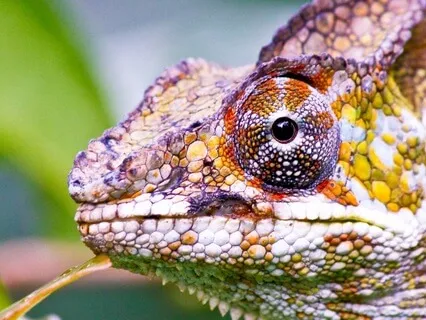
That brought a little smile to my face is just the eye of a chameleon.
And you know how like,
They're just like this bulging eye that comes out the side and they have this ability to just like the,
The movement of the eye alone.
It can go like in all the directions.
And,
Um,
I feel like I want to learn more about chameleon eyes,
But that was the,
The picture that came to mind with eye contact.
So big too,
Like sphere,
Big,
Spherical,
Big.
And I get like a little ASMR when I think of chameleon eyes,
Like the lid shutting,
And opening like it makes,
I think it makes noise when I've seen videos and cartoons of it.
It's usually an audible eye shut.
Wow.
That's so cool.
I also had fierce tiger eyes,
Just the two like camouflaged looking at whatever it's going to decide it's prey between like the jungle leaves,
Just fierce,
Fierce tiger eyes peering,
Peering in.
So,
I love that.
It's like all these different kinds of visions.
So we've got the protection vision,
The kind of like circular vision,
Spherical vision,
And then this like fierce kind of,
You know,
Looking at what it wants vision,
That fierce vision.
Deliberate target.
I see you.
Oh,
I like that.
Thank you,
Nature.
Thank you,
Lori.
Thank you,
Sarah.
Now we're going to pivot moving into words.
We're going to have a little back and forth conversation about what comes up when you think about eye contact,
Maybe your experiences with eye contact,
What others have taught you about eye contact.
For me,
Why I picked this topic,
It brings up a lot.
Being a speech therapist and the work I've done around eye contact and the pivot over the years,
Over the course of the last 20 years that I've been working with children,
I want to just explore it and shift it for people because there can be a lot involved in eye contact of interviewing for a job or your sensory system and it could just be really uncomfortable or even painful to make eye contact or maybe you have a little bit of anxiety or discomfort of that.
It just,
It doesn't feel safe to make eye contact.
So I want to see if we can just shift around a little bit,
But that was my basis for bringing this topic in today and it's a little bit charged for me too personally on my own journey.
So Lori,
I will start with you.
What are your initial thoughts and insights around that word,
Phrase,
Eye contact?
Yeah,
I guess it depends on the context of what I'm doing or what I need to use it for.
So definitely eye contact to me is like a very intimate thing.
I think of conversation,
Right?
Any conversation that you're having with another person,
When you are making eye contact,
Most of the time you're really connecting,
I think,
Very intimately and that can be very uncomfortable or very bonding,
Right?
Like I think of even making eye contact with my cat when I can maintain it for,
You know,
Longer than five seconds.
It's like,
Oh hi,
You know,
Like you really feel like you're connecting with their being and it can be a wordless connection.
So we don't speak the same language,
But I can feel the connection with him.
So I have that and then I think of like dating,
Right?
Like when I was first dating my husband and just like you're getting to know each other and you're making that effort to look at each other and ask deep questions or light questions,
You know,
Getting to know you and how it can be really intense.
Like sometimes there were just such vulnerable conversations that I felt my body start shaking,
You know,
Because you're really in something intimate.
So yeah,
I think it brings up bonding and intimacy and definitely some fear because of the vulnerability that eye contact adds to any connection or conversation.
And yeah,
There's definitely some beliefs in there or indoctrinated ideas of like,
You know,
If you're not making eye contact,
It means you're avoiding something or you're hiding something or there's a secret or you are pretending or you're in pretense or whatever these things are.
You're a dishonest person if you don't make eye contact.
So there are some interesting ideas that I can feel like,
Yeah,
That might be true sometimes,
But it doesn't necessarily mean that's true for every circumstance.
So I love that you want to unravel this topic and just change it and make everything okay.
I think that's the feel that I'm getting from you.
So I'm curious what your response is.
Yeah,
I love that the many layers of eye contact and what it means to you personally,
Because it's an intimate thing for each person and it means something so different of who you decide to make eye contact with,
How long,
Then there's the whole social dance behind it,
Like this many seconds and then look away because you can't make too much or you can't make too little and it's a hard thing to teach and it's not even a thing that should be taught anymore.
Unfortunately,
In my past,
I did teach it as a speech-language pathologist and that those days have pivoted because to help really all individuals,
But especially neurodiverse,
Making sure it's more of that self-advocacy piece of letting someone know how you communicate,
What you're comfortable with,
And each communication partner is so different.
So I love that you said how it has this intimate piece more with your husband or your cat companion.
That's a really safe space to practice or get comfortable with eye contact with people you know and trust and so it's interesting to me thinking even culturally the difference about what's like the social norms,
What's acceptable,
What's not.
Like I said,
When you go into a job interview,
What may be expected and I'm just curious,
Yeah,
If things can shift,
If we can nurture our voice a little bit more and let others know what we're comfortable with,
What we're not comfortable with in any kind of situation and I was just thinking between you and me,
Lori,
So eye contact is very uncomfortable for me.
I'm always quote-unquote working on it but getting comfortable with eye contact.
There are a few people that I feel I can make the eye contact and it not affect my body but at the same time mine is more attention related where like I was just thinking between you and me,
I've known you for almost 30 years and I'm like I don't even know the color of Lori's eyes.
I was thinking like earlier,
I was like probably brown but maybe hazel like but I couldn't you know picture and that's because I have a lot of fleeting attention.
A lot of the times I look up because I'm thinking,
I'm in my mind but yeah making it all okay and getting fun and playful with it of you know I'm going to explore eye contact with this person and see what it feels like really you know peer into them or I'm going to not make direct eye contact with an authority figure or something like that and helping people understand yeah it doesn't have to do with confidence per se.
There's so many different layers to eye contact and my last thing I was going to say also with a parent,
A parent child or a caregiver child or baby when they're first born into the world that imprinting that takes place not just for humans but so many living things of them just peering into the caregiver's eyes so that kind of came up for me too just thinking that that baby that just just looking at you and taking in your whole face and and that recognizing.
Gosh there's so many things in in this and I love yeah I love feeling the parent child connection and and all of the I guess different ways that people feel around eye contact like I think you're helping me to even have an awareness that for some people eye contact can cause physical pain and do you have any examples of that of anybody you know?
Yeah I mean it it's all about the sensory system but it's also a part of the the brain that it just fires a lot more the amygdala and it can actually create sensations that are painful so yeah a lot of different clients I work with I equate it to if you had a really bad headache and just like everyone turned the lights on like really bright fluorescent lights like how would that feel?
Just thinking about that makes my breath quicken so that's my guess is that's how it would feel within the body but I'm sure everyone's bodies are totally different too.
That's really cool to just have an awareness of and it just I think the invitation I'm feeling for myself is like just neutralize eye contact in general because you don't know even the degree of vision that people have right like we can assume everybody can see us or see who they're looking at but not everybody has the same quality of vision and just making it okay like this person does not have to look at me to have a really meaningful conversation and like I mean I had an example of that on a plane ride sitting next to a person who was legally blind and listening to his stories about traveling solo and independently and it was just really cool to like to get my mind opened and I shared with him what it was like to be a woman in a wheelchair traveling by myself so we both had these different ways of how we experienced the world through different abilities disabilities however you want to say it and I don't know I just keep thinking why do we put so much importance on if people are looking at us or not because that conversation was amazing and yeah we weren't making eye contact the whole time right and I was thinking too like just the background of eye contact and if you think about the animals a lot of time that means like let's go like we're gonna like alpha you know we're gonna have a confrontation this eye contact so I tend to not do eye contact not based on confidence which I think sometimes is perceived as lack of confidence but it's this softness that I want to bring into a dialogue or a back and forth and not this directness I think there's a time and place for directness but that's where the playfulness comes in of when do you want to play around with directness and okay I'm gonna make eye contact and you know feel into this person's soul or empathize with them or be direct with them yeah just exploring the different ways you can use your eyes with all the different people and animals I love that yeah so I guess we'll we'll wrap it up any final thoughts for our conversation Lori regarding eye contact I think it's just the feeling of like be in the moment and be in the present moment with people and be okay with your comfort of eye contact in that moment and not judging yourself or another for how they're feeling you know whether they're comfortable making eye contact or able to or not that's what I'm getting out of all of it I love that and what I was thinking too was it's just one form of possible connection right because that's one meaning of eye contact but think of all the other ways you could connect with someone so remembering that too and celebrating how you connect with someone I know you and I we connect with so many stories and our smiles and all different ways our music so putting that at the forefront too rather than all this eye contact pressure well what a lovely conversation we are going to move into the creative piece where we are going to vocal play eye contact so we're giving eye contact a unique sound whether that be patting something in the room or our bodies or singing a hum or a tune or a sound or even making animal noises anything goes for using our own voice to make a unique sound for eye contact there were so many like I kept using the word layers so there's just so many different meanings and feels around this eye contact so I think I want to embody that with my voice and here we go let's see what comes out I got like so many observations coming in I needed to do so much work around this the um at the end is like the connection and it just keeps going when you connect with people and the eye is all the different ways of eye contact but what really matters is this hum to connect with someone wow I love that it's so cool how you can feel the observations coming in while you're doing it it's really neat I like that yeah and I get some body sensations too I know we've talked about that music just lights my soul but I'll get like little tingles in my eyes or cold or chills a little sweet smile so how about you Lori what does eye contact sound like for you I'm feeling like the very interesting I love that all I kept seeing was irises and then like the edge of the eye when you draw the iris yeah I was thinking how like you can really feel that ding of connection I guess when you make eye contact like there's something beautiful about when you do make eye contact where it's like I see you like because you actually see but then there's this like little whoa it's just like this like all of it's okay it had this like circular chameleon eye coming in of like you don't have to be looking at me to have um wonder and awe and I don't know that feeling of like wow you know there's another person it's like the circular vision yep absolutely and the chameleon bringing that in of you can look anywhere and still be getting all the information about your environment and it does remind me working with my clients that they might not be looking at all at something I'm teaching them or just looking um out of the periphery and within a few moments they're copying what I'm doing or what we're playing with because they were attending to it even though it doesn't look like it you know they're taking it all in from wherever the eyes are at little chameleon love I like that yeah and chameleons I'm just remembering too like one eye can be looking over here while the other one's looking over there yeah and they're and almost like they're constantly they're constantly adjusting ah well thank you Laurie I love everything we explored today words and beyond words so we're going to wrap up our time here together giving this cocoon of eye contact a warm hum and I'll have you go first this time and you can pick a note and then I'll add to it ah thank you well anything you want to bring in keep in your pocket from our chat or our sounds today definitely that expansive view of eye contact so it feels like it's neutral and all okay and practicing embracing how I guess how I feel I think I'm not really aware of how I feel about eye contact all the time so maybe like just practicing where I'm at with it and seeing how that feels sounds wonderful yeah I'm gonna bring some nature bits I think chameleon's gonna have to show me the way of being okay looking everywhere and taking it all in I think I want to get playful with deciding who to make eye contact with and making it more deliberate and okay hmm all right thank you so much Laurie thank you Sarah from the bottom of my heart thank you again when you nurture your voice you nurture your soul